Patras
Patras, Greece

Patras is a working Greek port with a lively student scene, a Roman odeon, a hilltop castle and a famously exuberant February carnival.
The place
Patras sits in the north-west corner of the Peloponnese, on the Gulf of Patras, with the slopes of Mount Panachaikon rising behind it. It is the main city of Western Greece and the third largest in the country, with an urban population of about 173,600. Athens lies roughly 215 km to the east, and the city has long acted as Greece's door to the west.
That role shows in daily life. Ferries leave for Italian ports and for the Ionian Islands, and the harbour is the first thing most arrivals see. Trucks, passengers and ferry offices give the waterfront a practical, slightly rough energy rather than a postcard look.
The city is also a student town. Three public universities fill the cafés and bars with young people for much of the year, which keeps the centre busy in the evenings and gives it a more local feel than most Greek destinations. Much of the older architecture is neoclassical, set among newer concrete blocks, so the streets are a mix of elegant façades and ordinary modern Greece.
Patras is not a place of one big monument. It rewards a slow wander: a square with a theatre at one end, stepped streets climbing towards the castle, and a long seafront. At the eastern edge, the Rio-Antirrio Bridge ties the Peloponnese to the mainland. Summers are hot, and the city is quieter and easier in spring and autumn. Most visitors come either in transit or for a short stay before heading on to Olympia or the islands, which is a fair summary of why it is under-visited and often pleasantly unhurried.
Its story
Patras has been lived in for around four millennia, and its past runs through the Greek, Roman and Byzantine eras. Under Rome it grew into a cosmopolitan centre of the eastern Mediterranean. Christian tradition also holds that Saint Andrew was martyred here, which is why the city remains an important pilgrimage stop.
The medieval story is a tangle of changing masters. In 1205 the city fell to the Frankish knights William of Champlitte and Geoffrey I of Villehardouin and became part of the principality of Achaea. Its Latin archbishop became the leading churchman of that state. In 1408 Patras passed to Venice, and in 1430 it was recaptured by the Despotate of Morea under Constantine Palaiologos, who later became the last Byzantine emperor. George Sphrantzes was put in charge of the city's administration.
The Ottomans took Patras in 1458 under Mehmet II. They called it Baliabadra, a version of the Greek for Old Patras. Mehmet gave the city privileges and tax reductions, yet it never became a major commercial centre under Ottoman rule.
The result is a city with layers rather than a single dominant era. A Roman theatre sits close to a modern town, a medieval fortress overlooks the port, and a twentieth-century church holds relics of the apostle. Reading Patras means accepting that it has been a crossing point for most of its history, a place people passed through, fought over and traded in, rather than one preserved as a showpiece.
What to see
- Patras Castle — Upper town
The castle stands on the hill above the old town and gives wide views over rooftops, the port and the gulf. It is the best place to understand how the city is laid out. Go late afternoon for softer light and cooler air, and wear shoes with grip for the climb.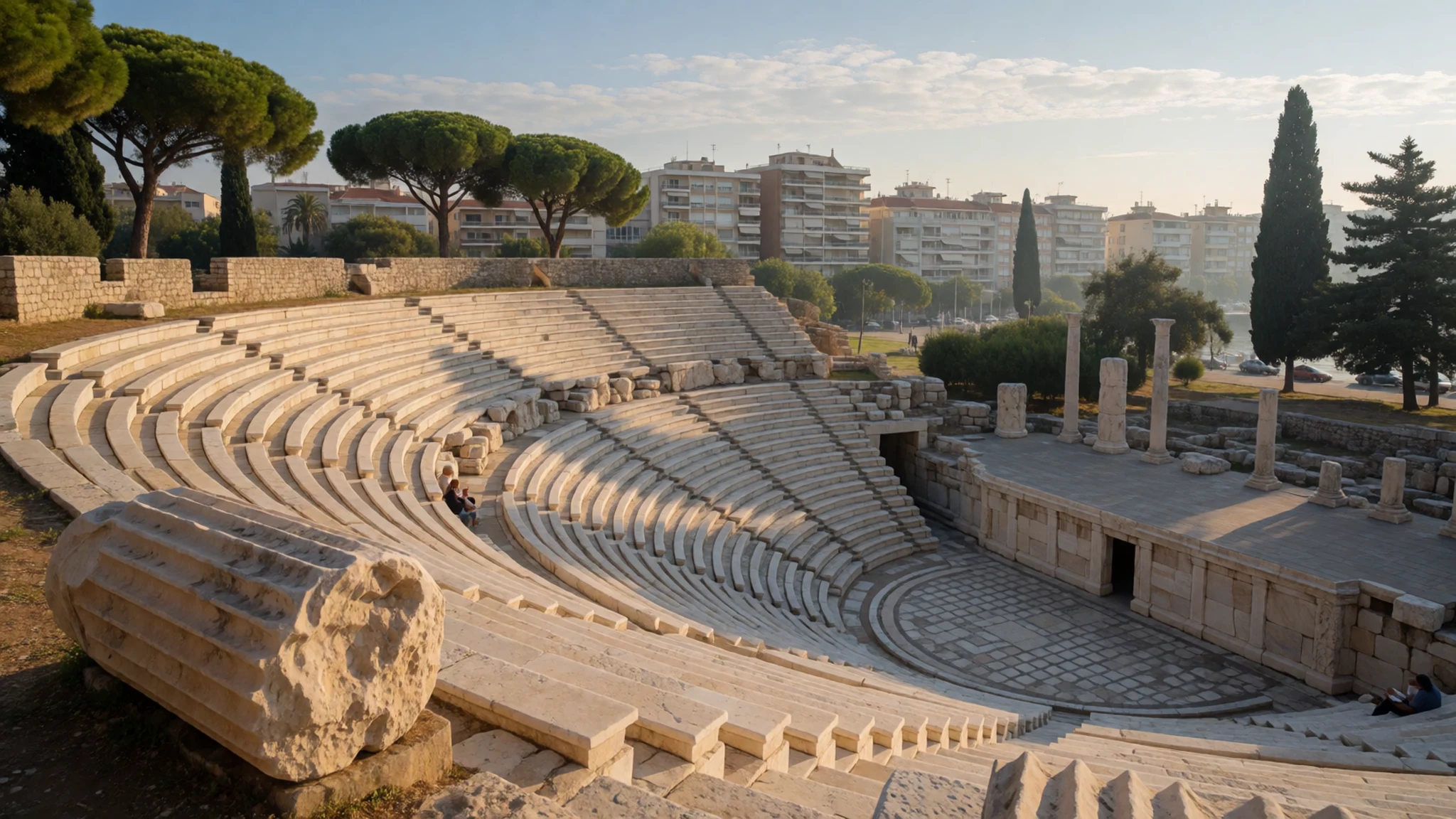
- Roman Odeon — Western centre
The Roman Odeon lies on the western side of the centre and has been restored. It was built before 160 AD, and a statue of Apollo once stood inside. Its seating and stage make it easy to picture ancient performances, and it is a quiet stop among busy modern streets.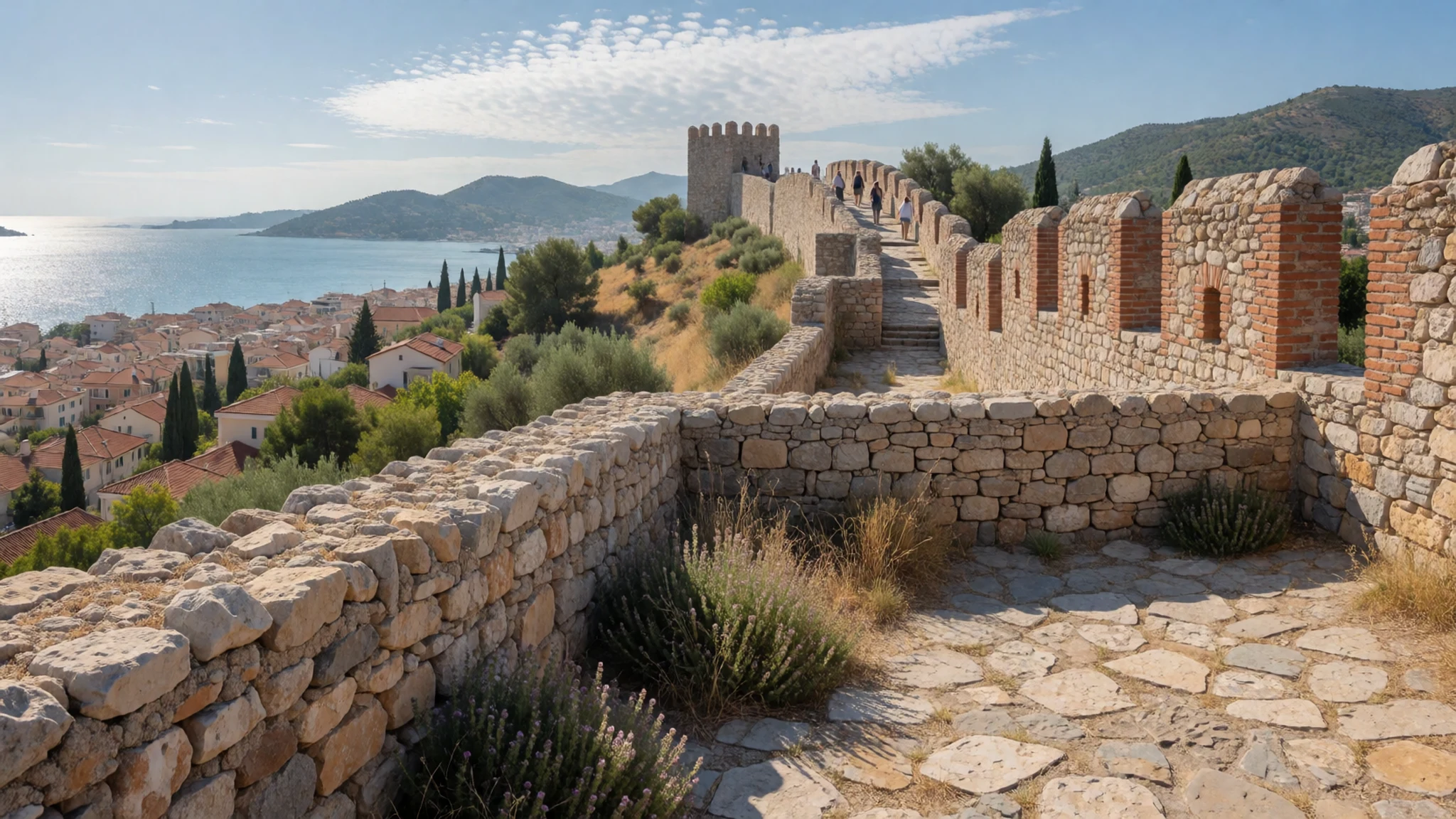
- Church of St Andrew — Waterfront
This twentieth-century church holds the remains of Saint Andrew the Apostle, kept in a small chapel at the back right as you face the altar. It draws pilgrims as well as curious visitors. Dress modestly, keep your voice low, and expect worshippers.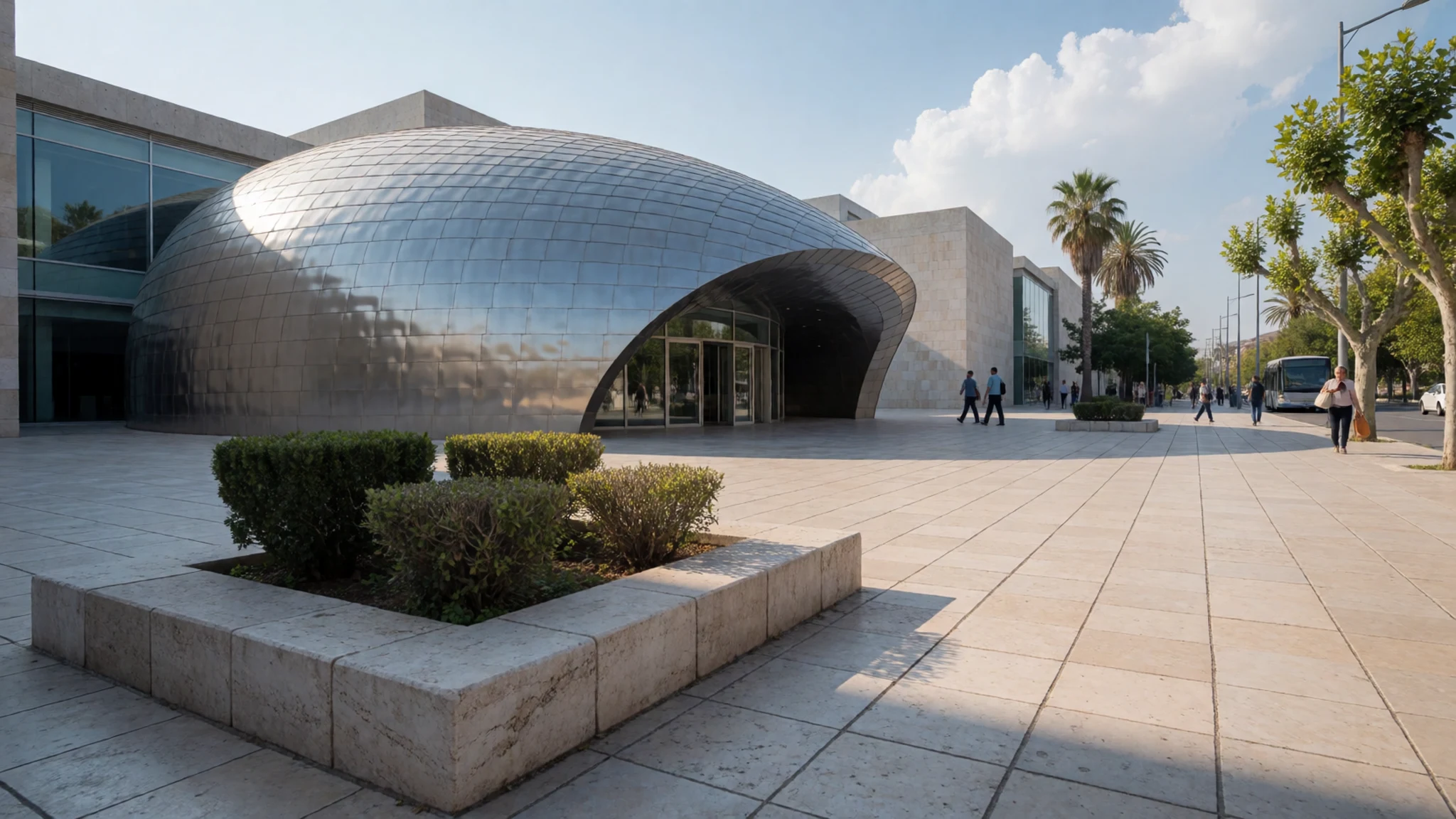
- Archaeological Museum — Eastern edge of the city
The museum opened in 2009 and is a striking modern building, with a silver-toned titanium entrance that looks like a spaceship. Inside are finds from the region and the Roman city. Check the official site for opening hours before you go.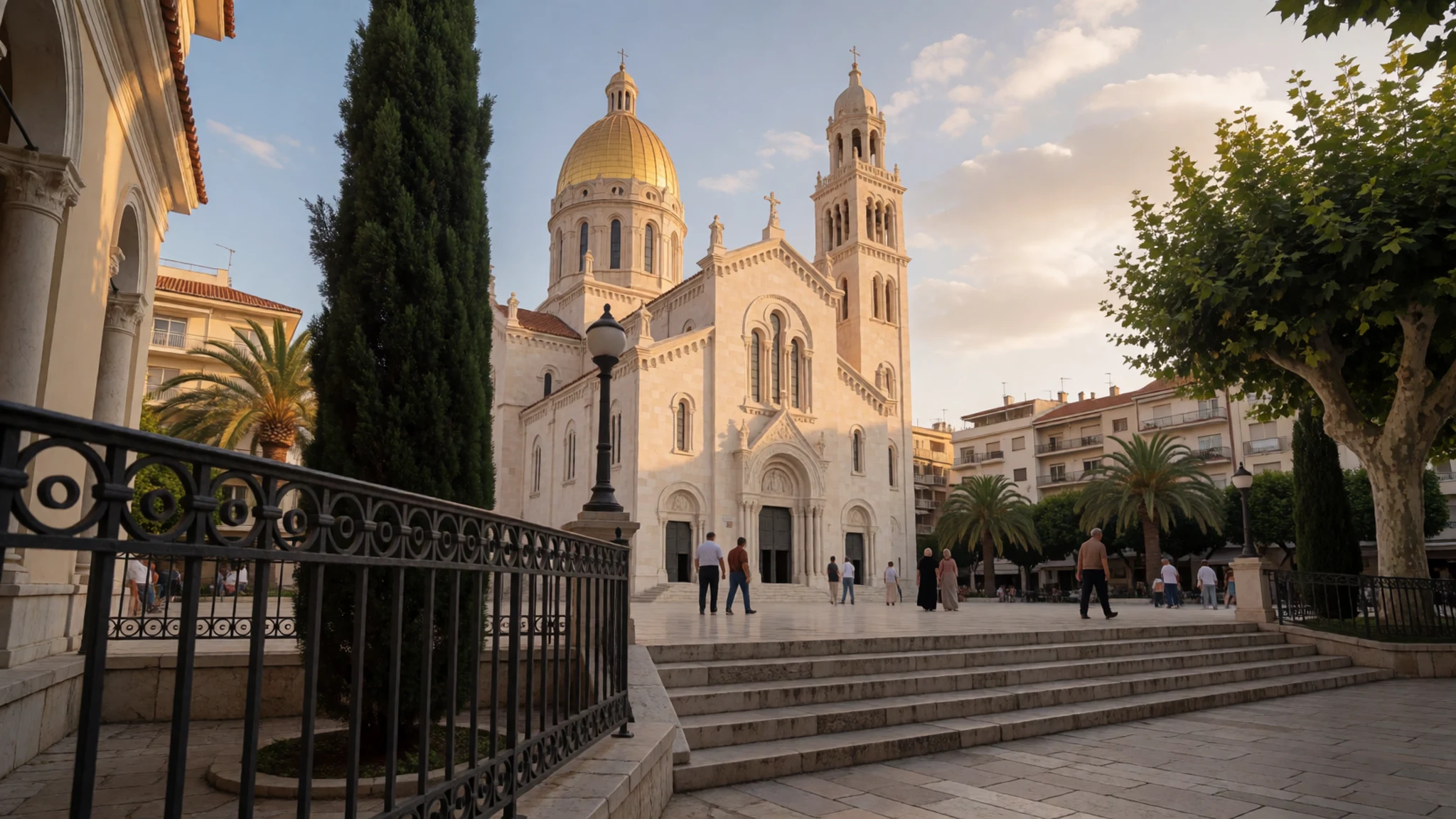
- Rio-Antirrio Bridge — Rio, east of Patras
This cable-stayed bridge, formally named after the statesman Charilaos Trikoupis, links the Peloponnese to mainland Greece. It is lit up at weekends and is best viewed from the Rio waterfront at dusk, with a drink in hand. Taxis and local buses run out there.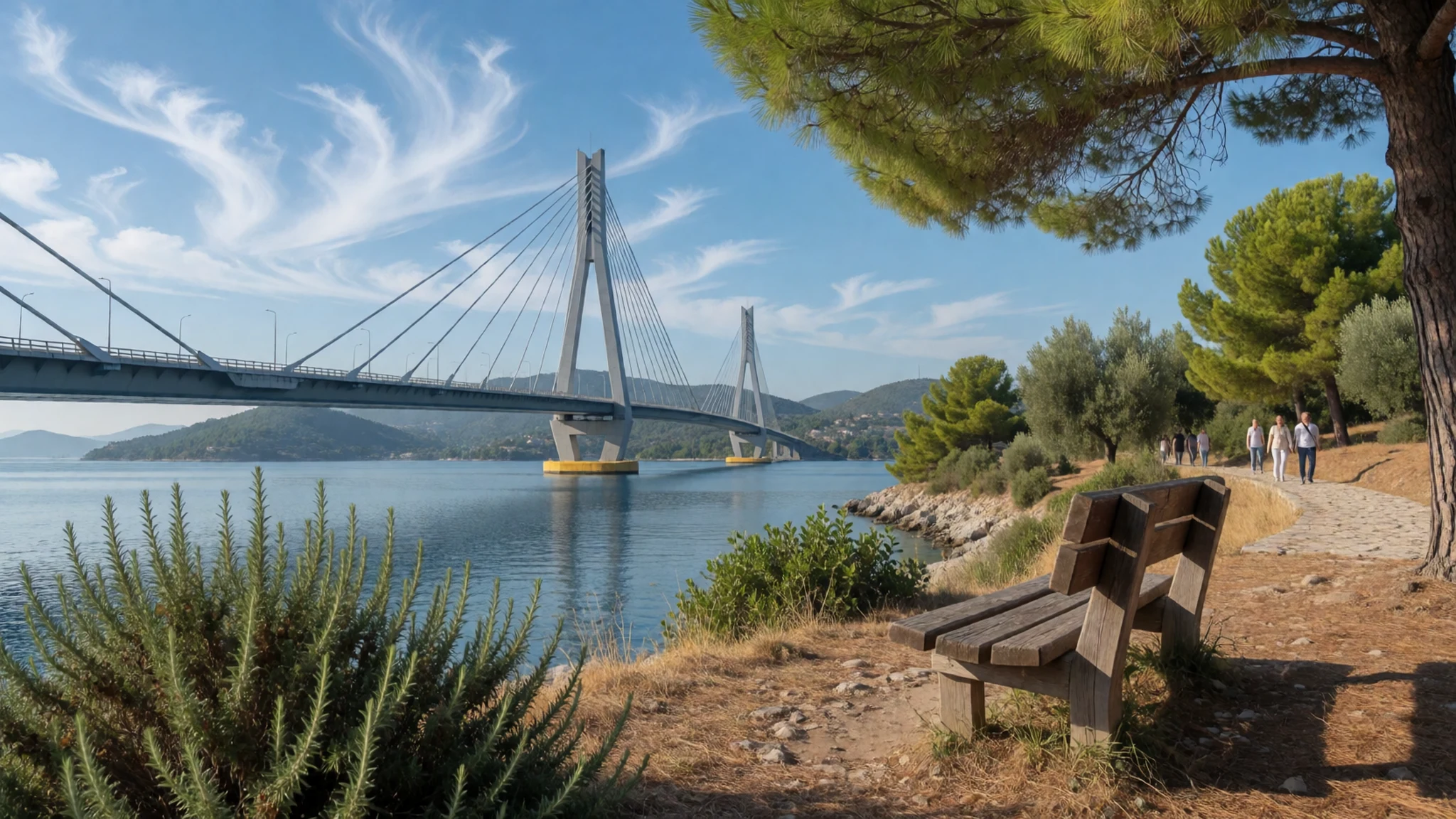
- Achaia Clauss winery — Southeastern hills
The winery sits on a green hillside about eight km south-east of the centre. It is the best-known name in local wine, especially for Mavrodafni. Tours and tastings are the draw. Book ahead where possible, and use a taxi if you plan to taste.
Culture
Patras has a strong civic culture for a port city. The Patras International Festival brings theatre and music to venues around town, and the Poetry Symposium adds a literary strand. The Apollon Theatre, the city's landmark stage, is home to the Municipal and Regional Theatre, founded in 1988.
The best-known event is the carnival, held every February and counted among the biggest in Europe. Months of preparation go into the floats, and the city has a dedicated Carnival Float Workshop. It is a mass street party with parades, costumes and a crowd of locals of all ages, not a staged performance for tourists.
Museums cover a range of topics, from archaeology to folk art, the press and technology. There is also a municipal library and gallery, an icon painting school and many private galleries. The neoclassical architecture reflects an earlier age of ambition. Patras also belongs to a European programme on intercultural cities, which suits a port with long ties to Italy and the rest of the Mediterranean.
Life here follows Greek rhythms: late lunches, long evenings, coffee as a social occasion rather than a quick stop. Students make the nightlife lively, though it is mostly cafés and bars.
When you enter a church such as St Andrew's, cover your shoulders and knees, speak quietly and do not take photographs of people at prayer.
What to wear
Patras has no single distinctive costume of its own. Traditional Greek dress, such as the embroidered waistcoats, pleated skirts and woollen or linen fabrics of the Peloponnese, now appears mainly at folk festivals, on national holidays and in dance groups. It is worn for parades and celebrations rather than daily life.
Day to day, people dress much as they do in other Greek cities: smart casual, with neat shirts, jeans, light dresses and trainers or leather sandals. Evenings out lean a little more polished, especially at weekends along the café streets. Students give the centre a younger, relaxed look. During carnival in February, costumes take over the streets, and the city fills with masks, wigs and fancy dress.
For visitors, summer is hot, so light cotton or linen, a hat and sunscreen make sense. Spring and autumn evenings can be cool, and winter brings rain, so carry a light waterproof layer. Pavements are often uneven and the castle hill is steep, so wear comfortable shoes with decent grip rather than flip-flops.
For churches, including St Andrew's, cover shoulders and knees. A light scarf in your bag handles this easily. Beachwear belongs on the beach, not in the city centre, and swimwear is not appropriate away from the shore.
What to eat
- Mavrodafni wine — Achaia Clauss winery or a local taverna
A sweet, dark local wine, closely tied to the Achaia Clauss winery and the hills around Patras. It is usually served as a dessert wine or after a meal. Try it at the winery itself or in any traditional taverna in town.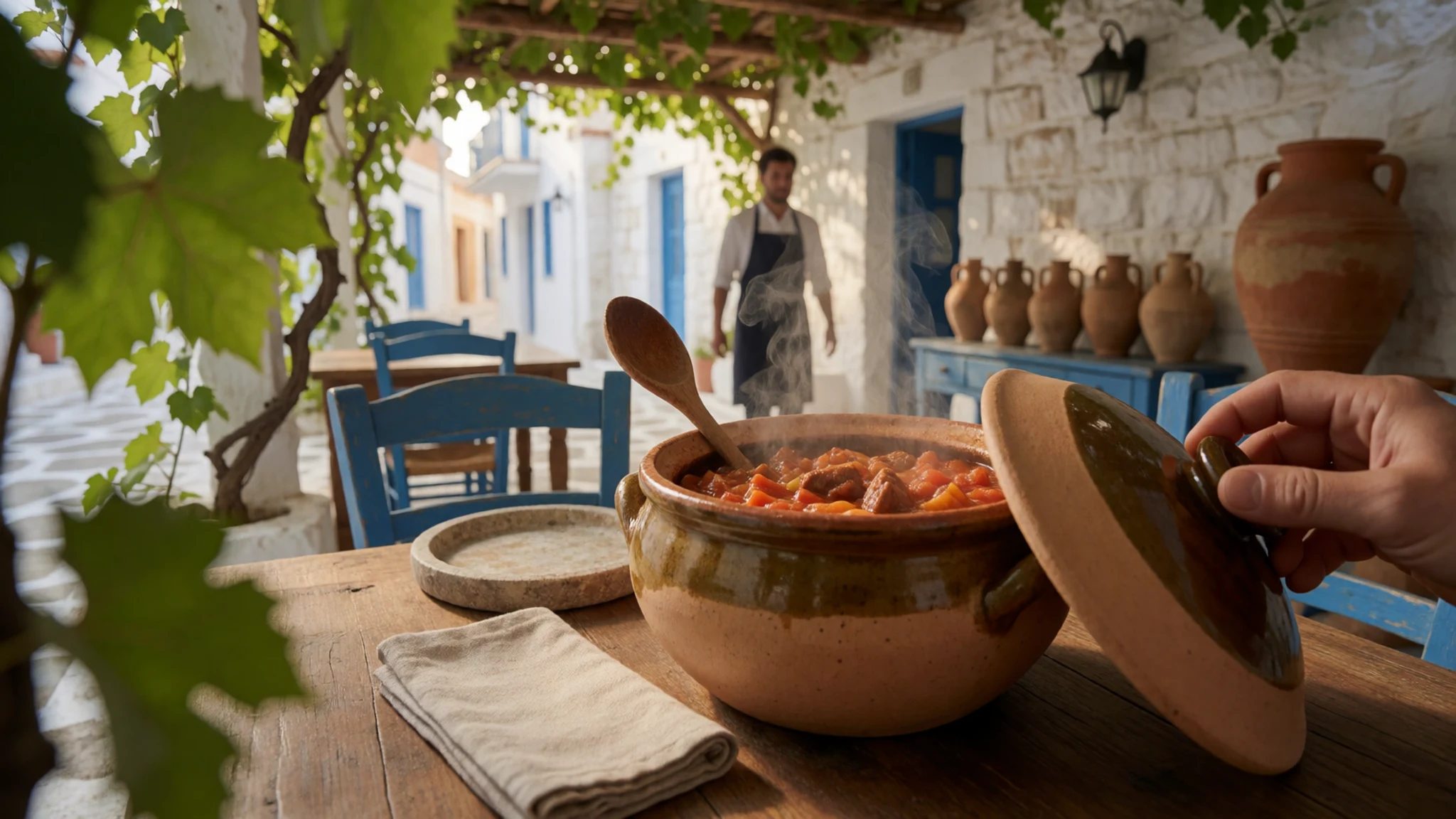
- Tentoura liqueur — Traditional tavernas and cafés
A local spirit liqueur, typically served as a digestive at the end of a meal. It is spiced and strong, and best taken in small glasses. Ask for it in traditional cafés and tavernas, where it is often offered after dinner.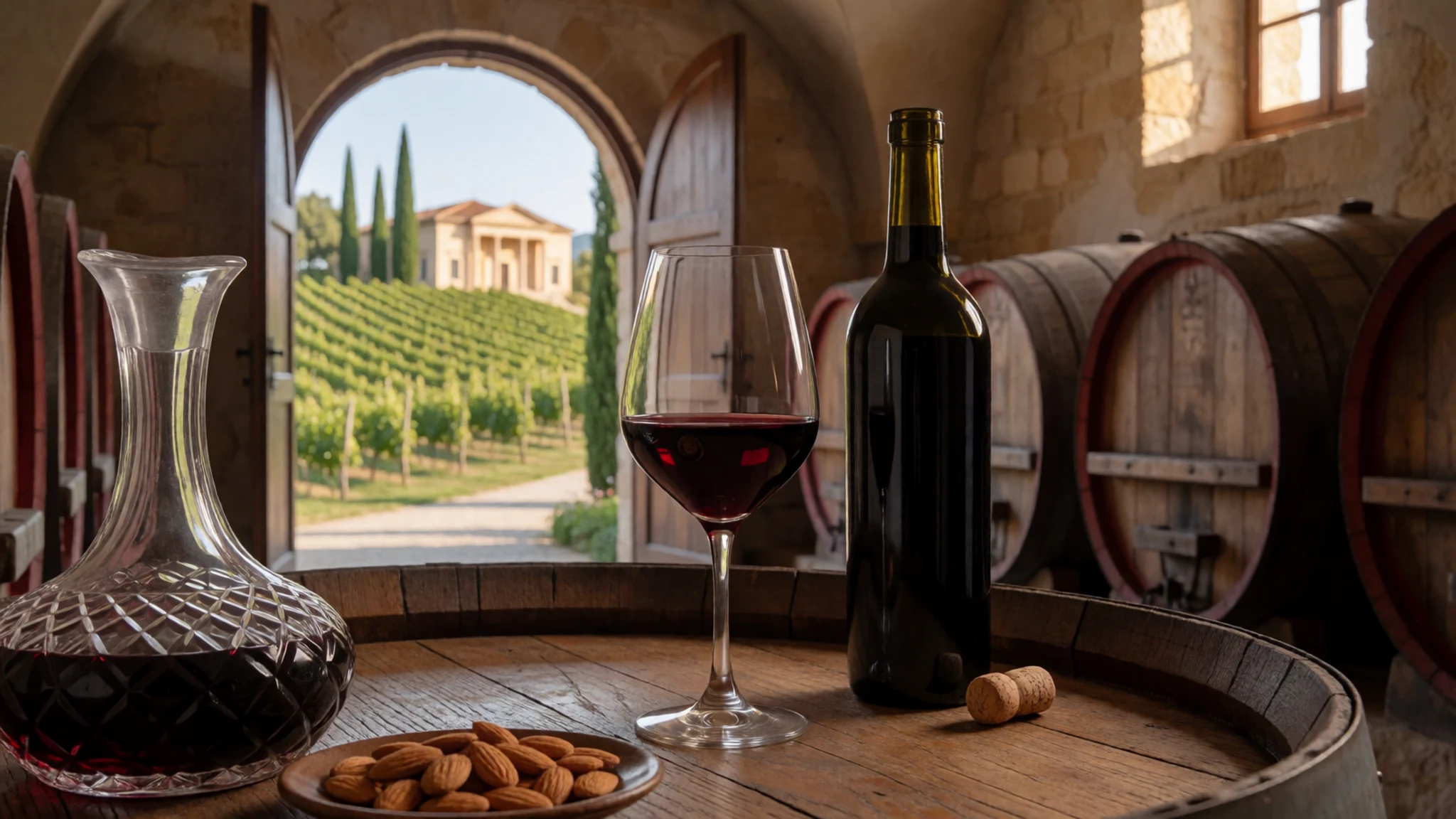
- Home-style Greek cooking — Small family eateries in the centre
Plates of baked dishes, stews and grilled meats come in generous portions at family-run eateries. Look for the daily specials that change with the season, and share a few dishes between you. Locals tend to eat late. - Greek coffee and frappé — Cafés along Agiou Nikolaou Street
Coffee is a social ritual in Patras. Order a small Greek coffee for a slow chat or a cold frappé in summer. Cafés fill from mid-morning and again after sunset, with students and families sharing the tables. - Seafront drinks and snacks — Rio beach road
Along the Rio beach road, bars and cafés serve cold drinks and light bites with views of the gulf. It is a casual summer evening ritual, mostly for locals, with the bridge lit up at weekends.
Plan it
Best time. May–June and September–October, when it is warm but not oppressive. July and August are hot, while winter is wetter and cooler. Visit in February only if the carnival is the aim, and book early.
How long. 2–3
Getting there. Athens International Airport is about 250 km to the east; continue by road via Corinth along the national highway. Ferries link Patras to Italian ports such as Brindisi, Bari, Ancona and Venice. A rail line from Athens Airport is operating as far as Aigio, with the extension still under construction, so check current services.
Budget. mid
Tips
- Book ferries and carnival-weekend accommodation well ahead
- Take a taxi to the winery if you plan to taste
- Climb to the castle in late afternoon for cooler air and good light
- Carry some cash for small cafés and kiosks
- Check the official city site, e-patras.gr, for events and opening times
Etiquette
- Cover shoulders and knees in churches
- Do not photograph worshippers without asking
- Expect late dinners and linger over coffee
Nearby
Sources
- Wikidata Q133123 (CC0)
- Wikipedia: Patras (rev 1384486684) (CC BY-SA 4.0)
- Wikivoyage: Patras (rev 5414035) (CC BY-SA 4.0)
- Patras Montage L, SilentResident (CC BY 3.0)
- Roman Odeon of Ancient Patrai, Carole Raddato (CC BY-SA 2.0)
- Patra banner, Project2501a, NNeilAlieNN (CC BY 3.0)
- Patra Febr 2021, Nikolaos Kotopoulis (CC BY-SA 4.0)
- Patras from Ferry 2003, AlekH (CC BY 3.0)
- Ancient theatre stadium Patras3, Tonyesopi (CC BY 3.0)
- Patras square, gary4now (CC BY 3.0)
- Patras flower clock, Tonyesopi (CC BY 3.0)


