Özbek Han Mosque
Özbek Han Mosque, Ukraine
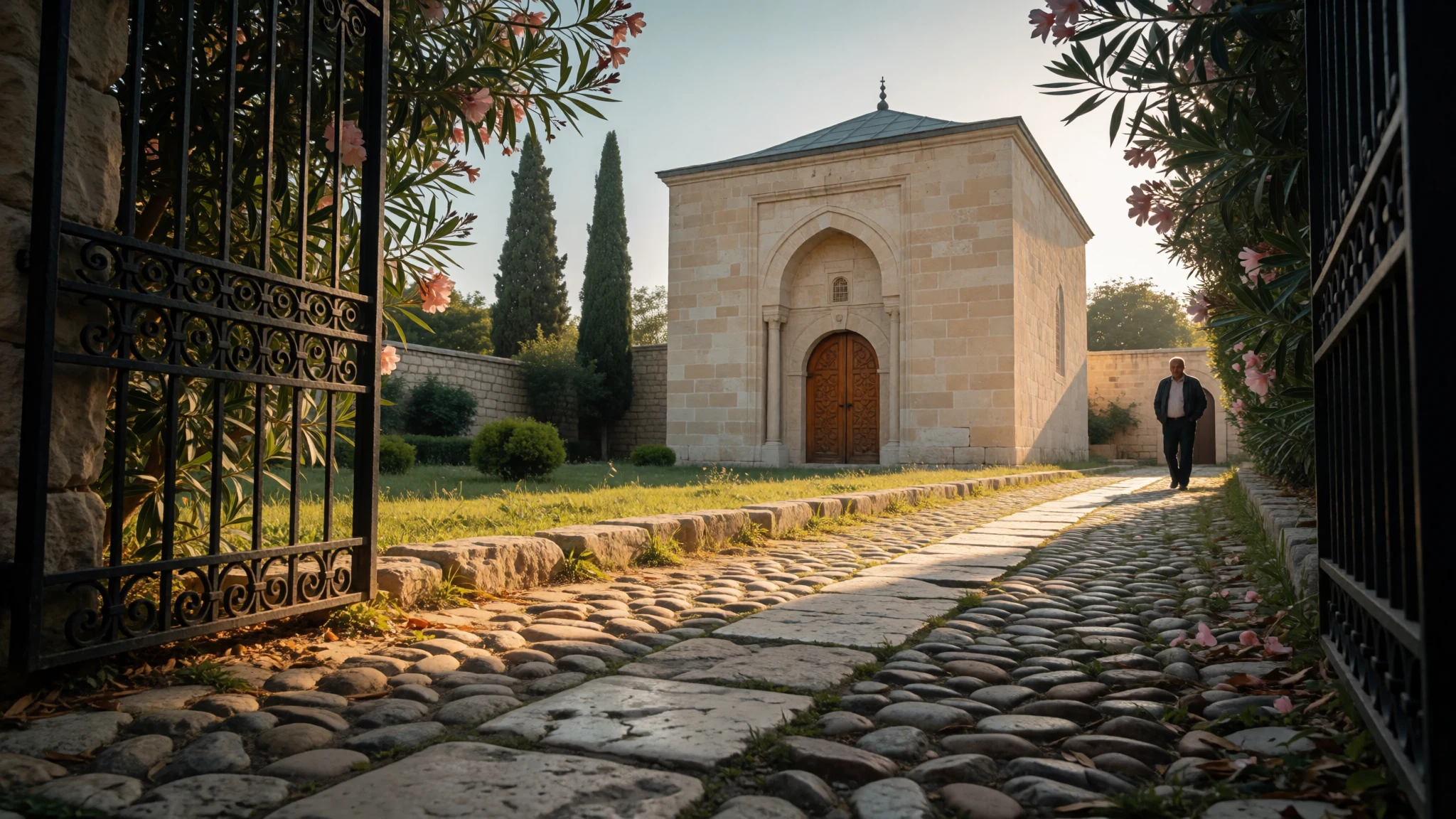
Özbek Han Mosque in Staryi Krym is a 1314 Golden Horde mosque, quiet and austere, with a carved wooden door and a ruined madrasah beside it.
The place
Özbek Han Mosque (Crimean Tatar: Özbek Han Camisi) stands in Staryi Krym, a small inland town in eastern Crimea. The town is far from the resort coast and has an unhurried, almost rural feel: low houses, orchards, quiet lanes and a few Crimean Tatar families who keep the place's religious life going.
The building is plain from the outside. Its plan is a square, topped with a dome, and the walls are pale stone with very little surface decoration. The one showpiece is the monumental entrance, where a carved wooden door gives the otherwise sober façade its focus. Wikipedia calls it the oldest mosque in Crimea, and it dates from 1314, the reign of Özbeg Khan, the Golden Horde ruler it is named after.
Beside the south wall lie the remains of a madrasah, a religious school added in the 1330s. Only ruins survive, but the broken walls give a sense of how much larger the complex once was, and they make the best foreground for photographs of the mosque.
This is not a big-ticket sight with ticket queues and tour coaches. A visit takes an hour or so, and the pleasure lies in the quiet and the age of the thing. It works best combined with a wander through Staryi Krym and other stops in the east of the peninsula. Anyone planning a trip should first read their own government's current travel advice for Crimea, because the region's status is disputed and the situation affects who can go and how.
Its story
Before the 14th century, Staryi Krym was called Solkhat, and it prospered under the Golden Horde, the Mongol-descended state that ruled much of the steppe and the Crimean peninsula. The early Crimean khans kept their capital here. In the first part of the 16th century the court moved to Bakhchisaray, and Solkhat slowly lost its place as the region's economic and cultural centre, shrinking into the modest town of today.
The mosque dates from 1314, in the time of Özbeg Khan. Its square floor plan is the feature scholars point to: it echoes building traditions found in Anatolia during the Seljuk period, which suggests links across the Black Sea between the steppe rulers and the Turkic cultures of what is now Turkey.
The madrasah was built next to the south wall in 1332, funded by Inci Hatun, daughter of Kilburun Bey. A woman founding a school is worth remembering when you stand among its ruins. The building has not survived, but the mosque beside it outlasted the changes of power that swept through Crimea: Ottoman influence, the Russian Empire, the Soviet Union, and the modern period.
Through much of that history the mosque's role changed with whoever held authority. Today it is once again a working place of worship for the town's small but devoted Crimean Tatar community. That continuity, a 14th-century prayer hall that people still use, is the main reason to come.
What to see
- The entrance and carved wooden door — Western approach, Staryi Krym
The monumental entrance is the mosque's single flourish, and the carved wooden door is the detail worth lingering over. Look at the grain and the carving up close, then step back to see how the doorway sets off the plain stone around it. Morning light is kind here.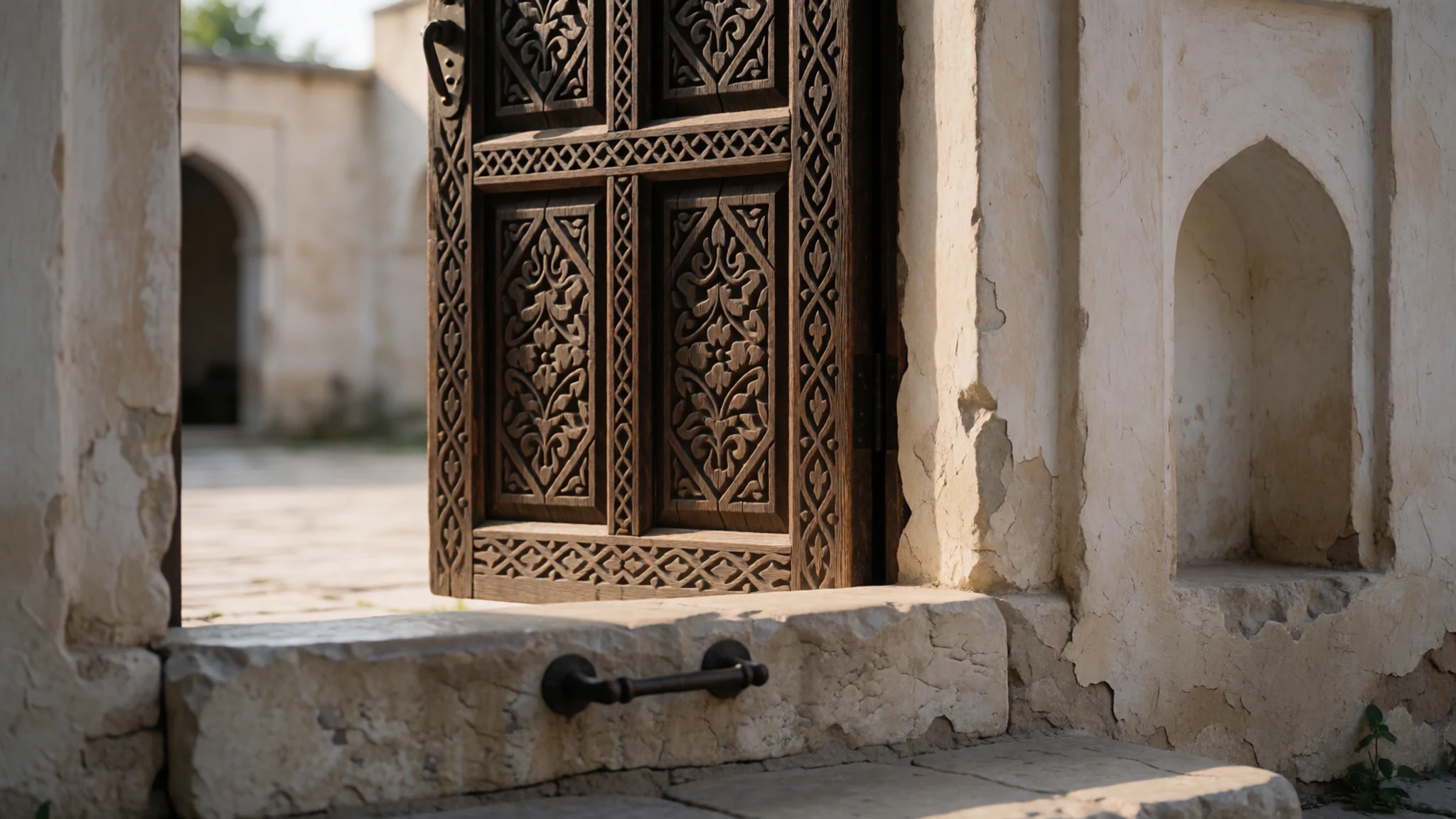
- The square prayer hall — Inside the mosque
The mosque's square plan is its architectural signature, with parallels in Seljuk-period Anatolia. When the building is open to visitors, the simple geometry and the calm of the interior say more than ornament would. Because it is in use, treat the room as a place of prayer first.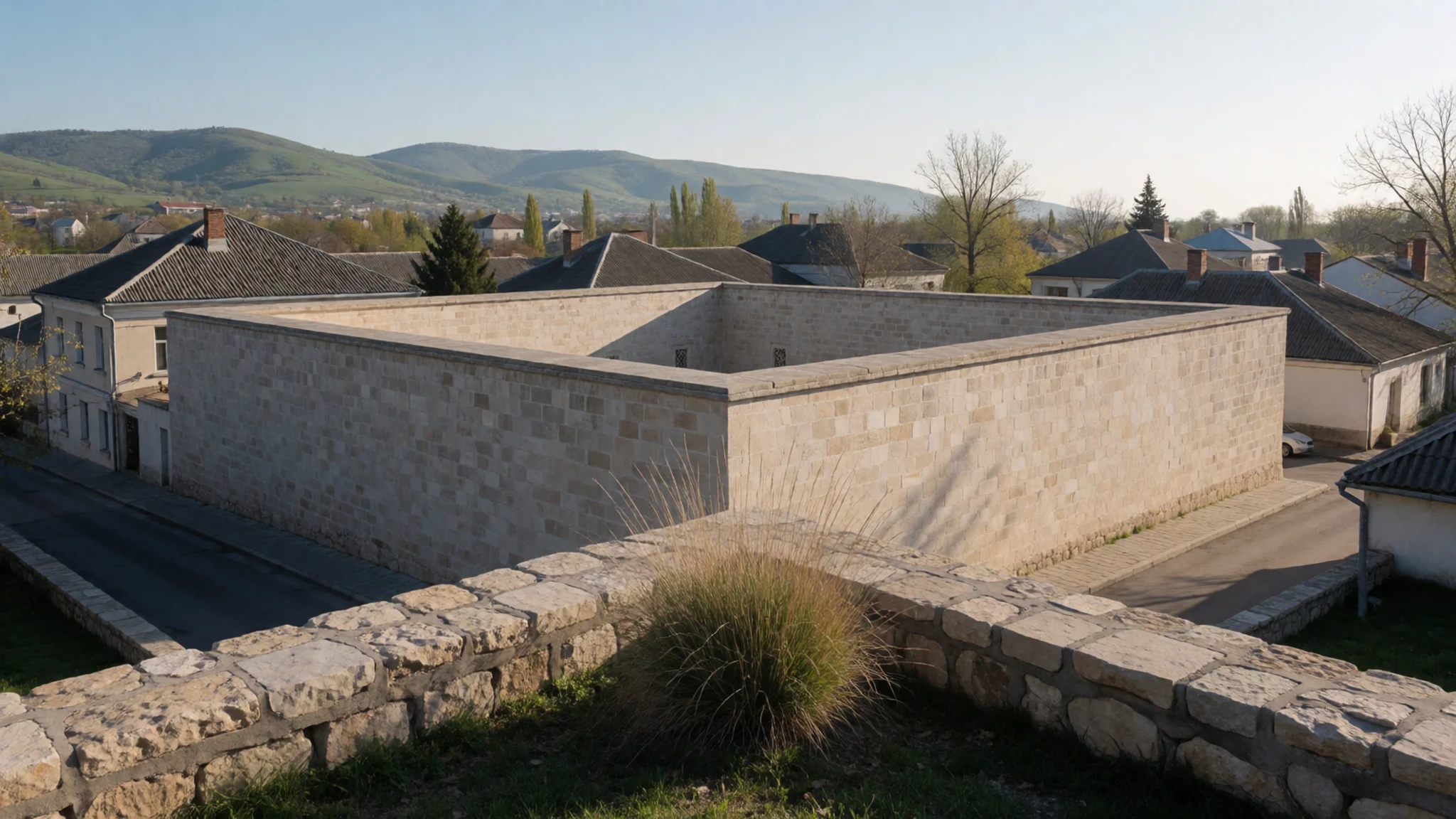
- Ruins of the Inci Hatun madrasah — South wall of the mosque
Against the mosque's south wall stand the broken remains of the school founded in 1332 by Inci Hatun. Only fragments survive, but they show the scale of the original complex and make a strong photograph with the mosque rising behind. Keep to marked paths and avoid climbing on the stones.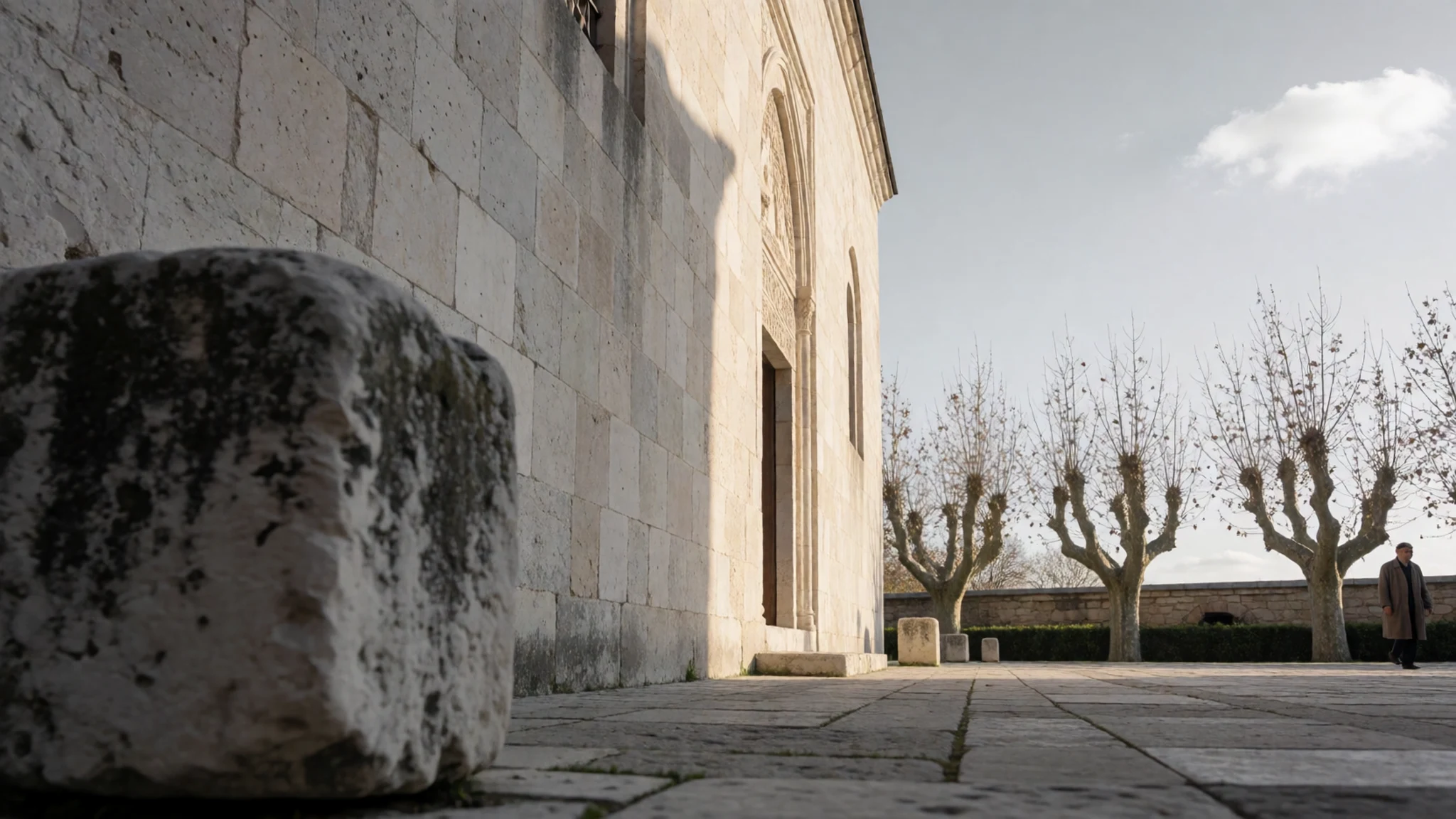
- The courtyard and the outside walls — Grounds around the mosque
Walking all the way round the building shows how the pale stonework, the dome and the ruined school fit together. The surrounding ground is quiet and often empty, which makes it easy to look closely at joints, repairs and weathering that mark seven centuries of use.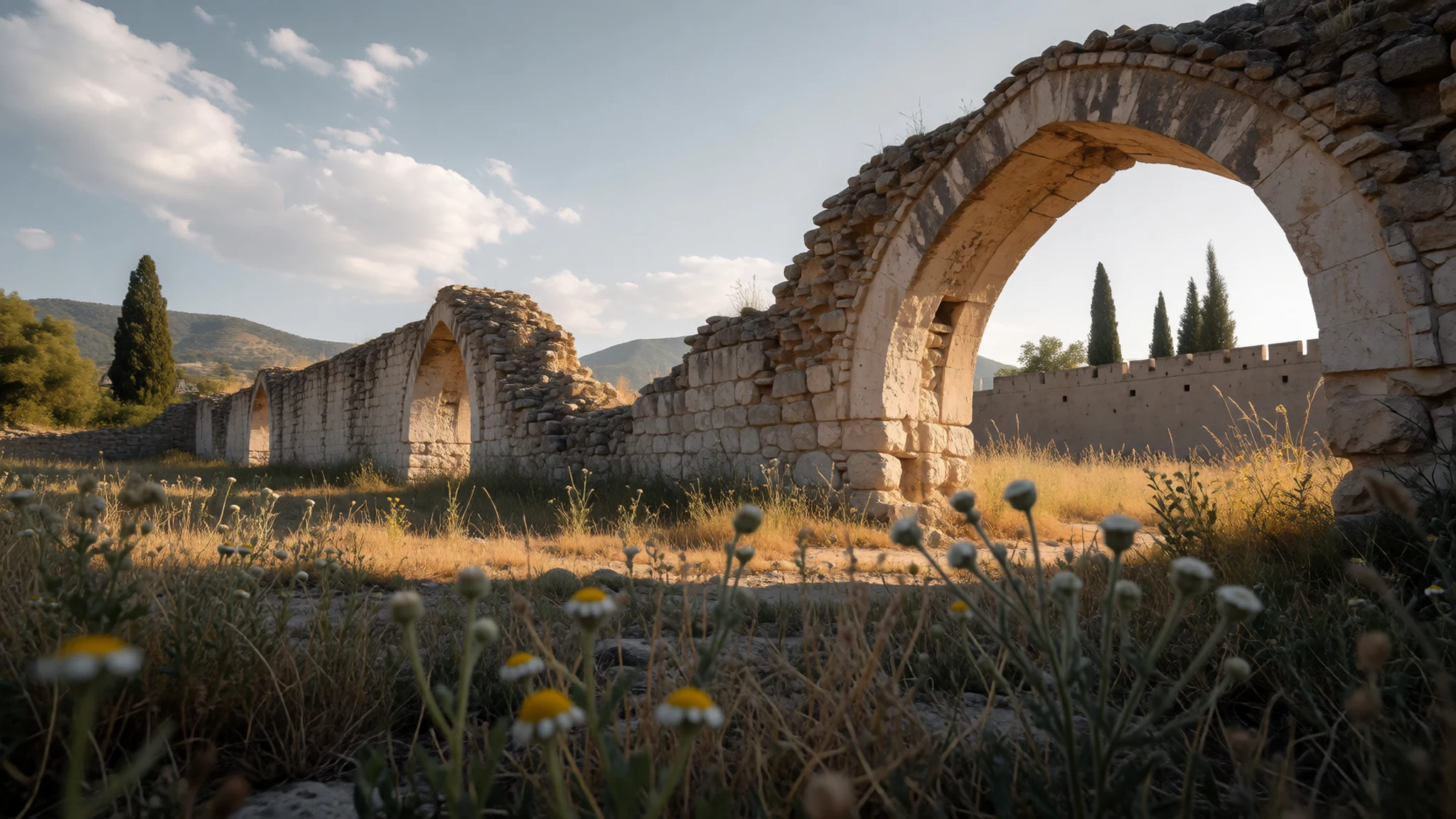
- Staryi Krym town — Staryi Krym, eastern Crimea
The old Solkhat is now a small town, and a stroll through its streets gives context: low houses, gardens and the occasional sign of its Crimean Tatar community. There is little in the way of formal sights, so treat it as a slow walk before or after the mosque.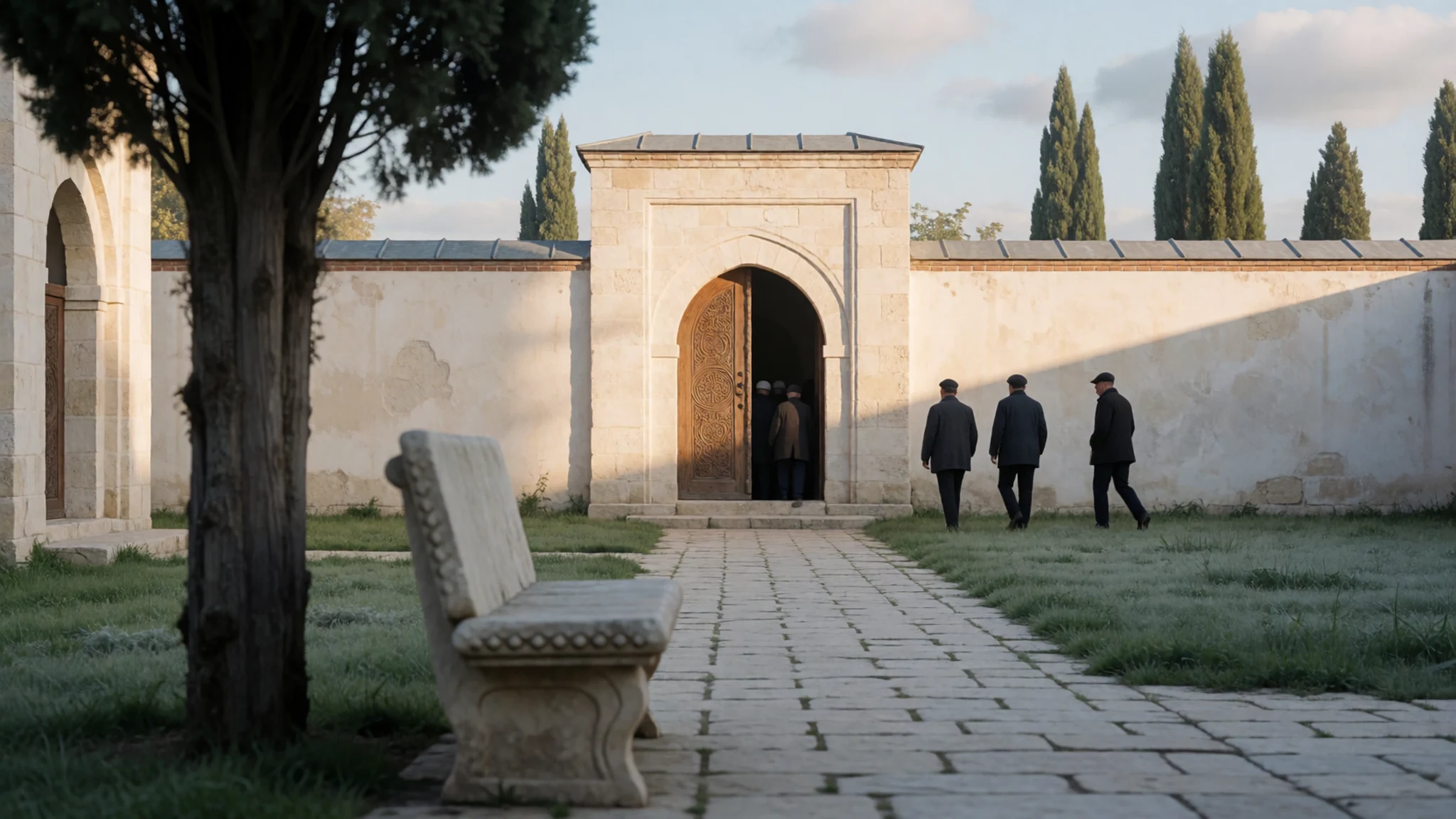
Culture
Özbek Han Mosque belongs to the Crimean Tatars, a Muslim Turkic people whose history on the peninsula runs from the Golden Horde through the Crimean Khanate and beyond. The community in Staryi Krym is small, and the mosque matters to it as a living place of prayer, not only as a monument.
That gives the visit a different feel from a museum. Worshippers use the building, and the regular prayer times shape the day around it. Friday midday prayers are the busiest, and visitors are likely to find the mosque closed to sightseers at those times. Where the building is open, people mostly come to pray quietly, so the atmosphere is hushed and unperformed.
The architecture reflects wider connections. The square plan has Seljuk-period parallels in Anatolia, and Solkhat's days as a khanate capital left the town with a layered history that includes Mongol, Turkic, Ottoman and Russian chapters. The madrasah, founded by a woman, Inci Hatun, adds a reminder that religious learning here had patrons of many kinds.
Since Crimea's political status is contested, conversations about identity, language and history can be sensitive. Listening is better than debating, and questions about local life and food are usually welcome.
Remove your shoes before entering the prayer hall, cover your shoulders and knees, women should cover their hair with a scarf, and stay silent during prayers rather than photographing worshippers.
What to wear
Traditional Crimean Tatar dress is rooted in Turkic and steppe styles. Women historically wore long embroidered dresses, aprons and headscarves, often with velvet caps decorated with gold thread, and festive outfits used silk and brocade. Men wore tunics and waistcoats, sometimes with sheepskin or felt caps. Today these garments mostly appear at weddings, festivals and cultural events, so they are not everyday wear in Staryi Krym.
Day to day, people dress like most of eastern Europe: jeans, shirts, plain dresses, cardigans and jackets. In a rural town like this, the style is practical and modest. Older women often wear headscarves, and on Fridays and religious days some people dress more formally for the mosque.
Visitors should dress for the building, not the beach. Cover shoulders and knees, avoid anything tight or transparent, and bring a light scarf that women can use to cover their hair. A shawl is useful for anyone. Socks without holes are a good idea, since shoes come off at the door.
The climate is warm in summer and cool, sometimes damp, in winter, so bring layers and a light rain jacket for the shoulder seasons. Streets and the ground around the madrasah ruins are uneven stone and earth, so wear comfortable shoes that slip off easily.
What to eat
- Chiburekki — Small cafés and market stalls around Staryi Krym and Feodosia
A thin, crisp pastry folded over spiced minced meat and onion, fried until blistered. It is the Crimean Tatar snack most visitors remember. Eat it hot, and expect it to be greasy and filling.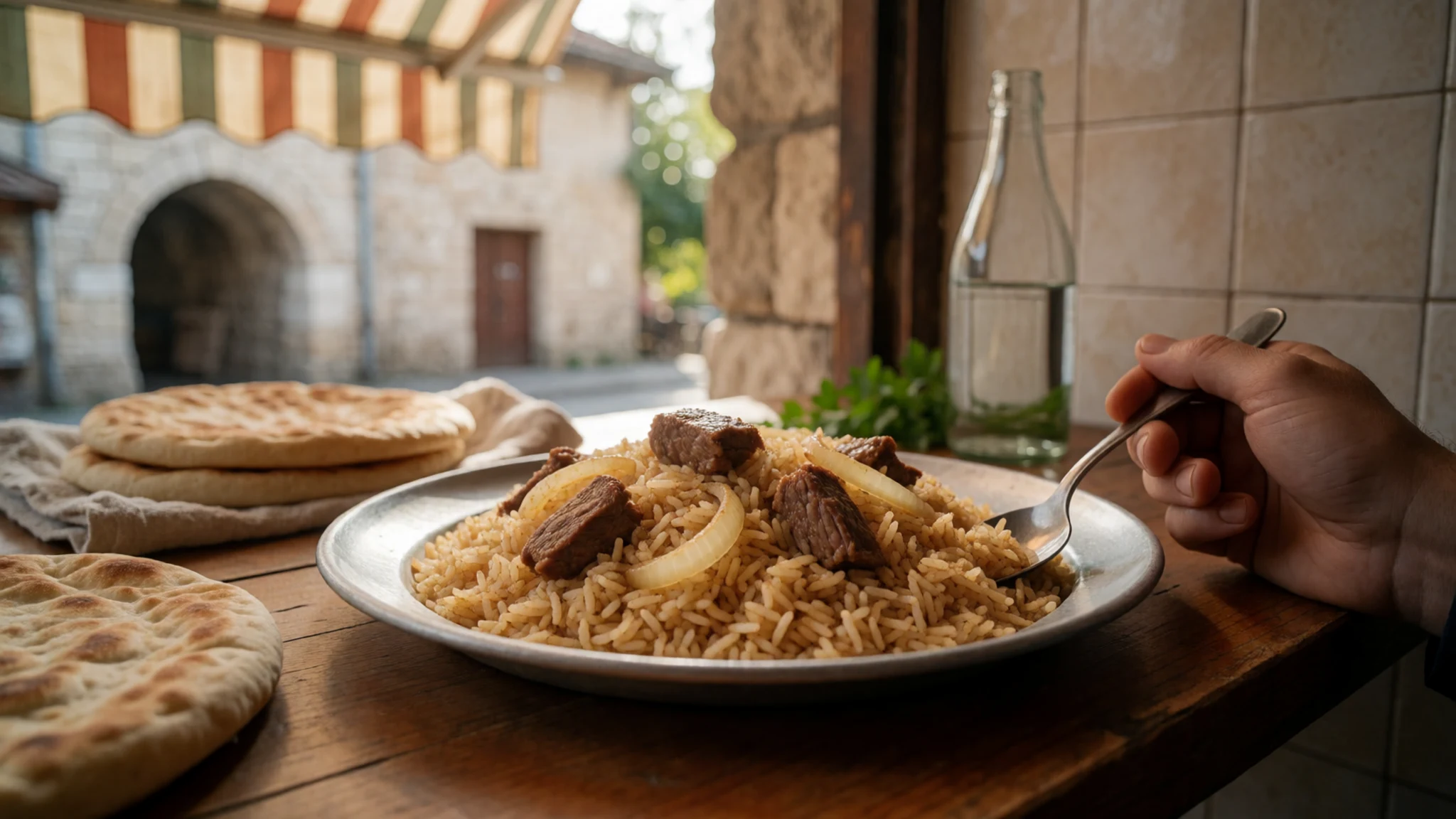
- Yantyk — Local bakeries and family-run eateries
A baked pastry, often filled with minced meat and onion, which makes a portable lunch. The dough is thicker than in chiburekki and the flavour is milder and more savoury.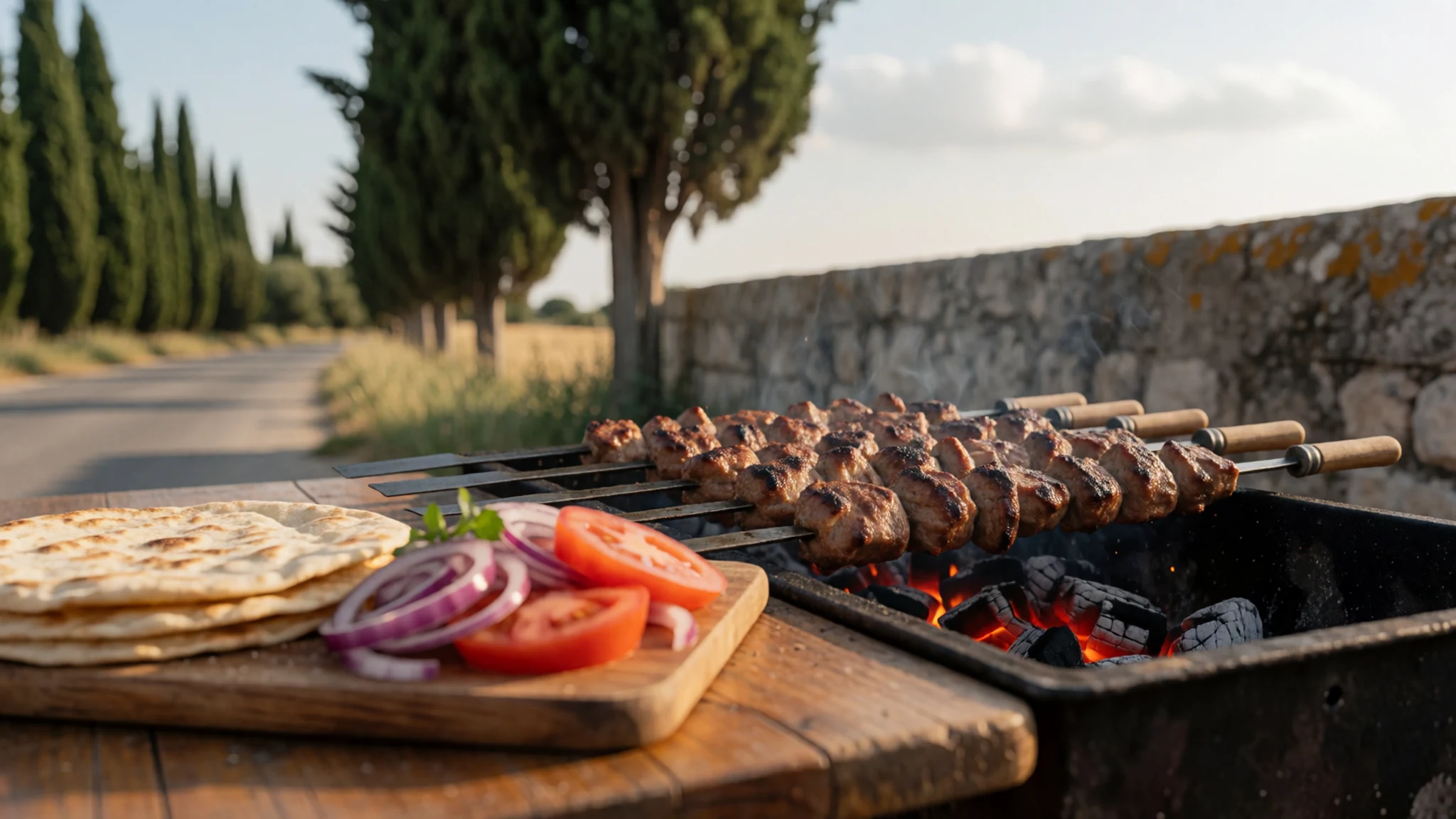
- Shurpa — Family-run restaurants and small eateries
A meat and vegetable soup, usually lamb, seasoned with herbs and eaten with bread. It is a warming choice outside summer and a good order in a home-style eatery. - Crimean Tatar plov — Eateries serving Crimean Tatar cooking, and festival tables
A rice dish with meat, onions and carrots, cooked slowly so the grains take on the flavour of the stock. Portions are generous, and it is usually served for gatherings and celebrations. - Baklava and sweet pastries — Bakeries and market sweet stalls in the town and nearby towns
Layered pastry with nuts and syrup, reflecting the Turkic and Ottoman links of the cuisine. Pair a piece with strong tea or coffee after a walk around the mosque.
Plan it
Best time. May–June and September–October, when it is warm without the heat of high summer, and the light is good for photographing pale stone. Winters are cool and damp.
How long. 1
Getting there. Staryi Krym is inland in eastern Crimea, reached by road from the coastal town of Feodosia or from elsewhere on the peninsula. Travel to Crimea is complicated by its disputed status and by current restrictions, so check your government's travel advice and the transport situation before planning anything. The UK Foreign Office, for example, advises against travel there.
Budget. low
Tips
- Check current official travel advice, insurance cover and entry rules before planning
- Visit in the morning, when it is cooler and the light is softest
- Carry cash, because small eateries and market stalls may not take cards
- Bring water and a light scarf or shawl, as shade is limited
- Check the mosque's opening arrangements locally, as prayer times affect access
Etiquette
- Remove shoes at the prayer hall door and dress modestly, with shoulders and knees covered
- Do not photograph worshippers without asking, and keep voices low
Nearby
Sources
- Wikidata Q7116539 (CC0)
- Wikipedia: Ozbek Han Mosque (rev 1367272405) (CC BY-SA 4.0)
- Piotr Matyga, Staryi Krym Ozbek Han Mosque, via Wikimedia Commons (CC BY-SA 4.0)
- Roman.alieiev, Madrassa (1332), Eski Kirim, via Wikimedia Commons (CC BY 3.0)
- Klymenkoy, photo 06221, via Wikimedia Commons (CC BY 3.0)
- Klymenkoy, photo 06222, via Wikimedia Commons (CC BY 3.0)
- Klymenkoy, photo 06226, via Wikimedia Commons (CC BY 3.0)
- Klymenkoy, photo 06227, via Wikimedia Commons (CC BY 3.0)
- Klymenkoy, photo 06231, via Wikimedia Commons (CC BY 3.0)
- Klymenkoy, photo 06232, via Wikimedia Commons (CC BY 3.0)
- Wikivoyage (CC BY-SA 4.0)


