Khotyn Fortress
Khotyn Fortress, Ukraine
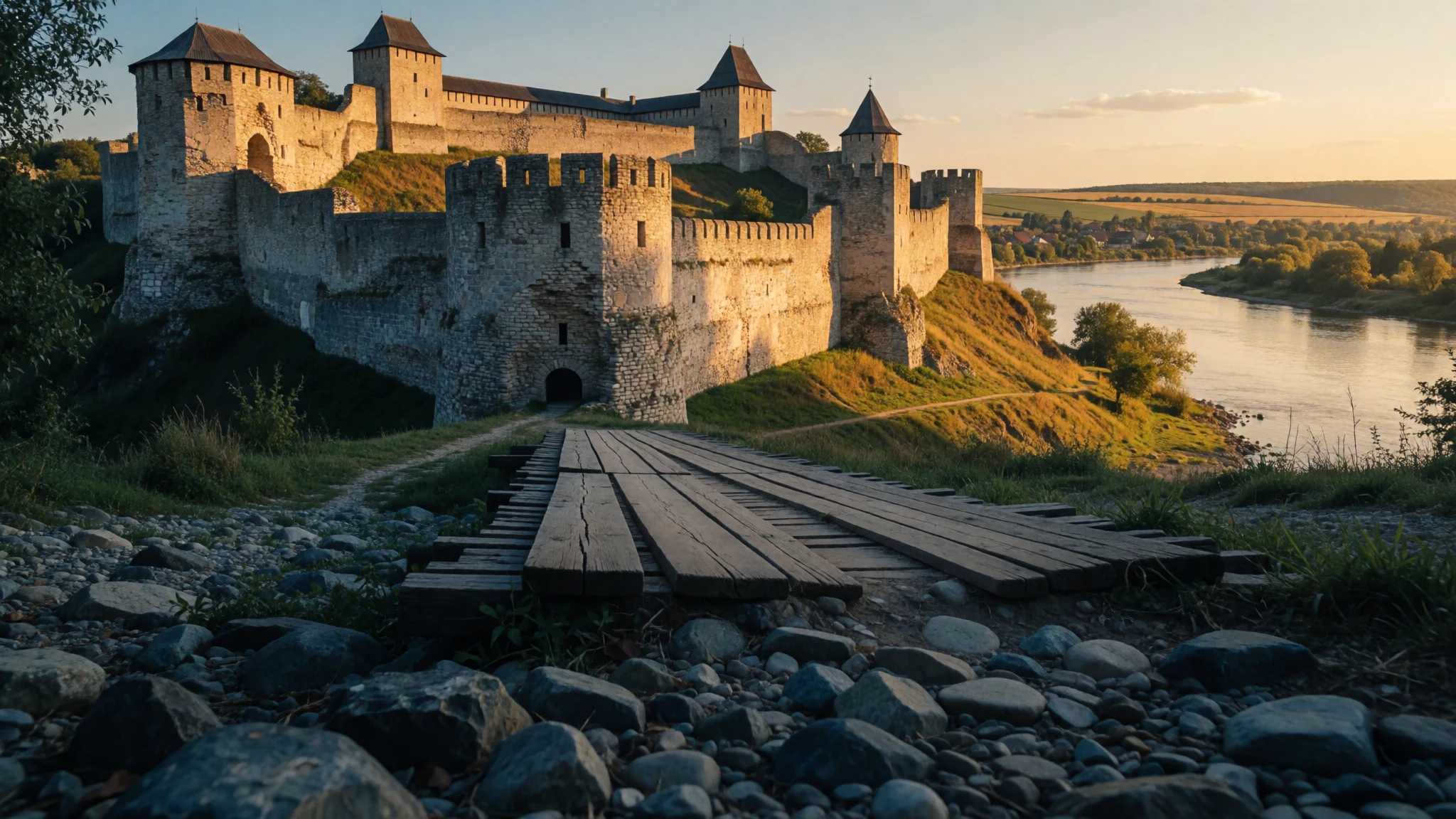
Khotyn Fortress is a river-cliff stronghold in western Ukraine where centuries of rival rulers left their repairs in one great sweep of stone.
The place
Khotyn Fortress stands on the high right bank of the Dniester in Khotyn, one of the larger cities in Chernivtsi Oblast, in southwestern Ukraine. The land belongs to the historical region of northern Bessarabia, and the river below has long served as a frontier between rival powers. The fortress has a name in every language of its past: Хотинська фортеця in Ukrainian, Cetatea Hotinului in Romanian, twierdza w Chocimiu in Polish and Hotin Kalesi in Turkish. Each form points to a different owner. The complex is a cluster of masonry: tall curtain walls, towers at the angles, a raised inner courtyard and vaulted cellars beneath it. It reads less like a single castle than a stack of rebuildings, shaped by Rus', Galician, Genoese, Moldavian, Ottoman, Habsburg and Russian hands. The facts record 1325 as its founding date, though earthworks and timber defences stood on the spot before any stone. From the approach road the fortress rises over the valley with the town small beneath it, and from the walls the Dniester bends away through farmland and low hills. The setting explains the purpose. This was a crossing point on trade routes linking Scandinavia and Kyiv with the Black Sea coast, and whoever held the cliff watched the traffic. Today Khotyn is a busy regional centre, with a lively town centre, a riverside and the fortress as the reason for most visits. Kamianets-Podilskyi, with its own castle, lies nearby, and the two are often paired on a western Ukrainian trip.
Its story
Khotyn Fortress began as an earth-and-timber border post of Kievan Rus', raised in the tenth century above a river crossing on the old route between Scandinavia and the Greek world. In the centuries that followed it passed between neighbouring powers: the Principality of Terebovlia, then Halych, then the Kingdom of Galicia–Volhynia. In the thirteenth century Prince Danylo of Halych and his son Lev gave it a stone wall and a ditch, and Genoese builders are credited with further work. Moldavia took control in the fourteenth century, and under Alexander the Good and later Stephen the Great the fortress was rebuilt into roughly the form that survives: thick walls, three added towers, a courtyard raised on fill, and deep cellars for the garrison. Later centuries brought Ottoman, Polish and Habsburg commanders, and then Russian ones. An anonymous plate shows the battle of 1673 on the ground beneath the walls, and a painting records a Russian–Austrian siege in 1788. After the Second World War began, the Soviet Union occupied the region, and today the fortress lies in Ukraine. The pattern is of a place no ruler could ignore, because of the river crossing it commanded. Each new owner repaired what the last had broken, which is why the masonry carries so many different hands, and why guidebook dates for individual walls are often hedged.
What to see
- The outer walls — Fortress perimeter
The curtain walls are the first thing met on arrival, and their scale is the point. Thick masonry climbs from the ridge above the river, with towers set at intervals. A slow walk round the outside shows how little cover an attacker had, and how many centuries of repair patch the weathered stone.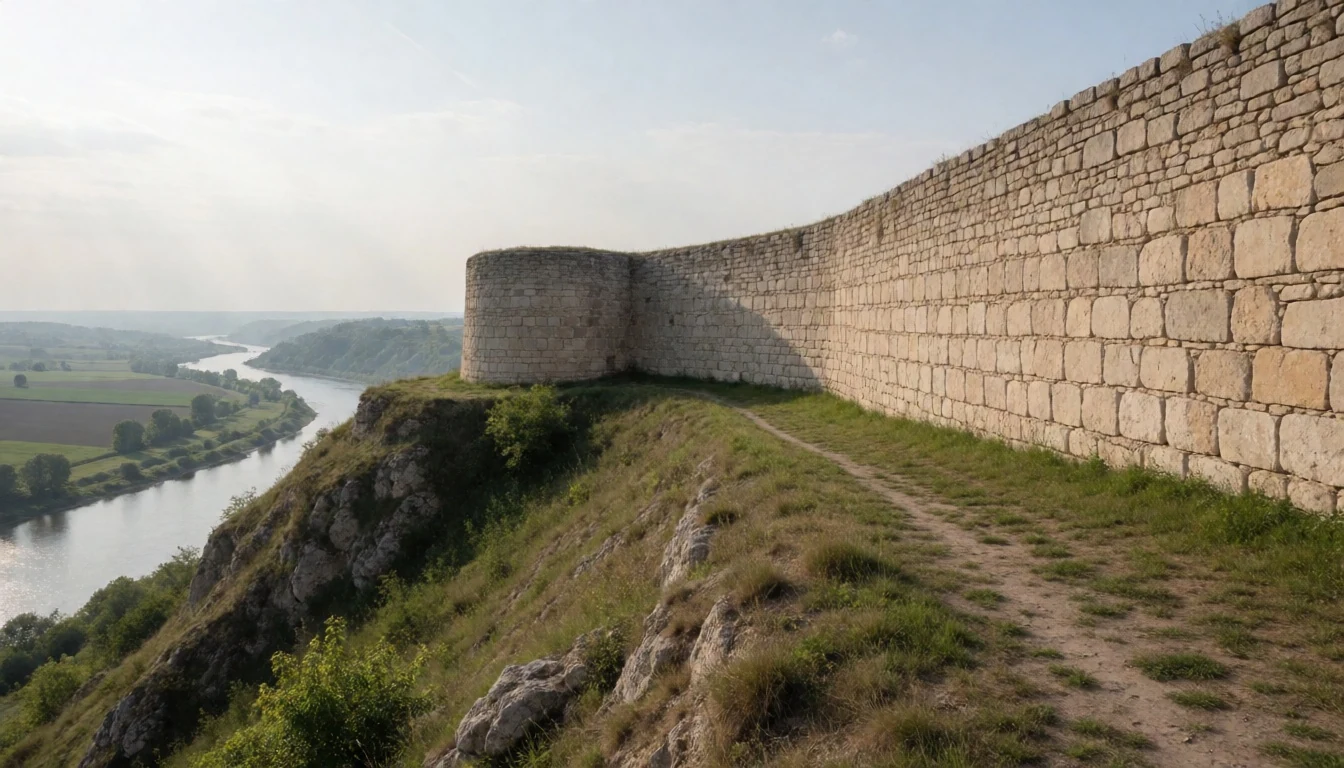
- The inner courtyard — Inside the main gate
The courtyard sits on built-up ground inside the walls and was divided historically between a princely side and quarters for soldiers. Open paving and grass make it a good place to get oriented, with stairways up to the wall-walks. It is a sheltered spot on a windy day, and busy with school groups in term time.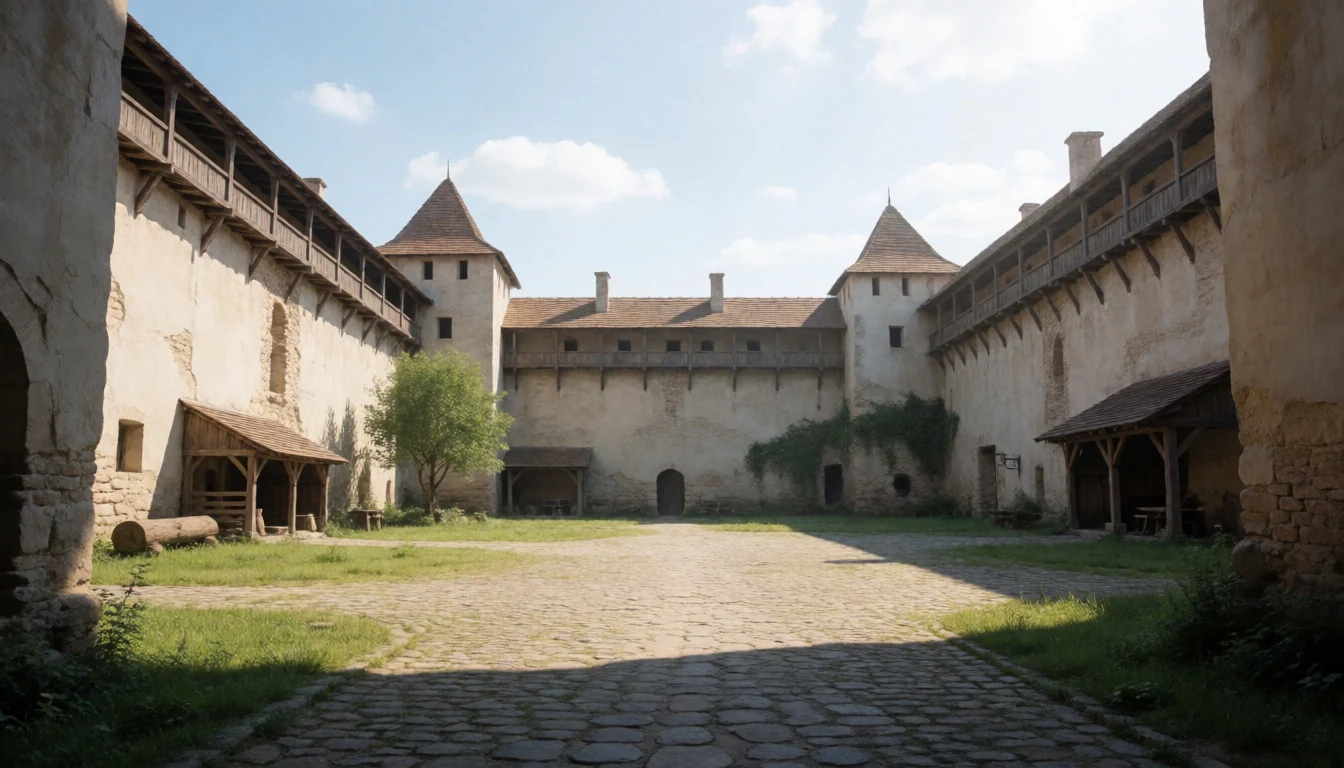
- Ramparts and towers — Upper walls
Climbing onto the ramparts gives the long view over the Dniester, the town roofs and the farmland beyond. The three towers added in the Moldavian rebuilding mark the main angles. Steps are steep and worn, and railings are sparse in places, so footing matters more than camera angles.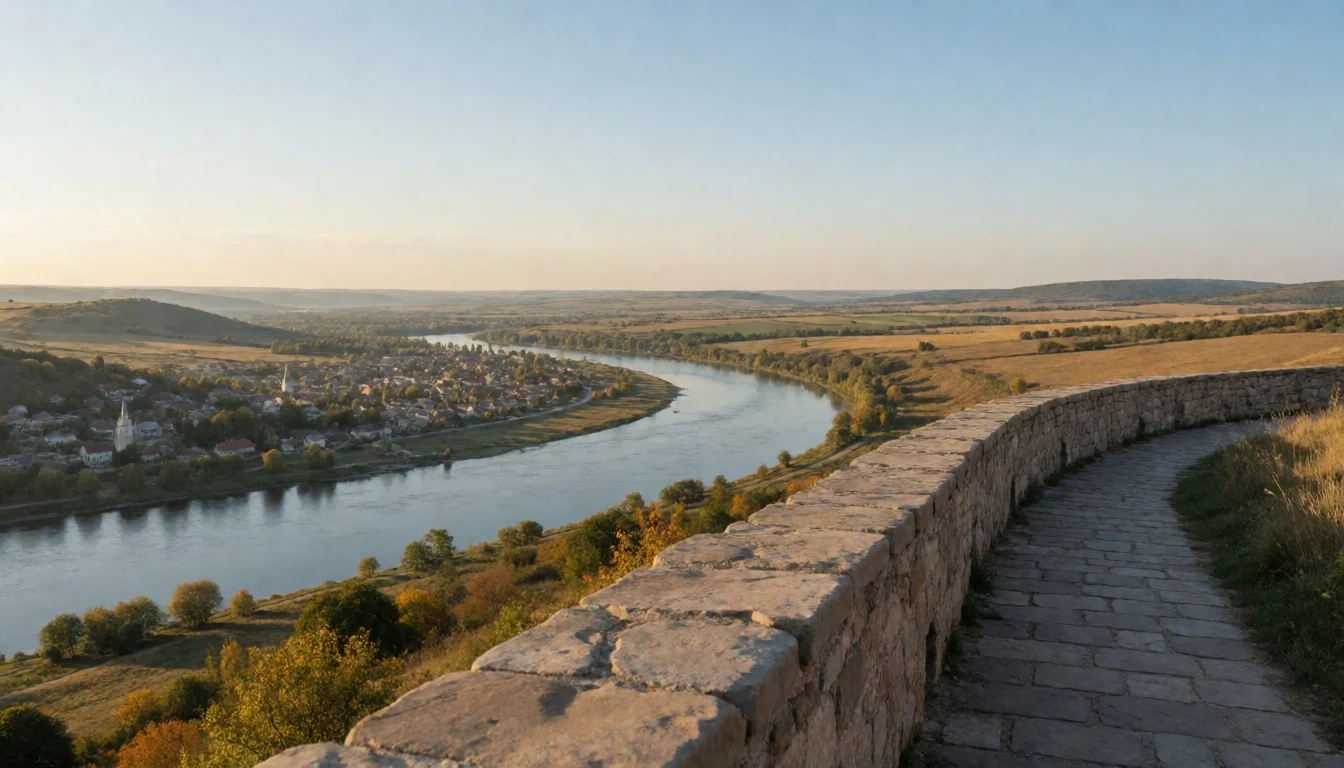
- Cellars and exhibition rooms — Beneath the courtyard
Deep vaulted cellars once housed troops and now hold displays of weapons, models and period objects in places. They stay cool in summer and damp in autumn. Lighting can be dim, so a phone torch helps. Which rooms are open varies, so check the official site before relying on them.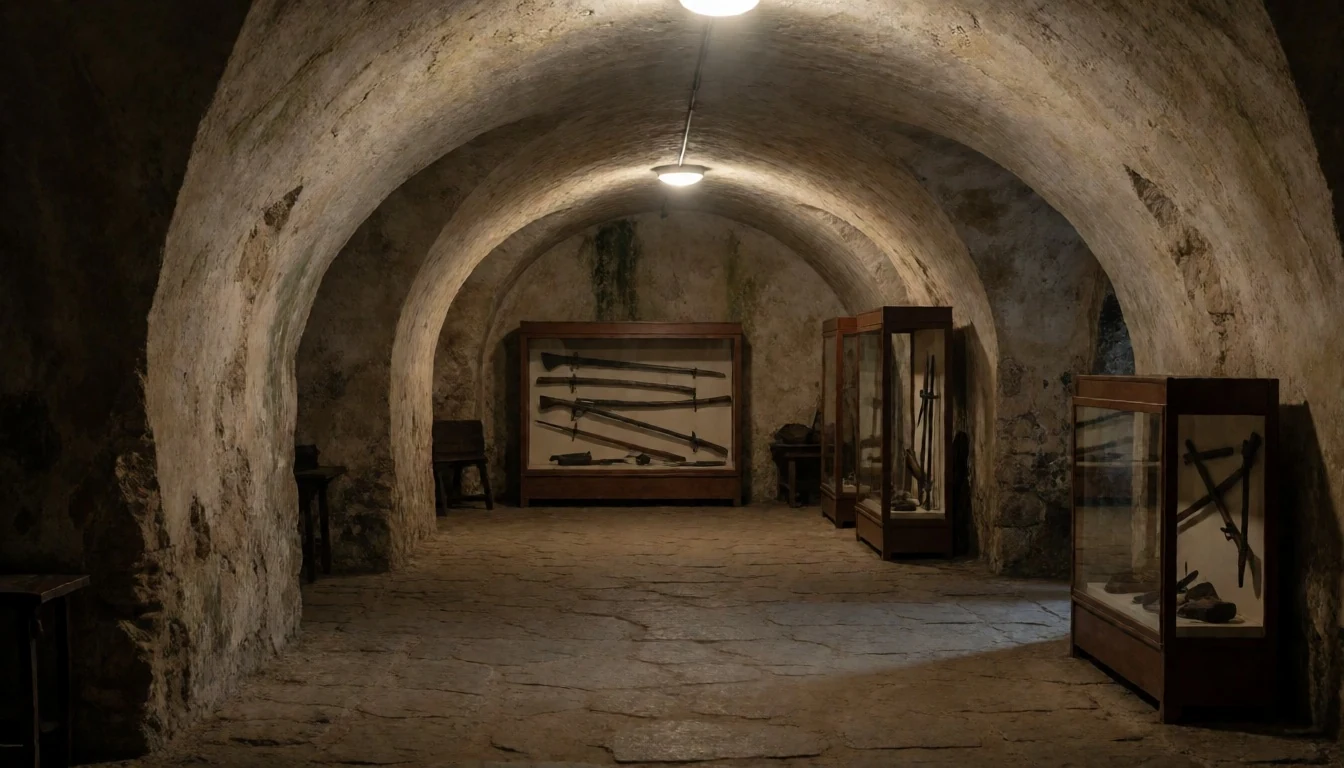
- The Dniester bank at dusk — River below the fortress
Below the fortress the river bank gives the view most photographs use, with the walls stacked above the water. Allow time for a walk along the shore, especially in the evening when low light turns the stone warm. The dusk and moonlit pictures in the reference set show why people linger.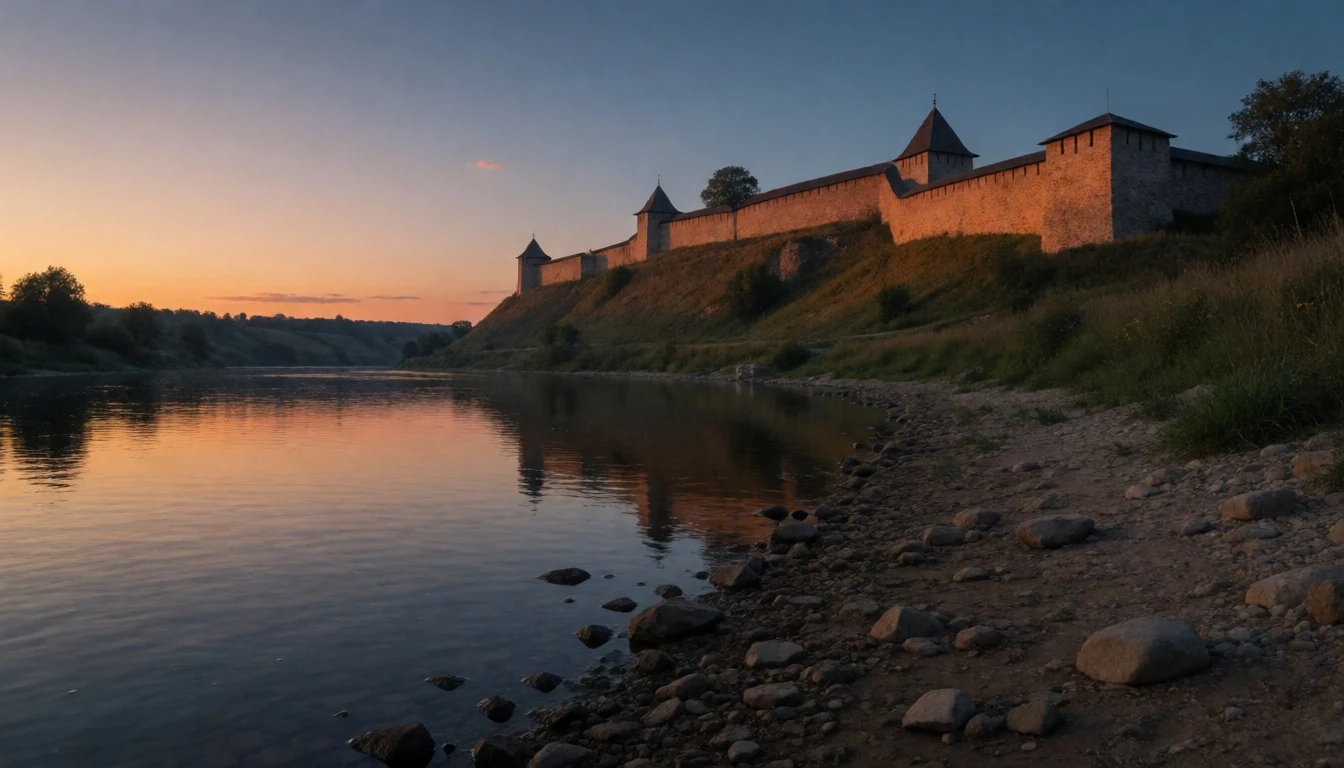
Culture
Khotyn Fortress sits in a borderland where Ukrainian, Romanian, Polish and Turkish names for the same walls tell of overlapping histories. The town today is Ukrainian-speaking, but Bukovina and Bessarabia to the south have long had mixed communities, with Romanian and Moldovan speakers, Jewish heritage and both Orthodox and Catholic parishes. Local pride leans on the fortress as a symbol of endurance, and it appears on school trips, in folk festivals and on souvenir stalls. Craft fairs and historical re-enactments sometimes take place inside the walls, so it is worth checking the official site for current events. Since Russia's full-scale invasion, the war has coloured public life across Ukraine. Air-raid alerts, volunteer collection tins, flags and memorial corners are part of the everyday scene, and many local people have relatives serving or displaced. Visitors usually find people welcoming and willing to talk, though it is kinder to let a host raise politics first. Religious life is strong in the region, with village chapels, roadside crosses and embroidered cloths on icons all common. Meals are social and generous, and refusing a second helping can take some effort. Keep your voice low and cover your shoulders if you step into a working church nearby, and ask before photographing soldiers, checkpoints or people in uniform.
What to wear
Around Khotyn Fortress, traditional dress means the vyshyvanka, an embroidered shirt or blouse in linen or cotton, stitched in red and black or in coloured thread, with patterns that vary from village to village. In Bukovina and the Carpathian foothills, men and women also wear sleeveless sheepskin waistcoats, and woven wool belts and aprons complete festive outfits. The Romanian-style ie blouse is also seen in the wider borderland. These clothes appear at weddings, church holidays, folk festivals and on Vyshyvanka Day in May, when many people wear embroidery to work or school. Everyday dress now is plain and European: jeans, trainers, jackets, and fleeces against the wind off the river. Young people favour streetwear, and older women often wear headscarves in villages and churches. Embroidered details sometimes show up on a collar or cuff as a quiet national signal. A visitor should plan for walking on uneven stone and steep steps, so closed shoes with good grip matter far more than style. Bring layers, because the cliff is exposed and the wind can bite even in sunshine, plus a hat and sunscreen in summer and waterproofs in spring and autumn. Cover shoulders and knees for churches and chapels, and carry a light scarf for the purpose. Shorts and sandals are fine in town in warm weather but awkward on the ramparts.
What to eat
- Borshch — Home-style cafés and canteens in the town centre
Beetroot soup, usually with cabbage, potato and often meat, served with sour cream and garlic buns called pampushky. Every household has its own version, and it turns up at eateries around the town. A bowl is a sensible lunch after climbing the fortress walls.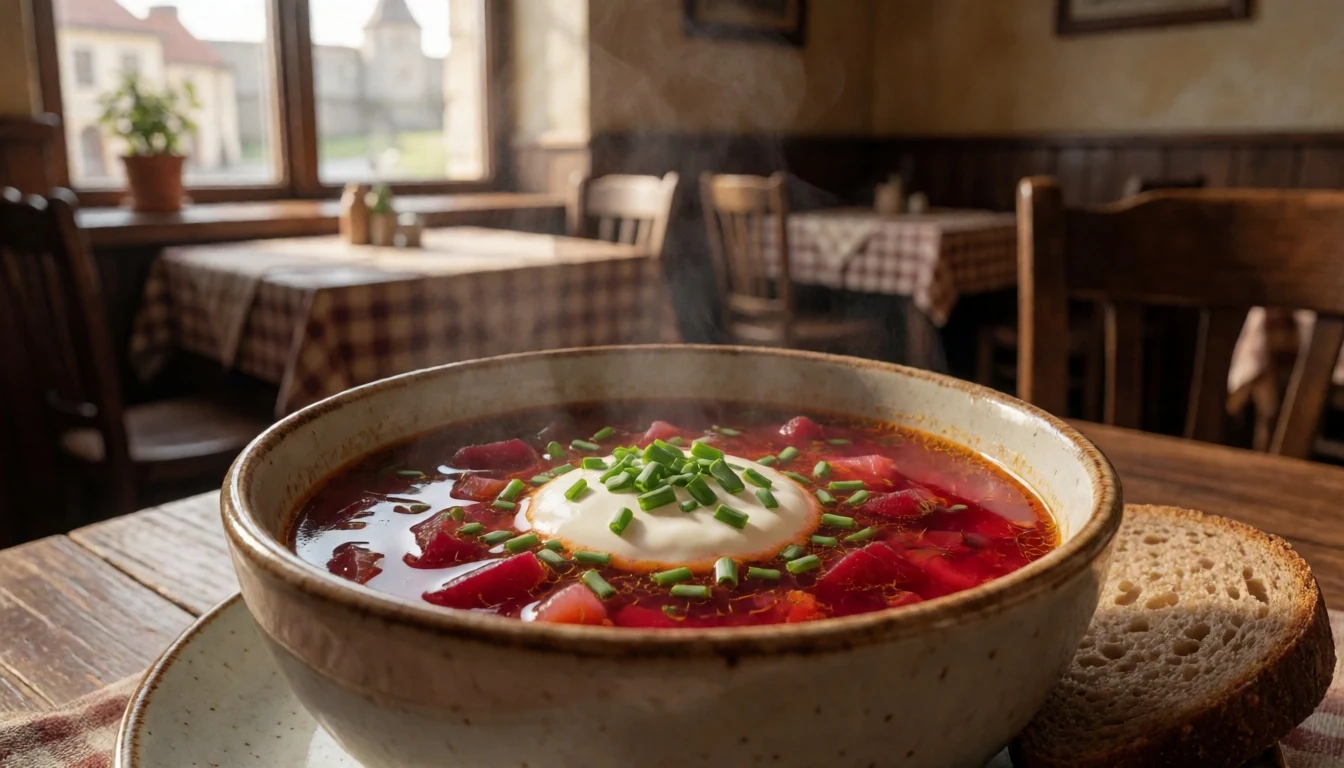
- Varenyky — Home-style canteens and café tables in the town centre
Dumplings of unleavened dough filled with potato, cheese, cabbage, mushrooms or cherries, boiled and served with sour cream or fried onion. Savoury and sweet versions are both common. Look for them at home-style canteens and café tables in the town centre, often ordered by the plate to share.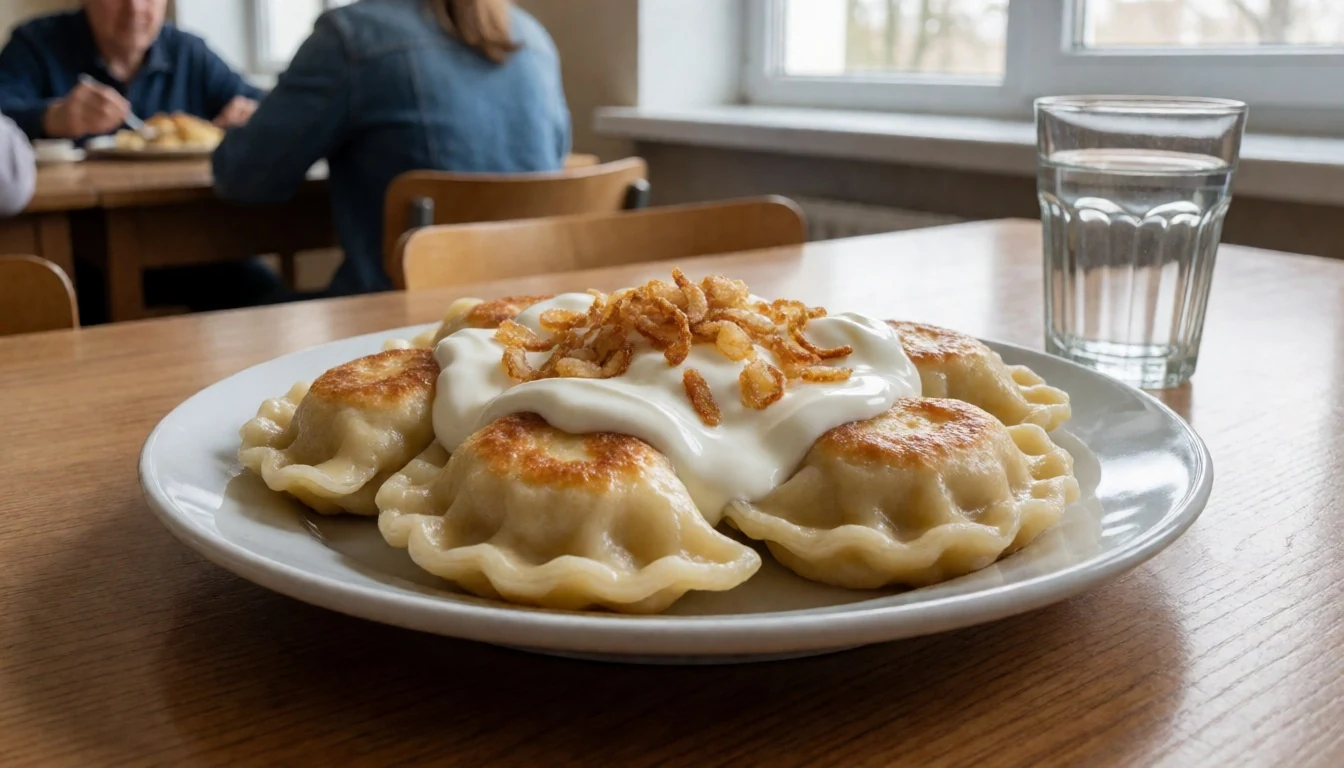
- Banosh — Restaurants serving western Ukrainian cooking
A Carpathian dish of cornmeal cooked in cream until thick, topped with sheep's cheese and crisp bacon pieces or mushrooms. Heavy and filling, it suits the cooler months. Look for it at restaurants that lean towards western Ukrainian cooking rather than at the simplest cafés. - Deruny — Casual cafés and market food stalls
Crisp potato pancakes made from grated potato and onion, fried until golden and served hot with sour cream. Some versions come with mushrooms or minced meat on top. They are modest, filling and found at casual cafés and market food stalls across the region. - Holubtsi — Traditional restaurants and family-run eateries
Cabbage leaves wrapped around rice and minced meat, stewed in tomato or sour cream sauce. A Sunday-lunch staple in many Ukrainian homes, they also feature on menus at traditional restaurants in town. Ask whether the filling is meat or buckwheat, as meatless versions exist.
Plan it
Best time. April–May and October for the most comfortable weather and green or golden river valleys; June–September can be very hot on the open walls, with June the wettest month, and winter is cold with ice on the steps.
How long. 1–2
Getting there. Air service to Ukraine has been disrupted, so check what is currently running before planning. Most visitors come overland, by train to Chernivtsi or Kamianets-Podilskyi, then a bus or minibus on to Khotyn; the fortress is a short walk or taxi ride from the town centre.
Budget. low
Tips
- Check your government's current travel advice for Ukraine before booking anything
- Arrive early or late in the day for softer light and fewer school groups
- Carry some cash for small cafés and souvenir stalls, as card use varies
- Wear shoes with grip, since the stone steps and ramparts are uneven and can be slippery when wet
- Check the official site for opening arrangements and events, as they change
Etiquette
- Cover shoulders and keep voices low in any working church or chapel
- Ask before photographing people, soldiers or checkpoints
- Follow barriers and signs on the ramparts, as some stretches are fragile
Nearby
Sources
- Wikidata Q141012 (CC0)
- Wikipedia: Khotyn Fortress (rev 1376817711) (CC BY-SA 4.0)
- Wikivoyage: Khotyn (CC BY-SA 4.0)
- Photo: Khotyn Fortress, Rbrechko (CC BY-SA 4.0)
- Photo: Stronghold in Khotyn, Palladinus (CC BY-SA 2.5)
- Photo: Siege of Khotyn in 1788, Carl Shulz (Public domain)
- Photo: Khotyn Fortress by full moon, Ryzhkov Sergey (CC BY-SA 4.0)
- Photo: Fortress in the evening light, Moahim (CC BY-SA 4.0)
- Photo: Fortress of Chocim (Khotyn) from a drone, PL-UA History by drone (CC BY 3.0)
- Photo: Defence walls, Ogre (Public domain)
- Photo: Battle of Khotyn in 1673, anonymous plate (Public domain)


