Chernivtsi
Chernivtsi, Ukraine
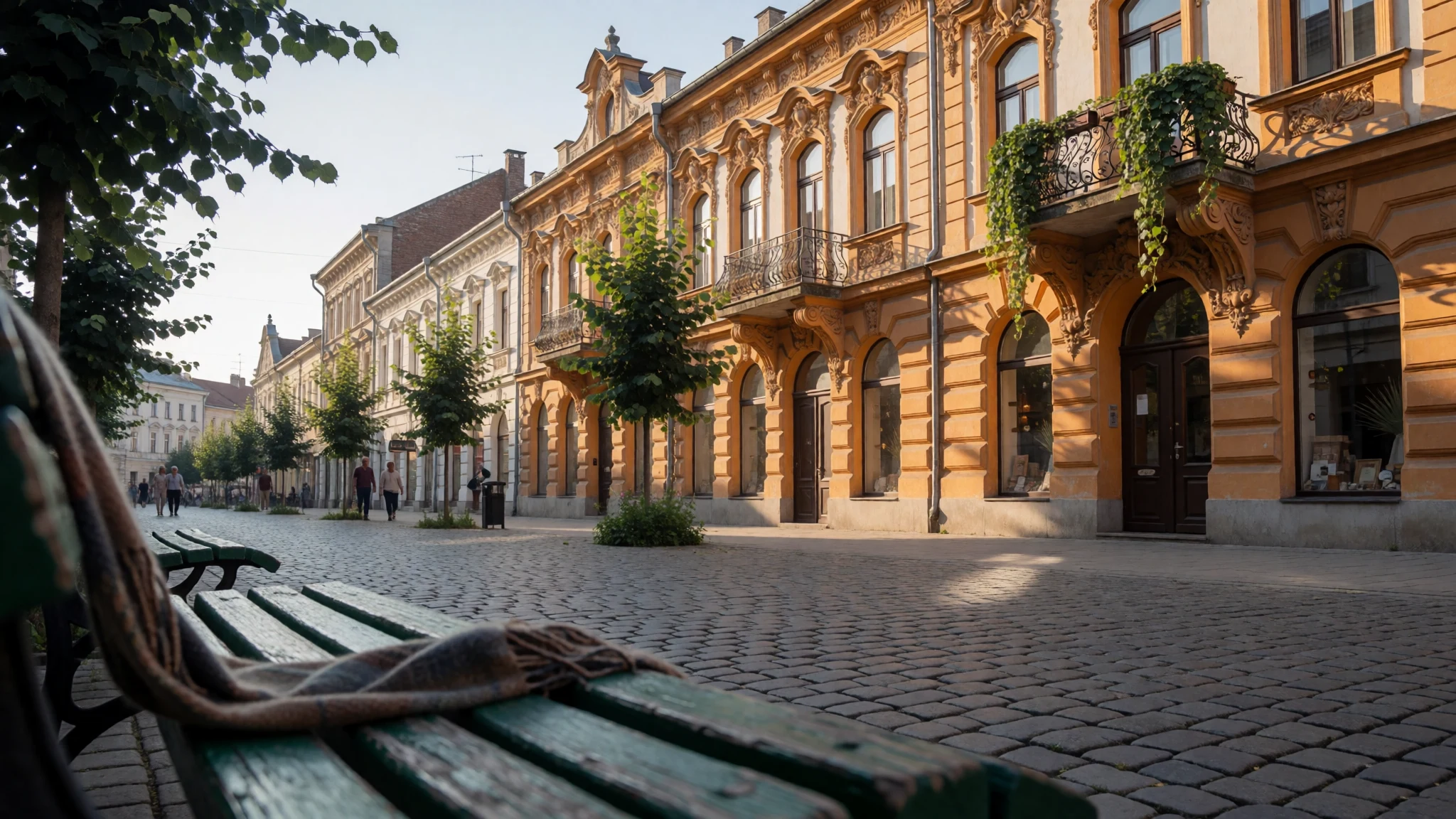
Discover a multicultural gem of western Ukraine where grand Habsburg architecture meets centuries of shared Central European heritage along the Prut River.
The place
Chernivtsi stretches across the upper course of the Prut River in the southwestern corner of Ukraine, serving as the historical heart of the Bukovina region. Home to a population of about 265,000 people at an elevation of roughly 248 metres, the city occupies a gentle landscape shaped by centuries of shifting borders and cultural crossroads. Visitors walking through the historic centre find themselves surrounded by dense urban layers of nineteenth-century European design, grand squares, and quiet courtyards that recall an era when intellectuals, merchants, and artists mingled freely across ethnic lines. Unlike cities flattened entirely by modern redevelopment, Chernivtsi has preserved its intricate streetscapes, where former Austrian administrative offices stand alongside intimate coffee houses and shaded pavements.
The urban layout flows naturally from the hills down toward the riverbanks, framed by parks and residential quarters that blend neoclassical, baroque, and secessionist styles. The atmosphere moves at a deliberate pace, encouraging extended strolls down pedestrian avenues where stone facades are decorated with reliefs, wrought-iron balconies, and sculpted portals. While municipal life hums with contemporary commerce and small enterprises, the architectural dignity of the old administrative centre remains untouched, offering a profound sense of place that feels distinct from the rest of the country. It is a city designed for wandering without a strict itinerary, where every corner reveals another polished doorway, an ornate window frame, or a quiet square shaded by mature lime trees.
Its story
The recorded history of Chernivtsi begins in the early fifteenth century, with the earliest surviving document dating to 1408, when the settlement functioned as a town within the Principality of Moldavia. Long before that administrative milestone, however, the surrounding land sustained human communities stretching back to the Neolithic era, leaving behind artifacts from the Cucuteni-Trypillian and Corded Ware cultures, alongside later Bronze and Iron Age relics. Initially established as a defensive fortification on the frontier, the town evolved into the regional centre of Bukovina by the late fifteenth century.
Over the subsequent centuries, sovereignty shifted frequently. Moldavian control yielded in turn to Polish suzerainty, Ottoman dominance, and eventually the Habsburg monarchy in 1774, following the Russo-Turkish War. Under Austrian rule, the city experienced a golden age of civic expansion, transforming into a vibrant provincial capital characterized by architectural ambition and cultural pluralism. The twentieth century brought immense turbulence, with rule passing through the hands of the West Ukrainian People's Republic, the Kingdom of Romania, the Soviet Union, and Nazi occupation before integration into the Ukrainian Soviet Socialist Republic and, finally, independent Ukraine in 1991. Through every regime, Chernivtsi retained an innate civic resilience, absorbing diverse influences into a singular urban identity that bridges Eastern and Central Europe.
What to see
- Chernivtsi National University
This sprawling historicist complex served as the palace of the Governor of Bukovina before gaining recognition as a UNESCO World Heritage site. Built during the nineteenth century, its intricate brickwork, tiled roofs, and grand courtyards showcase exceptional craftsmanship. - German House
Constructed in the early twentieth century between 1908 and 1910, this cultural hub historically concentrated the social and artistic activities of the city's German-speaking community. Although demographic shifts altered its makeup, the building remains an architectural landmark of local heritage. - Main (Central) Square Complex
Serving as the civic heart of the city for nearly two centuries, the downtown square brings together the historic town hall, the Museum of Arts, the monument to Taras Shevchenko, and the old post office in one cohesive architectural ensemble. - Turetska Krynytsia Square
Located just outside the historic city walls, this atmospheric public space preserves the historical footprint of the Turkish community that inhabited the area in the seventeenth century, offering shaded paths and quiet resting spots.
Culture
For centuries, Chernivtsi developed as a multicultural melting pot rooted in an atmosphere of mutual tolerance, fostering artists, writers, and institutions that crossed ethnic and linguistic boundaries. The city sustains a rich cultural infrastructure, maintaining multiple theatres, a philharmonic hall, an organ hall housed within a former Armenian Catholic Church, numerous museums, cinemas, libraries, and fine arts schools. Religious life is equally diverse, featuring more than a hundred active religious organizations and diocesan authorities reflecting the area's complex demographic tapestry. Visitors exploring museums, galleries, or places of worship should maintain a quiet, respectful demeanour and dress modestly, particularly inside active churches.
What to wear
Traditional Bukovinian attire features intricate embroidery, woven woollen elements, and regional textile patterns passed down through generations, historically worn during festivals and religious holidays. Today, residents dress in standard contemporary European styles, balancing practical everyday wear with a generally polished appearance when walking through the historic centre. Visitors should pack comfortable walking shoes suitable for uneven cobblestone streets and historic pavements, alongside versatile layers for changing weather. When entering churches or religious sites, shoulders and knees should remain covered as a sign of respect.
What to eat
- Café Français — Central historic district
A charming establishment in the city centre offering classic French cuisine within an authentic continental interior. The menu features rich dishes such as filet mignon paired with gratin dauphinois. - Wine cellar Count Vorontsov — City centre
Set inside nineteenth-century period decor in the very heart of the city, this atmospheric venue provides a relaxed setting for a hearty local meal accompanied by traditional drinks. - Chocolat — Central pedestrian area
A popular spot renowned for preparing extremely thick, rich drinking chocolate, traditionally served alongside a small glass of water to lighten the intensity. - Videnska Kava — Near the central squares
A traditional coffee house offering an extensive selection of coffees, teas, and an impressive counter of freshly prepared desserts in a relaxed salon setting.
Plan it
Best time. May through September offers the most pleasant weather for walking the historic streets, enjoying outdoor cafe terraces, and exploring the surrounding countryside.
How long. 2–3
Getting there. Due to airspace closures, fly into Suceava's Stefan cel Mare International Airport across the border in Romania, then continue onward by bus or train.
Budget. mid
Tips
- Wear sturdy walking shoes to navigate the historic stone pavements comfortably
- Check official websites ahead of time for up-to-date opening hours at university and museum sites
- Carry a mix of local currency and cards for small purchases at cafes and markets
- Allow extra time for overland border transits if arriving from neighbouring Romania
Etiquette
- Dress modestly with covered shoulders and knees when visiting churches
- Speak quietly inside religious buildings and cultural institutions
Nearby
Sources
- Wikidata Q157725 (CC0)
- Wikipedia (CC-BY-SA 4.0)
- Wikivoyage (CC-BY-SA 4.0)