Khan's Palace
Khan's Palace, Ukraine
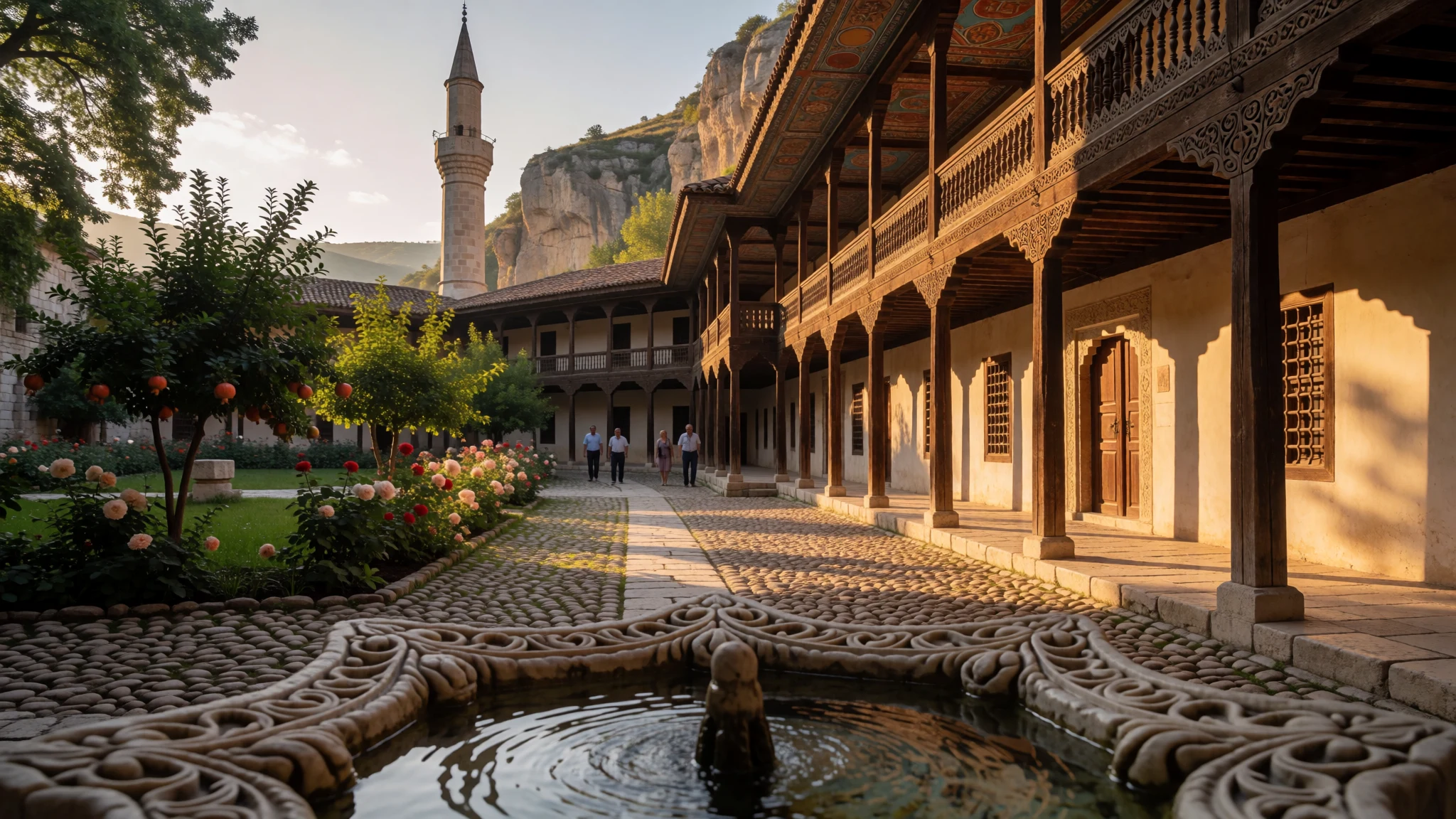
Khan's Palace is a compact, quiet Tatar court of courtyards, a mosque and a fountain, in a valley town that few outsiders reach.
The place
Khan's Palace, called Hansaray in Crimean Tatar, stands in the old quarter of Bakhchysarai, a small town in the foothills of Crimea. It was the residence of the Crimean Khans, and what survives is less one building than a walled compound of courtyards: a mosque, a harem, living quarters, a cemetery and gardens, tucked beside a narrow river valley. Inside, the rooms are furnished to suggest a working court in the Crimean Tatar manner of the sixteenth century, with low divans, carpets, painted ceilings, carved wooden screens and coloured glass. The palace is often named alongside the Alhambra and the sultans' palaces of Istanbul as a Muslim royal residence in Europe, though it is far smaller and much quieter than either. Most visitors come from Russia, Ukraine or Turkey, and the town sees nothing like the crowds of the big heritage cities. Very little English is spoken; Crimean Tatar, Russian or Turkish helps, and a translation app helps more. The compound can be walked in a morning, but the museum rooms, the cemetery and the old streets behind reward a slower pace. Some context matters here: Crimea has been under Russian occupation since the takeover of the peninsula, and that shapes who can reach the palace, how they travel and what is happening to its fabric. Ukraine regards the site as its own heritage. Anyone planning a trip should read their government's travel advice first.
Its story
Khan's Palace grew out of the rise of the Crimean Khanate, a state that split from the Golden Horde, one of the fragments of Genghis Khan's empire, and became independent in the fifteenth century. Its first ruler descended from Genghis Khan, and its first capital was Staryi Krym. The court later settled at Bakhchysarai, which became the political and cultural centre of the Crimean Tatars. In the first half of the sixteenth century the dynasty began building a palace in the valley; the founding is dated to about 1501. Ottoman, Persian and Italian architects are credited with the design and the minarets, which explains the blend of styles. Age and damage meant partial rebuilding, some original buildings did not outlast the eighteenth century, and later structures were added, so the palace is a layered place rather than a pure survival. Its recent history has been painful. A Moscow-based contractor with little conservation experience worked on it in the late 2010s, and reports describe old oak beams swapped for concrete, original tiles, stained glass and a four-sided roof lost, and eighteenth-century murals harmed by a high-pressure water jet. Ukraine protested to UNESCO, since the palace is on its Tentative List. Later, Russian forces replaced a damaged roof and coloured windows with modern ones, which Ukraine describes as part of an assault on its cultural heritage.
What to see
- Northern entrance and courtyards — Old town, Bakhchysarai
The approach to Khan's Palace runs through a gate in the northern wall into a series of courtyards ringed by low, timber-framed buildings with deep eaves. It is worth orienting yourself here before choosing rooms. Guides are usually available in summer in several languages; check the official site for opening arrangements, which change and may be affected by works.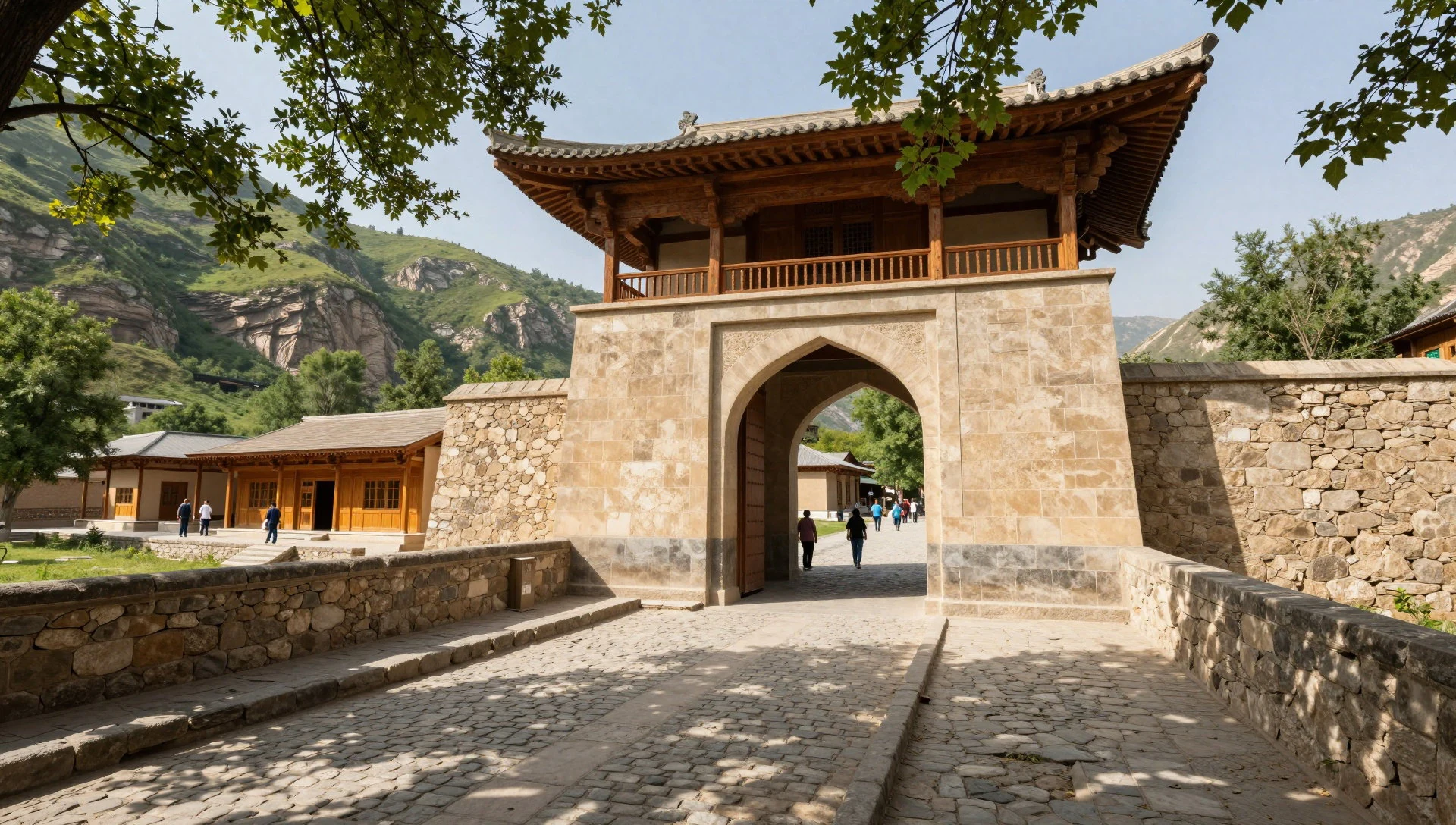
- Fountain of Tears — Inner courtyard of the palace
The Fountain of Tears is a small marble fountain in one of the inner courtyards, where water drips slowly from basin to basin like weeping. Many visitors come mainly for it, partly because Pushkin wrote a poem about it. The courtyard is tiny, so expect a short wait for photographs whenever tour groups arrive.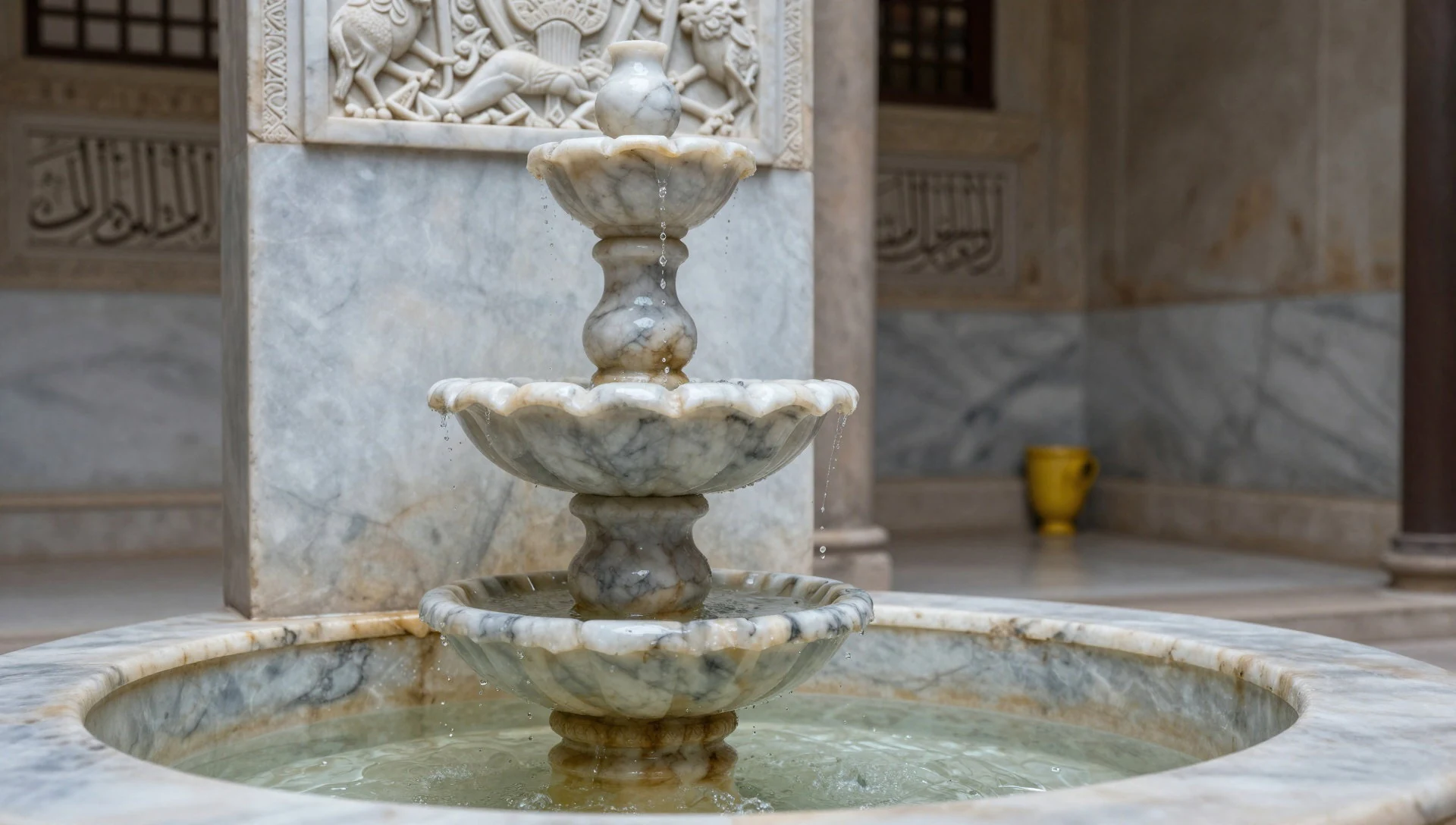
- The Khans' cemetery — Within the palace compound
Inside the palace walls, the Khans' cemetery holds turbaned stone markers and small domed mausoleums of the ruling family, in a shaded corner away from the main courtyards. Old engravings show the burial ground beside the palace, with stones set among trees. Walk slowly and keep voices low; this is a place of burial.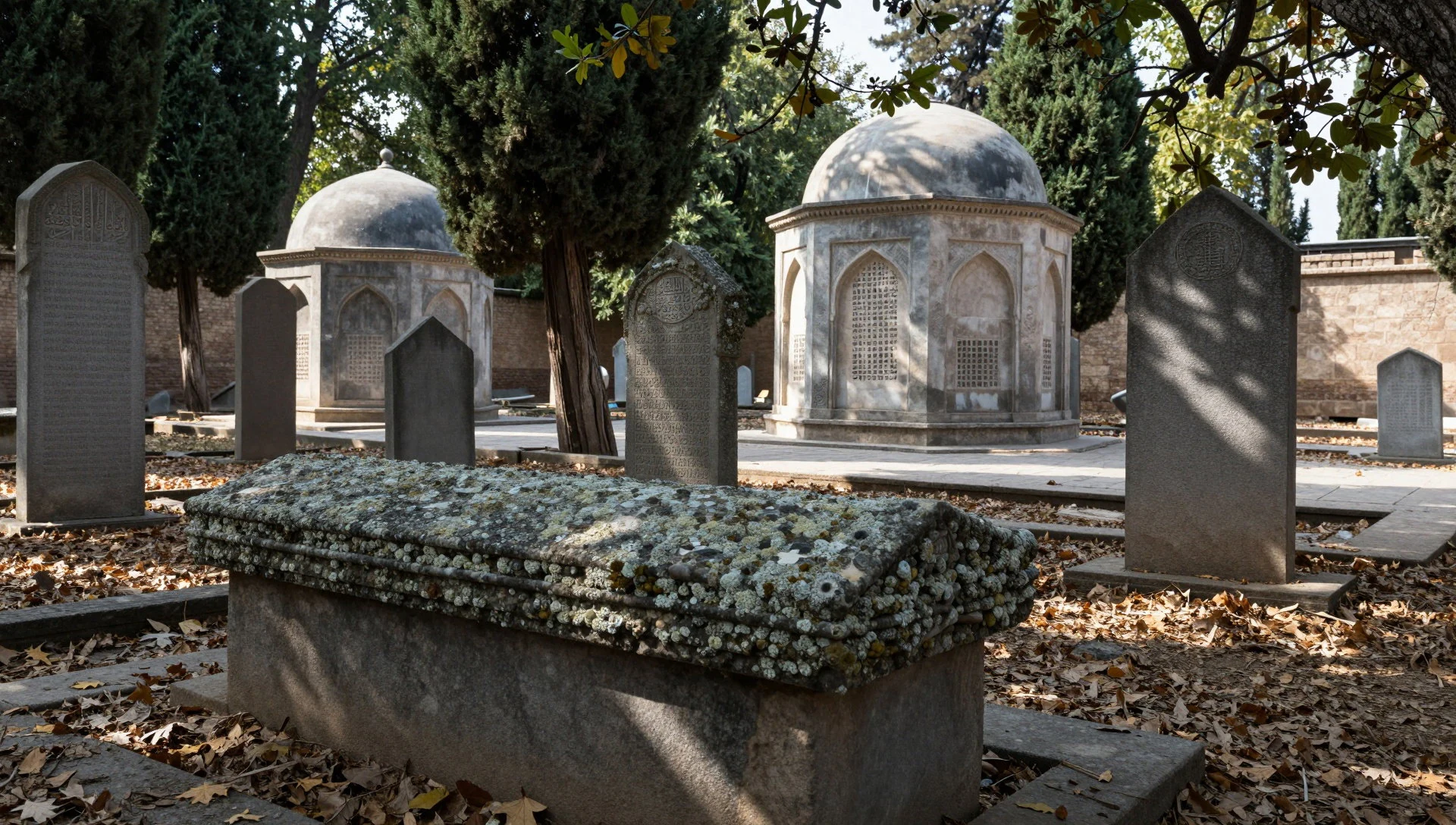
- Palace mosque and mihrab — Within the palace compound
The palace mosque and its slender minaret anchor the compound's religious life. Inside, the carved prayer niche, the mihrab, marks the direction of prayer. The building shows the Ottoman influence in the court's architecture, and the minaret is an easy landmark from the street when finding the entrance.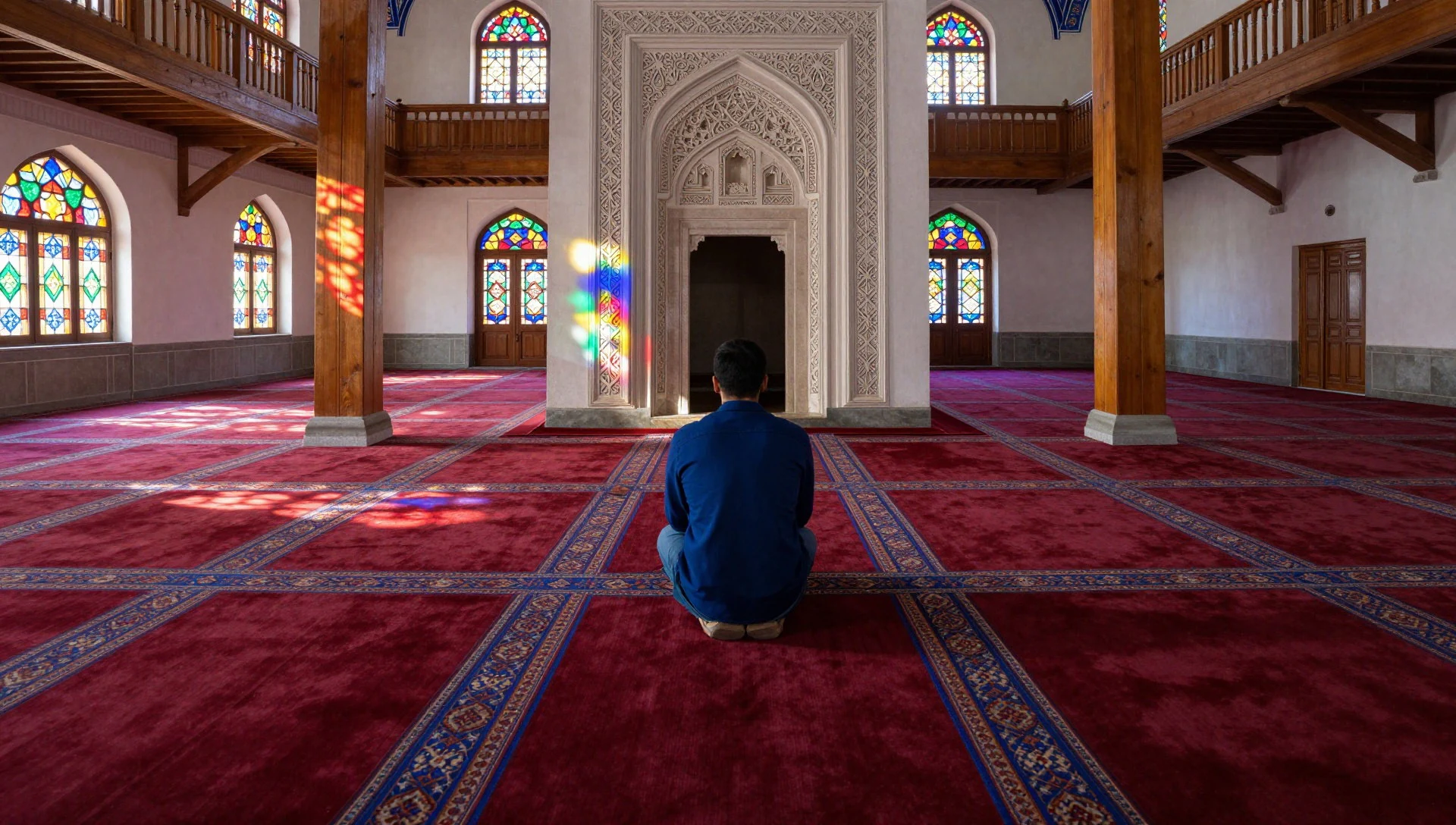
- Living quarters and museum rooms — Palace compound
The living quarters hold the furnished rooms, with low divans, painted ceilings, carved screens and coloured glass, alongside a Crimean Tatar museum, a small art gallery and the Falcon Tower. Take time over the harem rooms. They are small, dim and intimate, quite unlike a grand European state palace.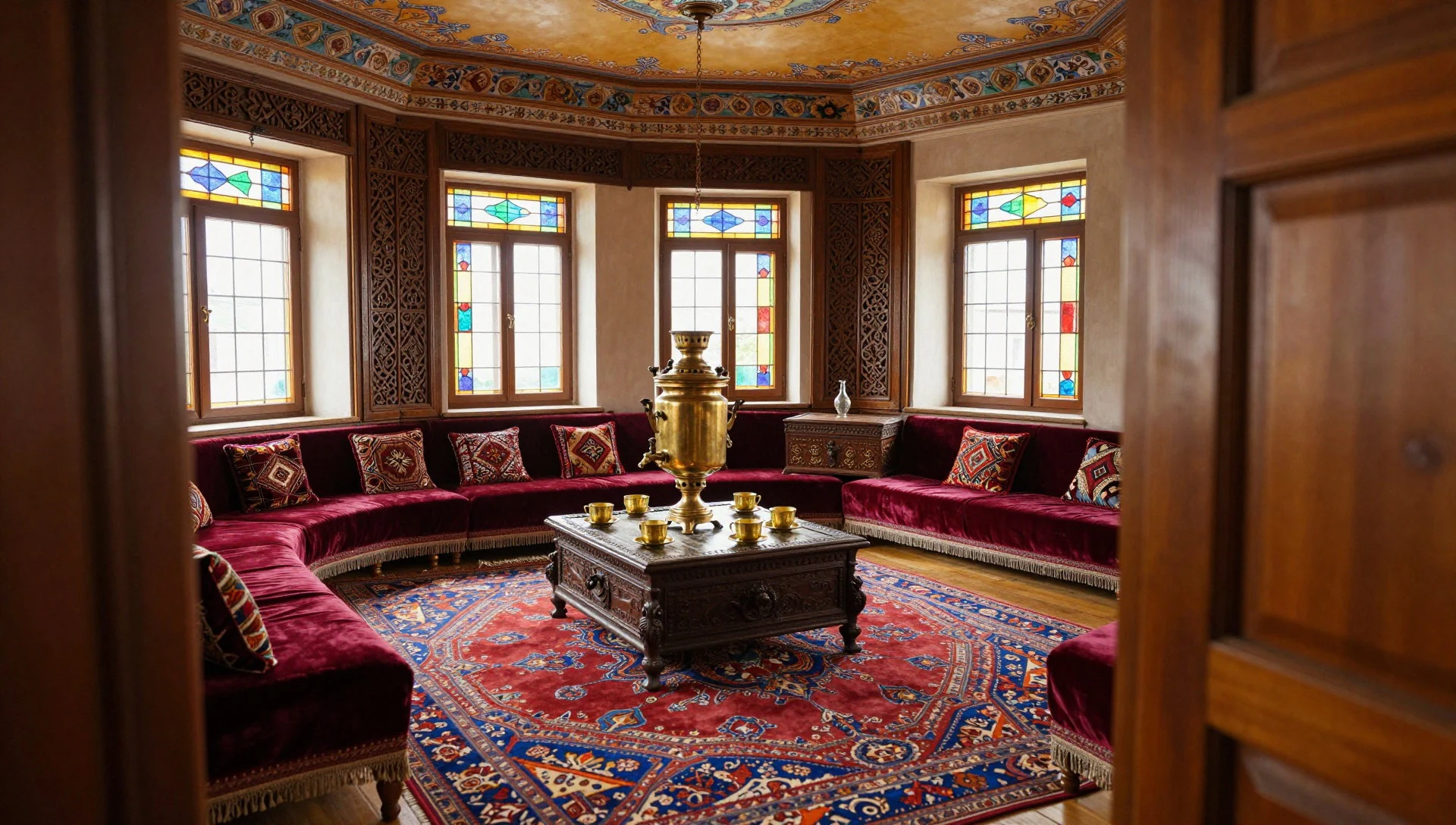
- Uspensky Cave Monastery and Chufut Kale — Valley east of the old town
A short way up the valley from town, the Uspensky Cave Monastery is an Orthodox complex cut into the cliff, with a holy spring whose water is reported to be drinkable. Beyond it, Chufut Kale is a ruined cliff city last lived in by Karaite Jews, with old cemeteries nearby. Wear sturdy shoes; the paths are steep and stony.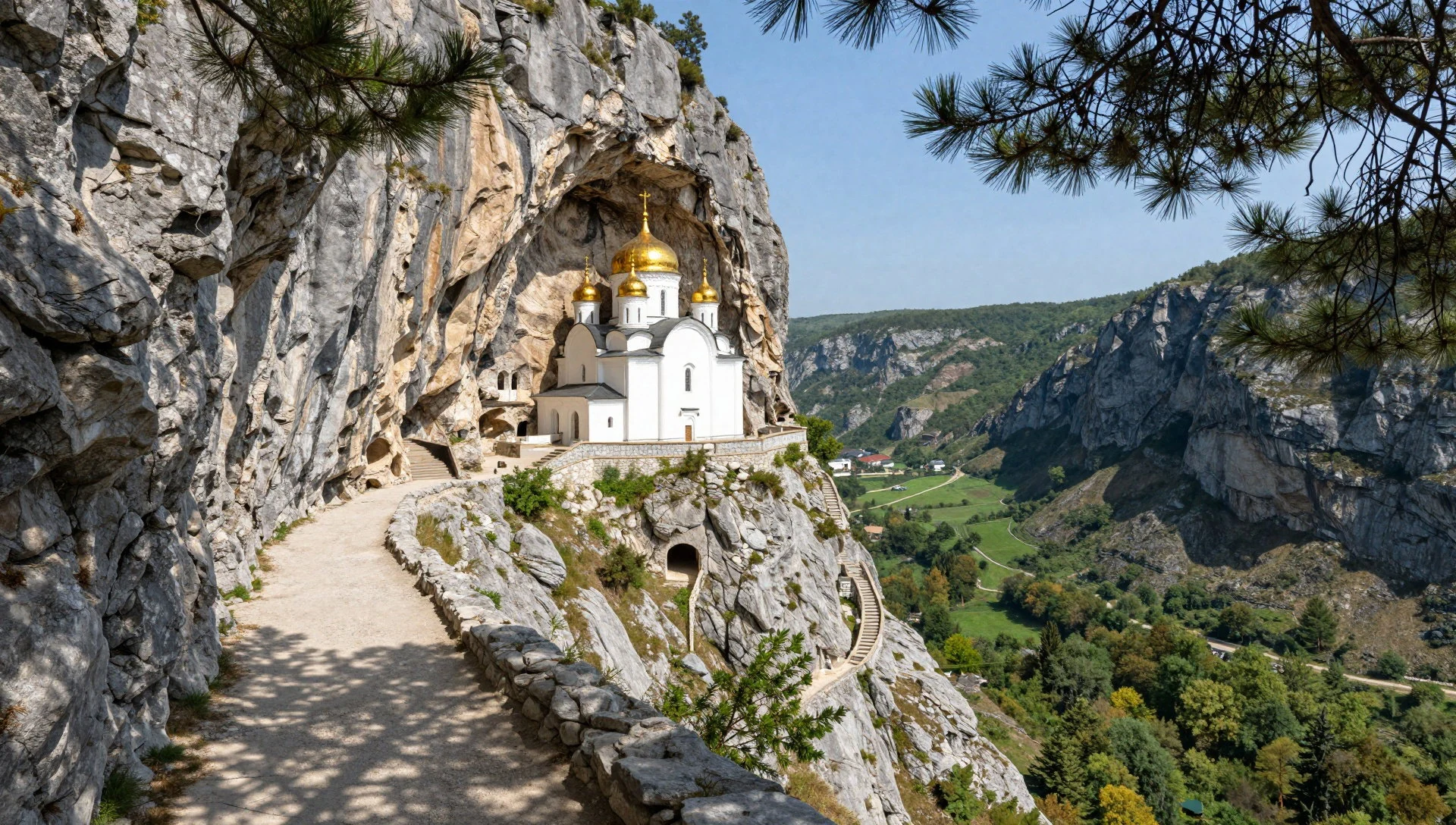
Culture
Khan's Palace is a living symbol for the Crimean Tatars, a Muslim, Turkic-speaking people whose state the Khanate was. Their language, music, embroidery and cooking tie them to the wider Turkic world, and they were deported en masse in the Soviet period before many returned; Bakhchysarai is where that heritage feels closest. Hospitality matters. Tea and sweets are offered readily, and turning down a second glass can seem curt. The palace and its mosque are also places of memory, so the tone is quiet rather than festive. Politics is sensitive: the status of Crimea is contested and the palace's restoration is a charged subject, so it is wiser to listen than to offer opinions. The cliffs around the town hold Orthodox and Karaite heritage too, a reminder of how many communities have shared these valleys. Language is a practical matter: Russian is the common tongue, Crimean Tatar a point of pride, and even a single greeting in Crimean Tatar is warmly received. Cover shoulders and knees, take off shoes where a mosque or carpeted room requires it, and ask before photographing anyone at prayer.
What to wear
Around Khan's Palace, traditional Crimean Tatar dress is best seen in museum displays, festivals, weddings and folk performances. Women's costume features embroidered velvet and silk, gold-thread work, light veils and ornamented caps, while men's outfits combine wool or felt with sheepskin caps. Embroidery and patterned textiles remain a point of cultural pride, and craft stalls in town often sell small embroidered pieces. Day to day, people in Bakhchysarai wear ordinary modern clothes: jeans, shirts, light dresses in summer, jackets in the cooler months. Some women cover their hair, particularly for mosque visits, but styles vary. Visitors should dress for a hilly, sunny valley and for conservative religious sites. In summer, bring light, breathable layers, a hat and sun protection; in spring and autumn add a warm layer for cool mornings. Shoulders and knees should be covered at the mosque and cemetery, and a scarf is useful for women entering prayer spaces. Footwear matters more than anything: the palace courtyards have uneven paving, and the walks to the cave monastery and Chufut Kale are steep and stony. Slip-on shoes make the carpeted rooms easier.
What to eat
- Cheburek — Cafes and snack counters near the palace
A large, half-moon fried pastry filled with minced meat and onion, crisp outside and juicy within. It is the classic Crimean Tatar snack, eaten hot with tea. Look for it at cafes and street counters around the palace and along the main road of the old town.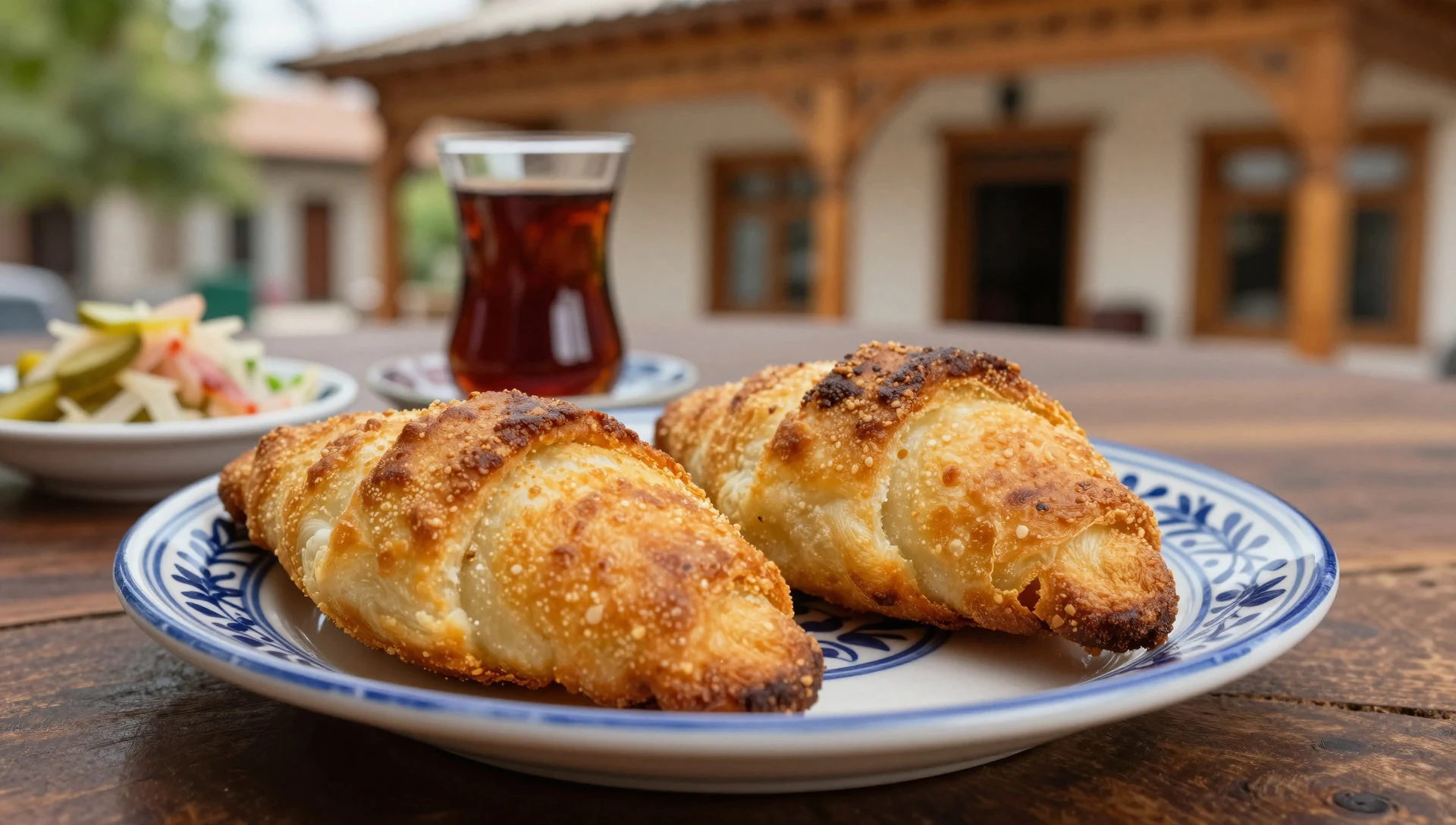
- Plov — Tatar and Central Asian eateries near the palace
A pilaf of rice with meat, carrot and spices, cooked in a heavy pot and served in generous portions. It shows the Central Asian side of Tatar cooking and appears on most menus of Tatar and Uzbek-style eateries in the old town.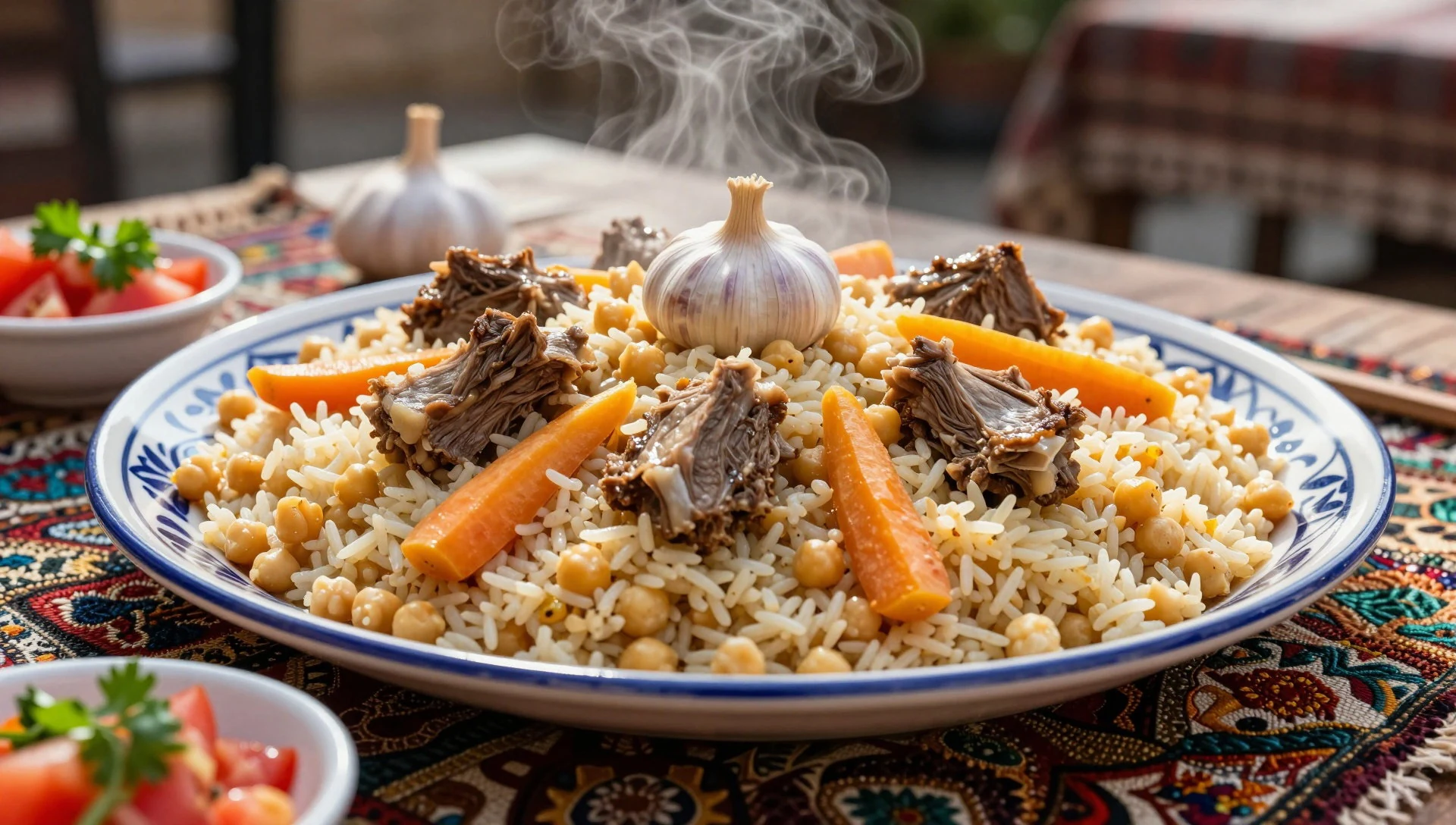
- Manty — Eateries on the main road below the palace
Steamed dumplings stuffed with spiced minced meat, usually served with sour cream or a thin sauce. They are filling, a good lunch after a morning of courtyards, and found at most Tatar restaurants around the old town. - Lagman — Tatar and Uzbek-style restaurants in town
A thick noodle dish with meat and vegetables in a savoury broth or sauce. It came west along Central Asian routes and now sits comfortably on Crimean menus. Order it where the kitchen is busy with locals at midday. - Sarma and dolma — Restaurants near the palace
Stuffed vine leaves or vegetables, usually with rice and minced meat, shared with Turkish and Balkan cooking. They are mild, comforting dishes, often served with yoghurt, and appear on set menus near the palace. - Chak-chak and Tatar baklava — Tea and dessert counters in the old town
Sweet finishers: chak-chak is fried dough bound with honey, and Tatar baklava is a layered pastry soaked in syrup. They pair well with strong tea or Turkish coffee, and sit on dessert lists at most traditional eateries.
Plan it
Best time. May–June and September–October, when the valley is mild and walking is comfortable; July and August are hot, especially for the climb to the cave sites, and winter can be cold and grey.
How long. 1–2
Getting there. Simferopol is the regional rail and bus hub; local trains run from there to Bakhchysarai in about forty minutes, and buses also connect from Sevastopol and Yalta (about two and a half hours from Yalta). From the station, take a local bus or taxi to the old town and palace. Direct long-distance trains from mainland Ukraine no longer run through the peninsula, and Crimea is under Russian occupation, so read your government's travel advice before planning.
Budget. low
Tips
- Check your government's travel advice and insurance cover before planning any trip to Crimea
- Check the palace's official site (http://handvorec.ru) for opening arrangements, as parts may close for works
- Go early in summer for cooler walking and fewer tour groups
- Carry cash and a translation app, as little English is spoken
- Bring water and sturdy shoes for the cave monastery and Chufut Kale paths
Etiquette
- Cover shoulders and knees at the mosque and cemetery
- Ask before photographing people, especially anyone praying
- Keep conversations about politics measured and let local hosts lead
Nearby
Sources
- Wikidata Q743881 (CC0)
- Wikipedia: Bakhchysarai Palace (rev 1375429926) (CC BY-SA 4.0)
- Wikivoyage: Bakhchysarai (rev 4896493) (CC BY-SA 4.0)
- Photo: Bakhchisarai Palace, Tiia Monto (CC BY 3.0)
- Photo: Hansaray northern entrance, Chapultepec (Public domain)
- Photo: Fountain of Tears, A.Savin (CC BY-SA 2.0)
- Photo: Mihrab, Andrew Butko (CC BY 3.0)
- Photo: Tombs of the Khans of the Crimea, unknown author (Public domain)
- Photo: Mosque near the palace of Bakhchisarai, Tiia Monto (CC BY 3.0)
- Photo: Palace from the street, A.Savin (CC BY-SA 2.5)
- Photo: Living quarters of Hansaray, Chapultepec (Public domain)


