Dnipro
Dnipro, Ukraine
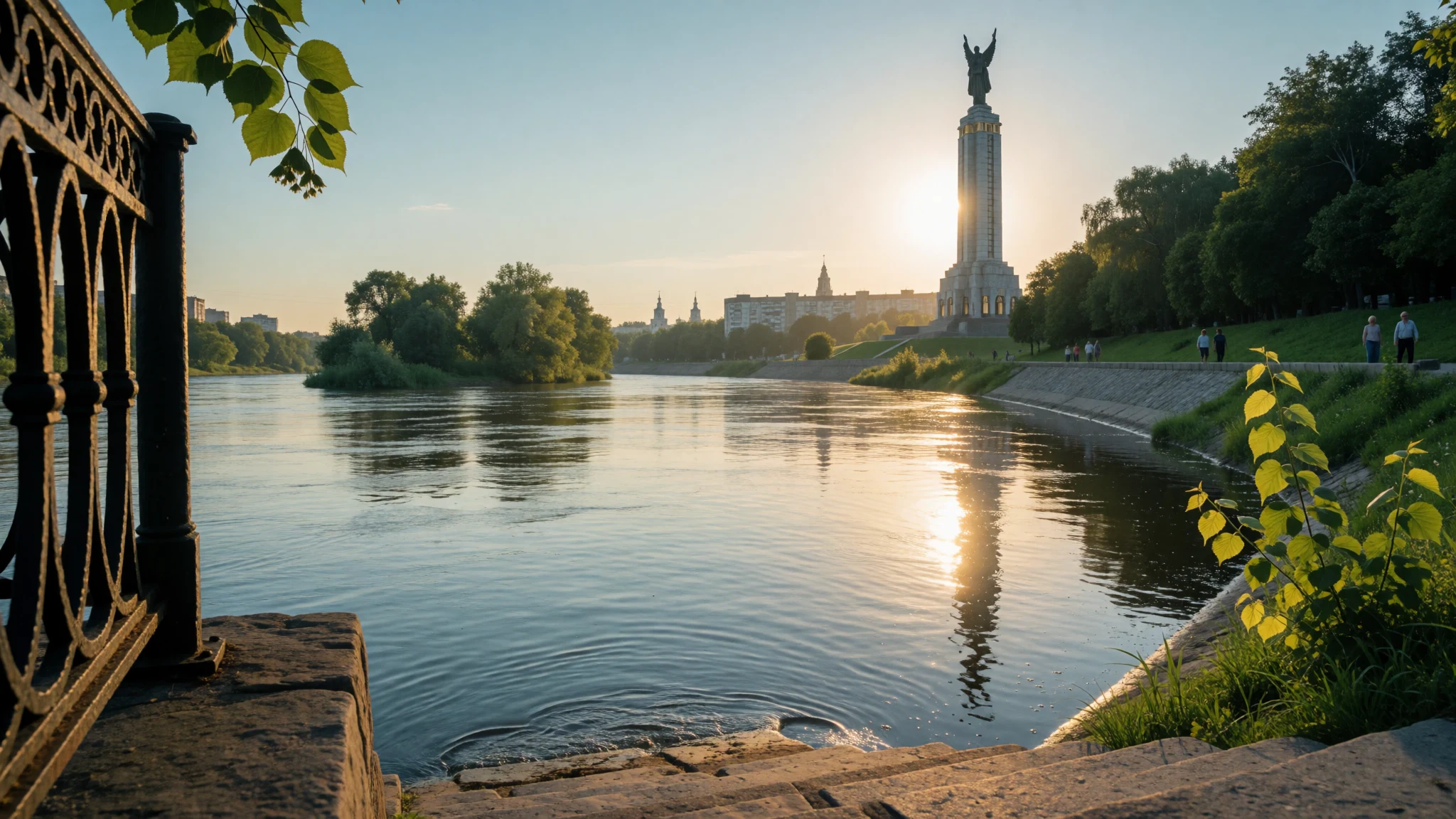
Dnipro is a working river city of embankments, theatres and layered history, best understood slowly, though travel to it now depends on the war.
The place
Dnipro is a river city in eastern Ukraine, home to close to a million people and set about 155 metres above sea level. The Dnipro River gives it both its name and its shape: a broad, slow channel with embankments for evening walks, wooded islands used as parks, and bridges that anchor the skyline. The city is the administrative centre of its oblast and lies roughly 391 km southeast of Kyiv. Its character is that of a working, commercial town rather than a museum piece. Iron ore and coal from the surrounding region fed its growth, and the results show in wide avenues, heavy Soviet-era apartment blocks, ornate nineteenth-century facades and a modern café and gallery scene that has grown up between them. Residents spend a great deal of time at the water's edge, and the riverside is where the city feels most relaxed. Summers are hot, and the sun on open embankments can be punishing; winters are cold and grey. Dnipro is not a place of one famous monument. It rewards slow walking, a few good museums and long meals. One honest caveat belongs here: Ukraine is at war, the country's airspace is closed to aviation, and conditions in the east can change quickly. Anyone considering a trip should read current official travel advice first, and treat this reading as a portrait of the city rather than a promise of access.
Its story
Dnipro's story begins long before the city. Traces of Palaeolithic people have turned up beside a small brook and on Monastyrskyi Island, and excavators have found the remains of a Stone Age craftsman's dwelling under one of the modern city's parks. Bronze Age peoples followed, among them the Cimmerians, whose settlement traces lie near today's Shevchenko Park, and later the Scythians held the region. Waves of nomads, including Huns, Avars, Bulgars and Magyars, crossed the steppe during the centuries of migration, meeting the Slavic farmers who lived there, and the area later fell within the realm of Kyivan Rus. The modern town's roots lie in Cossack settlement, and the facts block dates its founding to 1526. In 1787 Empress Catherine the Great ordered a new provincial capital here, Yekaterinoslav, meaning 'glory of Catherine', and the first stone of its cathedral was laid with Joseph II and Potemkin present. The late nineteenth century brought foreign investment and workers from many countries, drawn by iron ore and coal, which turned the town into an industrial centre. Soviet rule renamed major streets for Marxist figures, and the city itself carried a Soviet-era name, Dnipropetrovsk, before becoming Dnipro. Cossack, imperial, industrial and Soviet layers can all still be read in its streets.
What to see
- Dmytro Yavornytsky National Historical Museum — Central Dnipro
The city's historical museum is the best first stop for understanding the region. Its lapidarium holds weathered stone figures carved by steppe nomads and taken from burial mounds, standing in rows like a silent crowd. Check the official city site for opening arrangements, as these change with the security situation.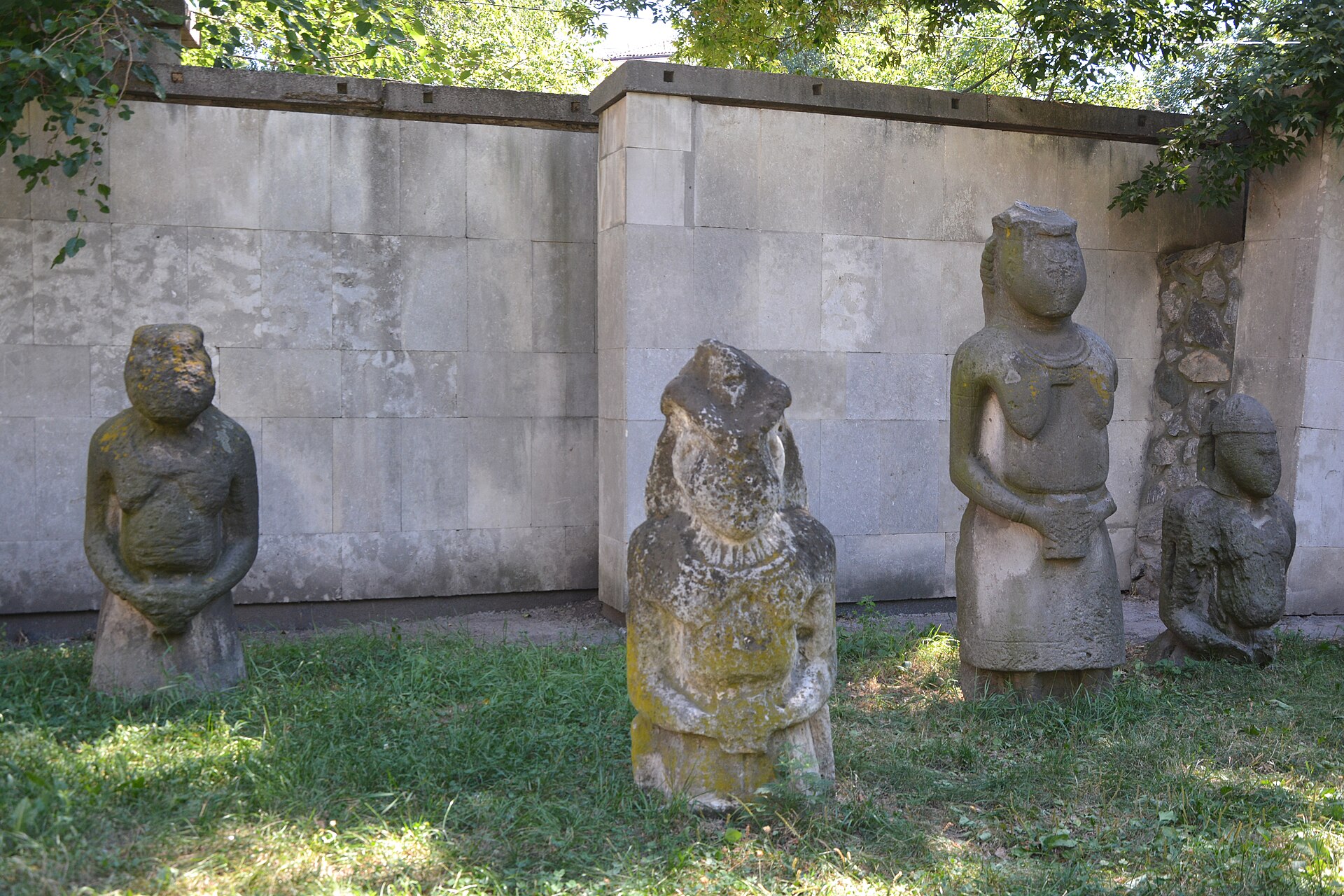
- Preobrazhensky Cathedral — Central Dnipro
This cathedral is tied directly to the founding of Yekaterinoslav, its first stone laid in 1787 by Catherine the Great, Joseph II and Potemkin. It is worth visiting for the history as much as the architecture. Go early, when the square is quiet, and dress modestly for the interior. - Prospekt Dmytra Yavornytskoho — City centre
The main avenue runs through the centre and links the city's two principal architectural groupings. Walking its length takes in cafés, theatres, Soviet-era buildings and older facades in one straight line. It is the easiest way to get a feel for the town, ideally on a mild evening. - Monument of Glory — Upper embankment, above the river
A war memorial stands on the high bank above the river, and the view across the water is the reason many locals come here. It is a place of remembrance as much as a viewpoint, so keep voices low. Evenings give the softest light over the far bank. - Taras Shevchenko Park and Monastyrskyi Island — Riverside, central Dnipro
The park honours Ukraine's national poet and sits close to the river, with shaded paths that are welcome in summer heat. Monastyrskyi Island, reached by bridge, has beaches and walking routes. Archaeologists have found Bronze Age traces nearby, so ordinary strolls cross very old ground.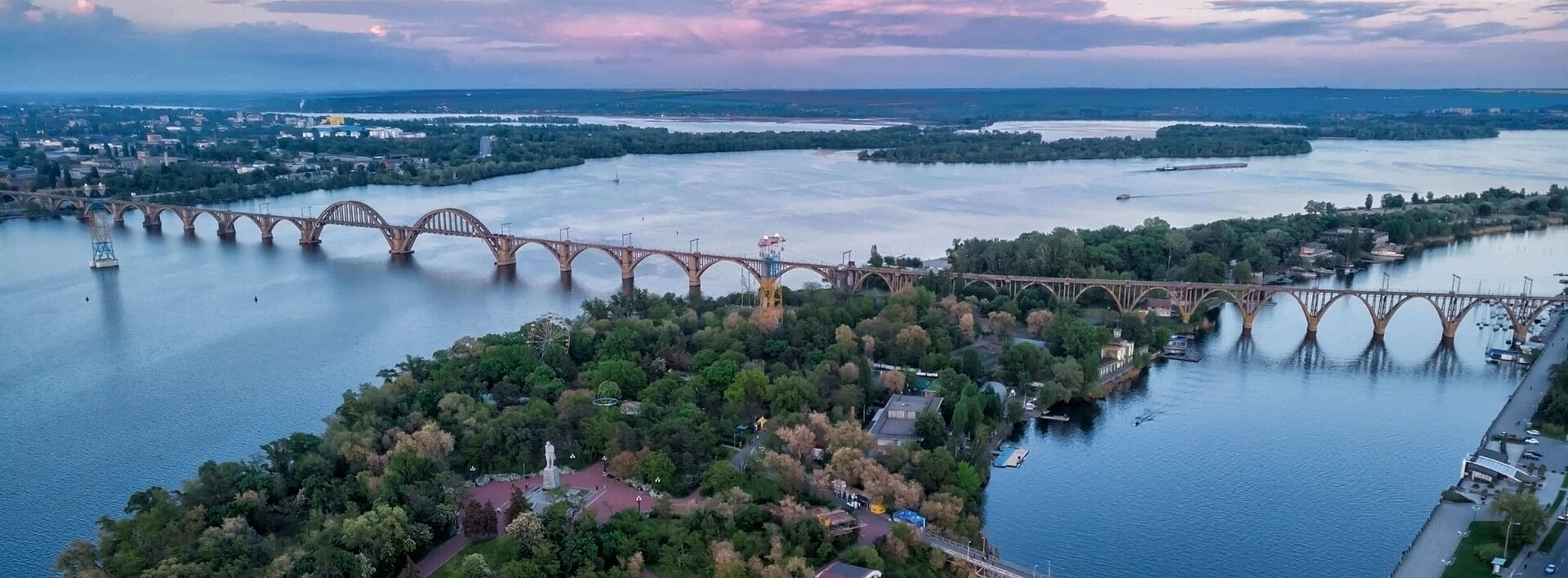
Culture
Dnipro's culture is that of a big, outward-looking industrial city with strong civic institutions. Theatre is taken seriously: there is a drama and comedy theatre, a Ukrainian music and drama theatre named for Taras Shevchenko, an opera and ballet house and a state circus. Museums cover local history, a diorama of the Battle of the Dnieper, and art. Shevchenko, the nineteenth-century poet who is Ukraine's national literary figure, is honoured in one of the city's best-known parks. The population has long been mixed, a legacy of the industrial boom that brought workers from many countries, and the city has a visible Jewish community, with the Menora community centre on Sholom Aleichem Street. Ukrainian is the national language, while Russian has long been widely spoken in the east. The language question is sensitive in wartime, and many residents now choose Ukrainian deliberately in daily life. Street names are another layer: Soviet-era honours to Marxist figures have been under review and renaming. Conversation tends to be direct and hospitable, and hosts expect guests to accept food and drink. Reminders of war are everywhere, from memorials to volunteer stalls and air-raid alerts, so curiosity should come with tact. Ask before photographing people, and never photograph military positions, checkpoints or air-defence sites, which can lead to police questioning.
What to wear
Traditional dress in the Dnipro region centres on the vyshyvanka, an embroidered shirt of linen or cotton, worked in red and black thread or in coloured floral patterns that vary from place to place. Women have worn it with a wraparound skirt called a plakhta, a woven sash and a flower wreath (vinok) with ribbons, while men pair it with a sash and wide trousers. Cossack heritage adds loose sharovary trousers and sheepskin hats. These outfits now appear at festivals, weddings, Independence Day and graduations, but many people also wear a vyshyvanka with jeans on ordinary days, as a quiet statement of identity. Everyday dress in Dnipro is smart casual and urban: trainers, tailored coats and dark colours in winter, light dresses and linen in summer. Visitors should dress for the season. In summer that means breathable clothes, a hat and sun cream for the exposed embankments; in winter, a proper coat, hat, gloves and boots with grip for ice. Comfortable flat shoes suit uneven pavements. For churches, cover shoulders and knees, and women may wish to carry a scarf for the head, though it is not obligatory for visitors. Avoid camouflage or military-style clothing, which can draw unwelcome attention.
What to eat
- Borscht — Canteen-style Ukrainian eateries across the centre
Ukraine's beetroot soup, usually with cabbage, potato and sometimes meat, served with sour cream and garlic bread rolls. It is the standard test of a kitchen. Order it at a canteen-style Ukrainian restaurant, where it arrives fast and cheap. - Varenyky — Ukrainian restaurants and cafés
Boiled dumplings stuffed with potato, cabbage, cherries or cottage cheese, and topped with fried onion or sour cream. Savoury and sweet versions are both common. They suit a quick lunch and are easy for vegetarians to find. - Deruny — Home-style cafés and canteens
Potato pancakes, crisp at the edges and eaten with sour cream or mushrooms. Simple and filling, they are a good winter order. Some places serve them with minced meat inside, so ask if you want a vegetarian plate. - Holubtsi — Traditional Ukrainian restaurants
Cabbage leaves rolled around rice and minced meat, then stewed in tomato sauce. It is slow, comforting cooking that locals associate with family tables. Order a portion with mashed potato and extra sauce. - Khachapuri and khinkali — Georgian restaurants, many with outdoor tables near the centre
Georgian cheese bread and meat dumplings are firm favourites in Dnipro, where Georgian restaurants are common. Khachapuri is best shared and eaten hot, while khinkali are held by the top knot and bitten carefully so the broth does not spill.
Plan it
Best time. May–June and September–October, when days are warm without the heat of high summer or the cold, grey and icy weather of winter. July and August can be very hot on open embankments.
How long. 2–3
Getting there. Ukraine's airspace is closed to aviation, so there are no flights. Overland routes, mainly rail and coach from Kyiv (about 391 km away), depend on the security situation. Check the official city site, http://dniprorada.gov.ua/, and your government's travel advice before any journey.
Budget. low
Tips
- Read current official travel advice before booking, and recheck it just before leaving
- Install an air-raid alert app and follow local guidance on shelters
- Carry some cash and a card, as payment options vary between small places
- Walk the embankment in the morning or evening, and carry water in summer
- Keep valuables out of sight and avoid drinking on the street late at night
Etiquette
- Dress modestly in churches and keep voices low at memorials
- Do not photograph military sites, checkpoints or damage to infrastructure
- Accept hospitality graciously, and be tactful when discussing the war or language
Nearby
Sources
- Wikidata Q48256 (CC0)
- Wikipedia: Dnipro (rev 1384227642) (CC BY-SA 4.0)
- Wikivoyage: Dnipro (rev 5401178) (CC BY-SA 4.0)
- Photo: Collage of Dnipro city images (Andrew J.Kurbiko) (CC BY-SA 4.0)
- Photo: view of the Nahirna part of the city from the left bank (Art Nostalgy) (CC BY-SA 4.0)
- Photo: Dnipropetrovsk City Council (Artemka) (CC BY-SA 4.0)
- Photo: Menora Jewish centre, Dnipro (Olebesedin) (CC BY-SA 4.0)
- Photo: Shevchenko Park, Monastyrskyi Island and bridges (Bodydock) (CC BY-SA 4.0)
- Photo: Dnipropetrovsk-Raion map (Olegzima) (Public domain)
- Photo: Lapidarium of the Dnipropetrovsk Museum of Local History (Nataliya Shestakova) (CC BY-SA 4.0)
- Photo: Yekaterinoslav on Schubert's map, 1860 (Public domain)


