Carpathian National Nature Park
Carpathian National Nature Park, Ukraine
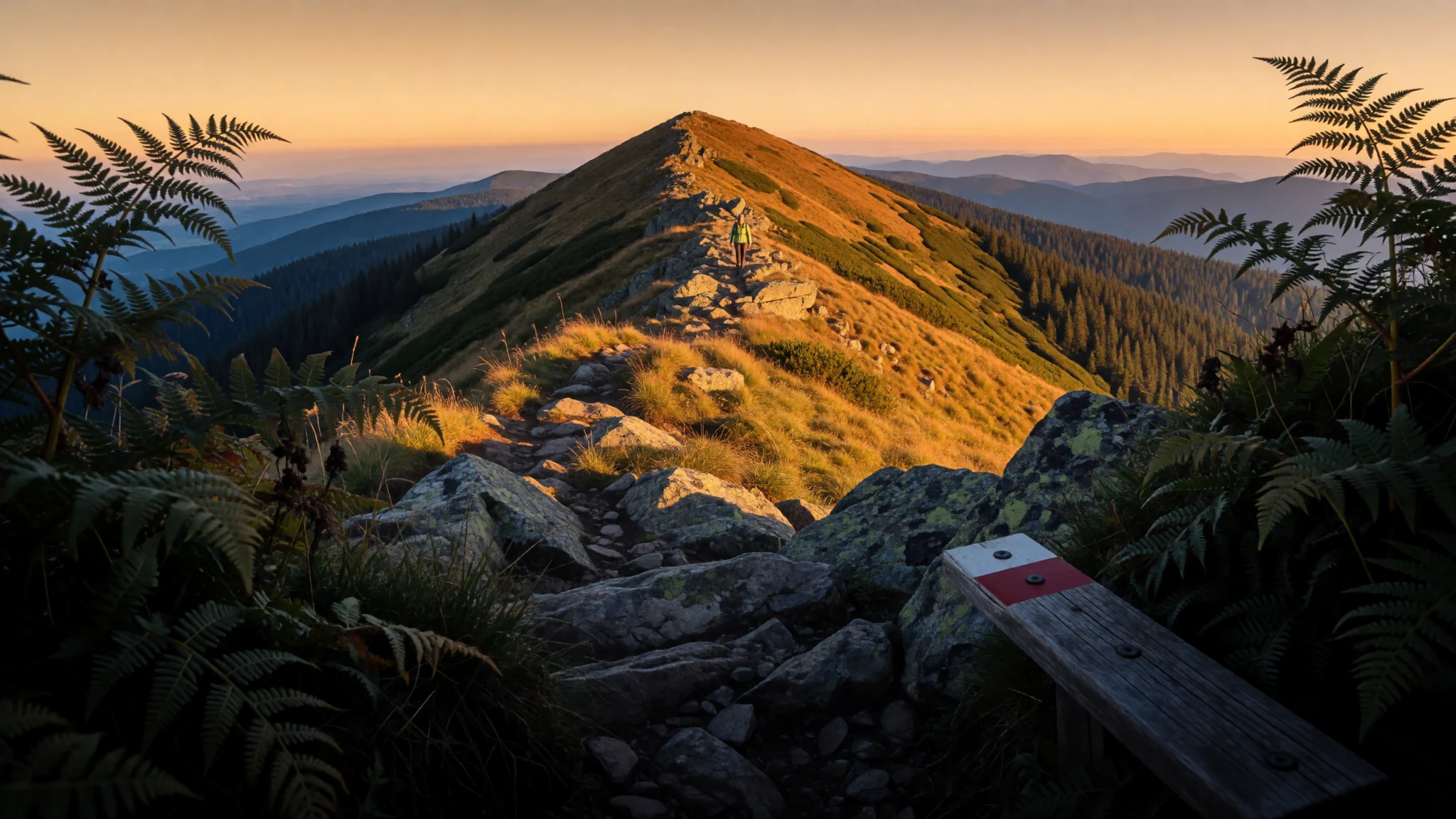
Carpathian National Nature Park is a walker's reserve of spruce ridges, open pasture and long summit views above Yaremche.
The place
Carpathian National Nature Park occupies a broad piece of the Ukrainian Carpathians in Ivano-Frankivsk Oblast, south of the valley town of Yaremche. The reserve was brought into being in 1980, and the staff who run it still work from Yaremche, where the road and the railway follow the river out of the lowlands and into the ranges. In Ukrainian the name is Карпатський національний природний парк. Calling it a national nature park is precise: this is not an empty wilderness behind a gate. Hamlets, hay meadows and summer pastures sit inside the same boundary as forest that is managed for conservation, so a visit is always partly a visit to a working landscape. Height organises everything. Down by the river the ground is green, settled and often damp. Climb, and mixed woods of beech and spruce take over, then break into the open ridges that photographs from Hoverla show so clearly — crest after crest, fading towards the horizon. Petros, a neighbouring summit, reads as a clean peak from those same high viewpoints. Early summer can cover the upper slopes in rhododendron; later the fireweed known as ivan-tea colours the meadows under Hoverla, and autumn lays gold through the forest while the first snow sits on the grass. A winter frame from the same country shows the two seasons meeting in one wood. The southern part of the park reaches into Nadvirna and Verkhovyna districts, where wooden homesteads and high pastures are still in use. The subject is the walk itself: a dawn ridge, a wet stand of spruce, a shoulder of pasture with the next range behind it.
Its story
Carpathian National Nature Park is the result of a decision, in 1980, to treat a living mountain district as heritage. The valleys of Ivano-Frankivsk Oblast had long carried farms, timber and seasonal pasture, and crests such as Hoverla and Petros were already landmarks for herders. Ukraine created this park before any other national park in the country, and placed its headquarters in Yaremche so the boundary would be run from the mountains rather than from a distant capital. The aim was scenery and forest, not an empty reserve. A national nature park in Ukraine leaves room for villages, grazing and visitors, with stricter quiet zones beside them. That is why the map still looks inhabited: hay meadows, livestock tracks and weekend paths share space with woods managed against careless cutting. The designation promised that rhododendron slopes, fireweed under Hoverla, autumn beech and winter woods would survive further logging and building. War has changed the setting around that promise. In February 2022 Russia invaded Ukraine outright, martial law took effect, and the danger has not stayed inside military fences. Western distance is not, by itself, a promise of quiet. People across Ukraine have said foreign travellers are welcome, and that a visit supports ordinary life. The park's own task stays narrower and older: keep a mountain landscape whole, and publish when a path is open. That notice lives on the park site, https://karpatskyi-park.in.ua/.
What to see
- Hoverla — High ridge above Yaremche, Ivano-Frankivsk Oblast
Hoverla is the summit most walkers aim for in Carpathian National Nature Park. From the top, photographs show ridge after ridge running to the horizon, forest in the valleys and grass along the crests. The route is a full mountain day: the path climbs hard, and cloud can wipe out the view in minutes, so a clear morning is the whole point.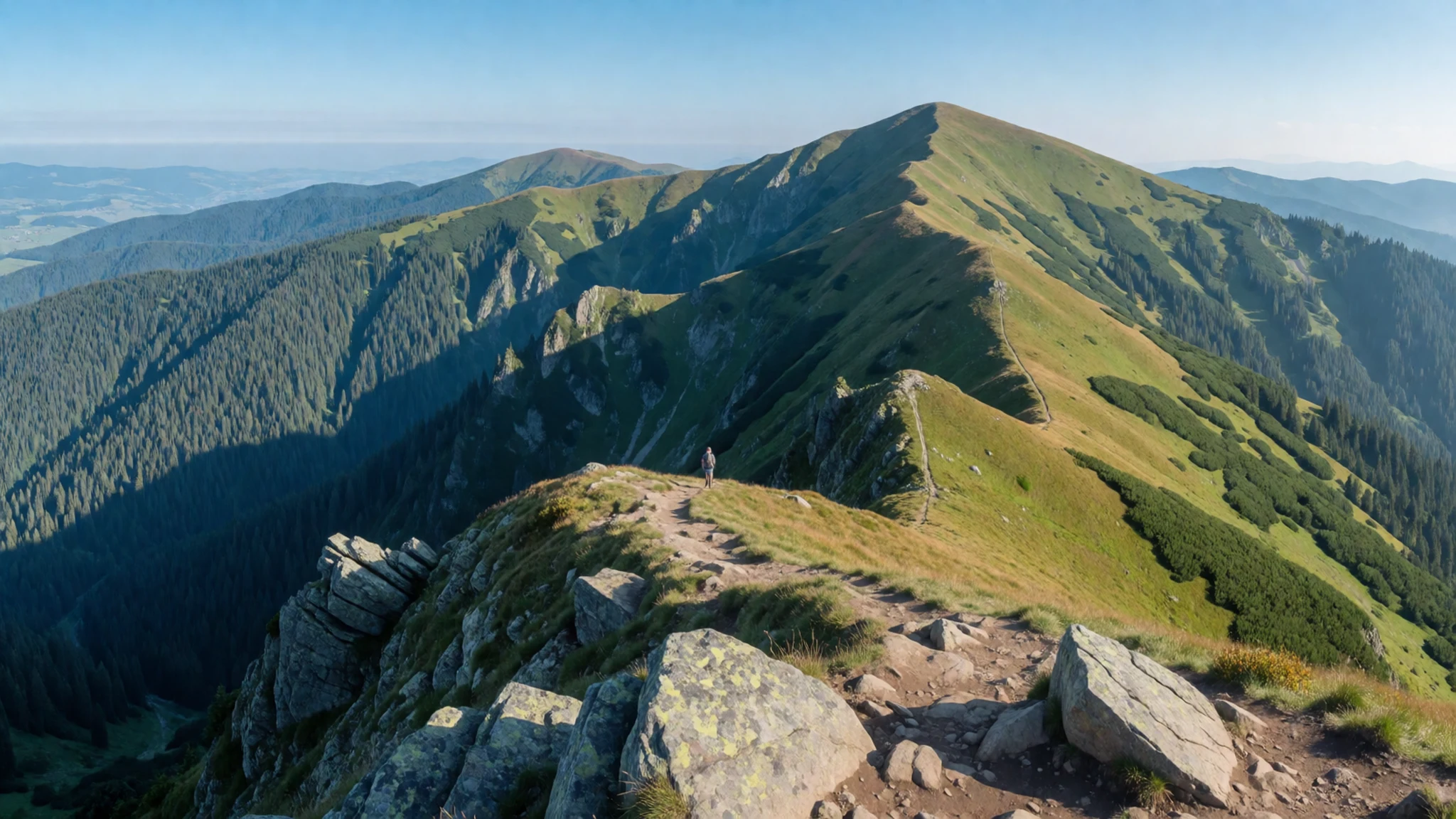
- Petros — Neighbouring high ridge in the park
Petros stands near Hoverla inside Carpathian National Nature Park, and a well-known view frames it as a sharp, separate peak across the high ground. Walkers often see it on the same ridge day, or as the next summit when the weather holds. The slopes below mix rock, pasture and dwarf shrubs, and the light changes fast when cloud spills over the crest.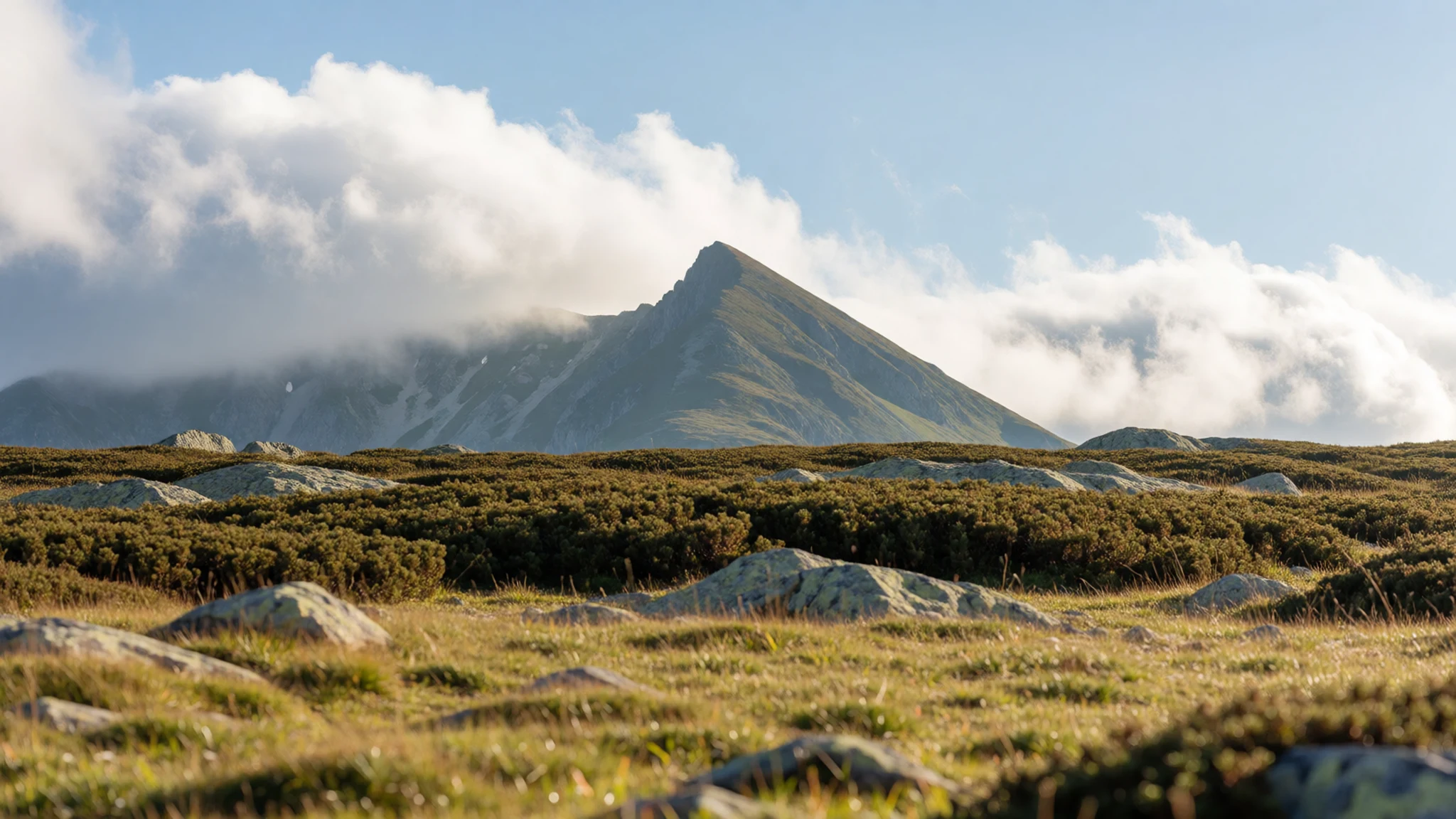
- Rhododendron slopes — Upper slopes of the park
In early summer, slopes inside Carpathian National Nature Park colour with rhododendron, a low mountain shrub whose flowers show clearly in photographs from the high pastures. The bloom is brief and depends on the year, so it is a reason to time a visit rather than a guarantee. Around the flowers the ground is open and bright, very different from the spruce shade lower down.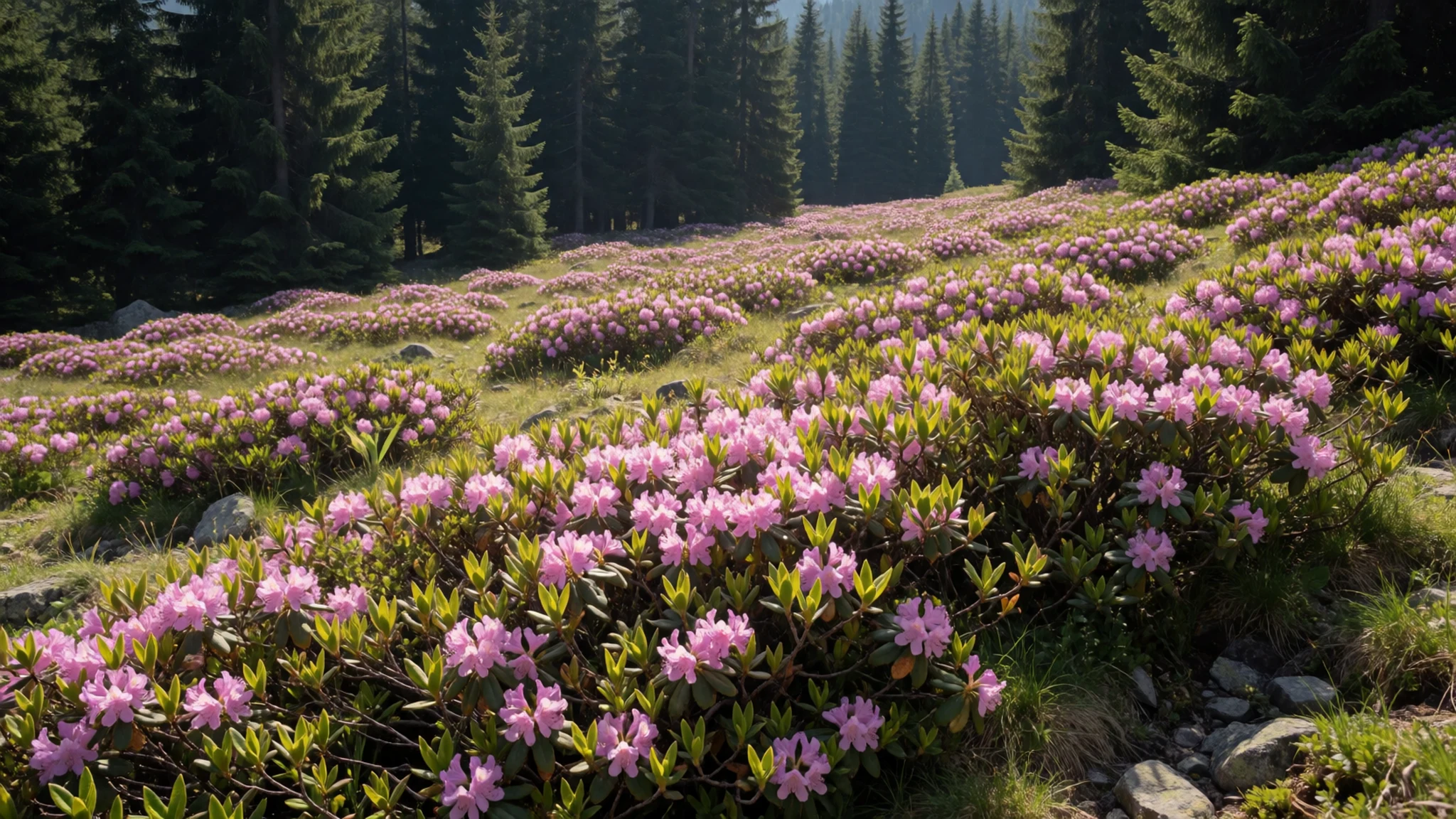
- Ivan-tea meadows — Meadows at the foot of Hoverla
At the foot of Hoverla, Carpathian National Nature Park opens into meadows of ivan-tea, the tall pink fireweed that fills photographs taken below the summit. The flowers mark a softer pause on an otherwise steep mountain day, with forest behind and the ridge still above. Herders and walkers share this kind of ground in season. The colour is the point; the plants are better left unpicked.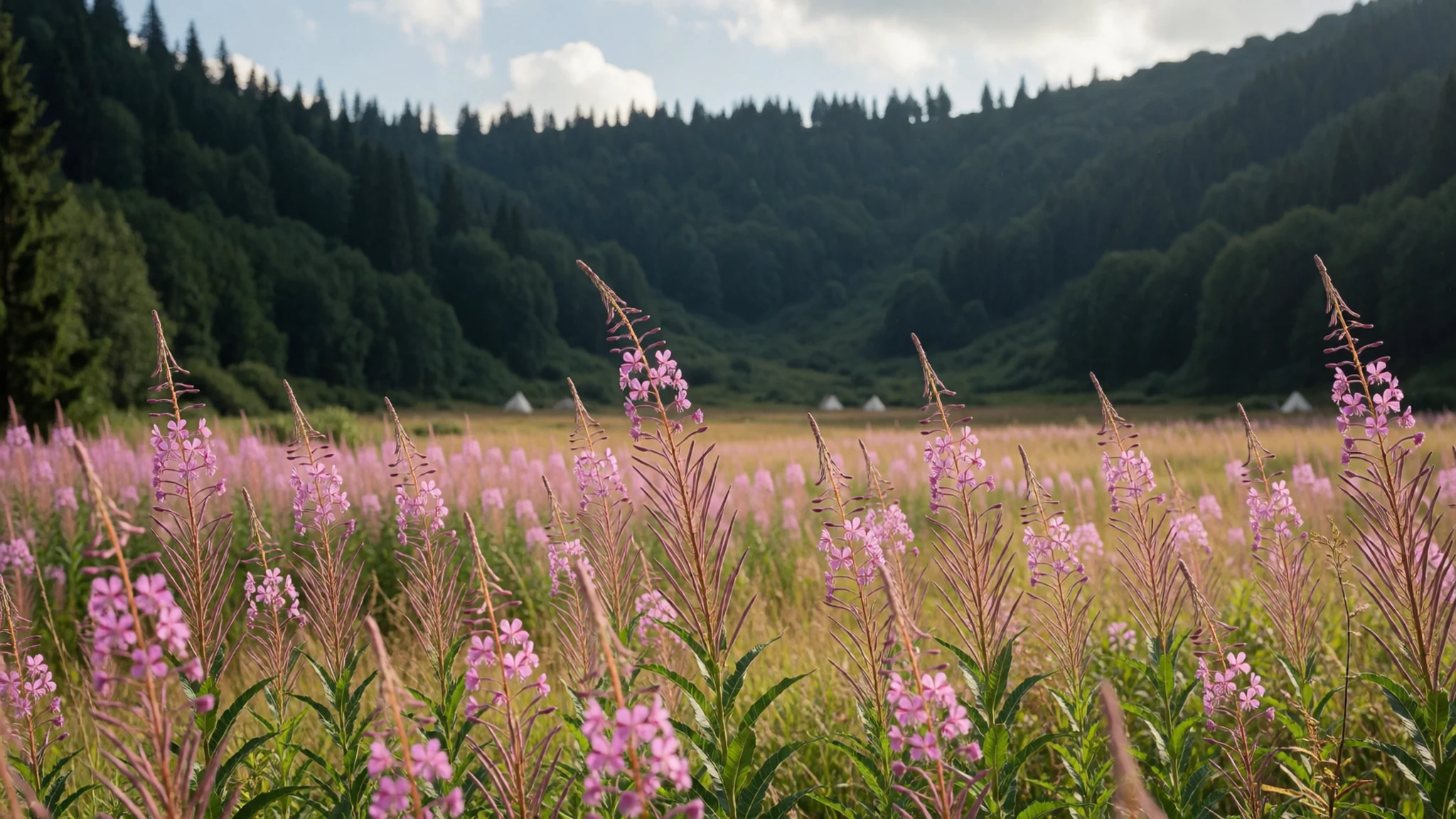
- Yaremche — Yaremche, Ivano-Frankivsk Oblast
Yaremche is the town where Carpathian National Nature Park keeps its headquarters, and the place most visits actually start. It sits in the valley, with the forested slopes rising on either side and the road and railway bringing people up from the lowlands. Guesthouses, trailheads and ordinary food cluster here, so the town is the useful base rather than a monument.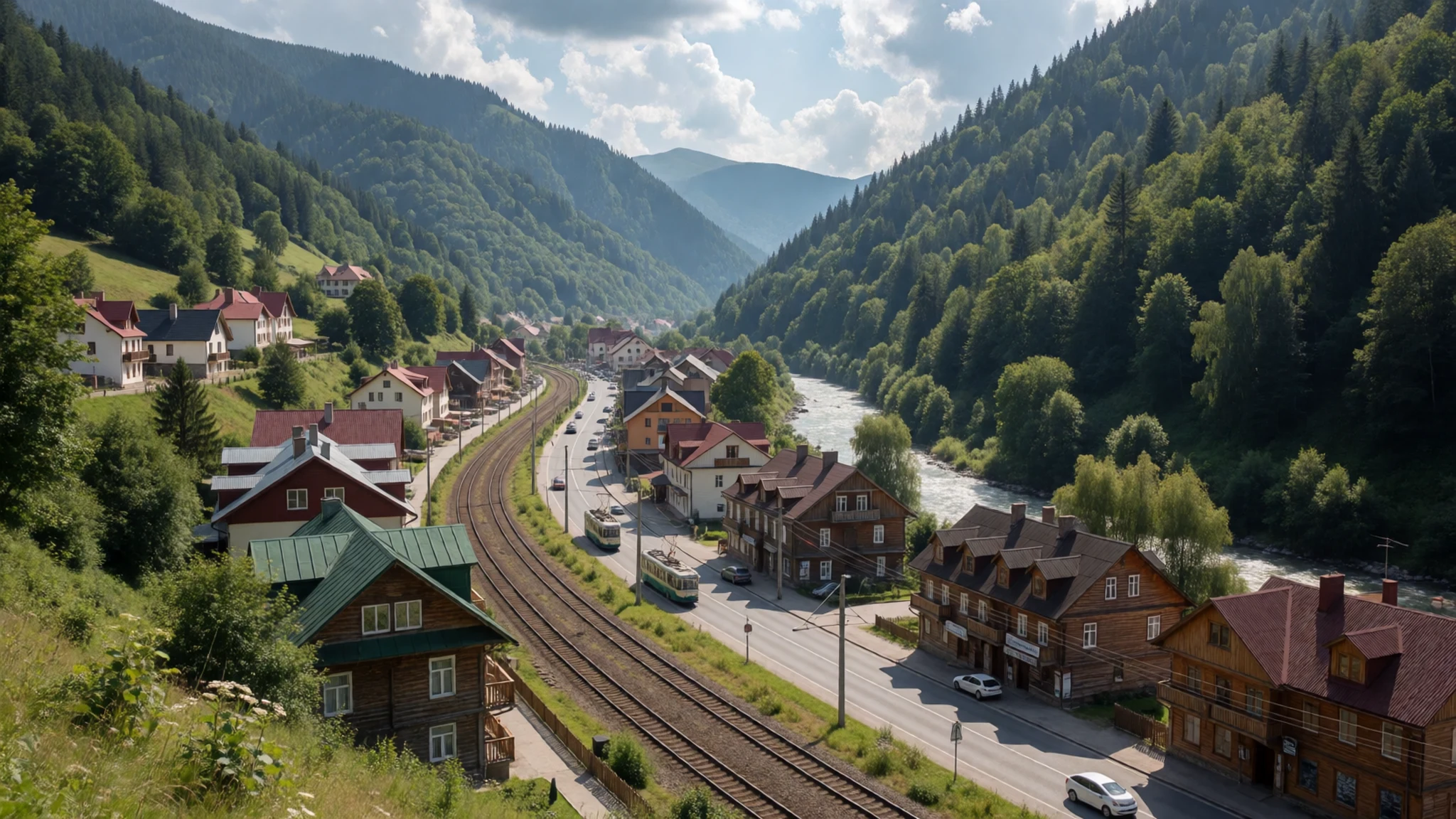
Culture
Carpathian National Nature Park is in Ukraine, and the people who live around Yaremche are Ukrainian — a nation of their own, not a subset of Russia. Even neighbours whose home language is Hungarian, Romanian or Russian generally count themselves Ukrainian, and they hear it as a slight when a visitor blurs that line. Treating the Ukrainian language as a form of Russian is both inaccurate and offensive, and so is pinning the word "the" in front of the country's name. In the park's valley towns the courteous default with a stranger is Ukrainian; a few words of greeting do more than fluent talk in the wrong direction. Everyday manners run warmer than a transactional visit. At a restaurant, men often pay, open doors and carry bags, and women treat that as ordinary courtesy rather than as courtship. Nothing about the region is stiffly conservative in dress or behaviour: summer streets in Yaremche look like any other Carpathian trail town, practical and informal. Meadows and wooden houses inside the park boundary are workplaces and homes. A camera is fine for ridges and flowers; a face, a window or a yard is a question, not a right. Residents have been clear that guests are welcome and that tourism is read as economic and moral support, not as poor taste. Politics can be discussed; it should not be debated as entertainment. Speak of the country as Ukraine, never "the Ukraine", and ask before you photograph a person or a private home here.
What to wear
Carpathian National Nature Park belongs to a mountain district whose traditional clothes were tools before they were costume. Wool, linen and sheepskin carried people through wet forest and cold ridges: an embroidered shirt (vyshyvanka), a woven sash, a sheepskin keptar and a heavy cape that shed rain. Embroidery in these valleys often runs to geometry in red and black, and the pattern could signal a village. Those clothes still appear at weddings, church feasts and festivals, and as craft for sale in Yaremche; they are not what anyone wears to climb Hoverla. Weekdays look ordinary and modern. Jeans, trainers, knit layers and waterproof shells fill the streets of Yaremche, the same European casual dress found in other western Ukrainian towns, chosen because the valley is damp and the morning bus is an early one. A visitor should pack for the ridge, then adjust for a church door. Waterproof boots with grip, a shell, a warm mid-layer and a hat cover the honest range between a mild valley and a cold summit. Summer adds sun cover and a way to carry water. Snow asks for proper winter footwear, not city soles. Covered shoulders are the simple expectation inside a church in Yaremche; the trail itself asks only for clothes that keep a person safe and able to move.
What to eat
- Borshch — Eateries in Yaremche
Borshch in the valleys around Carpathian National Nature Park is the deep red beet soup of Ukraine, finished with a spoon of sour cream. Eateries in Yaremche serve it year-round, often with dark bread and garlic. A bowl is the usual hot meal after a wet walk.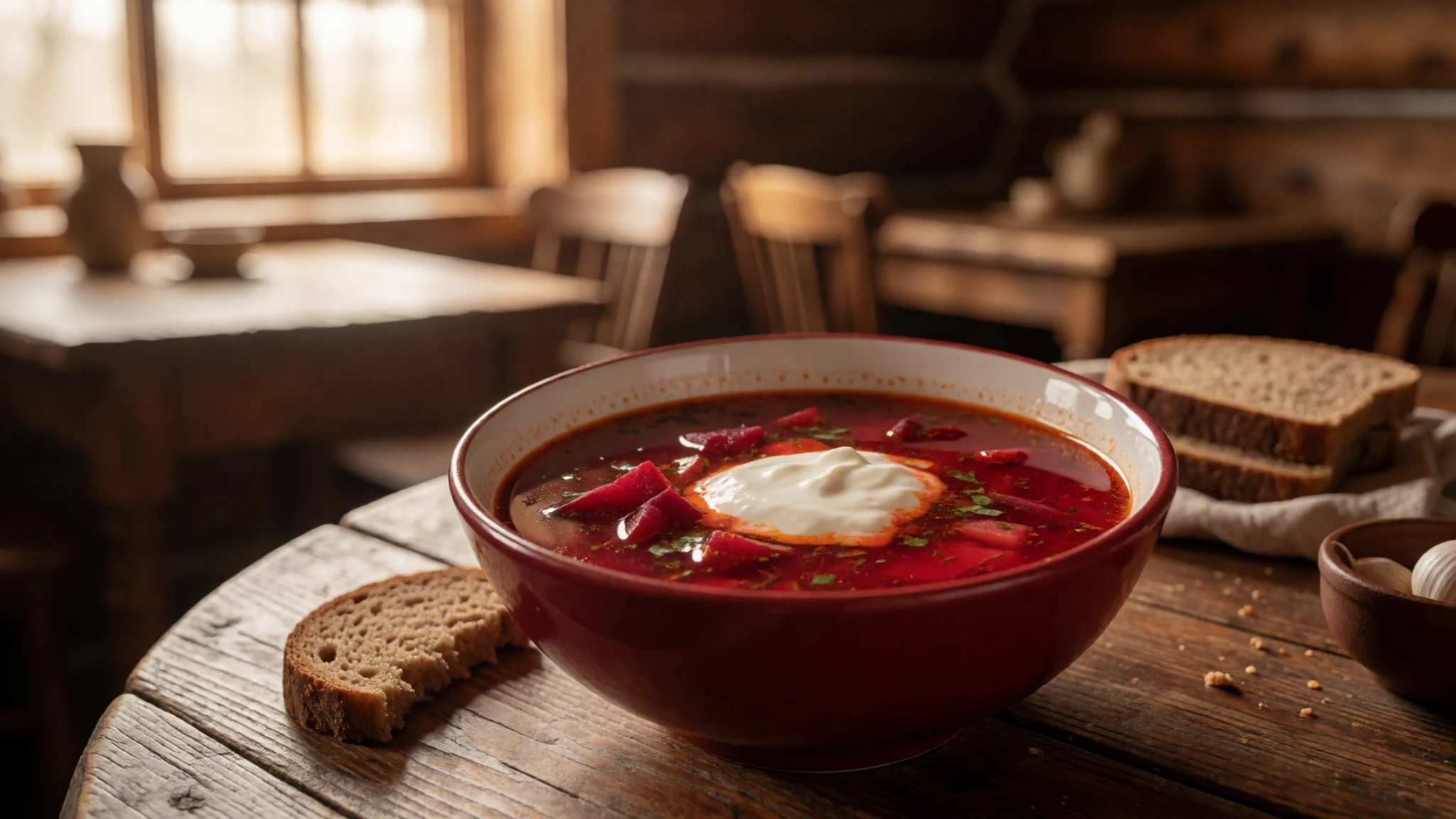
- Green borshch — Home-style eateries in Yaremche
Green borshch skips the beet. Around Carpathian National Nature Park it is a pale, sharp soup built on leafy greens, with a halved boiled egg in the bowl, and home-style eateries in Yaremche tend to offer it once the weather warms.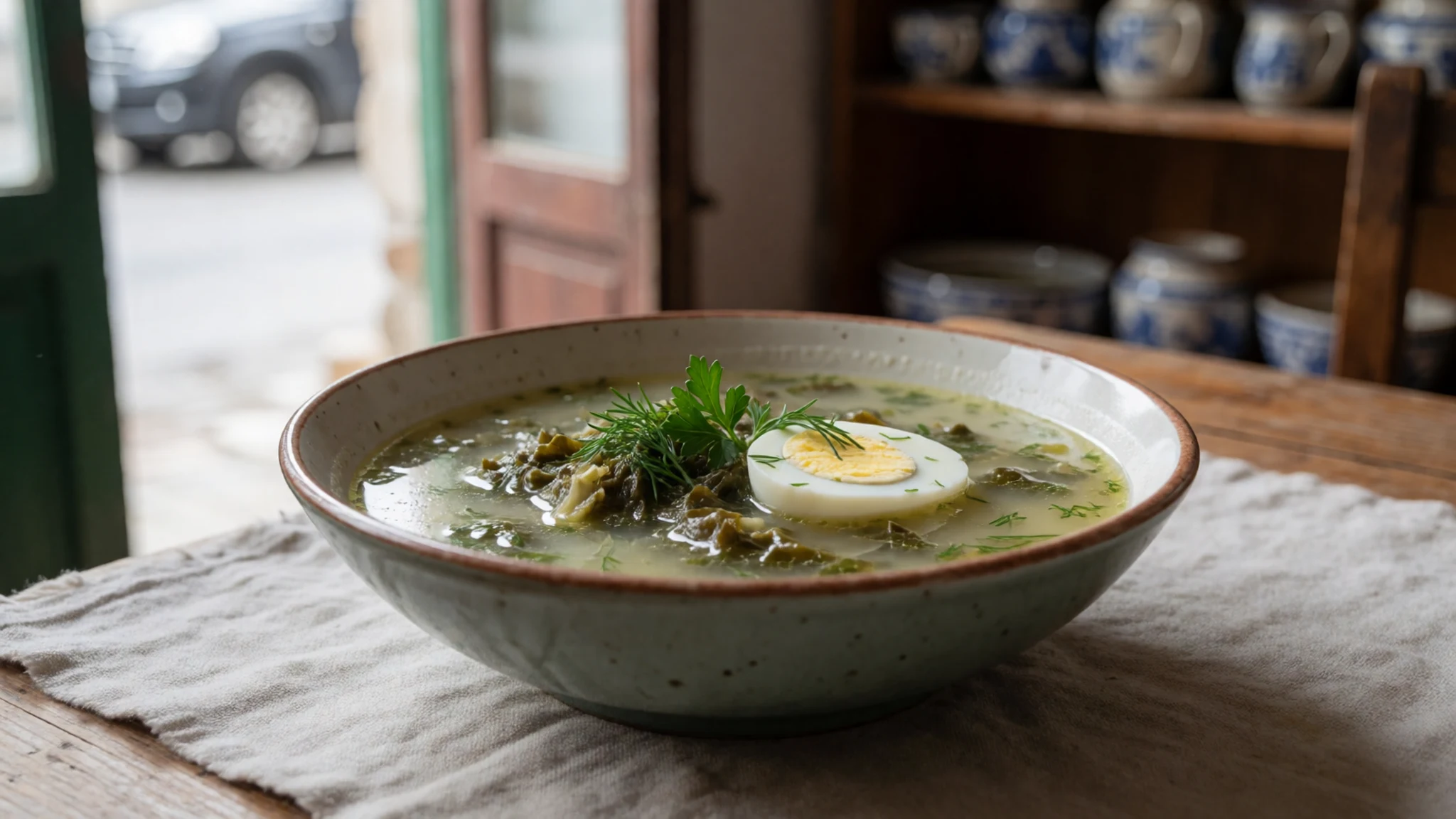
- Solianka — Valley eateries in Yaremche
Solianka (солянка) is a salty, sour meat soup that appears on menus around Carpathian National Nature Park once the weather cools. Pickles, sausage and a slice of lemon usually share the bowl. Valley eateries in Yaremche are the straightforward place to order it, with plenty of bread. - Salo — Market counters in Yaremche
Salo, cured pork fat, is the nibble that accompanies bread and pickles in the country around Carpathian National Nature Park. It is richer than it looks, and a thin slice on black bread is the local way, not a whole plate. Busy counters in Yaremche sell it. - Banosh — Village eateries around Yaremche and Verkhovyna
Banosh is the mountain porridge of the Hutsul valleys in and around Carpathian National Nature Park: cornmeal cooked with cream and served with sheep's cheese and cracklings. Shepherds ate it on the high pastures; today it shows up in village eateries around Yaremche and Verkhovyna.
Plan it
Best time. The useful season for high paths in Carpathian National Nature Park runs from late spring into early autumn, when daylight is long and deep snow has left the ridges. Rhododendron, in years when it flowers well, colours the upper slopes in the first half of summer; autumn is the season of fireweed and turning forest, which is the look of many photographs from Hoverla. Winter means snow and short days, and suits people already at home on mountain paths.
How long. 2–3
Getting there. Carpathian National Nature Park keeps its headquarters in Yaremche, in Ivano-Frankivsk Oblast. Fly into western Ukraine at Ivano-Frankivsk or Lviv, then continue by train or road up the valley to Yaremche and on to the day's trailhead by foot or local transport. Confirm the current approach and which routes are open at https://karpatskyi-park.in.ua/ rather than trusting a fixed timetable.
Budget. low
Tips
- Check https://karpatskyi-park.in.ua/ for which trails are open, and read your own government's travel advice before you go; martial law has applied across Ukraine since the invasion that began in February 2022.
- Start ridge walks early in the day so you are off the crest if cloud builds, and expect more company on Hoverla at weekends.
- Carry cash for village eateries, markets and small trail services; card payment is patchy away from Yaremche.
- Take water and an extra warm layer from the valley even when Yaremche feels mild; the summit is another climate.
Etiquette
- Say Ukraine, never "the Ukraine", and do not call Ukrainian a dialect of Russian or Ukrainians Russians.
- Ask before photographing people, houses or the inside of a church.
- Keep to the path and leave rhododendron and fireweed unpicked.
- Cover shoulders if you go into a church; on the trail, dress for weather and mud.
Nearby
Sources
- Wikidata Q4215646 (CC0)
- Wikipedia (rev 1362708661) (CC BY-SA 4.0)
- Wikivoyage (rev 5412779) (CC BY-SA 4.0)
- Photo photos/01-05.jpg (CC BY 3.0)
- Photo photos/02-.jpg (CC BY-SA 4.0)
- Photo photos/03-.jpg (CC BY-SA 4.0)
- Photo photos/04-.jpg (CC BY-SA 4.0)
- Photo photos/05-horizons-of-the-carpathians-view-from-hoverla.jpg (CC BY-SA 4.0)
- Photo photos/06-ivan-tea-at-the-foot-of-hoverla.jpg (CC BY-SA 4.0)
- Photo photos/07-view-of-petros.jpg (CC BY-SA 4.0)
- Photo photos/08-.jpg (CC BY-SA 4.0)


