Donetsk
Donetsk, Ukraine
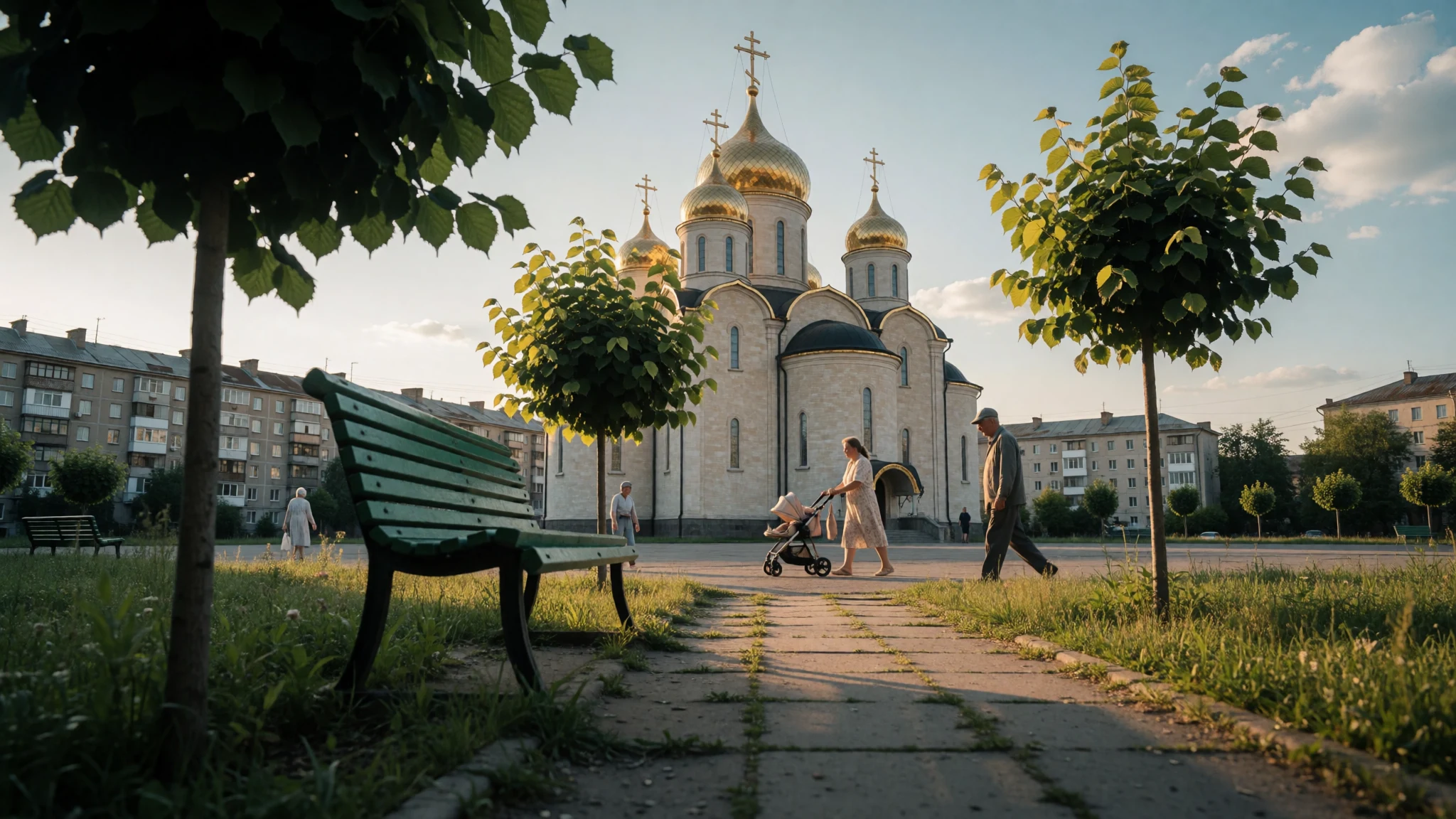
Donetsk is a coal-and-steel city founded by a Welshman, now caught in war; it is worth understanding, but not visiting while the conflict lasts.
The place
Donetsk sits on the Kalmius River in eastern Ukraine, in the heart of the Donets Basin coalfield, usually shortened to Donbas. The city stands about 169 metres above sea level on open, rolling steppe, with no coast or mountains to soften the horizon. Around 900,000 people lived in the core at the 2022 estimate, and the wider conurbation, which runs into neighbouring Makiivka and other towns, held more than two million at the 2011 count. Before 2014 it was the administrative centre of Donetsk Oblast and the unofficial capital of Donbas, a region organised around coal, steel and chemicals. That industry shaped the look of the place: factory districts folded into residential ones, spoil heaps on the skyline, and an air-quality problem locals have long lived with. The centre is a grid of long avenues, with parks, theatres, shopping streets and a scattering of newer churches. Since 2014 the city has been outside Ukrainian government control. Russia currently occupies it and presents it as the capital of the so-called Donetsk People's Republic, a claim not recognised internationally. The airport was destroyed in the fighting that year. Donetsk is therefore a city in an active conflict zone, where ordinary tourism is not realistic. Earlier names include Aleksandrovka, Yuzivka, Stalin and Stalino, and in Ukrainian the city is written Донецьк. Anyone reading about it now should treat every detail here as a picture of the city, not a promise of access.
Its story
The story of Donetsk starts with a Cossack settlement. By 1779 a sloboda called Aleksandrovskaya existed on the site, and a coal mine opened there in time. The modern city dates from 1869, when the Welsh businessman John Hughes built a steel plant and began working several mines at Aleksandrovka. The workers' settlement beside the plant grew into the existing village, and the combined place took his name: Yuzovo, then Yuzovka or Yuzivka, the Russian and Ukrainian renderings of Hughes. Many of the early skilled workers and managers came from Wales, particularly from Merthyr Tydfil, another iron-and-coal town, which gives the two places an odd kinship. By the start of the twentieth century Yuzovka had around 50,000 inhabitants, and it gained formal city status in 1917. The Soviet period renamed it Stalin and later Stalino, and heavy industry, miners and the factory-town grid defined it for decades; a German army map of Stalino marked 1943 survives as a reminder of how often the city changed hands and names. It was later renamed Donetsk. Its coal and steel kept it central to the Ukrainian economy until 2014, when war began in Donbas and the city fell outside Kyiv's control. The airport was destroyed that year, and the city's story since has been one of conflict, displacement and uncertainty.
What to see
- Artema Street and the Opera and Ballet Theatre — Central Donetsk
Artema Street, also called First Line Avenue, is the spine of central Donetsk and the natural starting point for any walk. Old and newer buildings sit beside small parks, cafés and shops. The Opera and Ballet Theatre, built in 1936, is the landmark to look for, along with Lenin Square and the Monument to Coalminers nearby.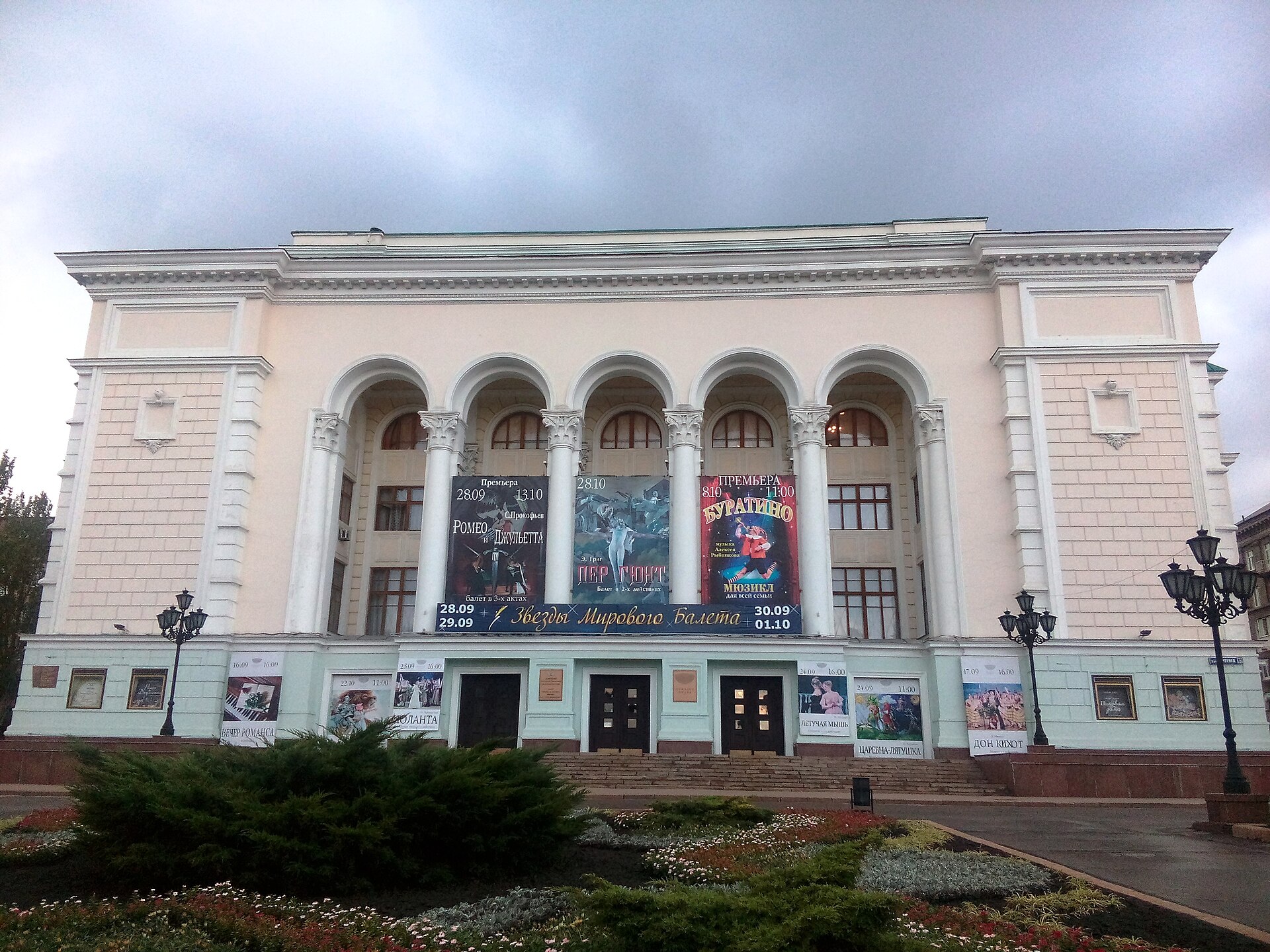
- Ahat Cami Mosque — North-western Donetsk
The Ahat Cami Mosque is a congregational mosque named after Akhat Bragin, with one minaret named for the businessman Rinat Akhmetov. It was built in the post-Soviet years and serves the city's Muslim community. Most visitors will see it from the street; entry for non-worshippers depends on the community, so ask politely and check current conditions first. - Church of St Joseph — Central Donetsk
The Roman Catholic parish church of St Joseph held its first service in 2006 and is regarded as the first Catholic church in the city. It is a small community in a mostly Orthodox setting, and the building also hosts organ concerts. Service and concert times change, so check locally rather than assuming. - Iverskiy Nunnery — North-western Donetsk
The Svyato-Iverskiy Ukrainian Orthodox nunnery opened in 2001, built around a church honouring the Iverskaya icon of the Mother of God and founded as a dependency of St Nicholas convent. It is a working religious community, so quiet and modest dress matter more than sightseeing. Early services are the calmest time to be there. - Temple of the Exaltation of the Cross — Western Donetsk
The Temple of the Exaltation of the Cross is an Orthodox church whose patronal feast falls every year on 27 September, when the parish gathers for the liturgy. At other times it is an ordinary neighbourhood church rather than a monument, best seen with respect for services in progress. - Holy Resurrection Cathedral — Central-eastern Donetsk
The golden-domed Sviato-Voskresensky temple has been in use since 2005 and was paid for with a donation from a mining company, which says a good deal about who built modern Donetsk. The bright domes stand out against the grey of the surrounding blocks, and the cathedral is a common reference point on the eastern side of the centre.
Culture
Donetsk is a city of miners, steelworkers and engineers, and its culture grew out of shifts, factory housing and company towns rather than court life. Pride in the workforce shows in the Monument to Coalminers and in the way coal appears in local imagery. The Opera and Ballet Theatre, built in 1936, has hosted a ballet company since 1946, a sign that the Soviet city invested in performance as well as production. Religious life has widened since the Soviet era: Orthodox churches and convents sit alongside a Catholic parish from 2006 and a congregational mosque. The Welsh founding is a quiet thread, remembered more in history books than on the street. Both Ukrainian and Russian are heard, and the language a person chooses can carry political weight since 2014, so it is wise to listen before speaking and to avoid assumptions about identity or loyalty. Conversation about the war is personal; many residents have lost relatives, homes or contact with family elsewhere. Humility and a willingness to listen go further than opinion. Public buildings, checkpoints and uniformed people are sensitive in a conflict zone. Dress modestly at Orthodox churches and convents, with covered shoulders and, for women, a head covering, and never photograph soldiers, checkpoints, official buildings or worshippers without clear permission.
What to wear
The traditional dress of Ukraine is built around the vyshyvanka, an embroidered shirt in linen or cotton, worked in red and black or in coloured threads, with patterns that differ from one region to another. Women add woven belts, beaded necklaces and, for celebrations, flower wreaths; men wear the shirt with a sash and wide trousers. In Donetsk these garments appear at weddings, folk festivals and national holidays, and many people put on a vyshyvanka as a quiet statement of identity. Donbas has its own working culture too: the miner's overalls, boots and helmet are part of how the region sees itself. Everyday dress today is urban and practical, with jackets, jeans, trainers and sportswear, plus heavy coats, boots and fur or knitted hats through the cold winters. People dress smartly for the theatre and for church. A visitor, if circumstances ever allow a visit, should wear layers for hot summers and harsh winters, sturdy closed shoes for broken pavements and rough ground, and modest clothes for churches and convents, meaning covered shoulders and knees and a scarf for women. Avoid camouflage, military-style clothing or anything that could be mistaken for a uniform; in a conflict zone it draws exactly the wrong attention.
What to eat
- Borshch — Home-style Ukrainian canteens and bistro-type cafés on the central avenues
Borshch is the beetroot soup of Ukrainian home cooking, with cabbage, potato and often meat, served with sour cream and dark bread. It is the dish most residents would name first, and is usually served as a hearty lunch. - Varenyky — Canteens, café-style eateries and local markets
Varenyky are boiled dumplings stuffed with potato, cabbage, cheese or cherries, and served with sour cream, fried onions or butter. They suit a cold day and are easy to find in the simpler Ukrainian-style eateries. - Deruny — Canteens and family-run cafés
Deruny are crisp potato pancakes, fried until golden and eaten with sour cream or alongside meat or mushrooms. They are filling working-city food that has no need of an introduction. - Holubtsi — Home-style canteens and set-lunch eateries
Holubtsi are cabbage rolls stuffed with rice and minced meat, simmered in a tomato sauce. They are a staple of family tables and of the set lunches in simple eateries, usually served hot with a spoon of sour cream. - Salo with rye bread — Markets and home-style eateries
Salo is cured pork fat, sliced thin and eaten with dark rye bread, garlic and pickles, often alongside a drink. It is an acquired taste for some and a point of pride for many Ukrainians, and tends to appear on celebratory tables.
Plan it
Best time. May–June and September–October are the milder stretches on this continental steppe, between hot summers and cold winters. In practice, security matters far more than weather.
How long. 2
Getting there. Donetsk lost its international airport during the 2014 conflict, so flying into the city is no longer an option. Overland routes now run through Russian-controlled territory, and one rail link from Kazakhstan needs at least a Russian transit visa. Most governments advise against travel to the area, and entering from the Russian side can carry legal consequences under Ukrainian law, so read your government's current travel advice first.
Budget. mid
Tips
- Check your government's travel advice and your insurer's cover before making any plan; many policies exclude conflict zones.
- Do not rely on cards or foreign banking; assume limited access to cash machines and no international roaming.
- Bring any medicines you need and a basic first-aid kit, as supplies and services may be disrupted.
- Do not travel without a trusted local contact or an organisation that knows current conditions.
- For background, the city's official website is https://gorod-donetsk.com/, though it reflects the occupying authorities.
Etiquette
- Do not photograph soldiers, checkpoints or official buildings.
- Avoid political arguments; listen first, as the war has touched almost every family.
- Cover shoulders, knees and, for women, hair when visiting Orthodox churches and convents.
Nearby
Sources
- Wikidata Q43070 (CC0)
- Wikipedia: Donetsk (rev 1385009442) (CC BY-SA 4.0)
- Wikivoyage: Donetsk (rev 5401209) (CC BY-SA 4.0)
- Photo 01-003.jpg — Andrew Butko (CC BY 3.0)
- Photo 02-panoramio-2.jpg — Olya Usovaツ (CC BY 3.0)
- Photo 03-.jpg — Tutti 7 (CC BY-SA 4.0)
- Photo 04-2012-panoramio.jpg — Валерий Дед (CC BY 3.0)
- Photo 05-2017.jpg — SerovaYuliya (CC BY-SA 4.0)
- Photo 06-bridge-on-ilicha-prospect-in-donetsk-2008.jpg — SergKh78 (CC BY-SA 4.0)
- Photo 07-004.jpg — Andrew Butko (CC BY 3.0)
- Photo 08-stadtplan-stalino-loc-2012593213.jpg — Germany. Heer (Public domain)


