Ostia Antica
Ostia Antica, Italy
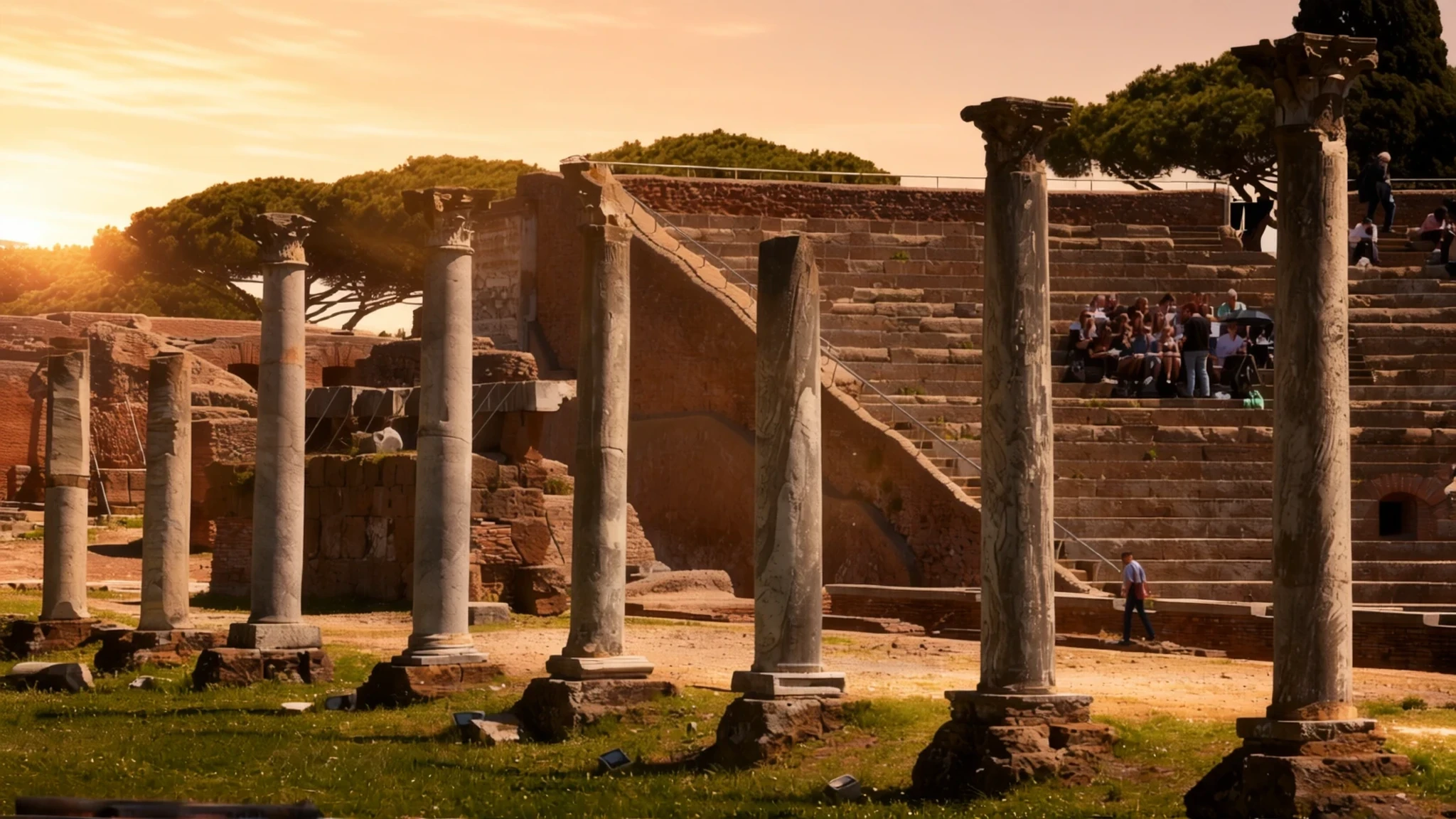
Ostia Antica is Rome's ruined port town, with streets, shops, apartment blocks and baths to wander at an unhurried pace.
The place
Ostia Antica is the modern name for the ancient Roman city of Ostia, the harbour town that once served Rome at the mouth of the Tiber. It lies about 25 km from the capital, close to the present-day seaside suburb of Ostia, and it is an easy trip out of the city. The river has since pushed the coastline outward with its silt, so the ruins now sit about 3 km from the water. The name comes from the Latin word for 'mouth', which tells you what the town was for. Today the site is a broad archaeological park of brick buildings, paved streets, mosaics and traces of painted plaster, shaded by pines and cut through with long straight roads. The oldest core was a rectangular military-style camp laid out on two crossing main streets, the cardo and the decumanus maximus. The decumanus follows the line of the road from Rome, and it is still the best spine for walking the site. Because sand buried the town after it was abandoned, the buildings survived unusually well, and they show how ordinary Romans lived and worked in ways the monuments of Rome itself cannot. Visitors find warehouses, bakeries, taverns, bathhouses and apartment blocks, not only temples. The site is large and mostly open to the sky, so it feels spacious even on a busy day, and the pace is far calmer than at Rome's headline ruins. Founded around 700 BCE according to the tradition recorded in the facts, it is a place to spend a half day or more.
Its story
Ostia Antica began, by legend, as a colony founded by Ancus Marcius, the fourth king of Rome, who is said to have destroyed the nearby town of Ficana and planted a settlement closer to the sea. An inscription seems to support a camp here as early as the 7th century BC, though the oldest physical remains found so far belong to the 4th century BC. The buildings still standing from the earliest phase date to the 3rd century BC, among them the fortified camp and, a little later, the Capitolium, a temple to Jupiter, Juno and Minerva. In 267 BC the town hosted an official in charge of the fleet during the First Punic War, and its naval and supply role grew through the wars with Carthage; its people were excused from army service as a reward. By the 2nd century BC the place had become above all a grain port for Rome. Warehouses and houses spilled beyond the old walls, and a magistrate seized extra land across the river to build more quays, because the original docks could no longer cope. Even so, Rome kept outgrowing what Ostia could handle, and the larger harbour at Puteoli took on much of the supply trade. Fighting reached Ostia in the civil wars of the 80s BC. The town stayed prosperous long after, even as its harbour declined, and when it was eventually abandoned, drifting sand covered it and kept the ruins intact for later excavators.
What to see
- The Theatre — Near the Piazzale delle Corporazioni
The theatre at Ostia Antica has tiered seating of brick and stone that can be climbed for a view over the site. From the top the layout of nearby streets and the pines beyond become clear. It is a good first stop to get oriented, and a good place to sit and rest.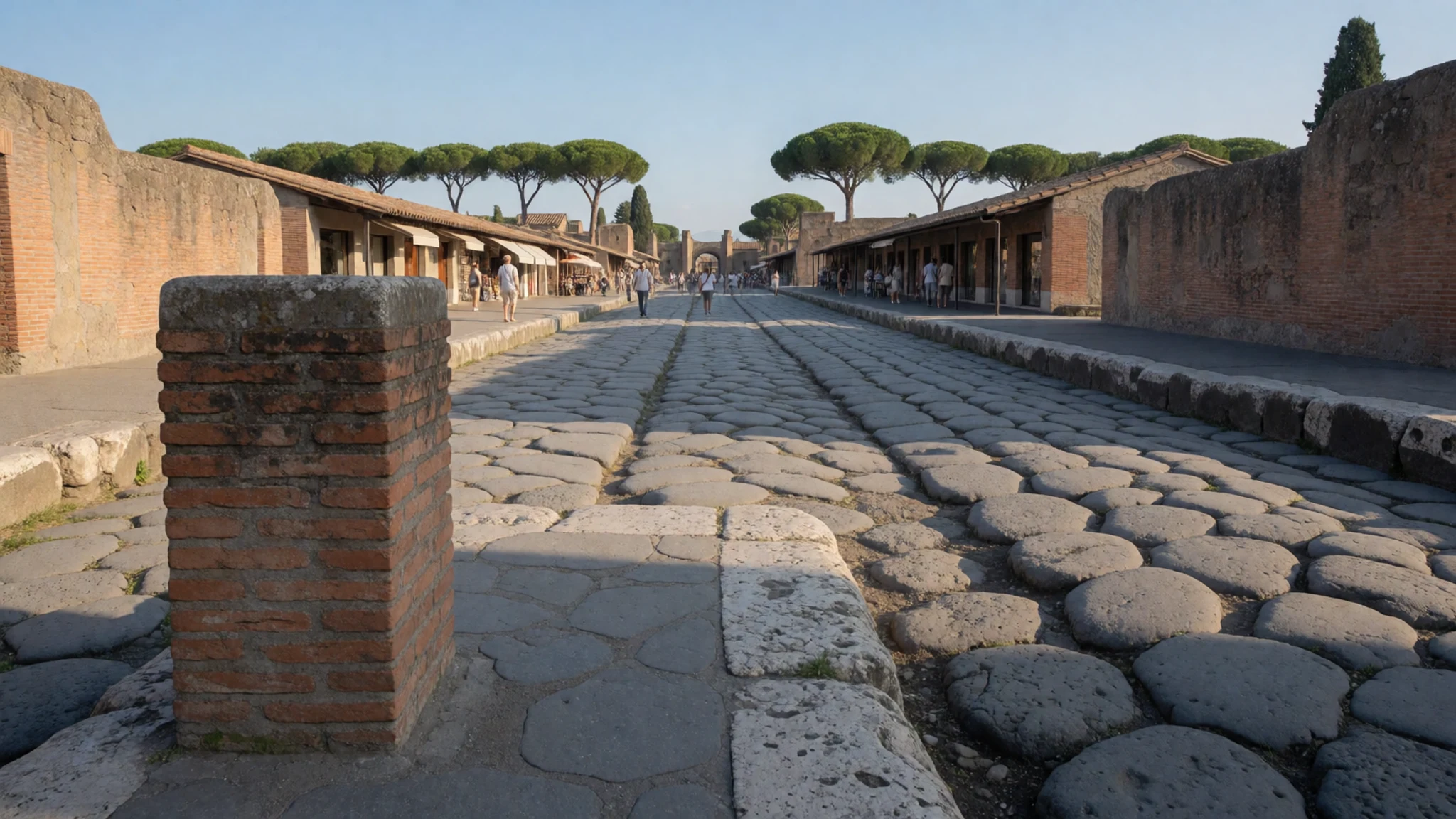
- Piazzale delle Corporazioni — Behind the theatre
Behind the theatre, this square was ringed by small offices of trading guilds and shipping agents. The black-and-white floor mosaics outside each room show ships, sea creatures and other emblems that advertised what each business handled. It is the clearest picture at Ostia Antica of how the port's commerce worked.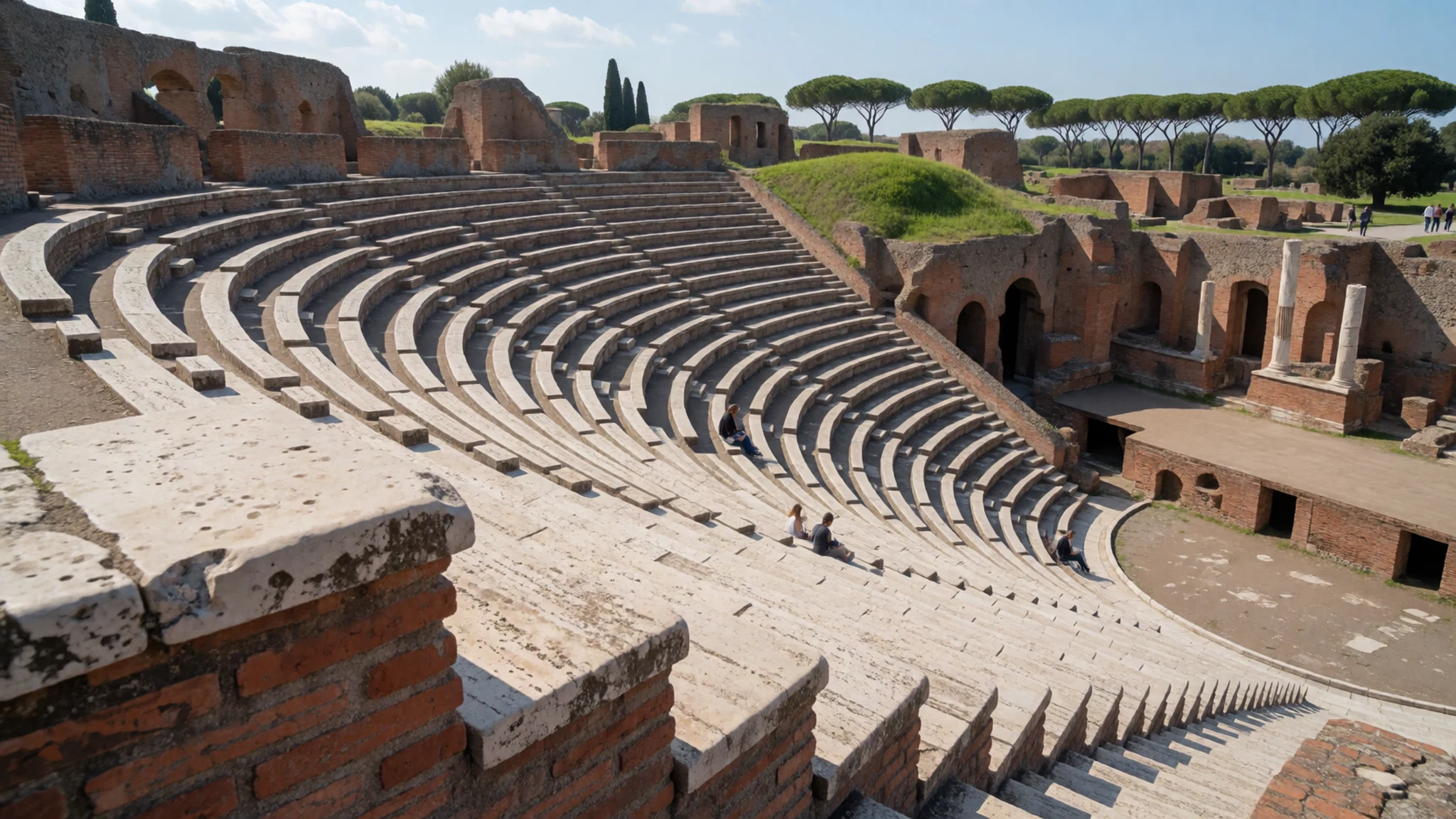
- Baths of the Forum — Central site, near the forum
The Terme del Foro were a large public bathing complex, and the cool hall known as the frigidarium still shows the scale of the rooms. Look for the mosaic floors and the way the heating and water systems were arranged. Bathing was a social habit here, not a luxury.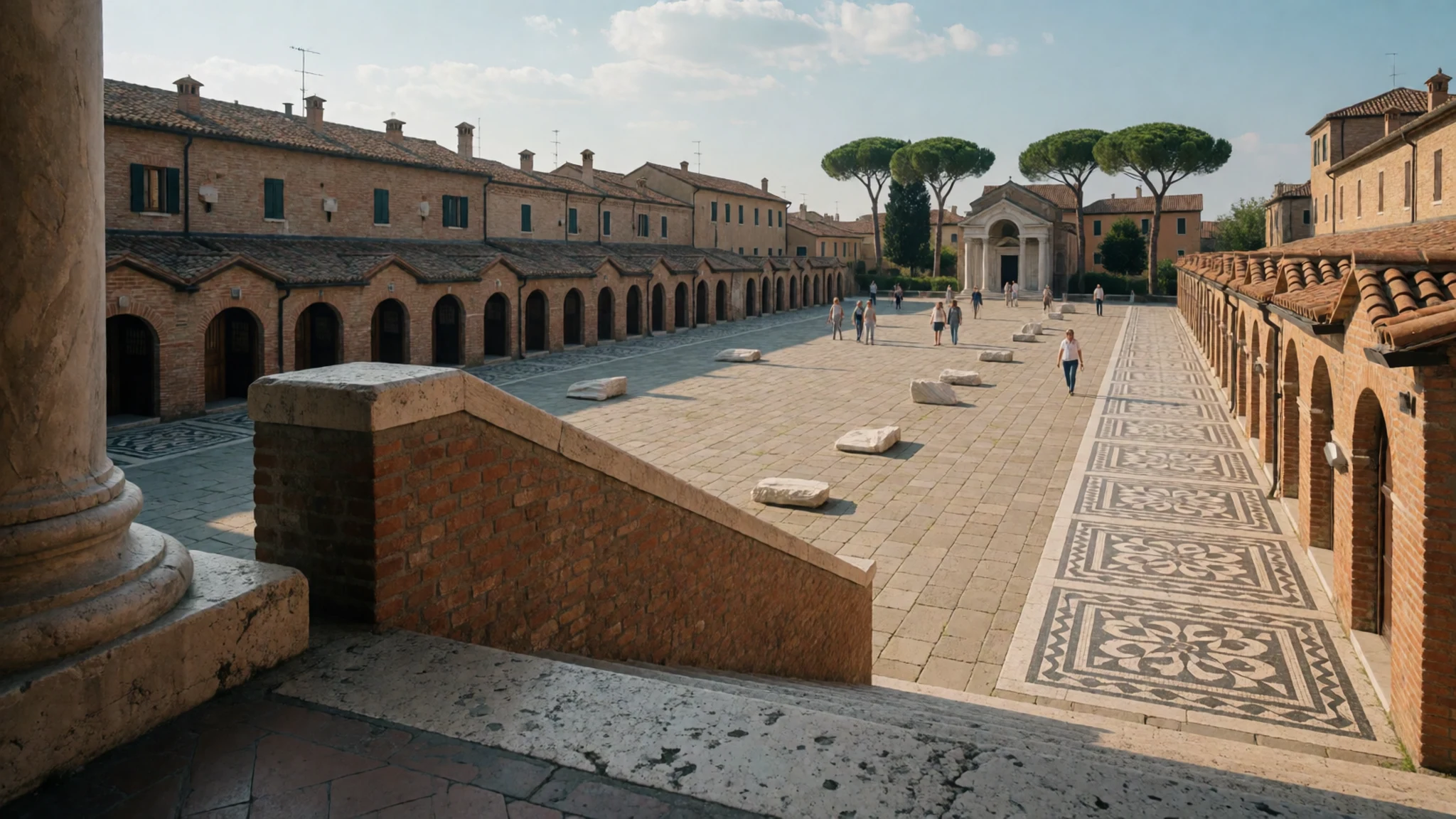
- Capitolium and Forum — Centre of the site
The forum was the civic heart of Ostia Antica, and the Capitolium rises at its head, a temple to Jupiter, Juno and Minerva. Its brick walls and the steps still dominate the open space. Stand where the town's officials once met and the street grid makes sense.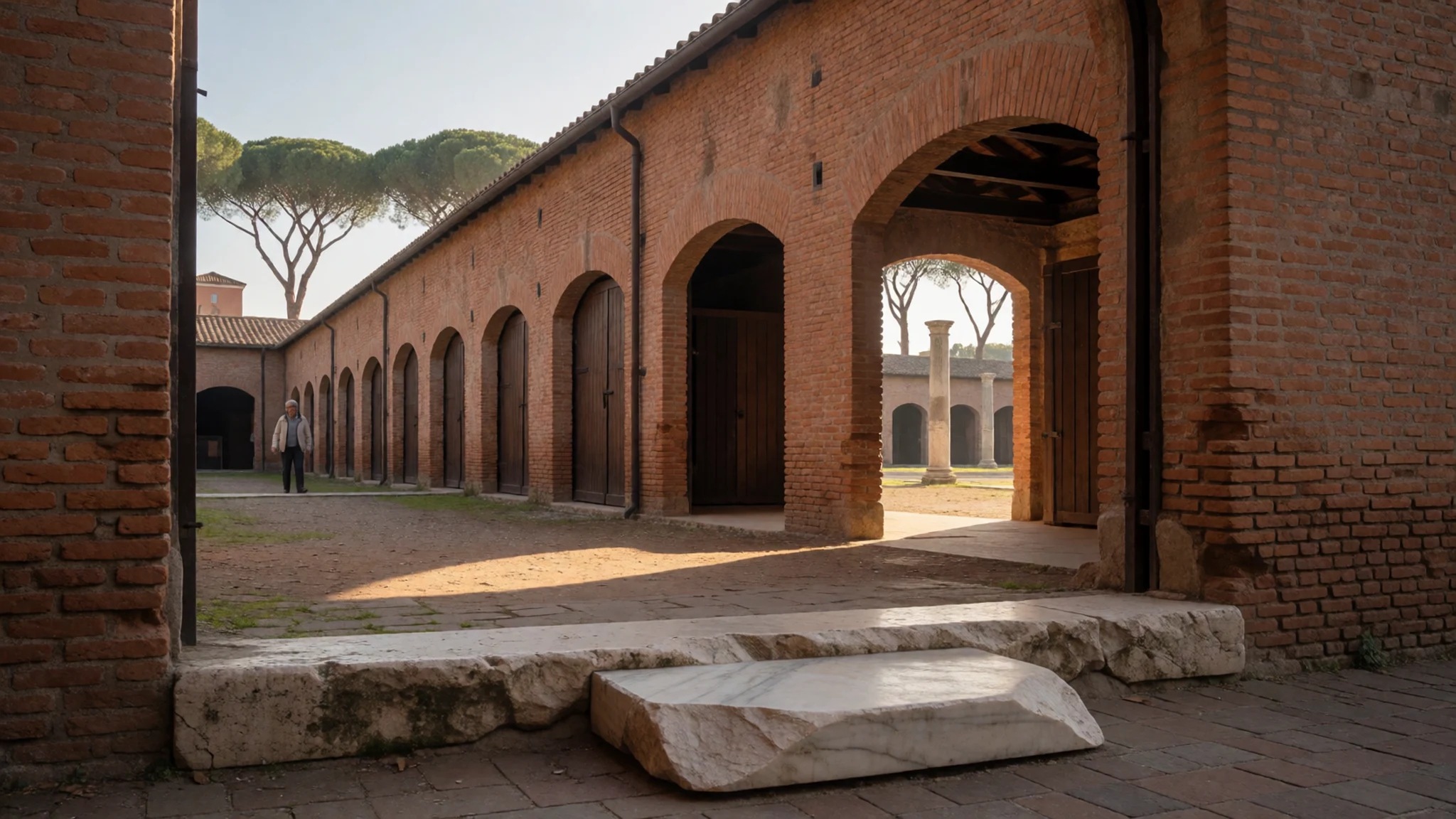
- Horrea Epagathiana and the apartment blocks — Eastern part of the site
Warehouses such as the Horrea Epagathiana show how grain and goods were stored near the quays, with a courtyard and rooms around it. Nearby are the multi-storey apartment blocks called insulae, including the one known as Diana's house, which reveal how ordinary families lived in a crowded port.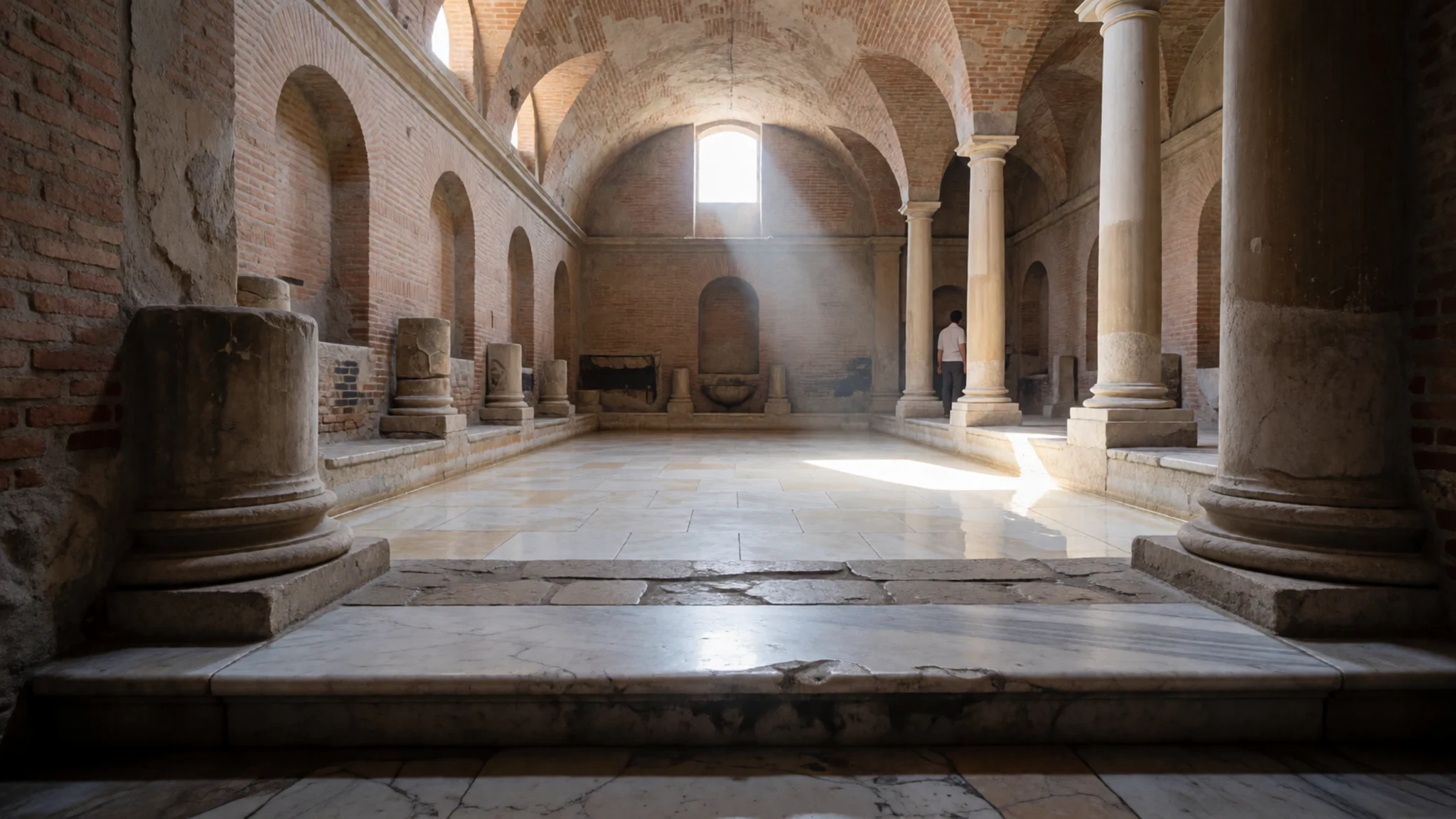
Culture
Ostia Antica is cared for as a state archaeological park, and the way Italians treat it is quietly protective rather than reverent. Locals come on weekends to picnic under the pines and to walk dogs along the older roads, and school groups are a regular sight on spring mornings. The site's identity is tied to commerce and everyday life, so the culture it expresses is practical: shops, offices, a theatre for entertainment, baths for socialising and small shrines where people of many origins worshipped. Archaeologists value it because it shows urban planning and daily routines that central Rome cannot, since later building there covered or replaced so much. Many visitors from India and the UK compare it to Pompeii, but its feel is gentler and greener, with far fewer crowds and long stretches of quiet. Italians generally treat ruins as shared heritage, so staff are firm about barriers, closed areas and staying on paths. Photography is welcome in most places, but tripods and drones usually need permission, which is worth checking on the official site. Guided tours and audio guides add a lot, as signs are limited in places and the layout can seem confusing at first. Stay on the marked paths and never climb on walls, columns or mosaics, even when others seem to be doing so.
What to wear
Ostia Antica belonged to a Roman world where dress marked status. Citizens wore the toga, a large semicircle of wool draped over a tunic, usually for formal occasions, while working people wore simpler tunics of wool or linen. Women wore the stola, a long gown over a tunic, and cloaks and shawls against the sea wind. Dyes, felt and woven cloth were traded through ports like this one. Nothing of that survives as everyday wear, and there is no modern costume tradition tied to the site itself. Italians today dress neatly but practically for the countryside and the coast: linen shirts, cotton trousers, sunglasses and comfortable trainers. A weekend crowd at the ruins looks relaxed and smart-casual, not formal. Visitors should plan for sun and uneven ground, because the site is largely open, with little shade except under pines. Wear sturdy, closed shoes with a good grip, since the ancient paving is rough and can be slippery after rain. Light, breathable clothes work best in summer, with a hat and sunscreen, and a light jacket helps in spring and autumn when the sea breeze is cool. There is no special dress code for the ruins, though covered shoulders are wise if you plan to visit a church in Rome on the same day.
What to eat
- Supplì — Fried-food counters and bakeries in modern Ostia and Rome
Supplì are fried rice croquettes with tomato sauce and a centre of melting mozzarella, which stretches into a string when bitten. They are a Roman snack, eaten hot from paper, and work well as a light bite before or after walking the ruins.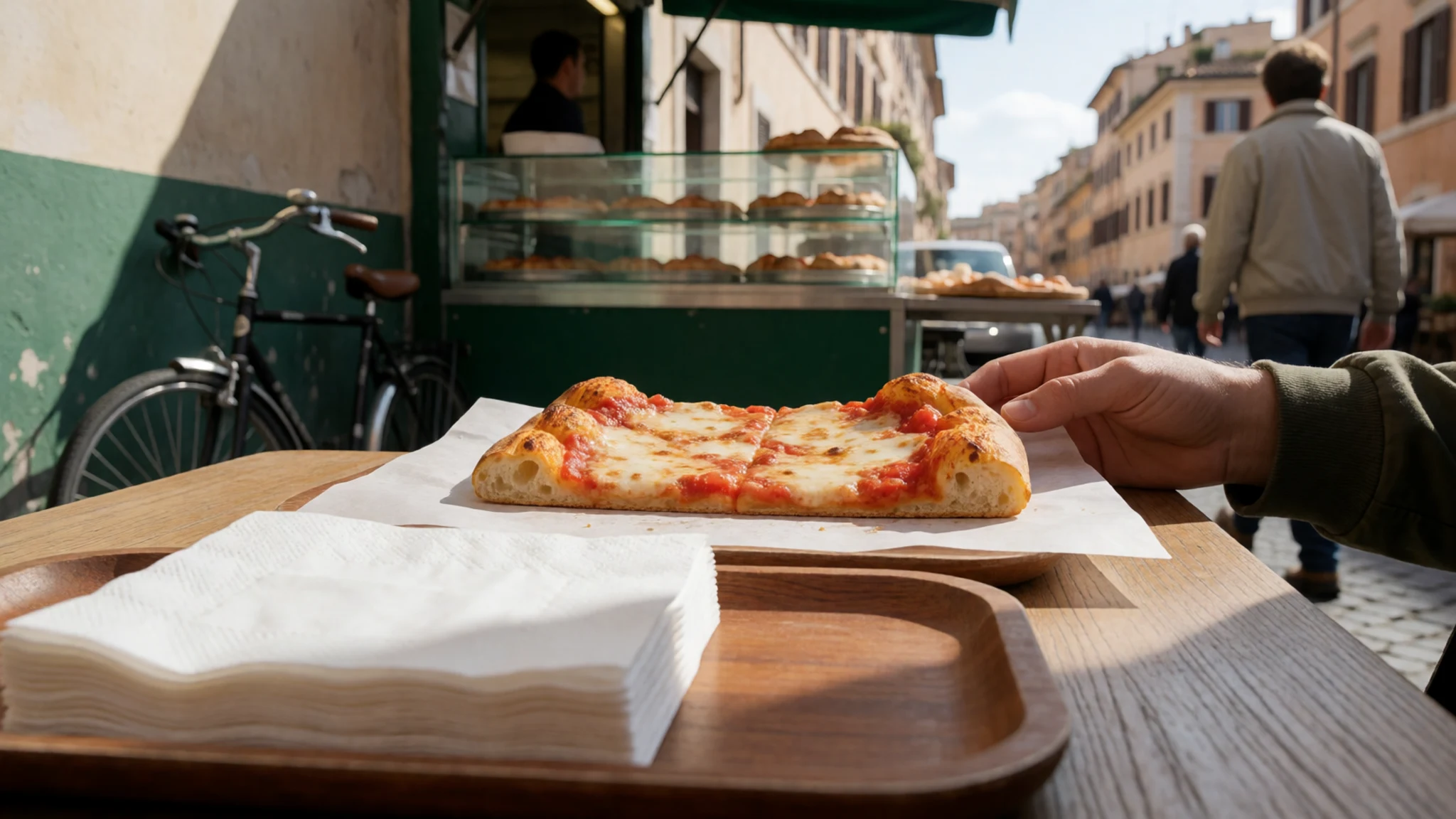
- Spaghetti alle vongole — Seafood restaurants along the seafront of modern Ostia
Spaghetti with clams is a coastal staple, cooked with olive oil, garlic, white wine and parsley, with the shells left on. The sauce is light and briny, and it suits the seaside setting of modern Ostia better than almost anything else on a menu.
- Cacio e pepe — Trattorias in Rome and in the village near the ruins
Cacio e pepe is a Roman pasta with pecorino cheese and black pepper, creamy without any cream. It is simple but hard to do well, and it is a reliable choice for vegetarians, though always ask whether any meat stock is used.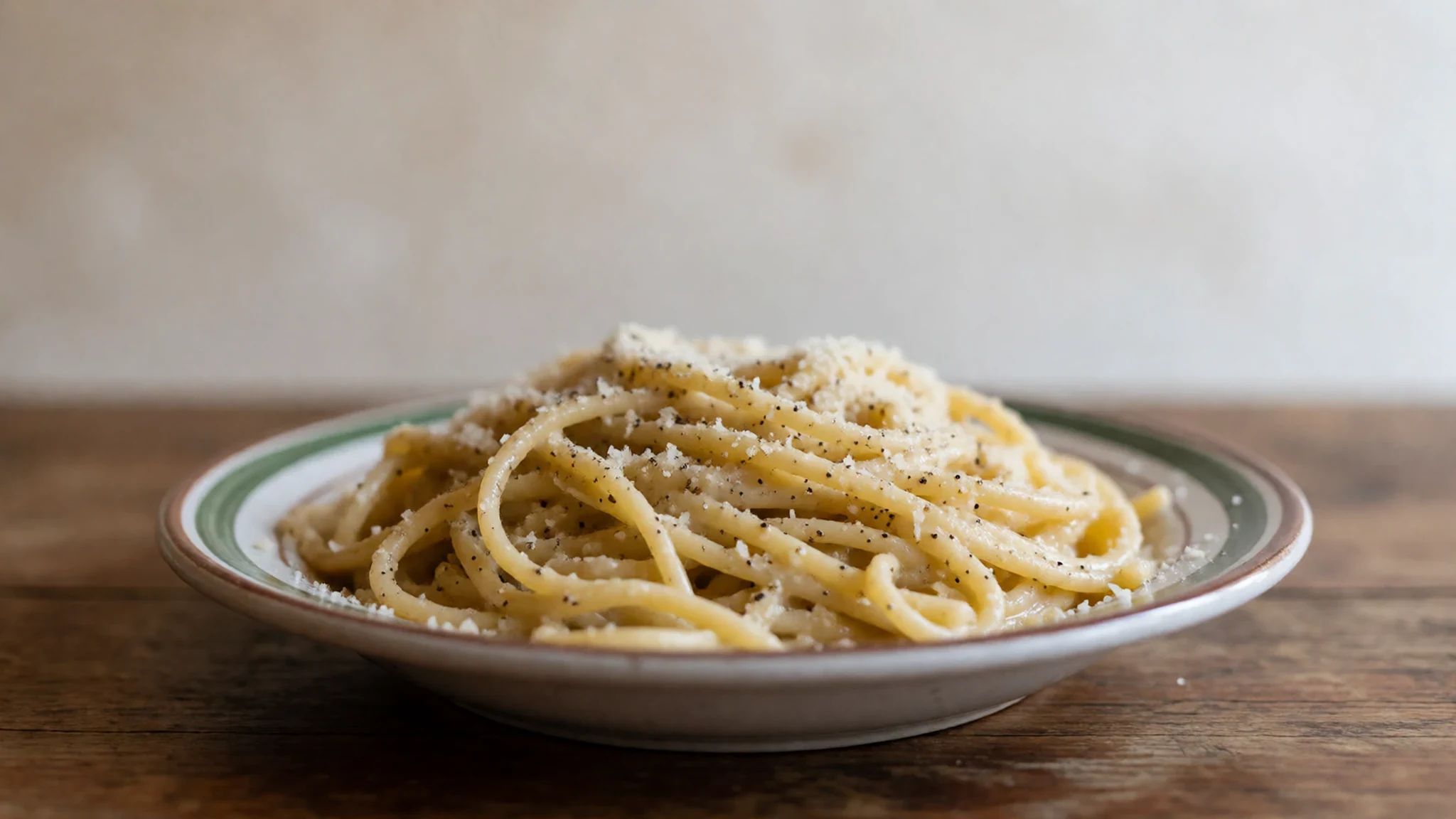
- Fritto misto di mare — Seaside restaurants and fish eateries near the coast
Fritto misto is a plate of lightly battered and fried seafood, often squid, prawns and small fish, served hot with lemon. It is a classic coastal lunch, best shared among a few people, and it pairs well with a cold white wine or sparkling water.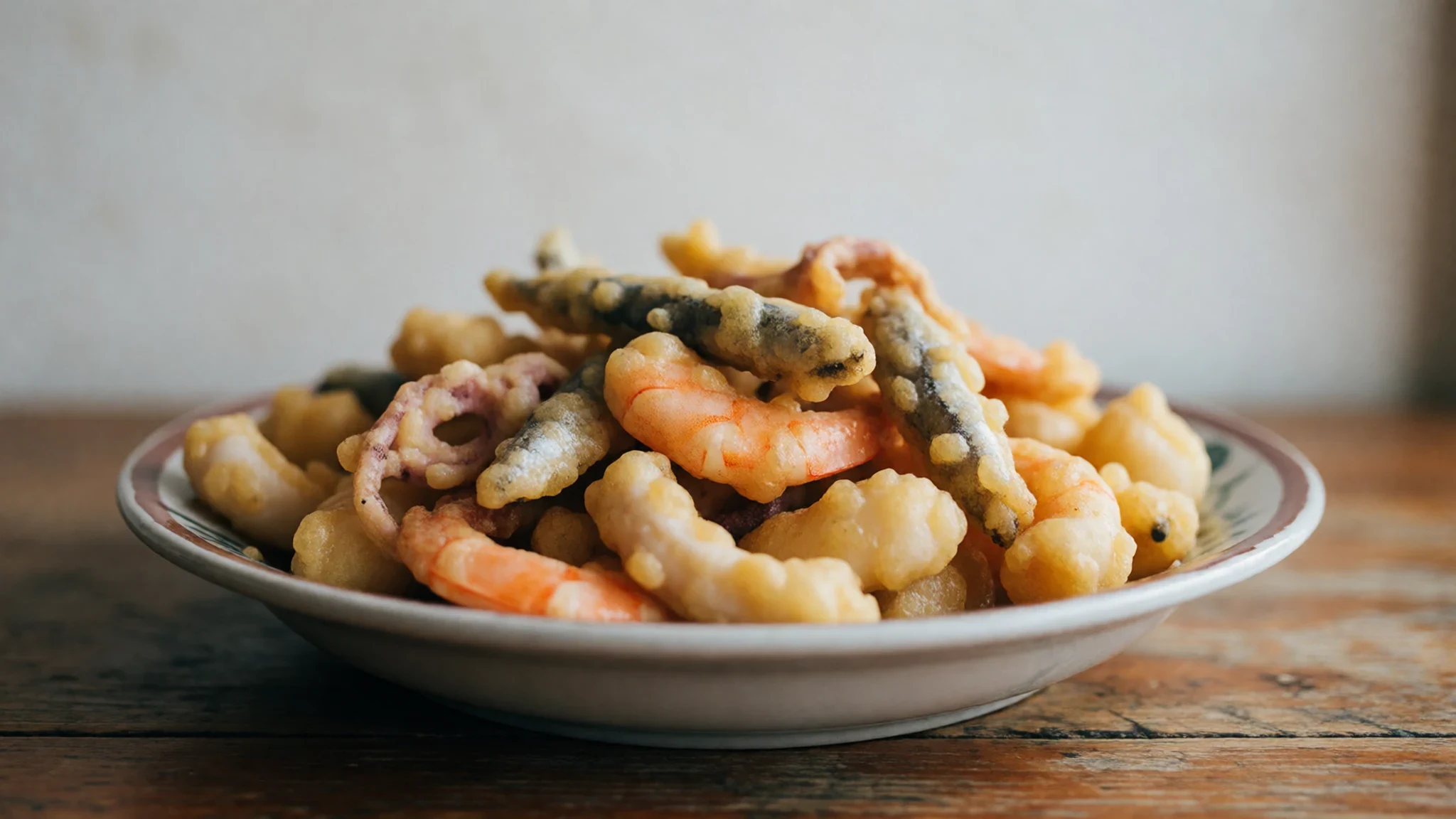
- Carciofi alla romana — Traditional Roman trattorias, especially in spring
Carciofi alla romana are whole artichokes stuffed with mint and garlic and braised in olive oil until tender. They appear on menus in spring, when artichokes are in season, and make a gentle, savoury starter that is naturally vegetarian.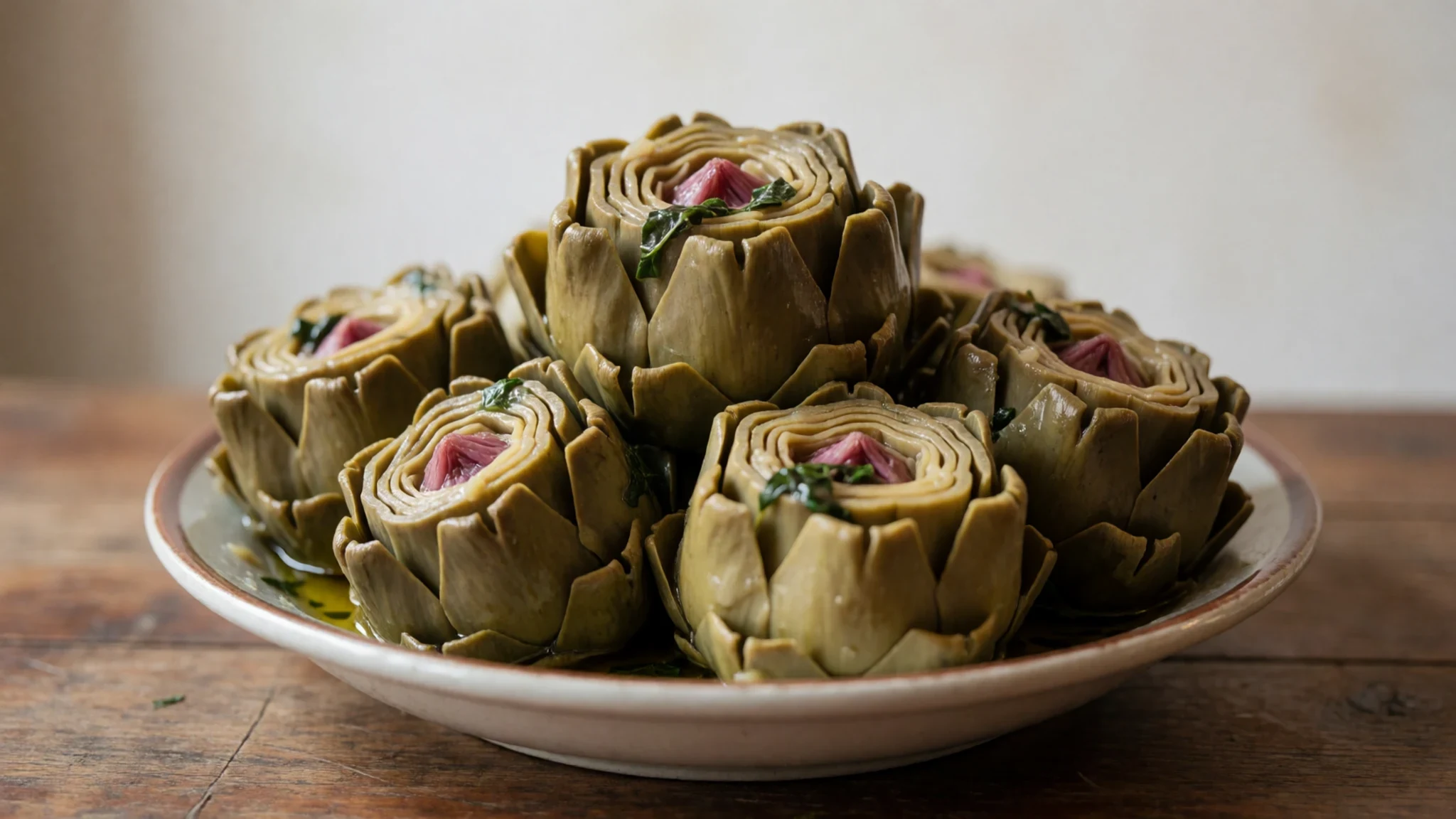
Plan it
Best time. April–May and October–November, when the weather is mild and walking the open site is comfortable. July and August are hot and sunny with little shade, so go early if visiting then. Winter is cooler and can be wet but is the quietest season.
How long. 1 (a half day is enough for the highlights)
Getting there. Fly into Leonardo da Vinci–Fiumicino Airport, which is close to the site, or reach Rome by train at Termini. From central Rome, a local train toward the coast reaches the Ostia Antica station in under an hour, and the entrance is a short walk away.
Budget. low
Tips
- Arrive in the morning to avoid heat and school groups
- Carry water and a hat, as shade is limited
- Check opening days and ticket details on the official site at https://www.ostiaantica.beniculturali.it/
- Wear sturdy shoes for uneven paving
- Allow time for the theatre and the Piazzale delle Corporazioni, which are easy to miss
Etiquette
- Stay on marked paths and off the walls and mosaics
- Ask before using a tripod or drone
- Keep noise low, especially in quieter corners of the site
Nearby
Sources
- Wikidata Q1012797 (CC0)
- Wikipedia: Ostia Antica (rev 1378877327) (CC BY-SA 4.0)
- Wikivoyage: Metropolitan Rome (rev 5078381) (CC BY-SA 4.0)
- Photo: Frigidarium, Terme del Foro (Marie-Lan Nguyen) (CC BY 2.5)
- Photo: La place des corporations (Jean-Pierre Dalbéra) (CC BY 2.5)
- Photo: Map of Ostia Antica (MM) (CC BY-SA 1.0)
- Photo: Panoramica Teatro di Ostia (Livioandronico2013) (CC BY 3.0)
- Photo: The Theater in Ostia Antica (Rabax63) (CC BY-SA 4.0)
- Photo: Horrea Epagathiana (Sailko) (CC BY 3.0)
- Photo: La maison de Diane (Jean-Pierre Dalbéra) (CC BY 2.5)
- Photo: Schematic plan with the castrum (MM) (CC BY 3.0)


