Orkhon Valley
Orkhon Valley, Mongolia
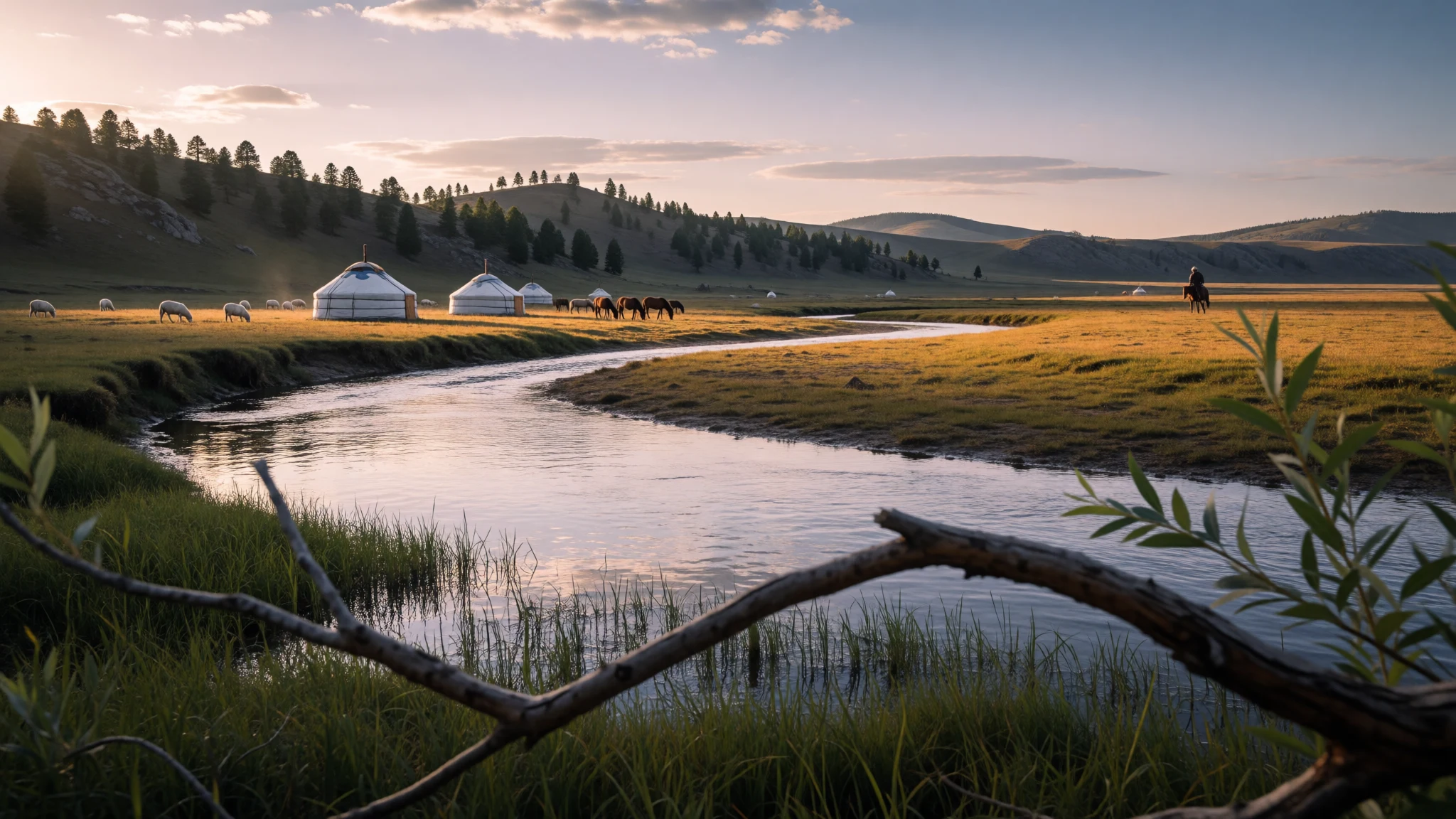
Orkhon Valley is a grassland river corridor where herders still move with their animals and Mongolia's old imperial capital once stood.
The place
Orkhon Valley lies in central Mongolia, along the Orkhon River, a long day's journey west of Ulaanbaatar by road. It is a landscape rather than a single sight: open pasture, low ridges, patches of larch and pine on the cooler slopes, and a river that loops slowly through the middle. Herders live here in felt tents called gers and move their livestock between seasonal pastures. The pattern has run for more than two millennia, which is why UNESCO recognises the valley as a cultural landscape. Horses, sheep, goats, cattle and yaks often graze within sight of each other, and the commonest traffic is a herder on a motorbike checking on the flock.
The valley has no centre. Monastery walls, stone memorials, ruined settlements and a waterfall are spread over a wide area, and the distances are real, so a visit is a loop by vehicle rather than a stroll. Services are thin outside Kharkhorin, the small town at the valley's edge. Ger camps offer beds and meals in summer, and many close for the cold months.
Weather shapes everything. Summers are green, with warm days, cool nights and sudden rain. Winters are severe and the river freezes. Phone signal is patchy, and tracks turn to mud after storms. Travellers who accept that pace tend to remember the silence and the sky more than any single monument.
Its story
Orkhon Valley has been a political centre for steppe peoples as well as a pasture. Grass, water and shelter made it a natural base for herding societies, and a succession of rulers, among them Turkic and Uyghur khans and later the Mongols, set up their courts in or near it. Stone inscriptions and the outlines of old settlements survive from those earlier states, mostly unfenced and easy to miss without a guide.
The best-known chapter is Karakorum, the capital of the Mongol Empire, built on the plain by the river. It was a tent city turned trading town, where envoys, craftsmen and merchants from far-off lands met the court. When the empire's centre of power moved elsewhere, Karakorum declined and was eventually abandoned. Today almost nothing stands above ground except a few carved stone turtles that once held up monuments.
Buddhist monks later built Erdene Zuu monastery beside the ruins, and local tradition says stone from the dead capital went into its walls. Under the socialist government, campaigns against religion destroyed most Mongolian monasteries; Erdene Zuu was reduced and kept largely as a museum, then returned to worship after socialism ended.
UNESCO inscribed the valley as a cultural landscape because it shows how nomadic pastoral traditions developed over more than two millennia. That is the fair summary: an empire rose and fell here, and the herders carried on.
What to see
- The Orkhon River and its steppe — Central valley, along the river
The Orkhon River is the thread of the valley, and walking or riding along its banks explains the place better than any monument. Expect wide grassland, grazing herds, gers pitched near water and larch-dotted slopes. Mornings and evenings are best for light and for watching herders bring animals in. Allow time rather than racing between stops.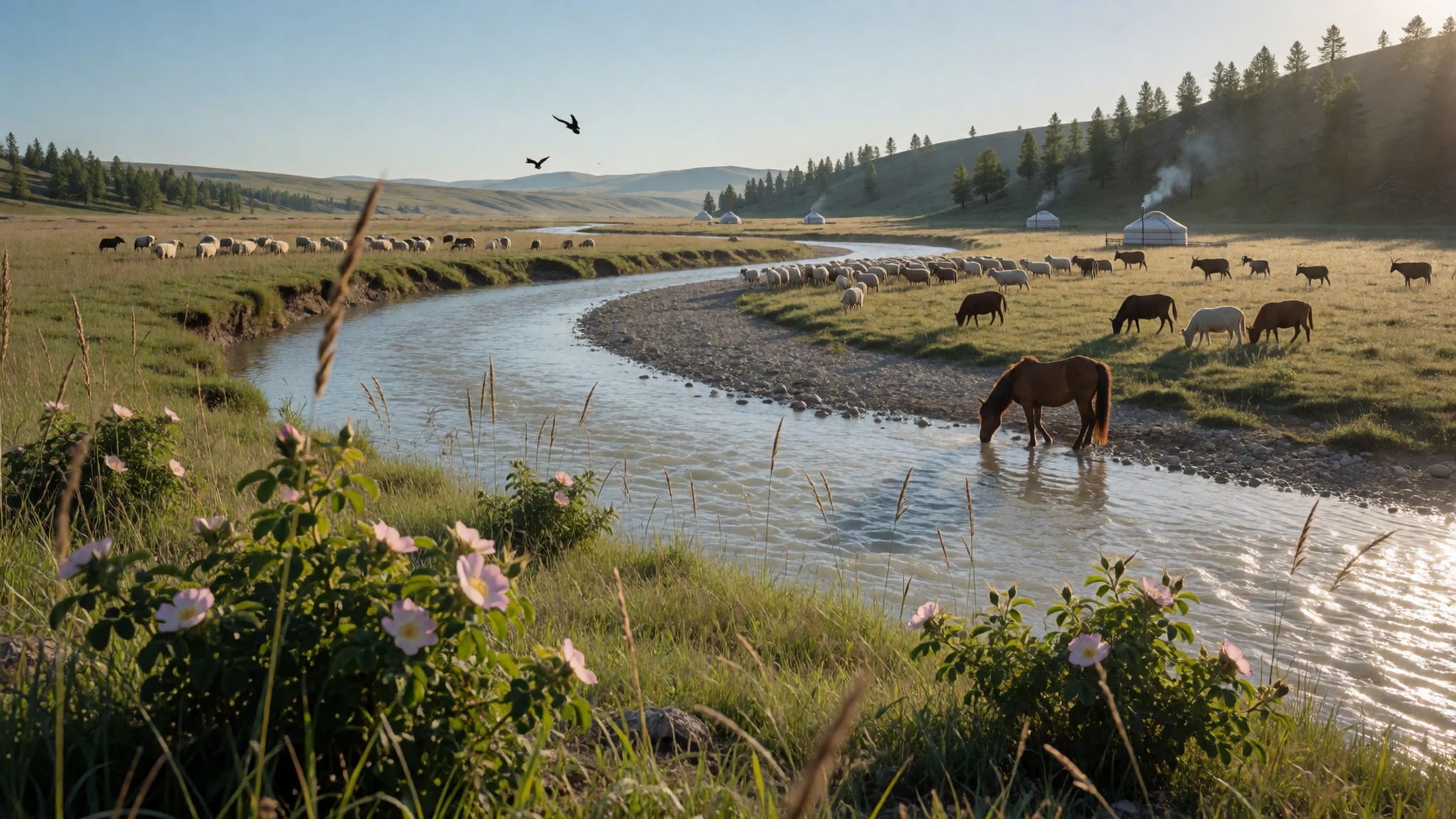
- Ulaan Tsutgalan Waterfall — Upper valley, near Bat-Ölzii
Here the river drops into a narrow volcanic gorge, a sudden break in an otherwise gentle landscape. A path leads down to the water and the basalt walls, and the spray is welcome on a warm day. The waterfall is a drive from the main sites, so plan it as a half-day stop. Footing can be slippery after rain.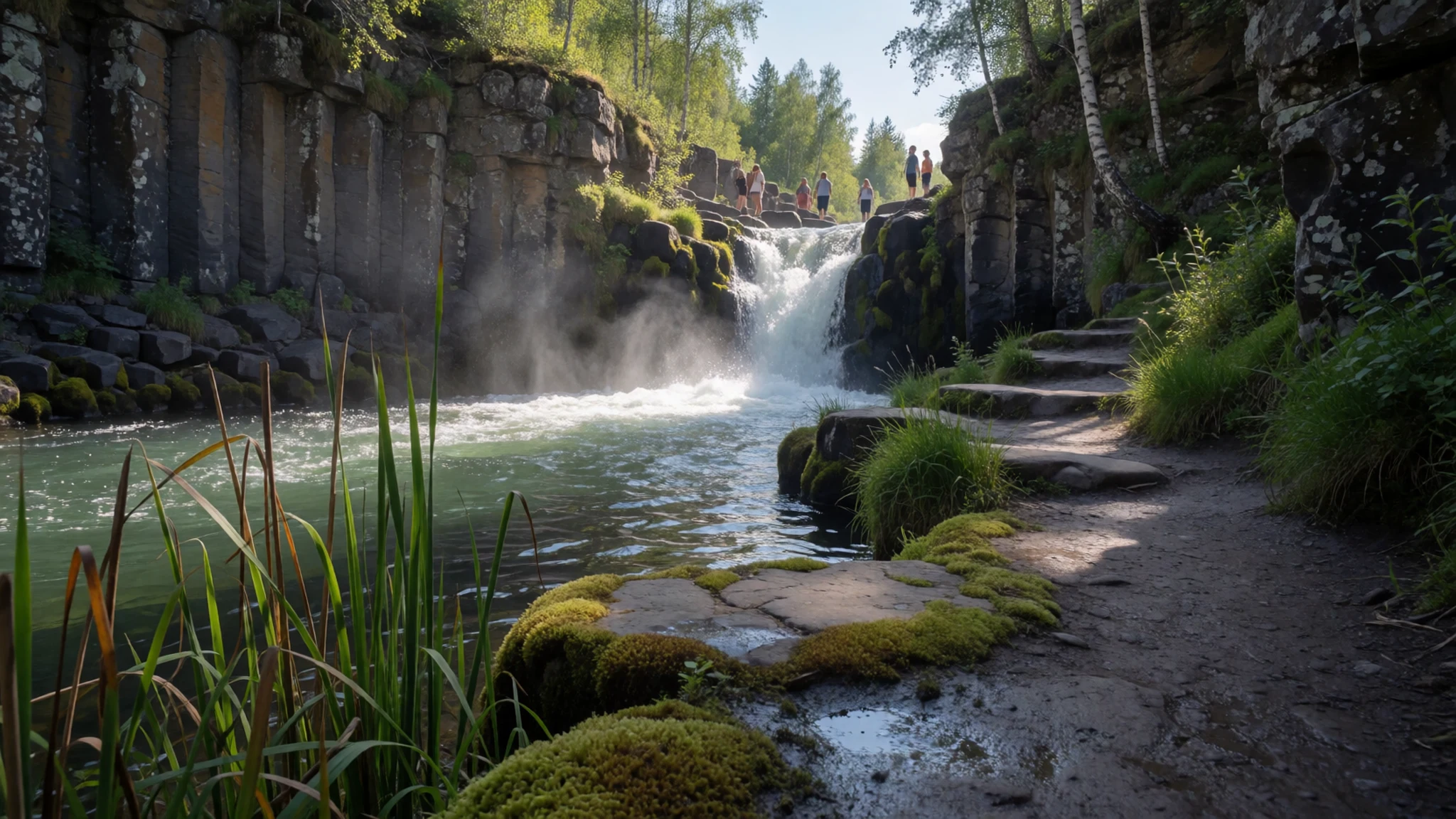
- Erdene Zuu Monastery — Kharkhorin
Erdene Zuu is a walled Buddhist monastery with a long perimeter of white stupas and a handful of surviving temples. Inside, there are painted halls, incense and monks at prayer on some days. It is the main place to understand how the Mongol capital's stones were reused. Check the official listing for opening arrangements before travelling.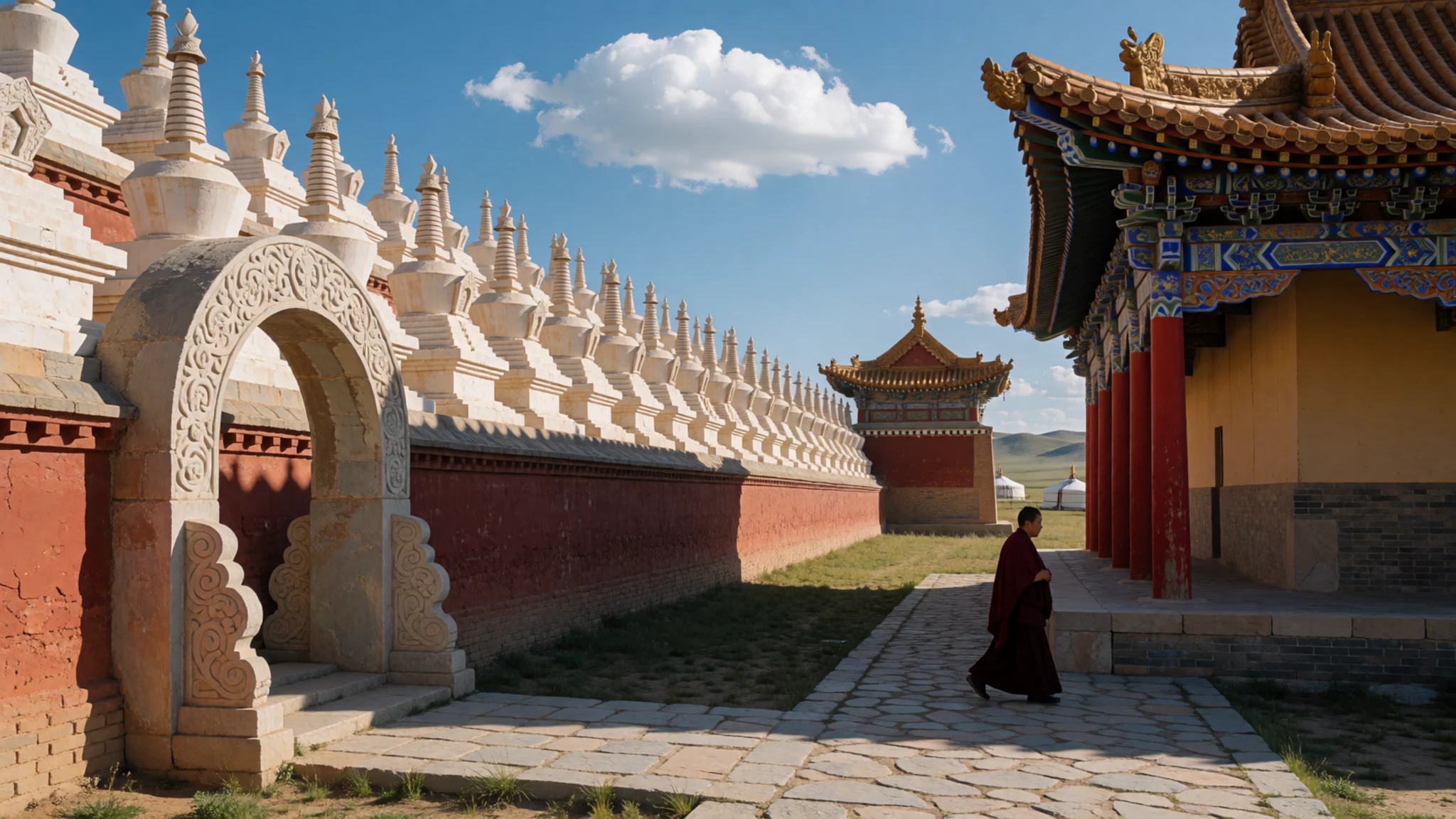
- Karakorum site and Kharkhorin — Kharkhorin and the old capital site
Little of Karakorum remains visible, but the open ground by Kharkhorin, with its stone turtles, helps a visitor picture the old capital. The nearby museum explains excavations and the empire's trade links. Kharkhorin itself is a practical base for fuel, food and supplies, with a modest market and guesthouses.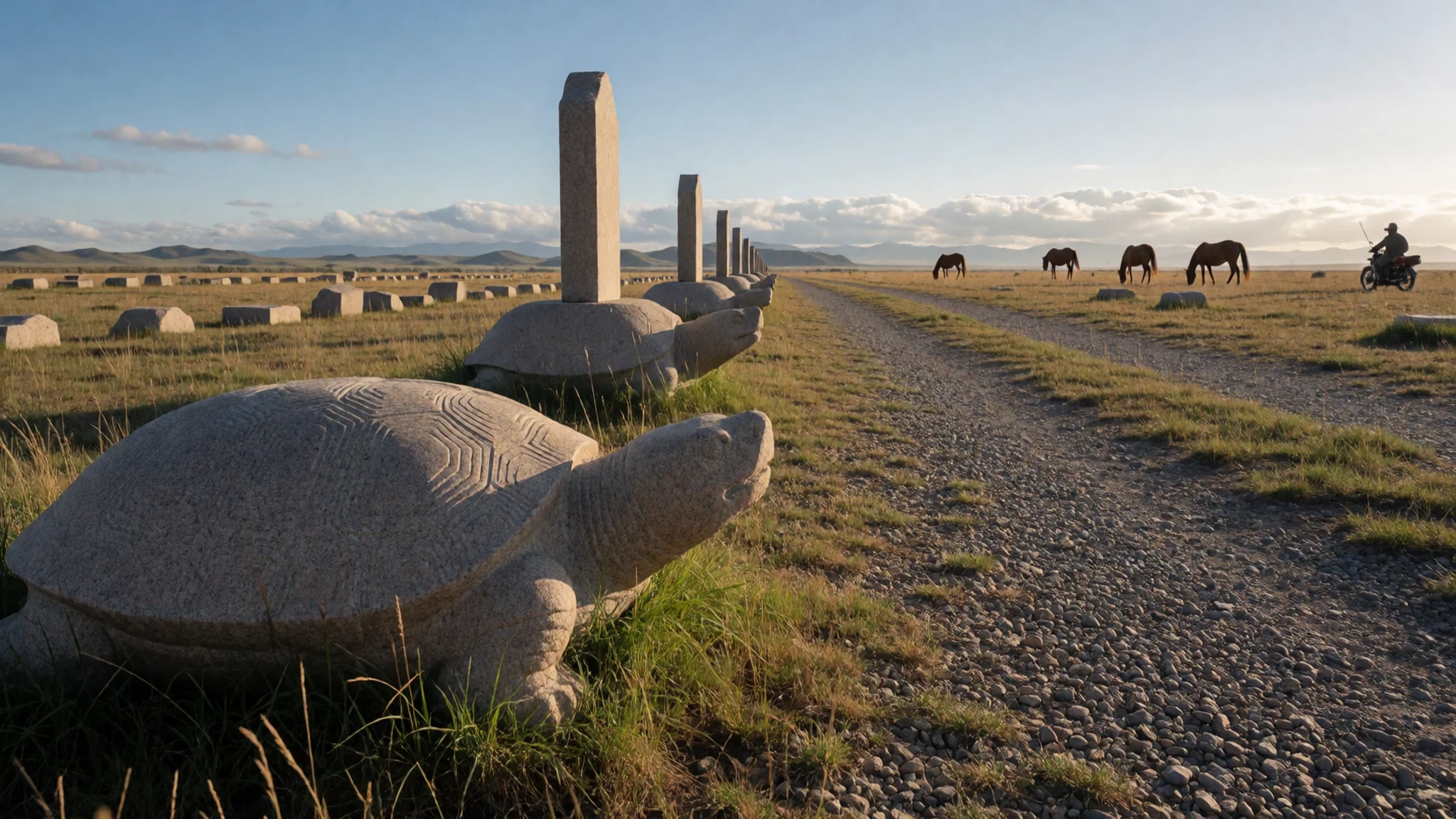
- Tuvkhun Hermitage — Hills above the valley, south-west of the river
Tuvkhun Hermitage is a small monastery site on a rocky hilltop above forested ground, reached by a steep climb through the trees. Hermits and teachers once used its caves and shrines for retreat. The views over the valley reward the effort, but allow time and carry water, since the path is rough and the weather can turn.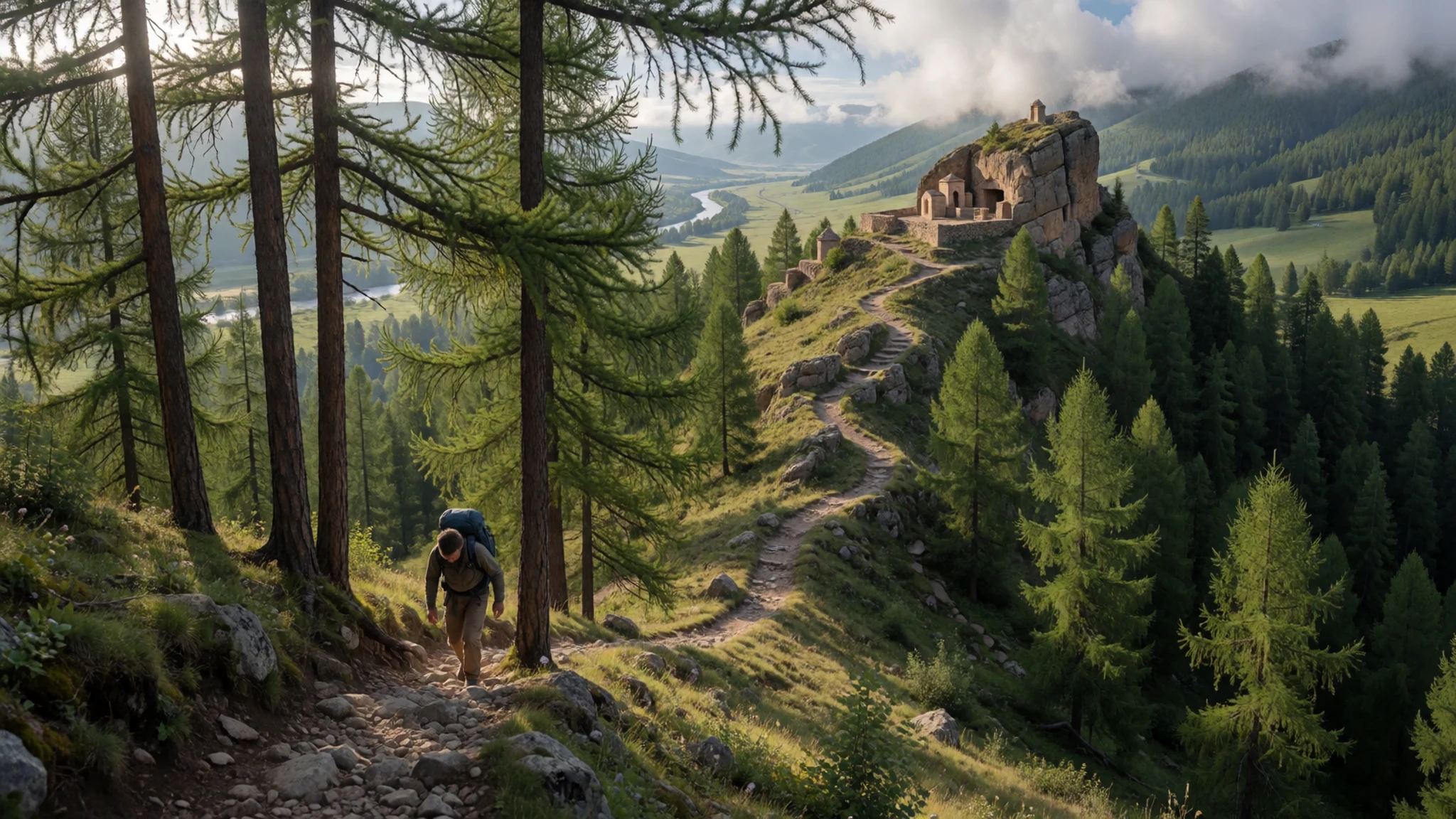
Culture
Orkhon Valley's culture is the culture of mobile herders, and it shows in small habits. The ger is home, kitchen and guest room in one, laid out with the stove at the centre, the family's honoured side at the back and a fixed order for who sits where. Hospitality is a duty: strangers are offered salty milk tea and something to eat, and refusing everything can seem odd.
Religion is a blend. Tibetan Buddhism is visible at Erdene Zuu and in prayer flags and small shrines, while older Mongolian beliefs about sky, mountains and rivers survive in cairns of stones called ovoo, built on passes and hilltops. Passers-by add a stone or a splash of milk and walk around the cairn, traditionally clockwise. Summer brings festivals of wrestling, archery and horse racing in the Naadam tradition, and local versions are held in towns and districts across the country.
The valley's history is carried lightly. Many families can name an ancestor's pasture, and herders are happy to talk about the seasons, horses and weather, especially over tea. Conversation is slow and unhurried, and an unexpected visit from a traveller is usually welcomed.
When entering a ger, step over the low threshold rather than on it, take your hat off, and accept food or drink with your right hand, or with both.
What to wear
Orkhon Valley's traditional dress is the deel, a long, wrap-over robe with a high collar and a fastening at the side, held in with a wide cloth sash. Everyday deels are cotton or wool, winter ones are lined or trimmed with sheepskin, and festival and wedding versions use silk brocade in deep colours. Boots called gutal, with turned-up toes and thick felt or leather, and felt or fur hats complete the outfit. Deels are worn for Naadam, weddings, New Year visits and by many older herders daily.
What people wear now is practical. Herders often wear a deel over trousers for work, then jeans, fleece and waterproofs for motorbike rides or town trips. In Kharkhorin, young people dress much as in any Asian city, with trainers, jackets and baseball caps.
Visitors should dress for changeable weather: several thin layers, a warm fleece, a waterproof shell and a sun hat, since days can be bright, cool and wet within hours. Sturdy walking boots suit uneven ground, river banks and the climb to hermitages. At monasteries, cover shoulders and knees and remove hats inside. Mosquitoes and biting flies can be a nuisance near water in summer, so long sleeves and repellent help. Winter travel needs serious insulation, including proper boots and gloves.
What to eat
- Khuushuur — Canteens in Kharkhorin and roadside stops
A flat, fried pancake filled with minced mutton or beef and onion, crisp at the edges and juicy inside. It is the standard road-trip snack. Look for it in small canteens in Kharkhorin, at roadside stops and at ger camps during the summer season.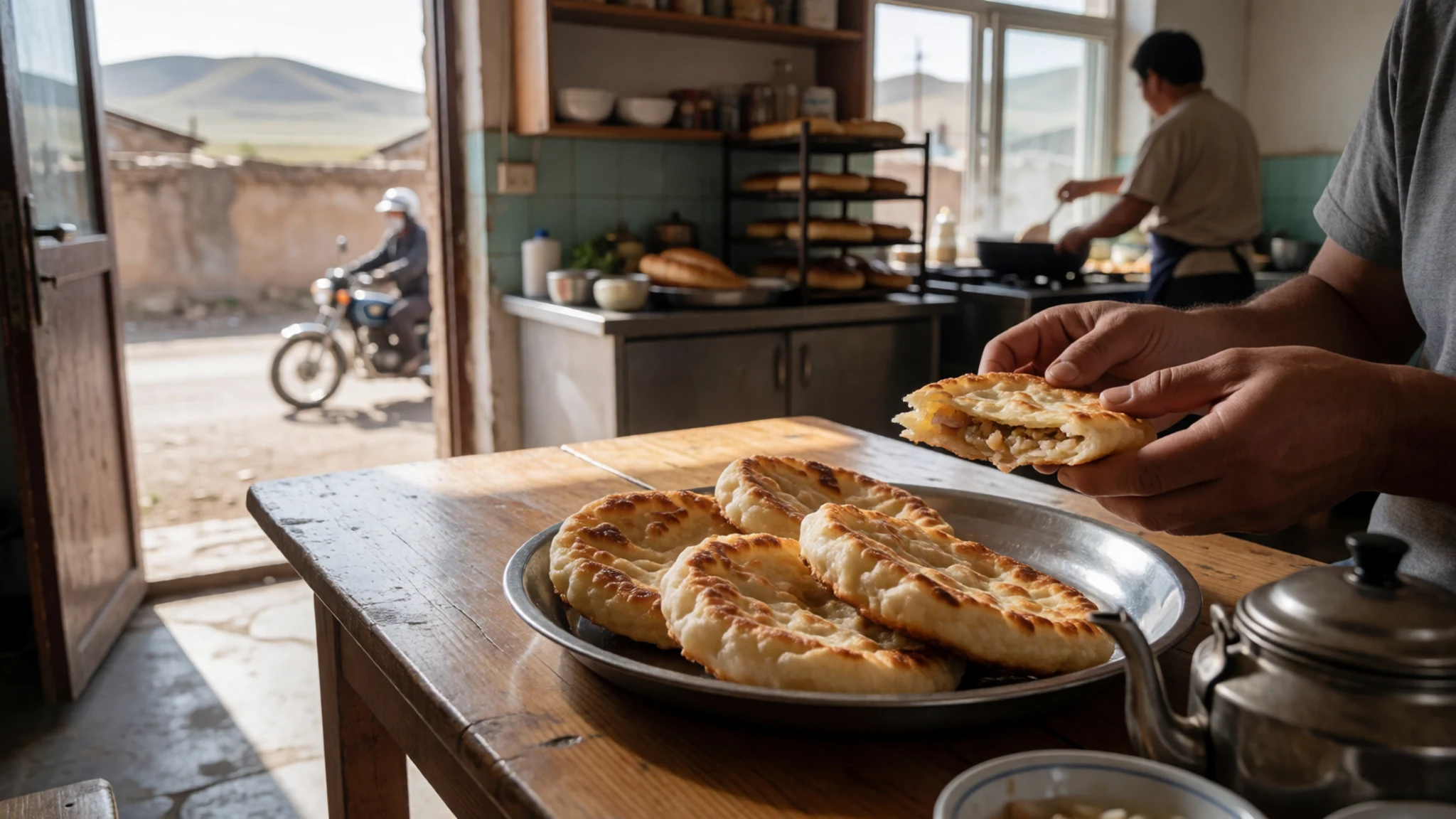
- Buuz — Ger camps and family eateries
Small steamed dumplings with a meat filling, often served in a heap and eaten by hand. They are a staple at celebrations and ordinary meals alike. Ger camps and family-run eateries in town usually make them to order, so expect a short wait.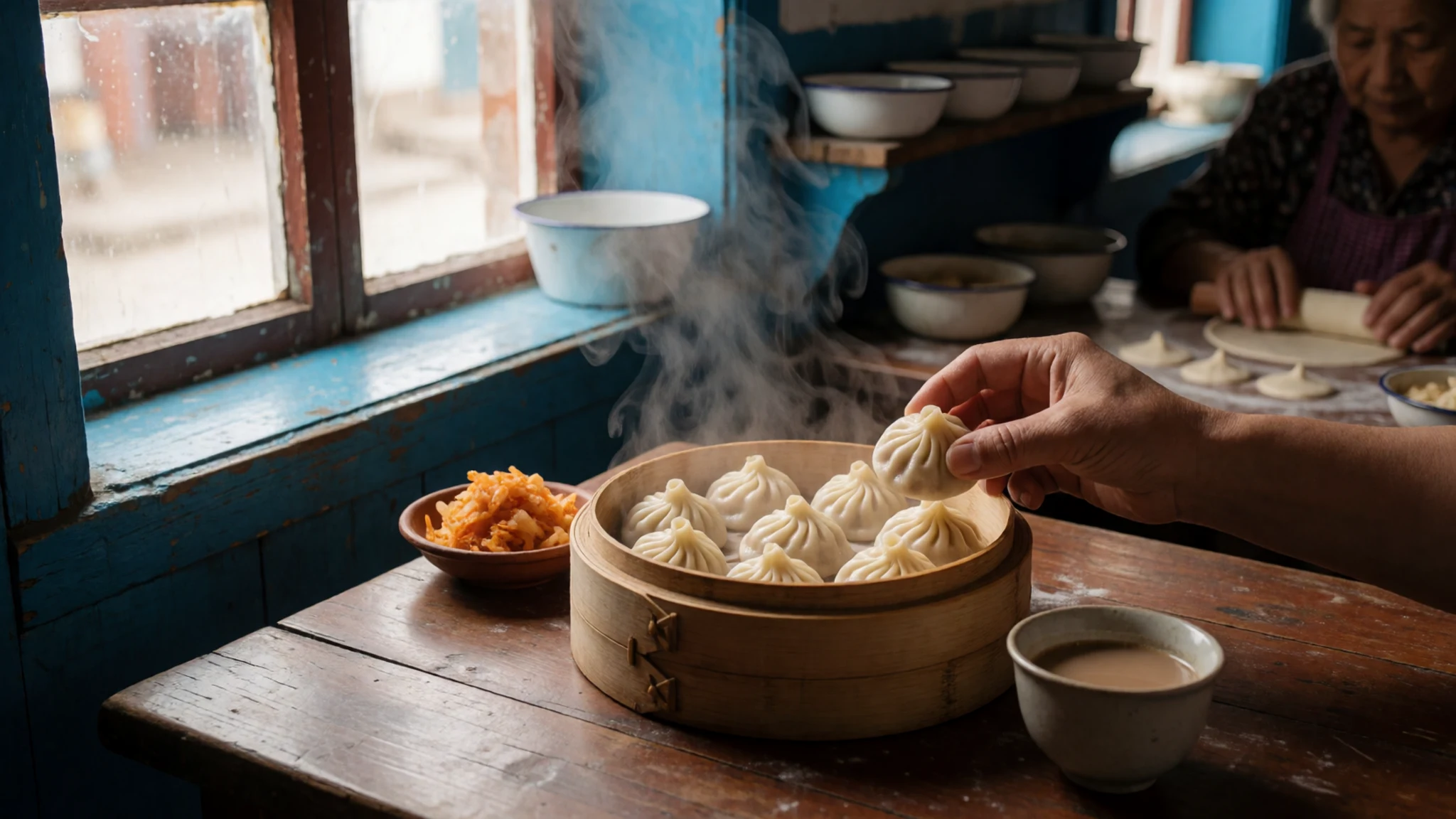
- Suutei tsai — Herder gers and ger camps
Salty milk tea, made with water, tea leaves, milk and salt, and sometimes with a little millet or butter. It is the first thing offered to guests in a herder's ger. The taste surprises many visitors, but a few sips are polite and it grows on people. - Airag — Herder camps in summer
Fermented mare's milk, lightly sour and slightly fizzy, made in summer when the horses foal and are milked. Families serve it in bowls and it is strongly tied to the season. Try a small amount first, because it can upset unaccustomed stomachs. - Tsuivan — Local canteens and ger camps
Hand-cut noodles stir-fried or steamed with mutton, carrot, onion and cabbage. It is hearty, filling and made in many homes. Local canteens and ger camps tend to serve it at lunch or dinner, and portions are generous.
Plan it
Best time. Late June to early September, when the grass is green, roads are passable and ger camps are open. Midsummer brings warm days, cool nights and afternoon storms. Winters are severe and many camps close, so travel outside summer needs specialist planning.
How long. 3–4
Getting there. Fly to Ulaanbaatar, then travel west by road to Kharkhorin, a long day's drive, usually with a driver and a four-wheel-drive vehicle booked through a tour operator or guesthouse. From Kharkhorin, tracks lead on to the waterfall and the upper valley. Check current domestic transport options with local operators.
Budget. mid
Tips
- Book vehicle, driver and ger camp early for summer, as options are limited
- Allow a full day each way from Ulaanbaatar and build in slack for weather
- Carry cash, because cards and cash machines are scarce outside Kharkhorin
- Bring layers, rain gear, sun protection and insect repellent
- Drink bottled or treated water and carry a supply on remote tracks
Etiquette
- Step over the ger threshold, never on it, and take your hat off inside
- Walk clockwise around ovoo cairns and monastery stupas
- Ask before photographing people or their animals, and close any gates you open
Nearby
Sources
- Wikidata Q1453235 (CC0)
- Wikipedia: Orkhon Valley (rev 1373783648) (CC BY-SA 4.0)
- Wikivoyage: Orkhon Valley (CC BY-SA 4.0)
- Photo: Oberlauf des Flusses Orchon in der Mongolei, He-ba-mue (CC BY-SA 2.5)
- Photo: Ulaan Tsutgalan Waterfall, Chongkian (CC BY-SA 4.0)
- Photo: Gol Zuu Temple of Erdene Zuu Monastery, Bernard Gagnon (CC0 1.0)
- Photo: Orkhon Valley 01, Jonashtand (CC BY-SA 4.0)
- Photo: Orkhon Valley 02, Jonashtand (CC BY-SA 4.0)
- Photo: Orkhon Valley 03, Jonashtand (CC BY-SA 4.0)
- Photo: Orkhon Valley 04, Jonashtand (CC BY-SA 4.0)
- Photo: Orkhon Valley 05, Jonashtand (CC BY-SA 4.0)


