Orchid Island
Orchid Island, Taiwan
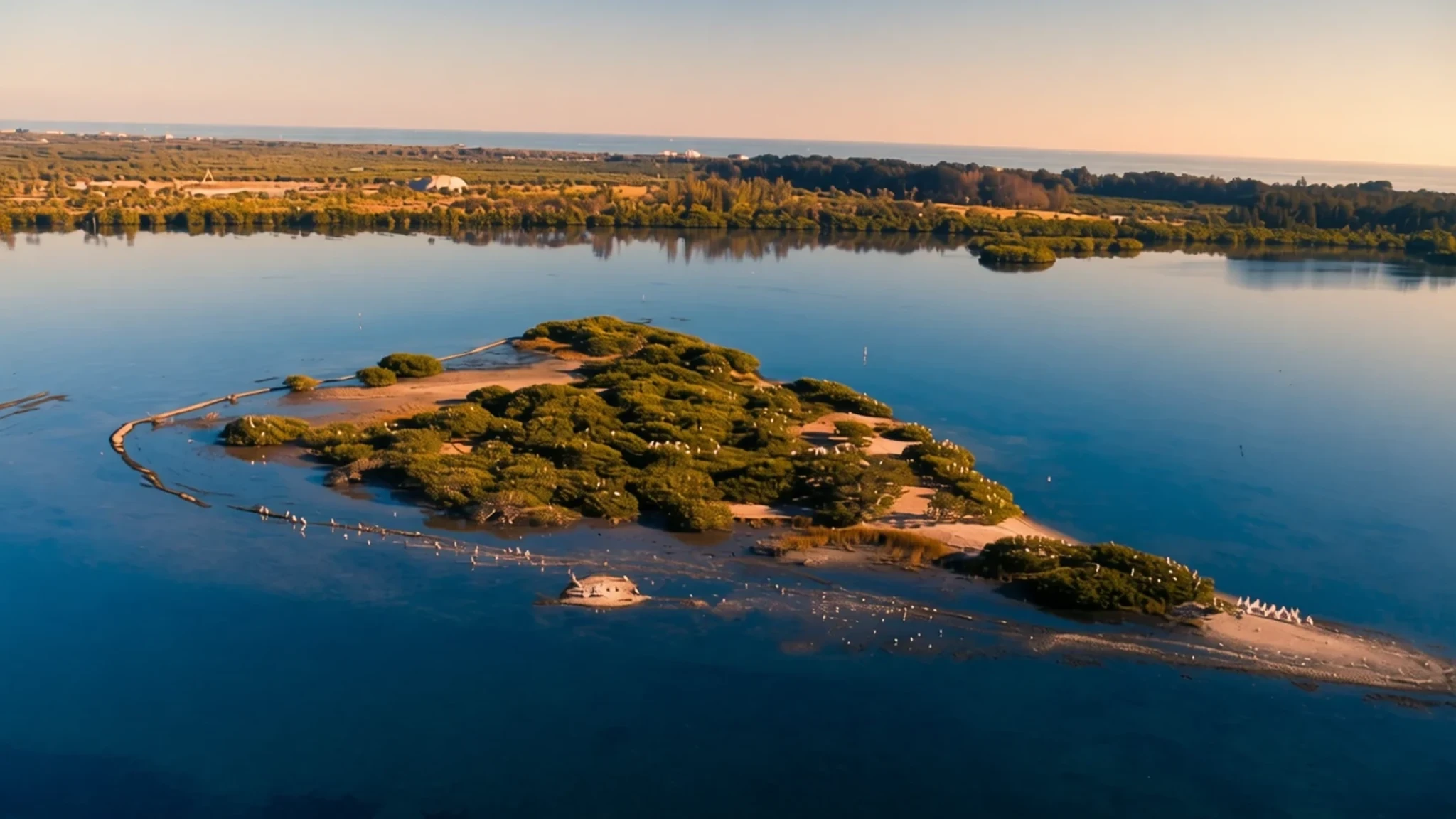
Orchid Island keeps a Tao fishing culture of flying fish, painted boats and stone-walled houses on a small volcanic coast off Taiwan.
The place
Orchid Island sits in the Philippine Sea south-east of Taiwan, a Taitung County island that Mandarin calls Lanyu and that Tao speakers call Pongso no Tao, the island of human beings. It is volcanic and steep. Forested ridges fall to black rock, coral shelves and short beaches, and Lesser Orchid Island, a smaller uninhabited islet, sits just to the south. A coast road rings the shore and links Tao villages built on seaward slopes, so that doors and work yards face the water. Weather organises the island more strictly than any street plan. Heat and humidity hold for most of the year, rain arrives in sudden weight, and typhoons cross this sea in the warmer months. The old house answers that climate: a low dwelling of timber and stone, set partly into the hillside, cool by day and less of a sail in a gale. Concrete homes, a clinic, churches and a small shop now stand in the same villages, yet the half-buried house still shows how people met the weather. Residents are mostly Tao, an Austronesian people whose taro plots, reef fishing and flying-fish season face the ocean rather than the cities across the water. The sights are that working coast: painted boats above the tide, stone walls, a few swimming coves, and long gaps of cliff and wind. Holiday weeks bring more scooters and fuller rooms, but this is not a resort strip. Coral is sharp, currents outside the bays are serious, and the same wind that clears the view can cancel the boat home.
Its story
Orchid Island's history is first a Tao history. In the Tao language the island is Pongso no Tao, the island of human beings. Families place themselves by village — Iranmeylek, Iratay, Yayo, Iraraley and their neighbours — and by boats, taro land and the flying-fish calendar, not by a date over a city gate. For generations the island sat at the edge of other people's charts. Chinese records called it Redhead Island, Hongtouyu; Japanese rule later brought surveys, schools and new orders into the villages, as it did across Taiwan. After the war the island followed Taiwan under the Republic of China, and the Mandarin name Lanyu settled onto permits, textbooks and tickets. Churches now share the villages with older rites, and Mandarin shares the day with Tao, which older speakers still hold more fully than the young. The chapter that still governs talk with the main island is not a myth. A storage site for low-level radioactive waste from Taiwan's nuclear plants was opened on the southern shore, and Tao residents have campaigned ever since for the barrels to leave. A fair telling of Orchid Island sets that dispute beside the boats, because the same state that photographs the culture also left a dump on it. A tatala is a plank canoe built and painted by a kin group in red, white and black, then launched with rite and hauled above the storm line when the season turns. Flying fish open a ritual season that decides who may go to sea, which fish may be eaten, and how the first haul is shared. That calendar is the history still visible on the beach.
What to see
- Langdao Beach — Iraraley (Langdao), north shore
Langdao Beach, below Iraraley on Orchid Island's northern shore, is a working landing as much as a swimming cove. Painted boats sit on the sand above the tide, and on a settled day the bay is a manageable place to enter the water. Rock and coral interrupt the sand. Mornings are the quiet hours, before scooters stop for pictures.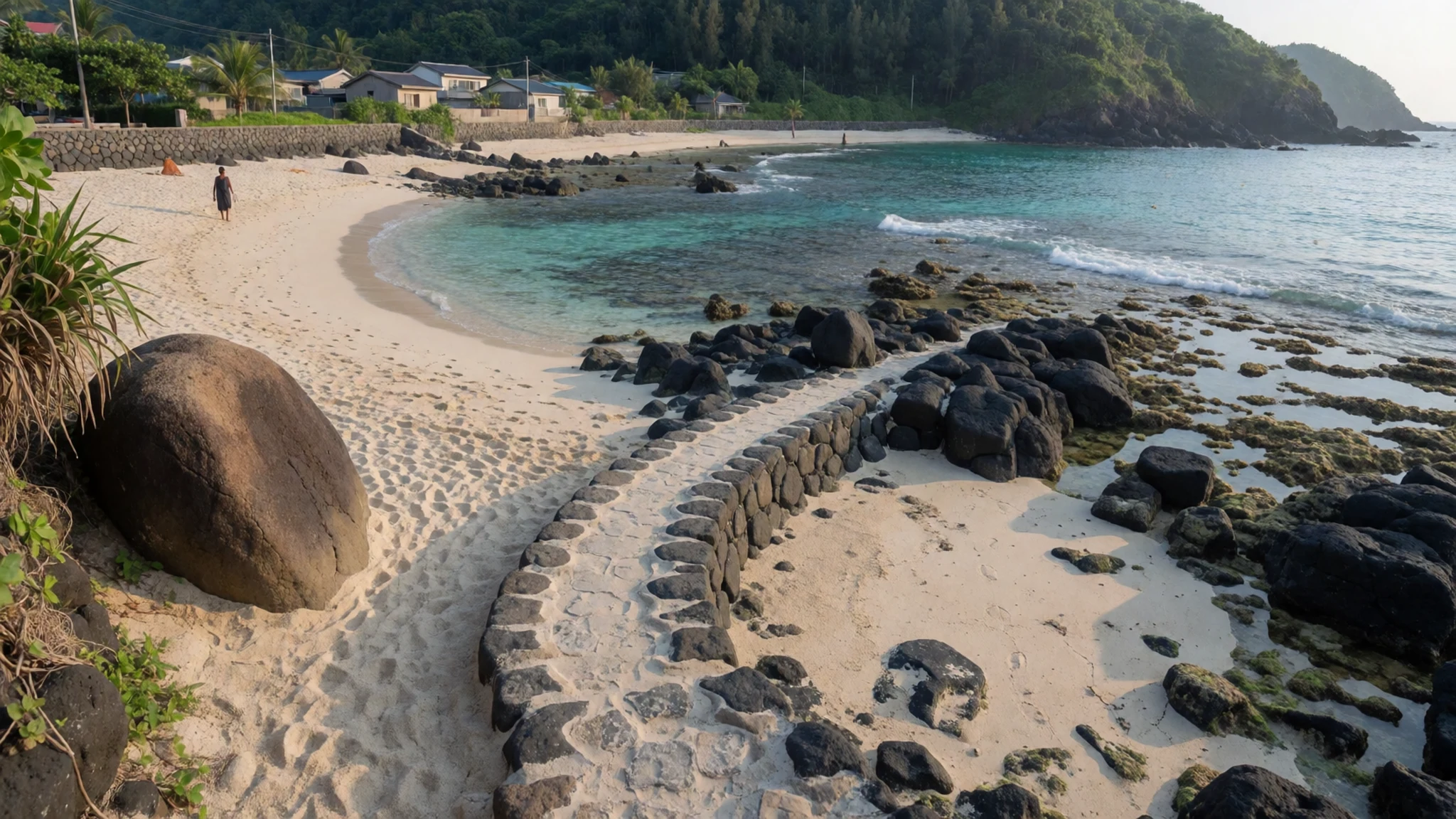
- Traditional underground houses — Seaward slopes of the coastal villages
The traditional houses of Orchid Island sit low on the village slopes, often partly underground, with stone walls and timber cut from island trees. The form answers heat, heavy rain and typhoon wind: cool by day, and a smaller target for a gale. They are private homes, best seen from the lane.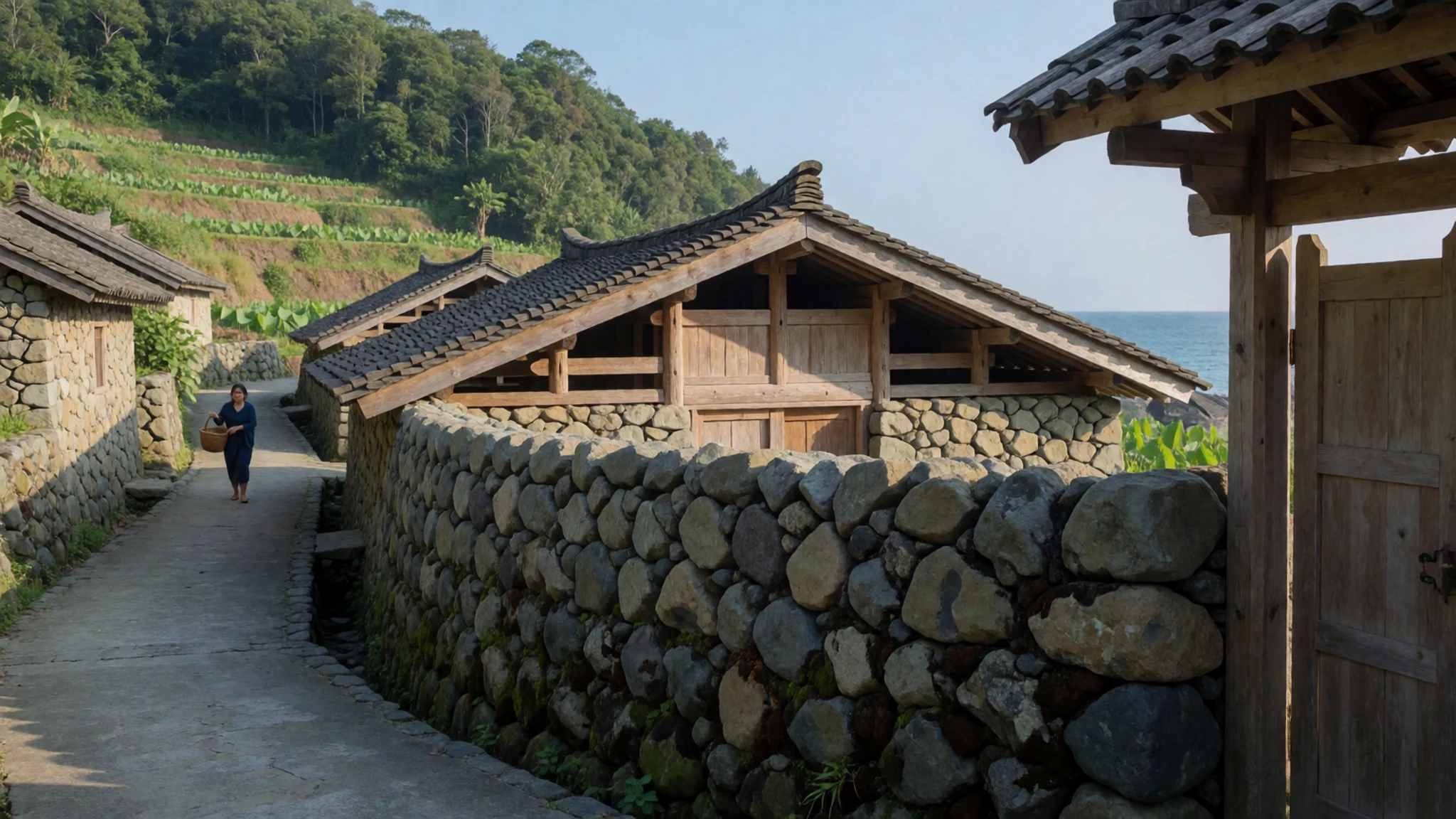
- Lesser Orchid Island — Offshore, south of the island, seen from the southern road
Lesser Orchid Island is the steep, uninhabited islet just south of Orchid Island, covered in low green scrub. From the southern road it stands as its own silhouette, separate from the main island's ridges. There is no village and no regular landing for a casual visit. The reward is the view across the channel, and any boat depends wholly on a calm sea.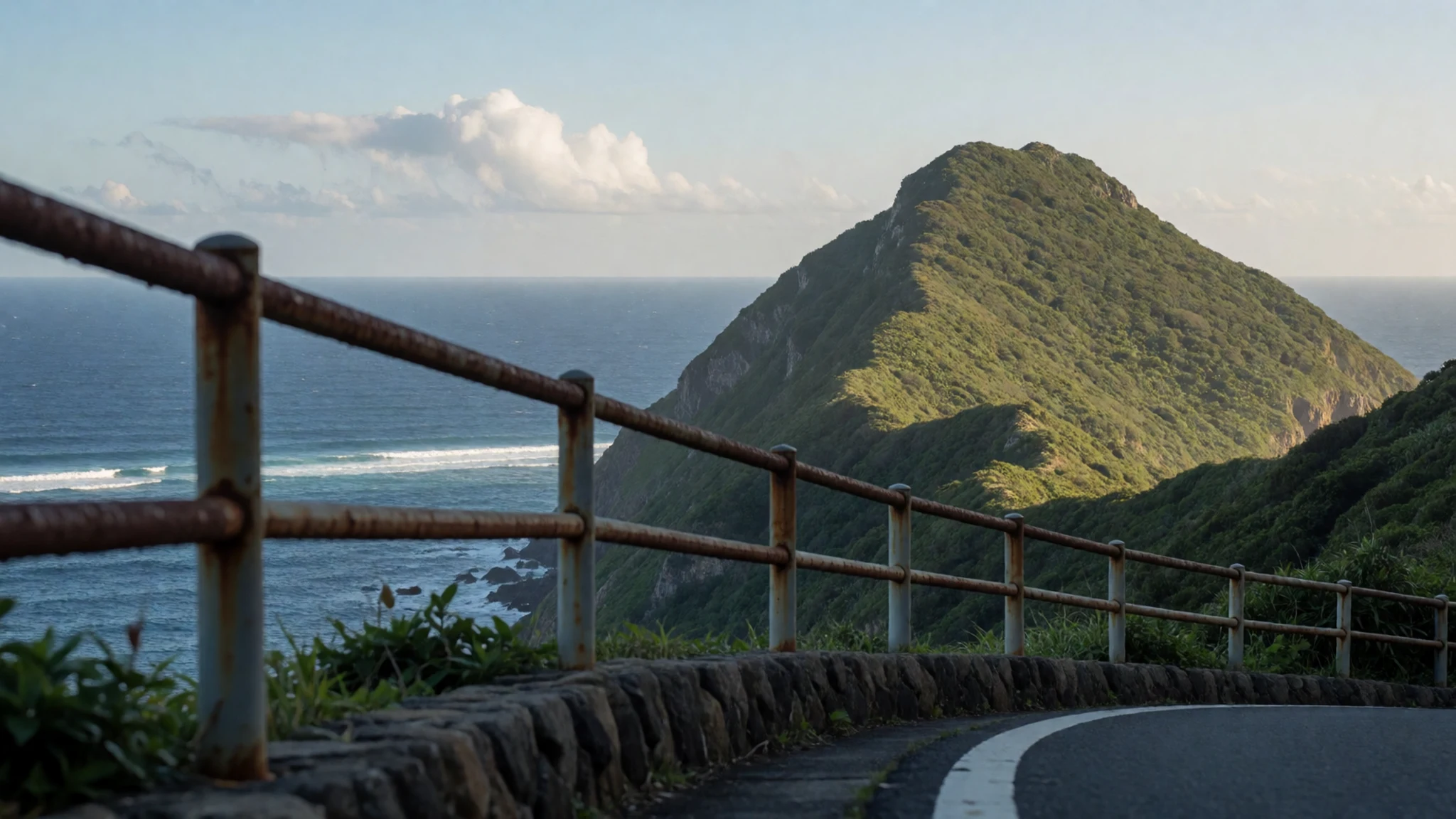
- Tatala boat landings — Langdao and other village landings
The tatala of Orchid Island are plank canoes kept on village shores such as Langdao, above the reach of a sudden sea. A boat belongs to a family: it is carved, fitted and painted in red, white and black before it fishes. In the flying-fish season these are working tools; later they may rest in plain sight for weeks.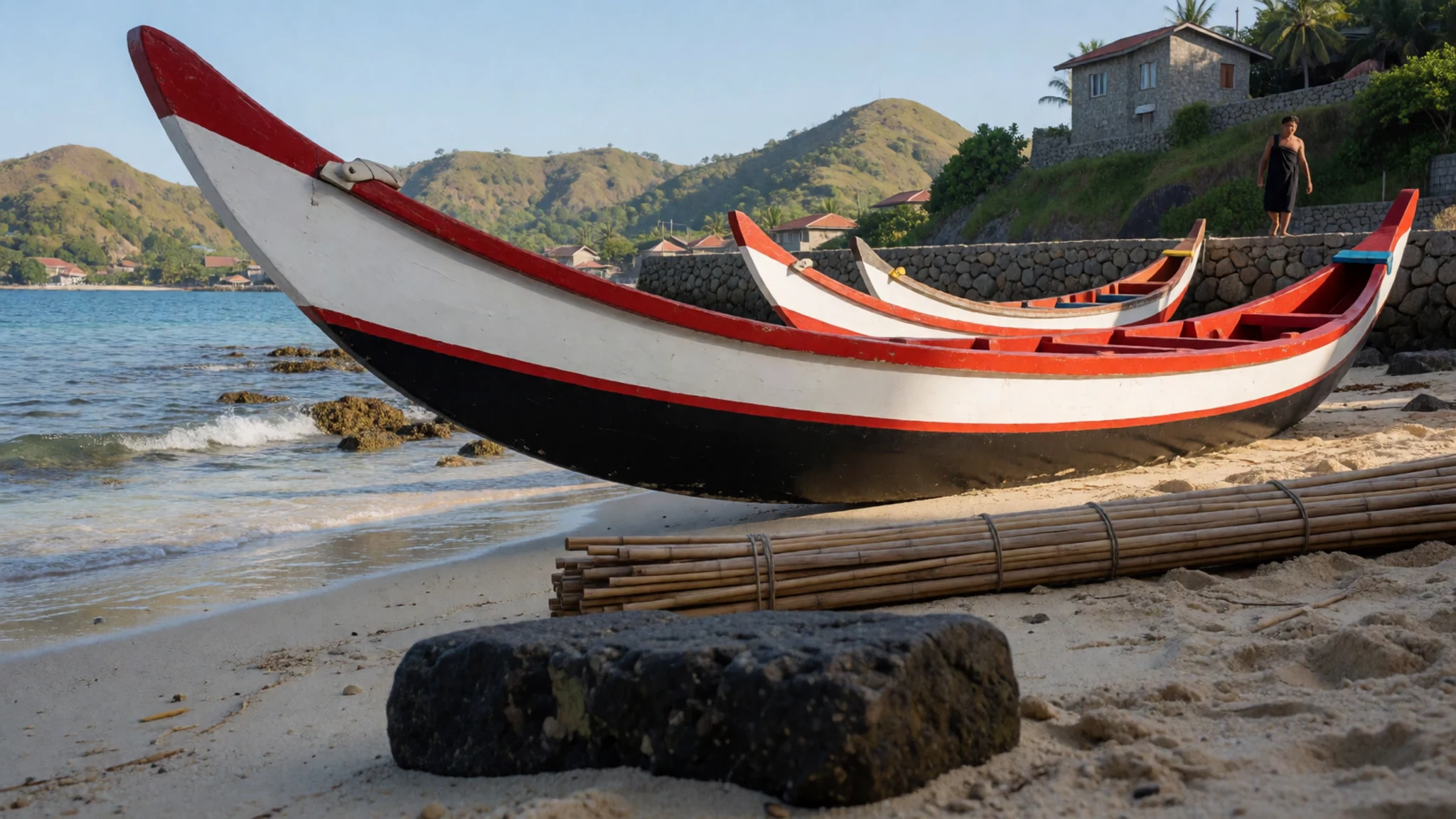
- Iranmeylek — Iranmeylek (Hongtou), south-east coast
Iranmeylek, signed in Chinese as Dongqing, is a busy village on Orchid Island's north-eastern shore and a practical stop on the ring road. A clinic, a school and a small convenience shop sit among concrete houses and older stone work. It suits a rest, water and a wait for the bus. The lanes are residential, and doorways stay private even where the road runs close.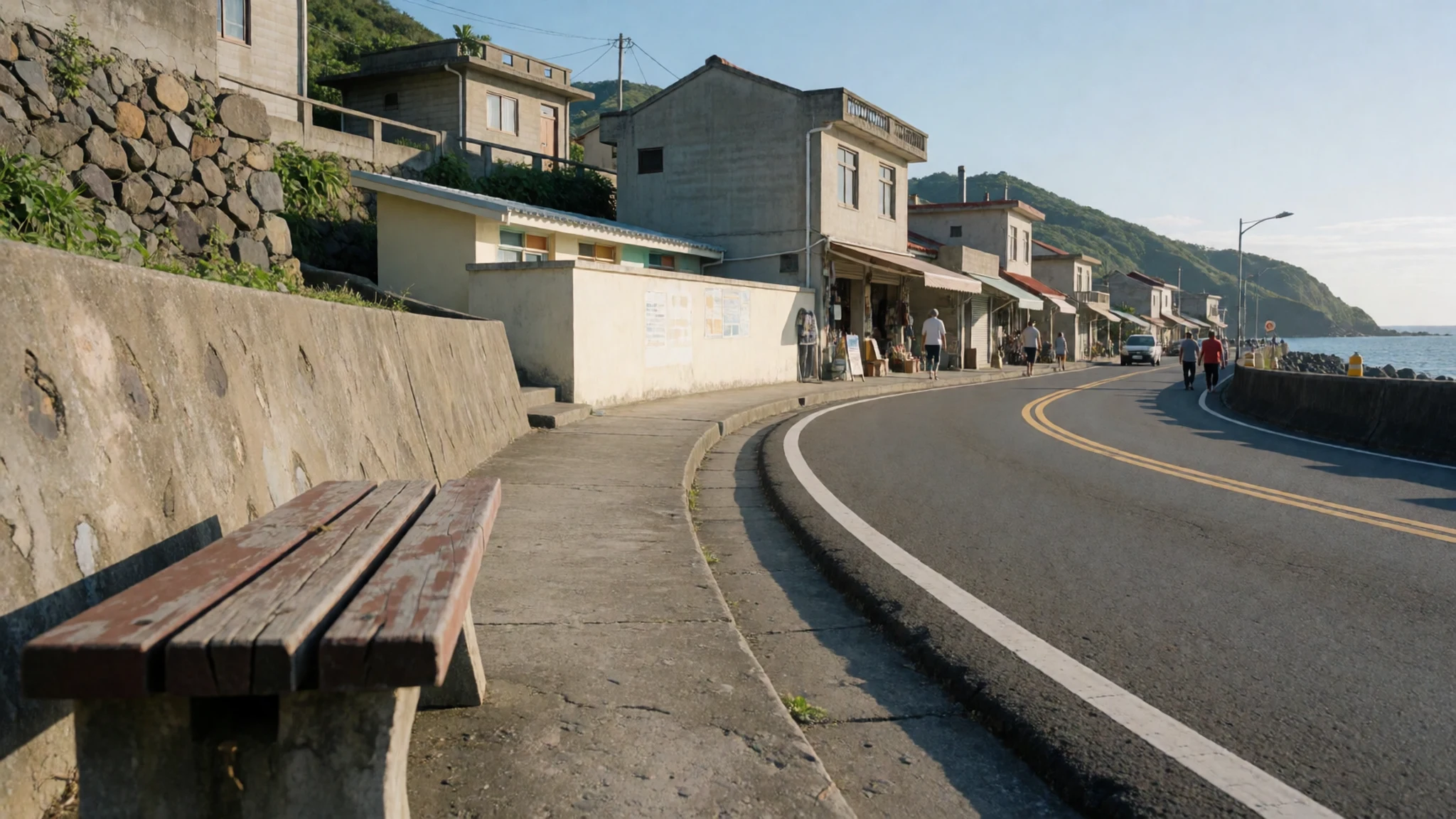
Culture
Orchid Island's culture is Tao culture, lived in the villages rather than put on in a hall. The year turns on flying fish. When the season opens, fishing and eating follow rules about which fish may be taken, who may eat them, and how the catch is shared. Taro gardens behind the houses carry the other half of daily work. Boat-building and certain rites sit with men in the older division of labour; women hold other knowledge, including food rules a visitor will never see posted. Spirits called anito remain part of how misfortune and respect are spoken about, even where a church stands at the village edge. Gatherings follow the fishing calendar and milestones such as a new boat. They are not a ticketed show, and an outsider is welcome only when someone has actually offered a place. Mandarin and Tao share the shop and the harbour. The waste store on the southern shore is part of culture now: protest, song and a long argument about consent. On Orchid Island, do not touch a beached boat, enter a house yard, or photograph people without a clear invitation.
What to wear
Fashion on Orchid Island still has a ceremonial layer that city clothes never copy. For a major rite or a new boat, Tao men may wear a loincloth and a beaten-silver helmet, and women a hand-woven wrap of chest cloth and skirt, worked in geometric patterns. The textile was plant fibre and is now often cotton; the pattern carries the meaning. Those clothes appear for the occasion. They are not daily dress, and they are not a costume for visitors to try on. Ordinary days look like heat, rain and scooter miles: T-shirts, shorts, light trousers, sandals and rain capes, plus school uniform on weekday mornings. A woven piece sometimes stays in an older woman's dress. The wind makes a light layer useful even in sun, and nearly everyone keeps something waterproof. A visitor does well in the same range: clothes that cover shoulders and thighs in the villages, swimwear kept to the beach, and shoes that can take wet rock. This is not a Buddhist circuit with a temple code, but bare chests and bikinis in a lane are rude. A rain jacket earns its place in any month.
What to eat
- Dried flying fish — Small eateries along the coast road
Dried flying fish is the store-cupboard taste of Orchid Island, salted and air-dried so it lasts beyond the fishing season. Households grill it or simmer it with little more than water and greens. It is bony, strong and not a garnish. Coast-road eateries are the realistic place to ask.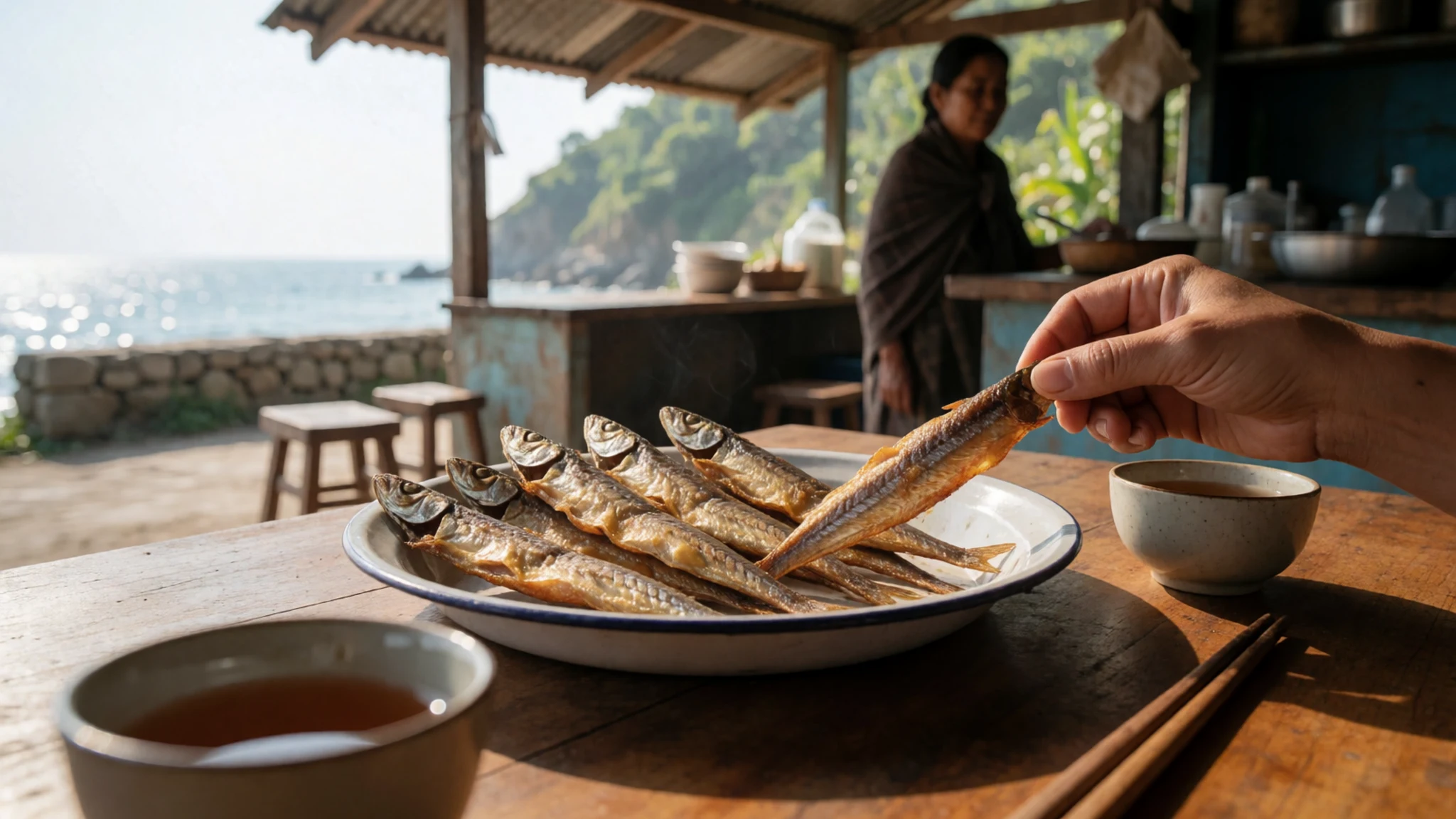
- Boiled taro — Home-style eateries in the villages
Taro is the staple root of Orchid Island, boiled until soft and eaten with fish rather than treated as a side. Families grow it on the slopes behind the villages, and a home-style eatery will often have it in the pot if rice is also on offer.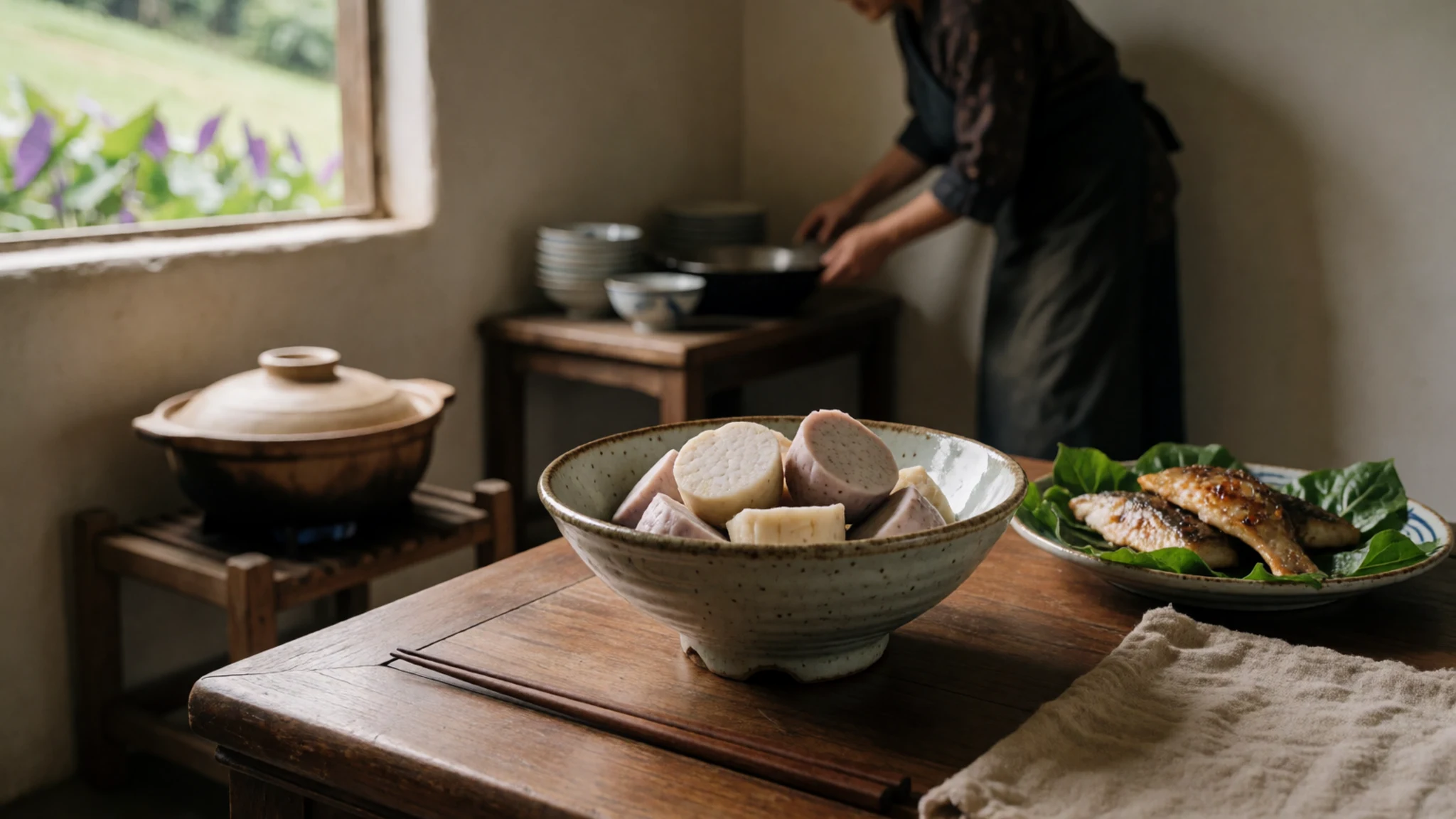
- Grilled reef fish — Simple eateries in Iranmeylek and on the ring road
Grilled reef fish on Orchid Island is the ordinary catch when flying fish are out of season or reserved by ritual rules. A whole fish, scored and cooked over a flame or on a flat pan, shows up in village eateries with rice and a bowl of broth. - Sweet potato — Village eateries and home tables
Sweet potato is the other hillside staple on Orchid Island, roasted or boiled and eaten at home the way taro is. It appears at family tables and sometimes in the same small eateries that serve set plates of rice and fish. The flavour is plain and filling. - Ceremonial pork — Village kitchens at gatherings
Pork on Orchid Island belongs more to gatherings than to a weekday lunch. Pigs are raised in the villages and cooked when a family marks a boat, a farewell or a church occasion, usually boiled or stewed and shared. Village kitchens, not a stall row, are where it turns up.
Plan it
Best time. On Orchid Island, April and October are the most comfortable months, July is the hottest and August the wettest, and the north-east monsoon from November to March often keeps the ferry ashore. Summer is hot, wet and full of cancellations. Winter is cooler and windy with the north-east monsoon, and the exposed shore is rough.
How long. 2–3
Getting there. Reach Taitung by air, then take the light aircraft to Lanyu Airport or the ferry from Fugang harbour when the sea allows. Wind delays both, and there is no railway to fall back on. Once ashore, the ring-road bus, a hired scooter or a walk joins the villages. Check the operator's own notice before you fix dates.
Budget. mid
Tips
- Leave at least four free days around the trip, because wind cancels flights and the ferry.
- Carry cash; small eateries and village shops may not take cards.
- Ride or walk the coast early, before rain and scooter traffic thicken.
- Pack water shoes; coral and rock cut bare feet, and shade is scarce on the road.
- Treat scooter hire as optional: the ring road is narrow, wet and shared with the bus.
Etiquette
- Do not touch or climb into a tatala unless the owner has clearly agreed.
- Ask before photographing people, and accept a refusal without pressing.
- Keep out of house yards and off the roofs of the old underground houses.
- In the flying-fish season, do not assume every fish is for sale or for guests.
Nearby
Sources
- Wikidata Q713417 (CC0)
- Wikipedia: Orchid Island (CC BY-SA 4.0)
- Wikipedia: Tao people (CC BY-SA 4.0)
- Wikivoyage: Orchid Island (CC BY-SA 4.0)