Ongi Monastery
Ongi Monastery, Mongolia
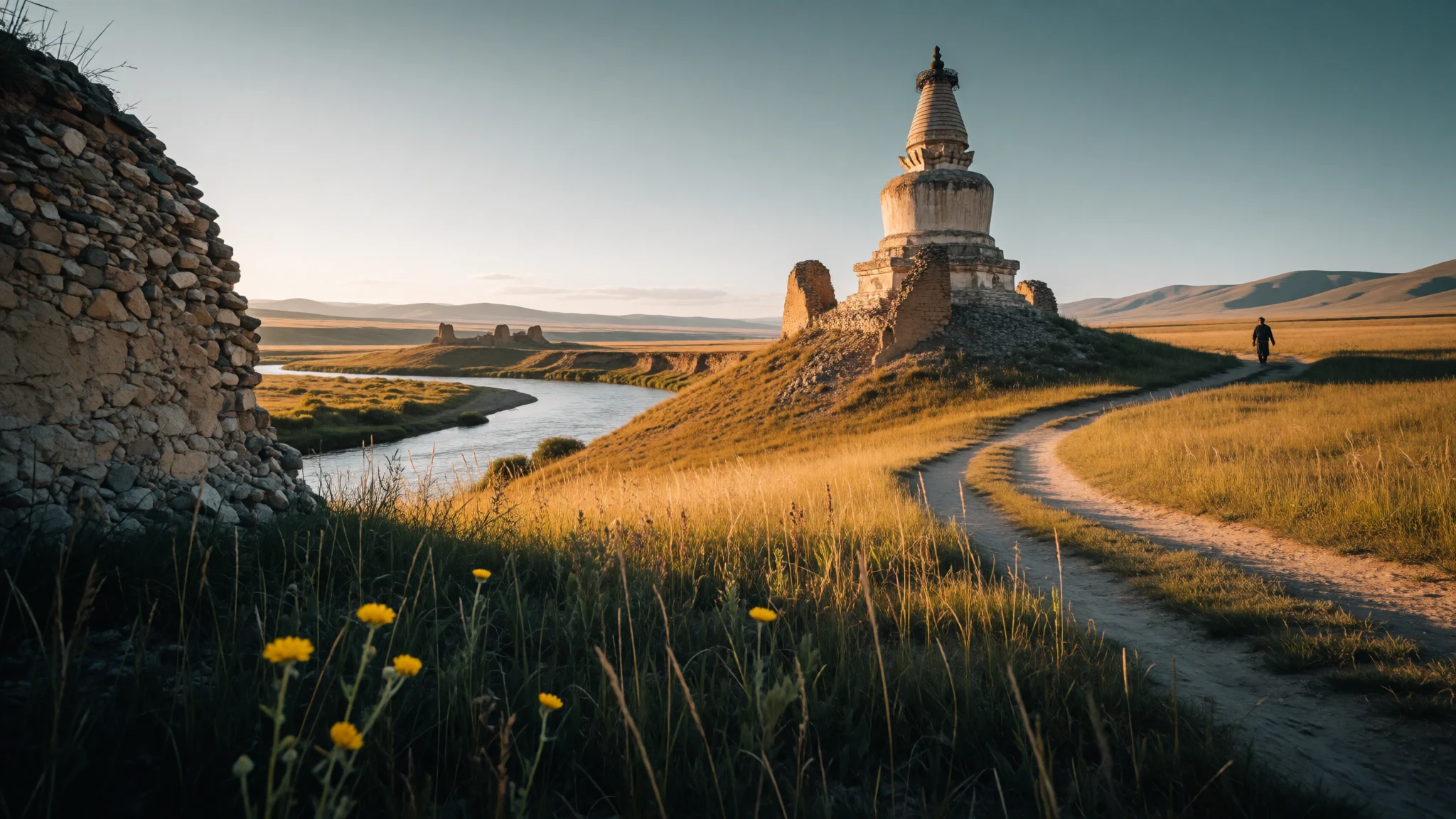
Ongi Monastery is a quiet, wind-swept set of ruins on the Mongolian steppe, where a destroyed monastic town is slowly being rebuilt.
The place
Ongi Monastery stands on dry steppe in Saikhan-Ovoo district, Dundgovi Province, in south-central Mongolia, where the Ongi River winds past low hills. Calling it one monastery is slightly generous. It is really two sites, Barlim on the north bank and Khutagt on the south, facing each other across the water, and most of what remains is ruin with a few restored pieces. The south bank was the older settlement, founded in 1660, with 11 temples and its administrative buildings. The north bank grew later, in the 18th century, and eventually held 17 temples. Between them the two sides ran four Buddhist universities, and at its height more than 1000 monks lived here. Ongi Monastery sits roughly 18 kilometers south of Saikhan Ovoo. Expect to leave paved roads for dirt tracks to get there, typically requiring a hired driver. Walls, foundations and a tall stupa show on the slopes and along the river. In front of the rebuilt temple, a small museum occupies a ger, the round felt tent of the steppe. The appeal is mostly atmosphere: low sun on pale stone, constant wind, very few other visitors, and a sense of scale that photographs understate. Facilities are thin, so the place suits people who enjoy long drives and silence.
Its story
Ongi Monastery began in 1660, in the long period when Tibetan Buddhism spread across Mongolia and monasteries became the country's most visible institutions. Over the following centuries it grew into a monastic town on both banks of the river, with temples, colleges and a large community of monks who studied, taught and held services. Its fate was the same as that of most Mongolian monasteries in the 20th century. In 1939, during the anti-religious purges led by Khorloogiin Choibalsan, head of the Communist Party, both complexes were wrecked. More than 200 monks were killed. Many of the survivors were jailed, forced to give up their robes, or pushed into the army. For decades the site was a field of rubble, and the faith it housed was suppressed across the country. In the 1990s, once restrictions eased, local people and monks decided to rebuild. The first new temple opened in 2004, and a small museum now sits beside it in a ger. One stupa has also been reconstructed, and a plaque on it lists the names of the monks who died in 1939. Rebuilding is slow and incomplete, and the ruins still outnumber the new structures. That is part of why the visit feels more like a memorial than a monument, with the past plainly unfinished.
What to see
- Khutagt ruins, south bank — South bank of the Ongi River, Saikhan-Ovoo
The older Khutagt complex on the south bank was the original monastic centre, with administrative buildings and 11 temples. Today the footprints of walls and chambers are scattered across the slope. Walking the outlines gives a better feel for the layout than any sign could, and the river view helps.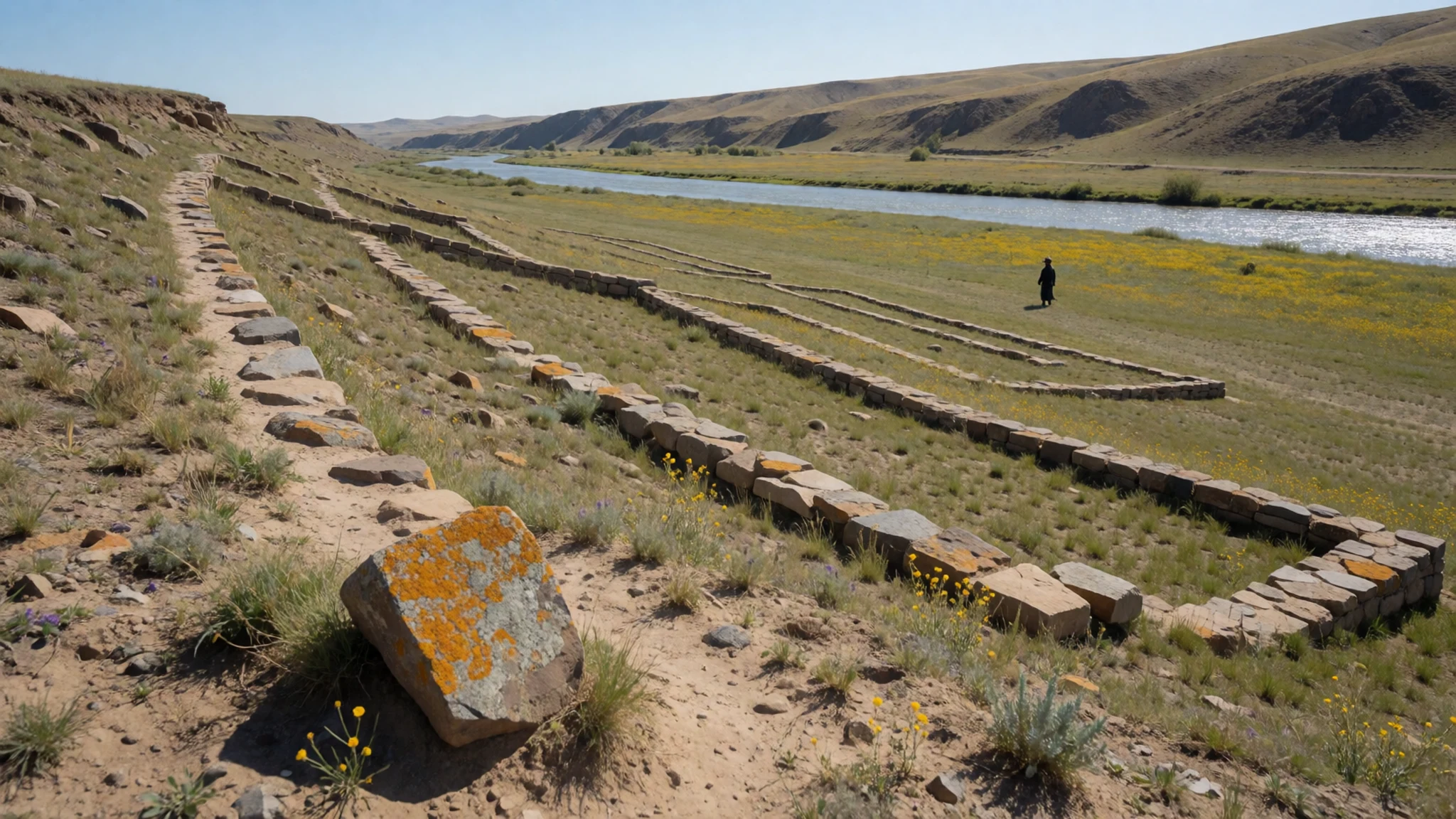
- Barlim ruins, north bank — North bank of the Ongi River, Saikhan-Ovoo
Barlim, across the river, was built in the 18th century and held 17 temples, among them one of the biggest in Mongolia. Little stands above head height now. Climb the slope behind the ruins for a wide view over both banks and the pale grassland beyond.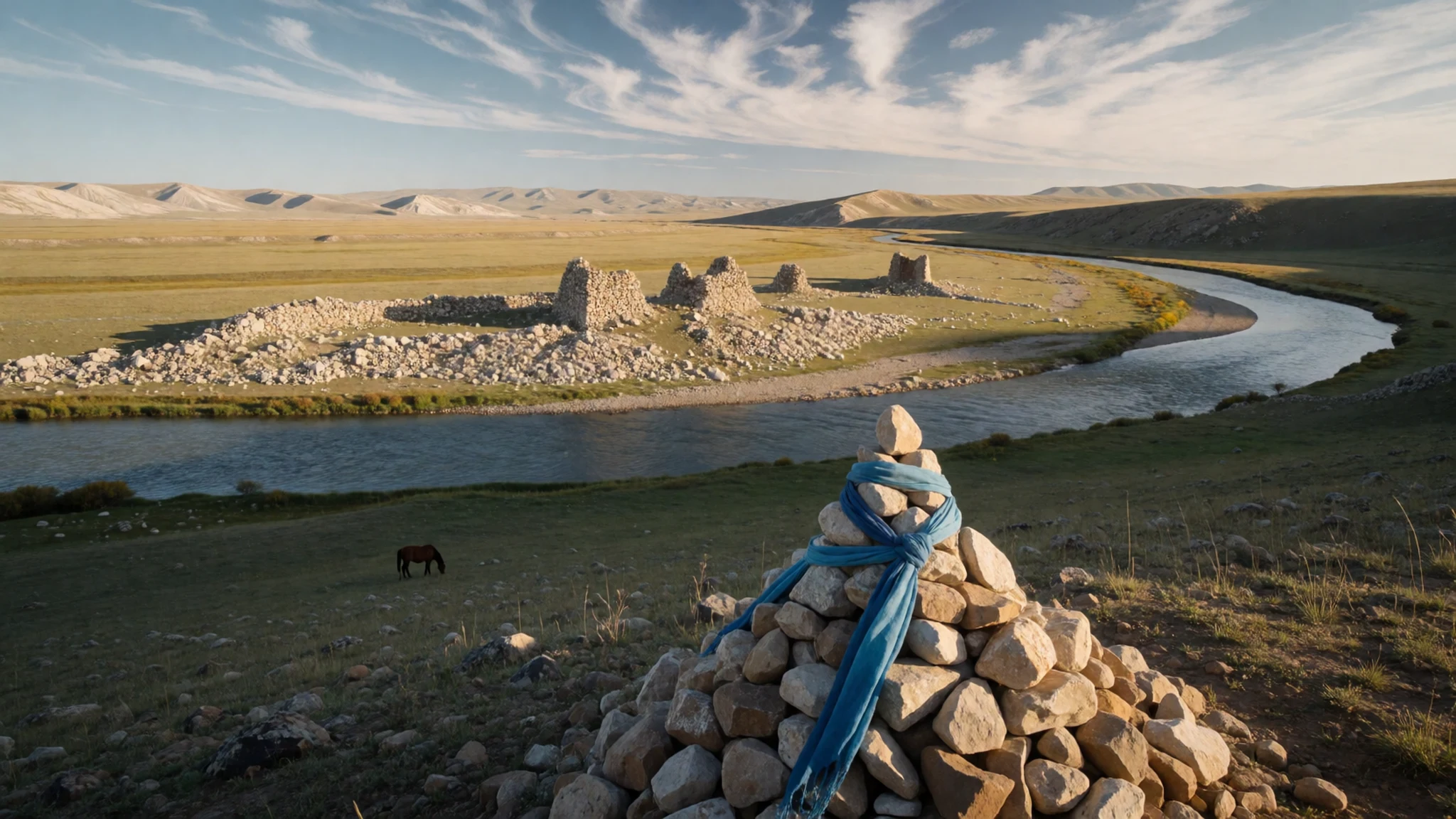
- The rebuilt temple and ger museum — Near the main gate, Saikhan-Ovoo
The first temple of the rebuilding programme was inaugurated in 2004 and is where living worship has returned. A small museum in a ger stands in front of it, with displays on the monastery's history. Opening times vary, so ask locally or at your camp before you set out.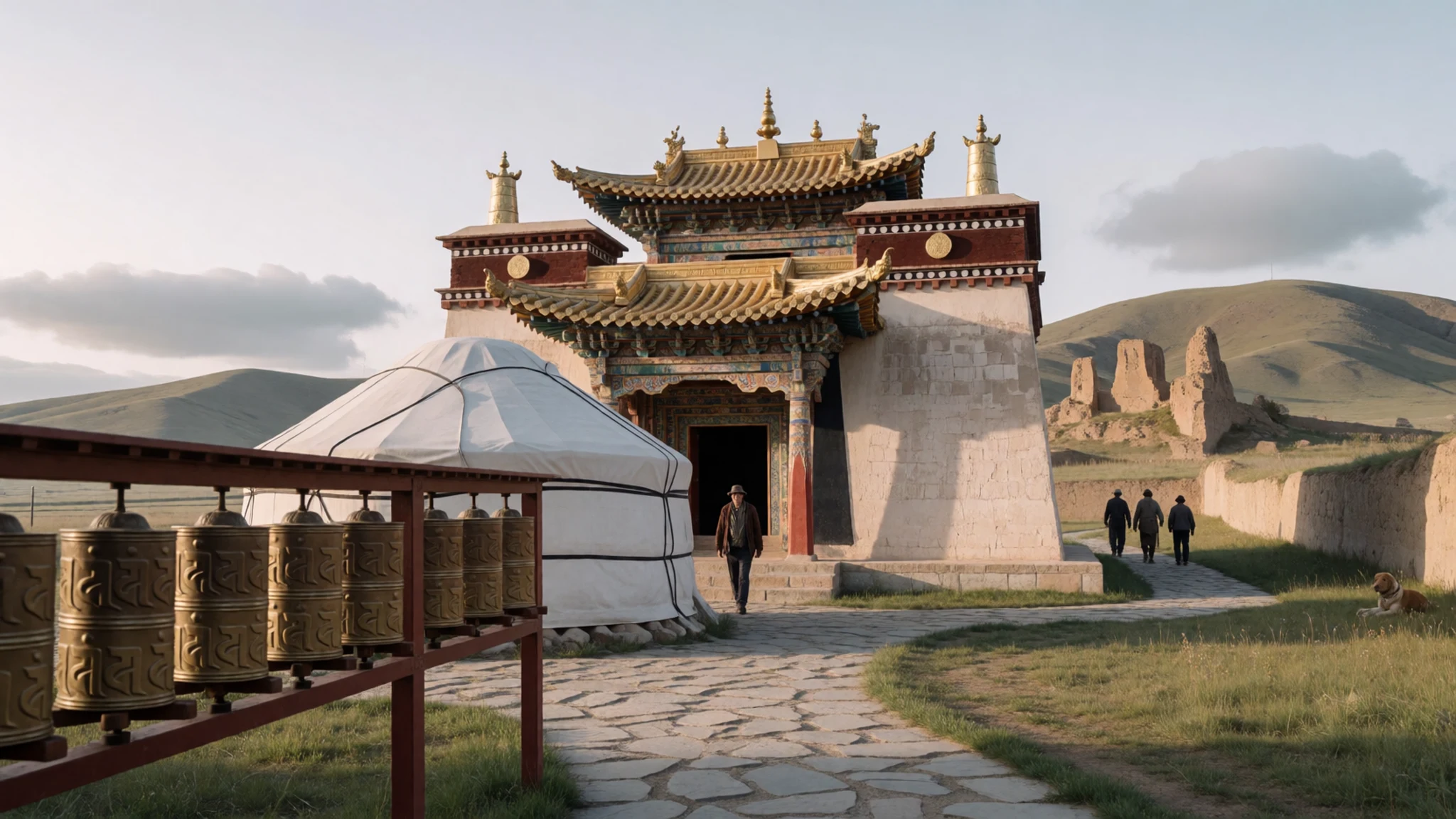
- The memorial stupa — Among the rebuilt structures, Saikhan-Ovoo
One stupa has been fully reconstructed, and a plaque on it records the names of the monks killed in 1939. It is a short, sombre stop and the clearest place on the site to understand what happened. Walk round it clockwise, as local visitors do, and keep conversation low.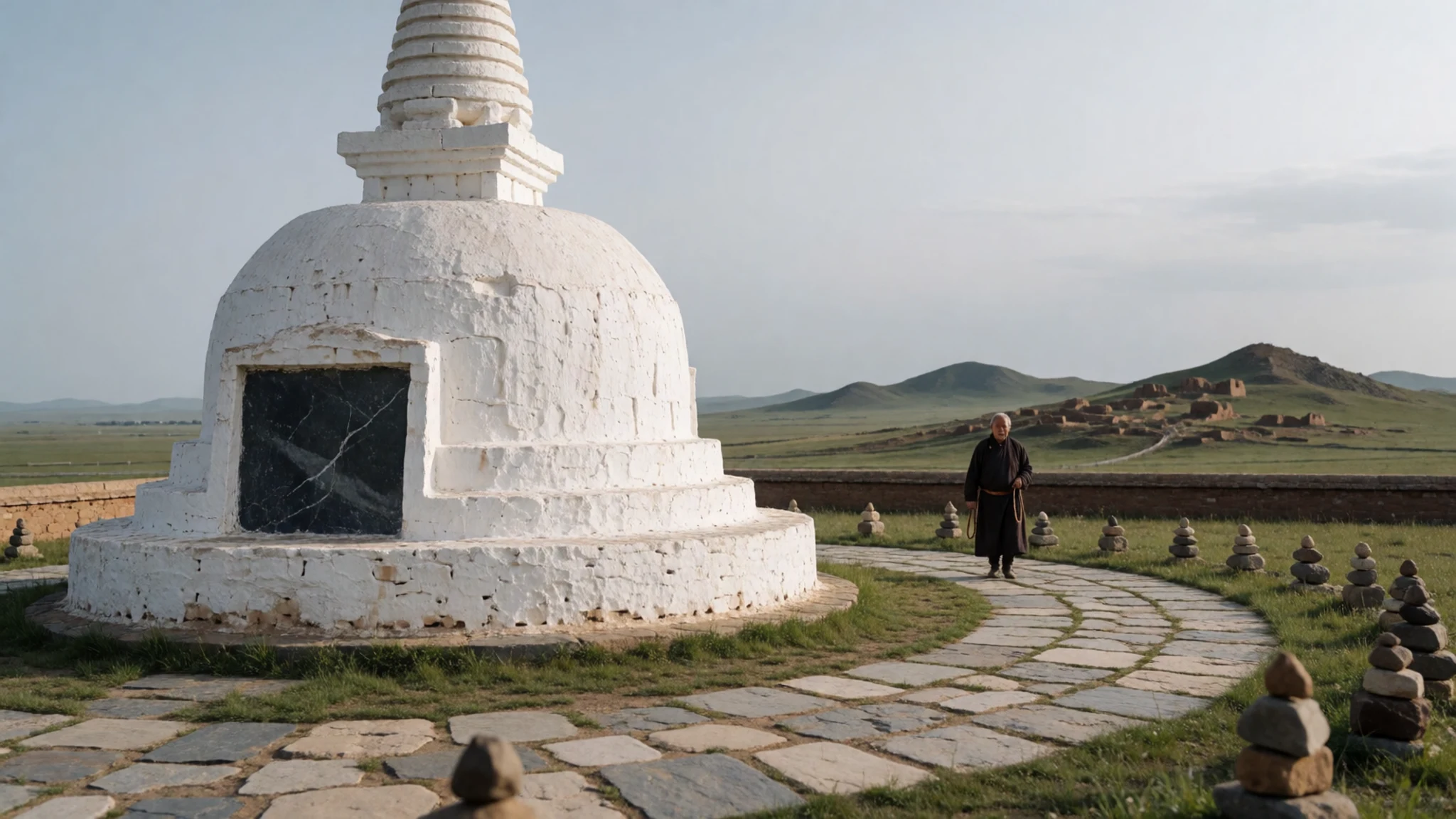
- The Ongi River and surrounding hills — Along the river, Saikhan-Ovoo
The river is the reason the monks settled here, and its banks and the nearby hills make easy walking. Dusk and early morning give the best light on the stone. Wind can be strong, and a tall stupa is visible on the skyline from several points.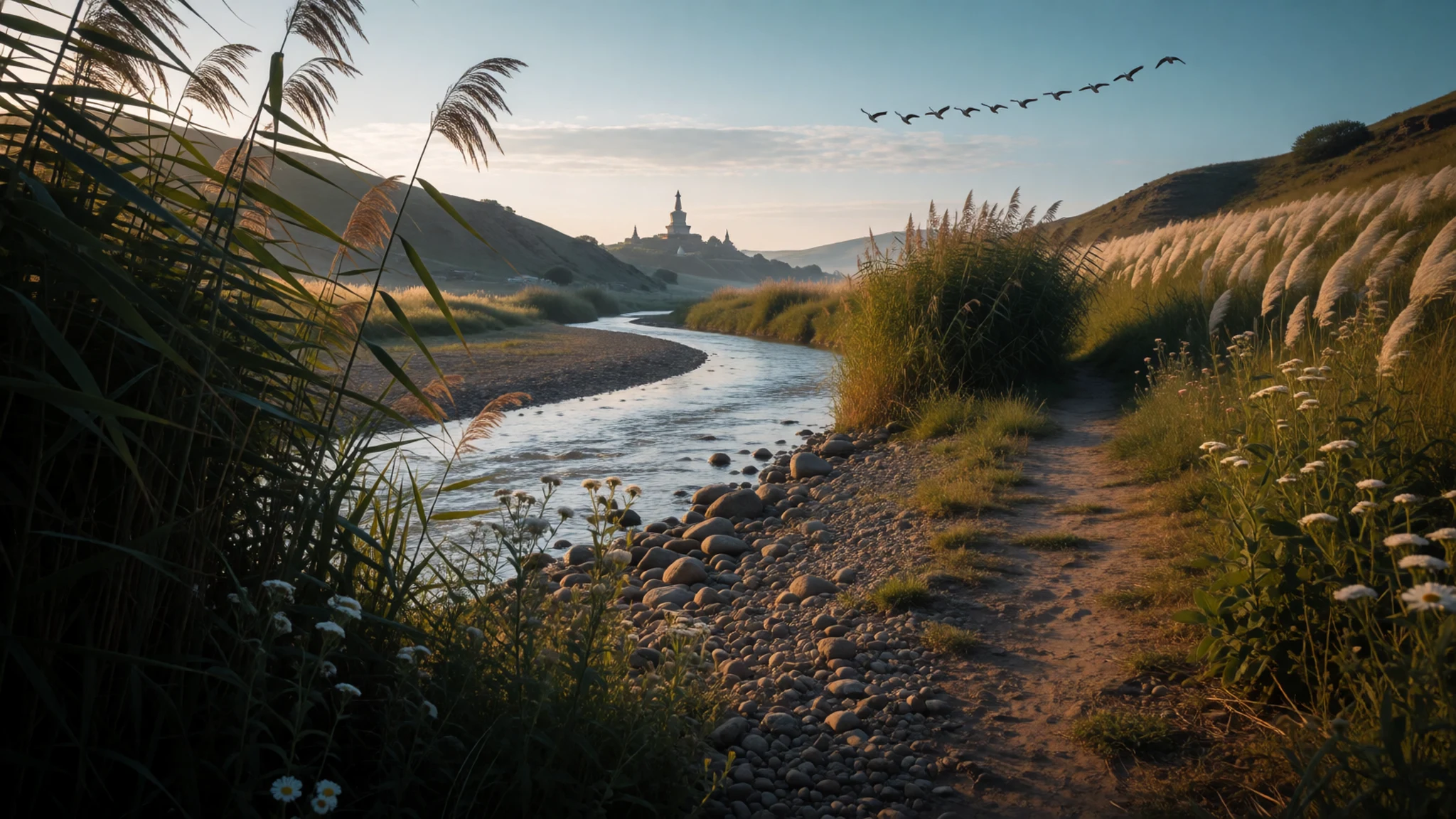
Culture
Ongi Monastery belongs to a Mongolian culture that blends Tibetan Buddhism with older herding traditions. Buddhism flourished here after the Mongol Empire broke apart, and monasteries such as Ongi were centres of study as well as worship. The purges of 1939 cut that tradition brutally, and the rebuilding since the 1990s is partly an act of remembrance, which gives the site a seriousness that visitors tend to feel. Mongolians are generally direct. Expect honest opinions and plain questions rather than polite hedging, and treat it as openness, not rudeness. Hospitality matters a great deal. When something is offered, whether tea, a gift or a plate of snacks, take it with the right hand, palm facing up, and try at least a small taste, since refusing is considered discourteous. Life on the steppe still revolves around horses and herds, and a ger is a home, so greet its household before taking photographs. Relations with China are a sensitive subject for many Mongolians, so avoid clothing with Chinese associations and do not bring the topic up. Western small talk and gestures may not land as intended, and watching what local people do is usually the best guide. At the monastery, walk round stupas and temple buildings clockwise, keep your voice low near the rebuilt temple, and ask before photographing monks or anyone inside a ger.
What to wear
Ongi Monastery sits in herding country, where the traditional garment is the deel, a long, wrap-over robe fastened at the side and closed with a bright sash at the waist. Deels are made from cotton, silk or brocade for festivals and from heavier wool or sheepskin-lined cloth for winter, and the cut, colour and trim vary by region and occasion. They are worn at festivals, weddings and ceremonies, and many herders still wear them for daily work, often with leather boots and a hat. In towns such as Saikhan Ovoo and across Ulaanbaatar, people mostly wear ordinary modern clothes: jeans, jackets, trainers and fleeces, with the deel reserved for special days. Monks wear maroon and saffron robes. For a visit, think weather first. The steppe is exposed, with strong sun, wind and large swings between day and night, so bring layers, a windproof jacket, a sun hat and sunglasses. Sturdy closed shoes suit the loose stone and uneven ground of the ruins. Dress modestly at the rebuilt temple, with shoulders and knees covered. Avoid anything that carries Chinese symbols or slogans. A scarf is useful against wind and dust, and warm layers are essential outside high summer.
What to eat
- Boiled mutton — Ger camps and herder families around Saikhan Ovoo
Boiled mutton is the base of the Mongolian diet, seasoned with little more than salt. It is served in herder households and ger camps throughout the countryside. Expect it plain, hearty and meat-heavy, with few vegetables on the side.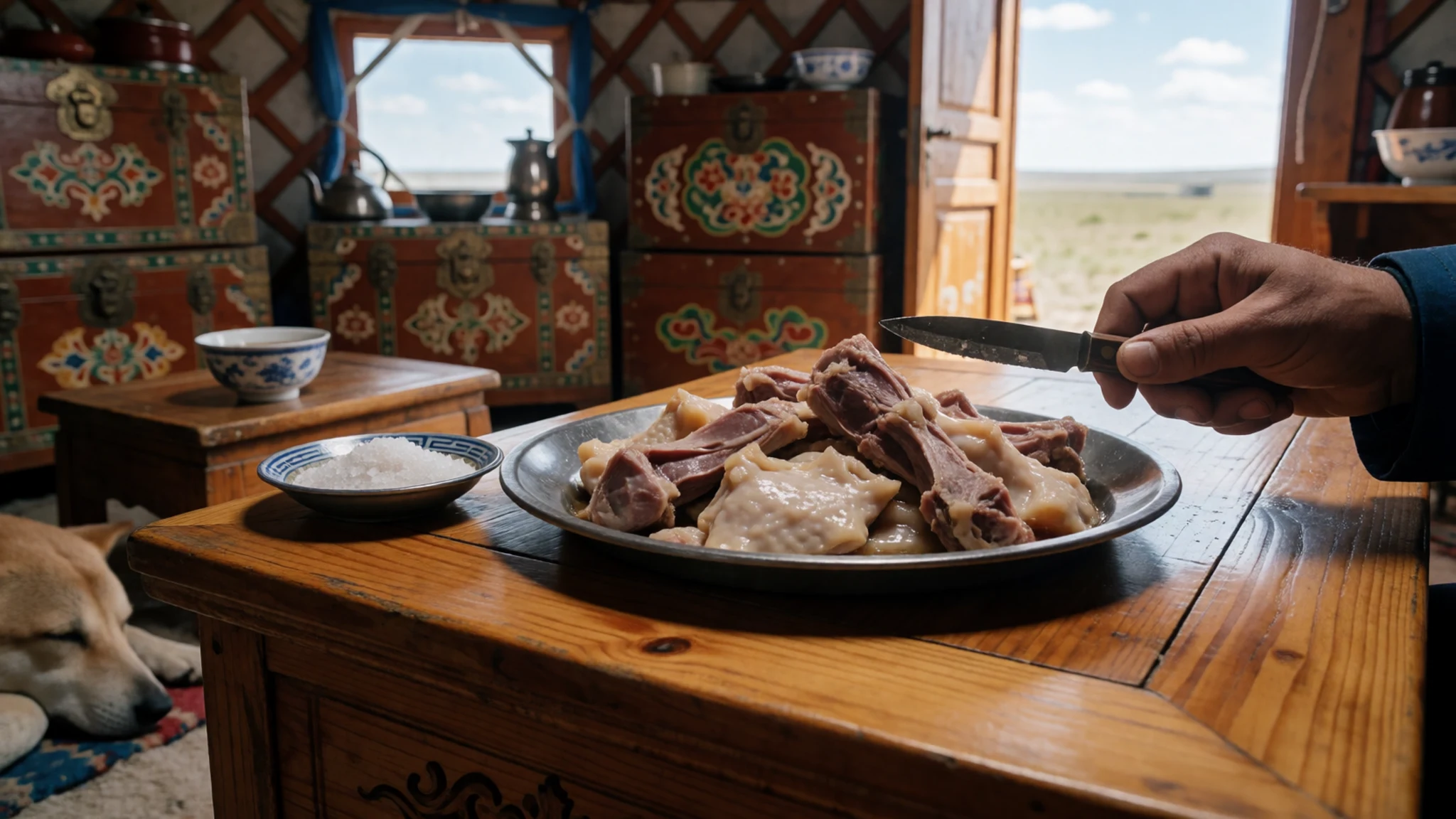
- Buuz — Canteens and tea shops in Saikhan Ovoo town
Buuz are steamed dumplings filled with minced meat, often called the national dish. They are eaten at home, especially around festivals, and are on most canteen menus. Eat them by hand and bite in gently, as the juices run.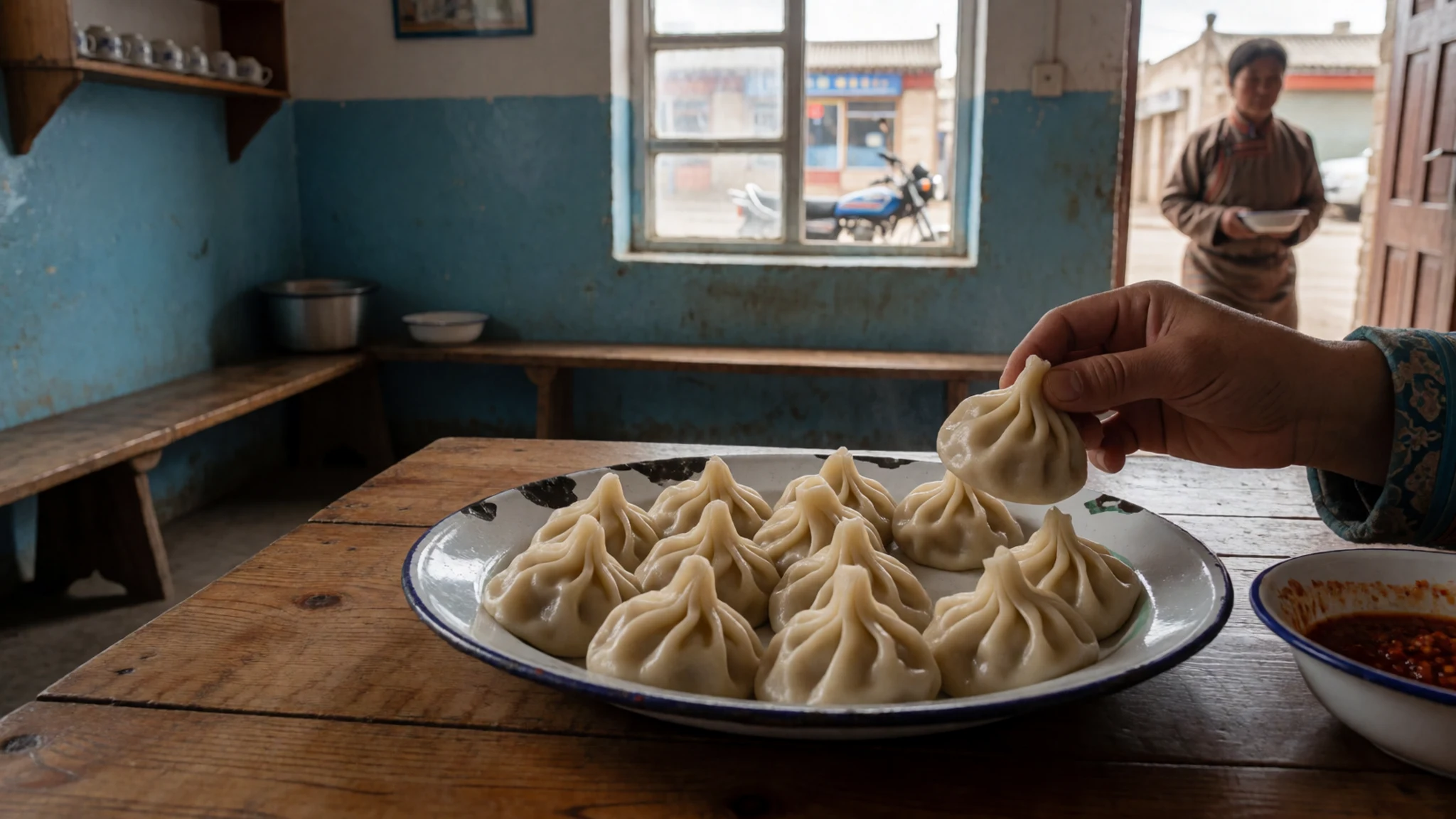
- Khuushuur — Roadside canteens and small eateries on the route from Ulaanbaatar
Khuushuur are flat, fried pastries filled with seasoned meat and onion. Once a festive food, they are now sold everywhere. They are greasy, filling and good road food, best eaten hot with tea. - Tsuivan — Tea shops and canteens in district towns
Tsuivan is a stir-fried noodle dish with mutton and a modest amount of vegetables, often served with ketchup. It is simple and filling, and appears on most menus in country towns where the choice is otherwise narrow. - Byaslag and öröm — Herder households and ger camps near the Ongi River
Byaslag is a mild, fresh cheese with a texture close to paneer, while öröm is thick clotted cream. Both come from herd animals and are common at family tables. Try them with bread and tea if a ger host offers them.
Plan it
Best time. June to September, when days are warm and the grassland is greenest. Winters are bitterly cold and exposed, and spring and autumn can bring sharp wind, so check the forecast before committing.
How long. 2–3
Getting there. Fly to Ulaanbaatar, then travel south by road to the town of Saikhan Ovoo. The ruins are about 18 km further on tracks, so most visitors hire a driver or join a tour. Check current entry rules for your passport before booking.
Budget. mid
Tips
- Hire a driver who knows the tracks, as signposting is minimal and the last stretch is unpaved
- Carry cash, water, snacks and a spare layer, since services around the ruins are limited
- Arrive early or late in the day for softer light and fewer people
- Beware of packs of dogs near settlements and keep a safe distance
- Check opening times for the temple and ger museum locally, as they vary
Etiquette
- Receive gifts, food and drink with the right hand, palm up
- Walk round stupas clockwise and keep voices low at the temple
- Ask before photographing monks or people at home in their gers
Nearby
Sources
- Wikidata Q21503615 (CC0)
- Wikipedia: Ongi Monastery (rev 1367127775) (CC BY-SA 4.0)
- Wikivoyage: Mongolia (rev 5427090) (CC BY-SA 4.0)
- Ongii Monastery 21, Bernard Gagnon (CC0 1.0)
- Ongii Monastery 19, Bernard Gagnon (CC0 1.0)
- Ongiin Khiid Monastery, Torbenbrinker (CC BY 3.0)
- Kloster Ongij in der Mongolei, Reisedoktor (CC BY-SA 4.0)
- Monestir d'Ongi, Lohen11 (CC BY 4.0)
- Gate of Ongii Monastery 01, Bernard Gagnon (CC0 1.0)
- Gate of Ongii Monastery 02, Bernard Gagnon (CC0 1.0)
- Ongii Monastery 03, Bernard Gagnon (CC0 1.0)


