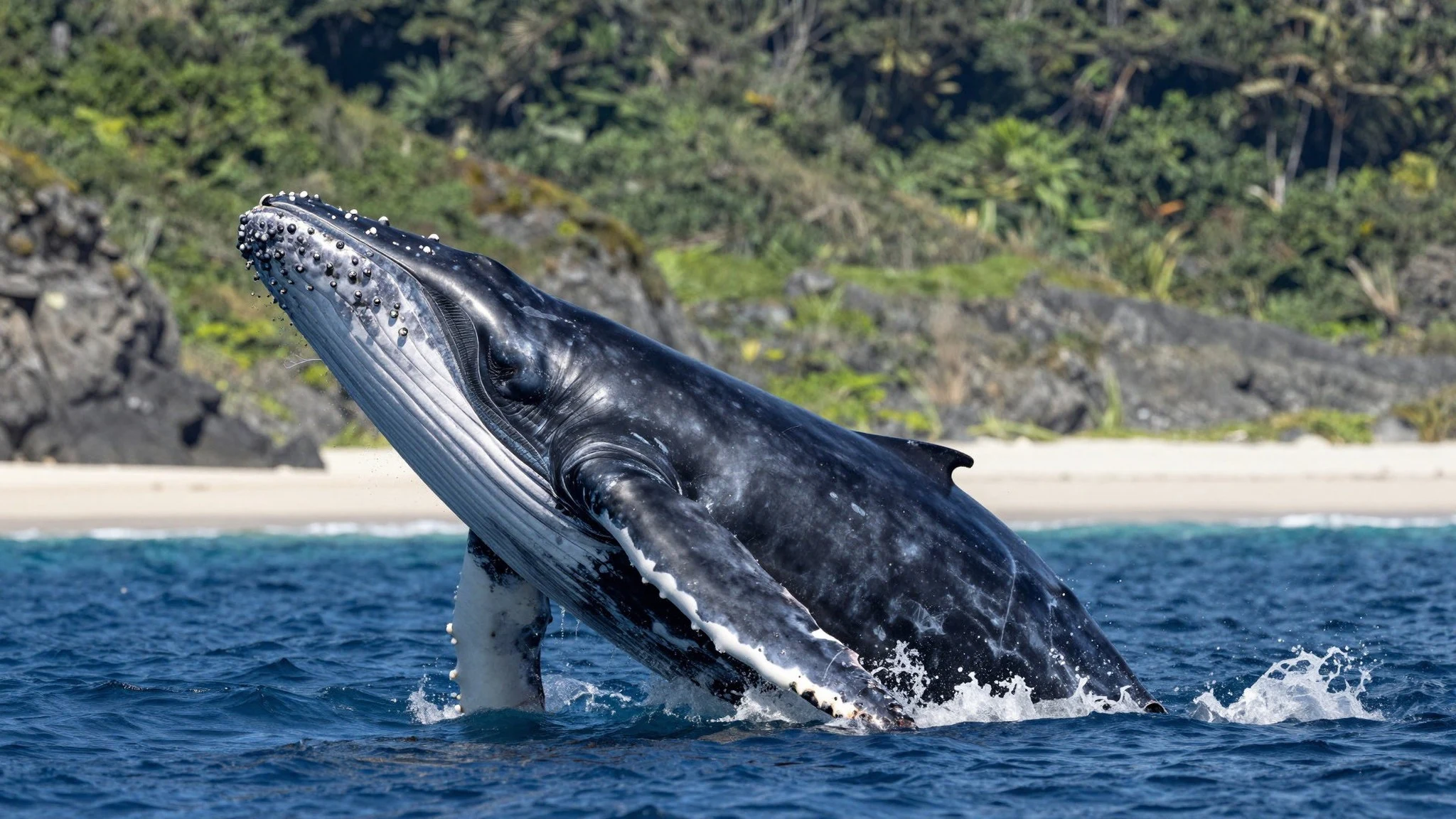
Ogasawara Islands
Ogasawara Islands, Japan
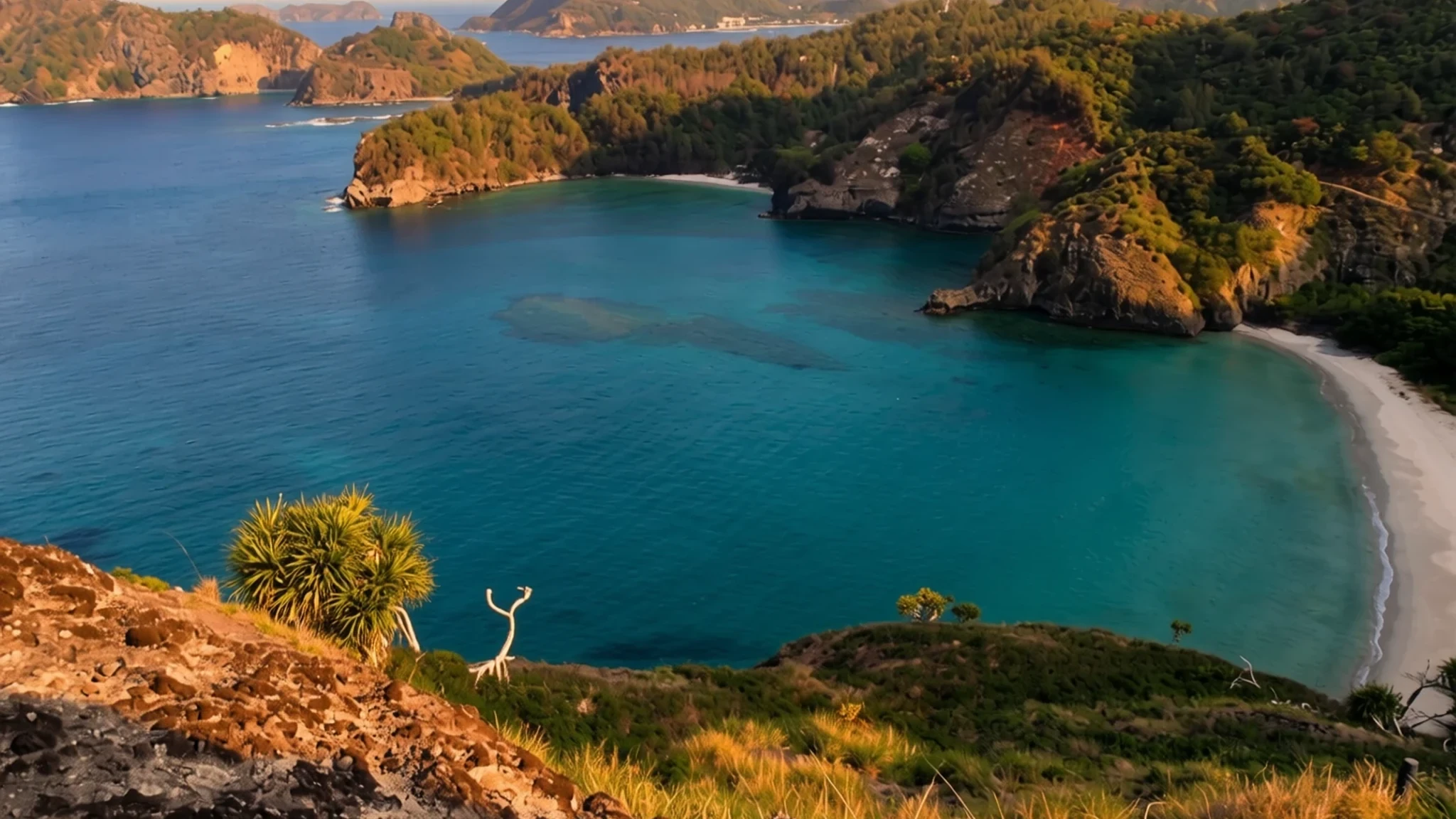
The Ogasawara Islands are a far subtropical outpost of Tokyo, reached by ferry, with clear seas and wildlife that evolved in isolation.
The place
The Ogasawara Islands lie far out in the Pacific, a scatter of small subtropical islands administered as a village of Tokyo. Chichijima, the main settled island, holds the harbour, the village streets and most of the lodging; Hahajima, to the south, is quieter, greener and more thinly lived-in. Between and around them sit islets that are largely left to forest, rock and birds. The land was never joined to the continent, so the plants and animals arrived by sea and air and then stayed, which is why so many snails, plants and seabirds here are peculiar to these slopes. The coast is a mix of pale sand, black rock and sudden drop-offs, and the water is clear enough that the seabed shows from a boat. Inland, the hills are low but steep, covered in dense green that stays lush in the warm, wet air. There is no airport and no bridge; the public journey is a long-distance ferry from Tokyo, which is why the islands feel much farther from the capital than a map of the same prefecture suggests. Daily life clusters around the port: a few shops, a clinic, schools, dive boats and guesthouses, with supplies timed to the ship. Visitors come for swimming, snorkelling, walking the ridges and watching whales in season, then discover that the pace is set by the ferry schedule and the weather, not by a city clock. Heat and humidity sit over the islands for much of the year, and the summer and early autumn can bring typhoons that cancel boats and close trails. It is a small, oceanic place, logistically demanding and deeply dependent on the ship that ties it to the mainland.
Its story
The Ogasawara Islands have a history of claims, absences and arrivals rather than a single founding moment. Japanese tradition credits a man named Ogasawara with an early voyage, though that account is disputed and the islands stayed effectively unoccupied for a long time afterwards. Western charts knew them as the Bonin Islands, an outside rendering of a Japanese word for an empty shore. A lasting community began when a small party of settlers from the Pacific, the Americas and Europe made a home on Chichijima, farming, fishing and trading with passing ships. Whalers and naval expeditions stopped in, and the islands became known to both Japanese and Western governments. Japan then brought the chain under its administration, and the older settler families — later called Obeikei — lived alongside newer arrivals from the mainland, producing a community that spoke more than one language and cooked in more than one style. War emptied the villages: civilians were evacuated and the islands became a military outpost. After the fighting, the chain was administered by the United States, and a limited number of people of pre-war island descent were allowed back before the wider population. The islands later returned to Japan and were folded again into Tokyo, this time as Ogasawara Village. What remains of that layered past is not a grand monument but family names, a few graves and wooden traces, stories told in the village, and a habit of looking both to Japan and to the Pacific. The Ogasawara Islands are still being written in that double register: a Tokyo address on an oceanic frontier.
What to see
- Kominato and Kopepe beaches — Chichijima
Kominato and Kopepe are the sandy coves people mean when they picture swimming on Chichijima, in the Ogasawara Islands. From the ridge above, the two beaches sit side by side, one more sheltered, both bright against dark green headlands. The water stays clear close in, so a visit is mostly swimming. Shade is thin and the midday sun is fierce, and after a ferry arrival the sand fills quickly.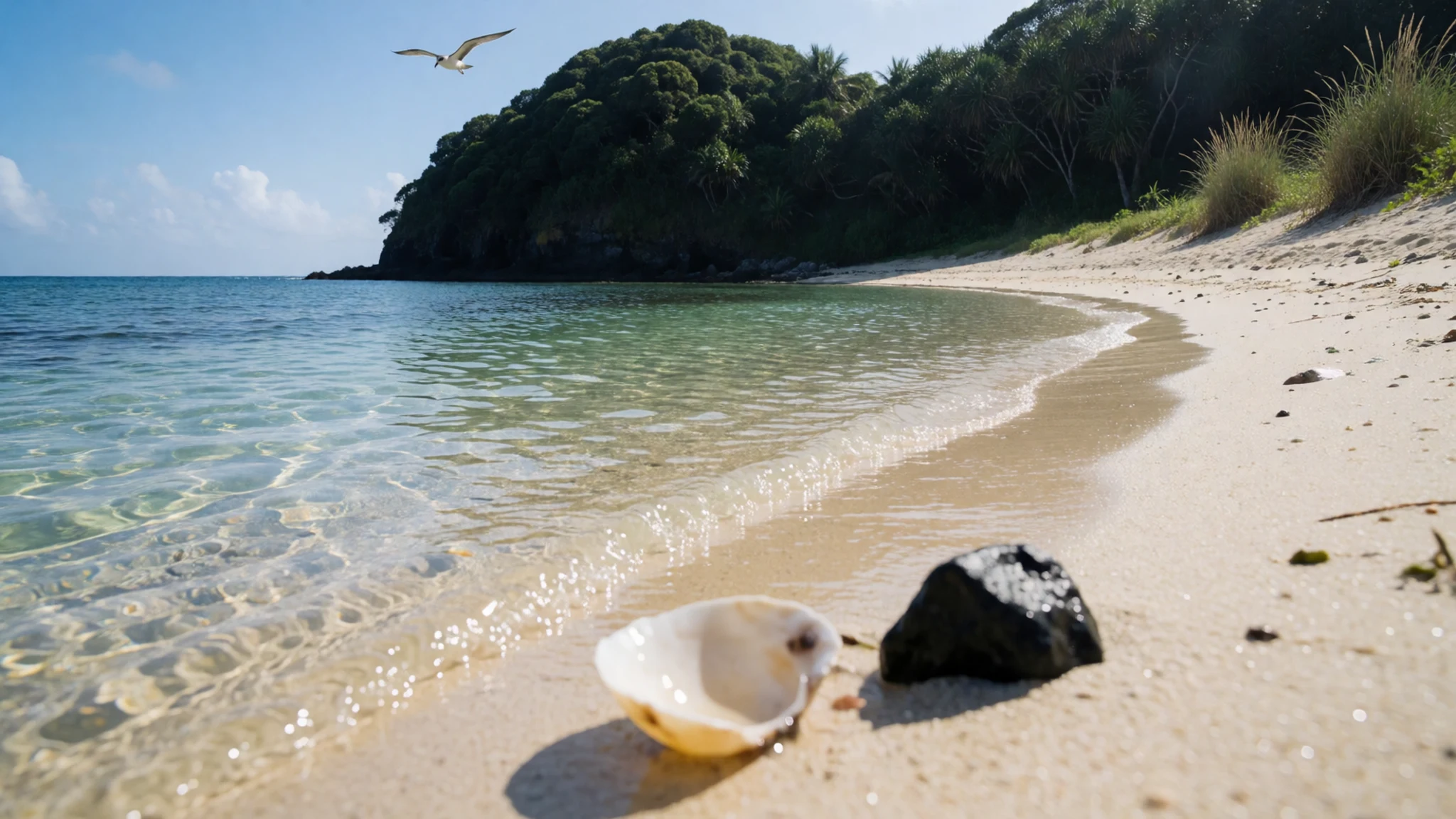
- Nakayama Pass — Chichijima
Nakayama Pass is the viewpoint that explains the Ogasawara Islands in a single glance: the two main beaches of Chichijima below and open Pacific beyond. The climb is short and exposed, along a road used by scooters, so it feels like a lookout rather than a wilderness trail. Clear mornings show pale water over sand and dark blue at the drop-off.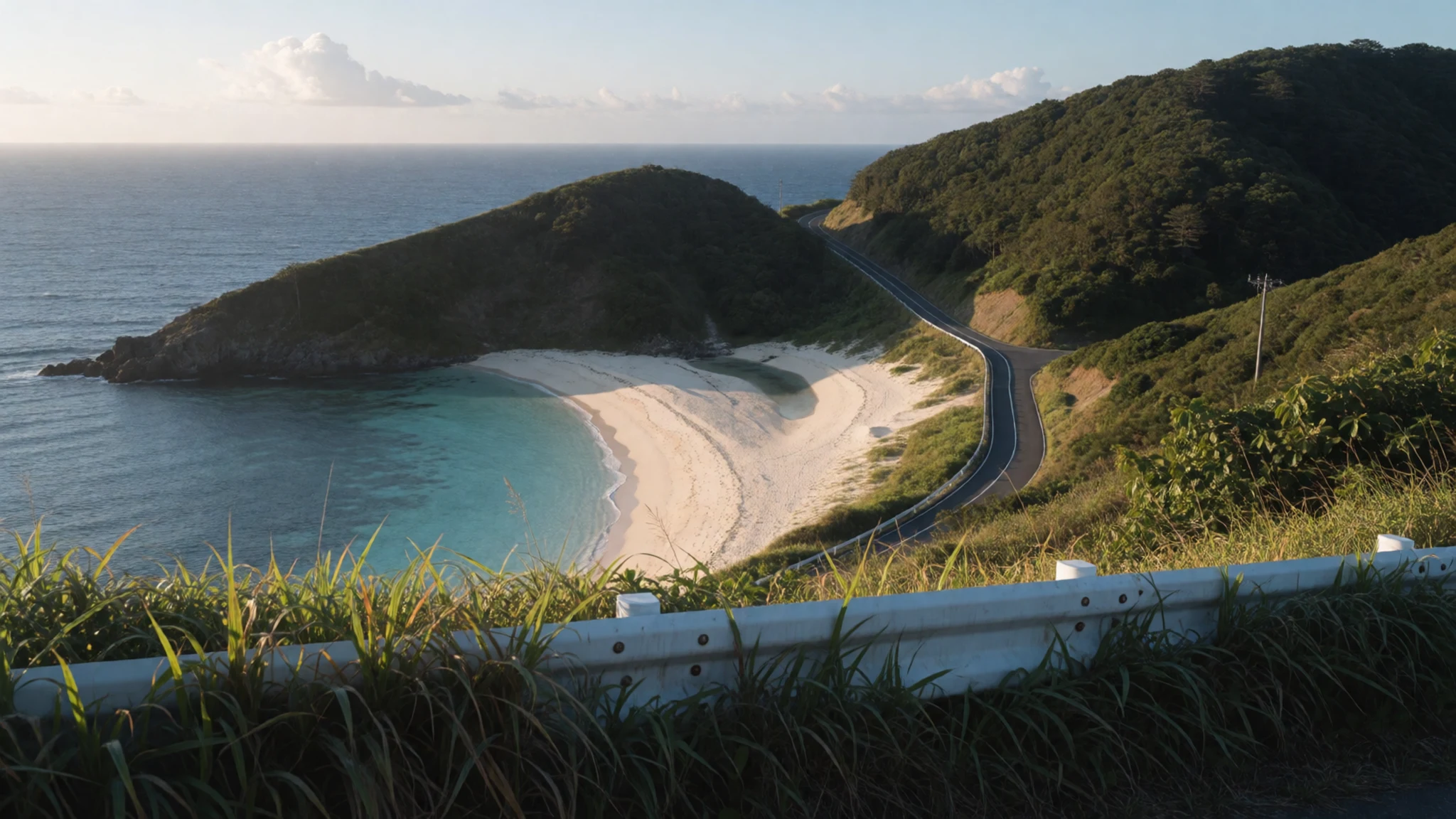
- Futami — Chichijima
Futami is the harbour village of Chichijima and the place where almost every visit to the Ogasawara Islands begins and ends. The ferry dock, the shops, the dive counters and the guesthouses sit within a short walk of the water. It is not a resort strip: concrete, gardens, fishing gear and a few cafés share the same lanes. Visitors sort bicycles and boat trips here before the port goes quiet.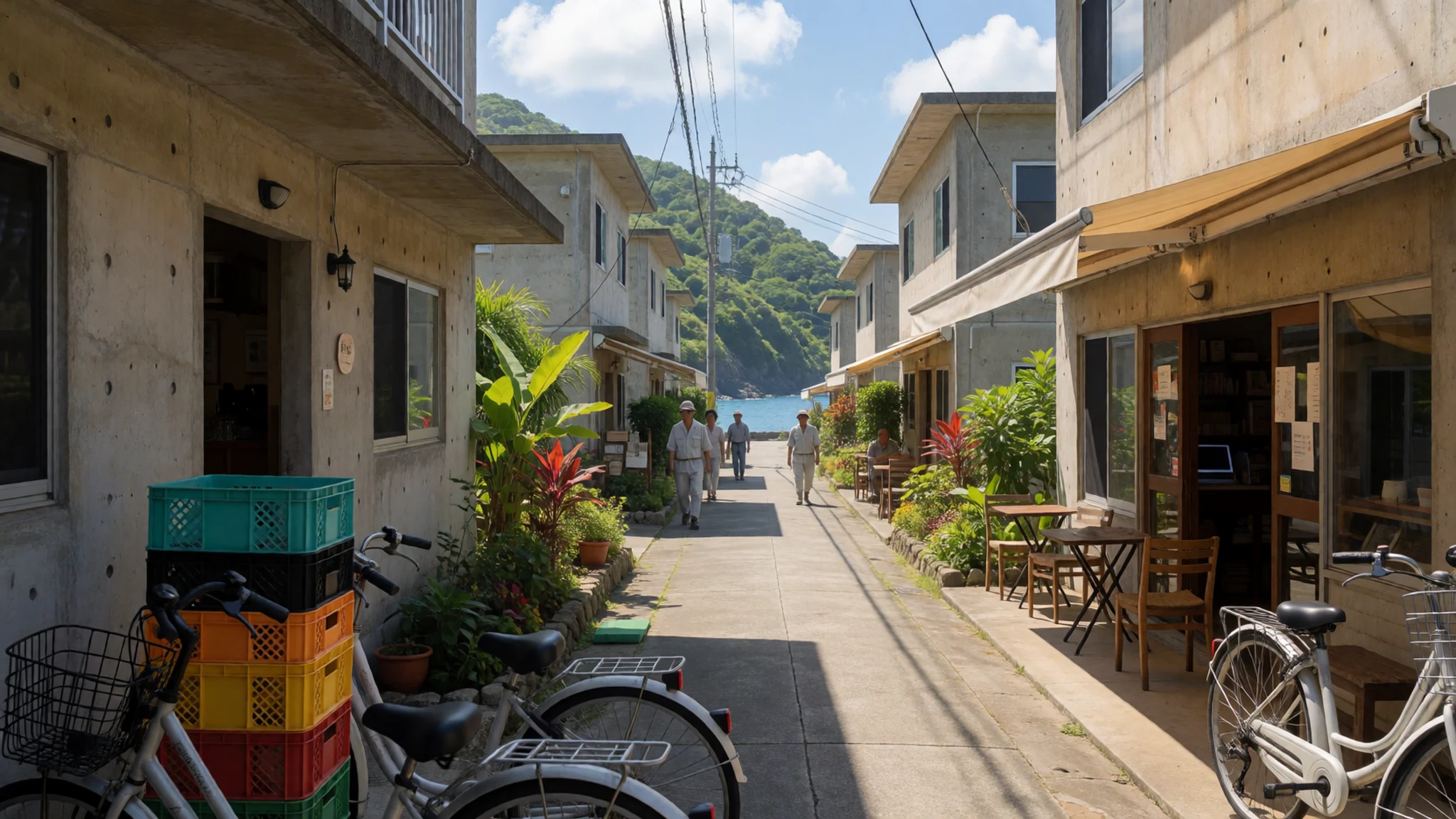
- Hahajima — Hahajima
Hahajima is the southern settled island of the Ogasawara Islands, greener and quieter than Chichijima, with a small community strung above a long bay. Most people reach it by a local ferry and find steep roads, lookouts over islets, and forest that comes right down toward the shore. Swimming and short walks are the point, not nightlife or shopping. Services are limited, so the return boat matters.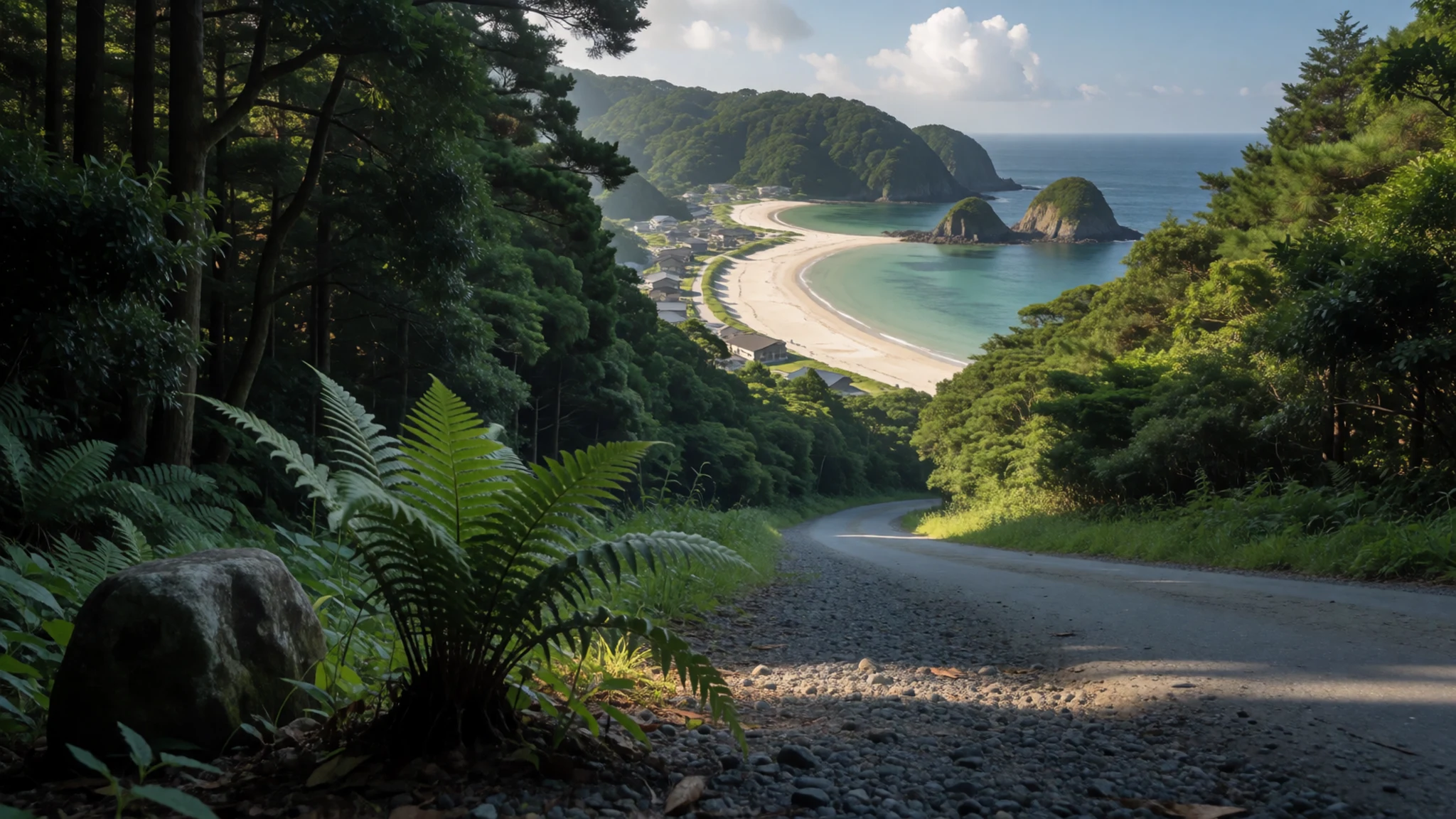
- Anijima — Anijima
Anijima lies just north of Chichijima in the Ogasawara Islands, close enough to see and deliberately hard to visit. Its forest shelters land snails of the Mandarina group, creatures that split into distinct forms from one wooded slope to the next, and the island is managed to keep that habitat intact. There is no village and no casual beach day.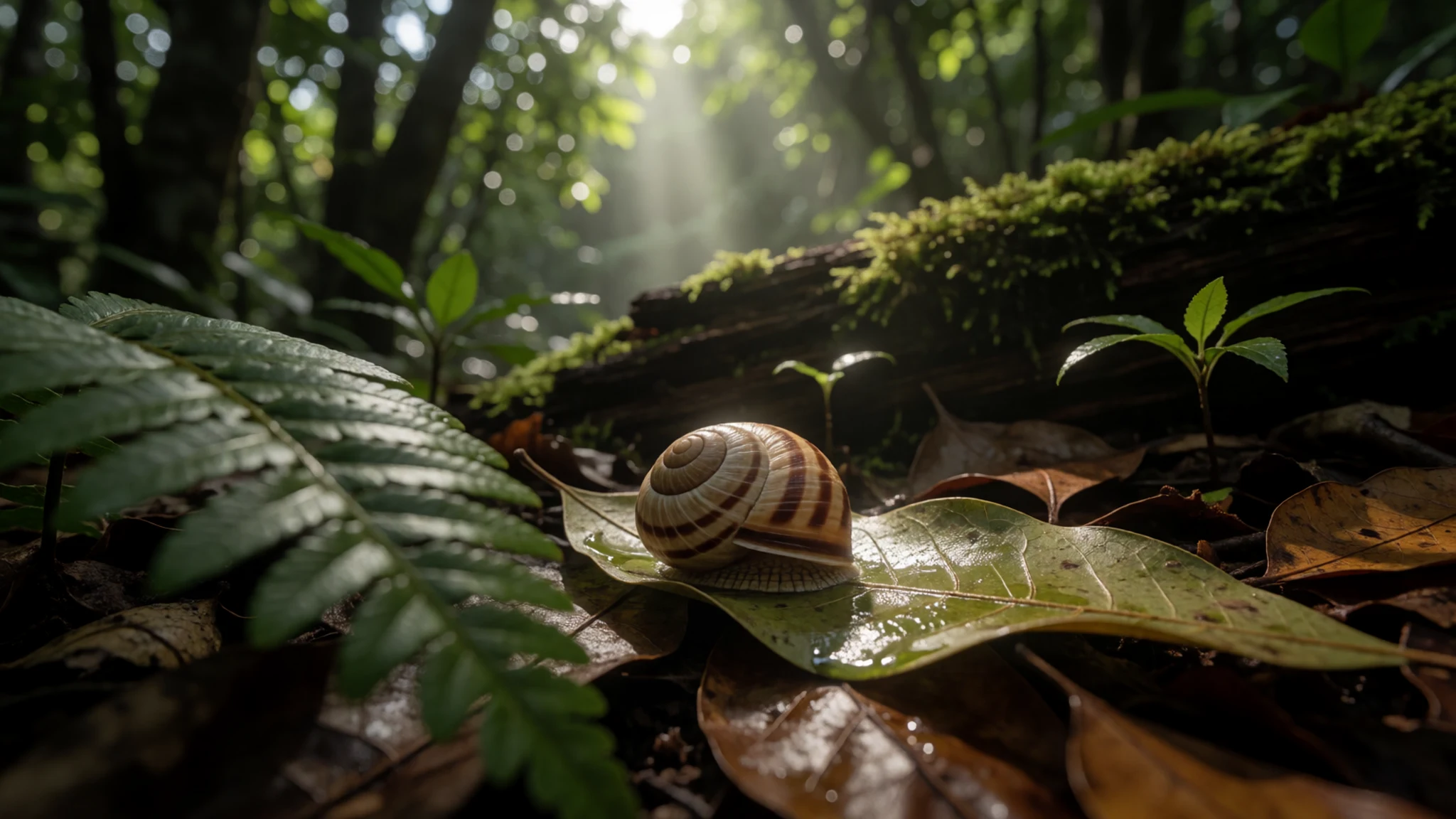
Culture
The Ogasawara Islands carry a culture that does not match the rest of Tokyo, even though the administration does. Older island families, the Obeikei, descend from Pacific, American and European settlers who put down roots before Japanese rule, and their history sits beside the lives of people who came later from the mainland. English words, family stories and a taste for both Western and Japanese home cooking lingered in that older community, while everyday public life now runs in Japanese, on Japanese time, with the school, the clinic and the ferry as the shared institutions. Nature is not a backdrop here so much as a civic duty: snails, seabirds and forest are spoken of as neighbours that can be lost, and volunteer spirit shows up in beach clean-ups and in the way boats approach nesting coasts. Whaling ships once used these harbours; today the interest in whales is watching them. Church traces and shrines are both small, and neither dominates the week. The social scale is village-scale, which means privacy is thin and kindness is practical — a lift, a weather warning, a seat on a full boat. Ask before photographing residents, and keep voices low near houses after the shops have shut.
What to wear
The Ogasawara Islands do not have a court costume of their own the way a mainland castle town does. What counted as local dress grew out of a settler and fishing life: practical cotton, straw hats against the glare, and work clothes for boats, gardens and the humidity, with Japanese kimono and Western everyday dress both appearing as the community mixed. Festive occasions now follow wider Japanese custom — yukata at a summer gathering, smart casual clothes for a school event or a shrine visit — rather than a textile unique to the chain. Day to day, people wear what the climate demands: light shirts, shorts or loose trousers, sun hats, rash guards on the water, and sandals or shoes that can handle a wet path. Visitors should copy that restraint. The sun is direct, the tracks can be slippery, and a beach is often a short scramble from rock or road, so swimwear belongs at the water and a cover-up belongs in the village shop. Take reef-safe habits with sunscreen, a long-sleeve layer for the boat, and shoes with a grip for passes and forest paths. A formal outfit is unnecessary; modesty in the village and care with sand in guesthouses matter more than fashion.
What to eat
- Flying fish — guesthouses and small eateries around Futami
Flying fish, tobiuo, is the everyday catch of the Ogasawara Islands, grilled, fried or served raw when it is fresh off the boat. The flesh is mild and firm, and it turns up at guesthouse dinners and small eateries around Futami more often than as a rare special.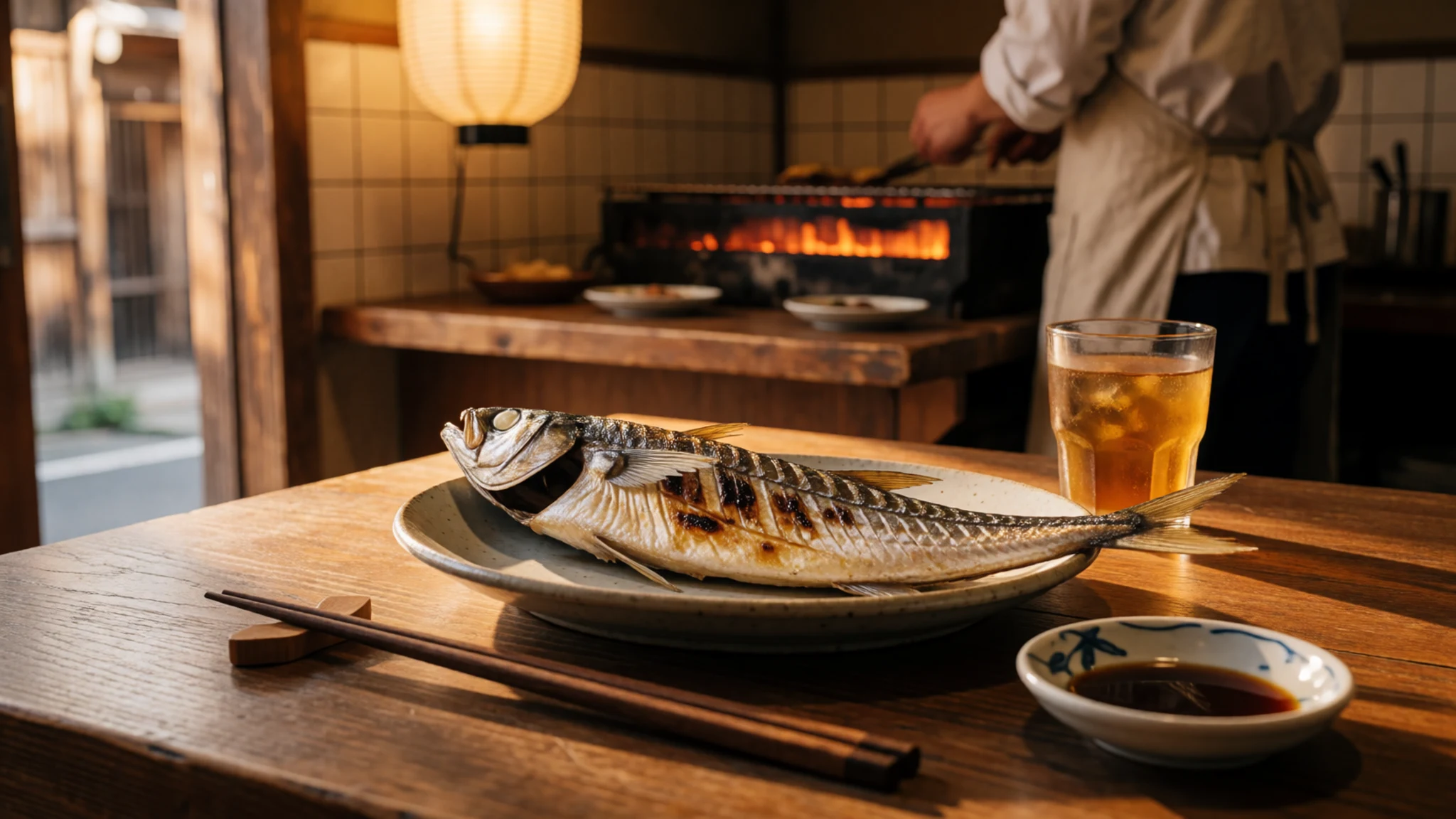
- Shima-zushi — guesthouse tables and eateries in Futami
Shima-zushi is the island style of pressed or hand-formed sushi in the Ogasawara Islands, often vinegared a little differently from Tokyo shops and topped with whatever fish came in. It is a home and guesthouse dish as much as a restaurant dish.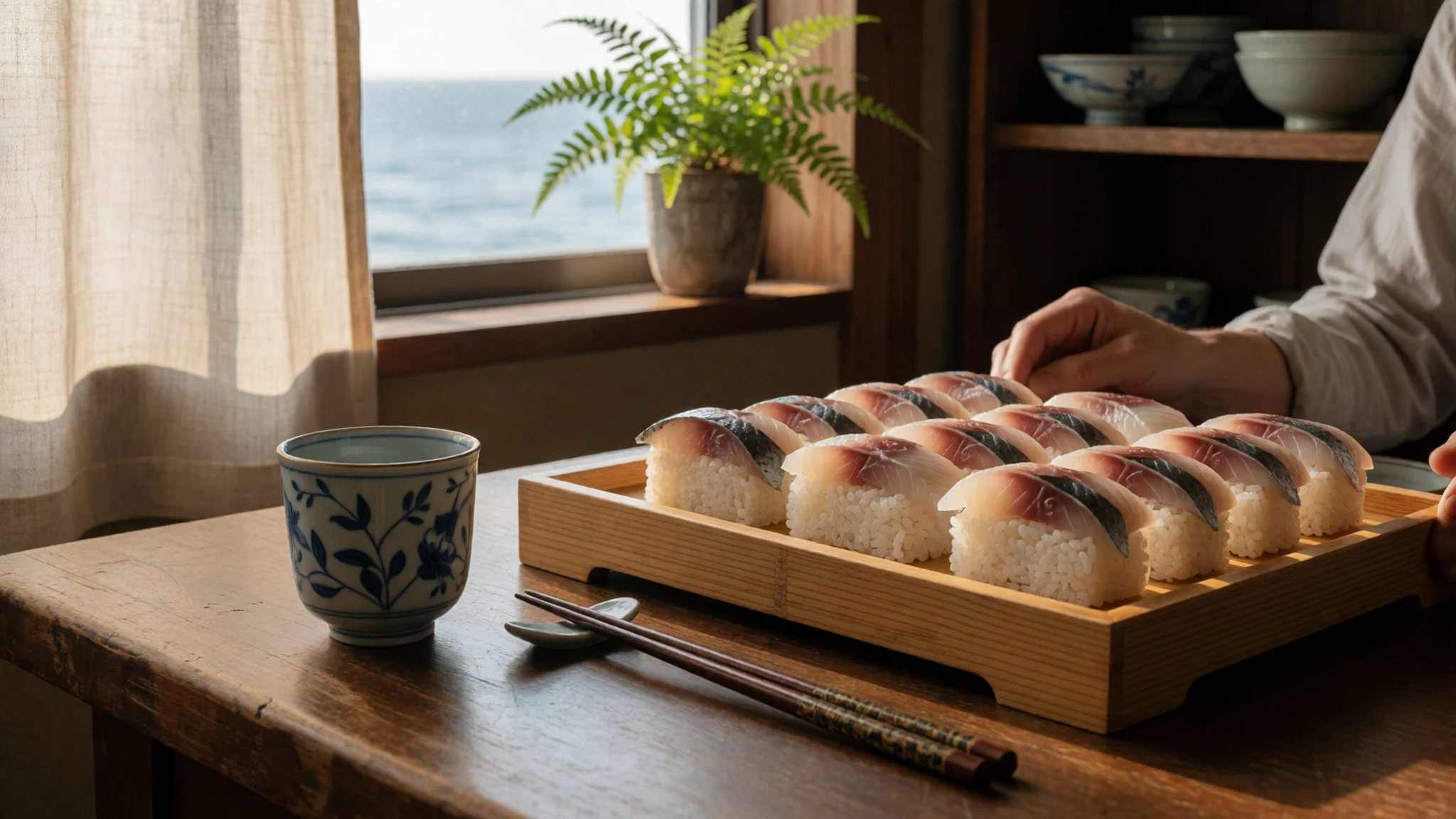
- Kajiki — harbour eateries and inn dinners on Chichijima
Kajiki, a marlin or swordfish, is the large-fish plate of the Ogasawara Islands, sliced thin when it is fresh and sometimes simmered when the catch is meant to last. The flavour is meatier than flying fish, so it often appears as sashimi beside rice at dinner. - Passion fruit — shops near the port on Chichijima
Passion fruit grown on the Ogasawara Islands is eaten as fruit, juice and a bright dessert flavour, and it is among the sweet things that do not have to arrive on the ship. The pulp is sharp and floral, good with yoghurt or simply with a spoon. - Island lemon — port cafés and guesthouses on Chichijima
Island lemon from the Ogasawara Islands is a small, aromatic citrus used in drinks, dressings and grilled fish. It is closer to a kitchen staple than to a souvenir eaten alone. The rind carries much of the scent, and port cafés use it when a village tree is fruiting.
Plan it
Best time. On the Ogasawara Islands, April to June and October to November suit most visitors: the air is warm without the worst of the typhoon season, and the sea is generally calm enough for boats. July to September is hotter, more humid and more likely to have storms that stop ferries. Winter is milder than on the Japanese mainland but windier, with fewer swimming days.
How long. 4–6
Getting there. There is no airport on the Ogasawara Islands. The public route is the long-distance ferry from Tokyo to Futami on Chichijima; from there a smaller boat runs to Hahajima. Book the ship before the bed, and check sailing status when a typhoon is anywhere near the route.
Budget. high
Tips
- Reserve the ferry and a room together; both fill on holidays and in the calmer months.
- Carry cash. Small shops and boat operators do not all take cards.
- Start outdoor plans early. Shade is scarce and the sun is strong.
- Build a spare day into the trip in case weather delays the ship.
- Ask locally before landing on small islets; some are closed to protect wildlife.
Etiquette
- Do not take shells, coral, snails or plants.
- Ask before photographing people.
- Keep noise down in the village at night.
- Follow boat crew instructions around whales and nesting coasts.
Nearby
Sources
- Wikidata (CC0)
- Wikipedia (CC BY-SA 4.0)
- Wikivoyage (CC BY-SA 4.0)
Wildlife
- Humpback whale (animal)
The humpback whale is a giant of the sea, up to seventeen metres long, with very long flippers and bumpy knobs on its head. It loves leaping out of the water, and the males sing long, winding songs. In Ogasawara, whale watching belongs to the season, and the weather and ferry timetable set the pace of each day, so stay flexible. Keep a respectful distance, stay quiet, and never feed them.