Odaesan
Odaesan, South Korea
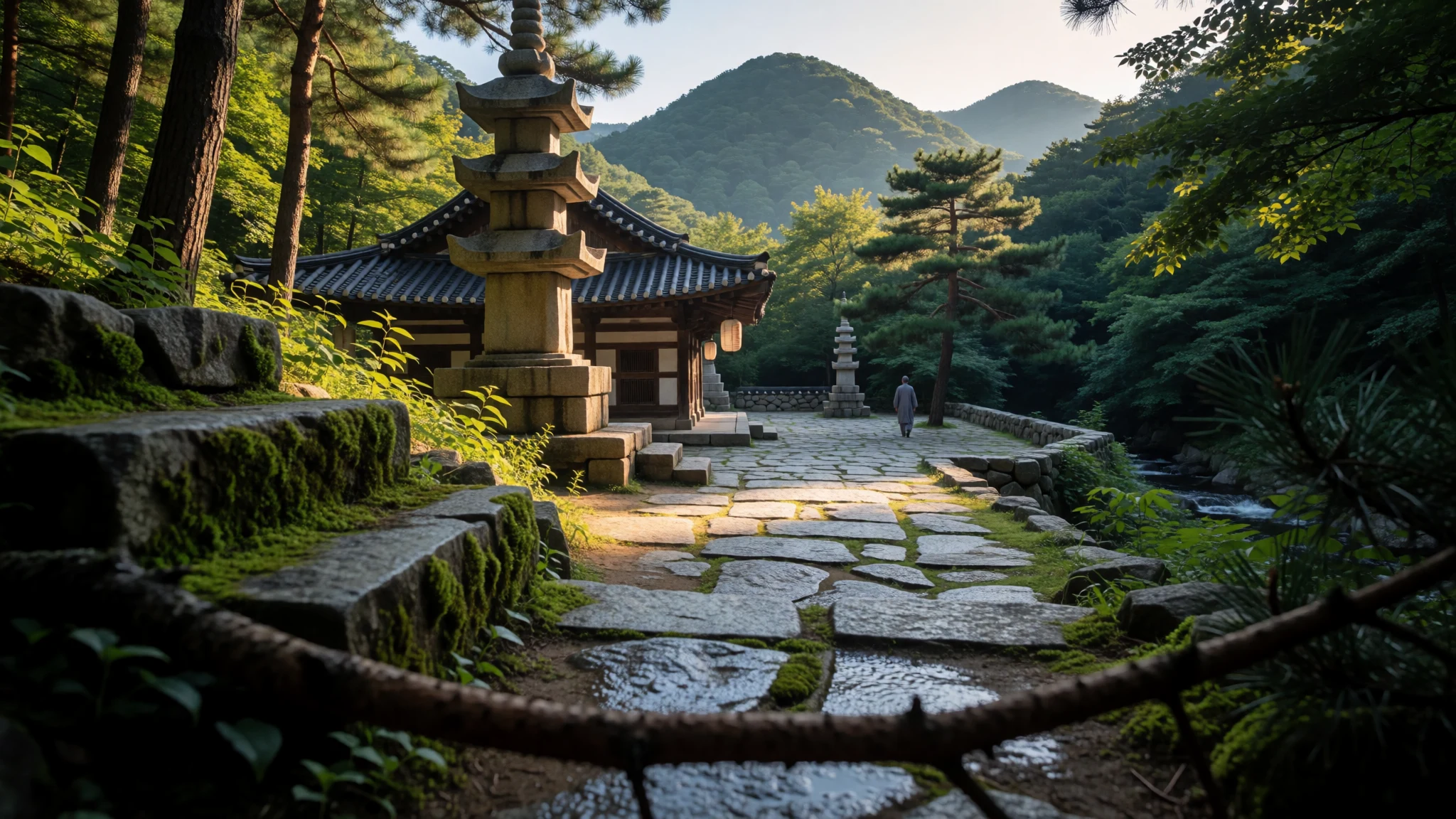
Odaesan is a rounded, forested Korean mountain where pilgrim paths, a historic temple and a royal archive share one quiet valley.
The place
Odaesan lies in eastern Gangwon Province, South Korea, where the territories of Gangneung, Pyeongchang and Hongcheon meet. It is a national park and also a pilgrimage mountain, and the two roles overlap on most trails. The massif sits on the Baekdu-daegan, the chain of ridges that Koreans treat as the backbone of the peninsula, with Seoraksan to the north and Dutasan to the south. Unlike those neighbours, Odaesan is not jagged: its summits are rounded and heavily wooded, so a day here is mostly forest paths, streams and gentle ridge walking rather than bare granite. Five main peaks enclose a deep valley that runs north to south, with smaller summits and gorges in between, and the river leaves the area towards the south. The name means Five Platforms Mountain and was borrowed from Wutaishan in China. A platform is the seat from which a Buddha teaches, and each peak was matched with one of five cosmic Buddhas and with a compass direction. The highest point, Biro-bong, reaches 1,563 m and is also called the Central Platform. Hermitages on the slopes are dedicated to individual bodhisattvas. National Highway 6 crosses the park, joining the main southern entrance to the road down to the east coast, so access by road is easy and the car parks fill on autumn weekends. Just beyond the western boundary, Gyebangsan rises slightly higher and is joined to the cluster by a long ridge; writers disagree on whether it belongs with Odaesan or stands apart.
Its story
Odaesan became a holy mountain of Korean Buddhism in 643 CE, when the monk Jajang founded Woljeongsa in its main valley. Jajang had travelled to China on pilgrimage and, at Wutaishan, had a vision of Manjushri, the bodhisattva of wisdom, who told him that a matching set of five peaks existed in his homeland and that he would meet the same figure there. He found Odaesan, judged its landscape to fit, and placed relics believed to come from the historical Buddha partway up the southern slope below Biro-bong. From then on the mountain was counted as a dwelling place of Manjushri. A second layer of history is secular. Near the centre of the cluster, just north of Woljeongsa, stood one of four mountain archives where the Joseon court kept its annals and ceremonial records. It was founded in 1606, and remote forest sites were thought safer from fire, wind and flood. Of the four, it alone escaped burning when Japanese forces invaded. In 1922, during the colonial period, many volumes were taken to Tokyo, and some were later lost in an earthquake. After a long diplomatic process, more than a thousand volumes came back to Korea in the early 2010s and were received with formal ceremony. The archive building seen at Odaesan today is a late twentieth-century reconstruction. Natural history adds a footnote: an iris first described from the mountain in the 1960s carries its name, Iris odaesanensis. Deep in the park, three small peat fens, rare in Korea, are protected under the Ramsar Convention and closed to visitors because they are so fragile.
What to see
- Woljeongsa — Main valley, near the southern entrance
Woljeongsa is the main temple of the valley, founded in the seventh century by Jajang, and the natural base for a visit. It has a compact complex of halls and a stone pagoda, reached by a forested approach. Arrive early, before tour groups, and walk slowly: the setting under the peaks matters as much as the buildings.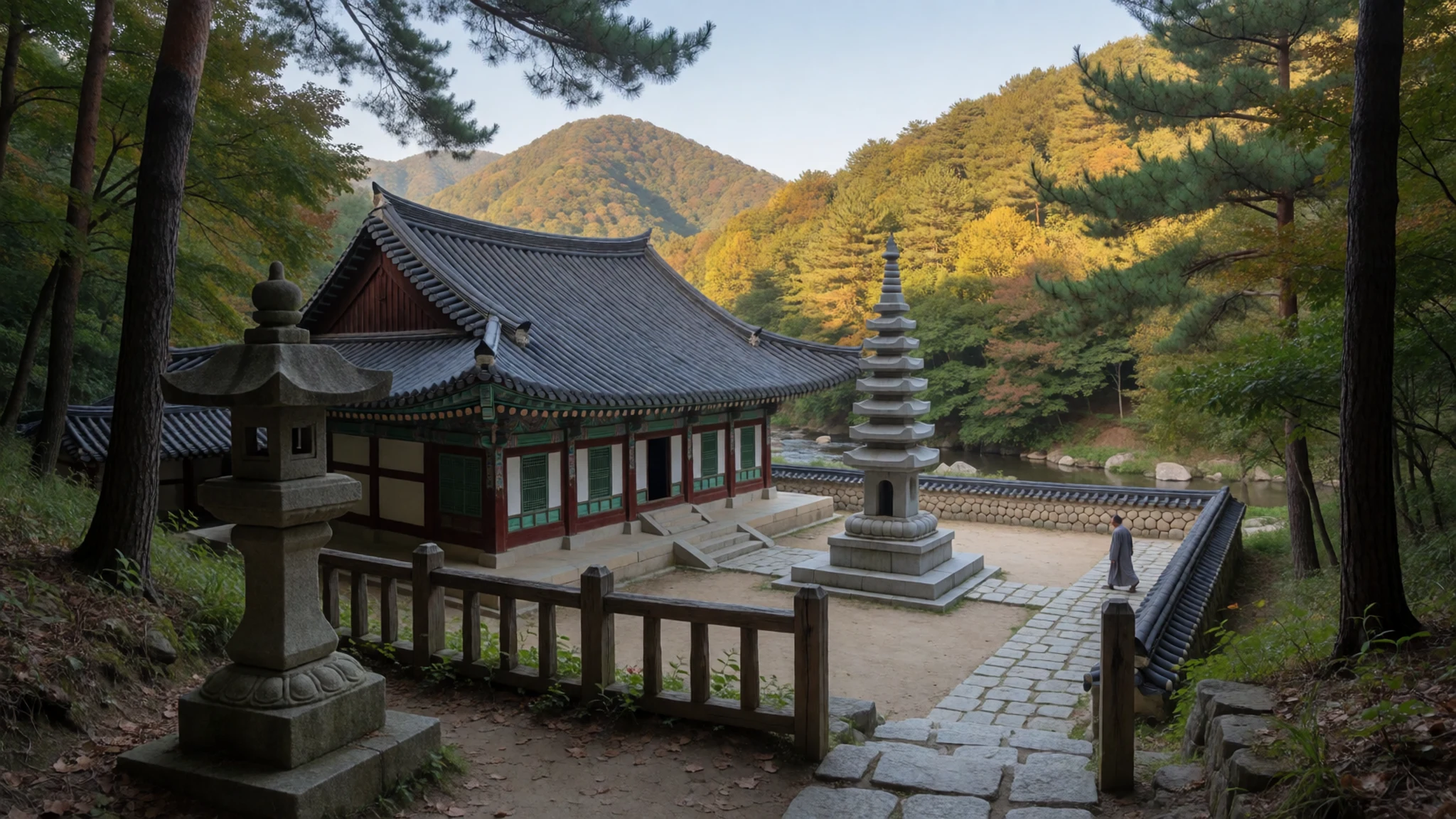
- Biro-bong — Central summit of the park
Biro-bong, the Central Platform, is the high point of the park and the usual goal of a long walk. The trail runs through woodland and is rounded rather than rocky, though the final stretch climbs steadily. Start in the morning and carry a waterproof layer, because mountain weather can change within an hour.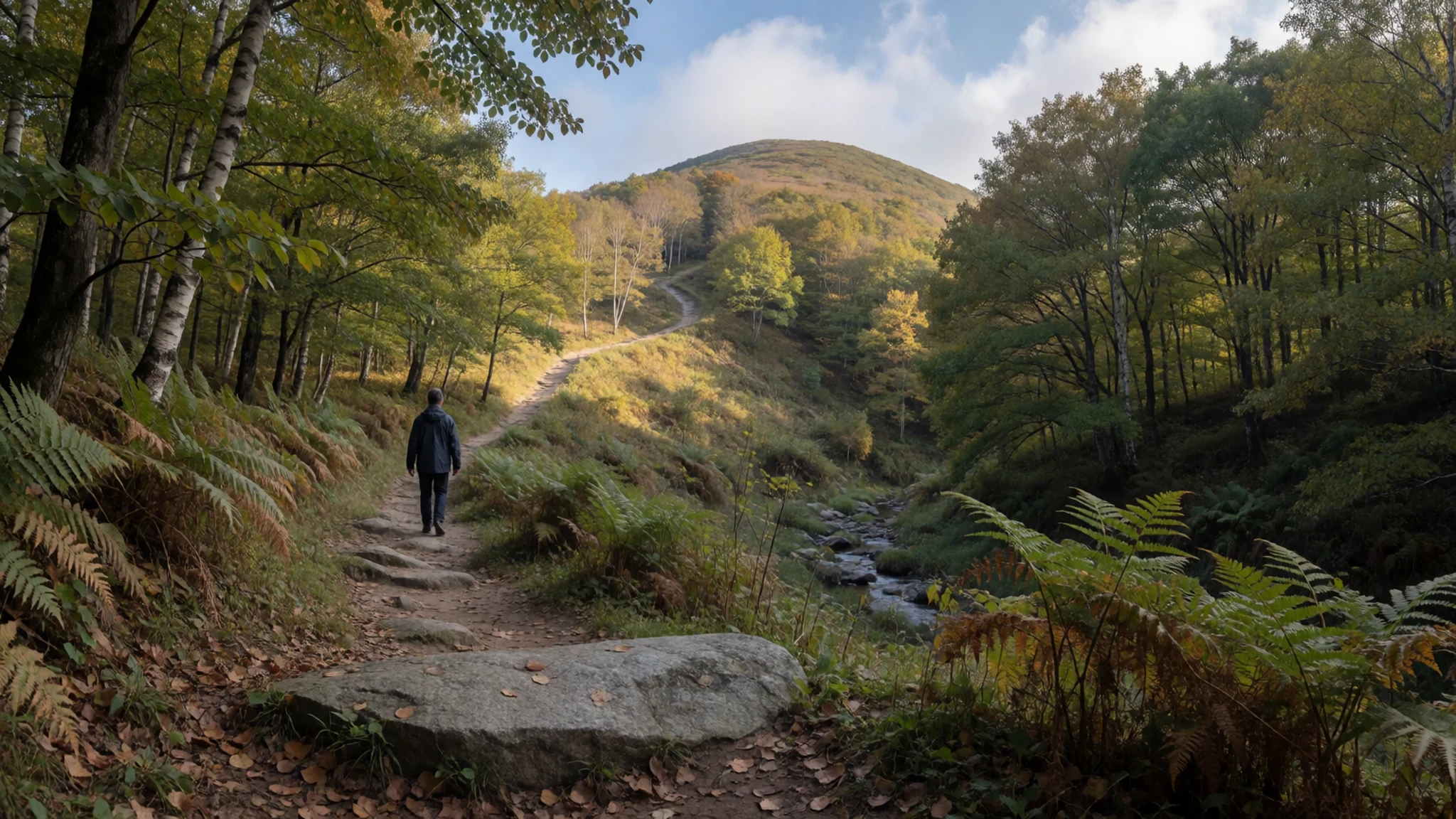
- The Joseon royal archive site — Just north of Woljeongsa
A reconstructed archive building stands north of Woljeongsa, on the site where the Joseon court once stored its annals and ceremonial records. The reasoning was simple: a remote forest valley was safer than a palace. It is a short, calm detour that explains why the mountain mattered to rulers as well as monks.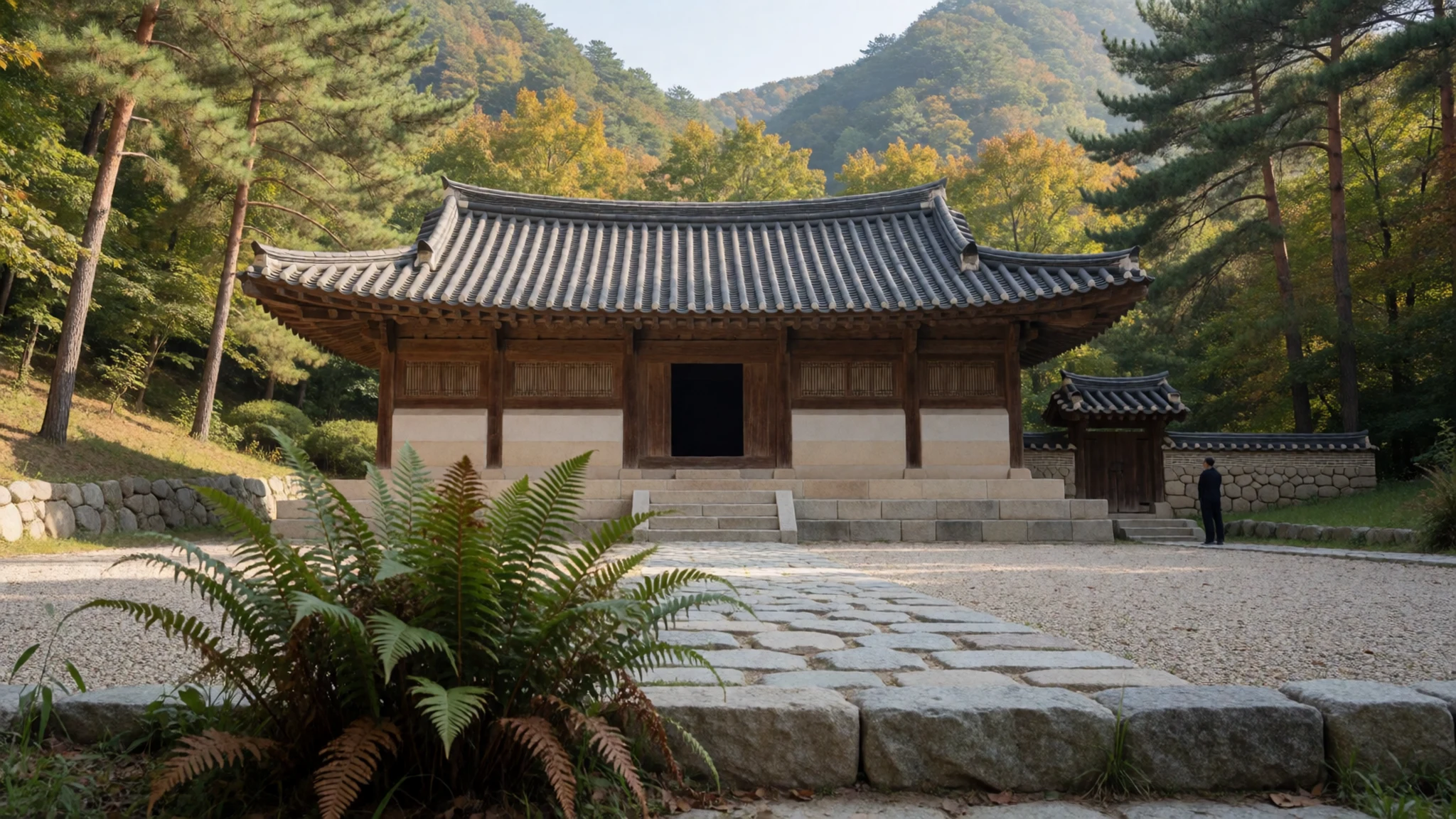
- The five platforms and their hermitages — Slopes around the central valley
Each of the five peaks carries a Buddha and a compass direction, and small hermitages dedicated to bodhisattvas sit on their slopes. Visiting a few of them turns a hike into a pilgrimage circuit. They are working religious places, so expect quiet, simple buildings rather than grand monuments.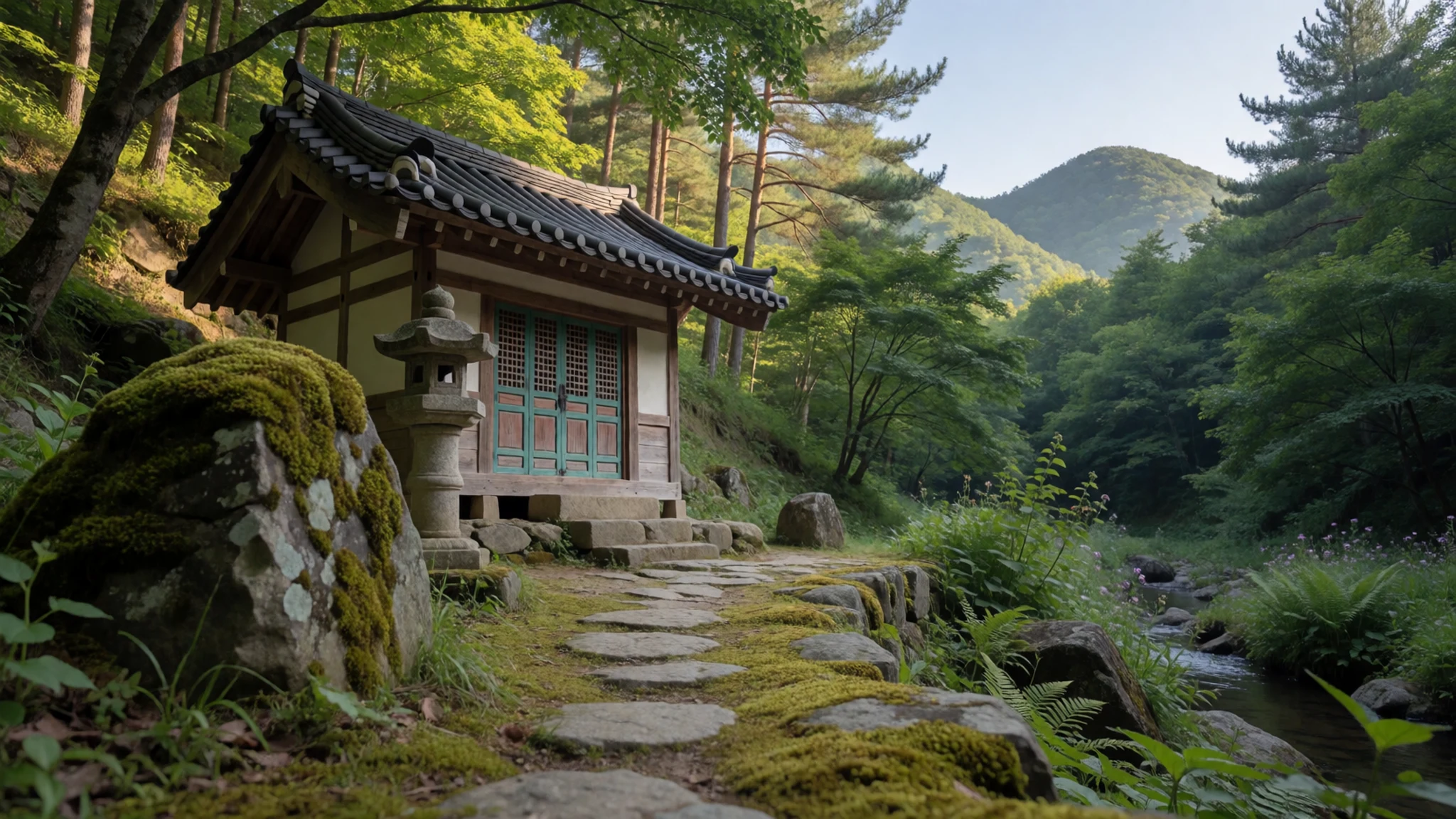
- Gyebangsan ridge — Just outside the western boundary
Gyebangsan lies outside the park's western edge and is linked to the Odaesan ridges by a long ridge route. It rises a little higher than Odaesan's own summit. Keen walkers use it to extend a trip, and it is generally quieter than the temple valley. Check trail conditions with the park office first.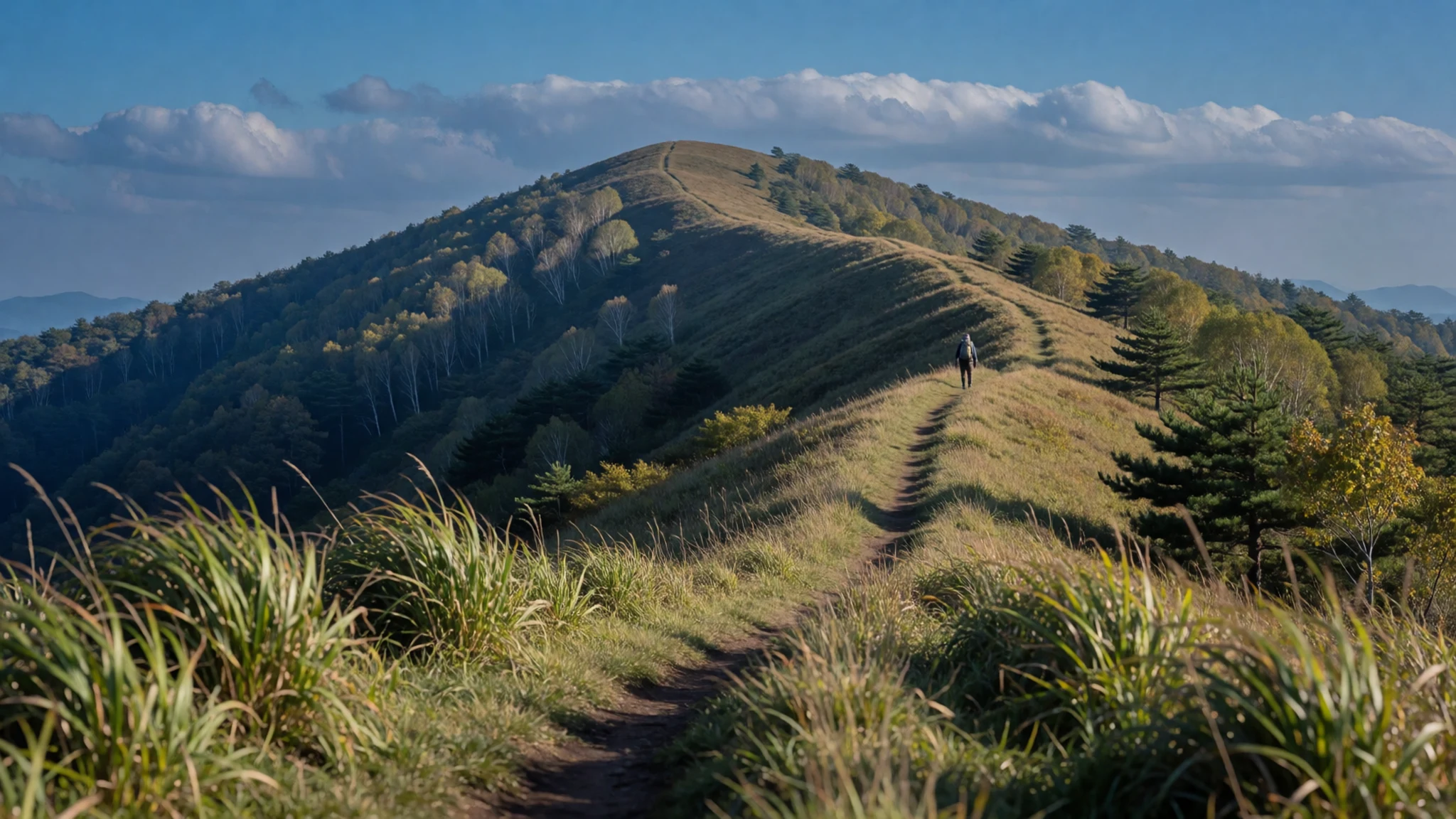
Culture
Odaesan's culture is Buddhist before anything else. For well over a thousand years the mountain has been understood as the home of Manjushri, and its five peaks are read as five seats of teaching, so a walk here is half hiking and half pilgrimage. Many Koreans come to pray, to visit the hermitages in turn, or to stay overnight in a temple, where guests join the monastic routine of early chanting, plain vegetarian meals and quiet meditation. The link with Wutaishan in China shows how Buddhism travelled across East Asia, carrying place-names and cosmology with it, including the five directions that map onto the peaks. The mountain also holds national memory through its Joseon archive, a reminder that the court trusted these forests to protect its records. The seasons set the rhythm of visits: lantern displays around the Buddha's birthday in spring draw crowds to Woljeongsa, and autumn colour fills the valley with day-trippers from the coast and from Seoul. Hikers and monks share the same paths, and courtesy is expected from everyone. A slight bow is the usual greeting, and a palms-together bow towards a monk is welcomed. Remove your shoes before stepping into any temple hall, keep your voice low near worship, and ask before photographing monks or people at prayer.
What to wear
Traditional Korean dress is the hanbok: a short jacket (jeogori) over a full wrapped skirt (chima) for women, and a jacket with loose trousers (baji) for men. Silk is used for formal and festive wear, ramie and hemp for summer, and cotton, often quilted, for everyday and colder months. Hanbok appears today at weddings, at the lunar new year and at Chuseok, and in rented form around the palaces of Seoul rather than in the mountains. Around Odaesan, the traditional clothing most often seen belongs to monastic life: monks and nuns wear loose robes in grey or brown, and guests on temple stays are usually lent plain tops and trousers. Everyday dress on the mountain is outdoor gear. Korean walkers favour technical jackets in bright colours, trekking poles and caps or visors, even on short walks, and the look is part of the outing. A visitor should dress in layers, since valley mornings can be cool even in summer and winter is cold with snow. Shoes need good grip for wet, rooty forest paths, and slip-ons or laces that loosen easily make temple halls simpler. At temples, cover shoulders and knees and avoid very short shorts or sleeveless tops. A waterproof layer, a hat for exposed ridges and a spare pair of socks are worth carrying.
What to eat
- Sanchae bibimbap — Family restaurants near the park's main entrance
Rice topped with seasoned mountain greens, such as bracken and aster leaves, mixed with chilli paste and sesame oil. It reflects the upland diet of Gangwon and suits a day on the trails. Portions are generous, and the greens change with the season.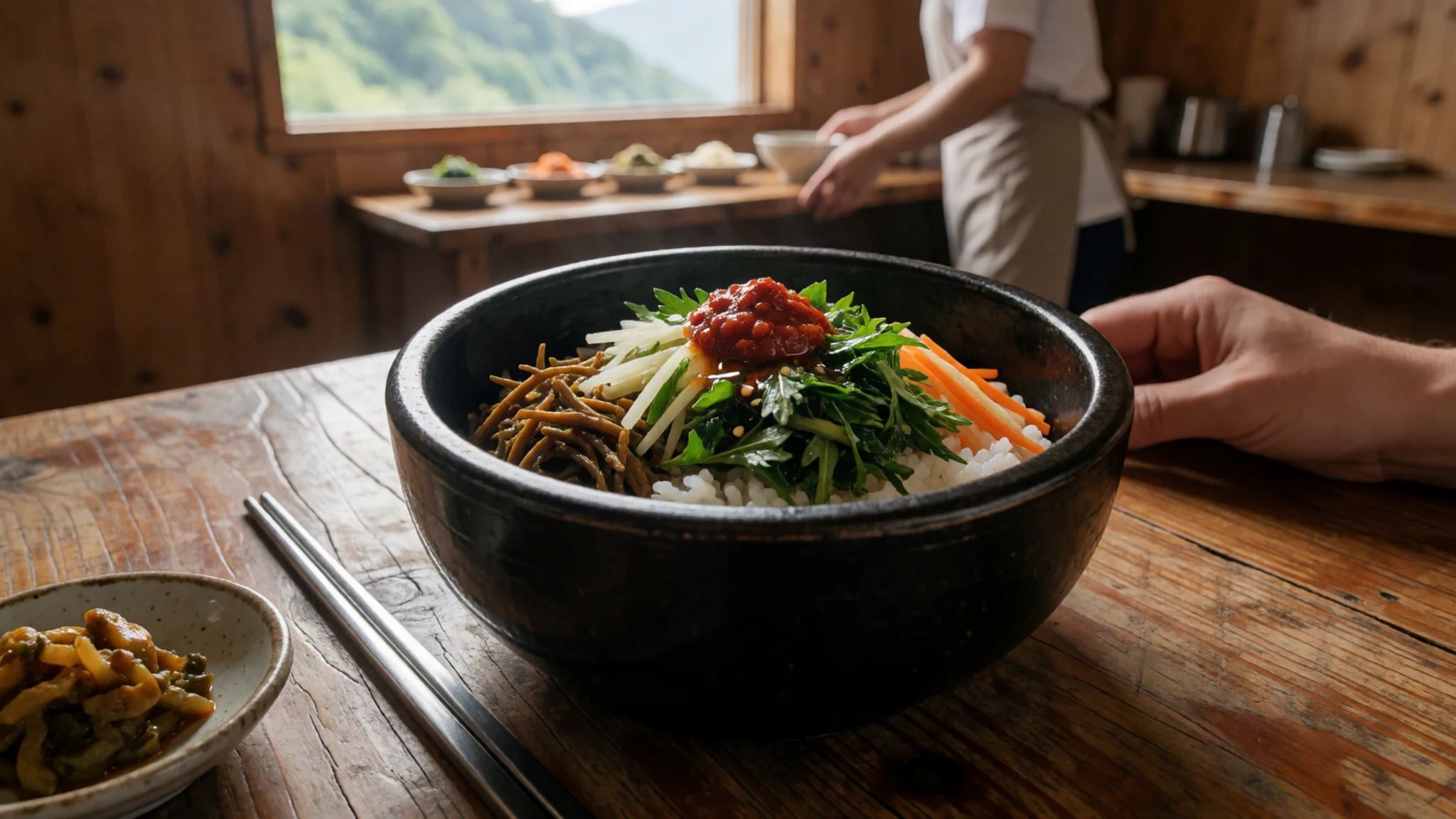
- Temple food (sachal eumsik) — Temple-stay programmes and a few specialist restaurants in the valley
Vegetarian cooking without meat or fish and traditionally without strong alliums such as garlic. Expect many small dishes of vegetables, tofu, pickles and soup. Eating it at a temple stay is the fullest version, and it is quiet and unhurried.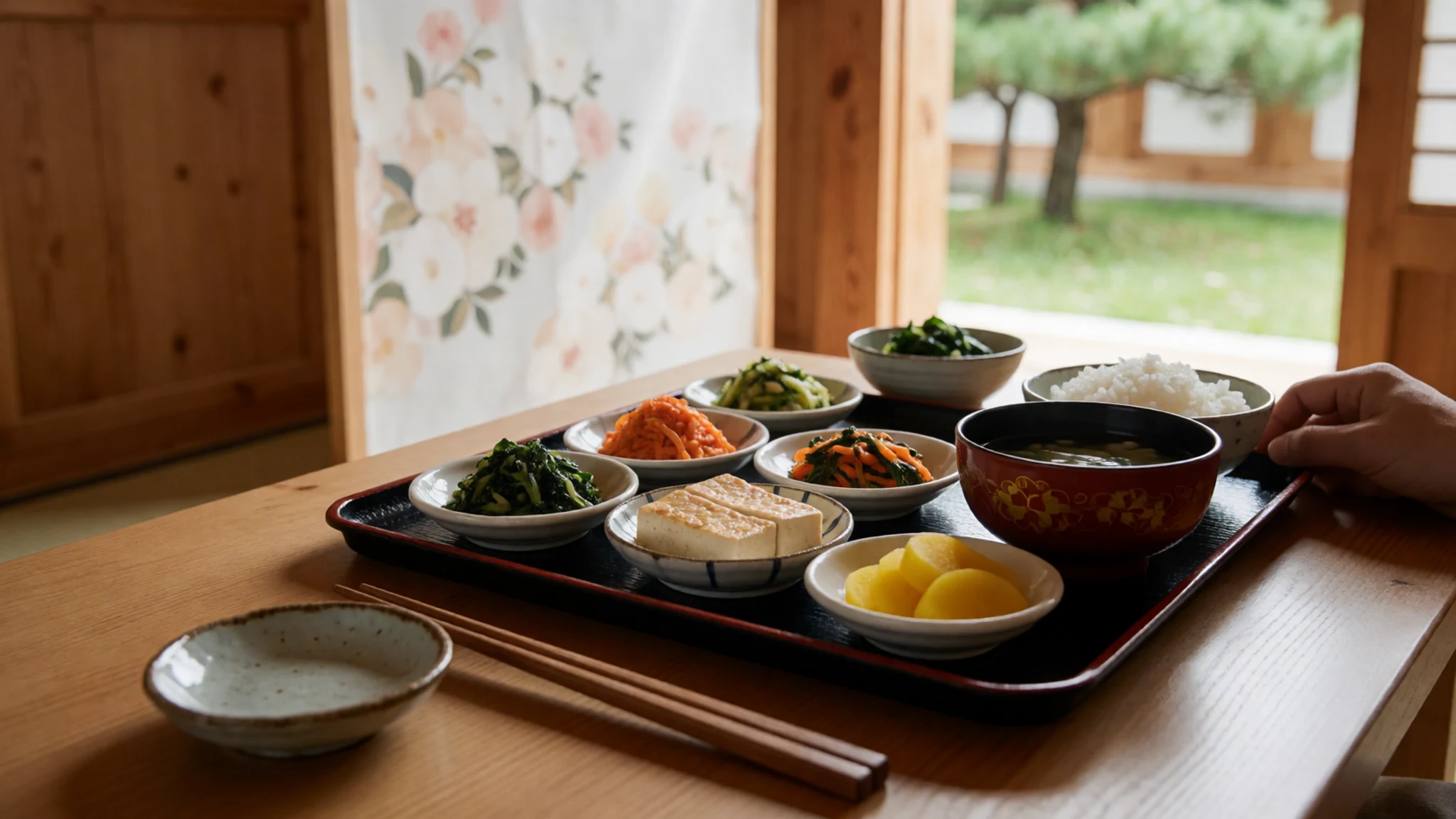
- Memil guksu or makguksu — Town eateries in Pyeongchang and Gangneung
Buckwheat noodles, a staple of the Gangwon highlands, served cold in a tangy broth or tossed with chilli sauce. The noodles are earthy and slightly grainy. They are a sensible lunch after a morning walk, especially in warm months. - Ongsimi — Local restaurants in highland villages
A soup of chewy potato-starch dumplings, often filled with greens or kimchi, in a light broth. Potatoes grow well in cool uplands, which makes this a regional favourite. It is simple, warming and good on a cold day. - Hwangtae haejang-guk — Roadside restaurants on the routes towards the east coast
A soup of dried pollack, made with radish and sometimes egg or tofu, known as a morning restorative. The fish is dried in the cold mountain air of Gangwon. It tastes mild and clean, and is a good breakfast before an early start.
Plan it
Best time. Late September to October for autumn colour, and May to June for fresh green growth; summer is warm, humid and prone to heavy rain, and winter is cold with snow, which suits quiet walks but needs proper footwear.
How long. 1–2
Getting there. Fly to Incheon International Airport near Seoul, then take an express bus or high-speed train towards Pyeongchang or Gangneung in Gangwon Province. The last leg is a local bus or taxi from the nearest town to the park entrance near Woljeongsa; check current timetables before travelling.
Budget. low
Tips
- Reach Woljeongsa early on autumn weekends, when roads and car parks fill up
- Carry water, snacks and a waterproof layer, as food options thin out away from the entrance
- Book temple stays well ahead for October, and check the national park's official site for trail closures
- Keep some cash for small stalls and local buses, along with a card
- Stay out of the closed wetland areas, which are protected
Etiquette
- Remove shoes before entering temple halls and keep your voice low
- Ask before photographing monks or people praying
- Stay on marked trails to protect the forest and rare plants
Nearby
Sources
- Wikidata Q27295265 (CC0)
- Wikipedia: Odaesan (rev 1355922973) (CC BY-SA 4.0)
- Wikivoyage: Gyeonggi (rev 5386961) (CC BY-SA 4.0)