Nouméa
Nouméa, France
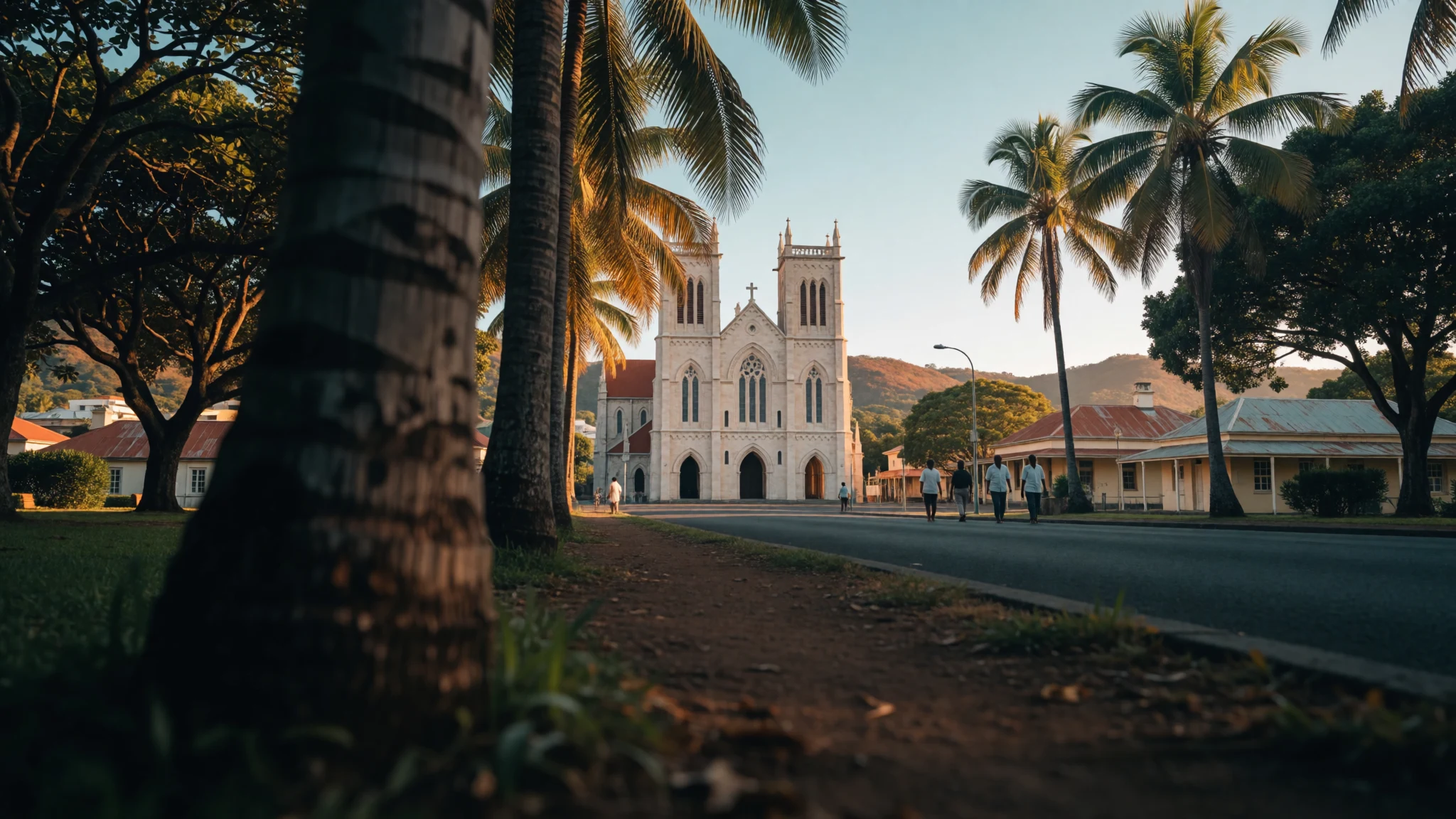
Nouméa pairs a French colonial capital with a Kanak lagoon city, where coral water, nickel-town history and Pacific markets share a peninsula.
The place
Nouméa occupies a hilly peninsula at the south of Grande Terre, the main island of New Caledonia, with a broad lagoon and a barrier reef lying between the city and the open Pacific. It is the capital of this French territory, and the double inheritance shows in the streets: municipal stone and café terraces under coconut palms and banyans, Kanak names on the land, and a Melanesian presence far older than the port. The centre gathers on Place des Cocotiers, a long public garden where the city walks in the evening, while the waterfront handles ferries, fishing boats and the traffic of a working harbour. Baie des Citrons and Anse Vata form the leisure shore, ironwoods and swimming beaches backed by eateries, yet the same water is a road to the reef rather than a resort backdrop. Behind the bays the ground rises into the ridges of Grande Terre, red soil and dry forest instead of a flat coastal plain, and the trade wind takes the edge off the heat. Nickel mined across the territory runs through the city's working life, and the port ties together communities that are Kanak, European, Wallisian, Vietnamese, Indonesian and wider Pacific. A visitor who sees only the beach misses the argument the city is having with itself. Nouméa is a French-speaking capital in Melanesia, small enough to cross by bus, large enough to hold several cultures, a lagoon and an unfinished political question on a single peninsula.
Its story
Nouméa stands on a shore that Kanak clans of the southern mainland already used for fishing and for gardens of yam and taro. France later planted a colonial port on that shore, a military and penal settlement whose early name, Port-de-France, gave way to Nouméa as the place became the capital of the territory. Convict labour, free settlers and a naval administration raised a town of public buildings, a cathedral and a street grid behind the coconut square, while Kanak communities were pushed aside from power and often from the centre itself. In the generations that followed, nickel made New Caledonia a mining country. Workers arrived from Vietnam, Java, Japan, Wallis and Futuna and other Pacific islands, and Nouméa grew into the territory's only large city, the place where those histories share a street. The political argument came with equal weight. Kanak leaders asked for independence and for land and standing to be restored; loyalists argued for remaining part of France; agreements between the sides rebuilt institutions and still left the question open. That argument shows in stone as well as in speeches. The Tjibaou Cultural Centre honours Jean-Marie Tjibaou, the independence leader killed in the conflict, and gives Kanak art a public house of its own, across the city from the cathedral, the old public buildings and a market where French and Kanak languages pass in a single morning. Nouméa's story is an anchorage made into a capital by empire, and a capital now learning to speak in more than a single voice.
What to see
- Place des Cocotiers — Centre
Nouméa's main square is a long garden of palms, with the Fontaine Céleste at its heart and the city hall and cafés along the edges. People cross it to shop, to catch a bus or to sit out the heat. By evening it becomes a shared living room, and the museum and the cathedral are a short walk away, so the square is the place to begin.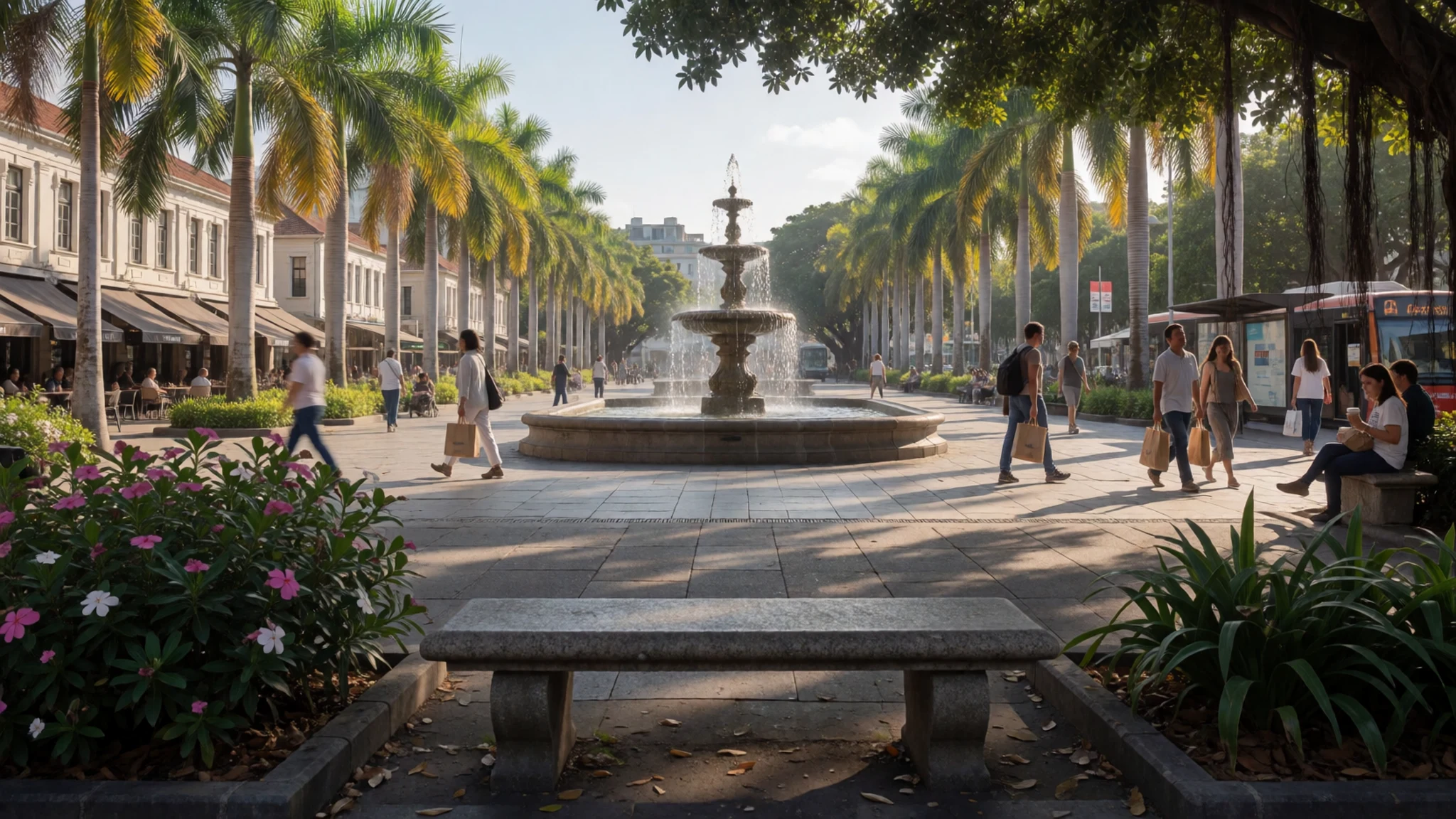
- Cathédrale Saint-Joseph — Centre
Nouméa's Cathédrale Saint-Joseph rises over the centre in pale stone, a landmark from the colonial making of the capital and still a working church. Visitors mostly remember the exterior, a solid west front above streets that run toward the square. The interior is used for ordinary worship, so a quiet manner and covered shoulders matter more than a long stay.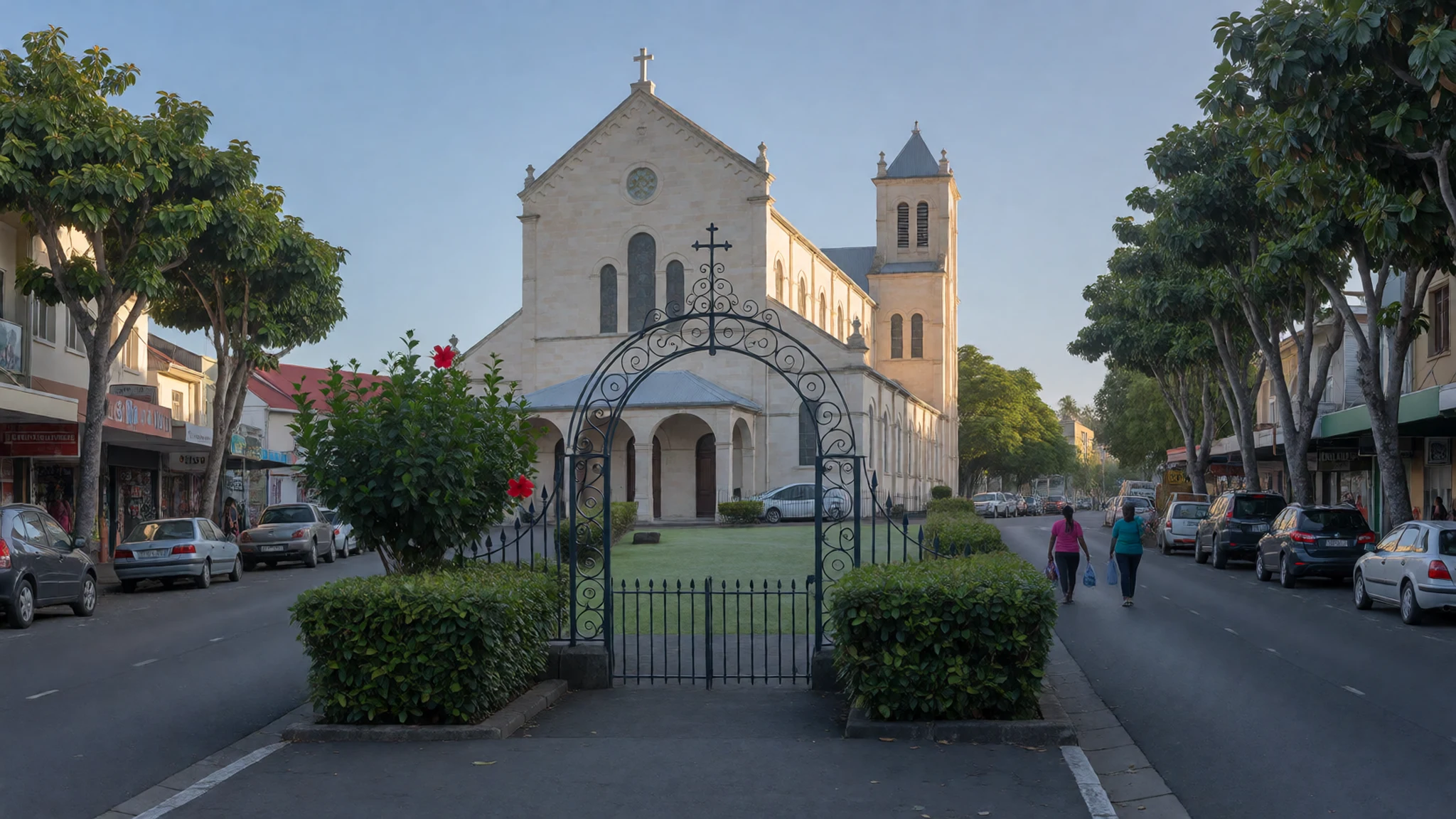
- Phare Amédée — Amédée islet, lagoon
Nouméa's Phare Amédée stands on a small coral islet in the lagoon, well outside the peninsula. A boat from the harbour carries visitors to the tower, the reef flat and water that is often clear enough for a swim. The crossing is the point: from the barrier the city looks like a thin shore, and the lighthouse shows why the lagoon has always been Nouméa's front door.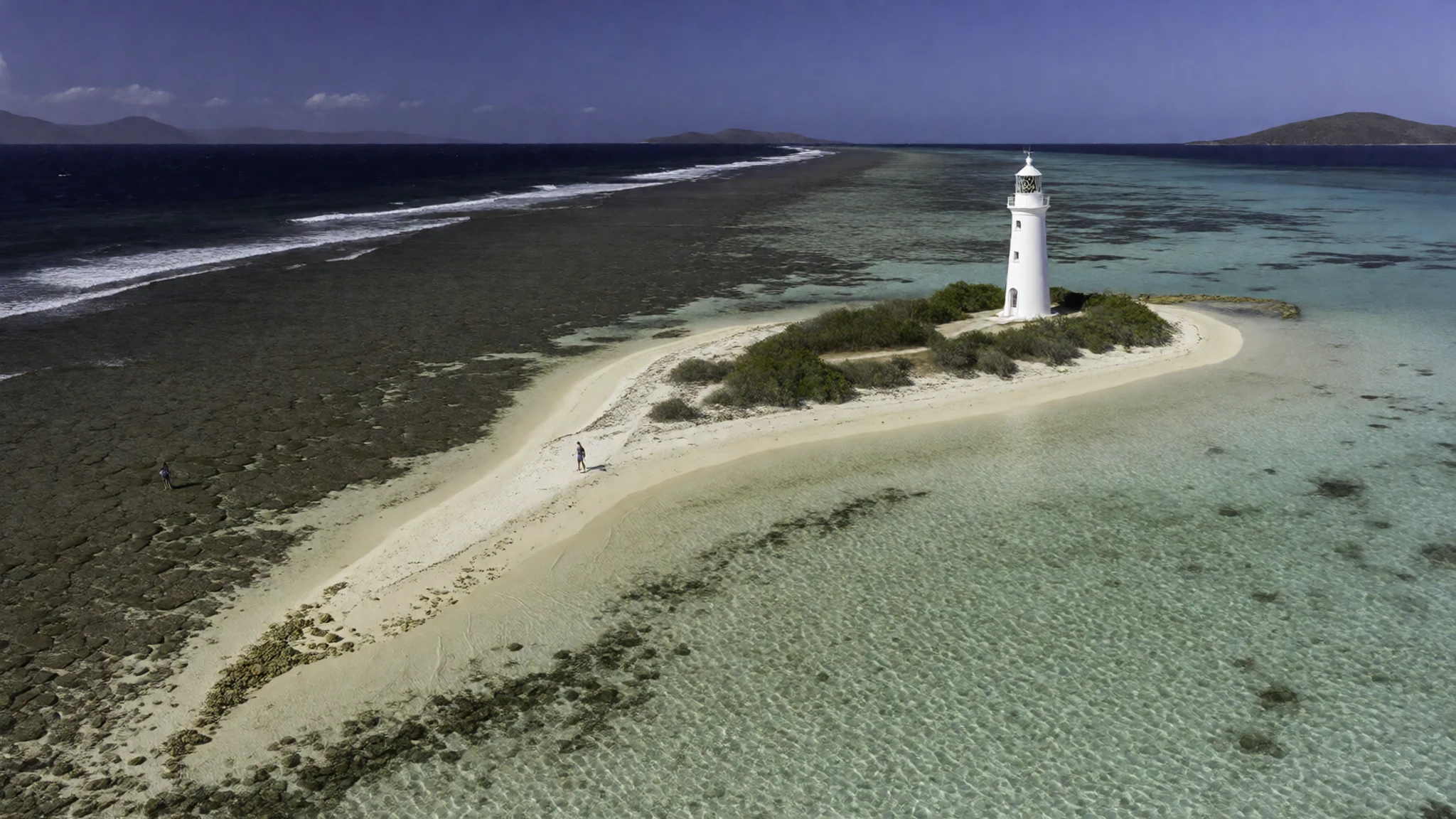
- Musée de la Ville — Centre
Nouméa's Museum of New Caledonia and the Maritime History Museum tell the story of the territory and the sea rather than the urban story alone. Displays cover the natural history of the islands, the growth of the port and the daily life of a capital built by several communities. They are useful stops for understanding the land and sea before a walk through the centre.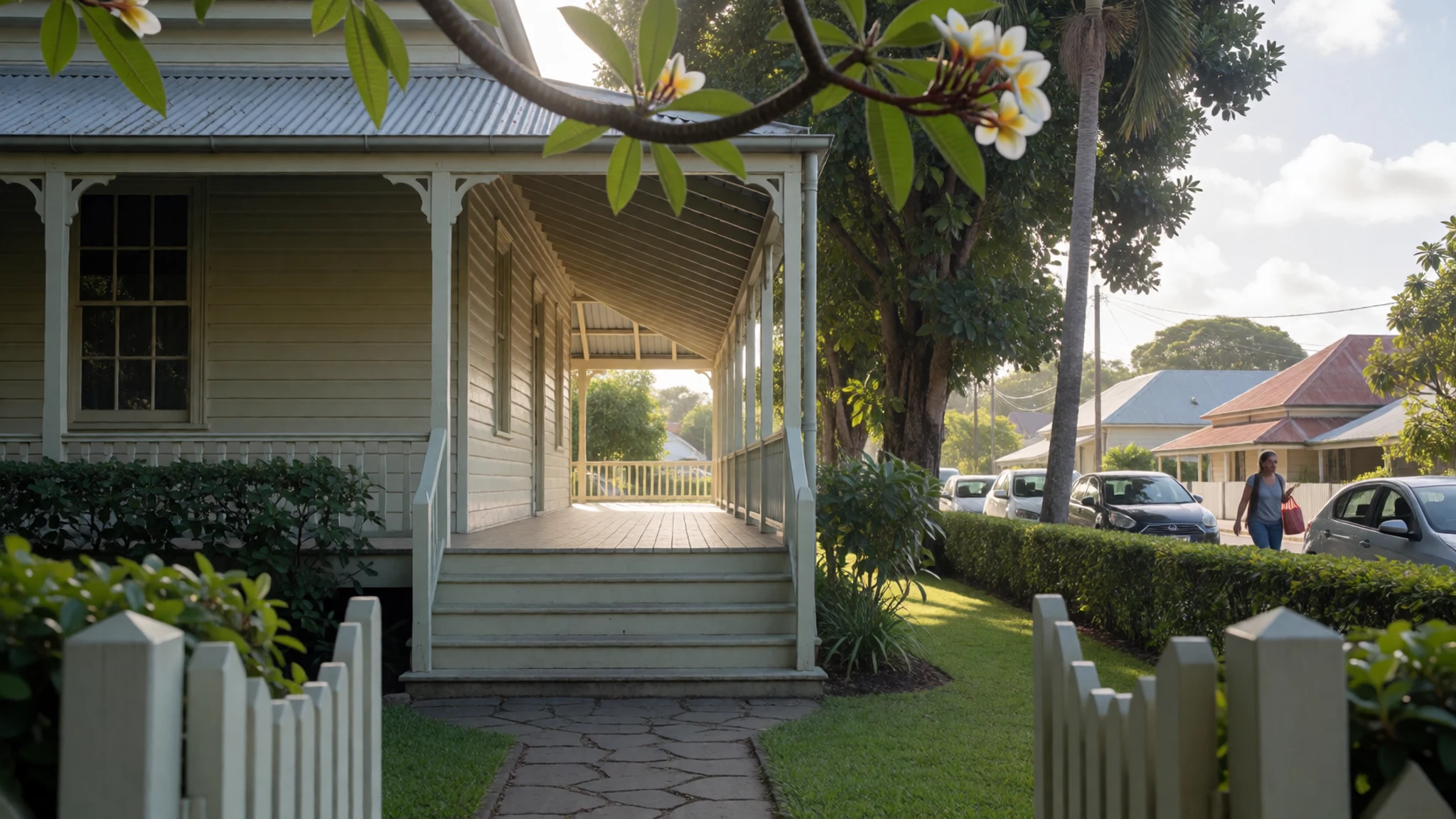
- Centre Culturel Tjibaou — Tina peninsula
Nouméa's Centre Culturel Tjibaou stands on the Tina peninsula among pines, tall ribbed pavilions by Renzo Piano that answer the form of a grande case. The rooms hold Kanak and wider Pacific art, and the path between the buildings is part of the visit, open to the wind off the water. The architecture earns the visit on its own, with time left to walk the grounds.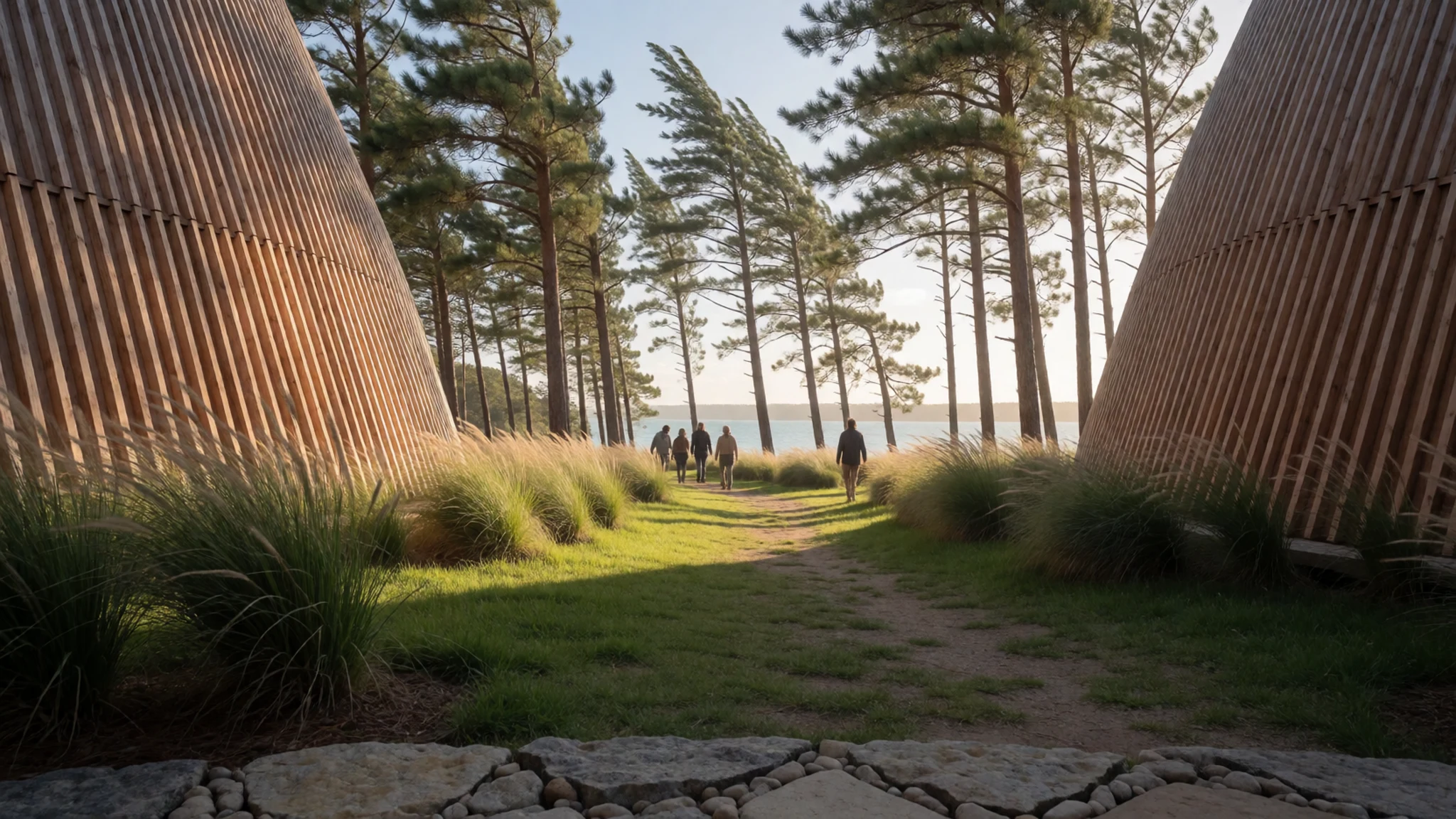
Culture
Nouméa is a Kanak city that also lives in French. Clans of Grande Terre and the Loyalty Islands keep languages, a yam calendar and customary ways of greeting, mourning and sharing food, and the capital is where those ways meet schools, offices and a French legal order. The grande case, the tall house of a chief with its carved finial, remains the model of a meeting even when the meeting is held in a concrete hall. Sculpture, bark cloth and the patterns of woven mats carry stories that are not ornaments. Sound in the city runs from Kaneka, contemporary Kanak music built on ancestral rhythm and electric instruments, to church choirs and the French songs in shops around the square. French is the language of the street and the counter; Kanak languages, and the languages of Wallisian, Tahitian and Vietnamese homes, surface at the market and at family gatherings. Custom still sets the terms of a Kanak event: a small gift, a quiet approach, and the knowledge that some ceremonies are not for spectators. Sunday belongs in large part to the Catholic and Protestant churches, beside the older cycle of the yam. Ask before you photograph people at a ceremony or in the market, and wait to be invited before you step onto a mat or into a case.
What to wear
Nouméa's traditional dress belongs to Kanak custom rather than to a single national costume. For ceremonies, men and women wear the manou, a wrap of printed cloth, sometimes with fibre, shell or a pattern that signals clan and occasion; the mission dress, a modest cotton gown, is part of the same history, marking how the churches changed public clothing. Bark cloth and woven plant fibre appear in dance costume and in the works shown at cultural centres, not as clothes for the bus. What people wear in the city now is light and practical: shirts, shorts, sundresses and sandals, with a smarter layer for an office, a church or a cool evening after rain. School uniforms and work clothes for the port are as ordinary as a beach pareo slung over a shoulder. A visitor should dress for strong sun, humid heat and a squall, in cloth that breathes and in shoes that can manage a market, a boat deck and a cathedral step. Swimwear stays on the beach at Anse Vata or Baie des Citrons, not in the centre and not in church. At a Kanak gathering, covered shoulders and a wrap read as respect, and shoes come off when a host points to a mat.
What to eat
- Bougna — Municipal market at weekends, and Kanak gatherings
Nouméa's ceremonial dish is bougna, an earth-oven parcel of yam, taro, sweet potato and banana cooked with chicken or fish in banana leaves until the starch is smoky and sweet. It appears at weekend stalls in the municipal market and at Kanak gatherings more often than on ordinary café menus.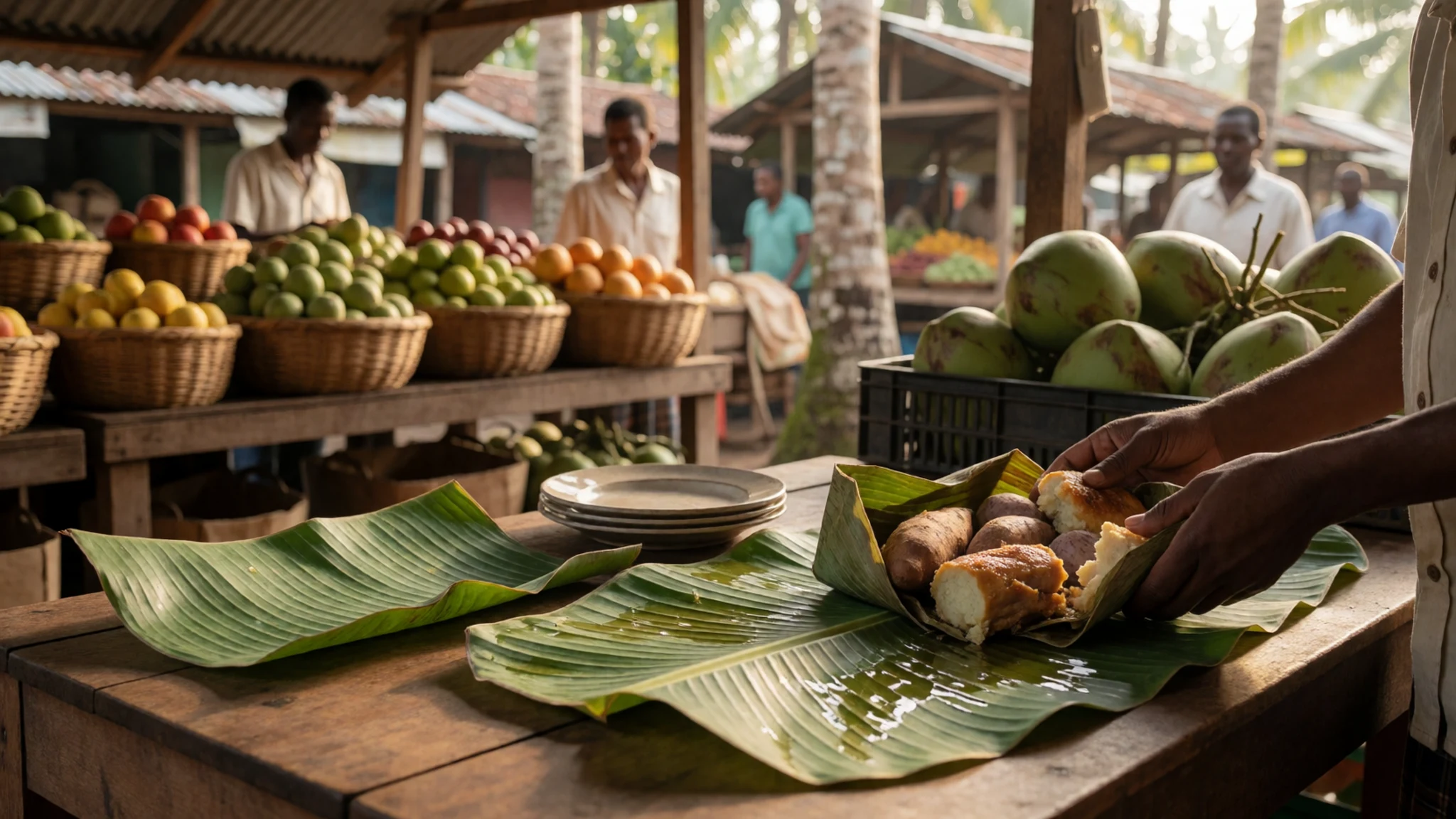
- Poisson cru — Waterfront eateries at Anse Vata and Baie des Citrons
Nouméa serves poisson cru as raw lagoon fish marinated in lime and folded with coconut milk, cucumber and tomato, a plate shared across the French Pacific. Citrus firms the flesh and coconut milk rounds the flavour. Waterfront eateries along Anse Vata and Baie des Citrons usually have it.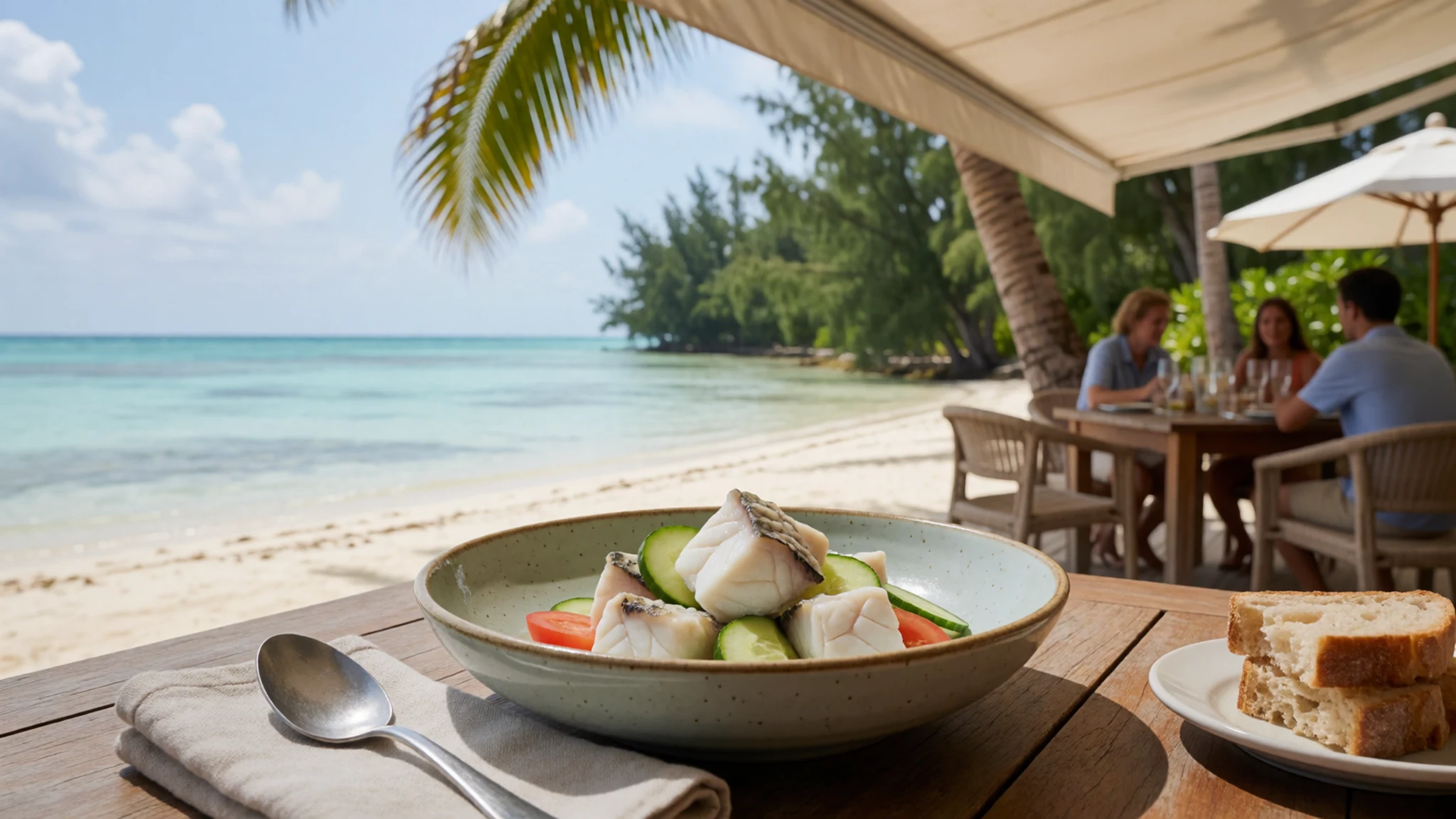
- Grilled prawns and rock lobster — Municipal market seafood counters and Baie des Citrons
Nouméa's lagoon supplies grilled prawns and, on a generous table, rock lobster, served with lime and little else. The sweetness is in the shellfish, not in a heavy sauce. Seafood counters at the municipal market and the eateries facing Baie des Citrons are the straightforward places to eat them. - Nems — Municipal market stalls and small eateries in the centre
Nouméa's Vietnamese community made nems, crisp fried rolls of pork and vegetables, a city snack as common as a sandwich. They are eaten at lunch with herbs and a sharp dipping sauce. Stalls in the municipal market and small eateries around the centre sell them through the day. - Cerf — Butcher counters and bistros in the centre
Nouméa cooks rusa deer, brought to the islands long ago and now a local meat, as a stew, a sausage or a grilled cut. The flavour is leaner than farmed beef and sits well beside yam. Butcher counters and bistros in the centre list it as cerf. - Baguette and coffee — Bakeries around Place des Cocotiers
Nouméa's mornings start, for many households, with a baguette, a croissant and strong coffee, the French habit intact in the tropics. Butter and jam, or a slice of ham, turn the loaf into breakfast. Bakeries around Place des Cocotiers sell both through the morning.
Plan it
Best time. Nouméa suits walkers and lagoon boats from June to October, the driest and coolest season. January to April is hotter and wetter, and it is when cyclones can form, so reef days are less certain.
How long. 3–4
Getting there. Nouméa is reached through La Tontouta International Airport on Grande Terre, then a road transfer into the city. Cruise ships come to the harbour, and ferries and local flights link the capital with the Loyalty Islands and the Isle of Pines.
Budget. high
Tips
- Book the Amédée boat, and any link to the Isle of Pines, ahead of the weekend.
- Carry cash for market stalls; cards are usual in larger eateries and less so at small counters.
- Begin in the centre in the morning, and keep the hot middle of the day for shade or the beach.
- Treat the sun as strong in every month, and rinse off after swimming in the lagoon.
- Ask which beaches are calm; currents and seasonal stingers matter more than the look of the water.
Etiquette
- Remove shoes when a host indicates a mat or the threshold of a case.
- Ask before photographing people at a ceremony or in the market.
- Wear covered shoulders in churches, and leave swimwear for the beach.
Nearby
Sources
- Wikidata Q170438 (CC0)
- Wikipedia: Nouméa (CC BY-SA 4.0)
- Wikivoyage: Nouméa (CC BY-SA 4.0)