Nonsuch Island
Nonsuch Island, United Kingdom
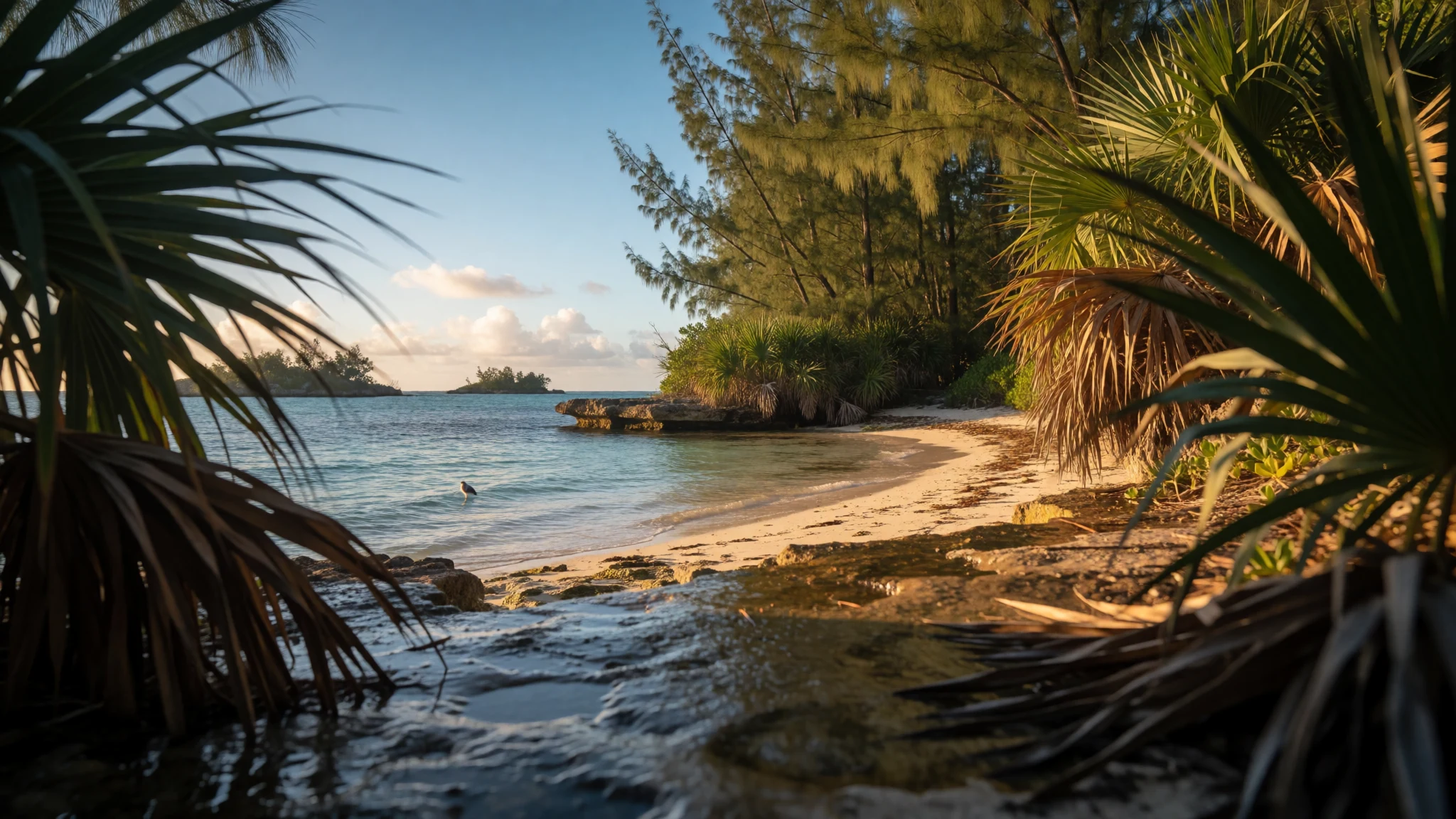
Nonsuch Island is a closed Bermudian reserve where native forest and the cahow are being brought back in Castle Harbour.
The place
Nonsuch Island sits in Castle Harbour, on the eastern side of Bermuda, in the western Atlantic. It is a wooded limestone island, not a town: there is no street grid, no harbour of shops and no resident neighbourhood. The shore is rock and small beaches, the water is clear and shallow near the edge, and the interior is a managed native woodland. Palmetto, Bermuda cedar and other plants that belong on these islands have been brought back, while trees introduced from elsewhere have been cleared so the older plant community can hold the ground. Bermuda is a British overseas territory, and ordinary life across these islands is Bermudian. Nonsuch Island is the part of that territory kept as a reserve. Other islets in Castle Harbour still show old forts and military stone; this one is kept as habitat. From the water the profile is low, a dark canopy over pale rock, with the shores of St George's lying across the harbour. The climate is subtropical and oceanic, and it decides whether a boat can land. Winters are mild and often windy, with fewer calm spells. Summers are hot and humid, and the later warm months fall in the Atlantic storm season, when swell or a tropical system can cancel a crossing. Spring and autumn are the steadier windows for a landing and a walk. Nonsuch Island is kept as a working sample of Bermuda's life from before widespread settlement. Researchers and conservation staff use it. Casual wandering is not the arrangement. Light off the water is hard, sound carries, and the soil and nesting ground are fragile. A permitted visit is a walk in a restored landscape, not a tour of monuments.
Its story
Nonsuch Island entered the English record under a borrowed name. Nonsuch was a palace of the Tudor court, and sailors gave that title to this harbour island as Bermuda was settled and its woodland cut for timber and grazing. On the larger islands the clearing went far. Cedar was taken for building, and later suffered blight; plants from other countries filled the gaps; seabirds lost quiet places to nest. The cahow, Bermuda's own petrel, was pushed to the edge of that change. People took the birds for food, and rats, dogs and the loss of nesting ground did the rest, until the species slipped out of common view and was spoken of as lost. Much later, birds were found again on small rocky islets in Castle Harbour, exposed to waves that wash over low rock in a storm. Nonsuch Island, with more height and more soil than those rocks, became the ground where a recovery could be given space. The long rebuild is tied to David Wingate, a Bermudian conservationist who treated Nonsuch Island as a pre-settlement landscape to be rebuilt, and to the wardens and scientists who carried it on. Introduced trees came down. Native trees and shrubs went back in. Sheltered burrows let cahows raise chicks above ordinary storm wash. The yellow-crowned night heron, a native bird, was restored here to hunt land crabs that overrun nests and seedlings. The aim was a whole island behaving like old Bermuda, not a set of pens. That work is still in progress. Cahows remain a watched population, young birds still face dangers at sea, and a replanted forest needs weeding, replanting and time. Nonsuch Island shows that patience: a closed island carrying habitats, and a seabird, that the settled islands could no longer spare.
What to see
- Restored native woodland — Interior of Nonsuch Island
The interior of Nonsuch Island is a replanted native wood, not a park lawn. Bermuda palmetto and Bermuda cedar stand with other plants that belong in this climate, and the undergrowth is managed so seedlings can rise. Introduced trees that once shaded them out have been removed. A guide decides where walking is allowed. The soil is thin and easily opened by a step off the path.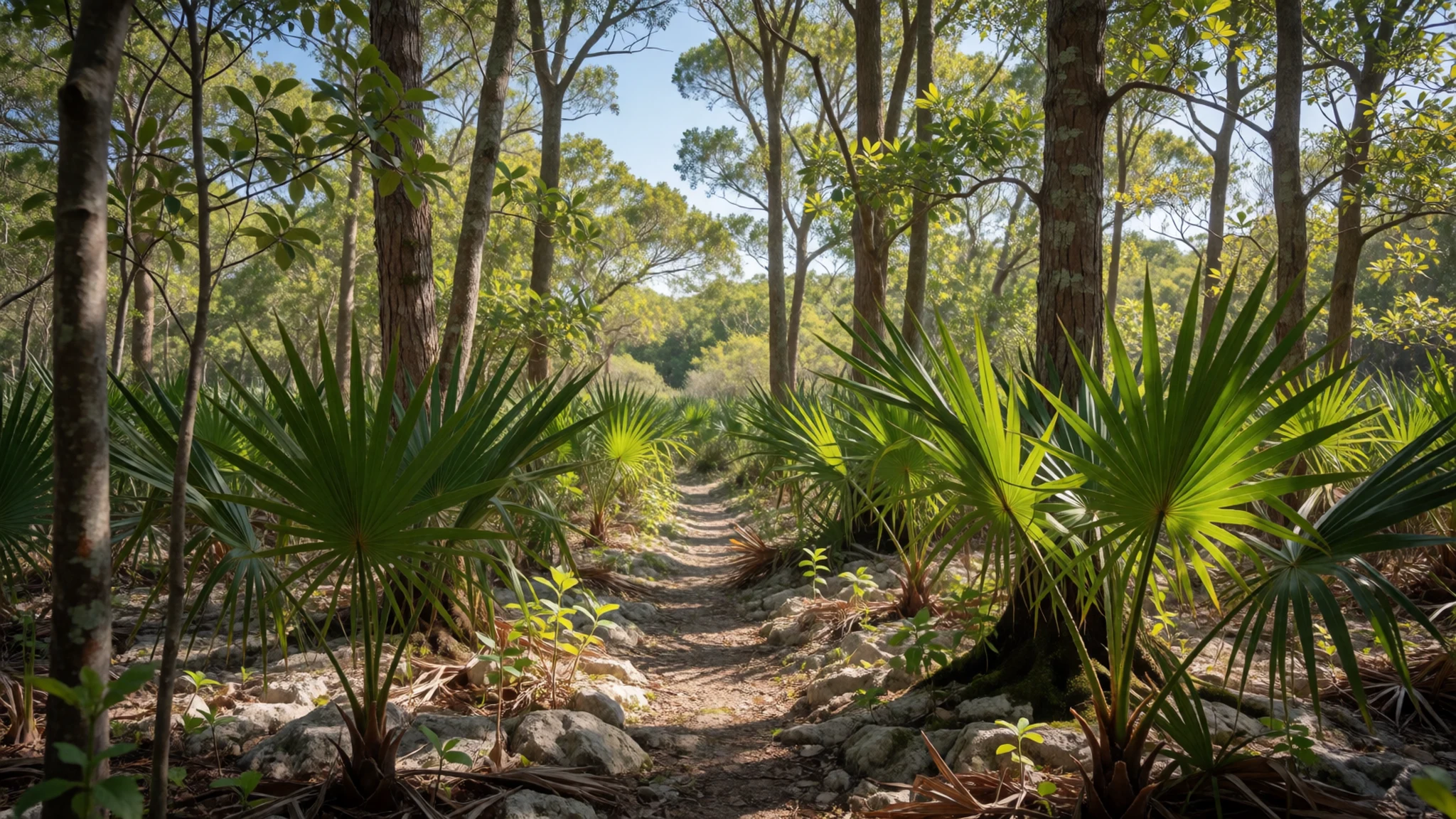
- Cahow nesting ground — Nesting areas on Nonsuch Island
Cahows, Bermuda's petrels, nest on Nonsuch Island in burrows, some of them built and watched as part of the recovery. The birds live over the ocean and come ashore to breed, often after dark. Visitors do not open holes or cross a nesting slope for a closer look. If the season allows it, the sight is the burrow field and the work of keeping floodwater off the chicks.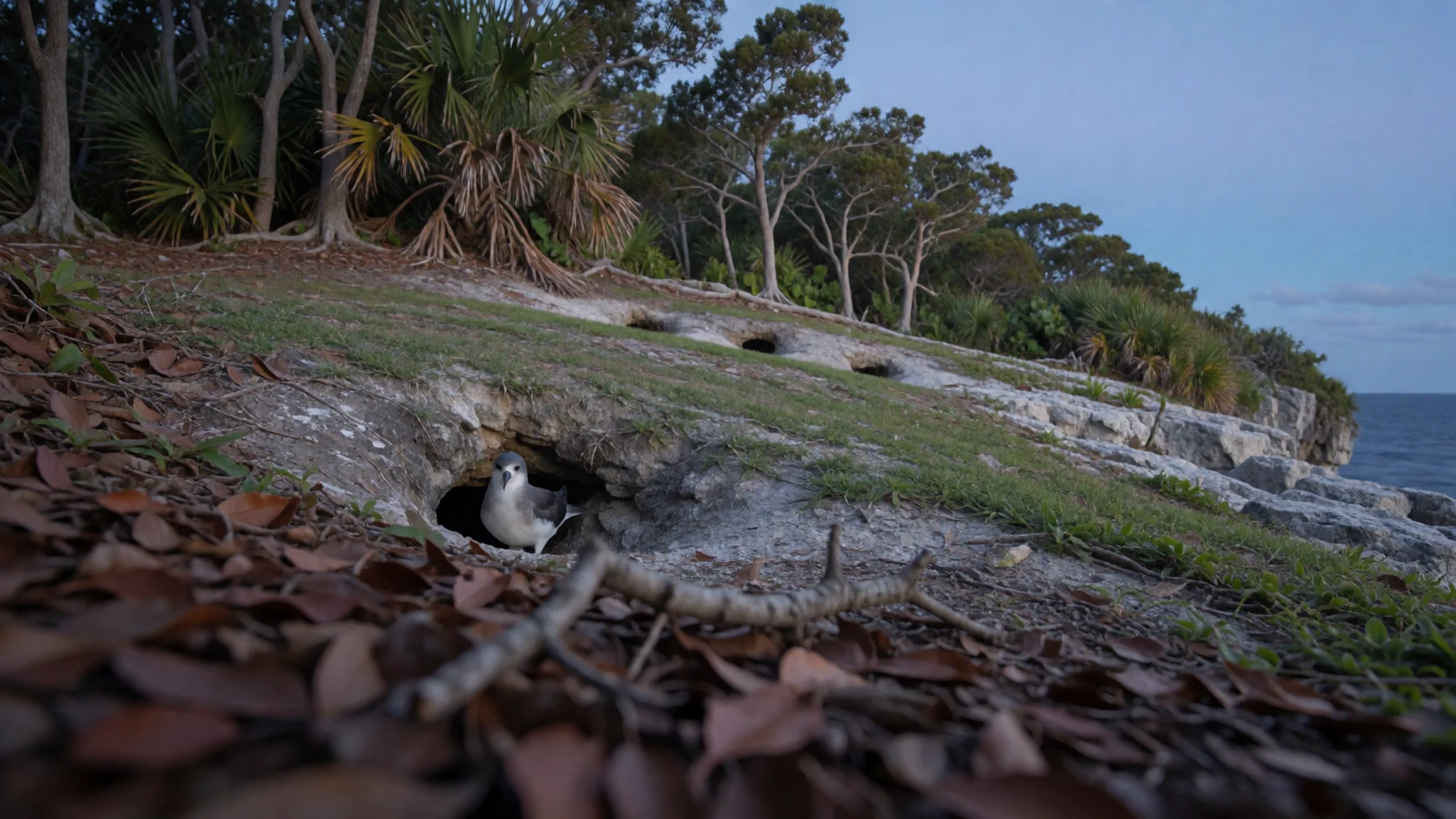
- Castle Harbour shoreline — The island's harbour edge
The harbour edge of Nonsuch Island is limestone, sand and clear water, with the rest of Castle Harbour spread around it. Neighbouring islets carry the stone of old coastal forts; this shore does not. It is a landing place and a lookout, exposed to wind and to whatever swell is running. There is no promenade. The shore is for landing, a short walk and the boat back.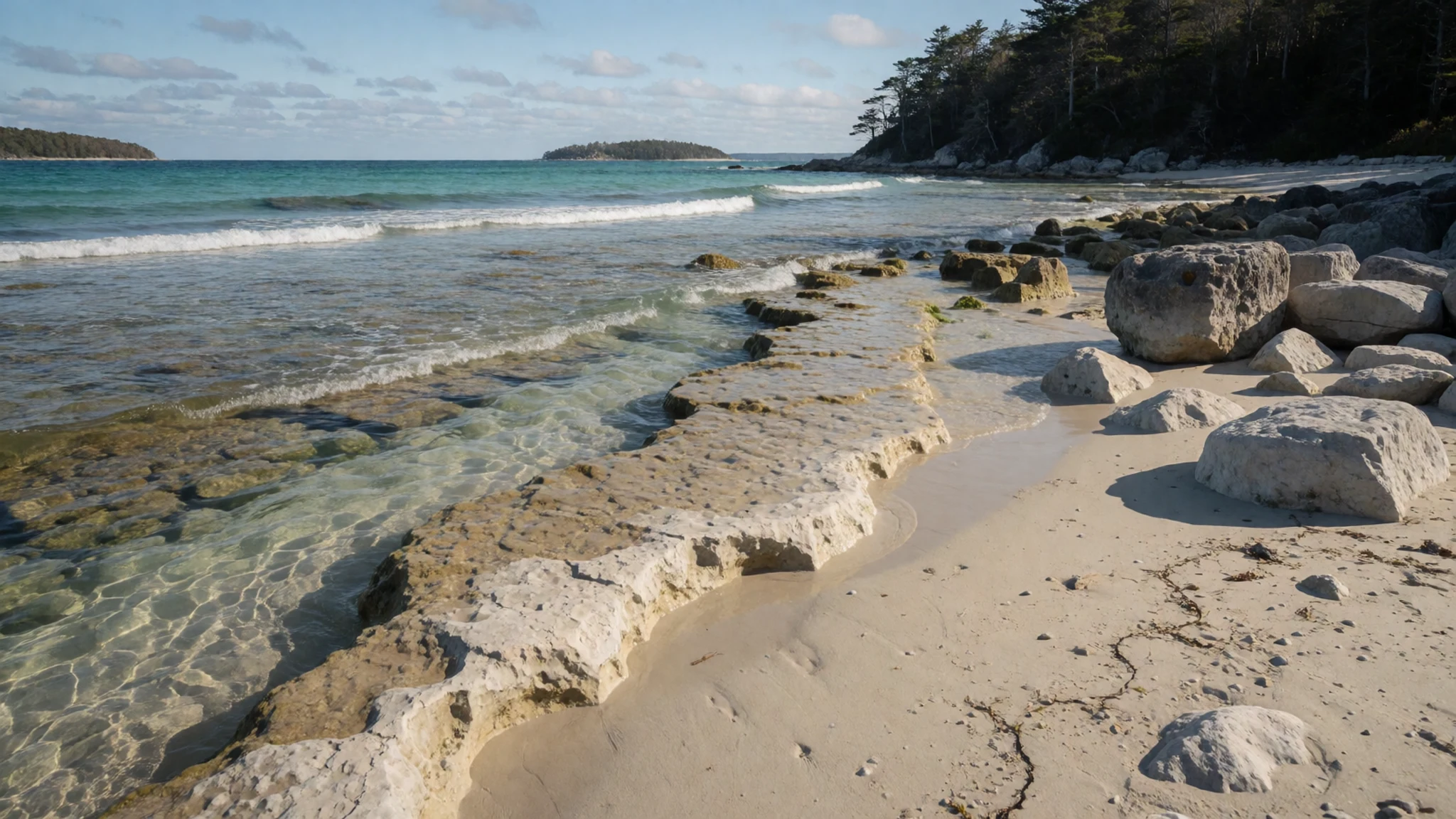
- Pocket beaches — Coves in the limestone shore
Small beaches tuck into the limestone of Nonsuch Island between rock heads. They are narrow, bright and fully exposed, with no cafés, umbrellas or lifeguards. The sand is a place to pause on a guided circuit, not a resort strand. Shells, coral rubble and plants at the back of the beach stay put; they are part of the reserve. Footwear matters: the rock is uneven and slick after spray.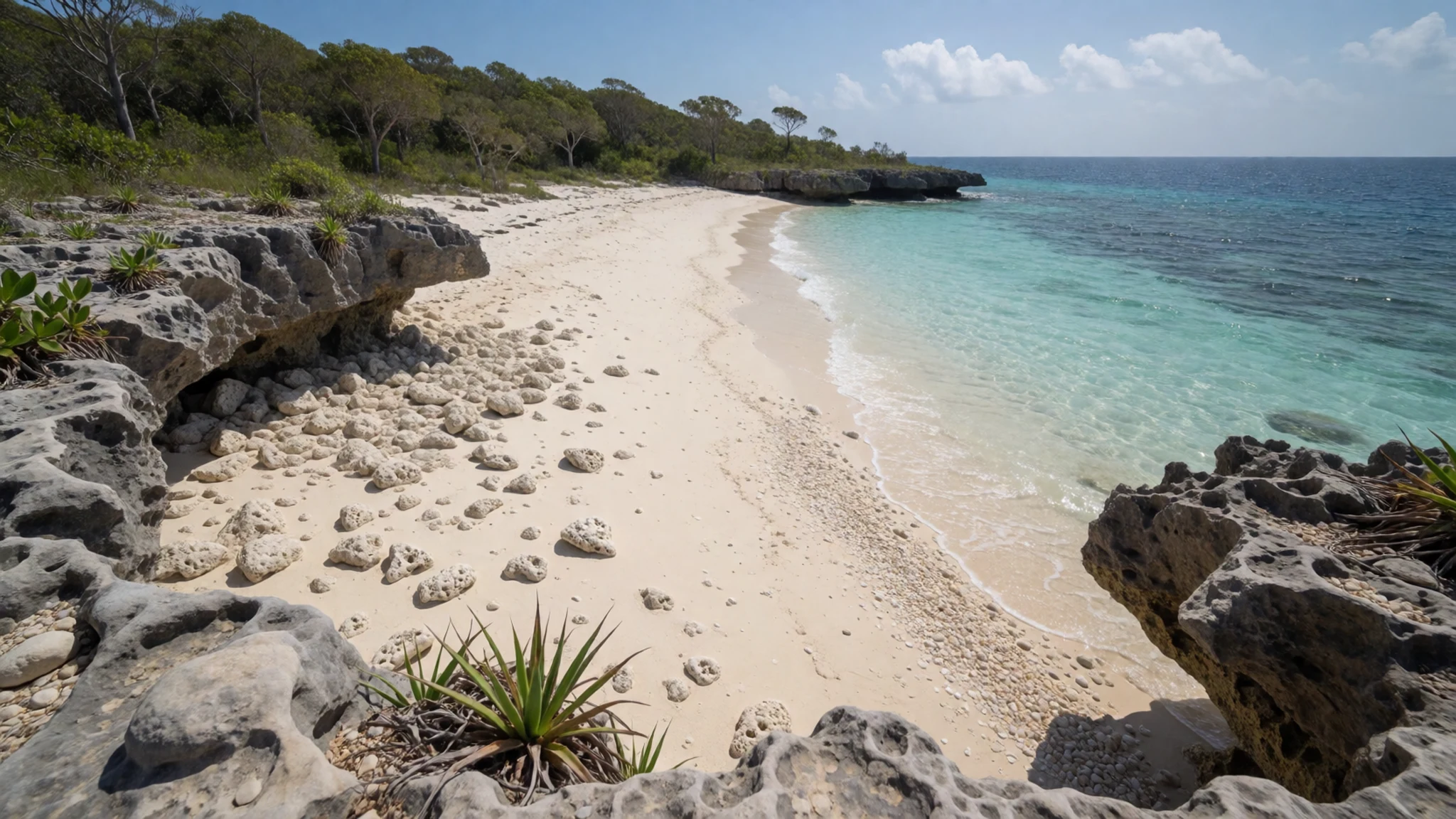
- View to the castle islets — Lookouts facing Castle Harbour
From higher ground and from the boat, Nonsuch Island looks out on the fortified islets of Castle Harbour. Old stone defences on those neighbours recall when this entrance to Bermuda was watched and armed. Nonsuch Island itself was not kept as a fort. The contrast is the point of the view: old forts on one rock, a restored island on the next, and open harbour between them.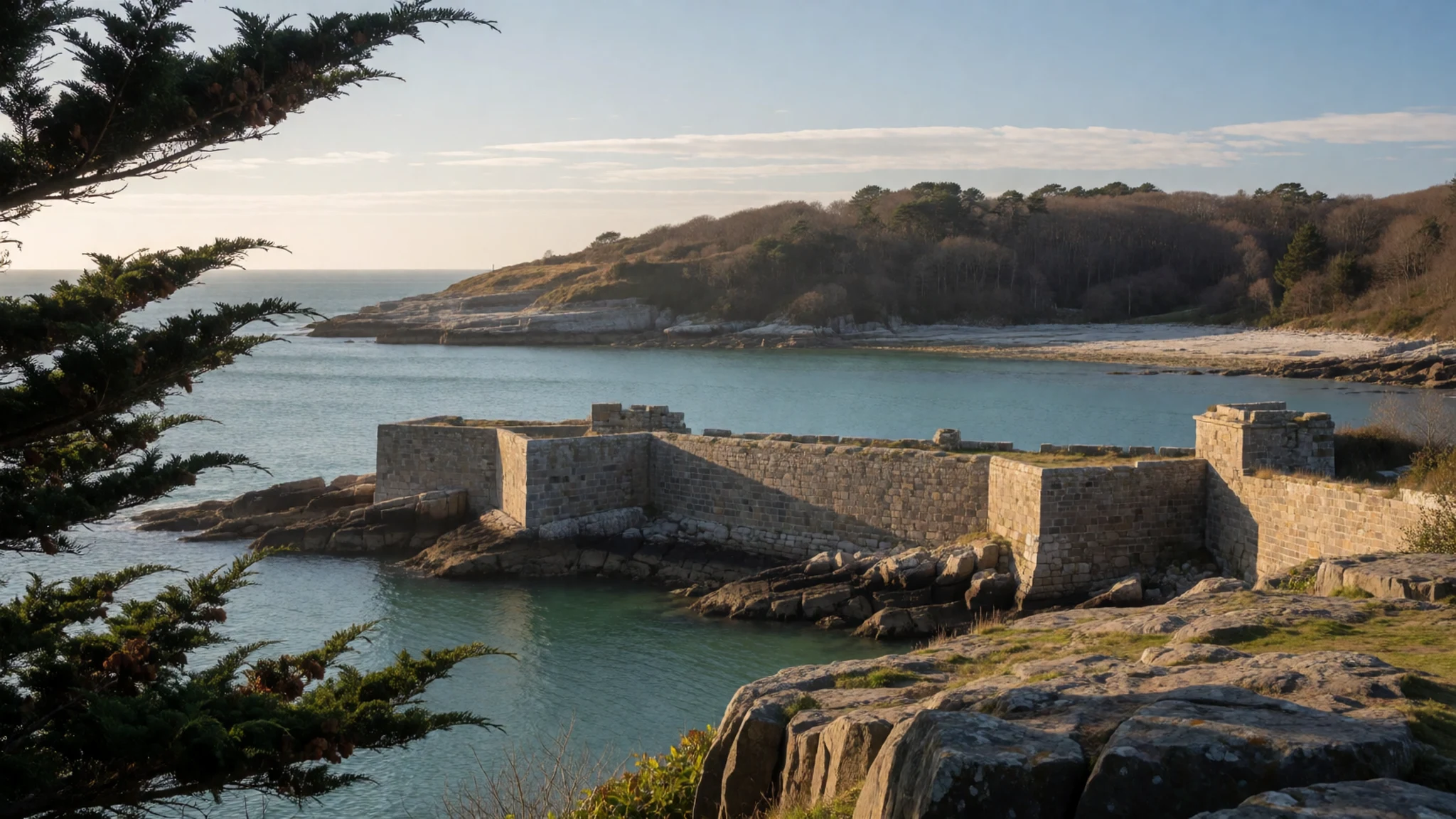
Culture
Nonsuch Island has a culture of stewardship more than of festivals. The people most bound up with it are conservation staff, scientists and Bermudians for whom the cahow is a sign that a bird once thought lost can be tended back. That attachment shows in school teaching, in local nature bodies, and in the way the island is spoken of: not as a beach to claim for an afternoon, but as a trust. The wider culture around Nonsuch Island is British-Atlantic and distinctly Bermudian. English is the everyday language, and the reserve's rules are explained in it. St George's, the old town across the harbour, keeps parish churches, a fortified past and public days when Gombey dancers perform, masked, with cape, drum and whip. Little of that performance takes place on Nonsuch Island. What belongs on the island is quieter: permission to land, a guide who sets the pace, and a shared sense that the ground's job is habitat. On Nonsuch Island, stay with the guide, leave every burrow, plant and shell untouched, and keep voices low near nesting ground.
What to wear
Nonsuch Island has no resident fashion of its own, so dress follows Bermuda, then the needs of a reserve. Traditional Bermudian dress, still worn for formal days and business, centres on the Bermuda short: tailored shorts, often in cotton or wool blends, cut just above the knee and worn with knee socks, a jacket and, for men at smart events, a tie. The cut is British tailoring adapted to heat. Gombey costumes, in bright cloth with mask and cape, belong to performance in town, not to a landing on Nonsuch Island. Everyday cloth is lightweight cotton, linen and quick-drying knits. On Nonsuch Island there is no street style, because there is no street. Staff and researchers wear sun shirts, long trousers or sturdy shorts, hats and boots that can take limestone and a wet deck. In St George's and Hamilton, people wear the usual subtropical range, from office cotton to beach clothes, and the tailored short still appears in offices and at events. A visitor to Nonsuch Island should dress for sun, wind, spray and rough rock. Sensible kit is a hat, a shirt with sleeves, light trousers or shorts, and closed shoes with grip. Sandals slip on wet limestone, and swimwear suits a beach afternoon better than a guided walk. A light layer helps on the boat when the wind is up.
What to eat
- Bermuda fish chowder — Restaurants and harbourside eateries in St George's
Before or after a landing on Nonsuch Island, Bermuda fish chowder is the bowl to know: a dark soup of local fish, simmered and finished at the table with sherry peppers and black rum. St George's restaurants and harbourside eateries serve it. The island has no kitchen.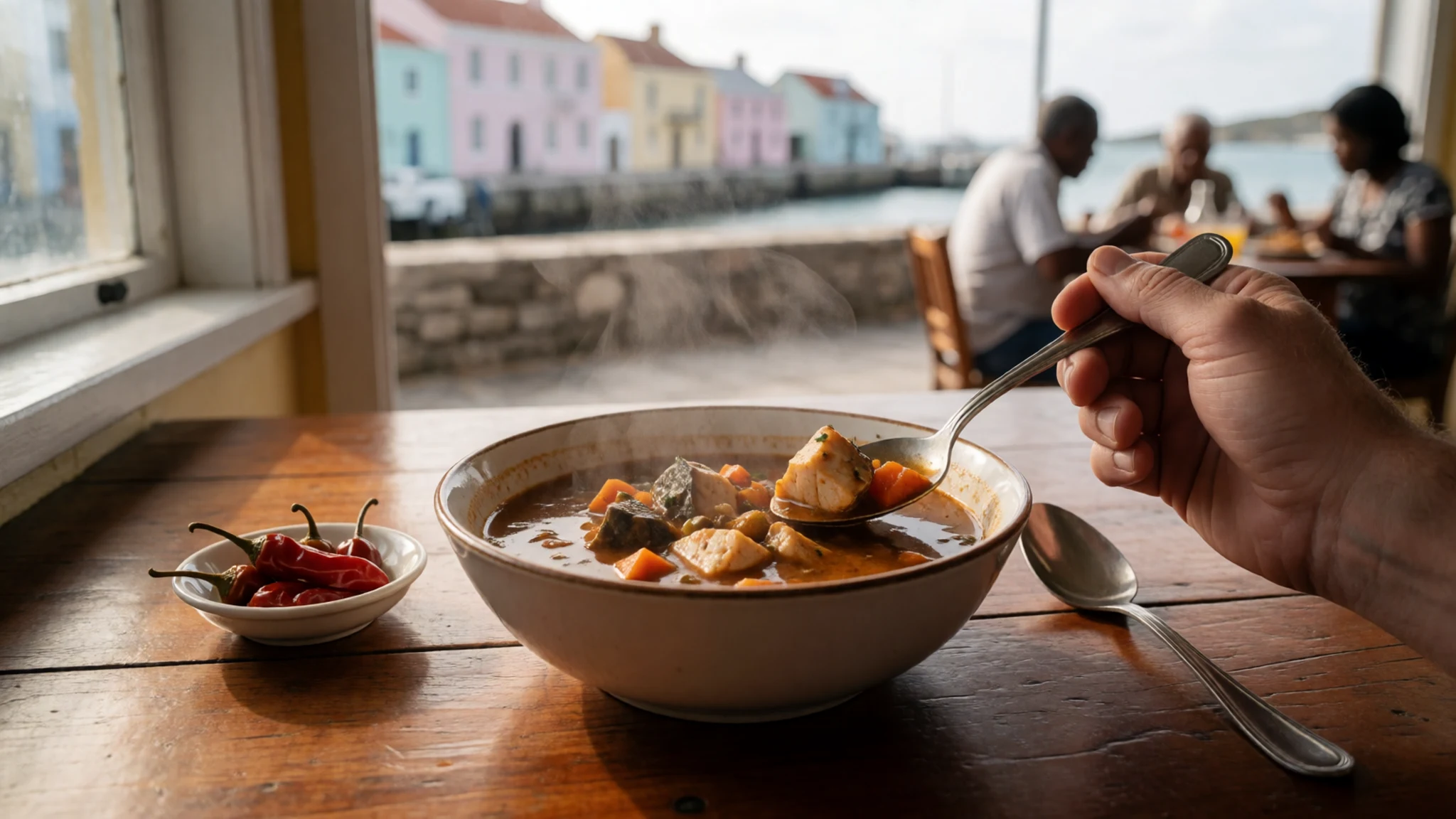
- Fish sandwich — Takeaway counters and casual eateries in St George's
The Bermudian fish sandwich is fried fish on raisin bread, with tartar sauce and sometimes coleslaw, a salty-sweet combination that belongs to casual counters rather than formal dining. It is sold at takeaway windows and simple eateries in St George's. Nonsuch Island has no food stall.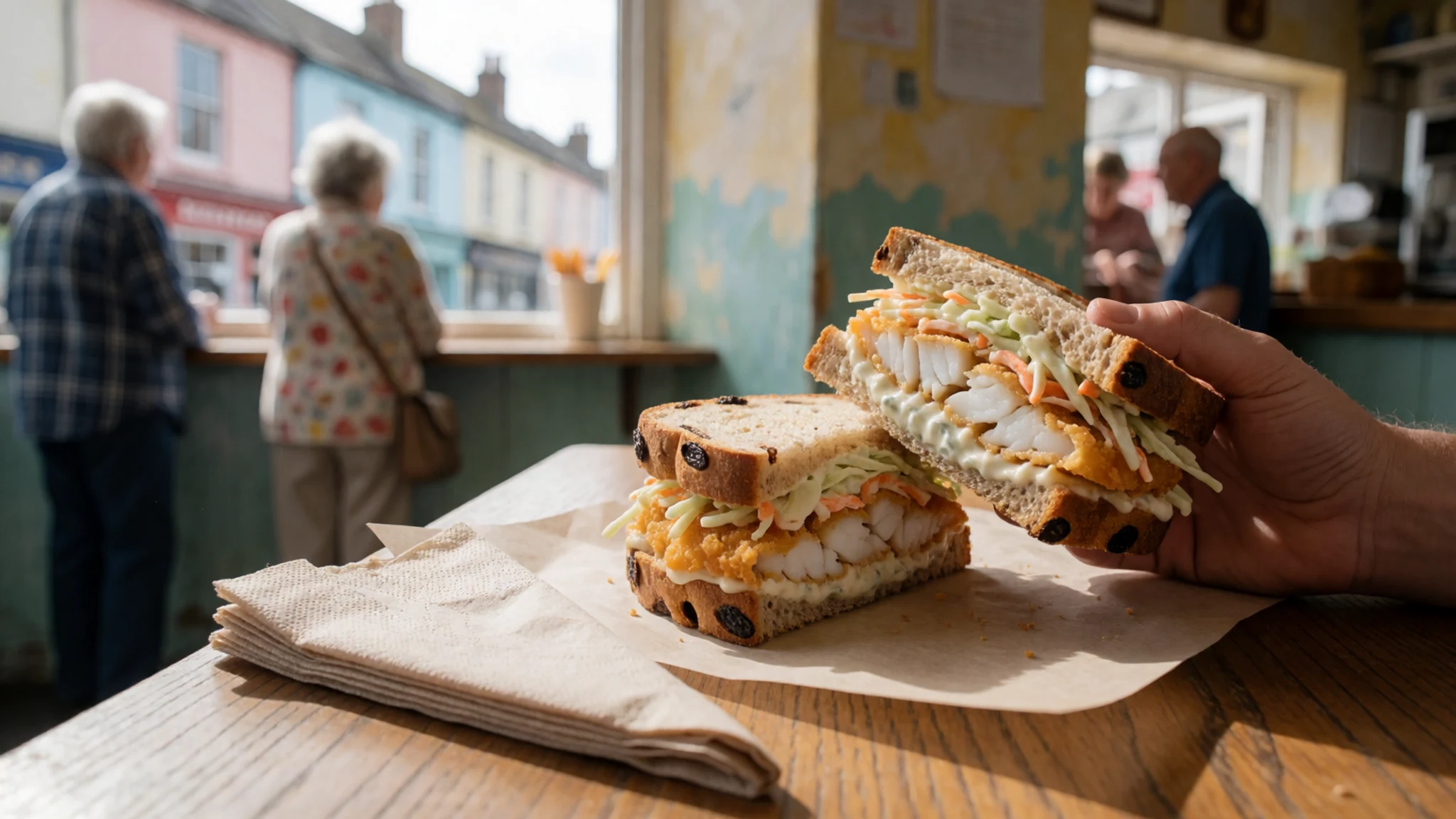
- Codfish and potatoes — Eateries serving Sunday breakfast in St George's
Codfish and potatoes is Bermuda's old Sunday breakfast: salt cod, boiled potatoes, banana, avocado, onion and a boiled egg, with tomato sauce on the side. The dish is a home pattern as much as a restaurant one, and some St George's eateries still serve it on Sunday mornings. - Cassava pie — Bakeries and holiday menus in St George's
Cassava pie is a Bermudian holiday dish, dense with grated cassava, egg, butter and chicken or pork, and traditionally part of Christmas eating. Bakeries and festive menus in St George's are the realistic place to meet it. It is not cooked on Nonsuch Island. - Peas and rice — Casual eateries in St George's
Peas and rice is the Bermudian side dish: rice cooked with beans, thyme and a little salt meat, served beside fish or chicken. It turns up at casual eateries in St George's through the week. Nonsuch Island has neither a stove nor a table.
Plan it
Best time. A landing on Nonsuch Island is steadier in spring and autumn, outside the heaviest heat, with a better chance of a calm boat across Castle Harbour. Winters are mild yet windy. Summers are hot and humid, and the later warm months bring the Atlantic storm season, when swell can cancel a crossing.
How long. 1
Getting there. Fly to L.F. Wade International Airport in Bermuda, travel by road to St George's, and cross Castle Harbour by boat. Nonsuch Island has no public ferry to assume and no bridge; a landing is by permission, usually with the reserve or a licensed guide. Confirm the arrangement before you travel, and do not expect a published timetable.
Budget. high
Tips
- Ask permission before you plan a landing; Nonsuch Island is a reserve, not an open park
- Aim for a calm morning and leave the rest of the day free in case the boat is called off
- Carry water, sun cover and closed shoes; the island has no shop and little shade on the rock
- Eat, draw cash and sort cards in St George's; there is nowhere on the island to pay or to resupply
Etiquette
- Stay on the route your guide sets, and do not approach burrows
- Do not pick plants, collect shells or move rocks
- Keep voices down near nesting areas and follow any limit on cameras
Nearby
Sources
- Wikidata (CC0)
- Wikipedia (CC BY-SA 4.0)
- Wikivoyage (CC BY-SA 4.0)
Wildlife
- Cahow (animal)
The cahow is a rare seabird that is busy at night and nests on the ground, named for its eerie, ghostly cries. It is Bermuda's national bird and even appears on its money. On Nonsuch Island it nests in burrows, and people have built some of them to help the species recover. As it is a night bird, go with a guide, keep your voice low, stay well back from every burrow, and never feed it. - Yellow-crowned night heron (animal)
The yellow-crowned night heron is a native bird with a job: it catches crabs. It was brought back to Nonsuch Island to hunt the land crabs that otherwise overrun nests and young seedlings. You may find it here, helping the island's wild places recover. Watch from a good distance, stay quiet and still, follow your guide's advice, and never offer it food, so that it keeps hunting naturally. - Cahow (bird)
The cahow is a rare seabird that is busy at night and nests on the ground, named for its eerie, ghostly cries. It is Bermuda's national bird and even appears on its money. On Nonsuch Island it nests in burrows, and people have built some of them to help the species recover. As it is a night bird, go with a guide, keep your voice low, stay well back from every burrow, and never feed it. - Yellow-crowned night heron (bird)
The yellow-crowned night heron is a native bird with a job: it catches crabs. It was brought back to Nonsuch Island to hunt the land crabs that otherwise overrun nests and young seedlings. You may find it here, helping the island's wild places recover. Watch from a good distance, stay quiet and still, follow your guide's advice, and never offer it food, so that it keeps hunting naturally.