Nami Island
Nami Island, South Korea
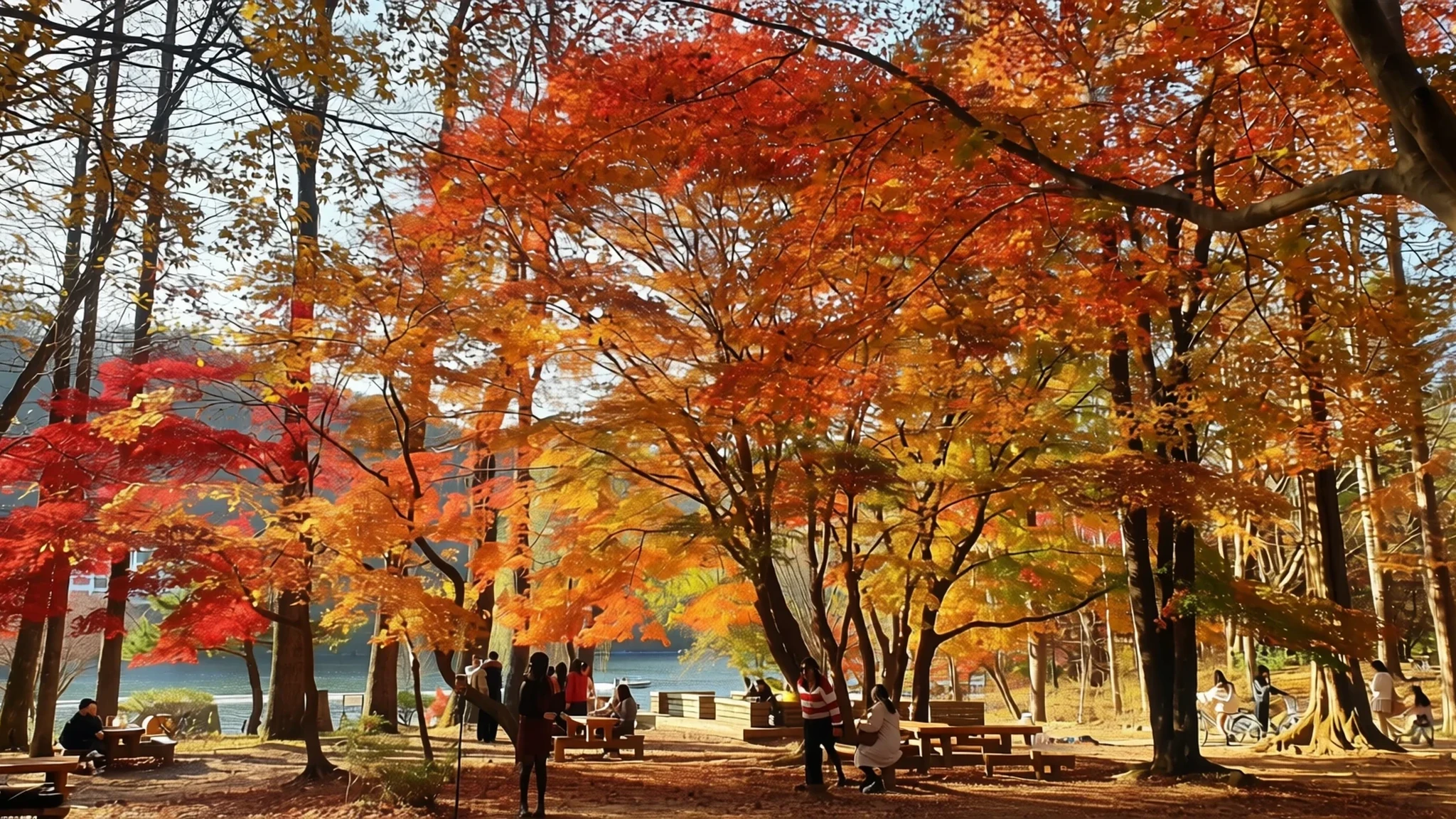
Nami Island is a short ferry ride to a river park of metasequoia avenues, known from the drama Winter Sonata.
The place
Nami Island, Namiseom (남이섬) in Korean, lies in the North Han River between Gapyeong and Chuncheon, in Gangwon Province, South Korea. The water is a border around a planted park: straight walks, lawns and tall trees, with no city streets behind them. Metasequoia avenues are the structure of the place, high trunks set in even rows like corridors. Pines, birches and open grass fill the gaps, and sculptures and small craft buildings sit along the routes. Benches, signs and small cafés mark it as a managed garden rather than a wild bank. The river shows itself again at the end of almost every path.
Season does more than architecture. In autumn the metasequoia foliage turns rust and gold and closes overhead. In winter those trunks stand dark in snow, the picture many visitors already carry. Spring is mild and newly green. Summer is warm, humid and busy under full leaf, and people bunch on the same shaded lines. A day on foot is enough to cover the island. The far bank is low hills, not a skyline.
Most arrivals use a short ferry from the Gapyeong dock. A zip line from the mainland is the other approach, crossing above the river. Once ashore, everyone walks. Nami Island's reputation sits on those tree walks and on the winter drama filmed among them, rather than on ruins or a shrine precinct. A quiet morning feels like a riverside garden; a peak weekend feels like a busy park with water on every side.
Its story
Nami Island takes its name from General Nami, a Joseon-era general whose name was attached to this piece of the North Han. The ground's story is plainer. A riverside rise became an island when the river was dammed downstream and the water rose around it, leaving a ferry as the front door.
After that, the interior was planted rather than left wild. The metasequoia rows that now define Nami Island were set out as avenues. Walkers began to come for the trees themselves, and galleries, craft workshops and a little performance life gathered along the paths. The planting stayed the structure of a visit. The older layer is a name, a dammed river and a long job of planting.
A later chapter filled the ferries. The drama Winter Sonata used the snowy avenues as a romantic setting, and viewers from Japan and elsewhere in East Asia came to stand where the characters had stood. Nami Island answered with theatre of its own: the Naminara Republic, a flag, a song and a souvenir passport stamp at the gate. The island remains a park in Gangwon. Fans still arrive with a scene in mind, and plenty of other people come only for the foliage. Visitors collect the stamp as if crossing a tiny border, then spend the day in a garden a television story carried far beyond Korea.
What to see
- Metasequoia avenue — Central avenues
Nami Island's central walk is an avenue of metasequoia, tall trunks in even rows through the middle of the park. Autumn turns the foliage rust and gold until it almost meets overhead. Winter leaves the same trunks dark against snow, which is the picture many people bring with them. The path is wide and flat, so it fills first. Narrower side paths run off into quieter grass.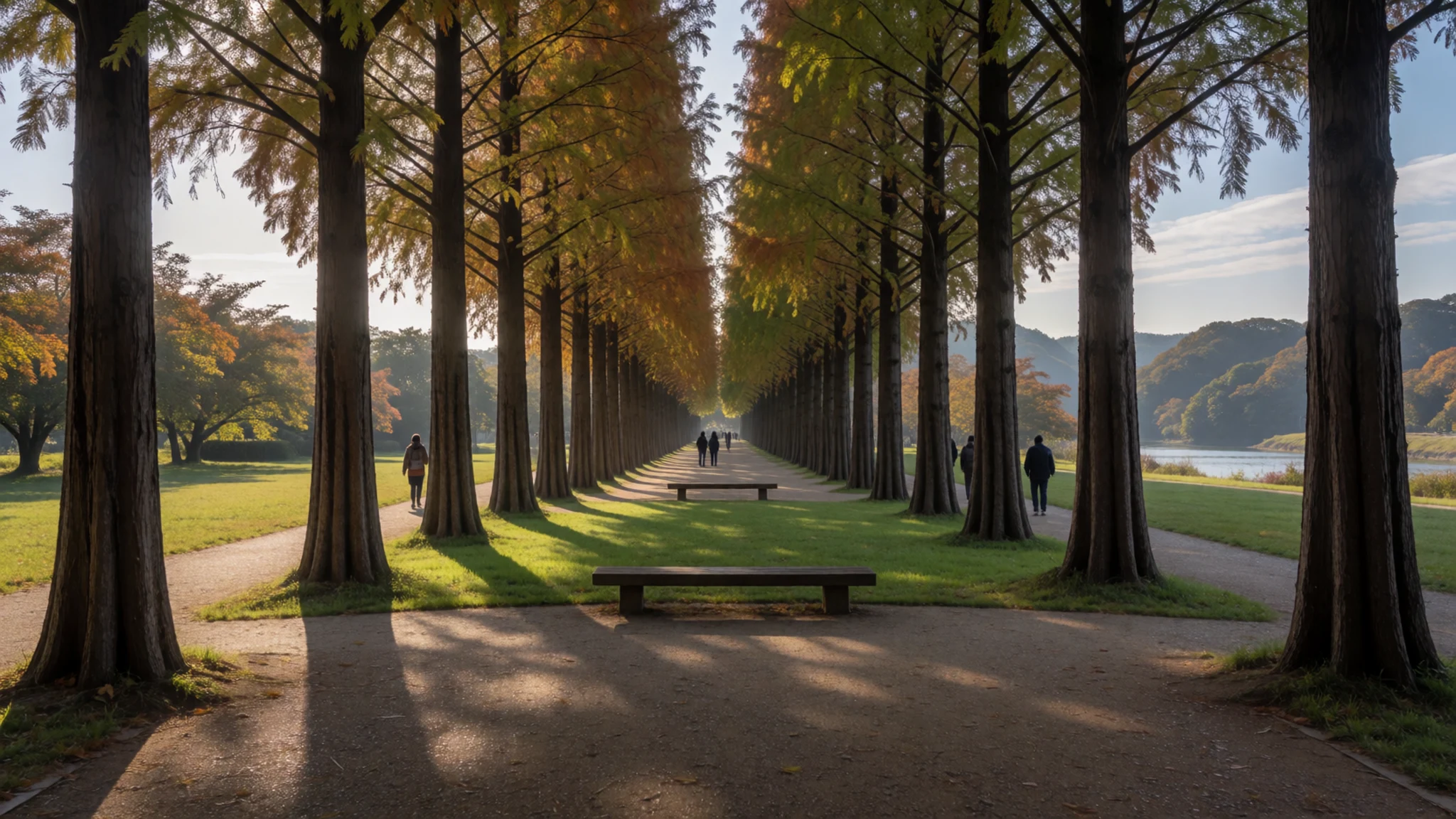
- Winter Sonata spots — Marked viewpoints on the avenues
Boards on Nami Island mark a handful of spots used in the drama Winter Sonata. What visitors come for is the real avenue in snow, not a rebuilt set: dark metasequoia and the hard winter light the series borrowed. Fans photograph the same rows slowly. Visitors who do not know the plot can ignore the boards; the trees do not need the story.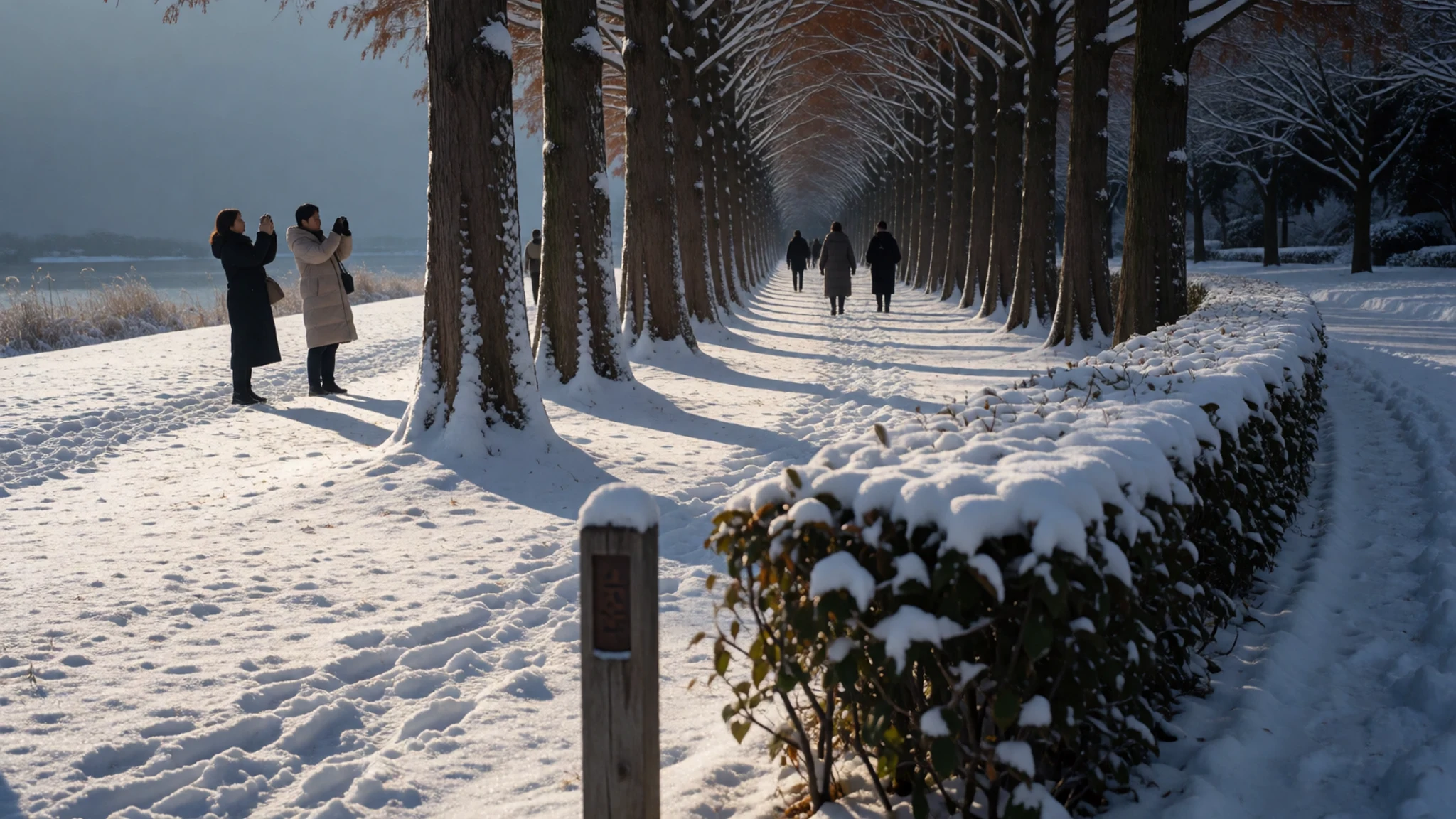
- Ferry approach and zip line — Gapyeong ferry approach
The usual entrance to Nami Island is a short ferry from the Gapyeong pier. The trees rise in front of the boat, and a zip-line tower is easy to see on the way in. The ride is brief; the wait at the dock often lasts longer, above all at the weekend. The zip line is the other way across, out over the river from the mainland.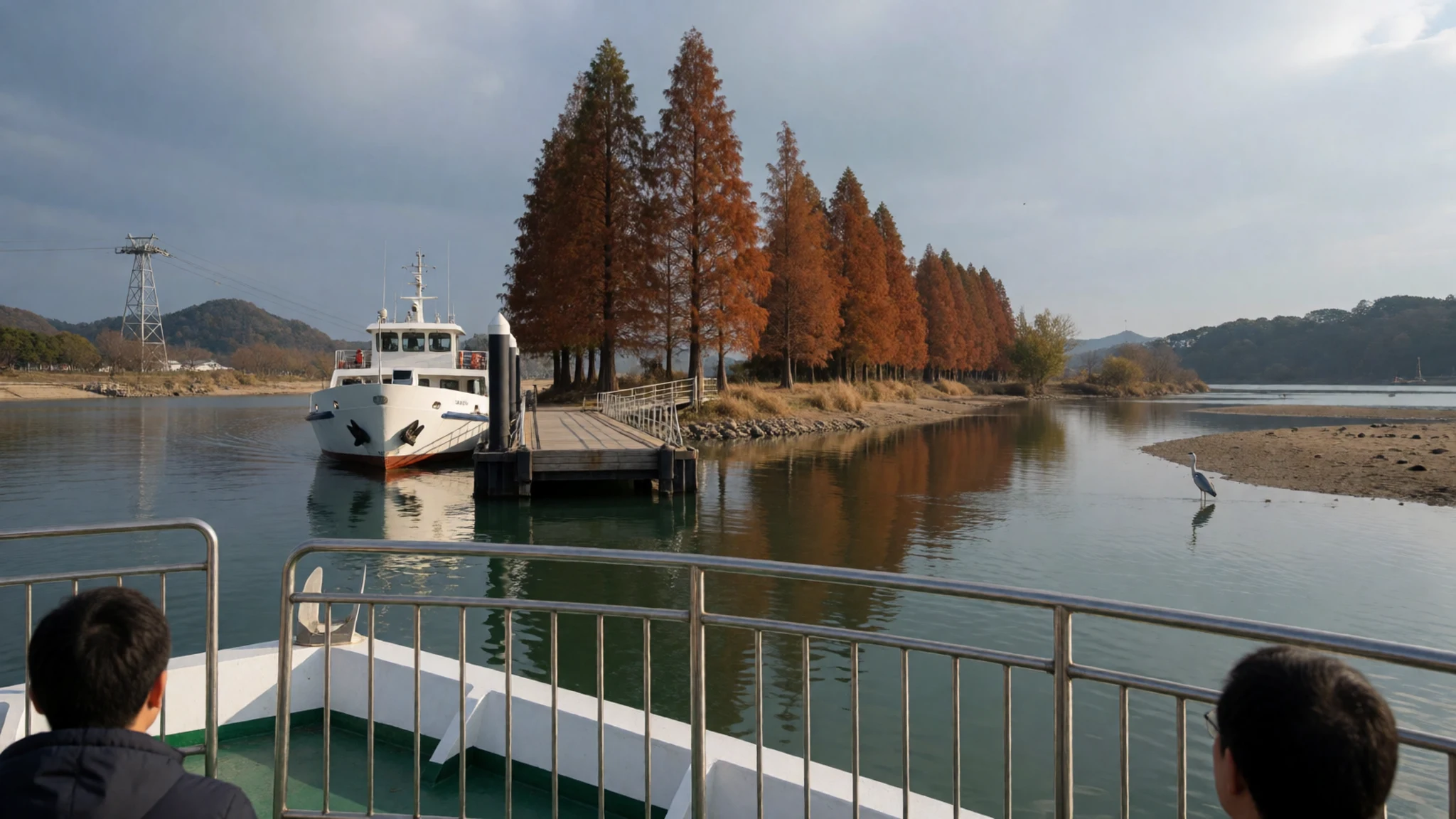
- Shore path — Island shoreline
A shore path on Nami Island trades the tree tunnel for open river, reeds and low hills on the far bank. It is the walk to switch to when the central avenue is crowded. In winter the wind off the water is colder than the air under the trees. In summer people stop on the bank for a breeze. Several links join this circuit back to the avenues.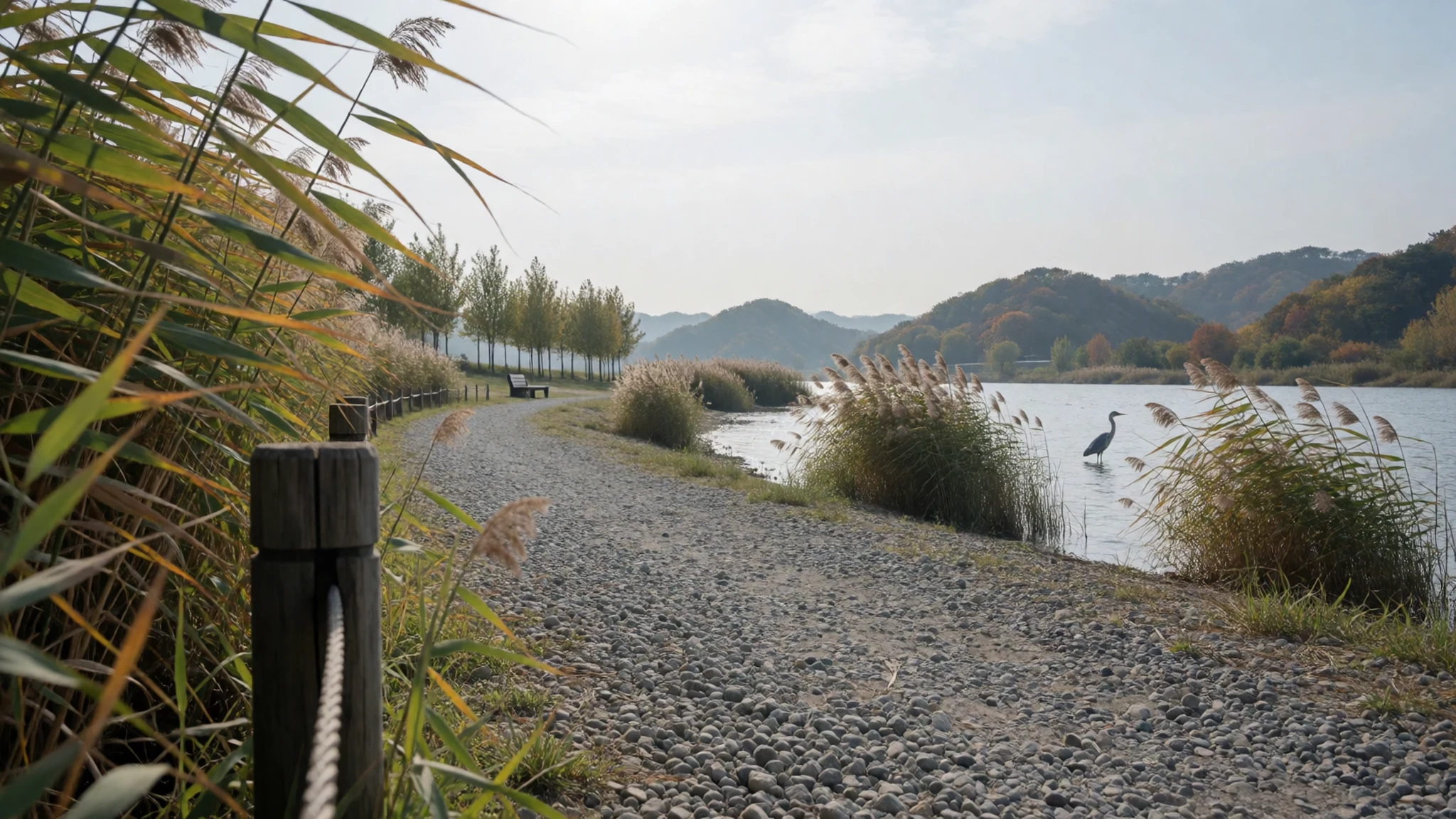
- Naminara gate and galleries — Entrance gate and craft buildings
Nami Island stages its entrance as the Naminara Republic, a piece of theatre with a stamp, a flag and the language of a country that does not exist on any map. Past the gate, small galleries and craft workshops sit off the paths, their shows changing through the seasons. Nothing here is a national collection. The pleasure is a quiet room of prints or objects between the avenues.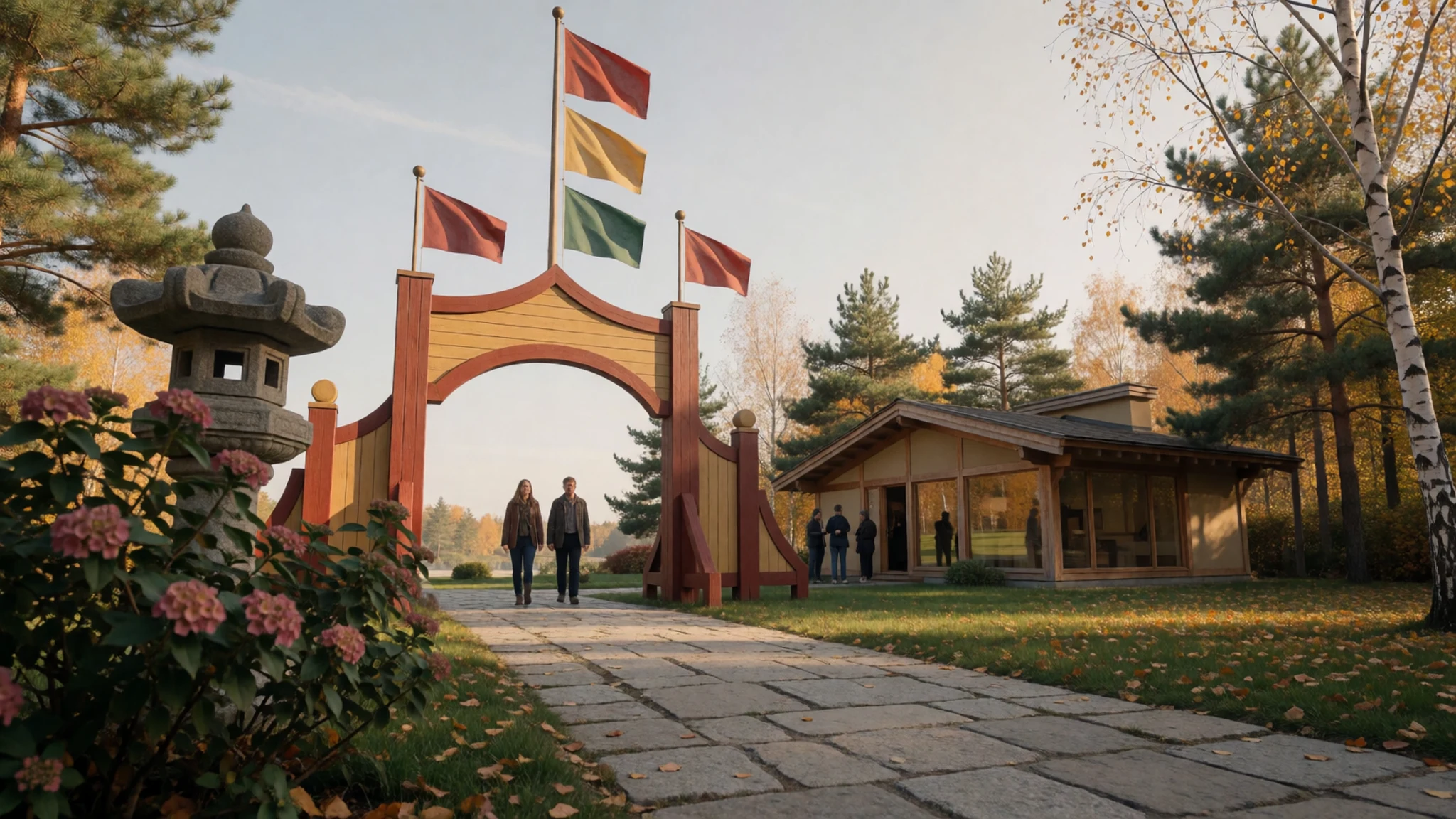
Culture
Nami Island runs on paired crowds that share the same paths. Part of it is ordinary Korean leisure: families, students out from Seoul, and couples in matched coats, eating snacks under tall trees. The other is the Winter Sonata pilgrimage. The drama became a common reference across East Asia, and people still come to match a scene to a real avenue. Foliage visitors and drama visitors are not kept apart. Photography is the shared habit: people stop in the avenues and treat the trees as a backdrop, which is why the wide path jams.
The island's own addition is the Naminara Republic, a theatrical micronation with a flag, an anthem and a passport stamp. It is a ceremony for the ferry crossing, not a political claim, and it gives groups a ritual at the gate. Workshops, outdoor sculpture and occasional music carry that cultural-village idea in among the trees. The planting is still the main exhibit. Weekend numbers can wipe out the quiet the branding suggests, which is worth knowing if solitude is the hope. Stay on the paths, leave twigs and cones on the trees, and ask before pulling a stranger into a photograph.
What to wear
Nami Island is not a palace, and traditional dress is a reference rather than the daily uniform. Hanbok pairs a jeogori jacket with a chima skirt or baji trousers. Older pieces use silk, ramie or hemp, chosen for the season; picture hanbok today is often a lighter blend, hired for a portrait. On the island it appears in small clusters when a group wants a formal frame of metasequoia. It is occasion clothing.
Everyday dress follows the weather and the camera. In the cold months that give Nami Island its familiar look, people wear long padded coats, knit hats, scarves and boots, in colours that will read against snow or rust leaves. Spring and autumn mean a lighter coat, jeans and trainers. Summer thins to T-shirts, sun hats and loose trousers, tidy park clothes rather than swimwear. Matching outfits for couples are common, a habit the drama pilgrimage encouraged.
Visitors should dress for wind off the river and for hours on foot. Winter needs a warm coat, gloves and shoes that grip on packed snow. In milder months, closed walking shoes beat thin sandals. There is no shrine dress code. Modest casual clothes are enough, with a spare layer for the shore, where the water keeps the air cooler than it is under the trees.
What to eat
- Makguksu — Noodle houses in Chuncheon and simple eateries on the ferry road
Makguksu is the Gangwon bowl that belongs with a day around Nami Island: buckwheat noodles, usually cold, in a sharp, lightly spicy broth. Chuncheon noodle houses and plain eateries on the ferry road serve it more reliably than stalls under the trees.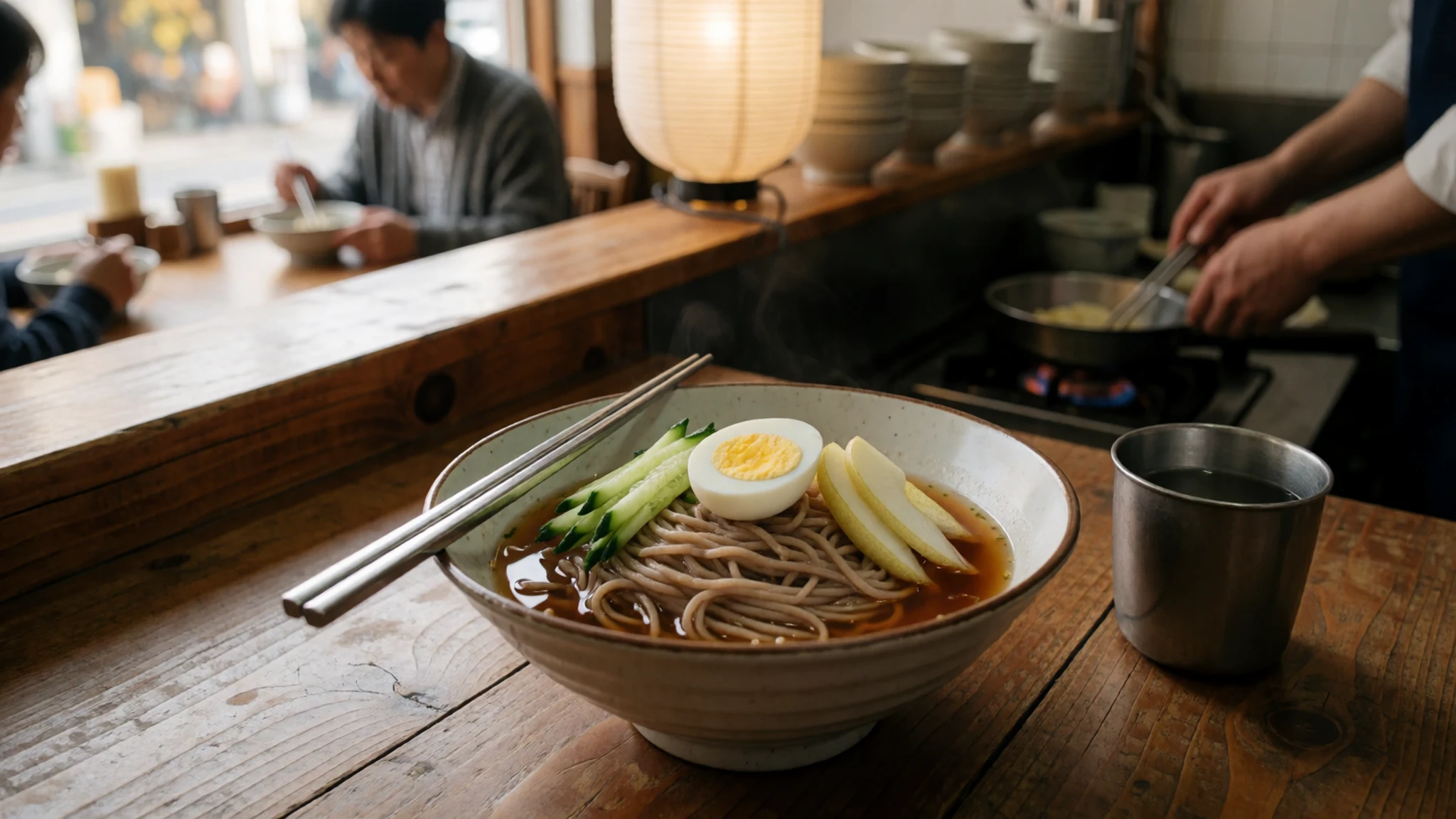
- Dakgalbi — Shared-pan eateries in Chuncheon
Dakgalbi, the dish to seek off Nami Island in Chuncheon, is stir-fried chicken with cabbage, rice cakes and gochujang on a shared pan. It is hot, salty and meant for a group, and a poor fit for anyone skipping meat.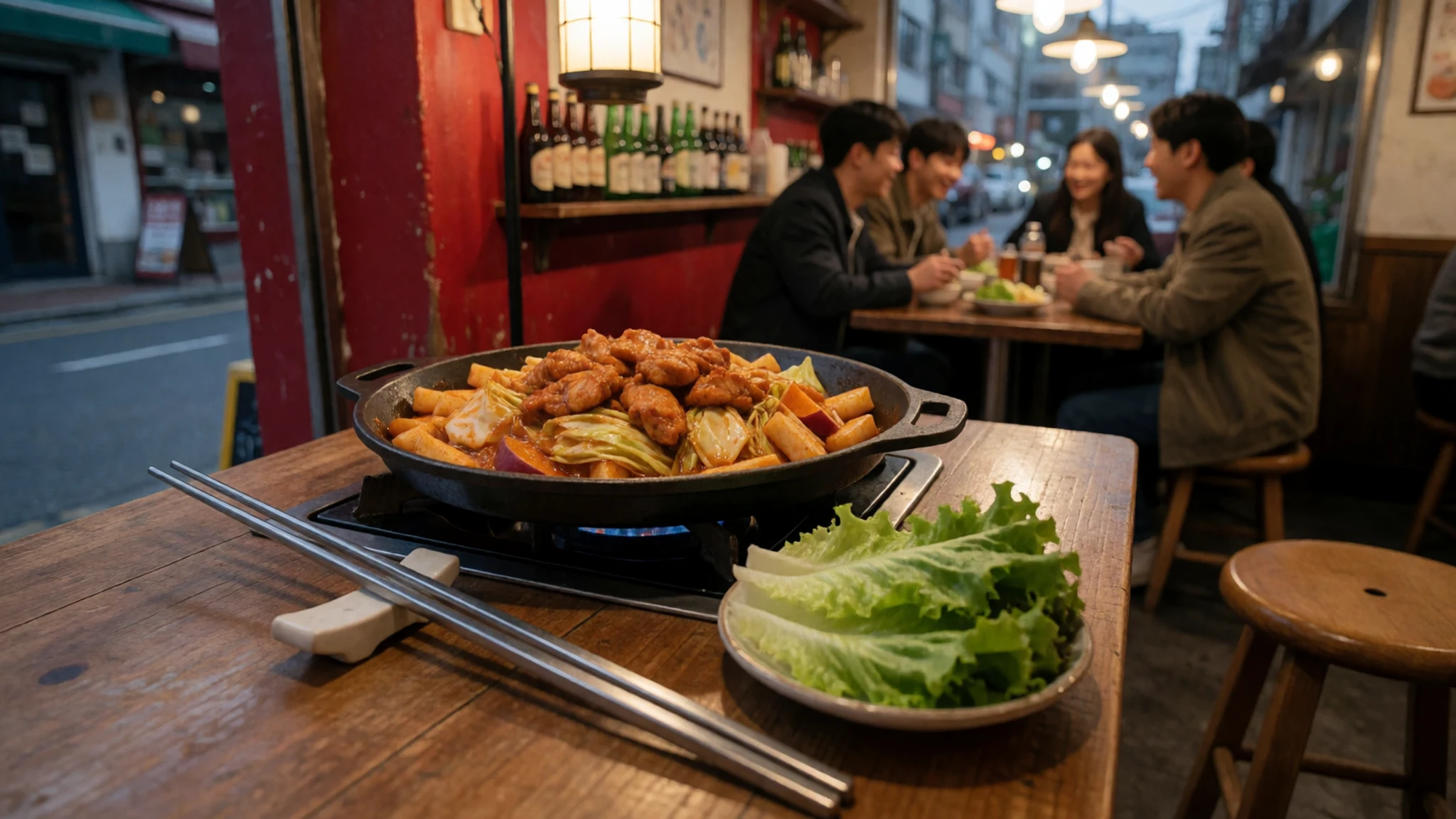
- Bungeoppang — Path-side griddle stalls in cold weather
Bungeoppang is a fish-shaped cake from a hinged mould, filled with sweet red bean, and it belongs to cold days on Nami Island. Stalls along the paths sell it in a paper bag for eating on the walk. It is a walking snack, and the griddles follow the cold. - Hotteok — Path-side stalls in the colder months
On Nami Island, hotteok is a fried pancake torn open around brown sugar, cinnamon and seeds while the centre is still molten. It appears at Sonata Cafe, a traditional house where people queue. The sugar leaks, so it is a standing bite rather than something to carry far. - Baekban — Sit-down eateries among the trees
Baekban is the useful seated lunch on Nami Island: rice, soup and several small side dishes, sometimes with fish or braised meat. Eateries among the trees serve it to visitors who want a table rather than another bag of snacks.
Plan it
Best time. On Nami Island, October and November bring rust-gold metasequoia colour, and December and January lay snow on those same avenues, which is the Winter Sonata look. April is a mild green alternative. July and August are warm, humid and crowded.
How long. 1–2
Getting there. From Seoul, the Gyeongchun line reaches Gapyeong station, and a short taxi or shuttle covers the road to the Nami Island ferry. The last leg is that brief crossing, or the zip line when it is running. The interior is for walking, not for cars.
Budget. mid
Tips
- Start on a weekday morning so the central avenue is still a walk.
- Check that morning whether the ferry is running; wind can stop it, and there is no road onto the island.
- Wear shoes you can walk in all day, including on snow or wet leaves.
- Buy the crossing at the dock's own window and see what the ticket covers before you pay.
- Leave Chuncheon for another day unless energy remains; the island itself fills the hours.
Etiquette
- Keep to the paths and do not take twigs, cones or flowers as photo props.
- Ask before you photograph other visitors.
- Enjoy the Naminara stamp as a souvenir; it is not a travel document.
Nearby
Sources
- Wikidata (CC0)
- Wikipedia: Namiseom (CC BY-SA 4.0)
- Wikivoyage: Chuncheon (CC BY-SA 4.0)