Namhansanseong
Namhansanseong, South Korea
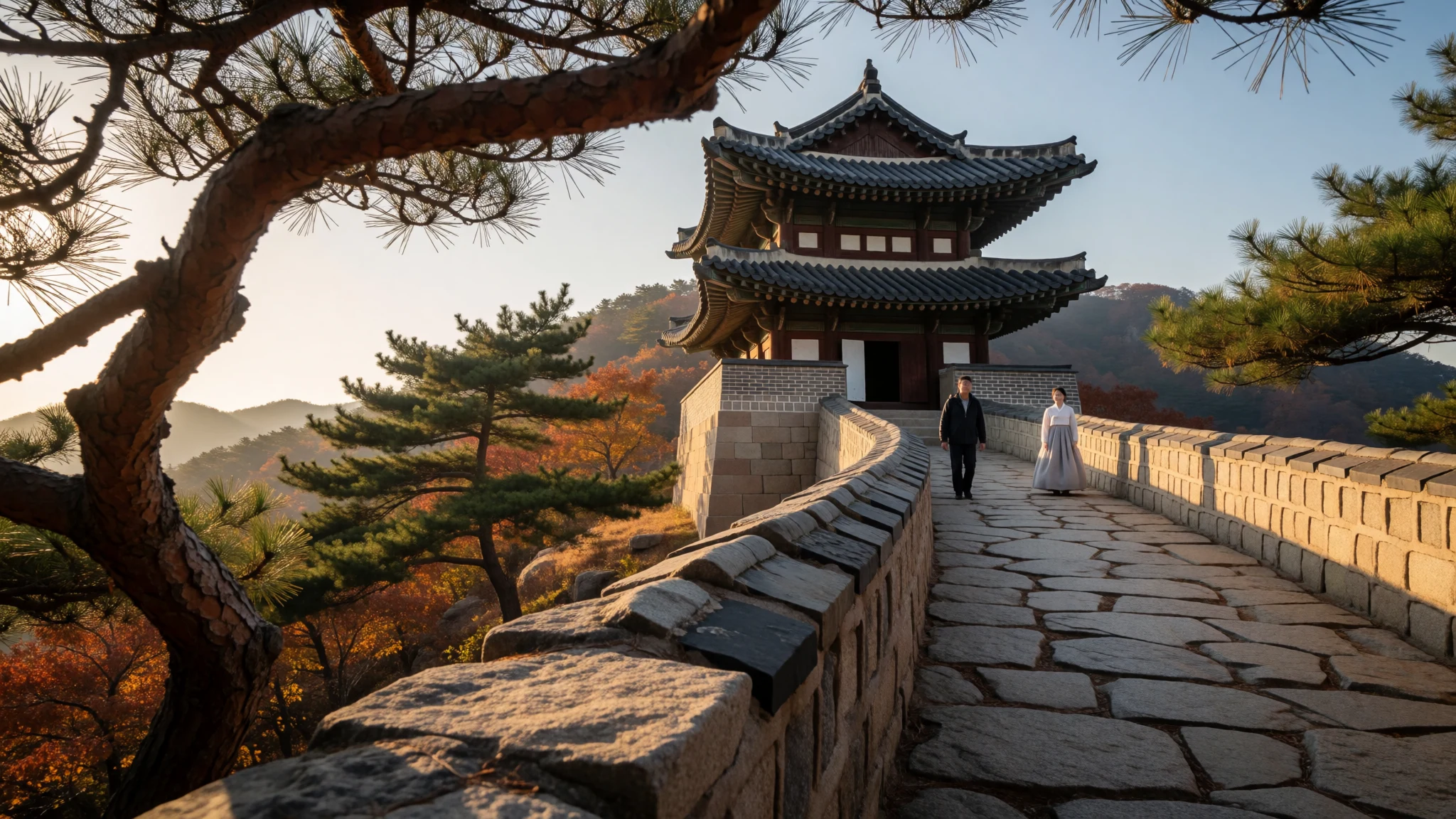
Namhansanseong is a mountain fortress at Seoul's edge where Korean kings planned to retreat, and walkers can still follow its stone wall.
The place
Namhansanseong (남한산성) is a walled mountain town in Gwangju, Gyeonggi Province, on the south-eastern fringe of the Seoul region. The wall follows the ridges of Namhansan for about 12 km, and the ground inside is a bowl of forest, lawns, old gates and a few quiet settlements. It is a UNESCO World Heritage Site, and it is also an ordinary weekend outing for Seoul families, so the approach roads and the restaurant street fill up on fine days.
The fortress was planned as a second capital: an emergency base for the Joseon court in wartime and a local administrative centre in peacetime. That mixed purpose explains what survives. Alongside gates and watchtowers there was a palace for the king, government offices, temples and housing for ordinary people, all meant to be lived in rather than merely garrisoned.
The design draws on several traditions. Korean building practice sits beside ideas from Japan's late sixteenth-century castles and from Ming and Qing Chinese fortification, adapted to the age of gunpowder weapons. Buddhist temples were folded into the defences, which is an unusual thing to find inside one fortress.
Names cause confusion here. This Gwangju is the small, fairly rural town in Gyeonggi, not the large city of the same romanised name in the south-west, and the two are written with different Chinese characters. The air on the ridge is cooler than in Seoul, and the views back toward the capital's towers make the gap between old and new easy to read.
Its story
Namhansanseong stands on a ridge that was fortified long before the present wall. Excavations in 2005 turned up an earlier fortress called Jujangseong, dating to the Silla period, and during the Goryeo period a town fort known as Gwangju Fortress occupied the area. The steep, defensible ground kept attracting builders.
The Joseon-era fortress was a response to a scare. After Yi Gwal's rebellion in 1624 and the Later Jin invasion of 1627, King Injo ordered Yi Sŏ to build a refuge that could shelter the court if Seoul became unsafe. Buddhist monk-soldiers were called up from every province of the kingdom to do the work, which is why temples later formed part of the garrison system.
Building did not stop with the first wall. Gates, storehouses, barracks and an emergency palace were added over the following generations, and the inner circuit eventually ran to roughly 7.5 km, with outer walls extending the total much further. Unlike many European castles, where townspeople were left outside the defences, this one was designed to hold king and commoners together, with housing for ordinary residents within the walls.
In the early twentieth century the fortress became a stage for fighting between Korean righteous armies and Japanese forces. In 1907 the Japanese destroyed much of it to reduce its usefulness to Koreans. Many of the structures seen today have been rebuilt or repaired since, so the site is best read as a mix of surviving stone and careful restoration.
What to see
- Sueojangdae watchtower — Western ridge of the fortress
Sueojangdae is the commander's western watchtower, a timber pavilion on a high point of the wall, built so that officers could watch for approaching trouble and direct the defence. The pine slope around it gives a calm setting. Reaching it means a steady uphill walk from the nearest gate, so allow time and carry water.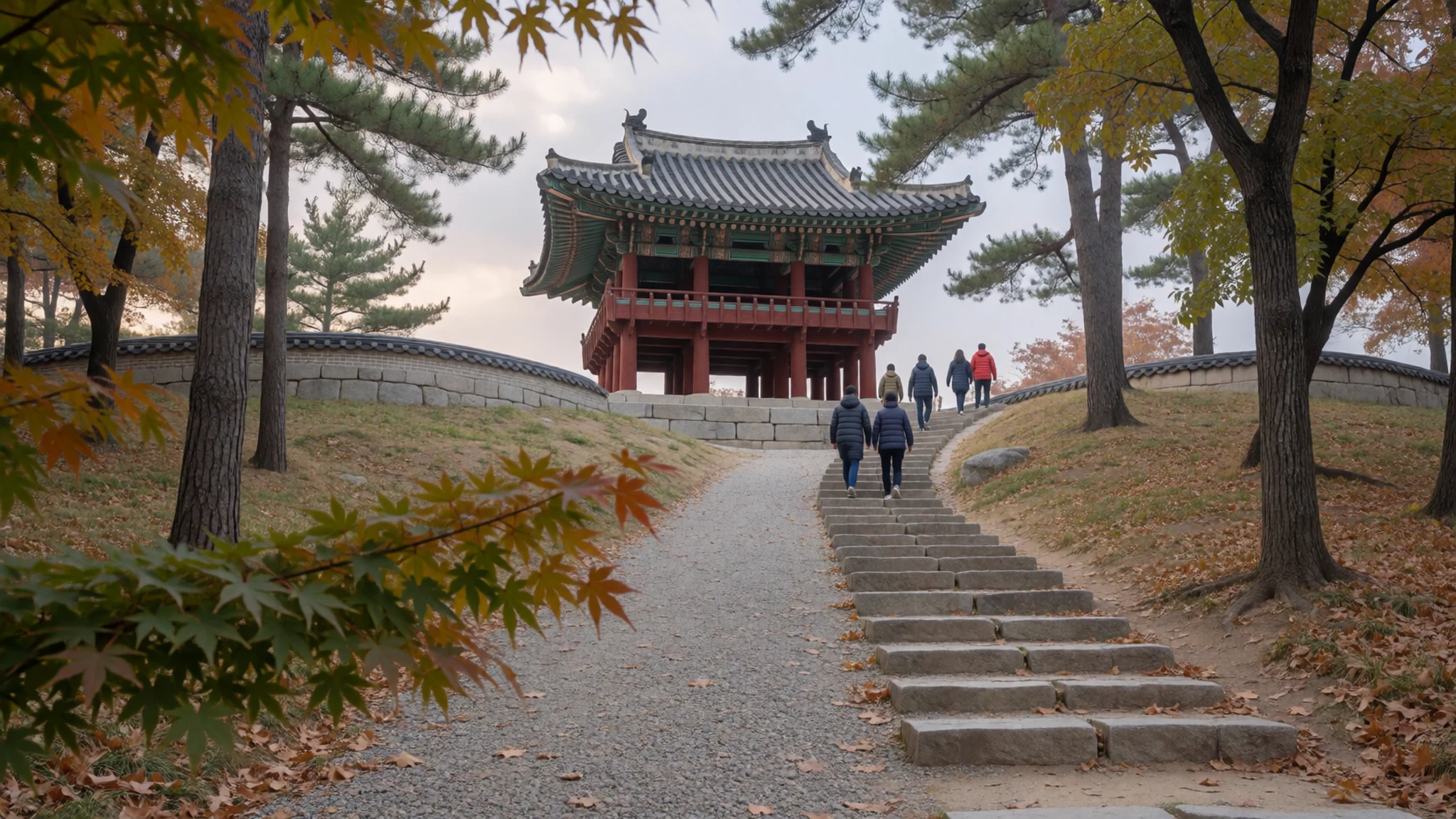
- North Gate (Bungmun) — Northern side of the wall
The North Gate sits low in a fold of the ridge, with the wall climbing steeply on both sides. It shows how the fortress used gates as pinch points. The approach is usually quieter than the main entrances, which makes it a sensible place to rest on a longer circuit of the wall.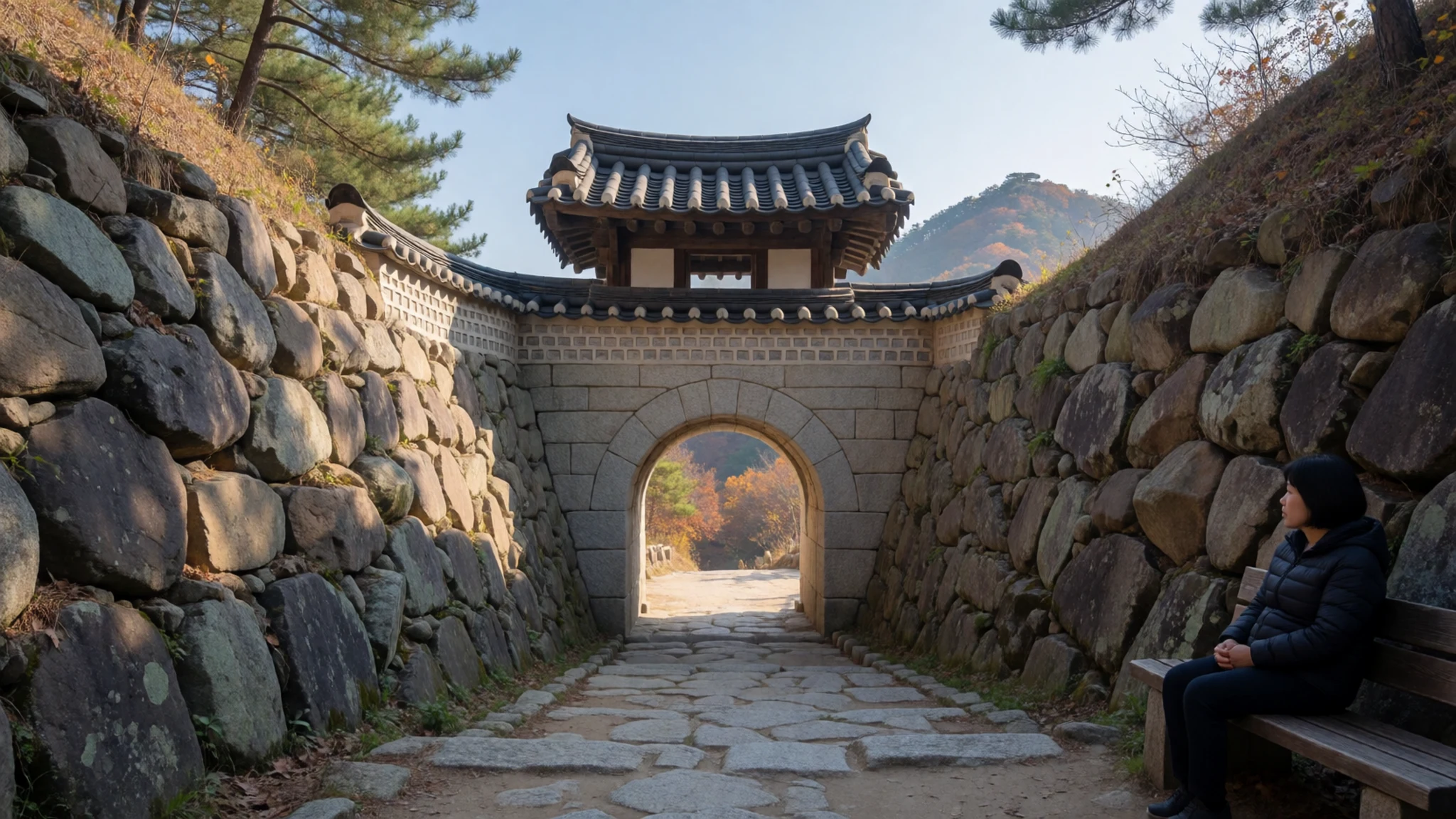
- West Gate (Seomun) — Western side of the wall
The West Gate looks toward Seoul and the lowlands, and the wall beside it gives long views of the city on clear days. It works well as a turning point for walkers, since the ridge path nearby is well worn and the stonework shows repairs from different periods.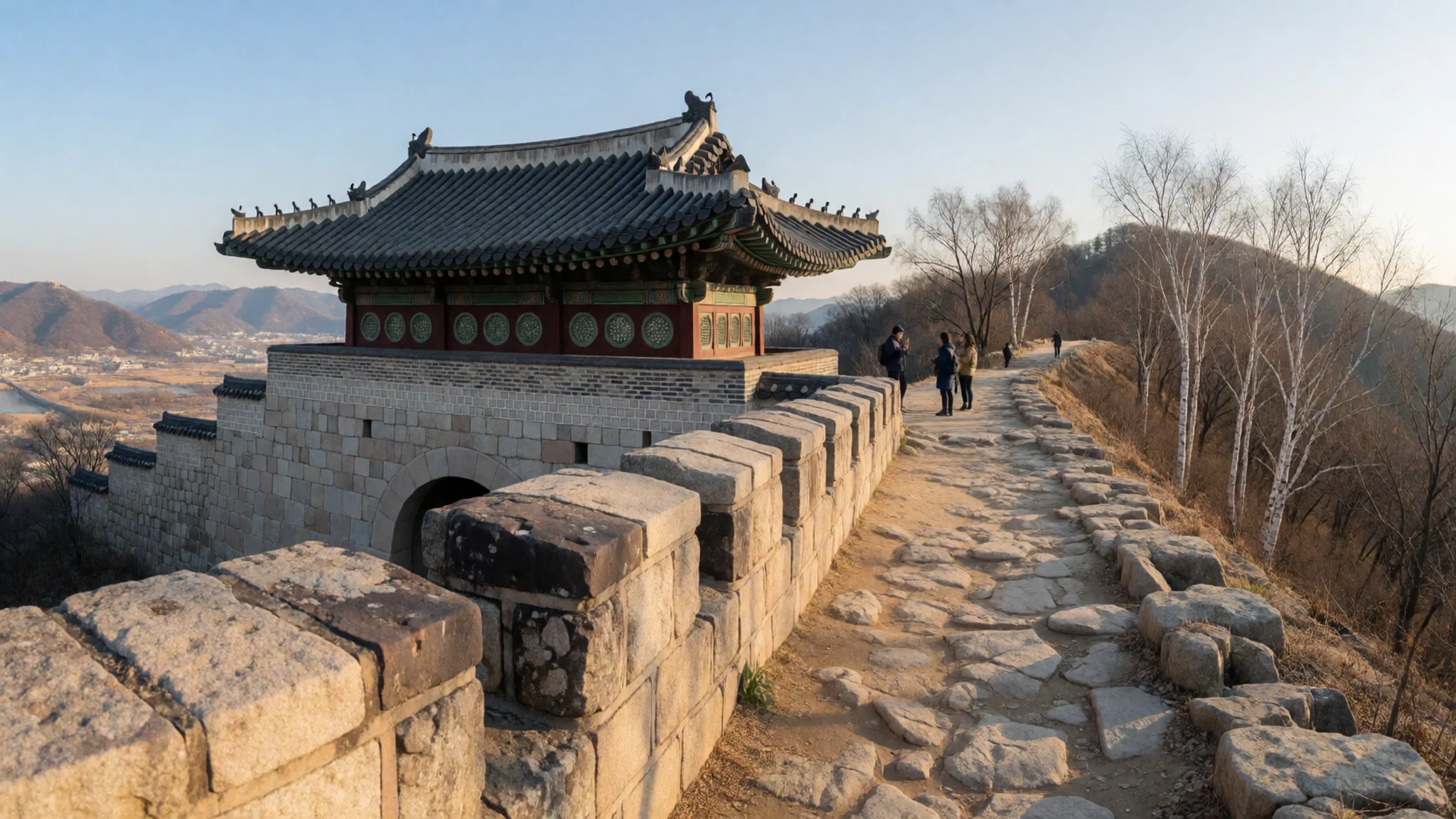
- South Gate (Nammun) — Southern side of the wall
The South Gate faces the approach from the plains and marks one of the main ways into the fortress. Its tiled gatehouse and arched stone opening show how thick the wall was built. Ridge paths run off in both directions, so walkers can join the circuit here without a long climb.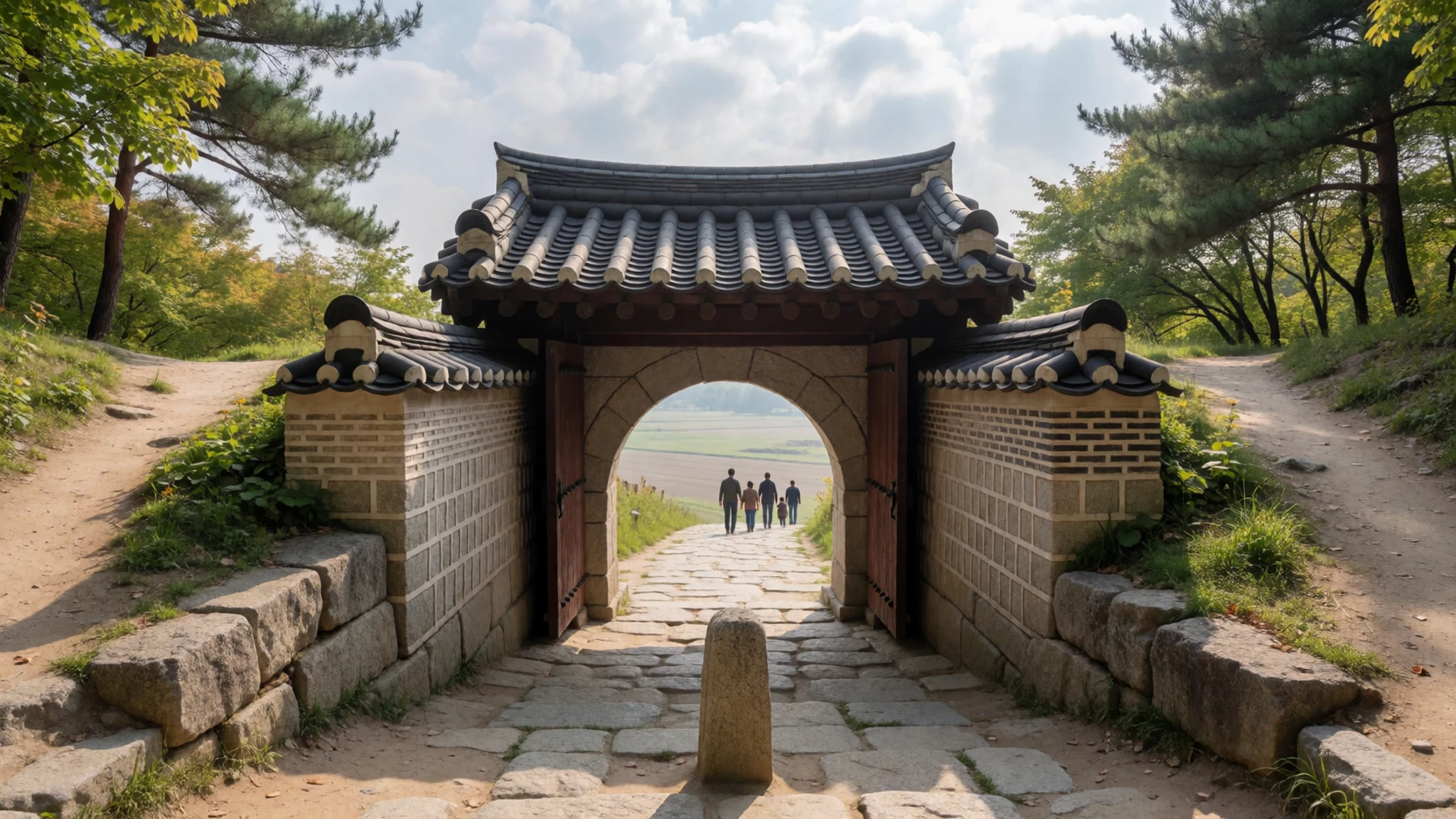
- Emergency Palace (Haenggung) — Inside the fortress, near the main village
The emergency palace was where the king would have stayed if the court retreated here. It is a modest compound next to Seoul's grand palaces, with halls arranged around courtyards, but it gives the clearest sense that the fortress was planned as a working capital. Reconstruction is visible, so the signboards are worth reading.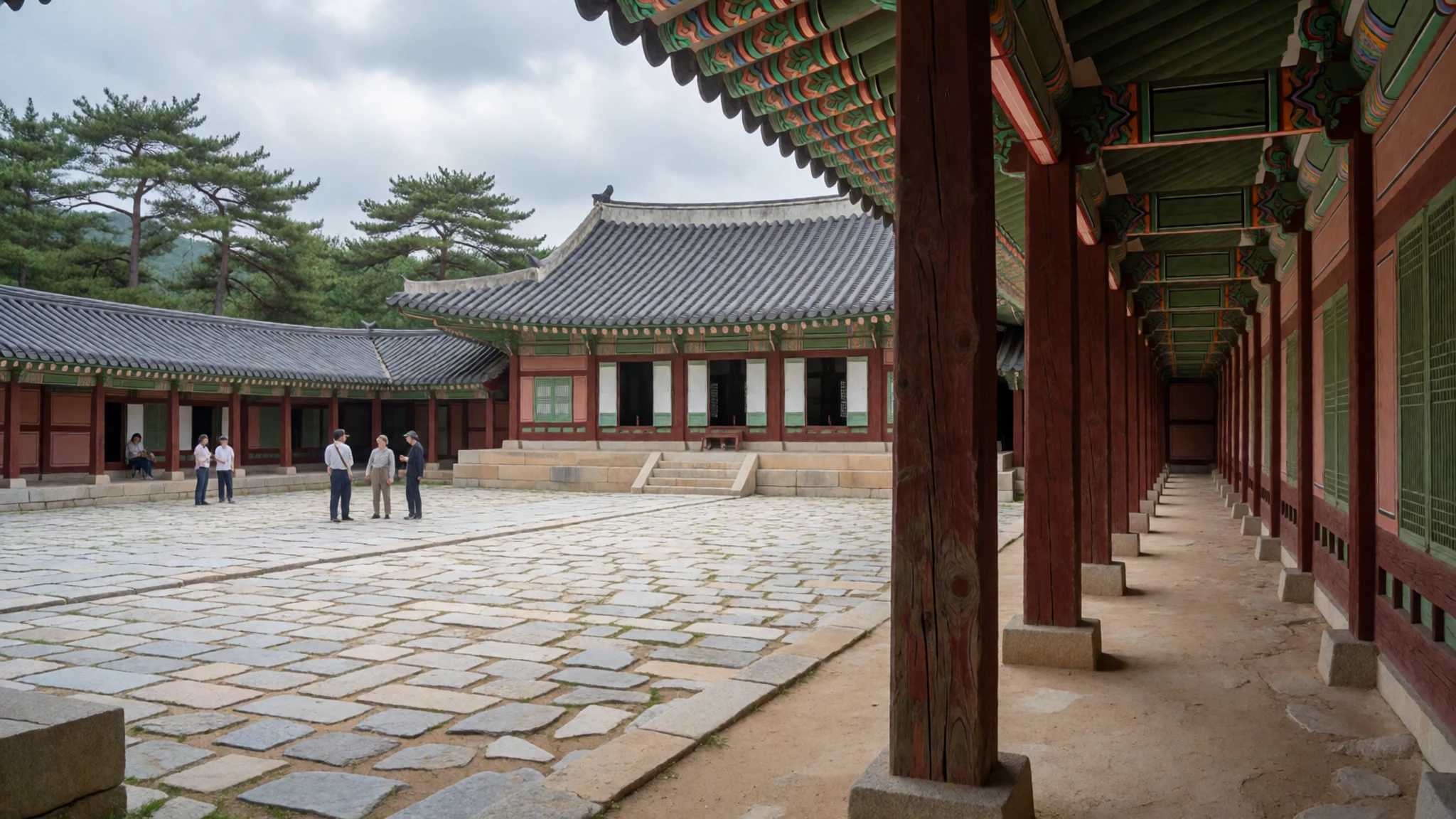
- Wall walk and Seoul viewpoints — Ridge path between the gates
Along the ridge, gaps in the trees open onto the Seoul sprawl: towers, river valleys and hills in one frame. Summer haze often softens the view, while crisp autumn and winter days are clearer. A panorama taken from the wall shows the scale well, though walking a section brings it home better.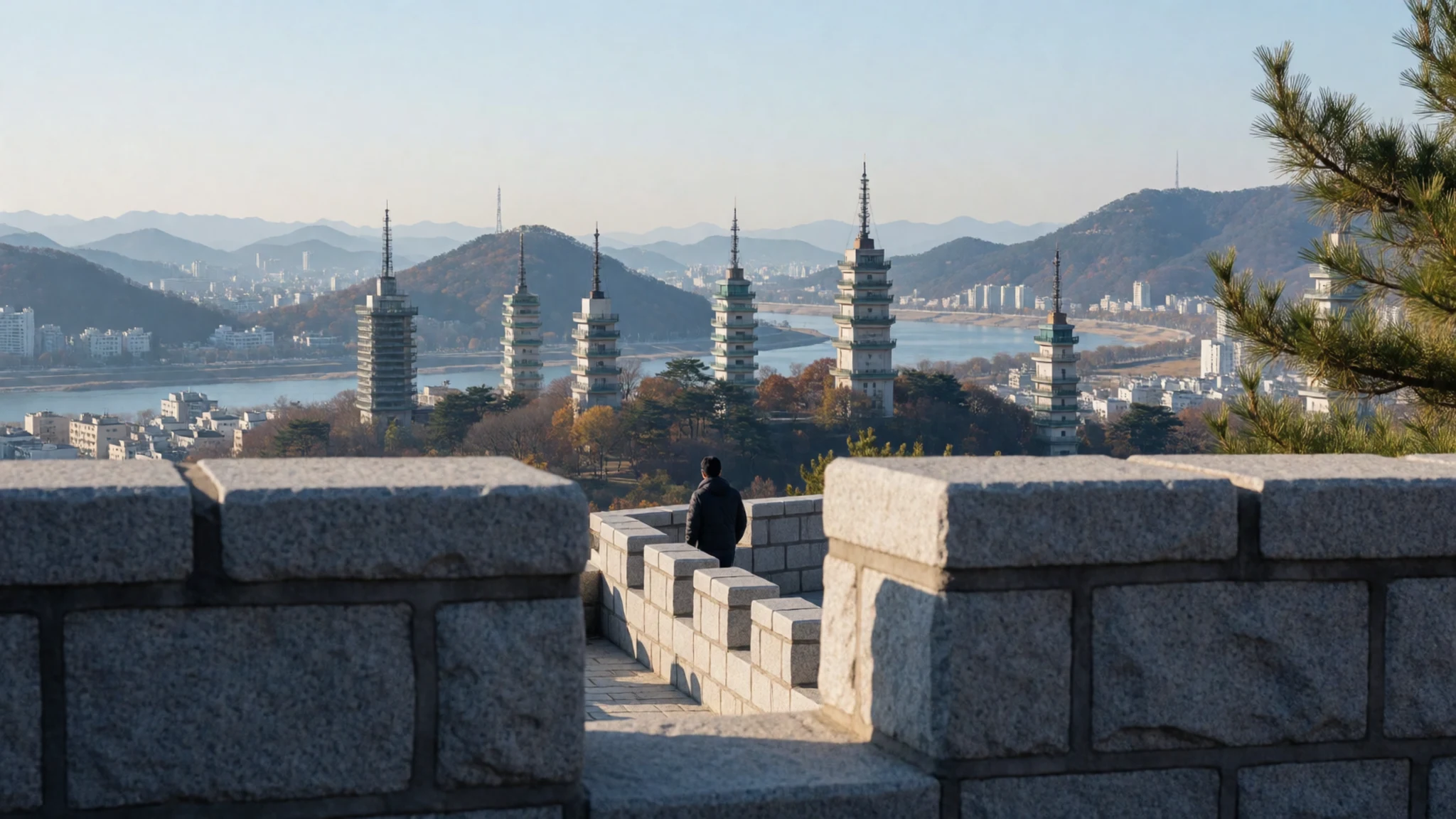
Culture
Namhansanseong carries a layered memory for Koreans: a refuge for kings, a labour project for Buddhist monks, and later a rallying point for righteous armies resisting Japan. That last chapter, and the destruction that followed, is why the fortress is treated as a symbol of sovereignty rather than just a heritage attraction. The Buddhist link is practical as well as spiritual, because monk-soldiers built and garrisoned the walls, and temples inside the fortress served the defence.
Today the living culture of the place is hiking culture. Koreans climb mountains in groups, often dressed for a serious summit, and this is an easy ridge close to Seoul. Families spread out for lunch near the walls, and the restaurant street by the main gate serves mountain-style food to walkers. Weekends are lively and sociable; weekdays are calmer and better for photography.
The site is also managed as a protected heritage landscape and a provincial park, with separate bodies looking after the monuments and the visitor facilities. Local people tend to treat it with some quiet respect, partly because many regard it as a memorial to difficult years, and the mood on the wall is closer to a pilgrimage walk than a theme park.
Keep voices low near temple halls and shrine buildings inside the fortress, take shoes off before stepping onto raised wooden floors, and never climb on the old stone parapets for a photograph.
What to wear
Traditional Korean dress is the hanbok: a short jacket (jeogori) over a full wrapped skirt (chima) for women, and a jacket with roomy trousers (baji) for men. Court and festival versions use silk in strong colours, while everyday and summer garments were made from ramie, hemp and cotton, which breathe well in humid weather. Hanbok is now worn mainly at weddings, at the Lunar New Year and Chuseok holidays, and by visitors who hire it for photographs in Seoul's palaces.
What people actually wear at Namhansanseong is outdoor gear. Walking groups turn out in bright technical jackets, quick-dry trousers, caps and trekking poles, and many Koreans take their hiking clothes seriously even for an easy ridge. Younger visitors mix sportswear with casual streetwear, and weekend crowds are well dressed for weather rather than for show.
For a visitor, the practical choice is layers. Spring and autumn mornings are cool on the ridge and warm by midday, summer is hot and humid, and winter is cold with ice on stone steps. Shoes with a good grip matter more than anything else, since the wall paths are steep and the paving is uneven. Bring a rain jacket in summer, a hat and water for sun, and warm gloves in winter. Temples inside the fortress are used for worship, so shoulders and knees should be covered when stepping inside a hall.
What to eat
- Kalguksu — Noodle restaurants in Gwangju town and near the fortress gates
Hand-cut wheat noodles served in a hot broth, often with vegetables or dumplings. It is a staple of the Gwangju area, warming after a windy ridge walk. Vegetable versions suit those avoiding meat, though broths are sometimes made with seafood or meat stock, so ask.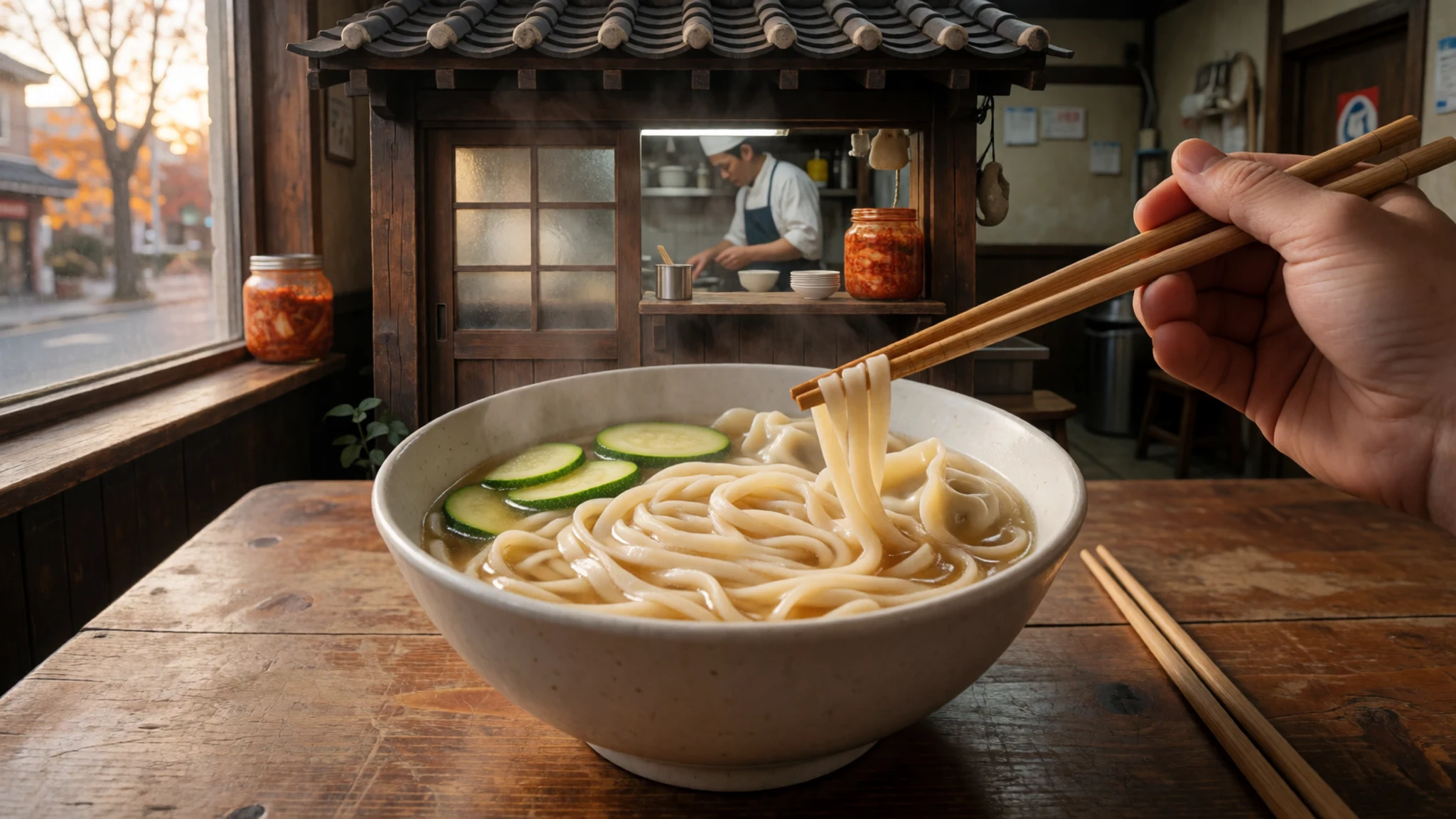
- Cheonggukjang with barley rice — Rural-style restaurants around Gwangju
A strong-smelling stew of fermented soybeans, usually served with barley rice and a spread of small side dishes. It is a country dish with a deep, savoury flavour. Newcomers should expect a pungent aroma, which fades once the pot is on the table.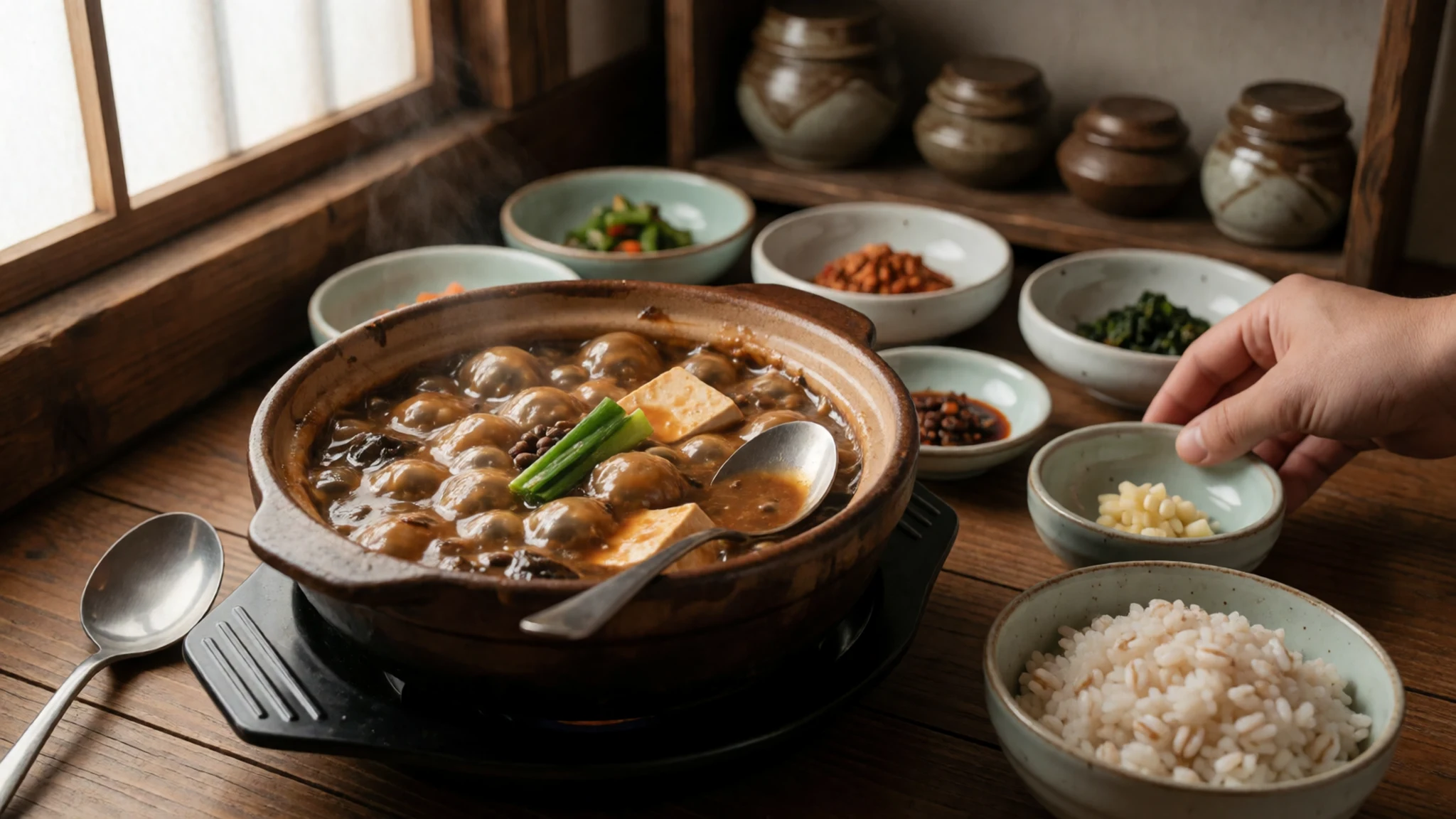
- Handmade sundae — Local sausage restaurants and market stalls in Gwangju
Korean blood sausage, traditionally stuffed with noodles, vegetables and pork or beef blood. Sliced and served hot with salt or a dipping sauce, it is a hearty, filling plate. It is a regional favourite worth trying if curious about local cooking. - Mandu-guk (dumpling soup) — Noodle and dumpling shops in the town
Dumplings floating in a clear, gently seasoned broth, often eaten as a simple lunch. The filling is usually meat and vegetables, with a vegetable-only version sometimes available. It is quick, easy on the stomach, and a reliable choice after a long day on the wall. - Pajeon and acorn jelly with makgeolli — The restaurant street near the main fortress gate
Pajeon is a crisp spring-onion pancake, and dotori-muk is a mild acorn jelly dressed with soy and sesame. Together with a bowl of makgeolli, the cloudy rice drink, they are the classic mountain-walker's snack and the standard order after a hike.
Plan it
Best time. March–April for blossom and fresh green on the ridge, and late October–November for autumn colour. July and August are hot and humid, and winter is cold, with ice on stone steps.
How long. 1
Getting there. Fly into Incheon International Airport, then take an airport limousine bus or the rail link into Seoul. From central Seoul, take the subway to Namhansanseong station and continue by local bus or taxi to the fortress; taxi apps such as Kakao T work in the area. Check that the destination is Gwangju in Gyeonggi Province, not the city of the same name in the south-west.
Budget. low
Tips
- Go on a weekday or early on a weekend morning, as fine days bring heavy crowds and traffic
- Wear shoes with good grip, since the wall paths are steep and uneven
- Carry water and a snack, because refreshments thin out away from the main gate
- Check the official heritage site for opening arrangements and any restoration closures before travelling
- Pick one or two gates and walk the wall between them rather than attempting the whole circuit
Etiquette
- Remove shoes before stepping onto raised wooden floors in halls and temple buildings
- Do not climb on the old stone parapets or step on loose wall stones
- Keep voices low near temples and take litter away with you
Nearby
Sources
- Wikidata Q562529 (CC0)
- Wikipedia: Namhansanseong (CC BY-SA 4.0)
- Wikivoyage: Namhansanseong (CC BY-SA 4.0)
- Photo 01-khitai5.jpg, Khitai (a flickr user) (CC BY-SA 2.0)
- Photo 02-2.jpg, Jocelyndurrey (CC BY-SA 4.0)
- Photo 03-2.jpg, Jocelyndurrey (CC BY-SA 4.0)
- Photo 04-1959.jpg, 한국저작권위원회 (CC BY 4.0)
- Photo 05-seoulpanorama.jpg, Arne Hückelheim (CC BY 3.0)
- Photo 06-namhansanseong-south.jpg, 메탈(bae6607) (CC BY 3.0)
- Photo 07-namhansanseong-gate10.jpg, 메탈(bae6607) (CC BY 3.0)
- Photo 08-korea-namhansanseong-fortress-06-13956678988.jpg, Republic of Korea (CC BY-SA 2.0)


