Namhae Island
Namhae Island, South Korea
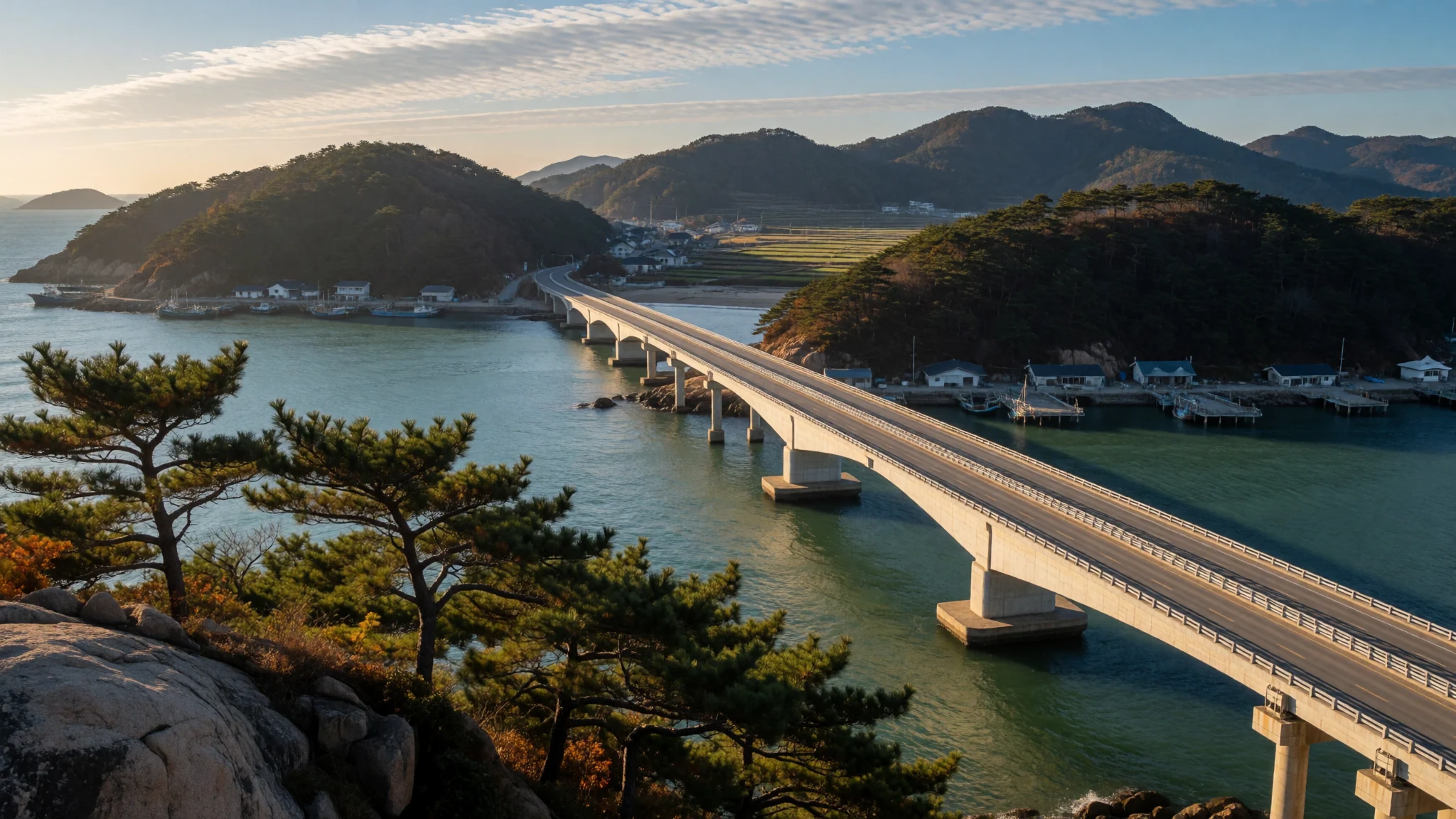
Namhae Island is a quiet, hilly island of terraced fields, fishing weirs and hermitage trails, reached by bridge from the South Korean mainland.
The place
Namhae Island lies off the south coast of South Gyeongsang Province, joined to the mainland by road bridges rather than a ferry. The wider county includes a scatter of smaller islands and many uninhabited islets, but most visitors see only the big island: hilly, green and fringed with small fishing harbours. Inland, the land is a patchwork of terraced paddies, garlic fields and citron orchards, rising to granite peaks that fall steeply to the sea. Mount Geum on the southern side is the usual hike for views across the water, with rock outcrops along the ridge and a small hermitage clinging to the slope. On the shore, pine-backed beaches alternate with rocky points and stone-walled fishing weirs. Villages are small and quiet, except on holiday weekends, when Korean families fill the coast roads and car parks fill early. Summers are humid and typhoons occasionally pass through, so spring and autumn are the comfortable seasons. Compared with the big resort islands, Namhae feels local: signs are often in Korean only, eateries are family-run, and the good finds tend to be down a lane rather than on the main road. Seoul is a few hours away by fast train and road, which is why the island suits a weekend, but it rewards a slower loop by car or bus with long lunches and no fixed list.
Its story
Namhae Island carries two kinds of memory, naval and literary. In the closing phase of the Imjin War, the Korean admiral Yi Sun-sin fought his last battle in the strait between the island and the mainland, and was killed there. A memorial shrine near the water at Noryang honours him, and the same strait is now crossed by the bridges that tie the island to the mainland. Namhae was also remote enough to be used as a place of exile. The scholar-official Kim Man-jung is traditionally associated with the island, and his novel The Cloud Dream of the Nine is said to have been written during his banishment, though accounts of the details vary. Farming shaped the landscape just as firmly. With little flat ground, villagers cut stepped paddies into steep slopes running down to the sea, and the terraces are still worked. Fishermen built V-shaped weirs of wooden stakes in the tidal shallows to trap anchovies, a method local communities have kept going. A more recent chapter is the German Village, built on a hillside for Koreans who had worked in Germany, many of them as miners and nurses, and who came home to retire. Its red roofs and half-timbered houses look odd against the Korean hills, but the story behind them is one of labour sent abroad and money sent home. Today garlic and citron fruit are the island's farm brands, and tourism has joined fishing as a living.
What to see
- Noryang Bridge and Namhae Bridge — Northern tip of the island, at the mainland crossing
Two road bridges carry traffic across the narrow strait between Namhae Island and the mainland, and they are the usual way on and off. Cross slowly, or stop at a viewpoint near the mainland end for the best look at both spans. The memorial shrine to Admiral Yi Sun-sin is close by.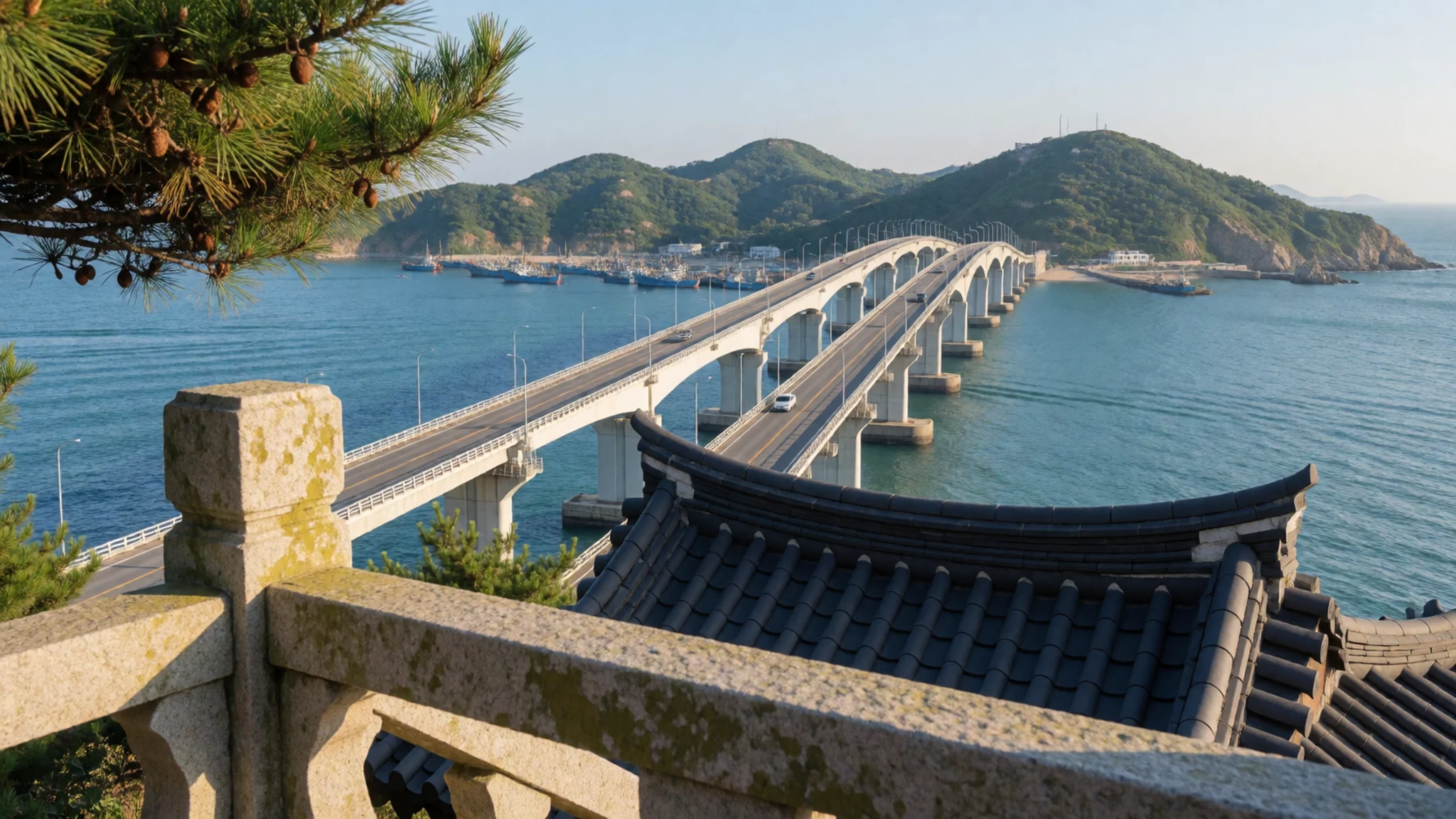
- Mount Geum and Boriam hermitage — Southern Namhae, inside the national park area
Mount Geum rises on the southern side of Namhae Island, with grey rock outcrops and wide views over the sea and scattered islets. A Buddhist hermitage, Boriam, sits on the slope and is reached by a steep path or a short drive and walk. Go early, since weekends bring crowds and haze.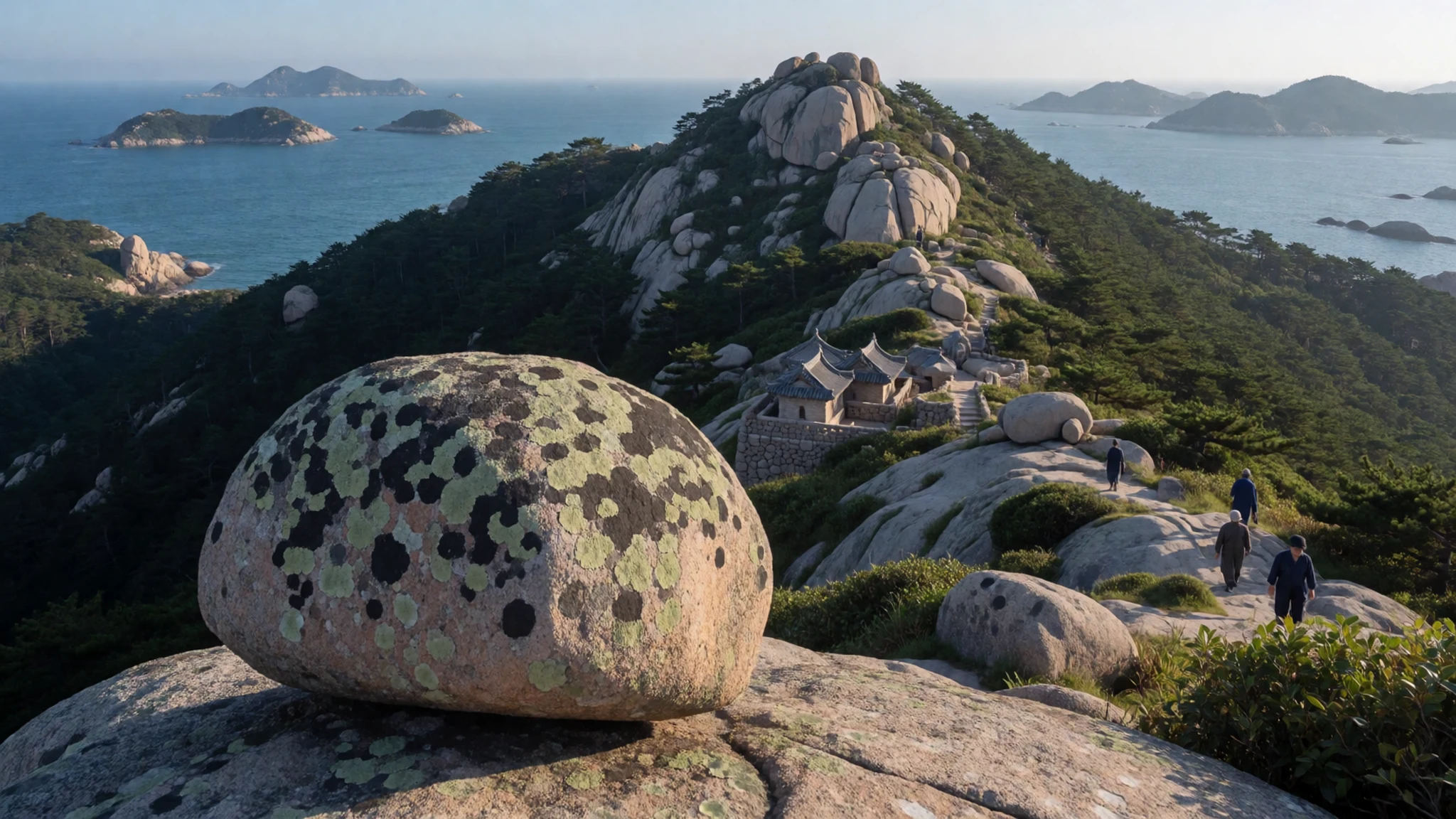
- German Village — Eastern Namhae, above the coast road
The German Village is a hillside cluster of red-roofed, half-timbered houses built for returning Korean migrant workers from Germany. Some houses are lived in, some take guests, and a few sell sausages and beer. It is touristy and busy at weekends, but the sea view and the story behind it make it worth an hour.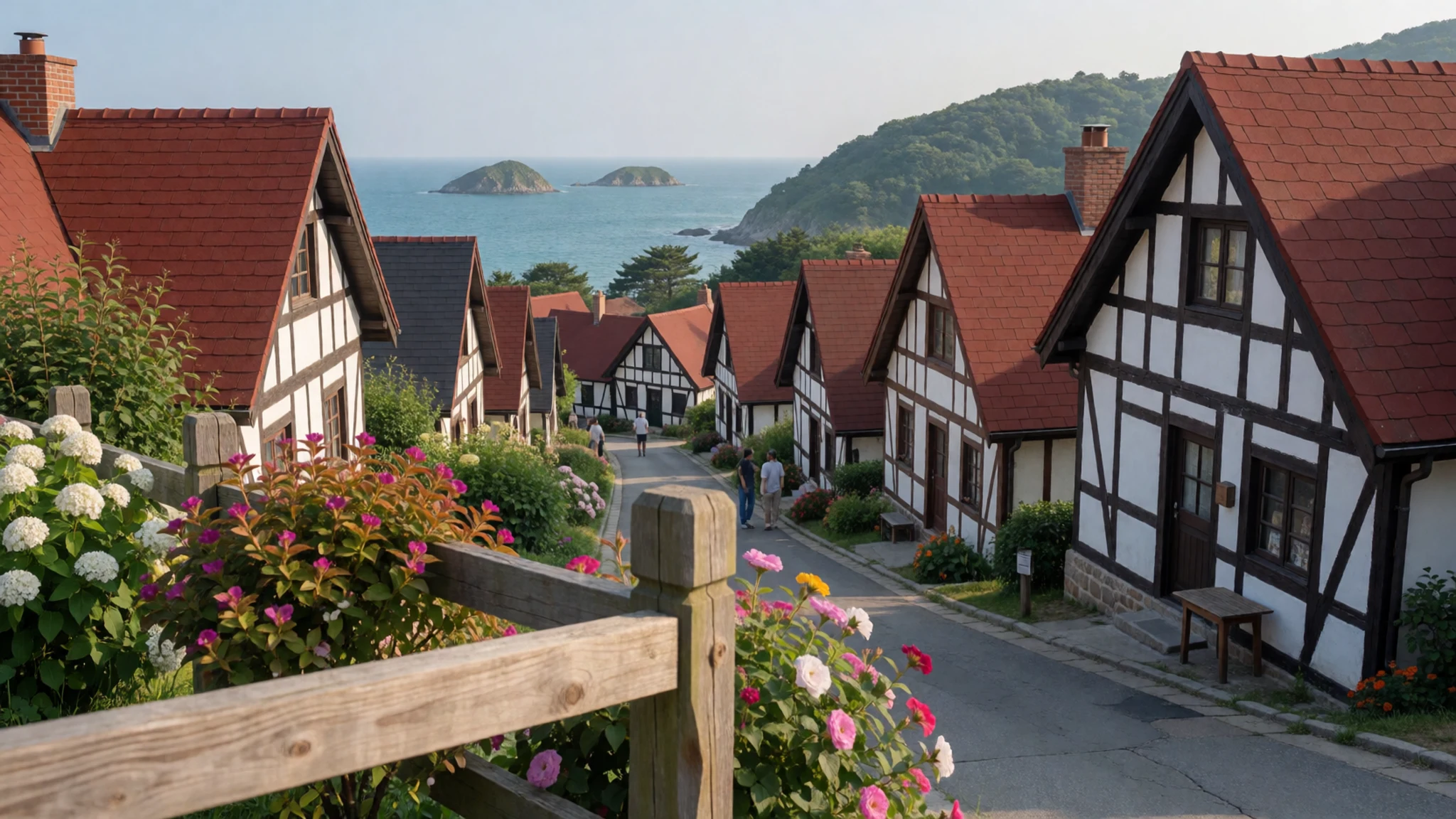
- Darangyi terraced village — Southern Namhae, near the coast
Darangyi is a farming village where small paddies and fields step down a steep slope to the sea. Rice is green in summer and golden in early autumn, and the walkways between the plots are narrow. Visitors share the lane with working farmers, so keep to the paths and avoid trampling edges.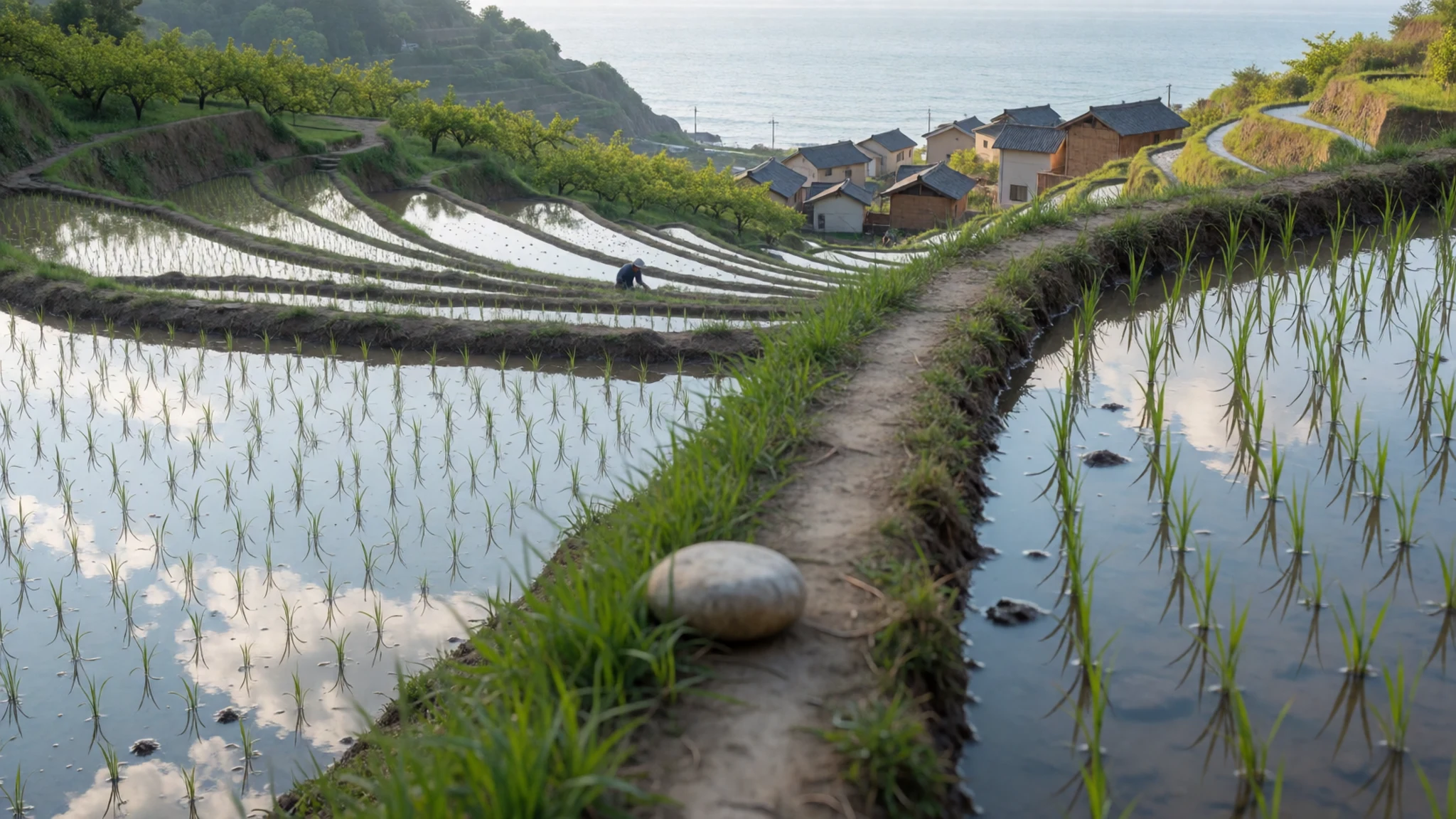
- Jukbang fishing weir — Eastern Namhae, near Jukbang village
At Jukbang, a line of wooden stakes stands in the tidal shallows, forming a V-shaped trap for anchovies that has been used here for generations. At low tide the structure is exposed, and fishermen can sometimes be seen at work. Check tide times locally, and bring waterproof shoes if wandering the mudflats.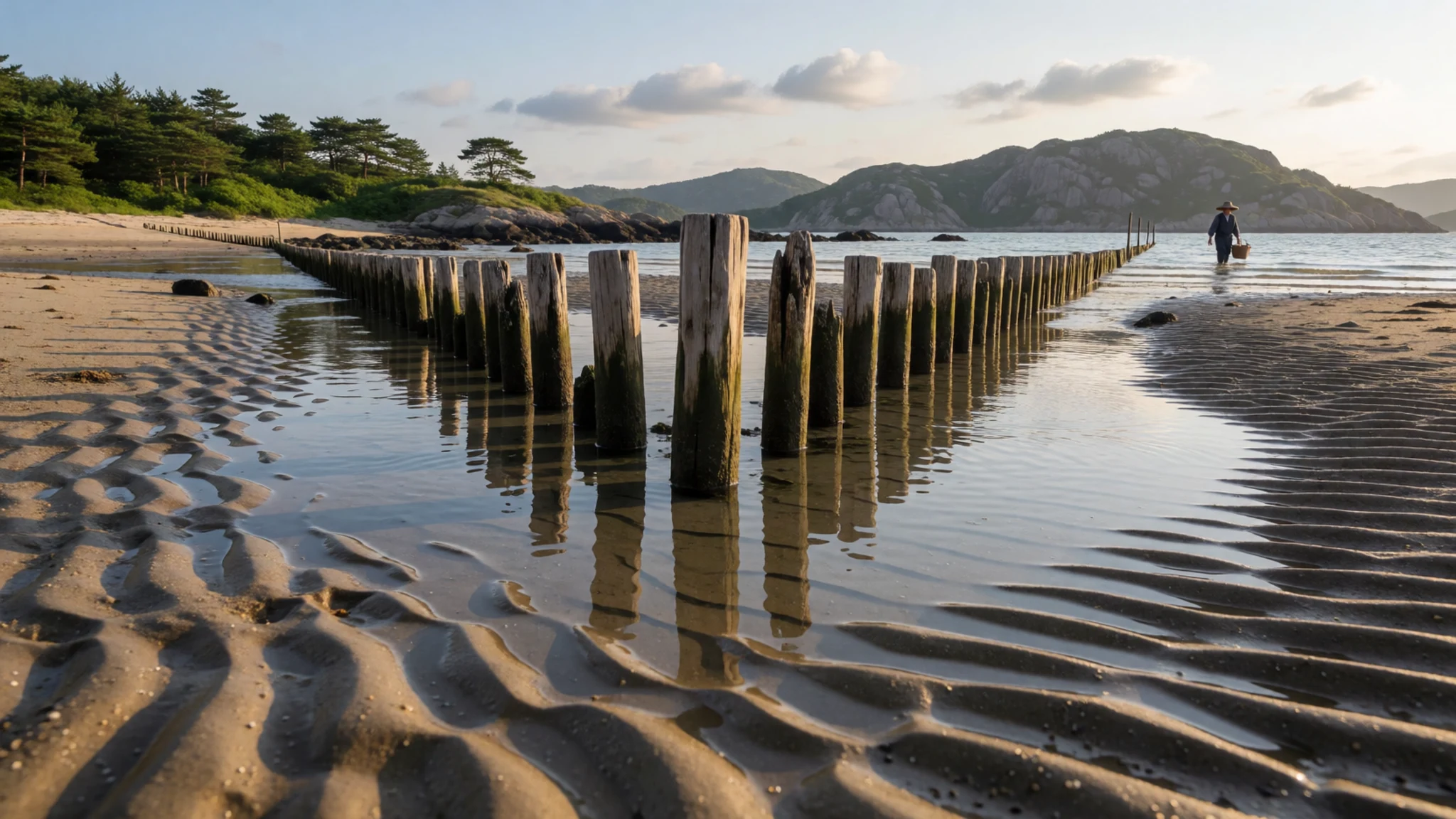
Culture
Namhae Island still runs on village rhythms, and Culture here is mostly about the farming year, the sea and the Buddhist hillside. Fishing families time their work to the tides and seasons, and farm lanes are used by tractors and walkers alike. Elders are addressed with respect, and meals tend to arrive as many small shared dishes, with rice and soup at the centre. Hospitality is quiet rather than showy: a neighbour might press extra side dishes on a guest, or offer fruit from the orchard. Citron, garlic and anchovies are local pride, and harvest times bring stalls and small festivals in the villages, though dates change from year to year, so check the official county site for the current calendar. Buddhism shapes the hills: small temples and hermitages sit on the slopes of Mount Geum, and visitors climb to them in the same spirit as pilgrims, if not always for the same reasons. Stories of the admiral Yi Sun-sin give the strait a patriotic weight, and Koreans visiting the shrine at Noryang often do so in silence. The German Village adds a modern, mixed note, a reminder that Korean families once worked far from home. Island life is relaxed but not casual about manners, and a little effort in Korean greetings is appreciated. At any temple or hermitage on the island, take off your shoes before stepping into a hall, speak softly, and ask before photographing monks or worshippers.
What to wear
Namhae Island shares the national traditional dress, the hanbok, though it is now rare in daily life. The hanbok is built from a short jacket (jeogori), a wrapped skirt (chima) for women, trousers (baji) for men, and a long outer coat (durumagi) for formal occasions. Summer pieces use ramie and hemp, which breathe in the humid heat; silk and cotton serve for festive and winter wear. Hanbok appears at weddings, the New Year and Chuseok harvest holidays, and in rented form among tourists at heritage sites. Historically, farmers and fishing families wore plain hemp or cotton work clothes, and those are the roots of the practical dress still seen in villages. Today, most islanders dress simply: windproof jackets, caps and visors, rubber boots at the harbours, and a lot of hiking gear, since walking is a favoured pastime. In town, neat casual clothes are the norm. Visitors should pack light, breathable layers for the humid summer, and a warm windproof layer for spring and autumn evenings on the coast. Waterproofs help in the rainy months. Sturdy shoes with grip are important for the ridge trails and the terrace paths, and sandals or slip-ons are handy for temples. At Boriam and other hermitages, cover shoulders and knees as a courtesy. A sun hat and sunscreen are useful on open shorelines.
What to eat
- Myeolchi hoe-muchim (anchovy salad) — Seafood eateries in the fishing villages of eastern Namhae, near Jukbang
Fresh anchovies are tossed with vegetables and a sharp, sweet-and-sour red pepper dressing, and often eaten with rice or wrapped in leaves. It is a seasonal local speciality tied to the weirs and harbours of the island.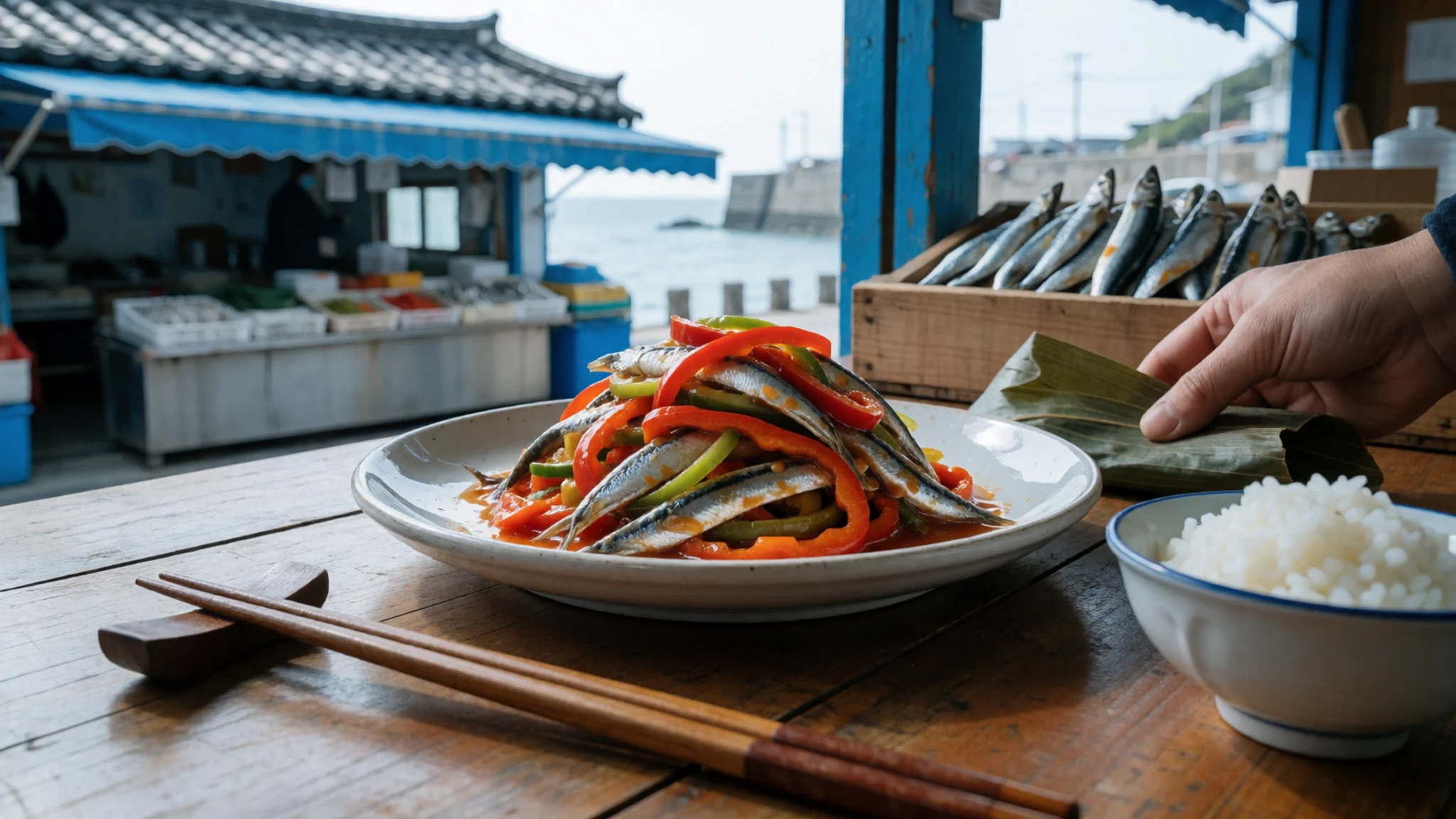
- Hoe (raw fish) — Harbour-side raw fish restaurants and small fish markets around the island
Thin slices of just-caught fish are served with leaf wraps, garlic, chilli paste and spicy soup made from the bones. Choices depend on the season and the day's catch, so ask what is local.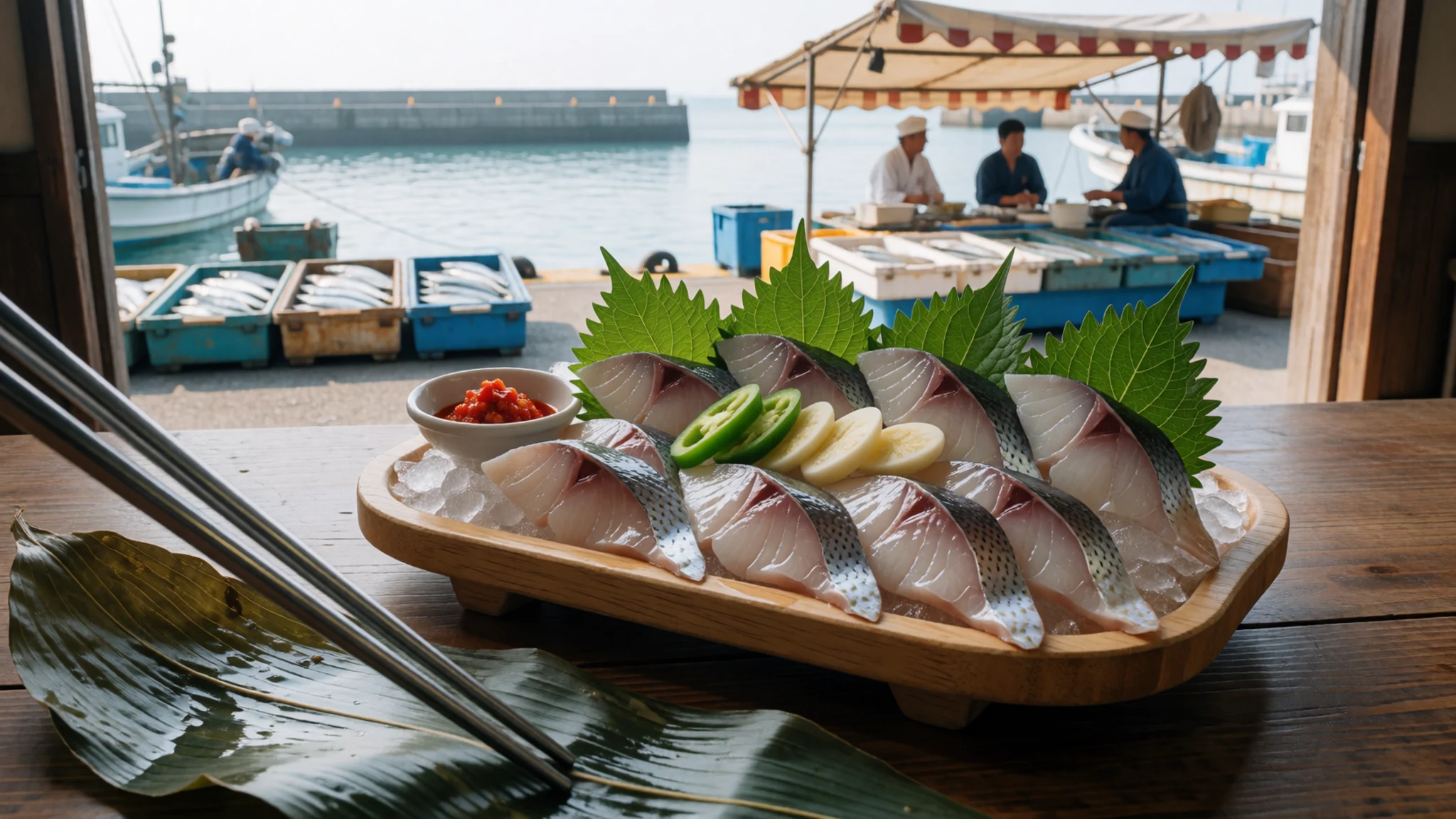
- Maneul (garlic) dishes — Family restaurants and farm shops across the island, especially in garlic-growing areas
Namhae is known for its garlic, which appears in pickles, grilled alongside pork, and in sauces and side dishes. It is milder and sweeter in the pickled form, and sharper when fresh. - Ssambap — Home-style eateries inland and on the farm roads
A spread of rice with fresh and blanched leaves for wrapping, along with fish or meat and bean or chilli pastes. Each guest assembles their own wraps and the table fills with small seasonal side dishes. - Yuja tea and citron sweets — Cafés, stalls and farm shops, particularly in autumn and winter
Citron is preserved in sugar or honey and served hot as a tea, or turned into jam and sweets. It is a warm, sharp-sweet drink that suits cool days on the coast.
Plan it
Best time. April–May and October–November are the comfortable months, with mild days and clearer air for hiking and coast walks. Summer is hot and humid with a rainy spell and occasional typhoons, while winter is cooler and quieter, with many beaches and shops closed.
How long. 2–3
Getting there. Fly into Busan's Gimhae International Airport (PUS), or to Sacheon airport (HIN) from Seoul Gimpo or Jeju. High-speed KTX trains link Seoul with Busan and other mainland stations, from where buses or taxis go to Namhae. The last leg is by road across the Noryang or Namhae Bridge, and a car is the easiest way to get between villages.
Budget. mid
Tips
- Hire a car if possible, since buses between villages are infrequent and timetables change; check locally before relying on them.
- Avoid public-holiday weekends and peak summer, when roads and car parks fill and accommodation is hard to find.
- Start hikes and hermitage visits early for cooler air, clearer views and fewer people.
- Carry some cash and a payment card, since small village eateries and stalls may only take one or the other.
- Check tide times before visiting the fishing weir, and look at the official county site for events and transport.
Etiquette
- Remove shoes before entering temple halls and many homes or guesthouses, and speak softly at religious sites.
- Stay on paths through the terraces and fields, which are working farmland.
- Ask before photographing farmers, fishermen, monks or worshippers.
Nearby
Sources
- Wikidata Q26123 (CC0)
- Wikipedia — Namhae County (rev 1376883868) (CC BY-SA 4.0)
- Wikivoyage — South Gyeongsang (rev 5250104) (CC BY-SA 4.0)
- Photo: German Village (Ulanwp) (CC BY 3.0)
- Photo: Noryang Bridge and Namhae Bridge aerial (Glabb) (CC BY 3.0)
- Photo: Geumsan of Namhae (Ryuch) (CC BY 3.0)
- Photo: Namhae High School and Idong Middle School (Chemsty) (CC BY-SA 4.0)
- Photo: In A Beautiful Place (Lee Kyeong Hwan) (CC BY 3.0)
- Photo: Korean garlic monument (sarang) (Public domain)
- Photo: Map Namhae-gun (CC BY 3.0)
- Photo: Namhae Fire Station (hyolee2) (CC BY-SA 4.0)


