Naejangsan
Naejangsan, South Korea
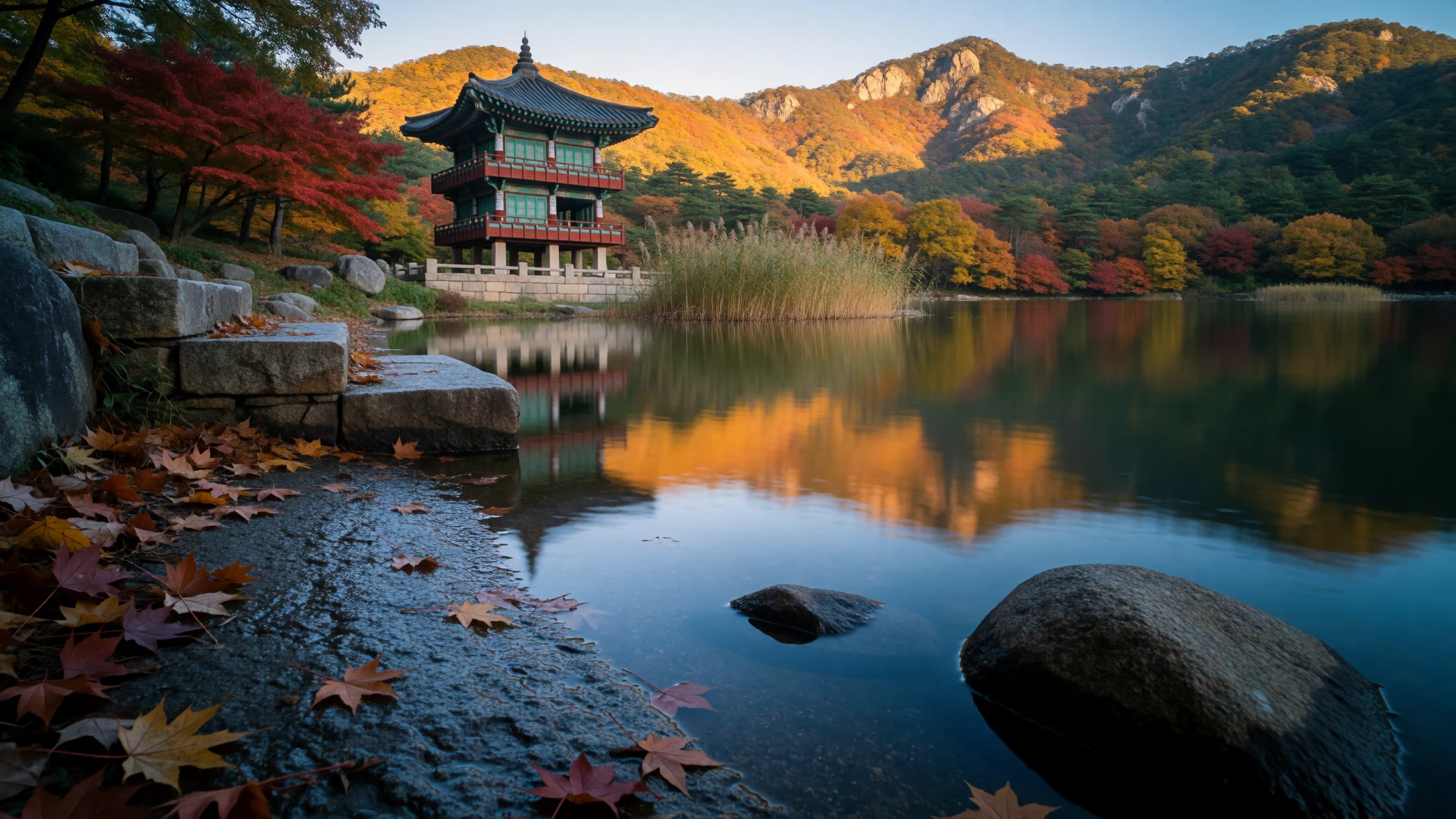
Naejangsan is a compact South Korean mountain park of lakeside paths, a working temple and forested ridges, loveliest when the maples turn.
The place
Naejangsan National Park lies mainly in North Jeolla Province in the south-west of South Korea, with part of it reaching into the Jeonnam-Gwangju area. The mountain that gives the park its name rises to 763 metres. That is modest beside Korea's grandest ranges, but it is enough for a ridgeline of rocky outcrops, steep wooded valleys and a network of trails that fan out from the main entrance. The park was designated in 1971 as the eighth national park in the country. Its species count is substantial for a small area: 919 plants and 1,880 animals, of which 12 are endangered. That makes it working habitat as well as a pleasant place for a walk. The character here is green, close-knit and easy to reach, more a mountain on the edge of farmland towns than a remote wilderness. Near the entrance a lake is edged by a pavilion, and the temple of Naejangsa sits in the valley below the peaks. Paths begin gently along the stream and then climb towards the ridge. Summers are warm and humid and winters are cold, so the seasons change the park's face completely. The busiest weeks come in autumn, when the entrance road, car parks and lakeside path fill with visitors. Weekdays and early starts are noticeably calmer.
Its story
Naejangsan has been valued as a mountain long before it became a national park. Korean mountains have traditionally been places of retreat, and Buddhist monasteries were built in their valleys for quiet and for water. The temple of Naejangsa belongs to that pattern, tucked into the folds of the range. The name itself is worth a moment. The Hanja characters (內藏山) can be read as something like the mountain that keeps things inside, which suits a range whose inner valleys open out only once the path turns past the first ridge. Modern protection came in 1971, when Naejangsan was designated the eighth national park in South Korea. That decision shifted the story from a regional pilgrimage and hiking spot towards formal conservation. Today the park's own figures show what is being looked after: 919 plant species, 1,880 animal species, and 12 animals counted as endangered. The designation also set the rhythm of visiting. Autumn leaf-viewing turned a quiet temple valley into a seasonal destination for families, school groups and walking clubs from across the country. The old and the new sit side by side: monks keeping their daily routines, rangers managing trails, and crowds arriving by the coachload when the colour peaks. Understanding the park means holding both pictures together, the contemplative mountain and the popular outing.
What to see
- Naejangsan Pavilion and the lake — Near the main entrance
The pavilion on the lakeshore is the park's easiest and most photographed viewpoint, with the mountains rising behind the water. It suits a slow first stroll, especially early in the day. In autumn the reflections of the changing leaves draw the biggest crowds, so arrive before the coaches.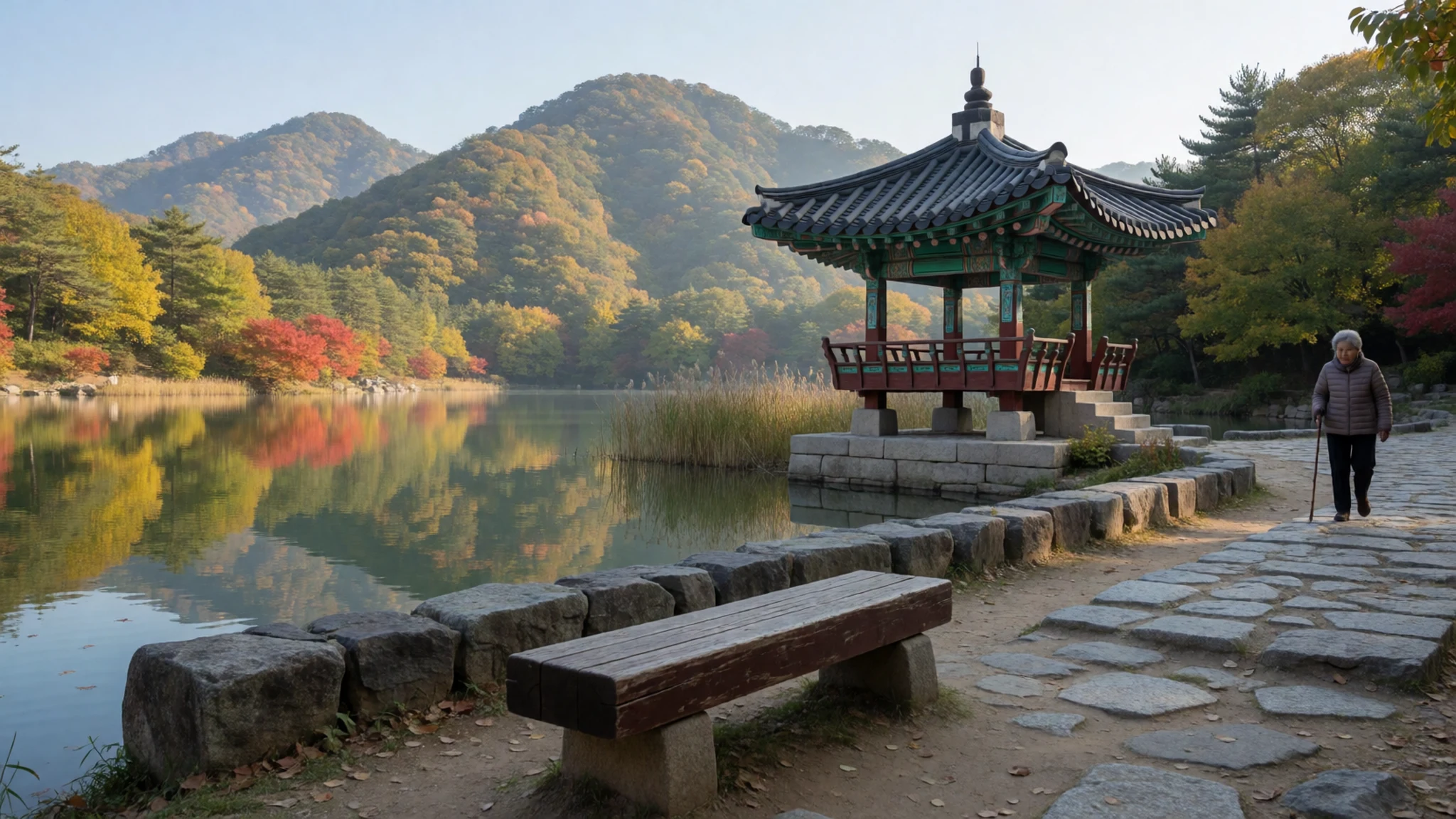
- Naejangsa temple — Valley below the main ridge
Naejangsa is the working Buddhist temple in the valley, with halls set among old trees and the peaks close behind. It is a place to walk slowly and listen for chanting or bells. Dress modestly, keep voices low, and treat it as a living religious site rather than a backdrop.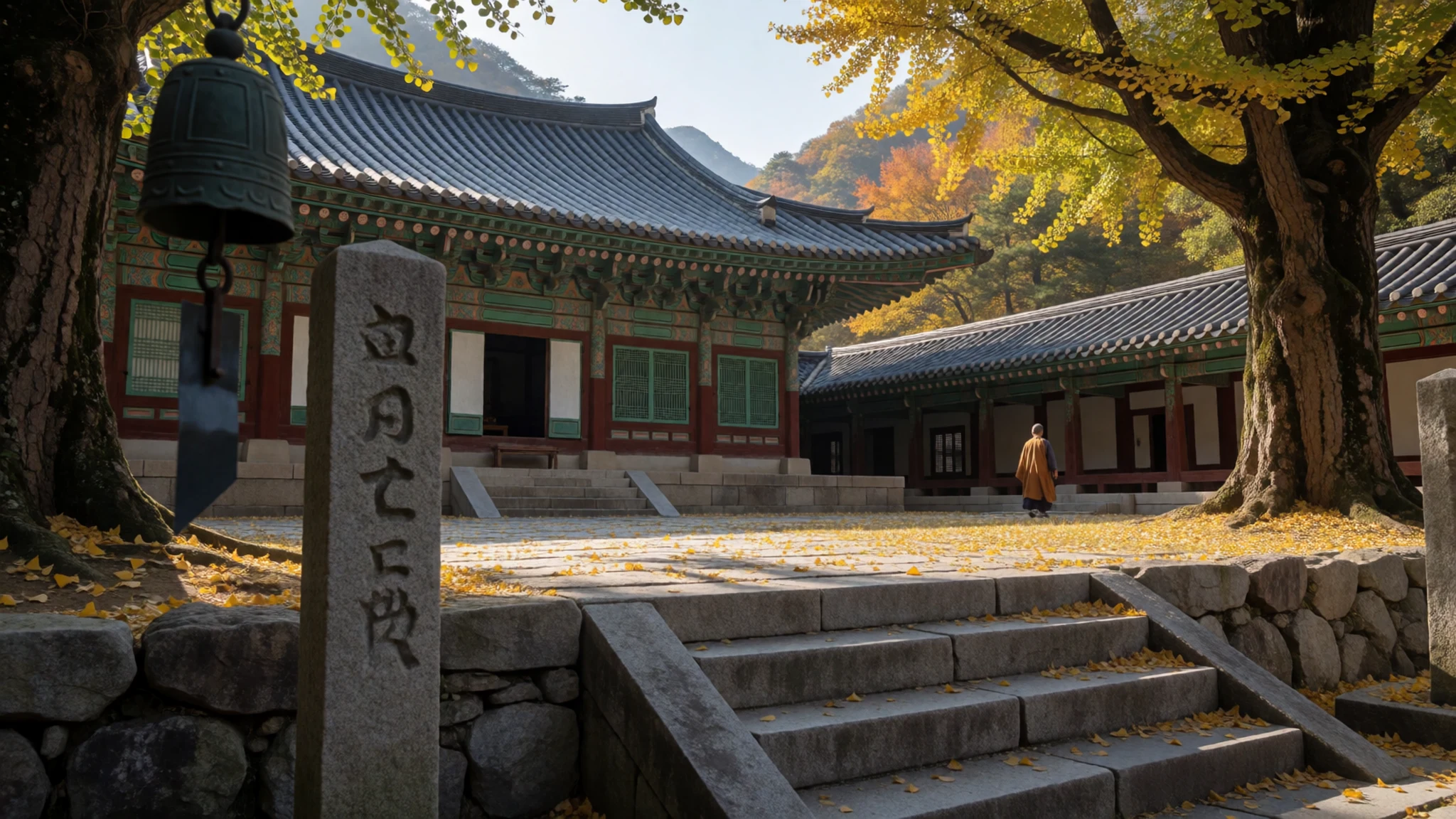
- The stream path from the entrance — Main entrance valley
The gentle trail beside the stream runs from the entrance area towards the temple and beyond. It is level enough for families and older walkers, shaded in summer and especially colourful in autumn. Allow time for pauses at bridges and bends, and expect company at weekends.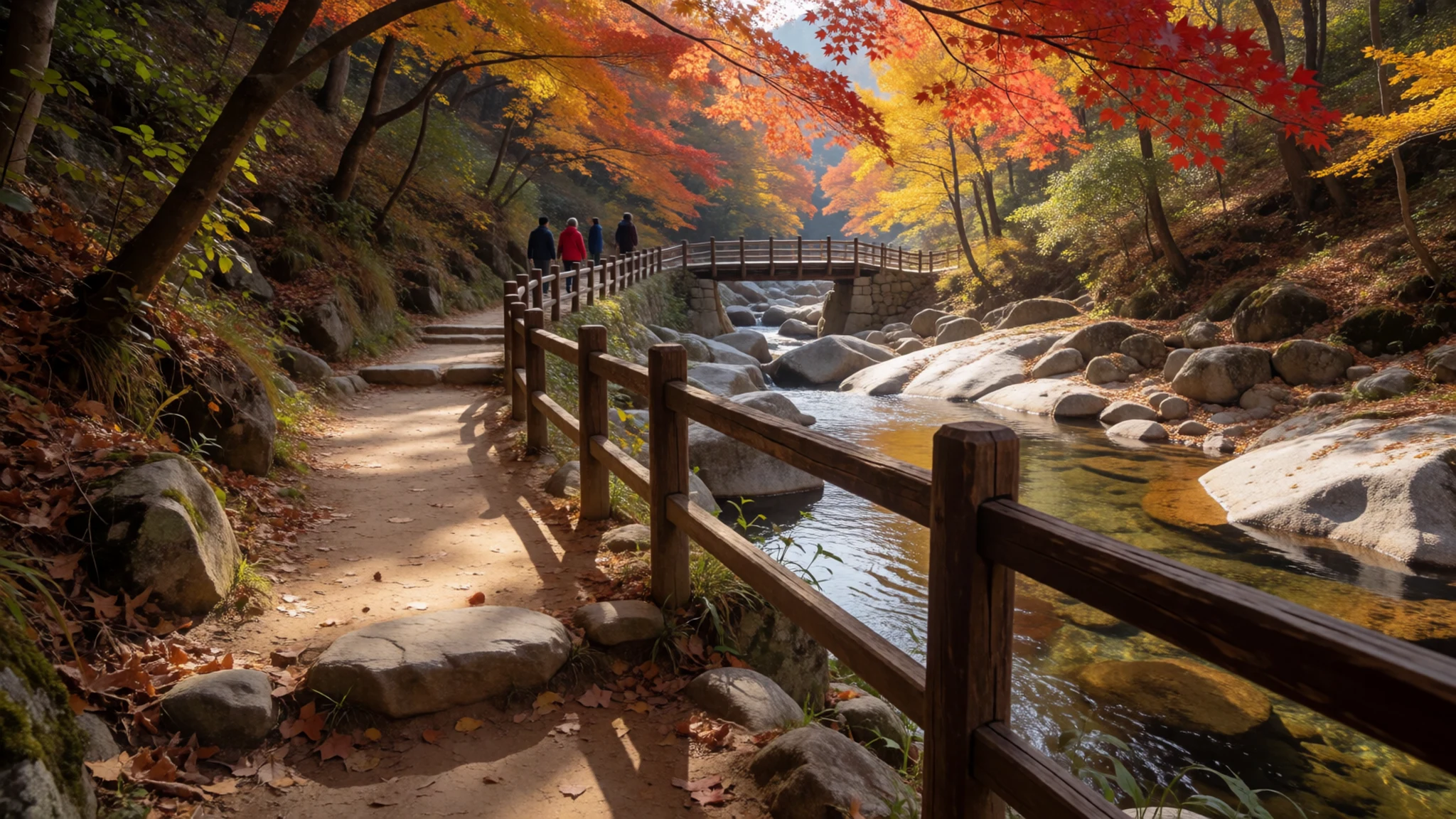
- The ridge trails — Upper park
For a harder walk, the trails climb to the rocky ridge around the 763-metre summit area. The reward is wide views over forest and farmland, with the temple valley far below. Paths can be steep and slippery after rain, so sturdy shoes and an early start matter. Check current trail openings with the park office.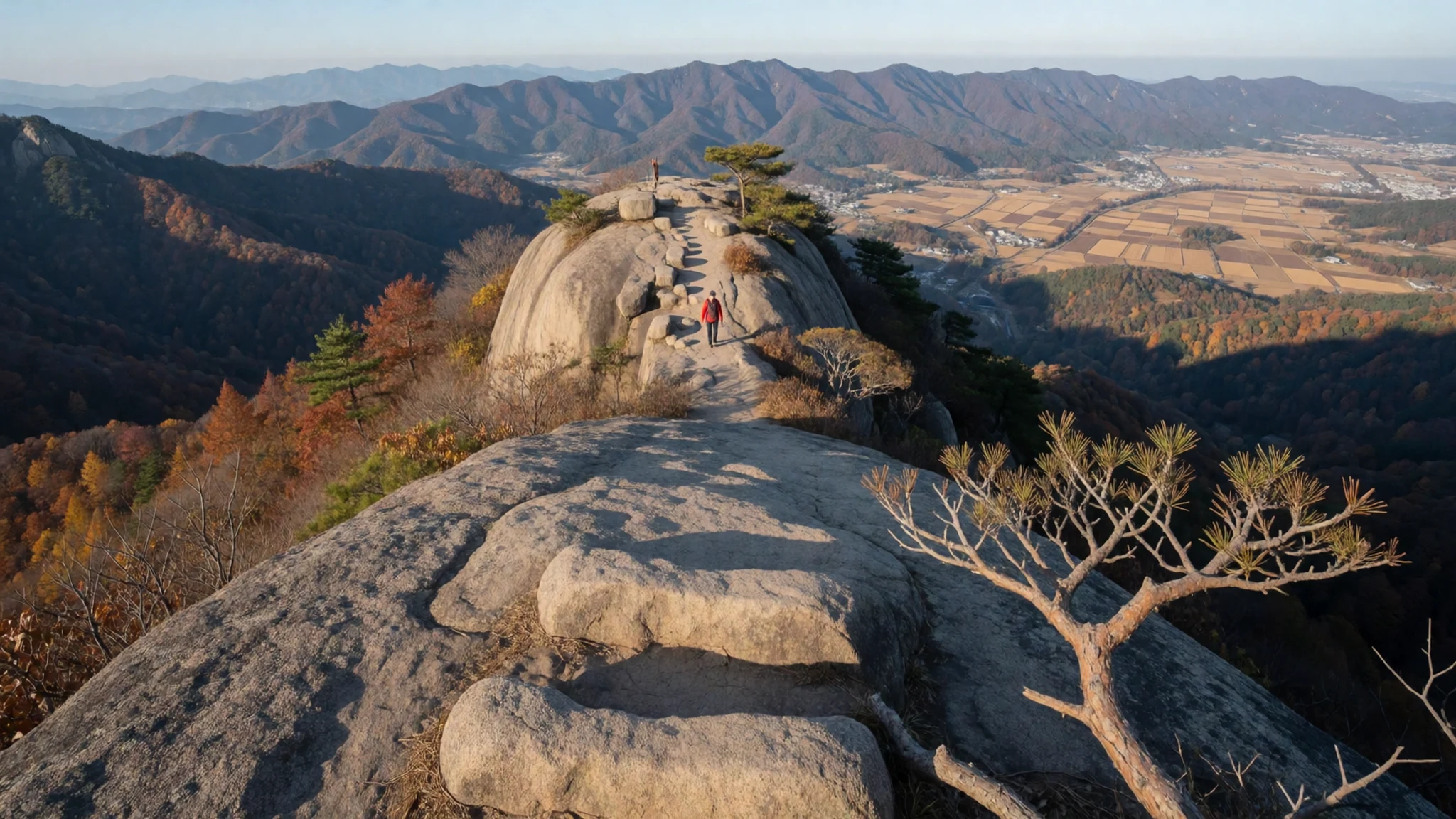
- Forest and wildlife walking — Side valleys and quieter trails
Away from the busiest paths the park's mixed woodland shows why the species count is so high: 919 plants and 1,880 animals are recorded here. Quiet weekday mornings give the best chance of birdsong and small wildlife. Stay on marked trails and leave plants and animals undisturbed.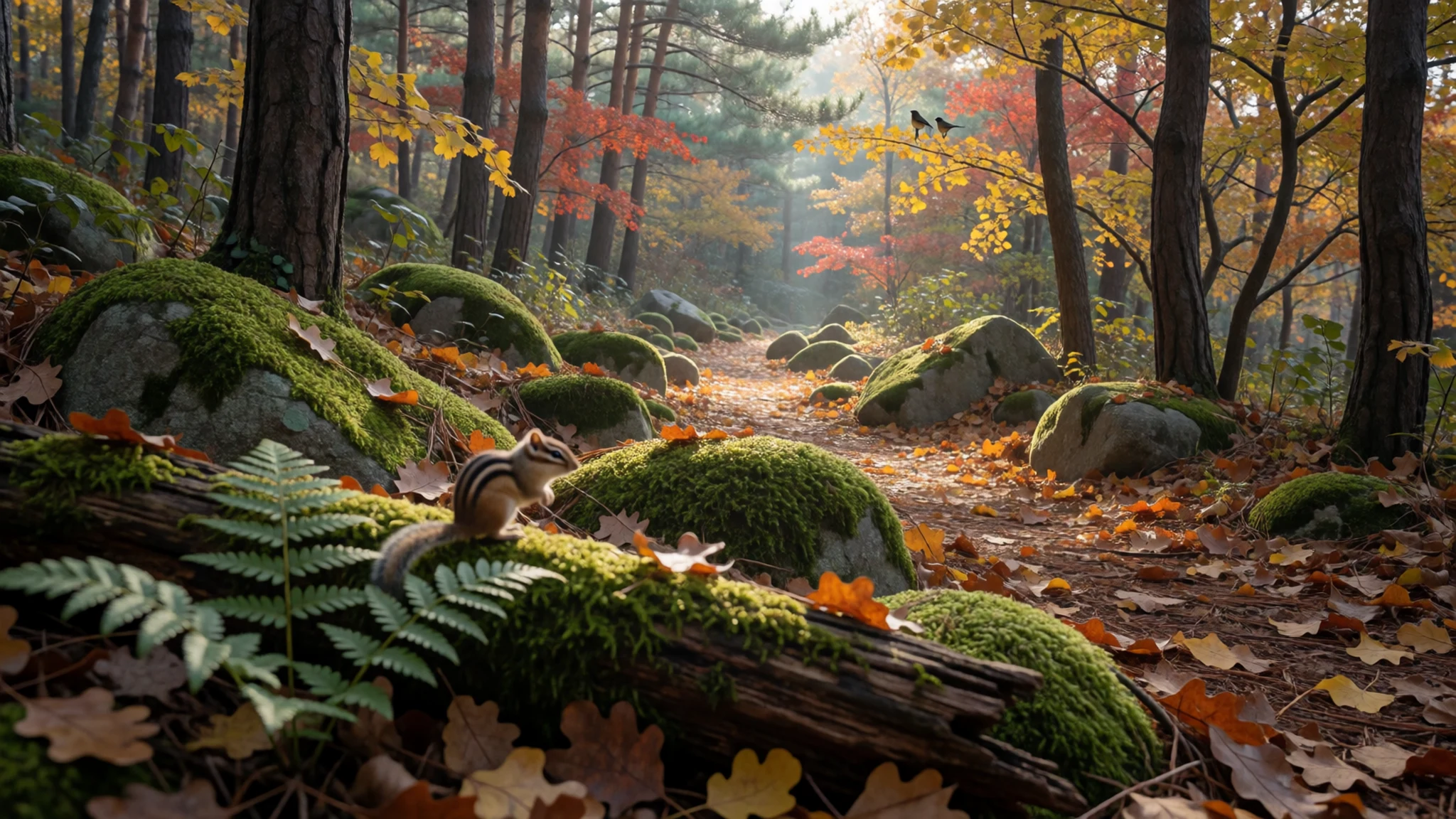
Culture
Naejangsan National Park sits within a culture where mountains are woven into daily life, leisure and belief. Walking in the hills, known as deungsan, is a popular national pastime, and groups in bright outdoor gear are a common sight on weekends. Many walkers bring a shared picnic of rice, kimchi and fruit, and a rest stop often turns into a long, sociable meal. Buddhism adds another layer. Naejangsa temple is a place of daily practice, and mountain temples traditionally offer a quiet refuge from town life. The courtyards, halls and stone lanterns are not exhibits but part of an active monastic routine. Autumn colour has its own cultural weight, and families, friends and office groups plan outings around the peak weeks, which is why the park can feel like a festival on busy weekends. Many visitors also stop at the small food stalls and tea houses near the entrance, a long-standing habit after a walk. Respect for older walkers is the unspoken norm on the trail, and a brief nod or a greeting as people pass is common. At the temple, keep your voice low, step quietly past anyone praying, and remove your shoes before entering any hall where shoes are left outside.
What to wear
Naejangsan National Park is a place for outdoor clothes rather than costume, but Korea's traditional dress, the hanbok, is part of the wider culture. The hanbok is a two-piece garment, a short jacket with a long wrapped skirt for women and a jacket with loose trousers for men, historically made in silk, ramie and hemp, with cotton for everyday wear. It is now worn mainly for weddings, festivals and national holidays, and in some areas visitors can hire one for photographs. On the trails, the fashion is unmistakably technical. Walkers favour bright jackets, quick-dry layers, trekking trousers, visors and sturdy boots, and coordinated group colours are a familiar sight at weekends. In autumn the park itself almost becomes a catwalk of reds, oranges and blues. A visitor should dress for the weather and terrain first. Wear layers, because mornings are cool and the ridge is windier than the valley, and add a waterproof for the rainy months. Footwear with real grip matters on stone steps and wet rock, and trainers are fine only for the lakeside and stream paths. For the temple, cover shoulders and knees and avoid very short or sleeveless clothing. Slip-on shoes are handy where footwear must come off. In winter, add a warm hat, gloves and a windproof outer layer.
What to eat
- Sanchae bibimbap — Eateries near the park entrance
Rice topped with seasoned mountain greens and vegetables, mixed with chilli paste. It is a natural meal after a walk. Look for it at the simple family-run eateries in the village near the park entrance.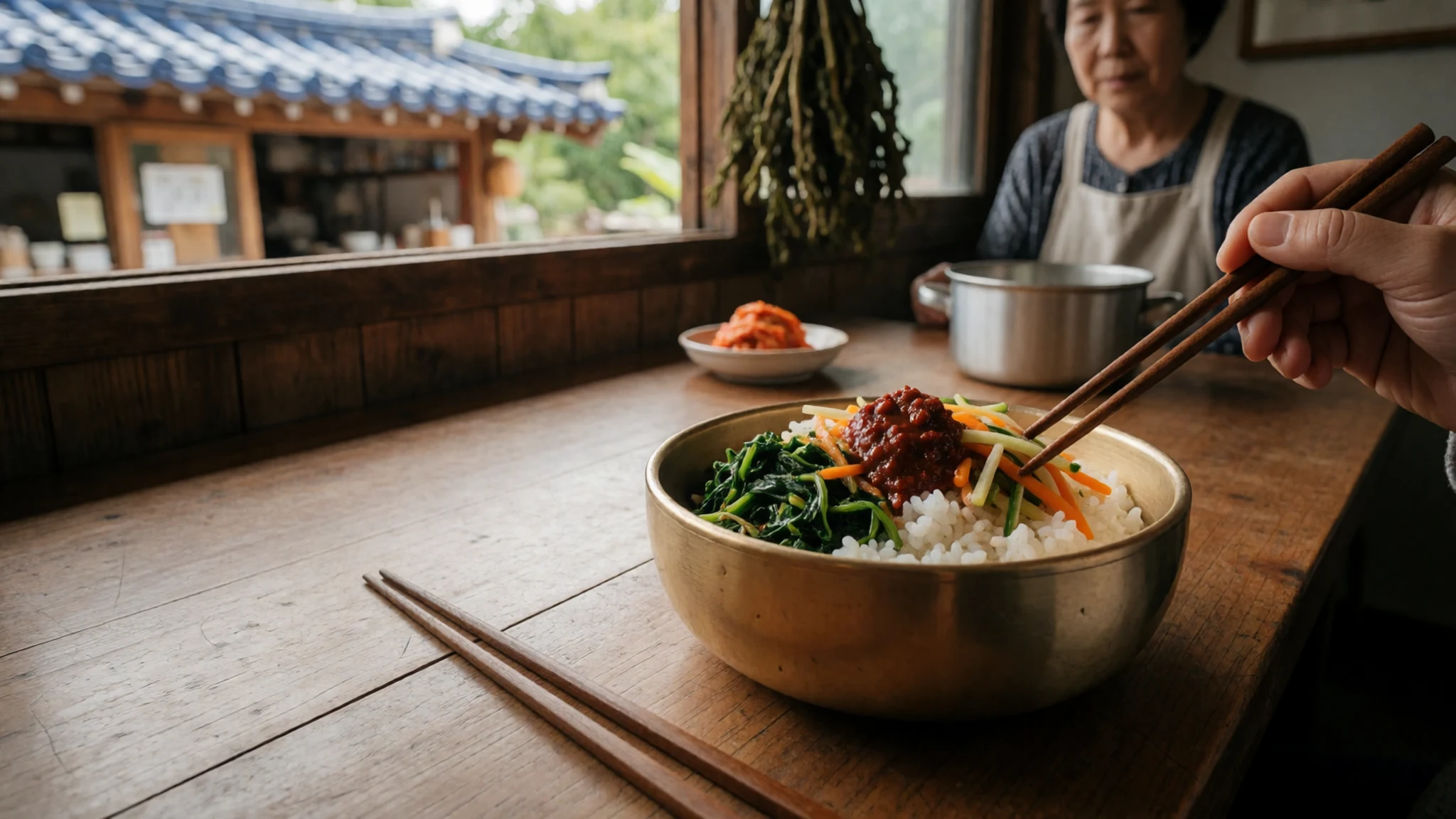
- Pajeon — Casual restaurants near the entrance
A savoury pancake of spring onion, often with seafood or vegetables, crisp at the edges and soft inside. It is usually shared and goes well with rice wine. Look for it at casual restaurants and roadside stalls on the approach to the park.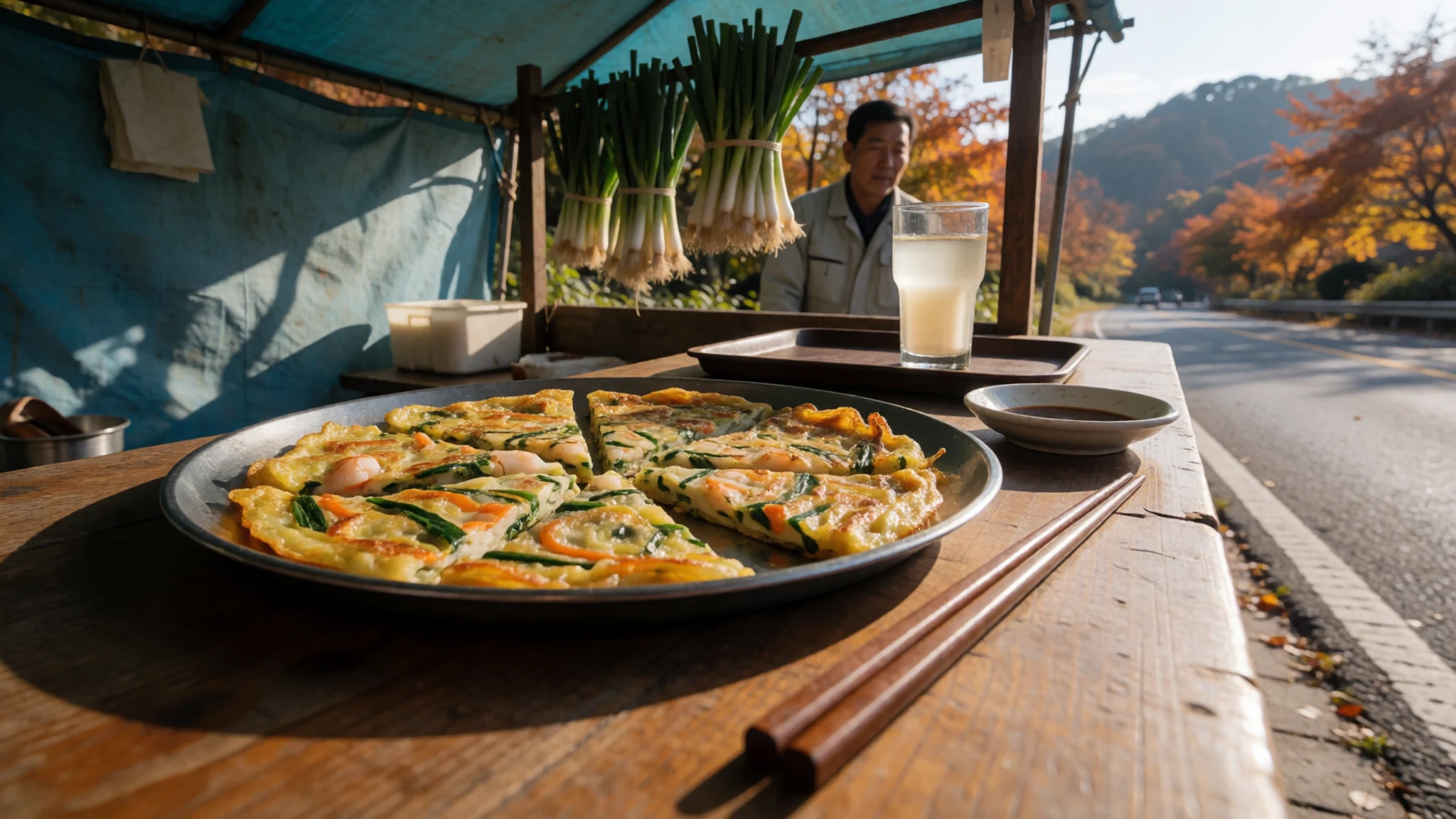
- Dotorimuk — Village restaurants around the park
A soft, lightly earthy jelly made from acorn starch, served in a seasoned sauce or in a cold salad. It is a traditional mountain-village food in Korea. Ask for it at restaurants serving hill-country dishes near the park. - Kimchi and banchan spreads — Traditional restaurants in nearby towns
A Korean meal arrives with many small side dishes, led by kimchi in the regional style. North Jeolla is widely regarded as a strong food region, so even a plain set meal is worth attention. Any traditional restaurant in the nearby towns will serve it. - Roasted chestnuts and seasonal snacks — Stalls along the entrance approach
In autumn, stalls near the entrance sell warm roasted chestnuts and other seasonal snacks, handy fuel for lakeside strolls. Carry some cash for small stalls, and take wrappers with you rather than leaving them on the trail.
Plan it
Best time. October and early November for autumn colour, though this is also the busiest period; April and May for fresh green leaves and milder crowds. Summer is warm and humid with rain, and winter is cold, so trails can be icy.
How long. 1–2
Getting there. Fly into Incheon (Seoul) or Gwangju, or take the high-speed KTX train towards Jeongeup. From the station, local bus or taxi takes you to the park entrance. Check current timetables with Korail and the Korea National Park Service before travelling.
Budget. low
Tips
- Visit on a weekday or arrive early in autumn, as weekends and peak leaf weeks bring heavy crowds and busy car parks
- Carry some cash for small stalls and eateries near the entrance, and check the official park site for current trail and facility information
- Bring water and a rain layer, and wear shoes with grip for the ridge trails
- Allow extra time for the stream path and lake, as most people linger there
Etiquette
- Remove your shoes where they are left outside temple halls, and keep your voice low at Naejangsa
- Stay on marked trails and carry your rubbish out
- Greet or nod to walkers you pass on narrow paths, and give way to those climbing
Nearby
Sources
- Wikidata Q6958106 (CC0)
- Wikipedia — Naejangsan National Park (rev 1364785949) (CC BY-SA 4.0)
- Wikivoyage — Naejangsan National Park (CC BY-SA 4.0)
- Photo: Naejangsan Pavilion 3, Tung Thanh Dang, via Wikimedia Commons (CC BY 3.0)
- Photo: Najaengsan, Café Bene, via Wikimedia Commons (CC0 1.0)

