Nadi
Nadi, Fiji
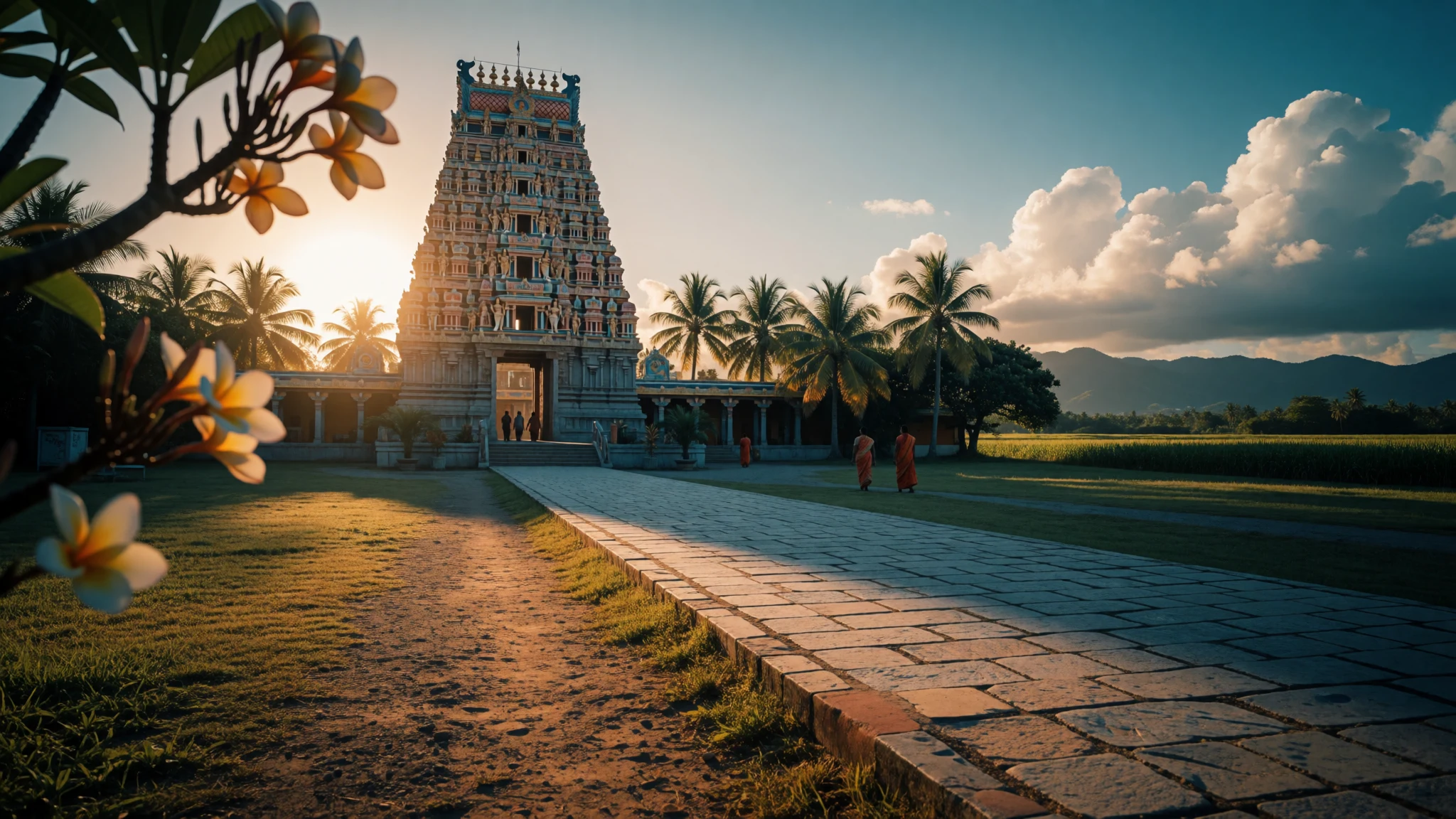
Nadi is Fiji's gateway town, where a vivid Hindu temple, a busy market and sugar-cane country sit minutes from beaches and mud pools.
The place
Nadi sits on the western, drier side of Viti Levu, Fiji's main island, at about 10 m above sea level, with a population of 71,048. Only Suva and Lautoka are bigger. For most visitors it is the first place they touch down in Fiji, because the international airport lies about 9 km outside town. The airport was built here rather than in the capital partly because the west gets less rain.
The town's character comes from its mix of people. Indigenous Fijians and Indo-Fijians, whose families arrived in the colonial era, live side by side, and a steady stream of travellers passes through. That shows in the streets: Hindi and Fijian are both heard, saris hang in shop windows, and a Hindu temple of Dravidian design dominates the skyline. Sugar cane and tourism carry the local economy, and the cane fields begin almost at the edge of town.
Queens Road is the spine of Nadi. It carries the traffic, the shops and most of the noise, and it links the town to the rest of Viti Levu. Shopkeepers along it are keen to draw passers-by inside, and a smiling 'no, thank you' usually settles the matter. Much of the area's accommodation lies beyond the centre, with beach strips to the north and the resort island of Denarau to the west.
Nadi is best understood as a base and a crossroads rather than a polished destination. It is warm and humid all year, a little scruffy in places, and unhurried. A day or two here brings good food, temples and easy day trips; as a mere airport stop, it feels like exactly that.
Its story
Nadi owes its modern shape to the twentieth century. In the Second World War the United States Navy built a base here, part of a wider naval presence in Fiji. Nadi Township was formally established in 1947. Around then the colonial government placed its offices on higher ground, shops and businesses gathered nearby to serve the officials, and firms from other parts of Fiji soon followed.
Flooding was the town's recurring worry. The original centre stood on land prone to water, and some concerned residents tried to shift the town centre to Martintar. The plan went nowhere: Nadi had already put down too many roots where it stood, and the low-lying centre is still worth remembering in the wet season.
Self-government arrived in stages. An elected Township Board was introduced in 1967, with Dr A. H. Sahu Khan as its first chairman. Under the Local Government Act of 1972 the board became a Town Council, and H. M. Lodhia served as the first mayor. Elected municipal government has since been suspended across Fiji, and appointed administrators now carry out the council's duties.
The wider story is one of migration and farming. Sugar cane tied the district to Indo-Fijian families whose labour built the industry, which explains why a large Dravidian temple stands in a town on a Pacific island. Sri Siva Subramaniya Temple is, in effect, the clearest physical record of that history, and it sits just a short drive from the cane country that brought those families here.
What to see
- Sri Siva Subramaniya Temple — Southern edge of Nadi town
Nadi's Hindu temple is built and carved in the Dravidian tradition and is probably the most visible monument in town, with colourful figures stacked in tiers above the gateway. Wikivoyage counts it among the largest Hindu temples south of the equator. It is a working place of worship and pilgrimage, so visits fit around ceremonies.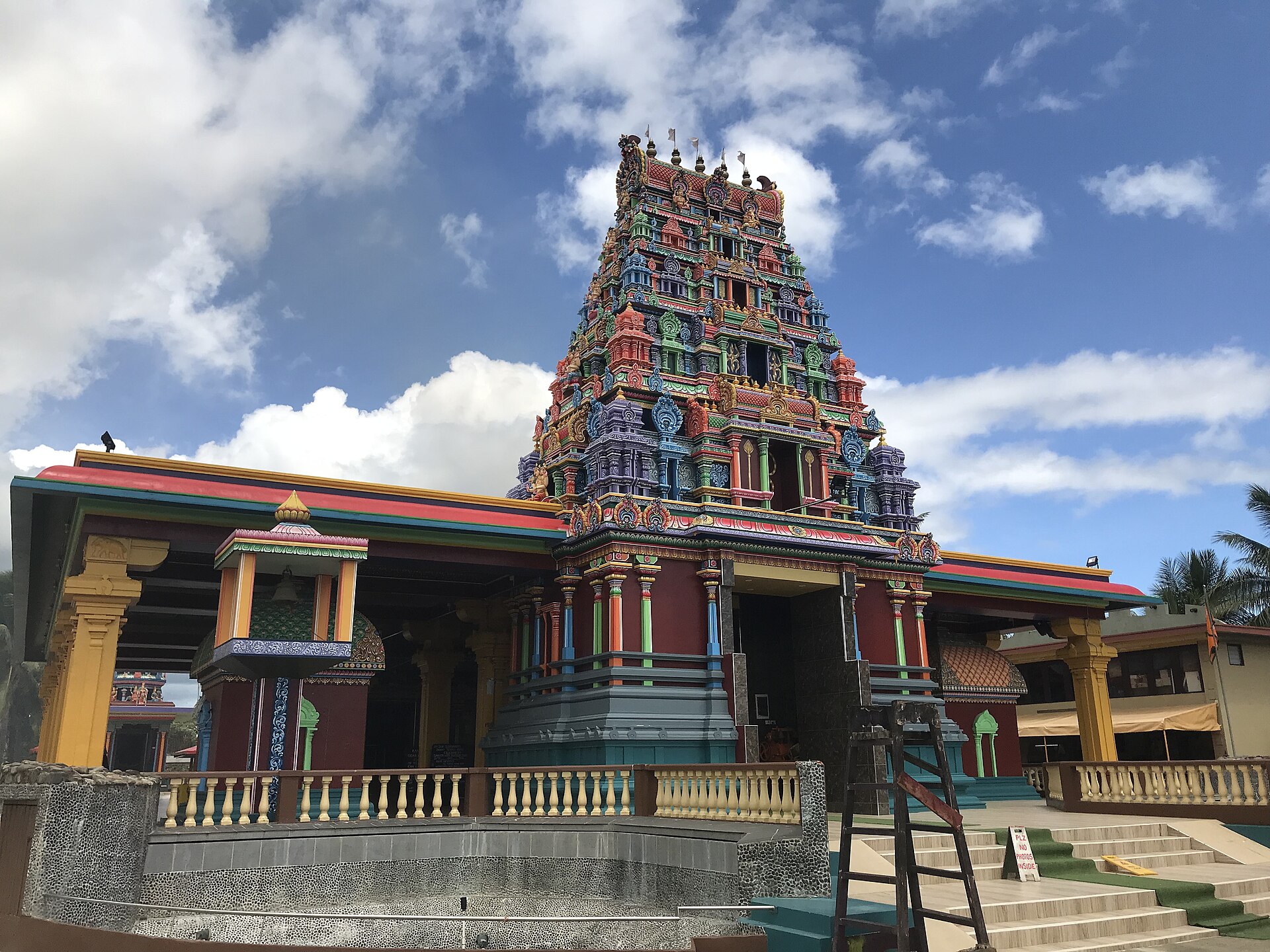
- Garden of the Sleeping Giant — Hills north of Nadi
The Garden of the Sleeping Giant began as a private nursery for tropical orchids, started by the Hollywood actor Raymond Burr. It remains a good stop for plant lovers, with flowering beds under the ridge that gives it its name. Opening hours and entry fees change, so check the garden's official channels first. - Sabeto Hot Springs and Mud Pool — North of Nadi, near the garden
Sabeto is a hands-on stop: visitors smear themselves with warm mud, let it dry in the sun, then rinse off in a series of pools. It is messy, a little silly and enjoyed by children and adults alike. Bring swimwear, a towel and a bag for wet clothes. - Wailoaloa Beach — North of the town centre
Wailoaloa Beach runs for about 3 km north of the centre, lined with resorts and beach clubs. It suits a swim or a sunset walk close to town, though it is a convenience beach rather than a remote one. The clearer lagoons that appear on Fiji's postcards are mostly on the outer islands. - Nadi market and Queens Road — Town centre
The market and the shops along Queens Road are where daily life in Nadi is easiest to read: heaped produce, spices, the chatter of vendors and buses grinding past. Mornings are cooler and livelier. Shopkeepers will invite visitors in, so a friendly refusal and an unhurried walk work well. Carry small notes.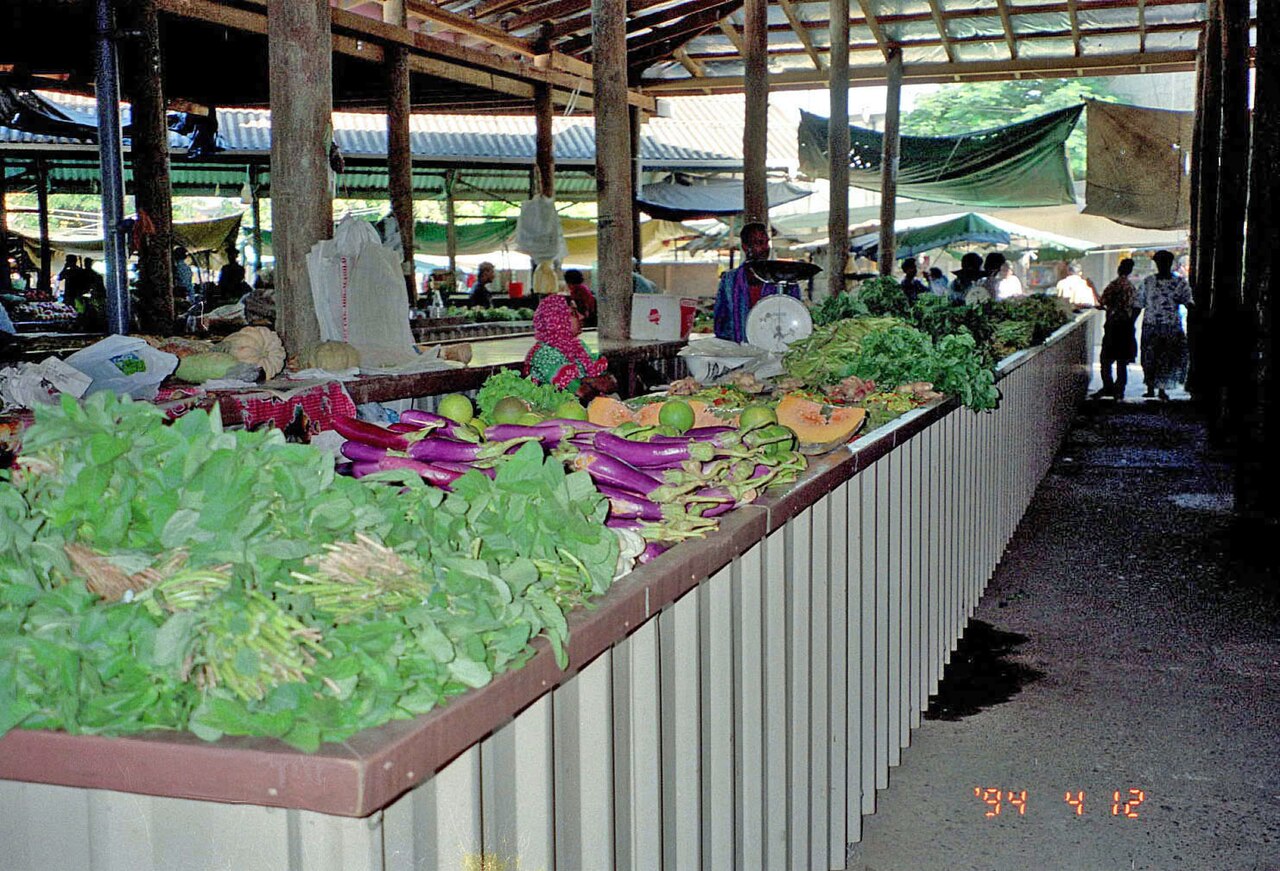
Culture
Nadi's culture is a meeting of two main communities, Indigenous Fijian (iTaukei) and Indo-Fijian, with a constant background of visitors. Hindu festivals, temple bells and Hindi film songs share the town with church choirs and Fijian greetings. A cheerful 'bula' is the standard hello to everyone, from shopkeepers to strangers on the pavement.
Family and community obligations carry weight in both traditions, and hospitality is generous. Among Fijians, kava (yaqona), a mildly numbing drink pounded from a dried root, sits at the centre of ceremony. A village visit traditionally opens with a gift of kava root presented to the chief, a custom known as sevusevu, and good tour operators arrange this properly. Among Indo-Fijians, Diwali, the festival of lights, is the great celebration of the year, and sweets, lamps and new clothes fill the shops beforehand.
Rugby is the shared passion, and a match on a television in a roadside eatery draws a crowd quickly. Religion is visible everywhere: Hindu temples, mosques and churches stand within a short drive of one another, and Sunday is quiet in many Fijian communities. Life runs on what locals call 'Fiji time', which means buses, meals and appointments are unhurried, and patience is rewarded far more than pushing.
Remove your shoes and cover your shoulders and knees before entering Sri Siva Subramaniya Temple, and ask before photographing worshippers.
What to wear
Traditional dress in Nadi draws on two heritages. For Fijians, the sulu is a wraparound cloth worn by men and women, and the formal tailored version for men, with a zigzag hem, is worn with a shirt and jacket at church, weddings and official occasions. Masi, a bark cloth made from paper-mulberry and stamped with black and brown geometric patterns, appears at ceremonies, and woven pandanus mats called ibe are tied at the waist for formal events. Indo-Fijian women wear saris in silk or cotton for festivals and weddings, and shalwar kameez and kurtas for daily and temple wear.
What people actually wear now is lighter and easier. Bright floral 'bula' shirts are smart wear for men, including in offices and on Sundays. Women often wear the sulu jaba, a matching tunic and skirt, which also appears in uniforms. Elsewhere, T-shirts, shorts, school uniforms and flip-flops fill the streets, because the weather is warm and humid for most of the year.
Visitors should pack light cotton or linen that dries quickly, a sun hat and sunscreen, plus a rain layer for the wet season. Swimwear belongs on the beach and at the resort, not in town. Cover shoulders and knees for the temple and for any village visit, and take hats and sunglasses off when entering a village, where wearing them is considered rude. Slip-on sandals are practical for temples, and sturdier shoes help at the muddy pools.
What to eat
- Kokoda — Fijian restaurants and café menus around Queens Road and the resort strip
Kokoda is raw fish cured in lime juice, then folded into coconut milk with chilli, onion and tomato. It is cool, sharp and creamy, and suits the heat well. Often served in a coconut shell or a small bowl as a starter. - Lovo — Village visits, family gatherings and resort feast nights
A lovo is an earth-oven feast: root crops, meat and fish wrapped in leaves and cooked slowly over hot stones. The result is smoky and tender. It is a communal dish, usually made for celebrations or served on organised feast nights. - Curry and roti — Indian eateries and dhabas along Queens Road
Indo-Fijian curries, of fish, goat, chicken or vegetables, come with soft roti or rice. Spice levels are generous and the cooking is home-style. Ordering at a simple local eatery tends to give the most authentic plate. - Rourou and dalo in coconut milk — Nadi market stalls and Fijian restaurants
Rourou is taro leaf slowly cooked in coconut cream until soft and rich, often served beside boiled dalo (taro root) or cassava. It is gentle, earthy comfort food, and the ingredients are sold fresh at the market. - Samosas, bhajia and Indian sweets — Sweet shops and bakeries near the bus station and main street
Fried samosas and vegetable bhajia make a cheap, quick snack, and glass cases of jalebi and gulab jamun round it off. Sweet shops get especially busy before Diwali. Fresh coconut water from a roadside seller is a good drink to go with them.
Plan it
Best time. July–August, the short dry season, is the most comfortable time for sightseeing and the beach. The rest of the year is a long wet season, hot and humid, though Nadi gets noticeably less rain than Suva on the windward side of the island.
How long. 2–3
Getting there. Nadi International Airport is about 9 km from town and is Fiji's main arrival point; the last leg is a short taxi or local bus ride. From Suva, Nadi is about four hours by bus or about three by taxi, with buses stopping at the Nadi bus station.
Budget. mid
Tips
- Carry water and seek shade through the middle of the day; the climate is warm and humid even on the drier west side of Viti Levu
- Go to the market and temple in the morning, when it is cooler and quieter
- Keep small cash for market stalls, buses and snacks, and keep valuables out of sight; crime is mostly petty but scams and pickpocketing do happen
- If driving, watch for large potholes on smaller roads around the edge of town
- Check official sites or notices for opening hours and fees at the garden, temple and tour operators before travelling out
Etiquette
- Remove shoes and cover shoulders and knees at the temple, and ask before photographing worshippers
- Take hats and sunglasses off in a Fijian village and follow your host's lead on sevusevu
- Politely decline shop invitations on Queens Road with a smile; a firm but friendly 'no, thank you' is enough
Nearby
Sources
- Wikidata Q619443 (CC0)
- Wikipedia: Nadi (rev 1377779801) (CC BY-SA 4.0)
- Wikivoyage: Nadi (rev 5412069) (CC BY-SA 4.0)
- Photo: Aerial view of Nadi (Henning Blatt) (CC BY 3.0)
- Photo: Map of Viti Levu (Kelisi) (CC BY-SA 4.0)
- Photo: Sri Siva Subramaniya temple (Enzino) (CC BY-SA 4.0)
- Photo: Tarsealed road outside Nadi (Jaejay77) (CC BY-SA 4.0)
- Photo: Market at Nadi town (Ik T) (CC BY 2.5)
- Photo: Market at Nadi town (Ik T) (CC BY 2.5)
- Photo: Viti Levu on approach to Nadi Airport (Maksym Kozlenko) (CC BY-SA 4.0)
- Admiralty chart No. 799, Nandi Waters (UK Hydrographic Office) (Public domain)


