Taveuni
Taveuni, Fiji
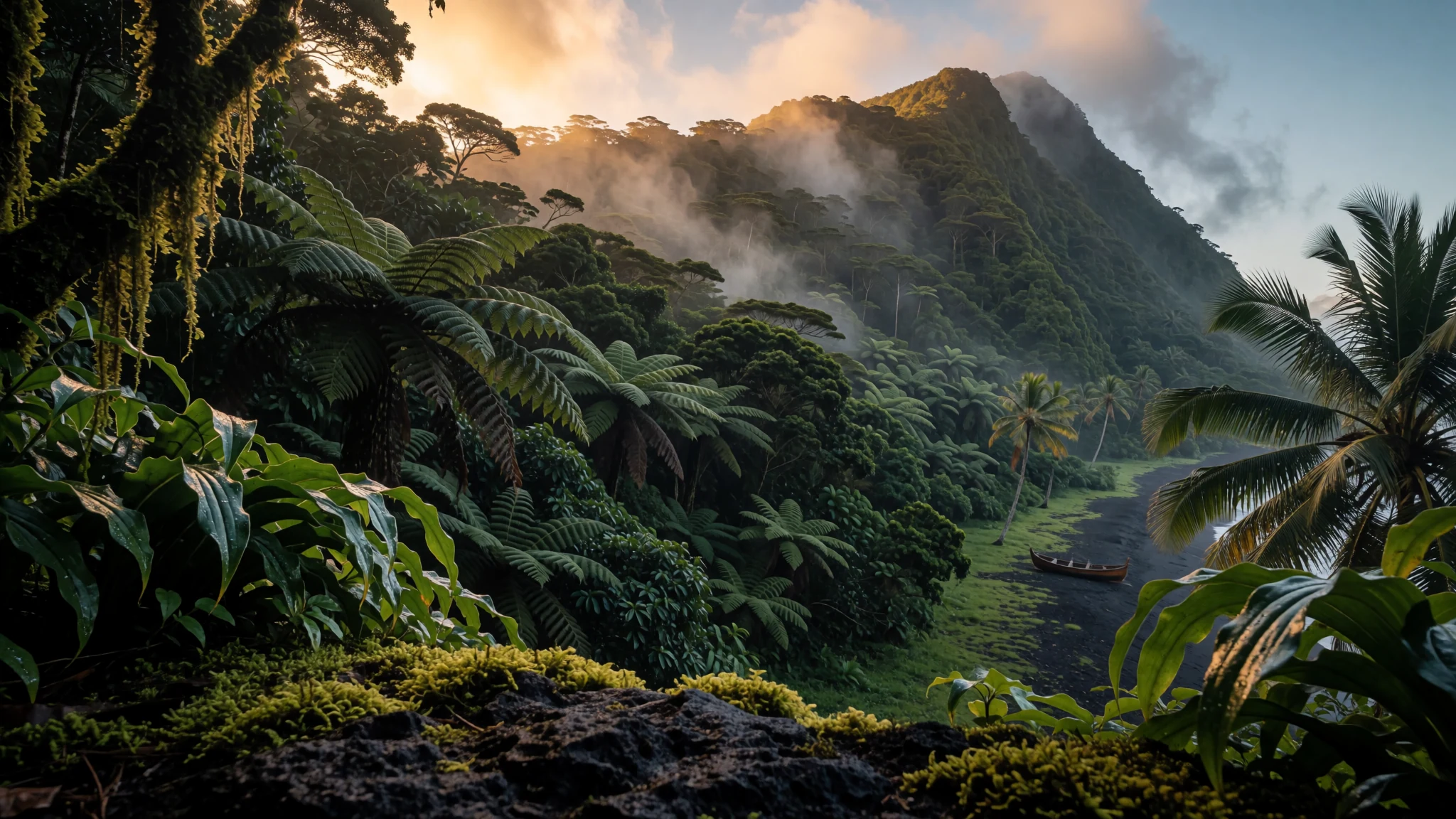
Taveuni, Fiji's Garden Island, is a green volcanic rainforest island where the 180th meridian runs right across the land.
The place
Taveuni is the third-largest island in Fiji, a long, cigar-shaped island lying east of Vanua Levu across the Somosomo Strait. The whole island is volcanic. It is the top of a dormant shield volcano that rose from the floor of the Pacific along an undersea rift, so the landscape is steep, green and broken by cones. About 150 volcanic cones dot the island. The highest, Uluigalau, reaches 1,241 metres and is Fiji's second-highest peak, with Des Vœux Peak close behind. Rainforest covers much of the interior, and the land falls to the coast in a patchwork of villages, gardens and small bays.
Most people live along the coast and on the flatter ground, and the great majority are indigenous Fijian. Farming has shaped daily life for a long time. Copra was the old mainstay, and today taro, kava, vanilla, coffee and tropical fruit fill the fields. Tourism is a newer layer, carried by a handful of small resorts, and most visitors stay at one of them. The island has a single airport, Matei, and everything else arrives by ferry from Vanua Levu. Travel here runs at a slower pace than on the main islands, with few cars, long quiet evenings and a strong sense of community. Rain can arrive quickly in the hills, so walks often turn to mud, and the calm rhythm of village life is part of the appeal.
Its story
Taveuni's written history begins with a mistake of sight. In 1643 Abel Tasman became the first European to see the island, but poor visibility made him take its peaks for several separate islands. People had settled here long before that. The first settlement dates to around 950 to 750 BC, and the island has seen at least 58 volcanic eruptions since. The major eruptions between 300 and 500 AD made the southern areas uninhabitable until about 1100 AD, and the latest lava flow to reach the southern tip came around 1550.
Power on the island moved over the centuries. Vuna was the paramount village while the Tui Cakau lived there, but warfare between chiefdoms eventually gave supremacy to Somosomo. The 1860s brought a sharper episode. Enele Ma'afu, a Tongan leader who had conquered much of the Lau Islands, was not behind a raid on Golea, which his lieutenant launched without his approval. The fighting ended on the beach at Wairiki, where Ma'afu's lieutenant Wainiqolo was shot dead and the Tongans were slaughtered. Ma'afu was in Tonga at the time, and historians generally conclude he was not part of the plot. He was angry enough with Wainiqolo to strip him of his land.
Later, outside demand reshaped the economy. Cotton was raised here and exported to Europe during the American Civil War, and sugar was grown briefly. Copra then became the staple crop, and the coastal villages and their land arrangements still reflect that long plantation history.
What to see
- The 180th meridian marker — East coast
A marker on the island commemorates the 180th meridian, the line where the calendar day changes. The date line once ran straight through Taveuni, but it was adjusted so the island would not be split into two different days. The spot is a short photo stop rather than a day out, so combine it with a drive along the east coast. Expect a small crowd of visitors at midday, when the light is strongest.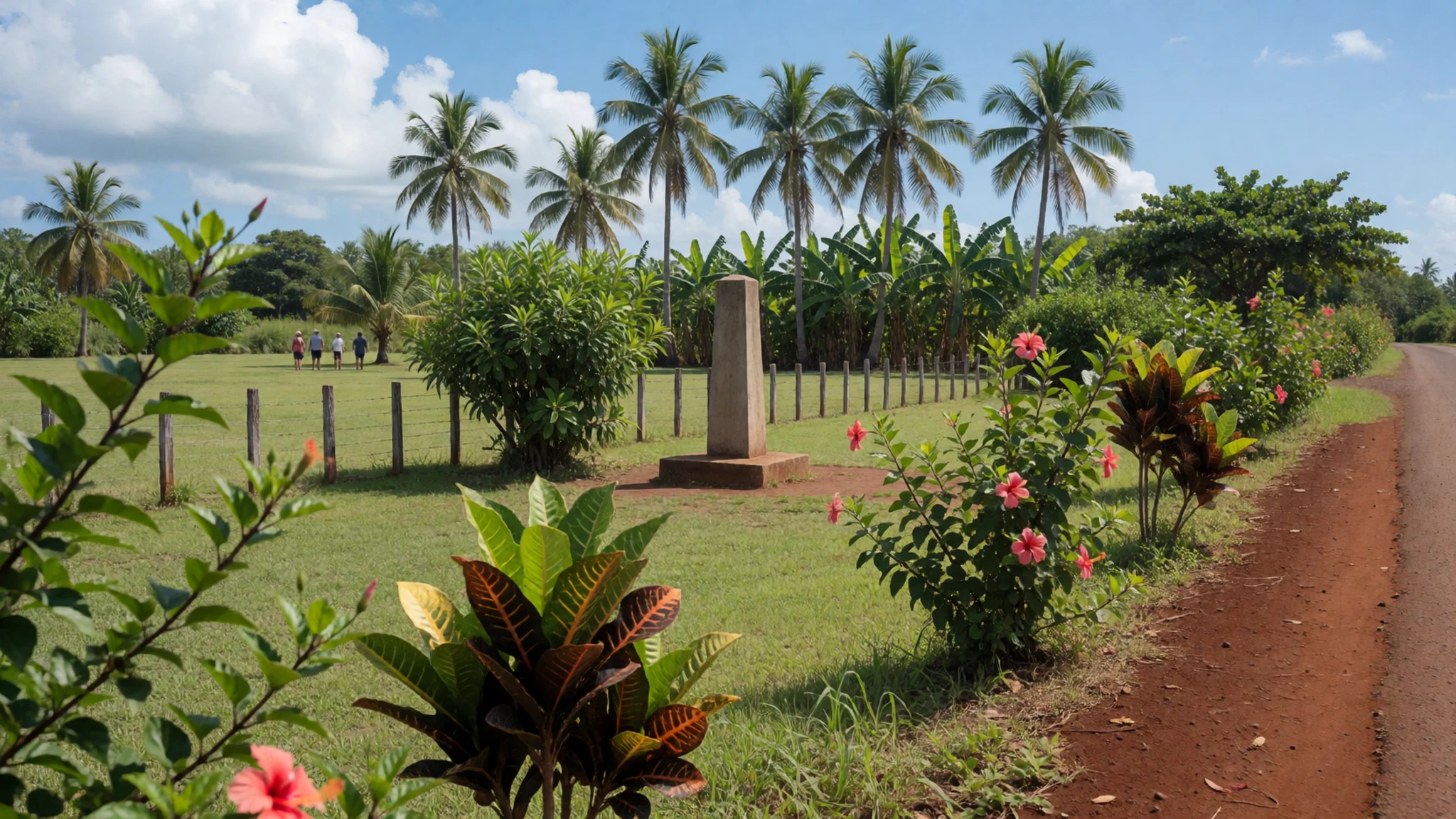
- Qeleni Village — Lower highlands
Qeleni Village is an eco-tourism project in the lower highlands, set up so that visitors can see traditional Fijian life. Cultural dances are performed here, and local handicrafts are sold directly by the people who make them. It suits a half day, and it is a good way to meet village life without staying in a homestay. Ask at your resort about arranging a visit in advance.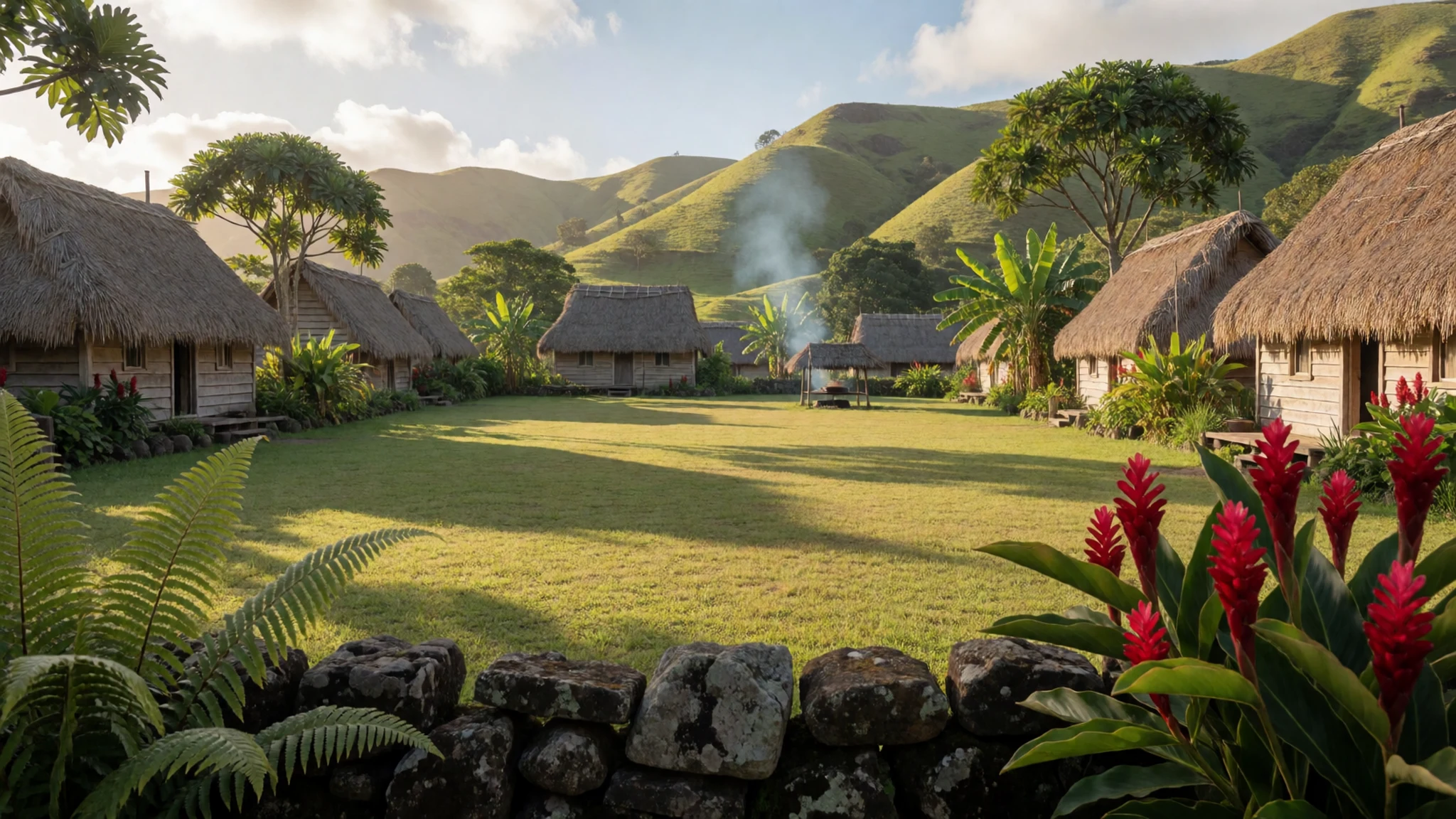
- Bouma National Heritage Park — Northern interior
Bouma National Heritage Park protects the island's rainforest and the land of the Vanua Bouma, the four villages whose land lies within its boundary. It was established in 1990, partly to protect the forest and partly to bring income to those villages. Bouma Falls sits within the park and is one of the island's best-known sights. Visitors should ask at the visitor centre at Tavoro about tracks and conditions before setting out.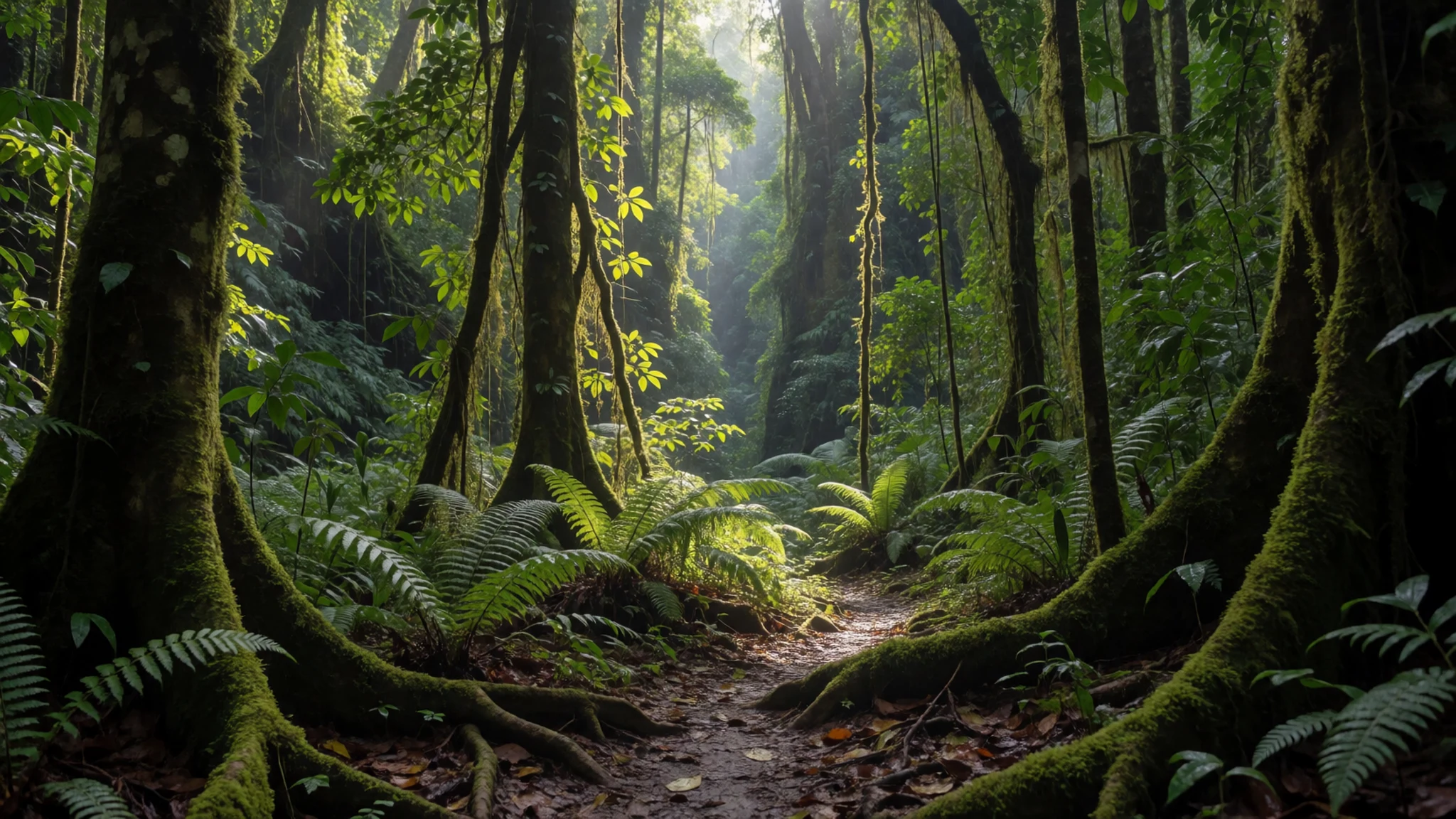
- Lavena Coastal Walk — Lavena, south-east coast
The Lavena Coastal Walk follows a well-formed track from Lavena village along a wild coastline to a swimming hole and waterfall. The path is generally level and offers numerous spots to pause, swim or snorkel. Allow about four hours return, and plan for half a day at the least. Reaching the waterfall means swimming about 100 metres, so bring a swimsuit and a waterproof camera. Check the official site for current fees before you go.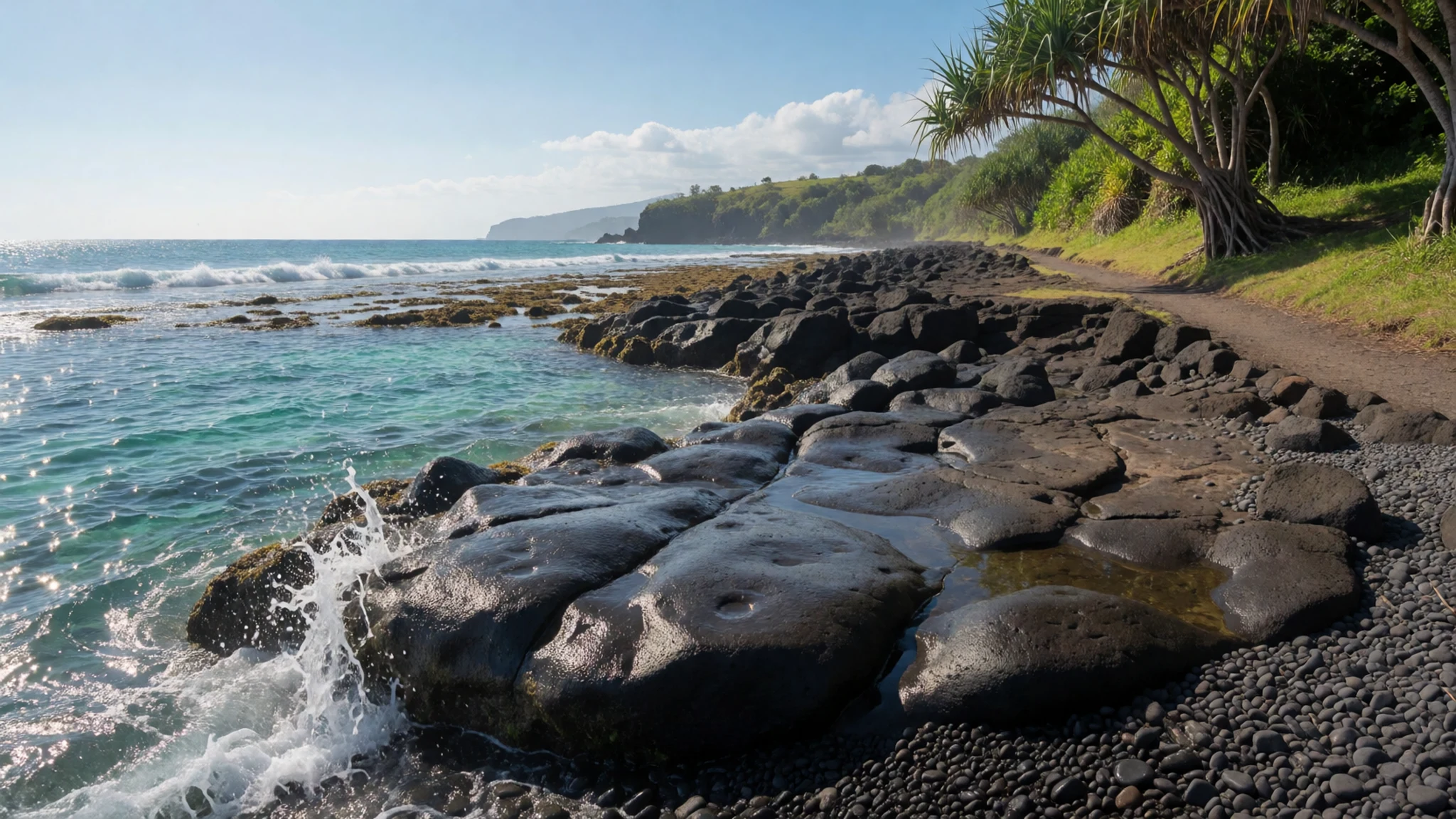
- Tavoro Waterfalls — Bouma area, northern interior
The Tavoro Waterfalls lie close to the Bouma park, and the Tavoro visitor centre is the best place to ask about access, guides and the state of the tracks. Waterfalls on the island swell after heavy rain, so check conditions on the day rather than relying on a forecast from the coast. Bring water and sturdy footwear, and keep to marked paths where the ground is steep and slippery.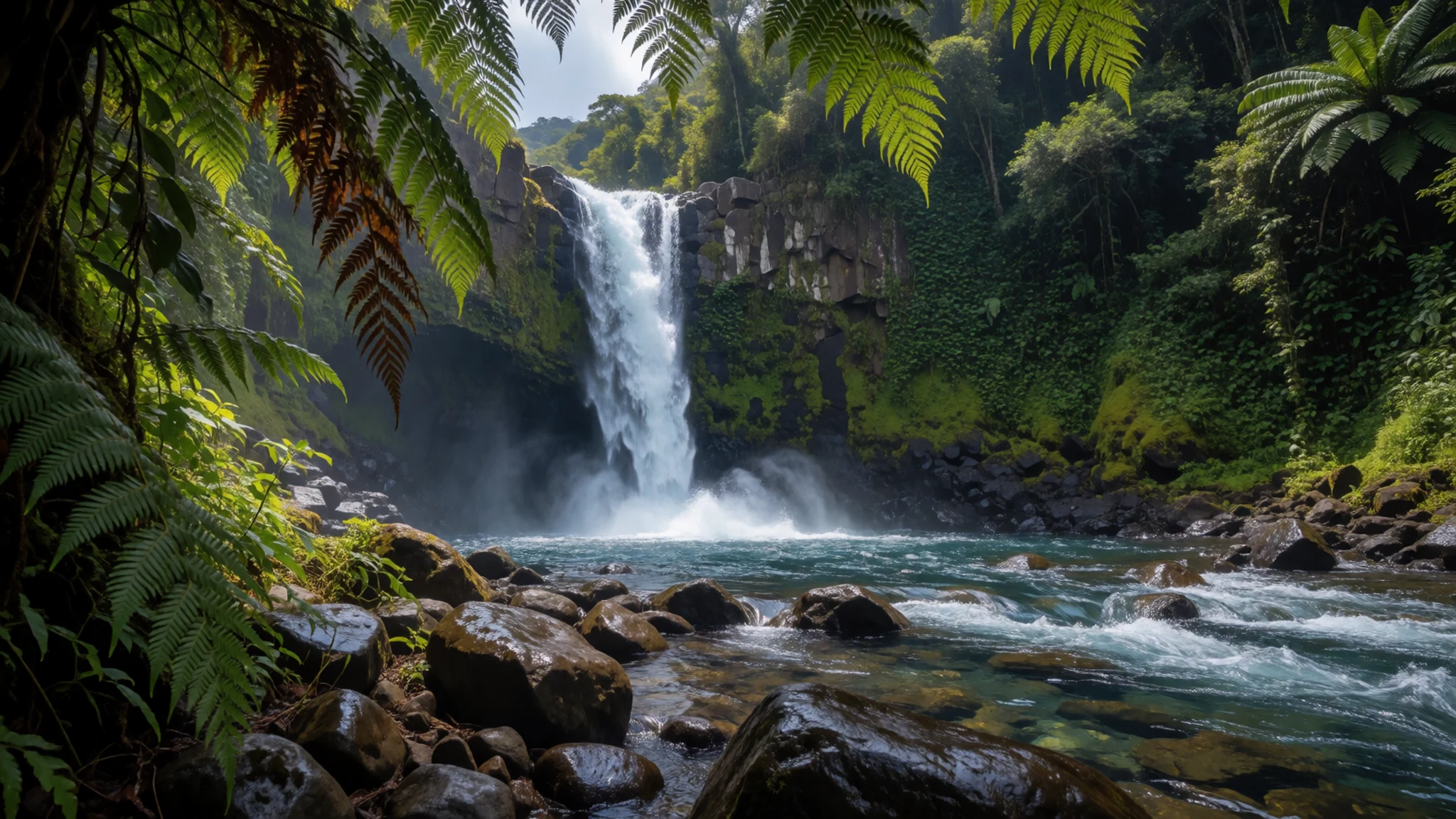
Culture
Taveuni's villages keep a close rhythm of family, church and shared work, and most visitors meet that life through a homestay, a village walk or a cultural evening at a resort. Fijian society is organised around extended families and chiefly relationships, so respect for elders and village leaders shapes much of daily life. Kava, known locally as yaqona, is central to formal and social occasions. When a visitor is received in a village, the custom is to bring a small offering of kava for the host, and the drinking that follows is slow, shared and seated. Sunday matters across the island. Churches are full in the morning, many businesses are quiet, and it is a day for rest, so plan walks and errands for other days. Dress covered in villages and churches, keep noise down near homes in the evening, and ask before photographing people or their homes.
What to wear
Taveuni's traditional dress follows the wider Fijian pattern, built around the sulu, a wraparound cloth worn by women and men. Lengths of cloth are printed or woven in bold patterns and worn knotted at the waist, while tapa, the beaten bark cloth decorated with stencilled designs, marks ceremonial occasions and is still made for gifts. Woven pandanus mats are part of the same textile tradition. Many people now wear Western clothes for everyday life, including jeans, T-shirts and the bright open-collared Fiji shirts that are sold across the islands. On Sundays and for church, people dress smartly and conservatively, and that is worth matching. For a visitor, the sensible choice is light cotton or linen that covers the shoulders and knees when you are in villages, at churches or near homes. Swimwear belongs on beaches and at resorts. Footwear matters more than fashion on this island: closed, grippy shoes or sturdy sandals suit the muddy tracks, river crossings and steep paths of the interior, and a light waterproof layer helps in sudden rain.
What to eat
- Kokoda — Resort restaurants and village eateries, often at lunch
Kokoda is raw fish cured in lime juice and then mixed with coconut cream, onion and a little chilli. It is cool, sharp and fresh, a good first taste of island cooking on a warm day. It is most often served at resort restaurants and at village eateries when a meal is laid on for guests.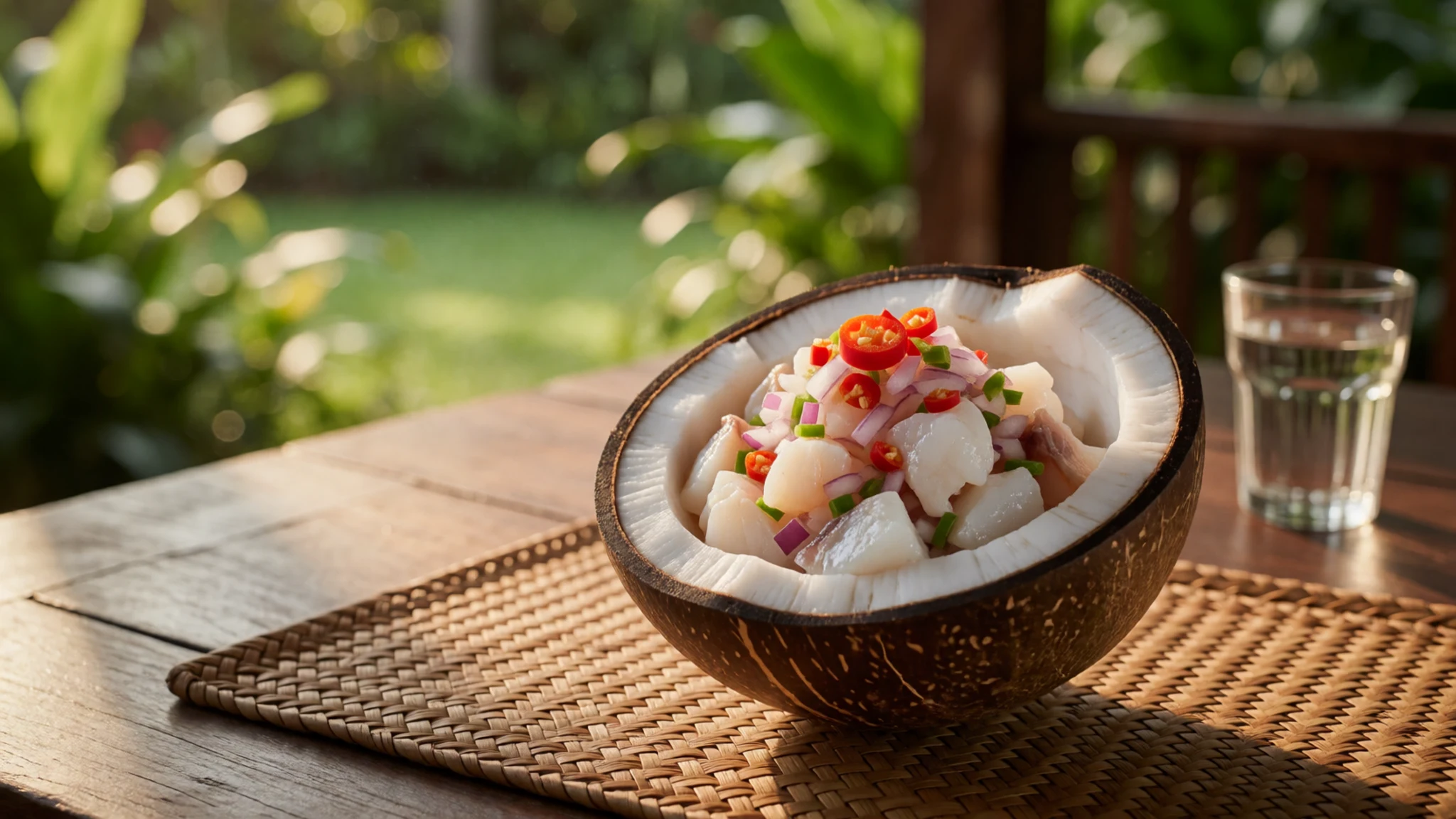
- Taro — Market stalls and village kitchens
Taro is the starchy root that grows across the island and sits at the heart of most meals. It is boiled, baked or mashed, and its leaves are cooked in coconut milk. Taro is now a major crop on Taveuni, so it turns up everywhere, from farm stalls to home kitchens.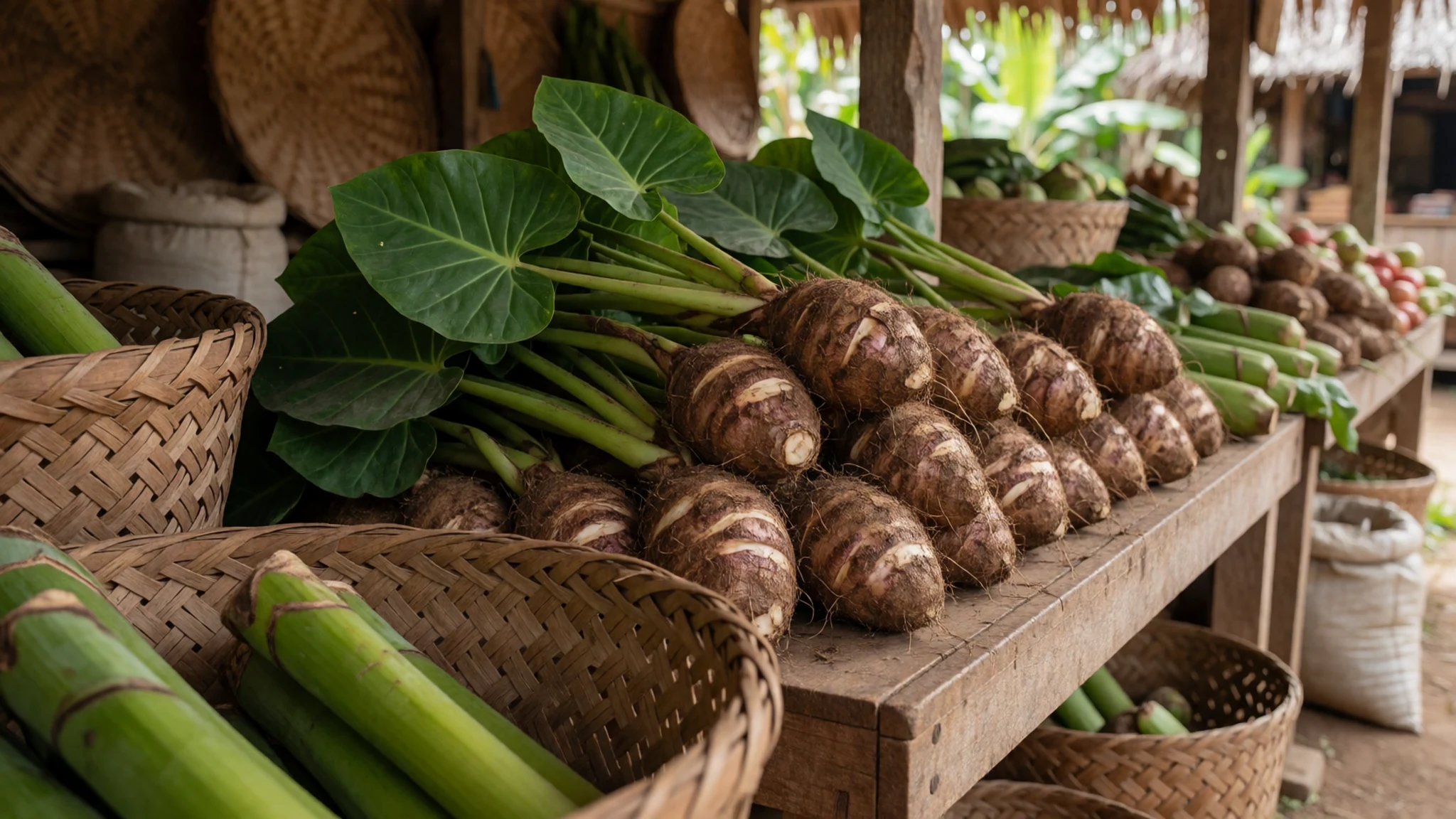
- Yaqona (kava) — Village kava circles and evenings hosted by villages
Yaqona, known in English as kava, is a mildly numbing drink made from the root of a pepper plant and prepared by pounding and straining it in water. It is drunk from a shared bowl during social and ceremonial occasions. Evening sessions in villages are the most authentic way to try it. - Tropical fruit and island coffee — Roadside fruit stalls, markets and resort cafés
Mangoes, papayas, bananas and pineapples are plentiful in season, and the island also grows coffee alongside vanilla. Fresh fruit is sold roadside and in markets. Local coffee is served at some resort cafés and is worth trying with a slice of fruit. - Lovo — Village feasts, arranged through resorts or hosts
A lovo is an earth-oven feast, with chicken, fish, root vegetables and taro wrapped in leaves and cooked slowly in a pit lined with hot stones. It is a dish for celebrations and family occasions, so it is unlikely to be served every day. Ask your resort whether a lovo can be arranged during your stay.
Plan it
Best time. Rain is heaviest from about November to April, peaking near 270 mm in February, while July is the driest month at about 67 mm and one of the most comfortable, with highs near 28°C. The drier months from roughly June to September are generally the easier window for walks and boat trips. The wetter summer months bring heavier rain, more mud on the tracks and higher humidity, though they also bring the greenest landscapes.
How long. 3–4
Getting there. Fly into Matei Airport on Taveuni itself. The other route is by ferry: Goundar Shipping sails from Suva or Nadi via Savusavu one to two times a week, as of 2024. A cheaper and smaller SunCity ferry runs from Natuvu Jetty at the eastern end of Vanua Levu almost every day, and tickets can be bought with a bus transfer to Savusavu (about 1.5 hours) or Labasa.
Budget. mid
Tips
- Check ferry and flight schedules early, since services run only a few times a week and can change
- Book a village visit or guide through your resort in advance, especially for the Lavena walk
- Start walks early in the morning, before the heat and the afternoon rain
- Carry cash for village visits, markets and small payments, as card facilities may be limited
- Pack a light waterproof layer, water and grippy footwear for muddy tracks
Etiquette
- Ask before photographing people, their homes or their gardens
- Dress covered when visiting villages and churches
- Keep Sunday quiet and avoid planned activities that disturb church-going families
- Bring a small offering of kava when you are received by a village host
Nearby
Sources
- Wikidata Q1138545 (CC0)
- Wikipedia: Taveuni (rev 1364335922) (CC BY-SA 4.0)
- Wikivoyage: Taveuni (rev 5267816) (CC BY-SA 4.0)
- Photo: Bouma Falls, Taveuni Island, Fiji (User:Doron) (CC BY 3.0)
- Photo: Sign Between Yesterday And Today at 180° Meridian (Paul Lenz) (CC BY-SA 2.5)
- Photo: Wairiki Mission, Taveuni Island, Fiji (Markmark28) (CC BY 3.0)
- Photo: Taveuni, Fiji looking toward Matagi (Barry Peters) (CC BY 2.5)
- Photo: Matei Airport, Taveuni Island, Fiji (Markmark28) (CC BY 3.0)
- Photo: Male Fijian Monkey-faced Bat, summit of Mt. Koroturaga (William N. Beckon) (CC BY 3.0)
- Photo: Grave of Rev. William Cross (Thomas Williams, possibly) (Public domain)
- Photo: Mantis Shrimp with Nudibranch (Ed Bierman) (CC BY 2.5)


