Kadavu
Kadavu, Fiji
Kadavu is a quiet, mountainous Fijian island where reef diving, village hospitality and boat-bound slow travel matter more than sights or nightlife.
The place
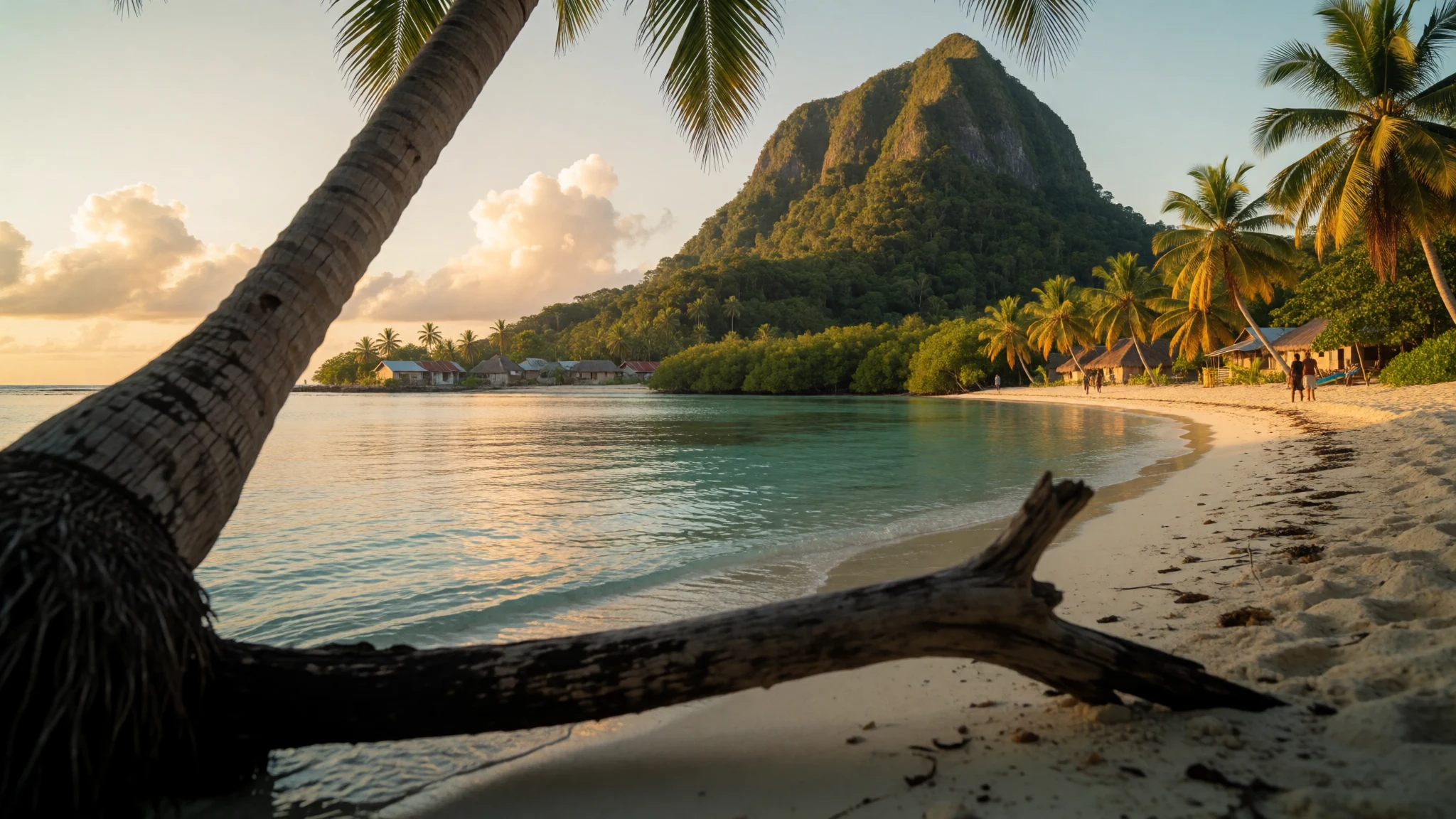
Kadavu is a long, narrow volcanic island in southern Fiji, south of the capital Suva, and the main island of the Kadavu Group, a small archipelago that also takes in Ono and Galoa. It runs about 60 km from end to end but is thin in places. Near Vunisea, the island's main settlement, the land pinches so tightly that Namalata Bay on the north coast almost meets Galoa Harbour on the south. Vunisea has the airstrip, the hospital and the secondary school. Beyond it the terrain is rugged: forested ridges, steep valleys, waterfalls and a scatter of coastal villages. Roads are few, so boats do most of the moving about, and the island and its surrounding islets hold only about 10,000 people. The Great Astrolabe Reef wraps the southern coast, and it explains why most visitors come: diving, snorkelling and paddling in clear water. Accommodation is mostly small resorts, guesthouses and village homestays, usually reached by boat from the airstrip or ferry landing, and many include meals in the nightly rate. Kadavu is unhurried and low-key rather than a busy resort strip. Shops are few, mobile signal can be patchy, and wind and sea conditions decide plans as much as any timetable does. The pleasures are simple ones: a village choir drifting across a bay, a walk to a waterfall, a long lunch after a morning on the water. Kadavu rewards slow travel and a flexible schedule, and it is a poor fit for anyone wanting to tick off many sights in a few days.
Its story
Kadavu entered European records in 1792, when William Bligh sighted the island from HMS Providence on his second voyage to Fiji. Other ships soon followed, and in 1827 the French commander Dumont d'Urville nearly lost his ship Astrolabe on the reef off the southern coast. The reef kept the vessel's name, so a French ship is still remembered on the map of a Fijian island. Traders in beche-de-mer, the dried sea cucumber sold to Asian markets, then set up on Kadavu, and whaling crews from Sydney and New England called in as well. Galoa Harbour, tucked inside the island's narrow waist, became a regular port of call on the postal runs across the Pacific. Those sightings and visits are the European chapters. Fijian communities had been living along these coasts long before any foreign sail appeared, and their clan and chiefly traditions still organise village life. The island's origins are volcanic, which explains the steep ridges and the cone of Nabukelevu, also called Mount Washington, near the western end. In the early years of this century the German painter Ingo Kühl spent time in the remote village of Togoni, living with its people during a year in the South Seas. His drawings and watercolours from that stay were later shown at the Ethnological Museum in Berlin, and one of his sketchbook spreads, painted in Togoni, is among the photographs shown with this reading. It is a reminder that Kadavu's story is also told by people who stayed long enough to be taken in.
What to see
- Great Astrolabe Reef — South coast, off Matava
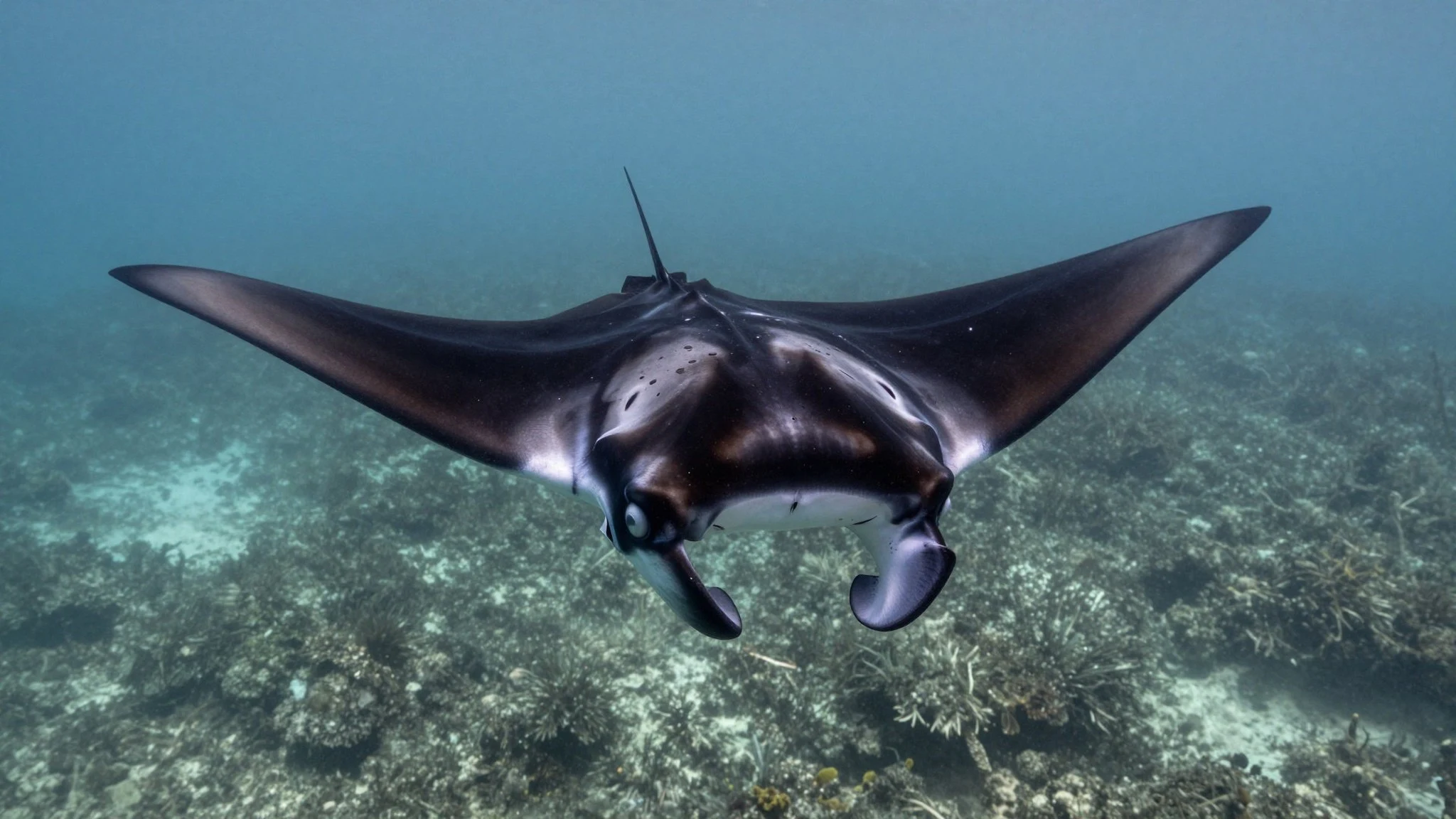
The reef follows Kadavu's southern coast and is the island's main draw. It holds coral gardens, steep drop-offs, channel passages and spots where manta rays gather. Currents vary a great deal from site to site, so book dives through an experienced local operator, and snorkel from resort boats or sheltered lagoons.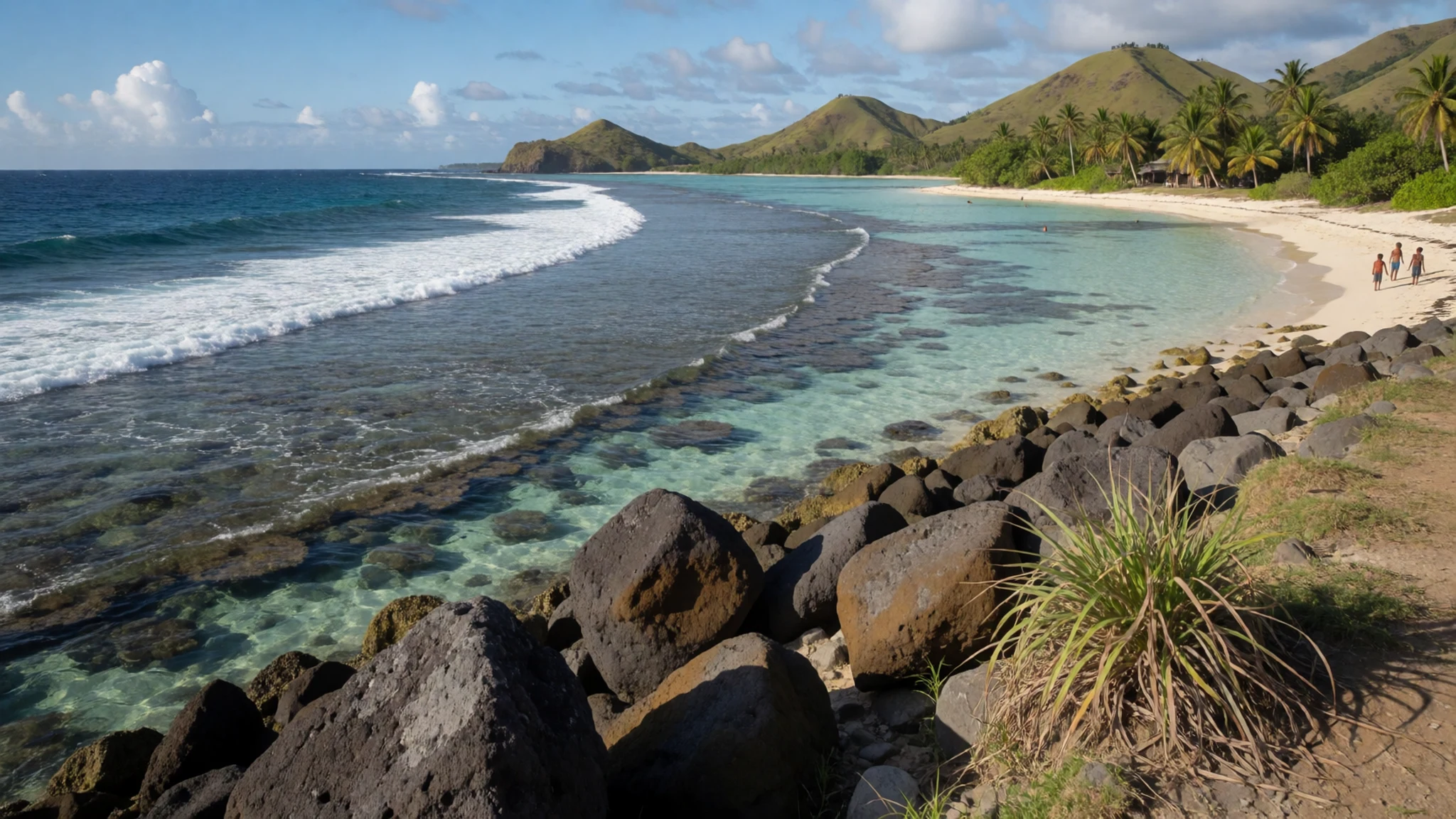
- Nabukelevu (Mount Washington) — Western end of the island
This volcanic cone rises near the western end of the island and gives Kadavu its most recognisable skyline. It is best seen from the water or from coastal villages. Any walk towards it should be arranged with a local guide and the landowners, since the slopes sit on village land.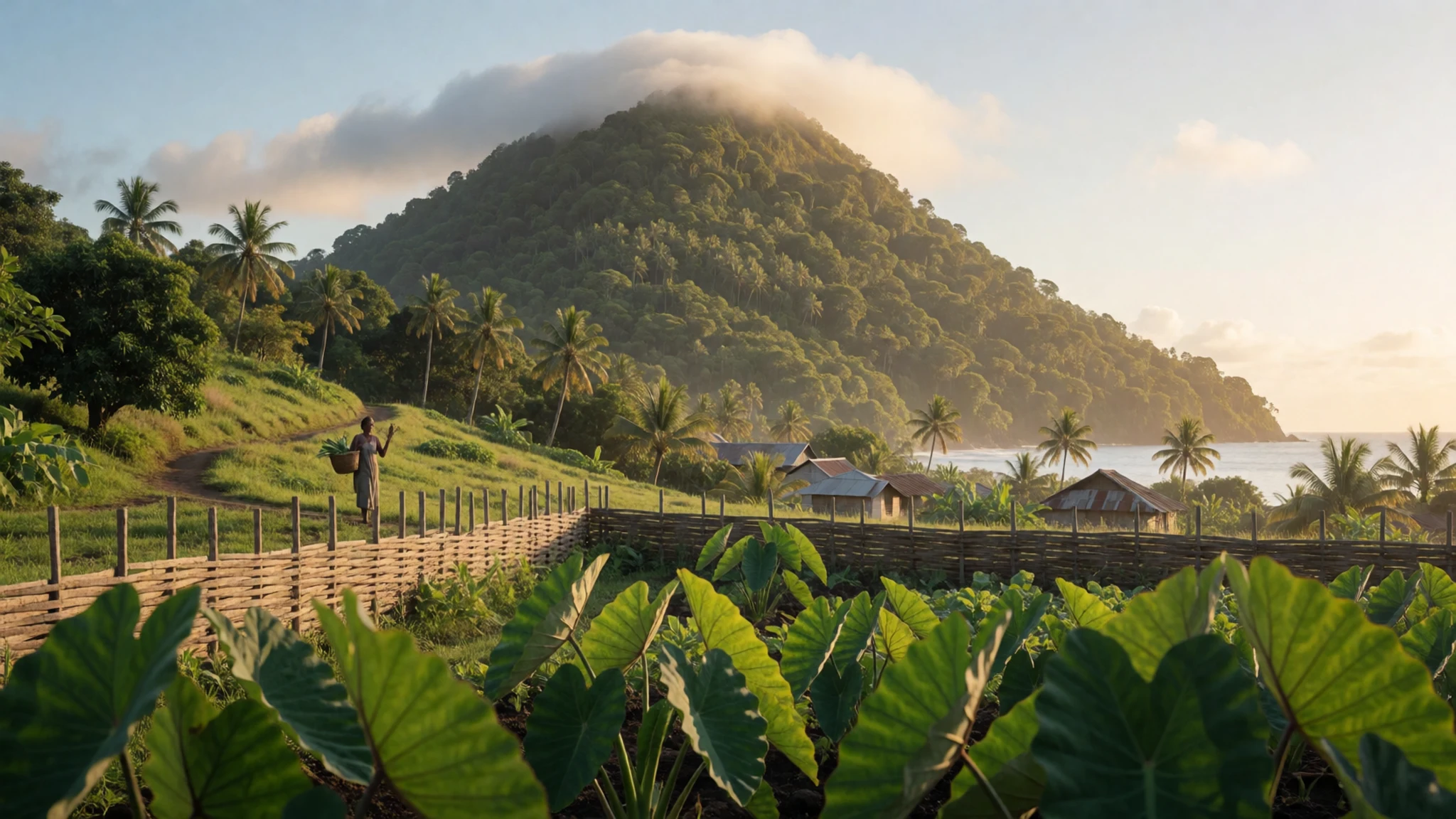
- Vunisea and the Namalata Isthmus — Central Kadavu
Vunisea is where the island nearly splits in two, with bays on both sides of a narrow neck of land. It is the place for supplies, the hospital, the airstrip and the ferry landing, and a short wander shows everyday island life more plainly than any resort does.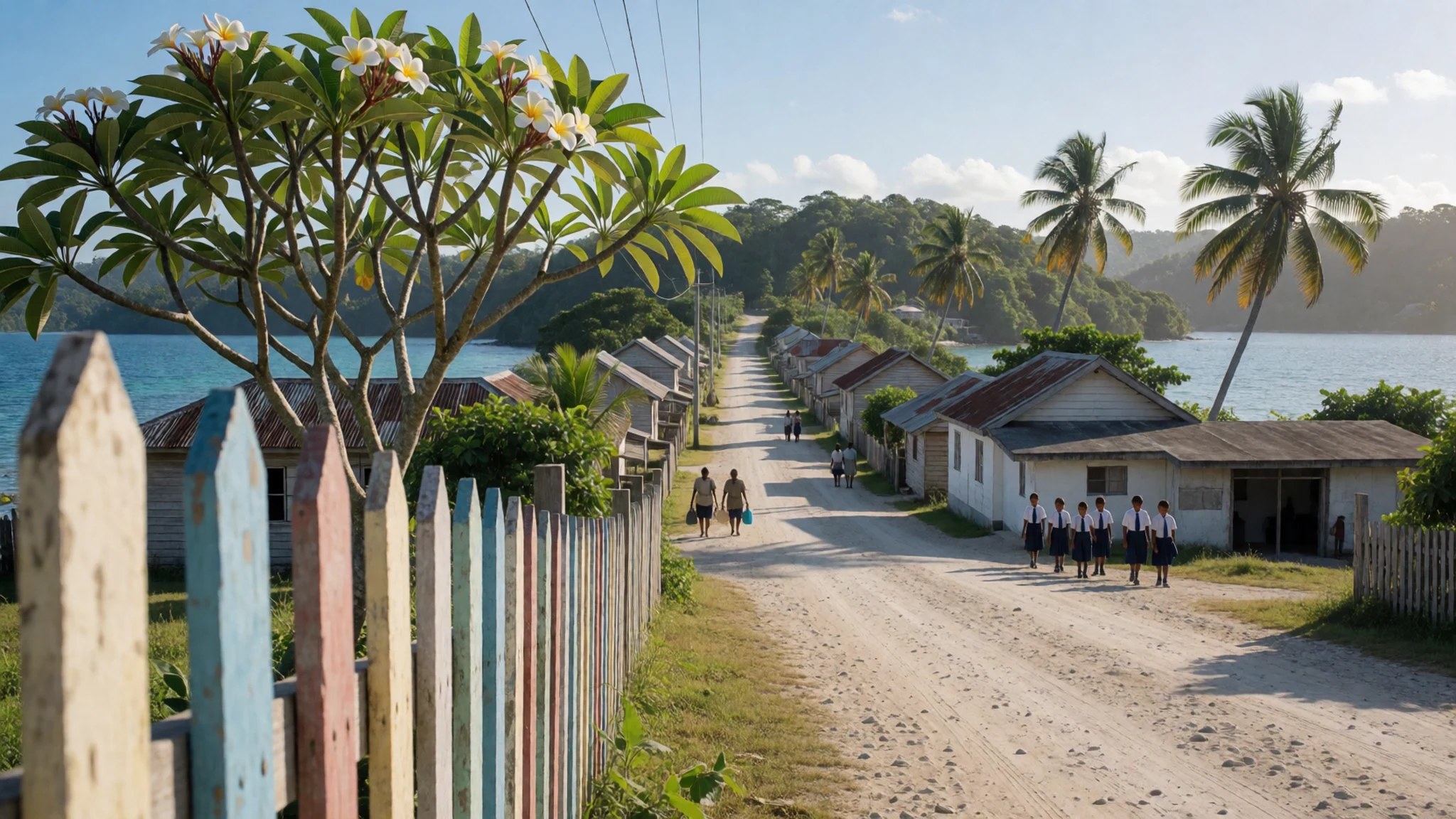
- Beaches, bays and sea kayaking — Coastal bays around the island
Sheltered bays, mangroves and sandy coves make Kadavu good paddling country. Guided trips run from short outings near a resort to longer journeys between villages with meals and beds arranged on the way. Beaches often hold coral fragments washed up by storms, so footwear helps.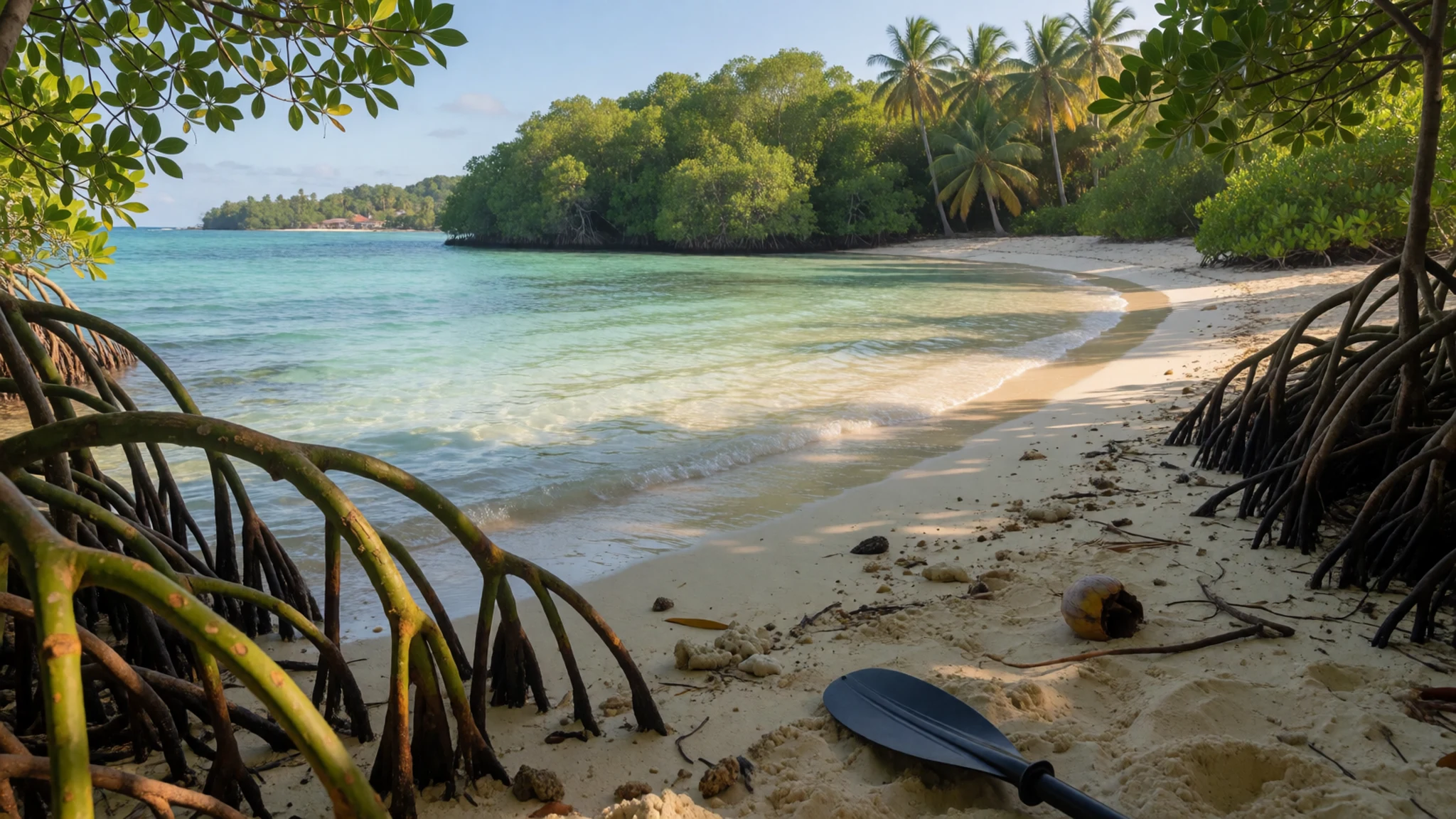
- Rainforest, waterfalls and birds — Interior and upland valleys
The forested interior shelters streams, waterfalls and birdlife, and is the best option for days when the sea is rough. Walks usually start from a village or resort and need a local guide, partly for the trails and partly because the land belongs to the community.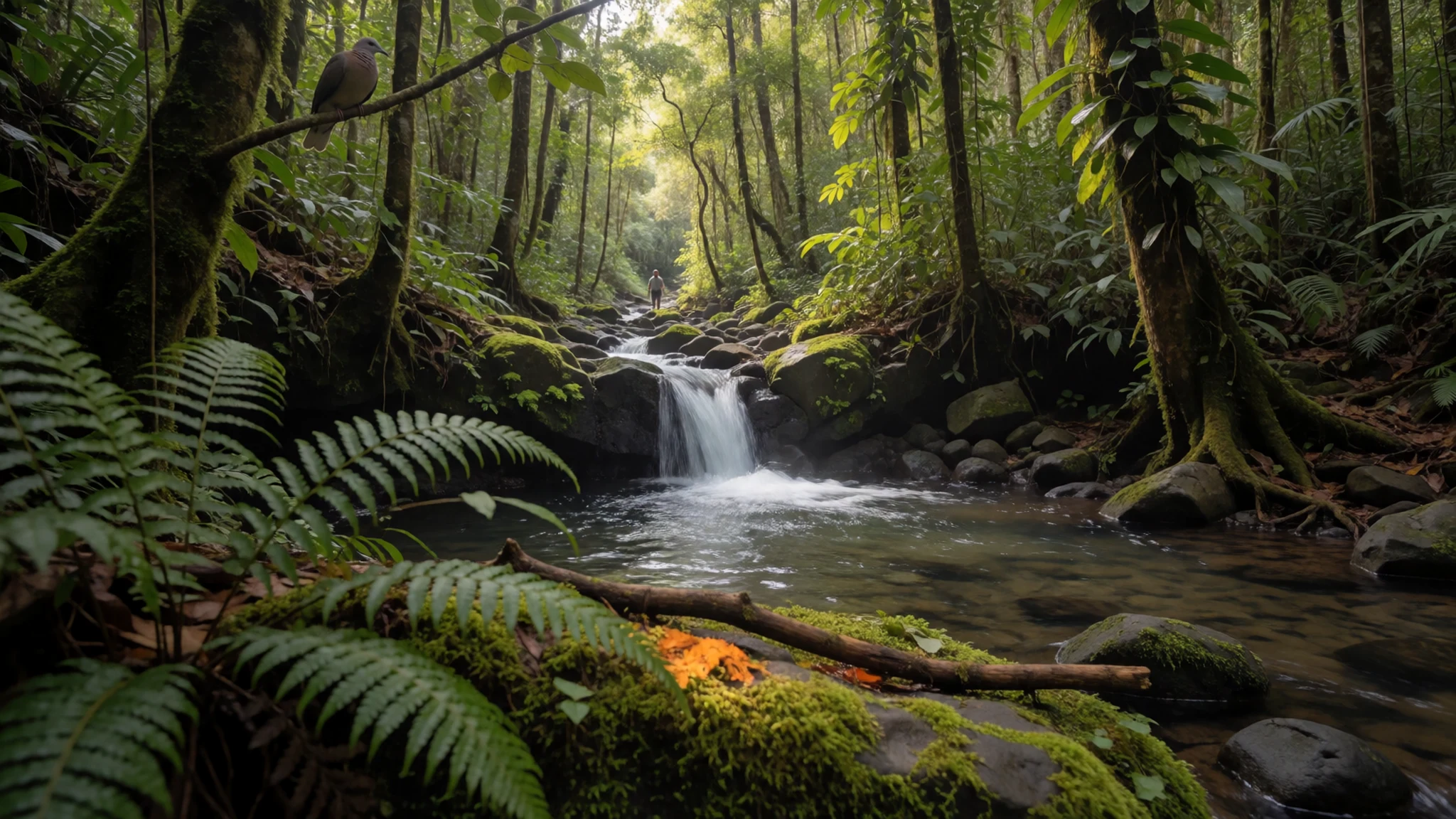
Culture
Kadavu is a place where village and church life set the rhythm, and visitors are guests of communities as much as of resorts. Most people are indigenous Fijian (iTaukei), living in coastal villages organised around clan and chiefly structures, with a headman or chief as the point of contact for outsiders. Sundays are for church and rest, and hymn singing carries across the bays; some villages limit swimming or boat trips that day. Kava, a drink made from the pounded root of the yaqona plant, is central to welcome and to evenings. A ceremony usually opens with a gift of kava roots, called sevusevu, presented to the chief on behalf of visitors. Resorts and guides arrange this, and village visits, cultural evenings and communal feasts are best set up through them rather than by turning up unannounced. 'Bula' is the all-purpose greeting, and a few words of Fijian are warmly received. Alongside the traditional order sits a working life of fishing, growing root crops and small-scale tourism, so money spent locally often reaches households directly. The island has few formal services, and the sea and weather change plans, so patience is part of the local manners. Before entering a village, take off your hat and sunglasses, cover your shoulders and knees, and wait for your guide to introduce you to the headman.
What to wear
On Kadavu, traditional dress centres on the sulu, a length of cloth wrapped at the waist, worn by both men and women. Formal versions are tailored with a hemmed, sometimes pointed edge and worn to church, funerals and ceremonies. Masi, a bark cloth stamped or stencilled with geometric patterns, appears at weddings and chiefly occasions, and pandanus is plaited into mats and ceremonial pieces. Garlands of flowers and leaves, called salusalu, are given to honour guests. Day to day, people wear what suits heat, boats and gardens: shorts, T-shirts, cotton dresses and a sulu around the waist, with rubber sandals or bare feet. Sunday is different, with clean shirts, long skirts and ties for the church service. Visitors should pack light, quick-drying cotton or linen, a sun hat, a rash vest for snorkelling and a light waterproof for squalls. Reef shoes protect feet on coral rubble and rocky landings, and sturdy sandals or trainers suit waterfall walks. Swimwear is fine at resorts and on beaches, but in villages, and on the way to and from boats, cover shoulders and knees with a sarong or a knee-length skirt or shorts. A sulu bought locally is both a useful souvenir and a polite thing to wear for a village visit.
What to eat
- Kokoda — Resort dining rooms and communal meals
Raw fish cured in citrus juice and finished with coconut milk, often with onion, tomato and chilli. It is Fiji's version of ceviche, and appears as a starter at resort restaurants and at village feasts when a boat has landed a good catch.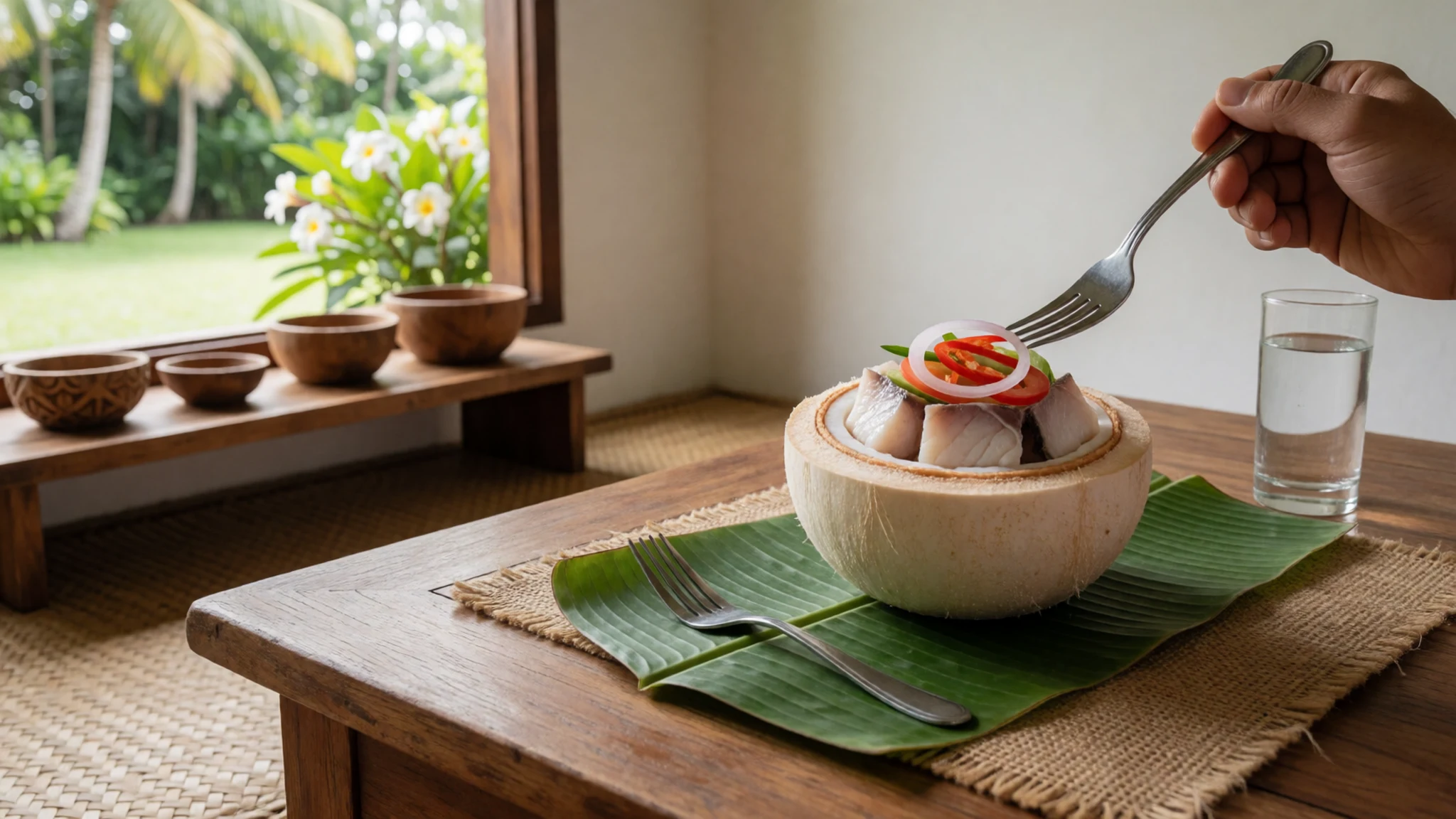
- Rourou — Village meals and homestays
Young taro leaves cooked slowly in coconut milk until soft and rich, tasting a little like spinach. It is a staple side dish and turns up alongside fish, root crops or curry, especially at village and homestay meals.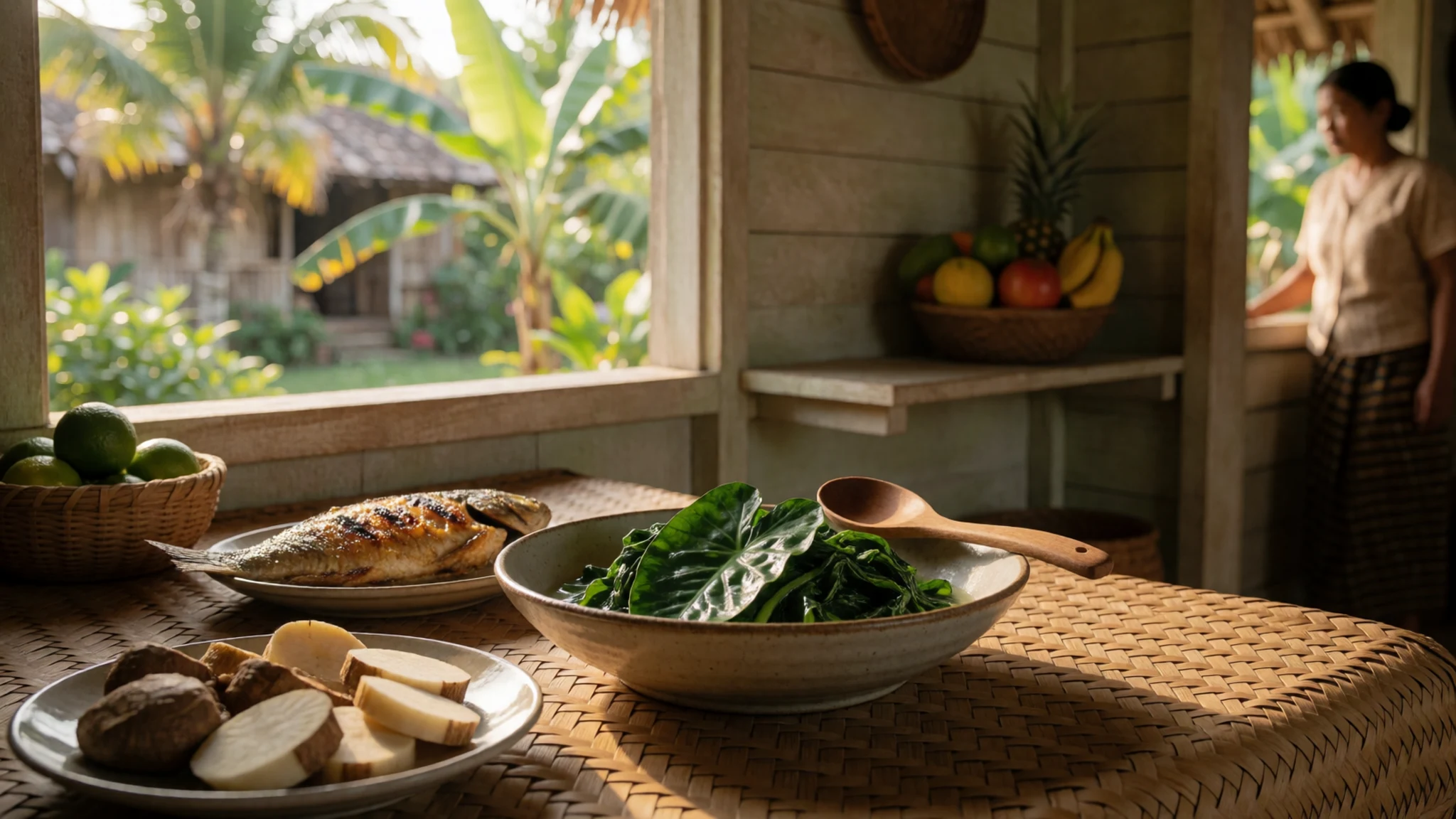
- Lovo feast — Arranged through a resort, guesthouse or village
Food cooked in an underground oven: fish, chicken or pork wrapped in leaves and buried over heated stones with root crops. It takes hours, so it is an occasion rather than an everyday meal, usually arranged by a resort or village for guests. - Grilled fish with coconut — Resort and guesthouse kitchens; packed lunches for dive trips
Fresh reef or open-water fish grilled whole or in fillets and served with coconut, lime and rice or root crops. It is the plainest and most common dinner on the island, and the day's catch decides what is on the plate. - Root crops: cassava and dalo — Village meals and local gardens, sold in Vunisea
Boiled or baked cassava and dalo (taro) are the everyday starch, eaten instead of bread or rice. They are dense, filling and mild, and good for soaking up coconut sauces. Cooked fresh, they come with most village meals.
Plan it
Best time. May to October is the drier and cooler part of the year in Fiji, with calmer seas and better odds for diving and kayaking. November to April is hotter, wetter and more humid, with a risk of tropical cyclones, and sailings and flights can be disrupted.
How long. 4–6
Getting there. Fly from Suva to Kadavu's airstrip at Vunisea, or take the ferry from Suva to Vunisea, which does not run daily. From Vunisea, most visitors continue by resort boat, since transport around the island is mainly by sea rather than road. Check flight and ferry times with the carrier, and confirm your boat transfer with your accommodation.
Budget. mid
Tips
- Book accommodation well ahead and confirm which meals, transfers and activities are included.
- Buy essential supplies in Suva, Nadi or Vunisea, because shops elsewhere on the island have limited stock.
- Arrange dives, kayaking and village visits through your resort or a local guide, not on a whim.
- Carry cash for small purchases and village contributions, since card machines are rare outside resorts.
- Bring reef-safe sun protection, drinking water for boat days and any medicines you need, as pharmacies are few.
Etiquette
- Dress modestly in villages, covering shoulders and knees, and remove your hat.
- Do not visit a village unannounced; arrange it through your accommodation or guide.
- Ask permission before photographing people, and respect Sunday as a day of rest and church.
Nearby
Sources
- Wikidata Q1048944 (CC0)
- Wikipedia: Kadavu Island (rev 1376267089) (CC BY-SA 4.0)
- Wikivoyage: Kadavu (rev 5322729) (CC BY-SA 4.0)
- Kadavu and the Great Astrolabe Reef from Matava, Duncan Wright (CC BY 3.0)
- Coastline on Kadavu, Jaejay77 (CC BY-SA 4.0)
- Kadavu-Fiji 1889.jpg (Public domain)
- Vunisea, Kadavu Island, Mike Serfas (Public domain)
- Ingo Kühl, Tongoni Trommel, Sylt-Tinto (CC0)
- Mount Washington (Nabukelevu), Jaejay77 (CC BY-SA 4.0)
- Admiralty Chart No 167, Kandavu Island and Passage, UK Hydrographic Office (Public domain)
- Coral on Kadavu, Brian (CC BY 2.5)


Wildlife
- Manta ray (animal)
The giant manta is the biggest ray in the world, a great flat swimmer that glides through the sea like an underwater kite. Around Kadavu, look for it at the places where mantas gather, among the coral gardens, steep drop-offs and channel passages. Watch with a local guide, keep a respectful distance, stay calm and quiet in the water, and never feed or touch it, so it can carry on gliding undisturbed.