Suva
Suva, Fiji
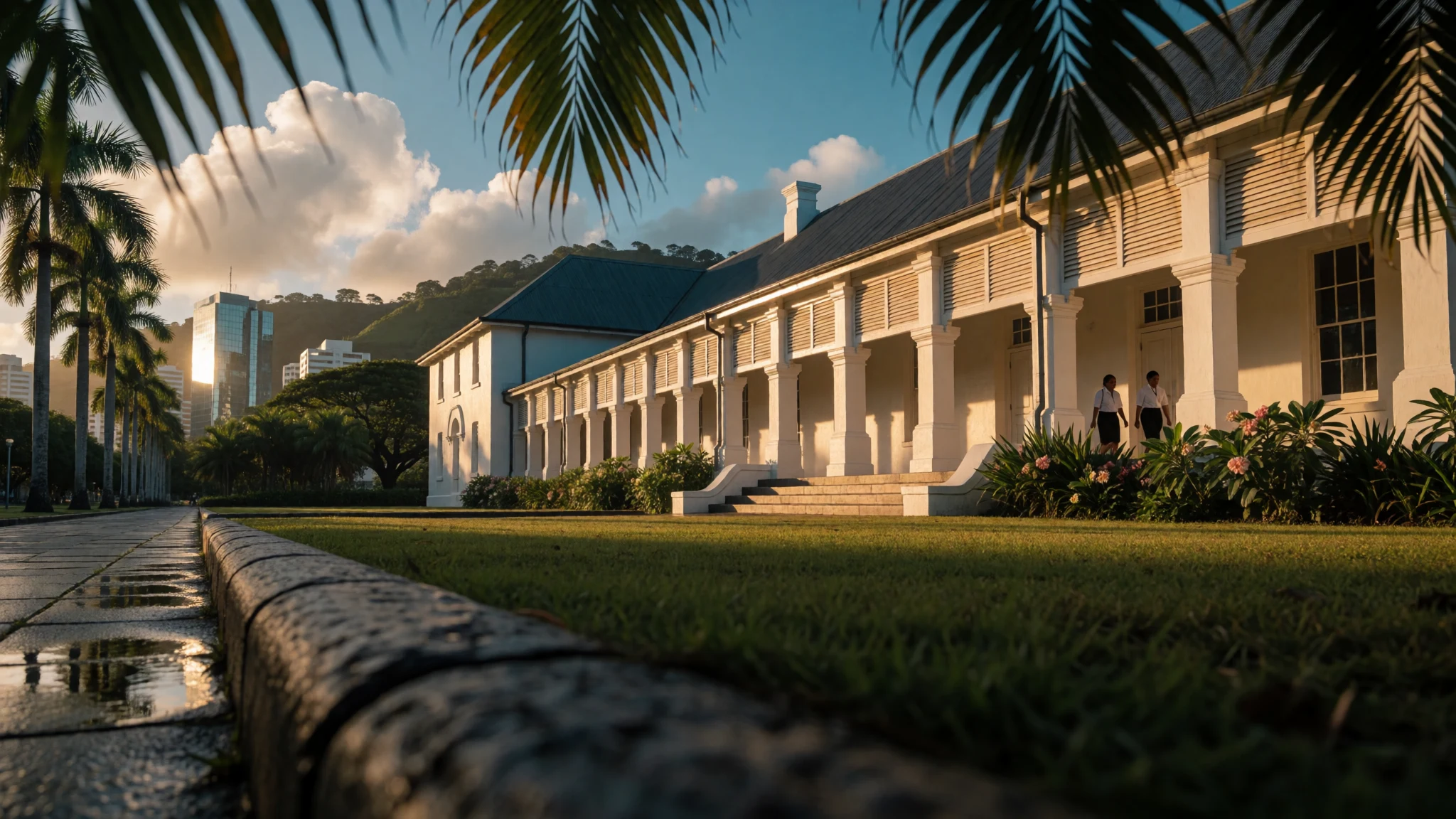
Suva is a rainy, working Pacific capital where Fijian, Indian and Chinese kitchens, a good museum and rugby on the grass fill a day or two.
The place
Suva sits on a hilly peninsula in the southeast of Viti Levu, with Suva Harbour on one side and Laucala Bay on the other. It is Fiji's capital and main port, home to about 88,000 people in the city proper, and the centre of a wider urban belt that runs through Lami, Nasinu and Nausori. Many of the region's offices, embassies and international agencies are based here, so the streets mix civil servants, students, market sellers and diplomats. The look is part colonial, part modern: verandahed government buildings and a Carnegie library stand within sight of glass towers, and the harbour is rarely empty of ships. Rain defines the place. Suva is much wetter than Nadi and the dry western side of the island, which locals call the burning west, and showers can arrive in any month. Temperatures hold steady all year, warm by day and mild at night, and the trade winds take the edge off the humidity. There are no resort beaches in the city, and the local shoreline is better for watching than swimming. What Suva offers instead is a lived-in Pacific capital: a museum, a botanical garden, rugby and football matches, food from Fijian, Indian and Chinese kitchens, and a university that draws students from across the islands. It suits a day or two of walking, eating and looking, and it works well as a first stop before heading to the coast or the outer islands.
Its story
Suva was a small village in the 1860s, when the Bauan chief Seru Epenisa Cakobau granted a huge block of land to the Polynesia Company, an Australian-based firm, in return for help clearing debts. The company hoped to grow cotton, but the soil and climate did not cooperate, and the venture faded. The land, however, stayed on the map. Fiji passed to Britain in 1874, and the colonial government soon found its capital, Levuka on Ovalau, hemmed in between a steep hillside and the sea, with no room to grow. Suva offered flatter ground and a deep harbour, so the capital moved in 1877, and the administration was formally transferred in 1882. Colonel F. E. Pratt of the Royal Engineers, working with colleagues, laid out the new town. Suva became a municipality in 1910, still only about a square mile in size. In 1952 it absorbed the Muanikau and Samabula wards, and that October it was declared a city, the first in Fiji. Tamavua and later Cunningham were added afterwards. Growth has since spilled well past the official boundary, producing suburbs and the connected Suva-Nausori corridor. Much of what visitors see today, from the government buildings to the street grid near the harbour, comes from that colonial planning, layered over a much older Fijian landscape of villages, rivers and reef.
What to see
- Fiji Museum — Thurston Gardens, central Suva
The Fiji Museum, set beside the botanical garden, is the best single stop for grasping the islands' archaeology and history. Its collections trace Fijian settlement, canoe-building, ceremonial objects and the colonial period. Allow a slow morning, and check the official site or ask locally for opening times before going. - Government Buildings and the former Parliament — Government precinct, central Suva
Suva's colonial-era government buildings and the former Parliament stand in the administrative quarter, with deep verandahs and ordered lines suited to a humid climate. They are best seen from the outside on a walk. Photographs are fine from the pavement, but follow any signs and instructions from security staff.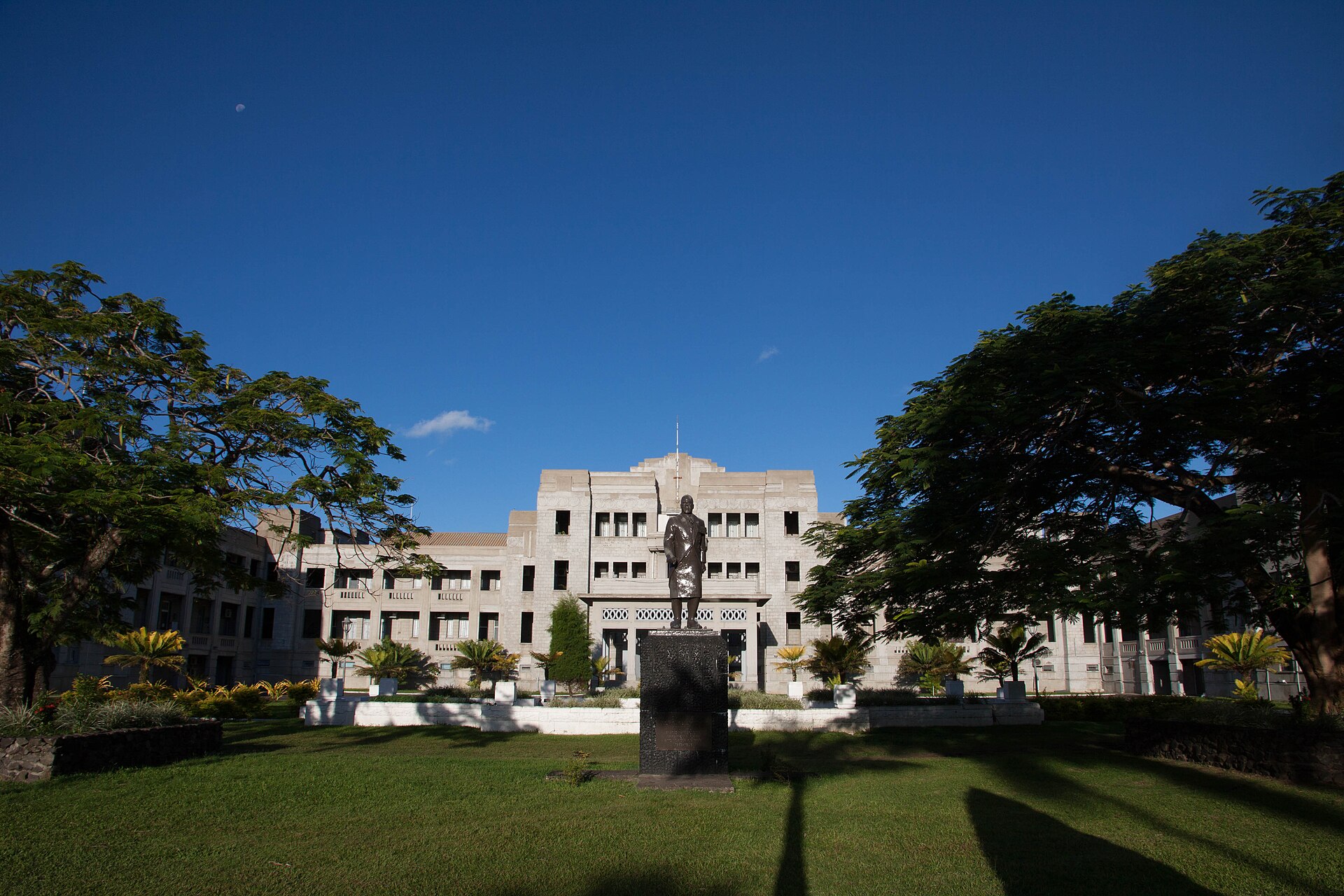
- Carnegie Library — Central Suva
Suva's Carnegie Library is a small, handsome reminder of the town's early decades, when libraries funded by the industrialist Andrew Carnegie appeared across the British empire. It is worth a short stop for the architecture, and a quiet contrast with the busier streets and shopping centres nearby.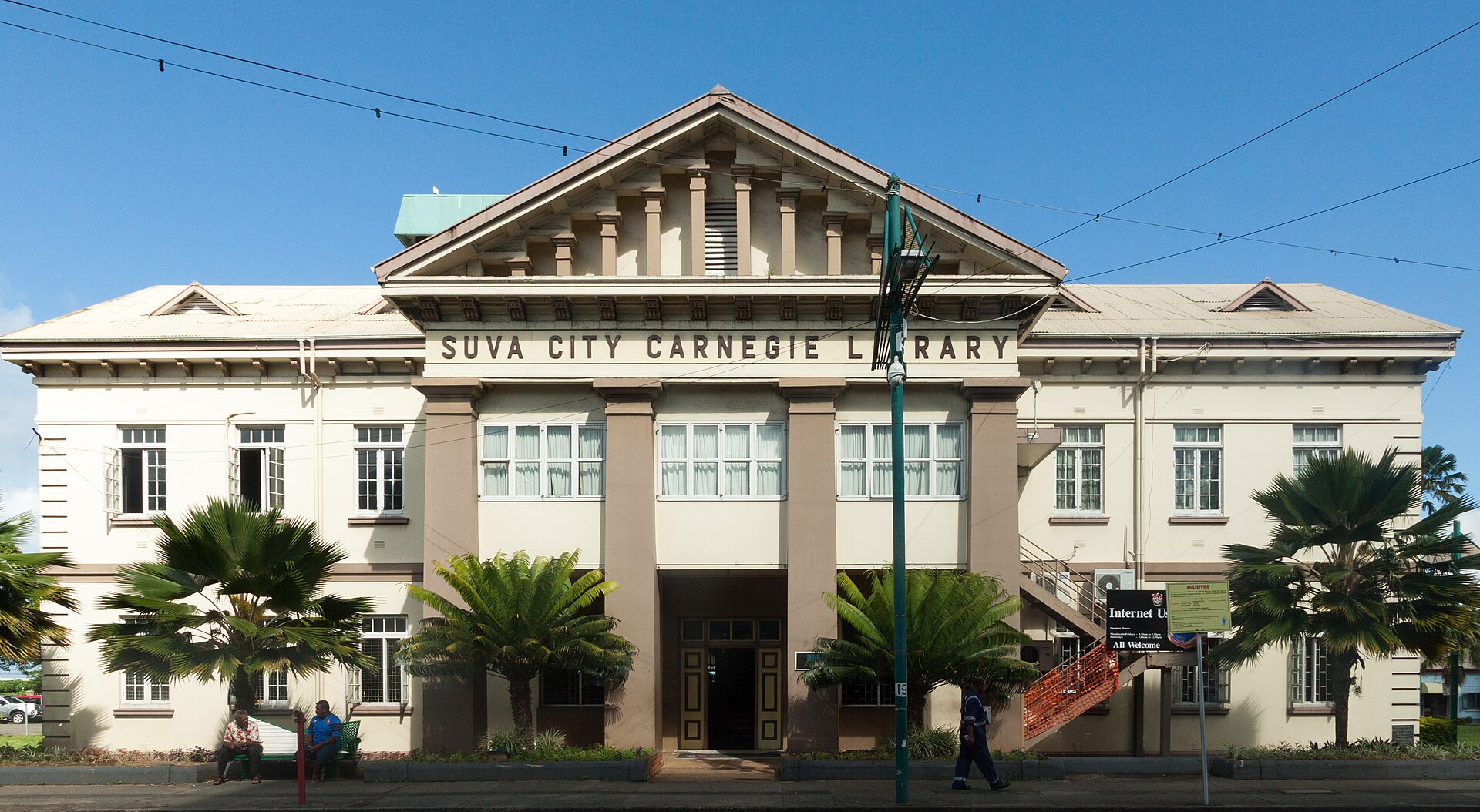
- The harbour and waterfront — Suva Harbour
Suva's harbour is the reason the capital sits where it does, and the waterfront is the easiest place to watch the city work: cargo ships, small boats, joggers and families. Fish and chips from a paper bag eaten by the water is a local habit, as is a bench in the botanical garden.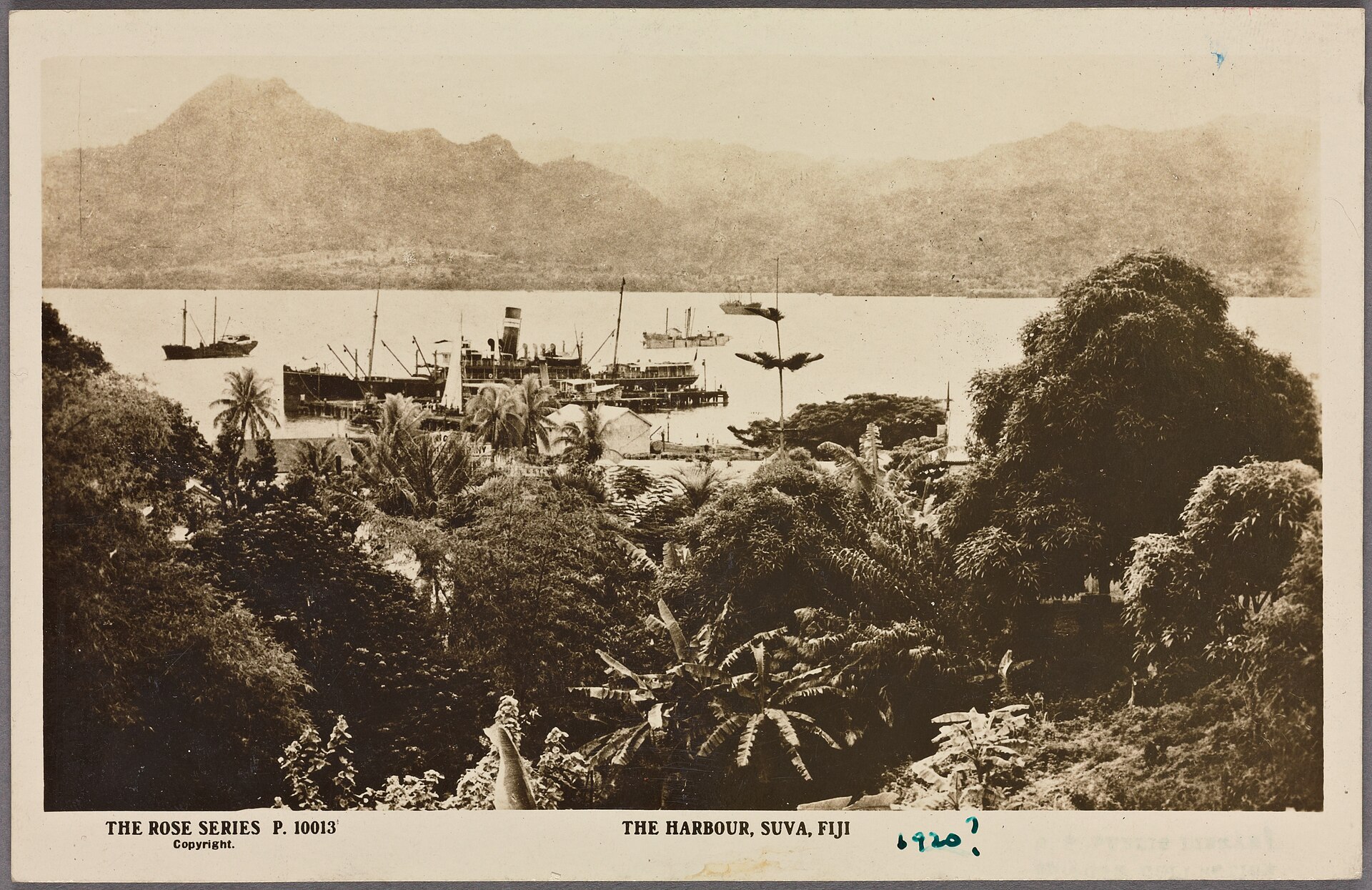
- Rugby and football matches — Albert Park and the National Stadium
Suva follows its sport closely, and a local rugby or football match is one of the liveliest free ways to spend an afternoon. Rugby is usually played at Albert Park, football at the National Stadium on Laucala Bay Road. Fixtures change, so ask at your accommodation or check local listings.
Culture
Suva is the place where Fiji's main communities meet daily. Indigenous Fijians, Indo-Fijians, Chinese-Fijians and people from across the Pacific share the same buses, markets and offices, and the city's churches, mosques and temples sit within a short walk of each other. Village life still shapes Fijian custom: family and community come first, and respect for chiefs and elders is expected. Kava, a mildly numbing drink made from the root of a pepper plant, is central to ceremony and to everyday socialising, often shared in a circle with a bowl passed round and clapping before and after each cup. Church on Sunday matters to many families, and the day is quieter than the rest of the week, with some shops closed. Indian festivals, especially Diwali, bring lights and sweets to the streets, while sport, particularly rugby, gives the city a common language. The arts scene is active, with theatre, music and craft markets, and the university adds a youthful, regional edge. People are generally relaxed and friendly, and a greeting of bula, accompanied by a smile, goes a long way. If you are invited to a kava session or a village visit, accept graciously, take off your hat and shoes at the door, and follow your host's lead before taking any photographs.
What to wear
Traditional Fijian dress in Suva centres on the sulu, a wrapped length of cloth worn by men and women, and on masi, bark cloth stamped or stencilled with geometric patterns in brown and black. Masi appears at weddings, funerals and ceremonies, alongside woven mats and fibre skirts. Indo-Fijian families wear saris and salwar kameez, especially at weddings and during Diwali, in silk and cotton. What people wear day to day is much simpler. In offices, men often wear a tailored sulu, known as a sulu vakataga, with a shirt and jacket, a style that doubles as formal wear for government workers, and many women wear a knee-length skirt or dress. Bright floral bula shirts and printed island dresses are common on Fridays and at celebrations. Suva also has a growing fashion scene, with local designers using masi-inspired prints and a yearly fashion week. For visitors, light cotton or quick-drying clothes work best in the humid, rainy climate, and a compact umbrella or light rain jacket is more useful than a heavy one. Shoulders and knees should be covered in villages, churches and temples, and swimwear belongs on the beach, not in town. Sandals suit the pavements, though shoes with grip help on wet slopes and steps.
What to eat
- Fijian curry with roti or rice — Curry houses and local eateries in central Suva and Samabula
Suva's Indo-Fijian cooking shows in its curries, usually chicken, goat, lamb or vegetable, served with rice or soft flatbread. The flavours are rich but not always very hot. Small curry houses around the centre and Samabula suit a cheap, filling lunch. - Kokoda — Waterfront cafés and restaurants serving Fijian dishes
Kokoda is Fiji's take on ceviche: raw fish cured in lime juice, then mixed with coconut cream, onion, chilli and tomato. It is cool, sharp and creamy together. It is usually served in a coconut shell or bowl and tastes best fresh. - Lovo — Festive meals, cultural events and some Fijian restaurants
Lovo is food cooked in an earth oven with hot stones, covered with leaves. Meat, fish, cassava and taro take on a smoky, soft flavour. It is mostly a feast dish for gatherings, but some restaurants and cultural events in the city offer it. - Fish and chips by the water — Takeaway counters near the harbour and in the town centre
A paper bag of fried fish and chips is the simplest cheap meal in Suva. Locals eat it on the waterfront or in the botanical garden, and it is a pleasant way to watch the harbour, as long as the rain holds off. - Market produce and tropical fruit — The municipal market in the town centre
The central market is the best place to see what grows on Viti Levu: cassava, taro, bundles of kava root, pawpaw, pineapple and coconuts, plus fresh fish. Sellers are used to questions, and a cup of fresh coconut water makes a good break. - Food court meals — Food courts in the main shopping centres
Suva's shopping centres have food courts offering Indian and Chinese dishes, where choosing by sight is easy and prices stay modest. They are useful for a quick, dry lunch on a rainy day, and for trying several dishes without committing to one restaurant.
Plan it
Best time. June to October, when the days are slightly cooler and rainfall is lighter. Suva is wet all year, with the heaviest rain from November to May, and cyclones can occur in the wetter season.
How long. 2–3
Getting there. Fly into Nausori International Airport, about 30 minutes by road from the city, which handles domestic flights and a few regional ones. Most international flights arrive at Nadi on the other side of Viti Levu, and from there buses and cars run to Suva. Buses from across the island arrive at the Suva Bus Station.
Budget. mid
Tips
- Carry a light rain jacket or umbrella at any time of year, since showers are common
- Check the official city site, suvacity.org, and local listings for events, opening times and fees rather than relying on old guides
- Plan beach time outside the city, as Suva's own shoreline is not suited to swimming
- Keep some cash for markets and small eateries, and use cards in larger shops
- Drink bottled or boiled water and use sun protection even on cloudy days
Etiquette
- Cover shoulders and knees in villages, churches and temples
- Remove shoes and hats when entering a home or a village building
- Ask before photographing people, and follow your host's lead at a kava ceremony
Nearby
Sources
- Wikidata Q38807 (CC0)
- Wikipedia: Suva (rev 1380653319) (CC BY-SA 4.0)
- Wikivoyage: Suva (rev 5356890) (CC BY-SA 4.0)
- Suva, Fiji 52 — Maksym Kozlenko (CC BY-SA 4.0)
- Suva, Fiji 77 — Maksym Kozlenko (CC BY-SA 4.0)
- Former Parliament Building (Suva) — Matthias Süßen (CC BY-SA 2.0)
- Government Buildings — Matthias Süßen (CC BY-SA 2.5)
- WG Plaza Tower Suva 2023 — EmaarFJ (CC0 1.0)
- Suva City Flag — DjLeonard14 (CC0 1.0)
- The harbour, Suva, Fiji — NYPL (Public domain)
- Suva City Carnegie Library — Matthias Süßen (CC BY 3.0)


