Lau Islands
Lau Islands, Fiji
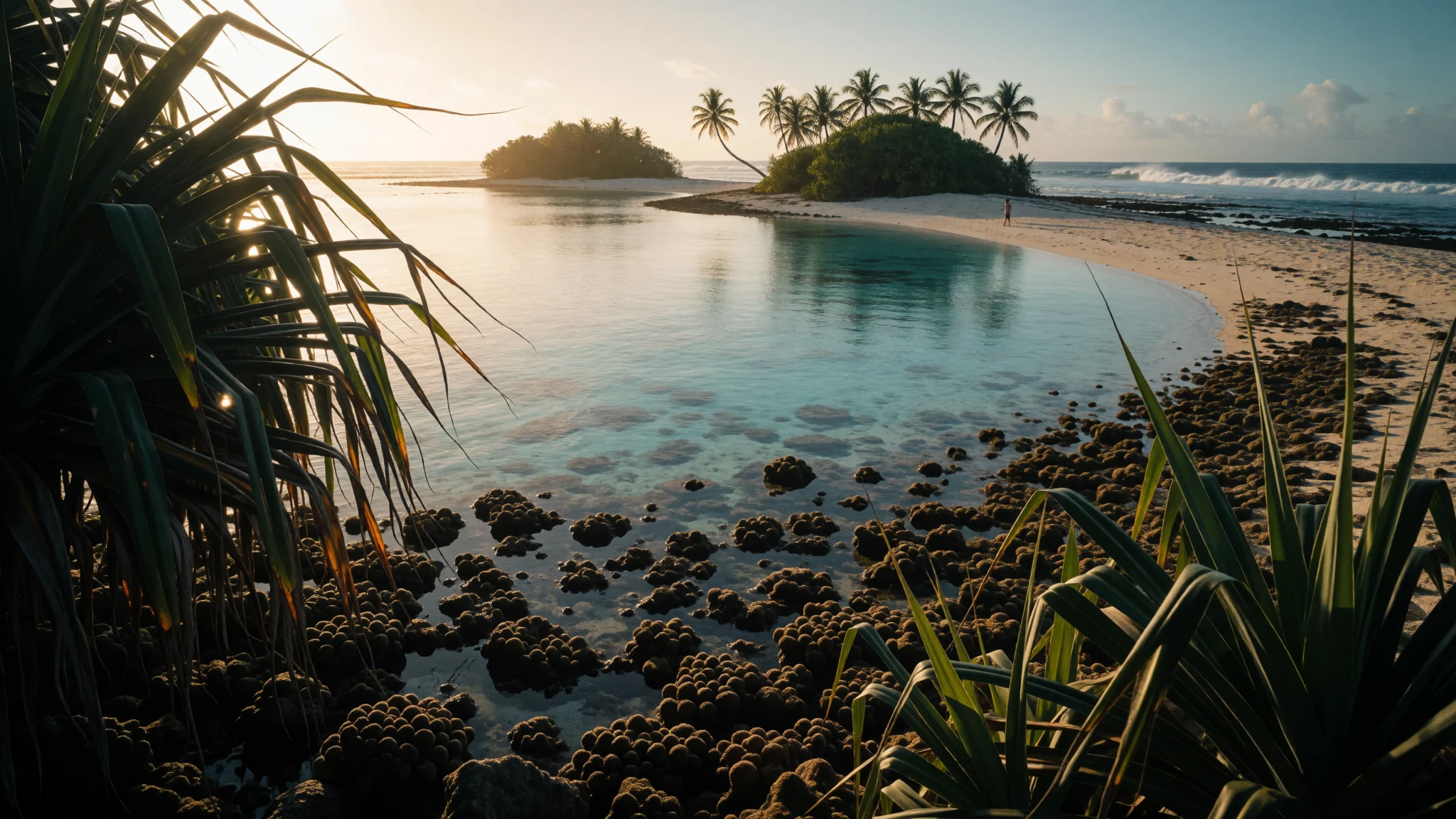
The Lau Islands are Fiji's quiet eastern chain, where Tongan and Fijian traditions meet and visitors are few.
The place
The Lau Islands are an archipelago in the eastern part of Fiji, scattered across the southern Pacific just beyond the Koro Sea. The chain goes by several names, including the Lau Group and the Eastern Archipelago. It holds roughly sixty islands and islets, and about thirty of them have people living on them. Most are small, and the water between them is wide, which shapes everything from how supplies arrive to how often anyone sees another visitor.
The geology splits the chain in two. The northern islands are mostly high and volcanic, with steep green slopes and ridges. The southern ones are mostly low carbonate islands, built up from old reef, flatter and ringed by lagoon and fringing coral. From the air the contrast is easy to read: dark hills in the north, pale rings of reef in the south.
Administratively the islands make up Lau Province, divided into three sub-groups: the Northern Lau, the Southern Lau and the Moala Islands. Tubou, on Lakeba in the south, is the capital and the leading village on that island. Vanua Balavu in the north has a port at Lomaloma and an airstrip near Malaka village, which makes it the most obvious landing point for outsiders.
This is not Fiji's resort belt. Tourism here is thin and has struggled; a small resort off Vanua Balavu failed almost as soon as it opened and has stood abandoned since the turn of the century. The people who come are mostly sailors, independent travellers content with village-style hospitality, and anyone who wants Fiji without the crowds. The trade-off is logistics. Boats and flights can be irregular, weather decides a lot, and the schedule needs generous slack.
Its story
The Lau Islands appeared on European charts early. James Cook called at Vatoa in 1774, and later navigators added detail until the group was far better known to mapmakers than much of Fiji. Yet for Lauans the more important story was political, and it was a story of three separate territories rather than one.
The Northern Lau looked towards Taveuni and paid tribute to the paramount chief of Cakaudrove. The Southern Lau, running from Ono-i-Lau in the far south up to Cicia, were the traditional domain of the Tui Nayau, a chiefly title tied to the island of Nayau. The Moala Islands had closer ties with Bau and the Lomaiviti group than with either.
That changed around 1855, when Enele Ma'afu, a Tongan prince, joined forces with the Tui Nayau's warriors and brought the whole region under one administration. Ma'afu received the title Tui Lau, made Lomaloma on Vanua Balavu his capital, issued a constitution and encouraged Christian missions. Missionaries had first landed at Lakeba in 1830 but had been driven out. In practice the Tui Nayau, previously the nominal overlord, now answered to Ma'afu.
The two titles were united in one person in 1969, when Ratu Sir Kamisese Mara, already Tui Lau, was also installed as Tui Nayau after the death of Ratu Tevita Uluilakeba II. Installations of the Tui Nayau still take place on Nayau, carried out by clan elders. Moala has remained part of Lau Province ever since, though its older loyalties are still remembered.
What to see
- Lakeba and Tubou — Lakeba, Southern Lau
Lakeba, in the Southern Lau, is a good place to start making sense of the archipelago. Tubou, its capital, sits among the island's villages, and Lakeba was long a meeting ground for Tongans and Fijians. Missionaries first landed here in 1830. Expect quiet roads, village life and very few other visitors.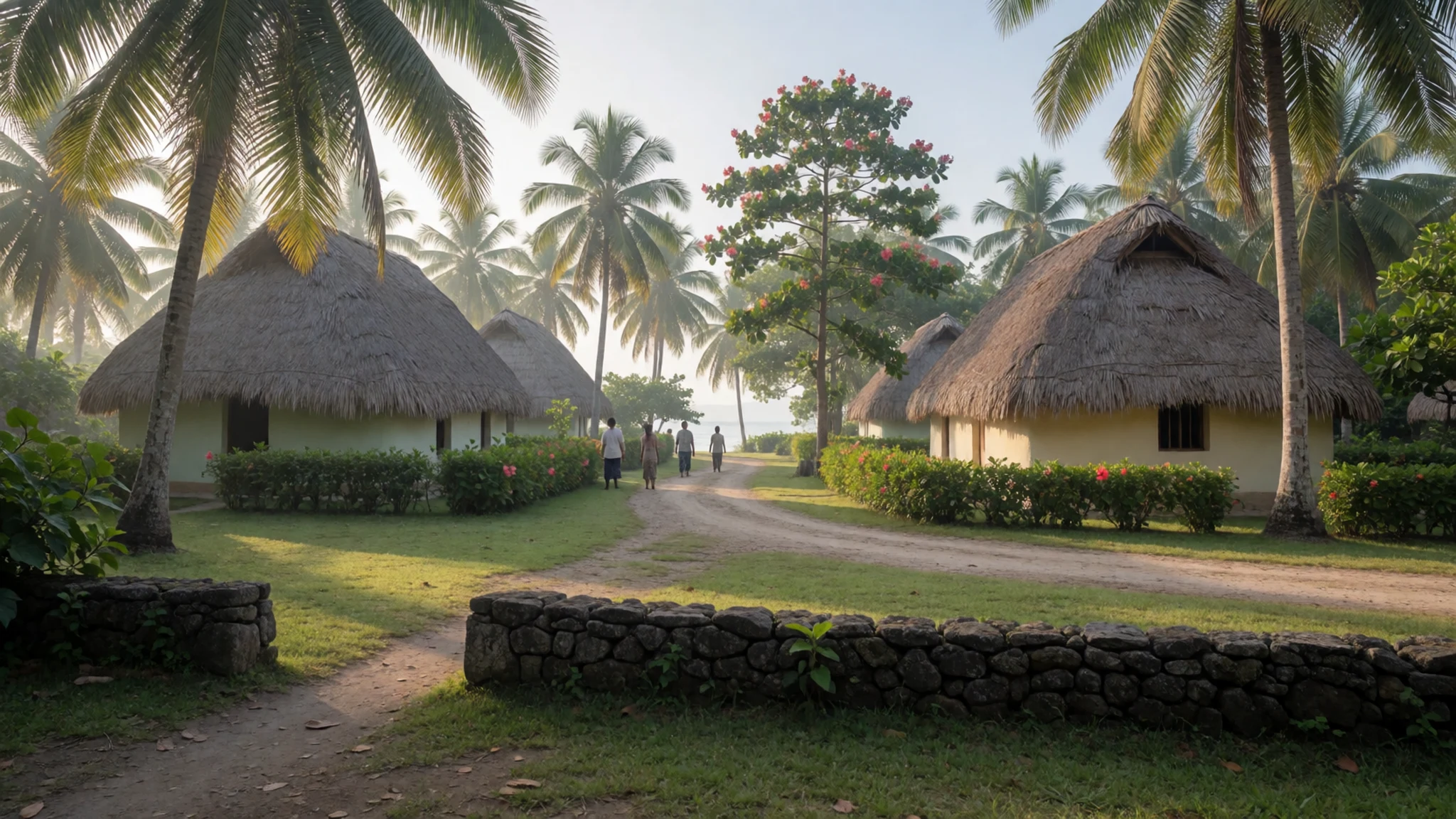
- Vanua Balavu and Lomaloma — Vanua Balavu, Northern Lau
Vanua Balavu in the north is a practical way into Lau, with a port at Lomaloma and an airstrip near Malaka village. Lomaloma was Ma'afu's capital in the 1850s. Offshore, the abandoned resort is a reminder of how hard it has been to build tourism in this part of Fiji.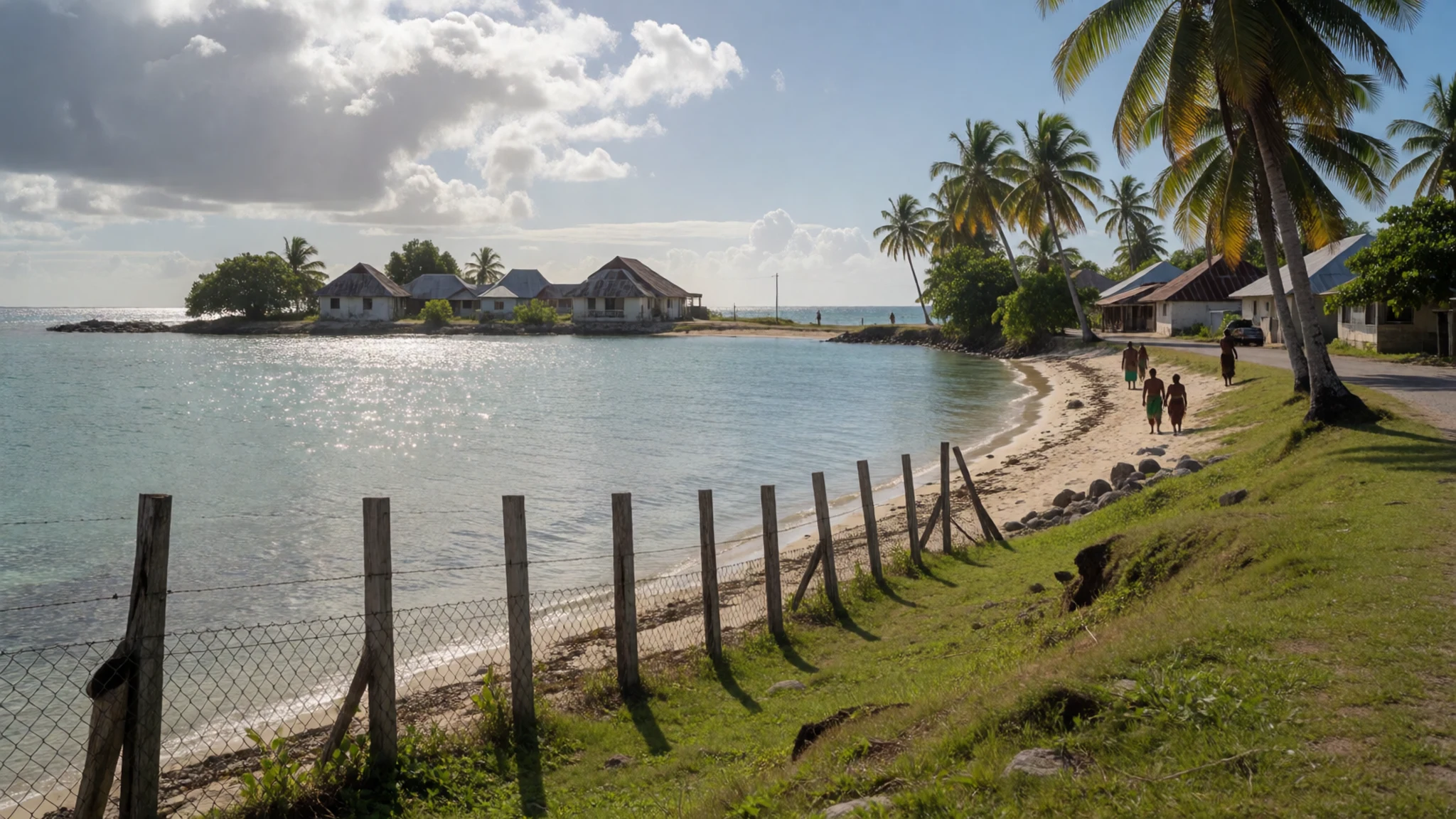
- Moce — Moce, Southern Lau
Moce lies in the Southern Lau, with the islet of Karoni and the Na Potu reef close by, all clear in satellite pictures. The draw is village life and the surrounding lagoon rather than any set sight. Visits need arranging with the village in advance, so go through proper channels.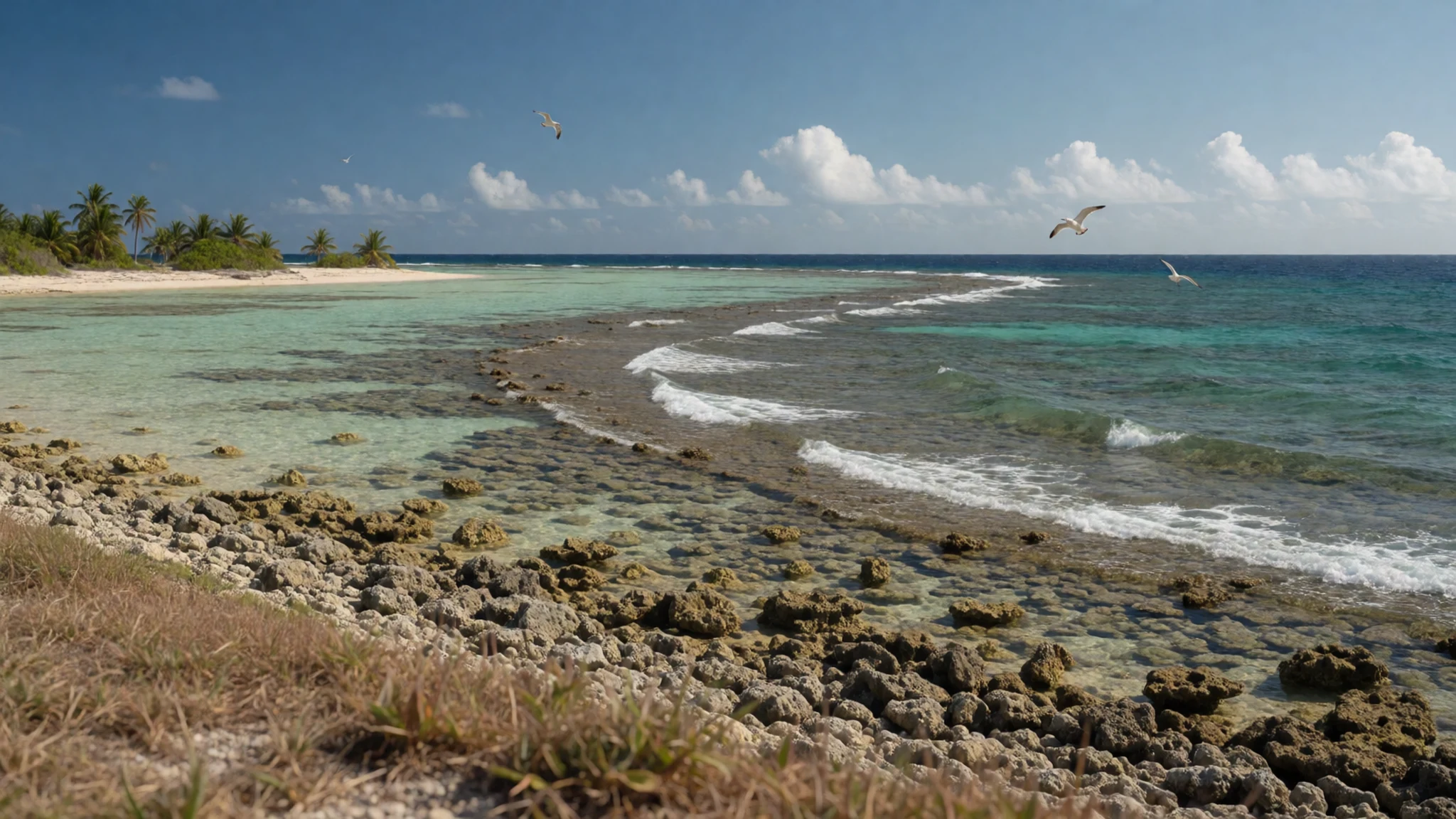
- Fulaga — Fulaga, Southern Lau
Fulaga is a low carbonate island in the south, a ring of reef and lagoon dotted with small limestone islets. Its villagers are known across Fiji for carving wooden bowls, so a visit is a chance to see a craft that Lau is respected for. Getting there takes time and planning.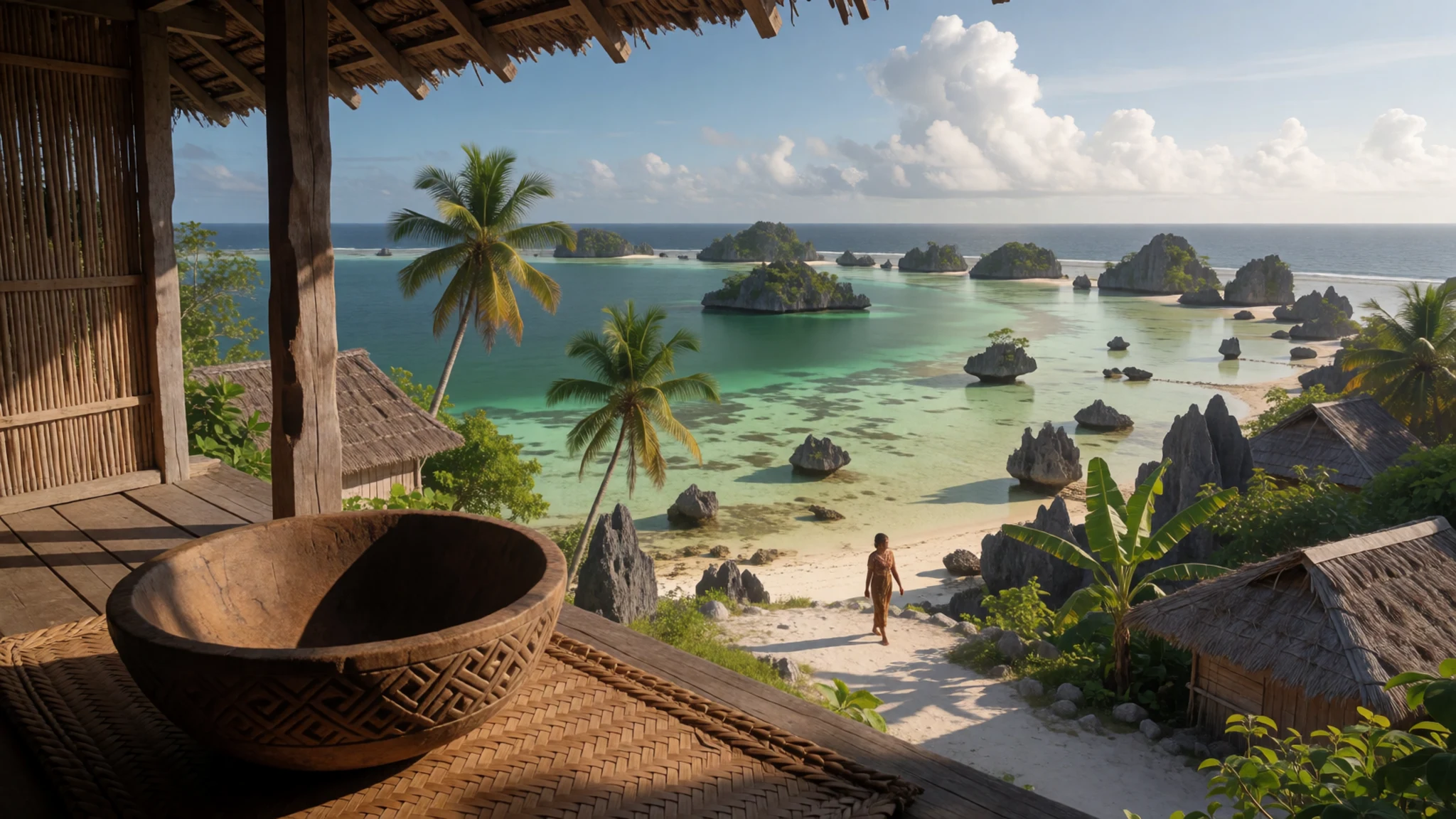
- Matuku — Matuku, Moala Islands
Matuku, in the Moala group, is a high volcanic island, quite unlike the flat coral isles of the south. Moala's old links ran towards Bau and the Lomaiviti islands rather than Lau, so the island feels culturally distinct. Reaching it needs a boat and plenty of slack in the schedule.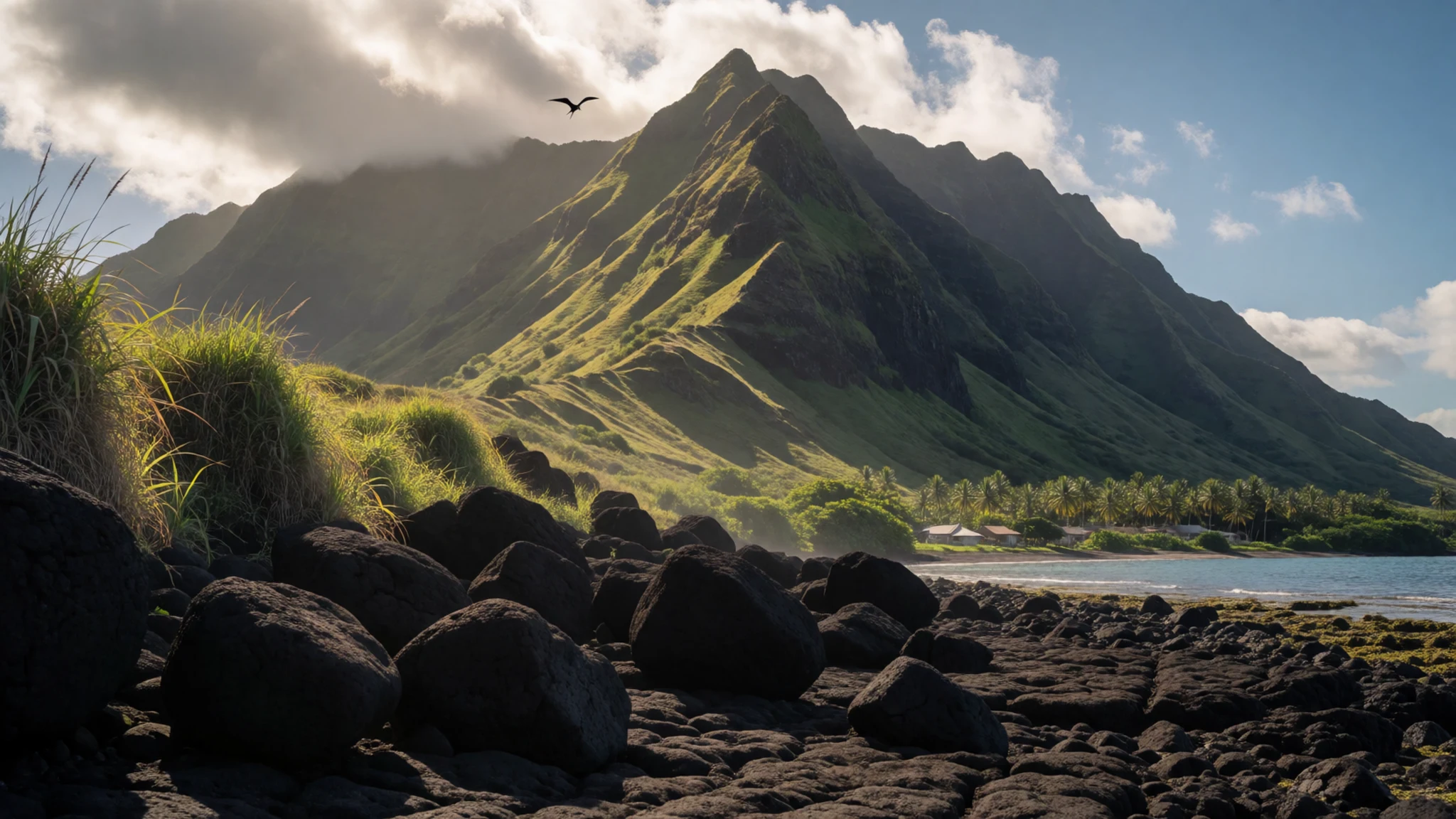
Culture
The Lau Islands sit between Melanesian Fiji and Polynesian Tonga, and the culture shows both. Sailors found the south-east trade winds carried them easily from Tonga to Fiji but made the return hard, so Tongans settled and intermarried, and Lakeba became a meeting place for the two peoples. From around 500 BC the islands became more Fijian than Polynesian, but Tongan influence survives in names, language, food and architecture. Lauan houses, for example, tend to have rounded ends in the Tongan manner, where houses elsewhere in Fiji have square ones.
Villages remain traditional, and the islands are respected for wood carving and for masi, the decorated bark cloth. Chiefly titles such as Tui Nayau still carry real weight, and installations follow clan custom. Genealogical ties run in both directions—many Lauans trace lineage to Tonga, and some Tongans have connections to Lau—which is why any mention of Tonga asserting claims over the islands remains a sensitive topic. In 2014 a Tongan minister floated a proposal about the Minerva Reefs, which are traditional fishing grounds of Ono-i-Lau, and it had not even been discussed with the provincial council.
Daily life revolves around village, church, fishing and gardens. Visitors are guests of the community, not customers, and the pace is slow by design.
Before landing at any village, ask permission through the headman, bring a bundle of kava roots as a gift (sevusevu), and keep shoulders and knees covered.
What to wear
Dress in the Lau Islands draws on both Fijian and Tongan habits. The everyday traditional garment is the sulu, a wrapped cloth skirt worn by men and women alike, usually in cotton. For formal occasions, Tongan-influenced woven mats of pandanus leaf are tied around the waist. Masi, the bark cloth made from the paper mulberry and printed or painted with geometric patterns, appears at weddings, funerals and chiefly events, often as gifts, wall hangings and ceremonial wrapping rather than clothing.
What people wear now is simple and practical. In villages, men commonly wear shirts with a sulu or shorts, and women wear modest dresses or a blouse and sulu. On Sundays, church clothes come out: clean, pressed and often white or bright. Out fishing or working the gardens, people wear old shirts and shorts, plus whatever protects against sun and salt.
Visitors should pack for heat, sun and wet landings. Light, loose cotton or linen clothes that cover shoulders and knees are best for villages, and a sarong is useful as a sulu, a towel and a shade. Take a wide-brimmed hat, reef-safe sun protection and sturdy reef shoes for walking on coral and rocky shores. A light rain jacket is worth carrying, since boat transfers can be splashy and showers come quickly. Swimwear stays on the beach, not in the village.
What to eat
- Kokoda — Village meals and guest house tables on the main islands
Raw fish, usually a firm white reef species, cured in lime juice and mixed with coconut milk, chilli, onion and tomato. It is cool, sharp and creamy, and in Lau it is best eaten on the day the catch comes in.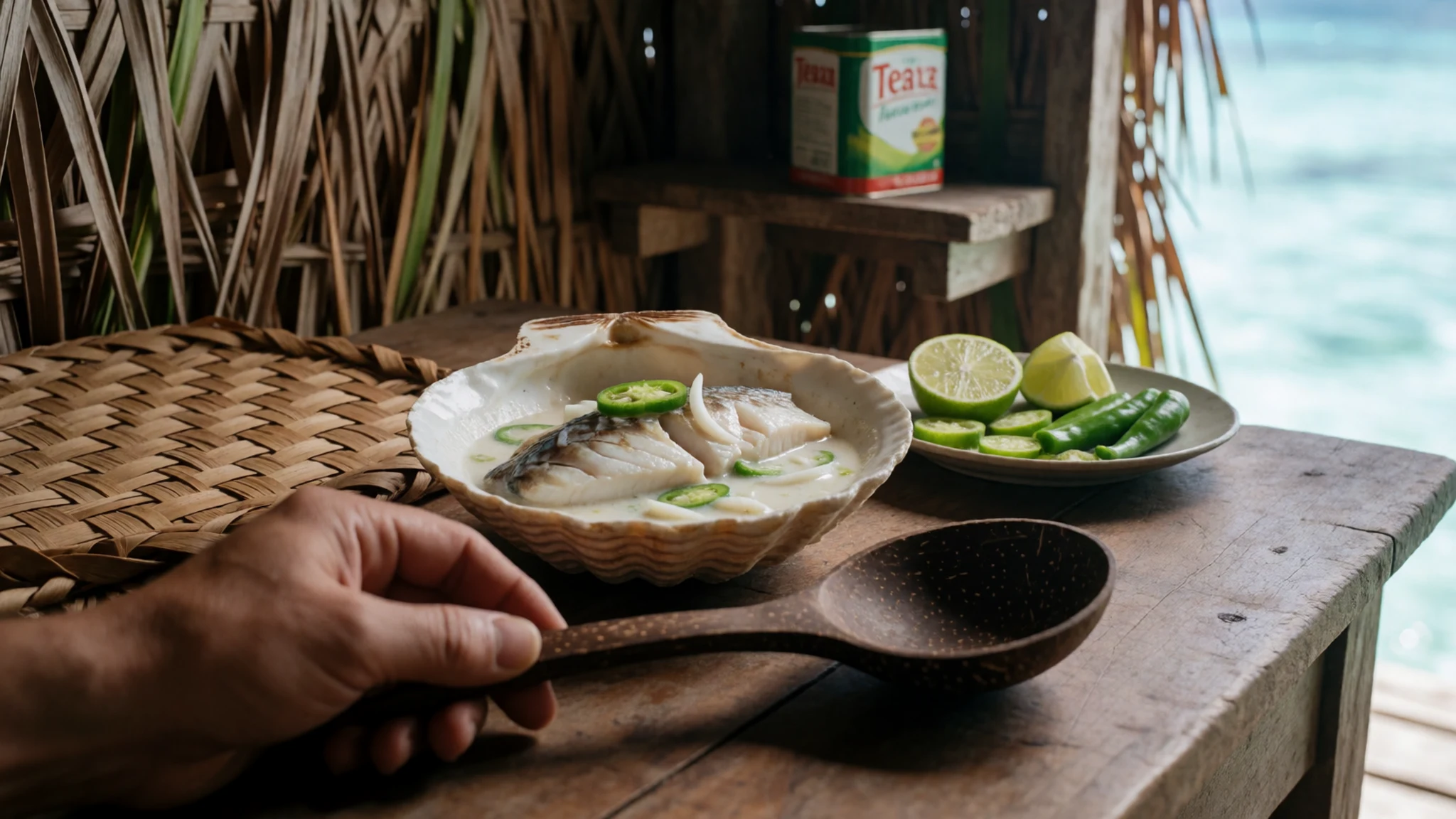
- Lovo — Village feasts and church-day meals
Food cooked in an earth oven: parcels of fish, pork or root vegetables wrapped in leaves and buried over hot stones. The result is smoky and tender. It is made for feasts and Sunday meals, so timing a visit around one is a treat.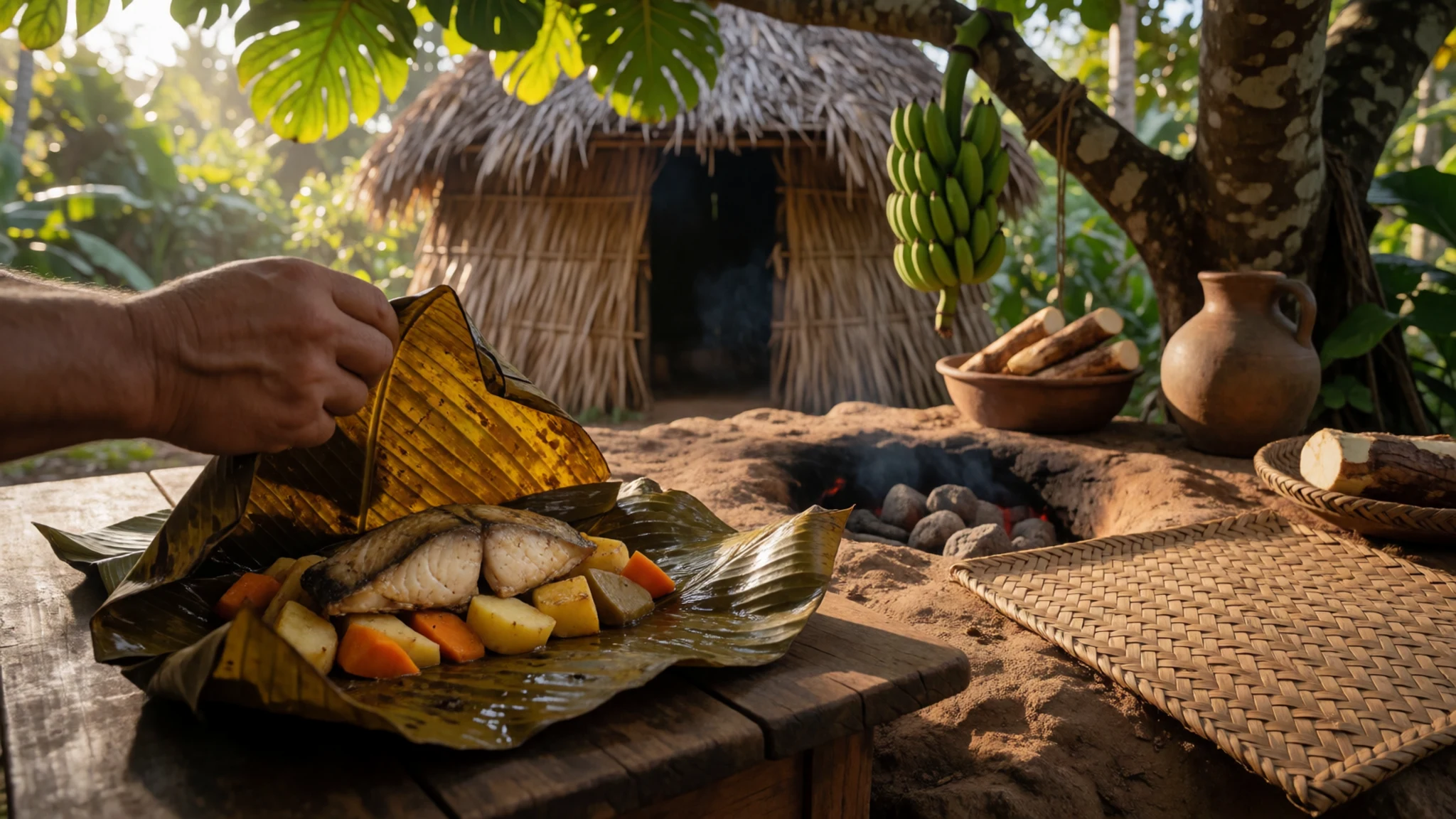
- Rourou — Home-cooked village meals
Young taro leaves simmered in coconut milk until soft and rich, often served beside fish or boiled roots. It is gentle in flavour, filling, and a useful dish for vegetarians, though cooks sometimes add tinned fish, so ask. - Dalo and cassava — Any village meal; gardens beside the settlements
Boiled or baked taro and cassava are the staples on the table, soaking up fish broth and coconut sauces. They are plain and starchy but satisfying, and many are grown in village gardens rather than bought. - Grilled reef fish — Village homes and guest houses near the shore
Fish caught that morning is grilled over a wood fire or cooked in coconut cream, sometimes with lime. Species vary by island and season, and the cooking is simple. Ask the household what came in from the boats.
Plan it
Best time. May to October is the drier, cooler part of the year, which suits boat journeys and village stays. November to April is hotter, wetter and more humid, and brings the risk of tropical cyclones and disrupted sailings.
How long. 5–7
Getting there. Fly into Nadi or Suva on Fiji's main island, then continue by small aircraft or boat. Vanua Balavu has an airstrip near Malaka village and a port at Lomaloma. Check current flight and shipping schedules with the operators, as services to the Lau Islands can be irregular.
Budget. mid
Tips
- Allow slack of several days at both ends, since flights and boats can be delayed or cancelled by weather
- Arrange village stays and visits in advance through the provincial or village contacts, rather than turning up
- Bring cash, since cards and cash machines are unlikely to be available on most islands
- Carry enough drinking water, sun protection and any medicines, as supplies on small islands are limited
- Moana's Guest House on Vanua Balavu is one of the few regular options for independent travellers, with meals included
Etiquette
- Present a kava gift and ask permission before entering a village
- Cover shoulders and knees in villages, and take off hats and sunglasses when meeting a chief
- Ask before photographing people, ceremonies or masi and carvings
Nearby
Sources
- Wikidata Q1062438 (CC0)
- Wikipedia: Lau Islands (rev 1377426605) (CC BY-SA 4.0)
- Wikivoyage: Lau Islands (rev 5311849) (CC BY-SA 4.0)
- NASA astronaut image of the Yagasa Cluster, Lau Archipelago (Public domain)
- Fulaga (NASA) (Public domain)
- NASA astronaut image of Kanacea Island (Public domain)
- Mago Island, Lau Group (NASA Geocover 2000) (Public domain)
- NASA astronaut image of Matuku (Public domain)
- NASA astronaut image of Moce Island (Public domain)
- Naitaba (NASA) (Public domain)
- NASA astronaut image of Namuka-i-Lau (Public domain)


