Vanua Levu
Vanua Levu, Fiji
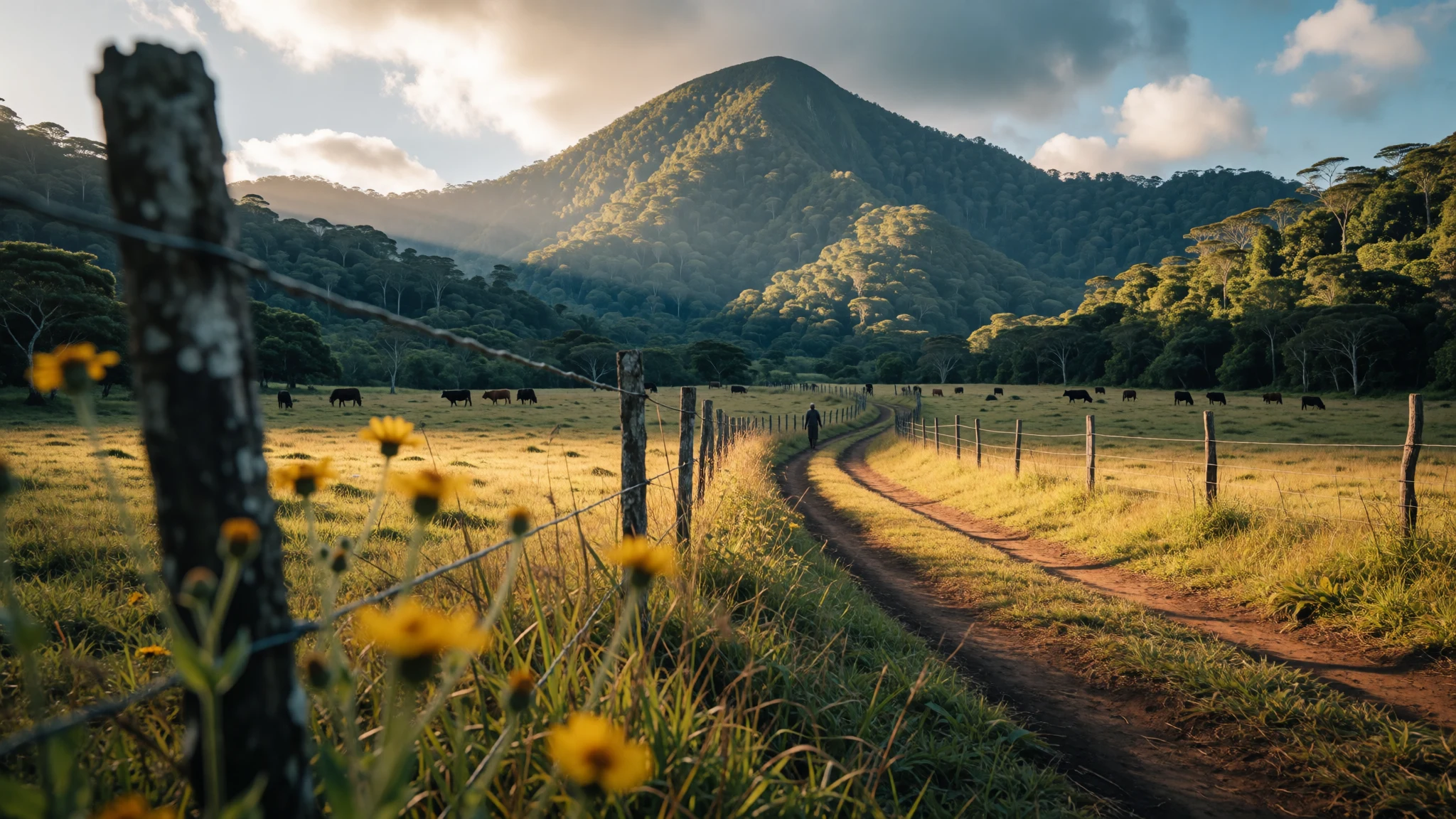
Vanua Levu is Fiji's quieter second island, where small harbour towns, village life and forested hills reward slow travel.
The place
Vanua Levu is the second largest island in Fiji, lying north of Viti Levu across about 64 km of open sea. Its name means Big Land, and it feels less like a resort stage set than a working country: coconut groves, cattle pasture, sugar cane, fishing villages and forested ridges. A spine of volcanic and sedimentary hills runs through the middle, and the higher peaks catch cloud and rain, so the interior is green and often damp. Two towns anchor daily life. Labasa, in the north, is the commercial centre of the cane-growing side, home to a mixed Fijian and Indo-Fijian community and a busy market. Savusavu, at the foot of the southern peninsula, is a small harbour town facing a sheltered bay, popular with visiting yachts and divers. Between them the roads are quiet, villages are small, and a long day can pass with few other visitors. Compared with the busy western side of Viti Levu, there are fewer large resorts and more family-run guesthouses, dive lodges and homestays. Heat and humidity are constant, the wetter months bring heavy rain and some risk of cyclones, and distances that look short on the map can take hours on rough roads or irregular buses. Plans here bend around weather, ferries and flights, and travellers who accept that tend to enjoy the island most.
Its story
Vanua Levu was first settled roughly 3,100 years ago, by people who built houses on stilts over the shallow reefs. Later, the sea fell by a small but critical margin, exposing the reef tops, killing off shellfish and other seafood, and lowering the water table below the roots of crops. Hunger bred conflict, and communities left the shore for fortified villages on hilltops, which stayed in use until the second half of the nineteenth century. Europeans arrived late and briefly. The Dutch navigator Abel Tasman sighted the island in 1643, and William Bligh passed by in 1789, in an open launch after the mutiny on the Bounty. A later voyage by Captain James Wilson in the ship Duff added to the charts. The island's old nickname, Sandalwood Island, comes from a trade that began around Bua Bay in the early nineteenth century, after shipwrecked sailors from the schooner Argo found the trees. The groves were stripped within about a decade, and afterwards only whalers and bêche-de-mer traders called regularly. A young sailor who left his ship on neighbouring Taveuni was adopted by a chief and went on to explore much of the east and north. Settlers from Australia and New Zealand later planted coconuts around Savusavu, and that plantation economy shaped the south of the island. Overgrown hilltop fort sites and old harbours are the physical record of this layered past.
What to see
- Savusavu and its bay — South coast
Savusavu is the island's easiest base: a small waterfront town with a produce market, a sheltered anchorage full of yachts, and dive operators nearby. Walks along the shore road are pleasant in the cooler morning hours, and the town is a sensible place to arrange boats, drivers and local guides.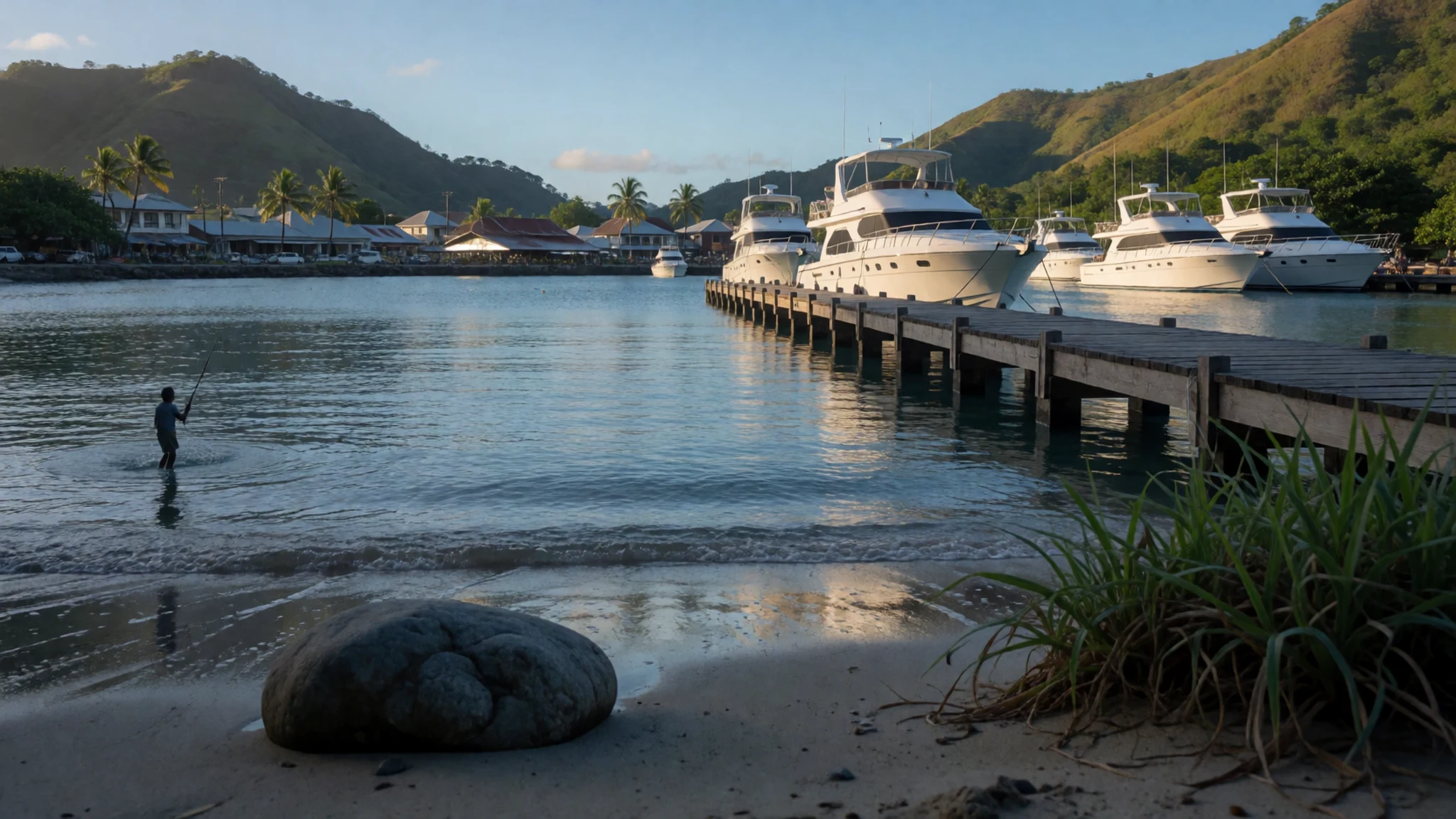
- Labasa and the cane country — North coast
Labasa is the island's northern hub, set among sugar cane fields and low hills. The town market is the best place to see everyday Vanua Levu, from root crops to spices, and the Indo-Fijian temples and festivals give the area a character distinct from the south coast.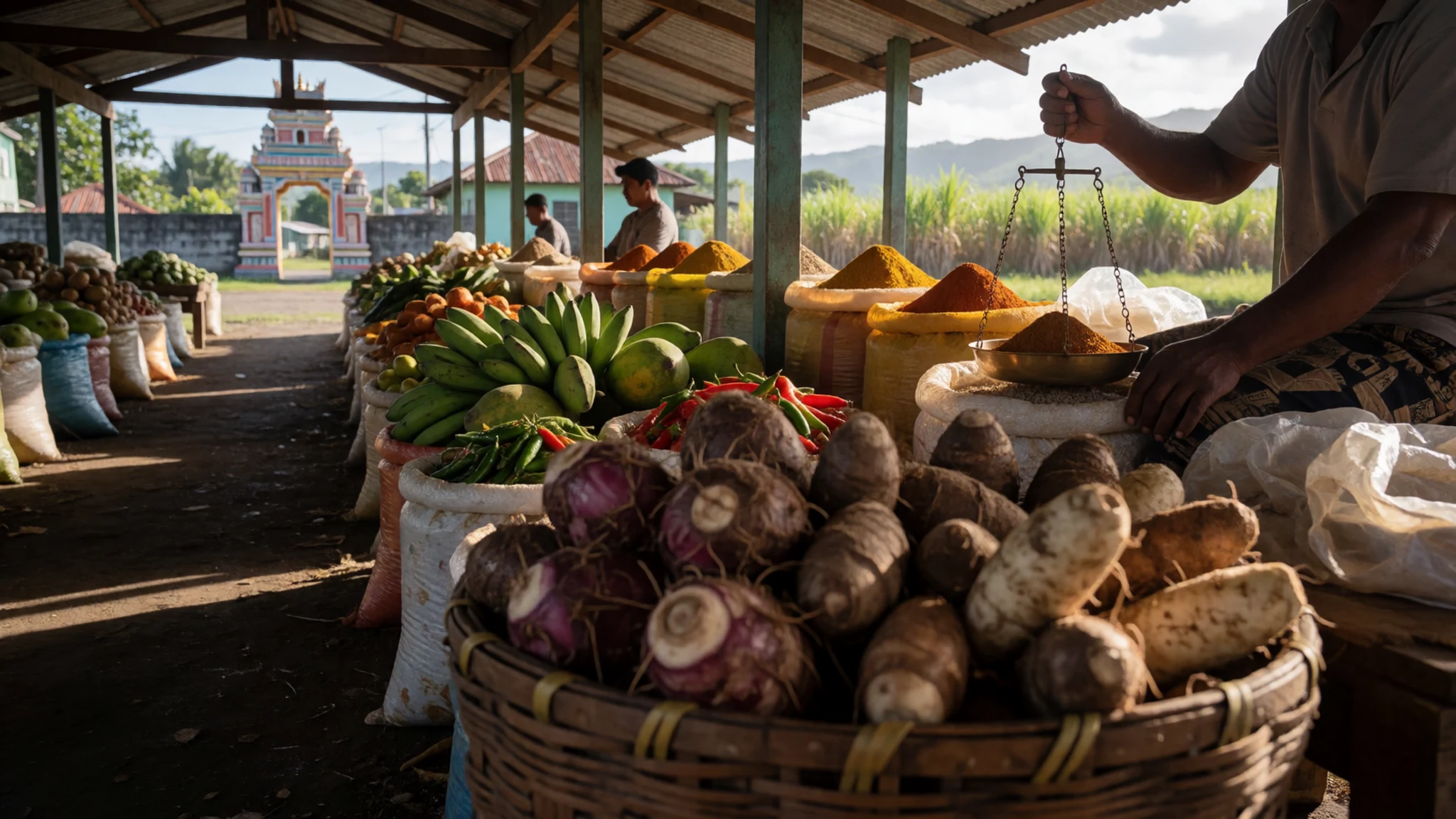
- Nabouwalu ferry port — South-west coast
Nabouwalu is where the ferry from Viti Levu lands, and the approach by sea gives a good first view of the island's mountainous green coastline. The port itself is small and functional, but the crossing and the long bus ride beyond it show how the island is laid out.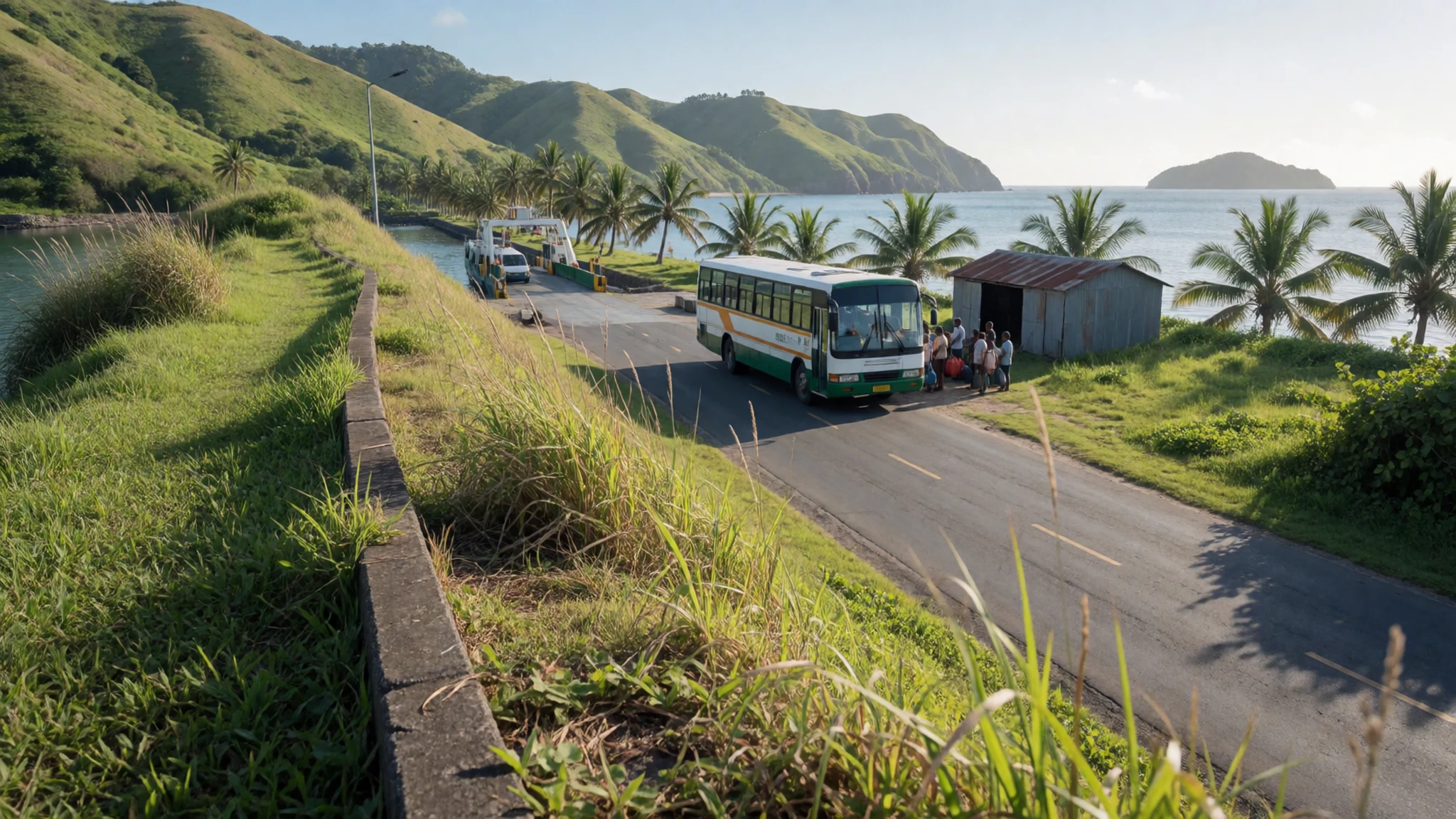
- Natewa and Tunuloa peninsula forests — South-east
The interior of the Natewa and Tunuloa peninsula holds the largest remaining tracts of old-growth forest on Vanua Levu and is recognised as an Important Bird Area. It supports the vulnerable shy ground dove. Go with a local guide, expect mud, and treat it as a birdwatching trip rather than a sightseeing stop.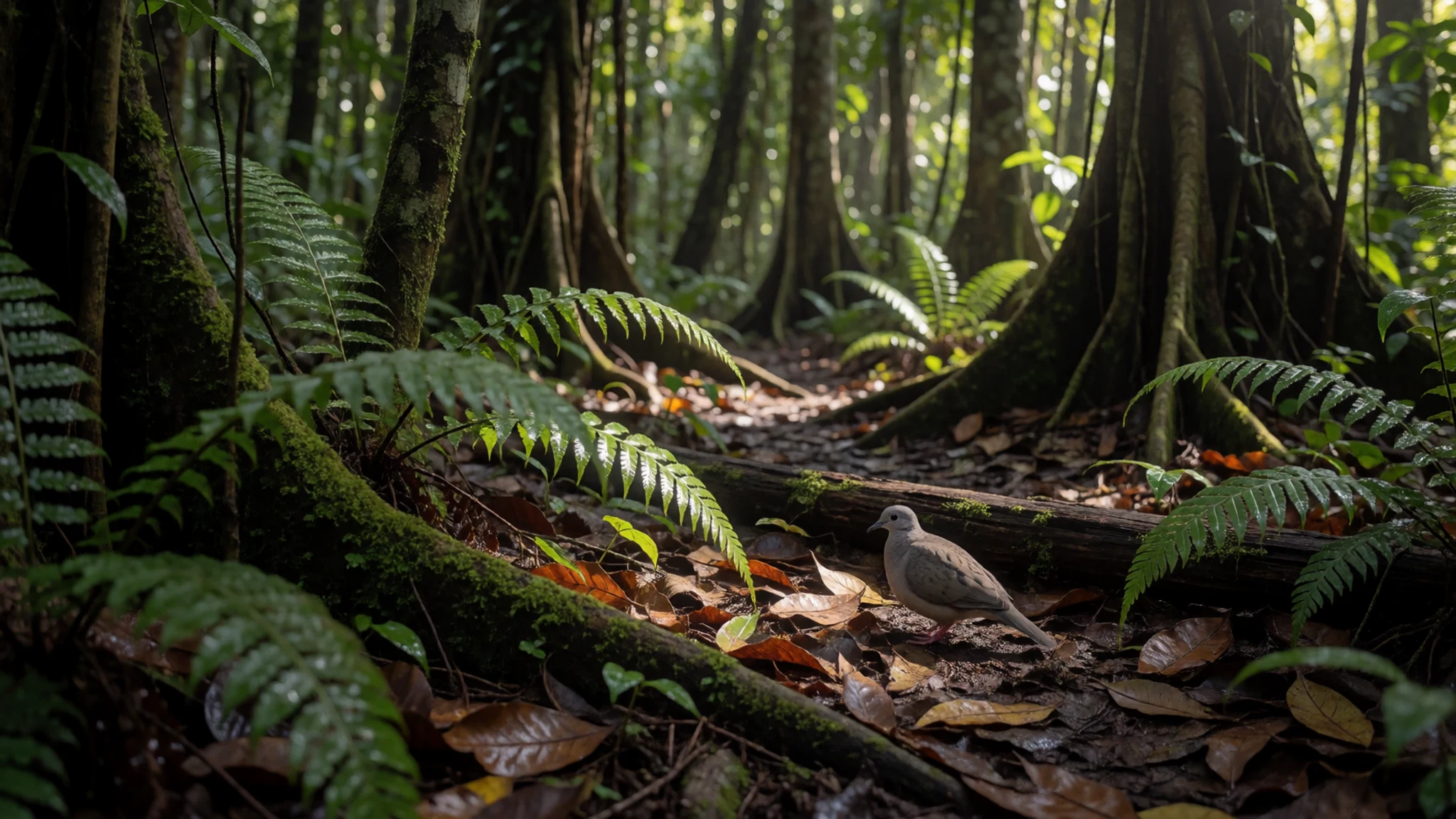
- Bua Bay — West coast
Bua Bay is where the sandalwood trade began in the early nineteenth century, and it remains one of the island's remote corners. Visitors come for quiet coast, village life and fishing rather than monuments, and the journey itself, along unsealed roads past small settlements, is much of the interest.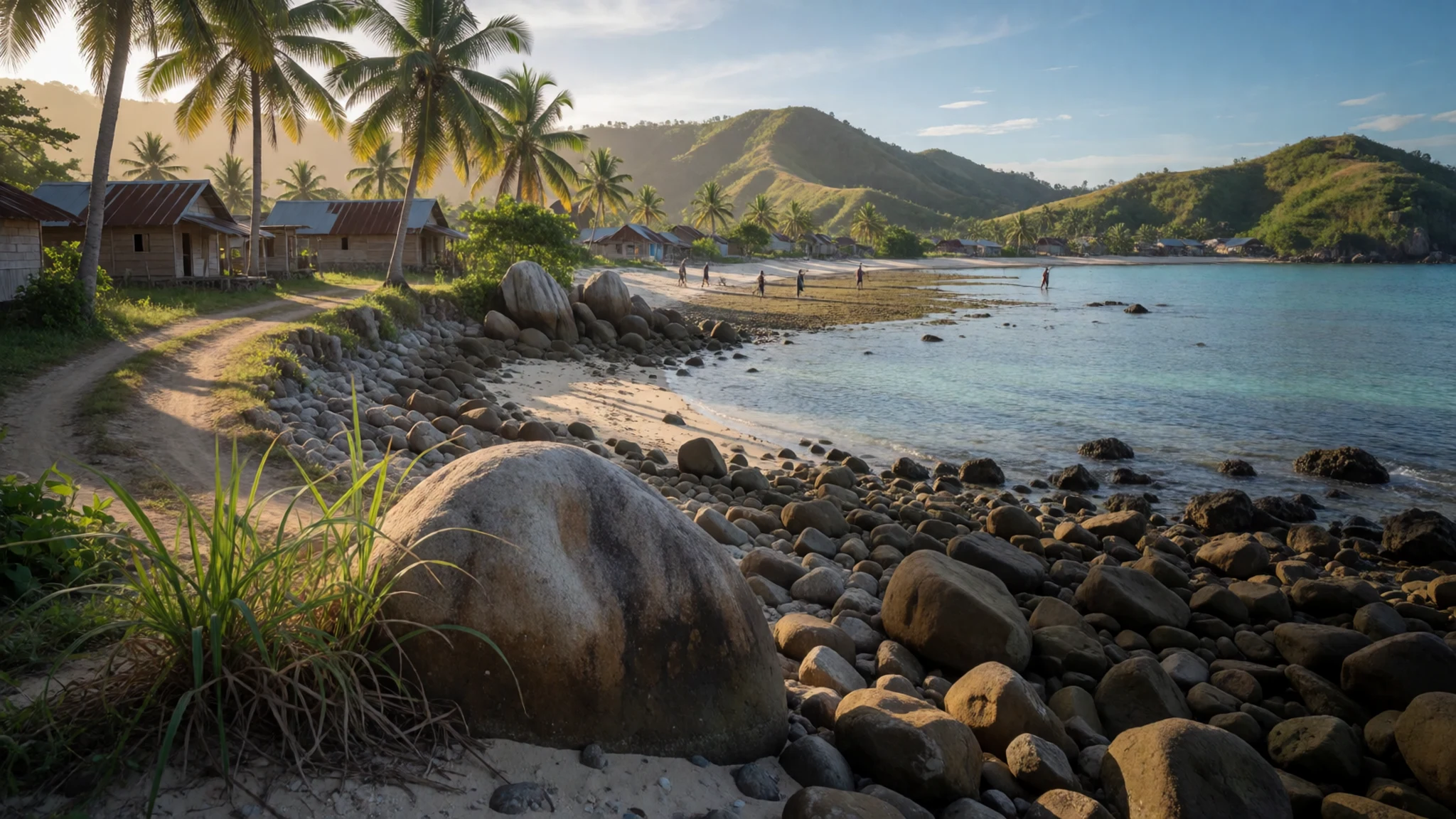
Culture
Vanua Levu is a place where village life and Fijian custom still set the pace outside the towns. Land is held communally by clans, and each village has a chief, so a visit beyond the main roads usually involves some form of introduction. Kava, called yaqona, is the drink of welcome and ceremony: a root pounded and steeped in water, then shared from a bowl in a set order, with a clap and a cry of bula. Churches matter a great deal, and Sundays are quiet, with services, singing and family meals taking priority over shops and boats. The island's Indo-Fijian community, whose families came as indentured labourers to work the cane, adds Hindu temples, mosques and festivals such as Diwali to the calendar, especially around Labasa. Fijian hospitality is real but runs on relationship rather than transaction, so time spent sitting and talking counts as part of the visit. English is widely spoken alongside Fijian and Fiji Hindi, though a few words of greeting are noticed and appreciated. Respect for hierarchy, patience with schedules and gentle humour carry a long way. When visiting a village, ask before photographing anyone, remove your hat and sunglasses, and bring a bundle of kava root as a gift for the chief.
What to wear
On Vanua Levu, traditional dress centres on the sulu, a length of cloth wrapped at the waist and worn by men and women. Men wear a tailored version with pockets and a pleated hem, the sulu vakataga, for church, offices and formal occasions. Masi, a bark cloth made from the paper mulberry and stamped with geometric patterns, appears at weddings and ceremonies, alongside woven pandanus mats. Indo-Fijian women wear saris and salwar kameez, especially at festivals and temple visits. In daily life, people wear cotton shirts, shorts, floral dresses and flip-flops, with smarter clothes for church on Sundays. Visitors should pack light, quick-drying cotton and a sun hat, with a sarong that doubles as a cover-up. In villages and towns, keep shoulders and knees covered, and save swimwear for the beach or resort. Reef shoes help on rocky shores, sturdy trainers suit muddy forest tracks, and a light rain jacket earns its space in the wetter months. Cold is rarely a concern, but evenings by the water can feel cooler, so a thin layer is useful.
What to eat
- Kokoda — Savusavu market and waterfront cafés
Kokoda is raw fish cured in lime juice and mixed with coconut cream, chilli, onion and tomato. Vanua Levu's version is a fresh, sharp, cooling dish, best eaten soon after the catch comes in, usually with boiled cassava or taro alongside.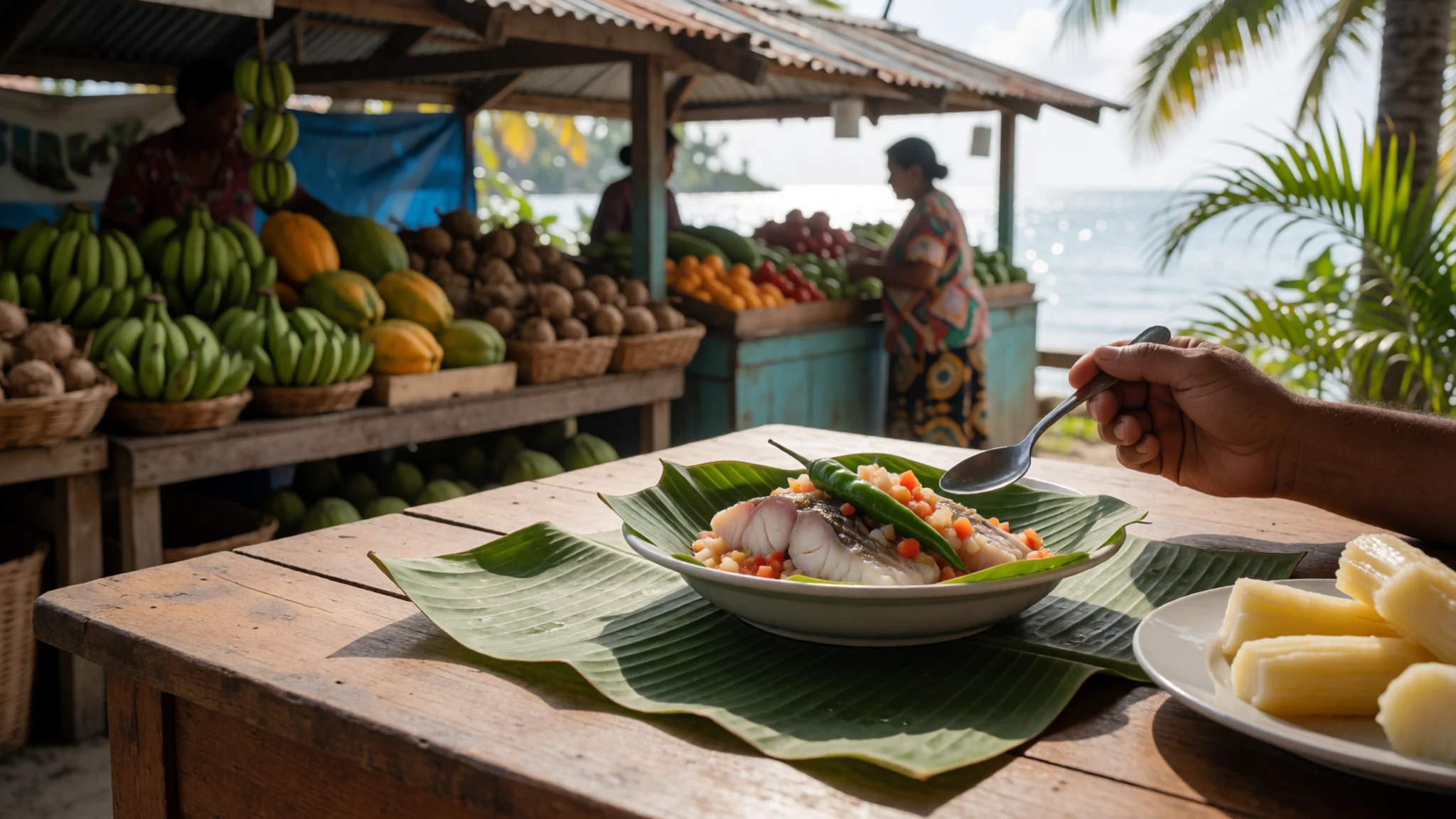
- Lovo — Village feasts and weekend gatherings
Lovo is food cooked in an earth oven, with hot stones, banana leaves and a covering of soil. Meat, fish and root crops come out smoky and tender. It is usually served at celebrations, so a village invitation is the best way to try it.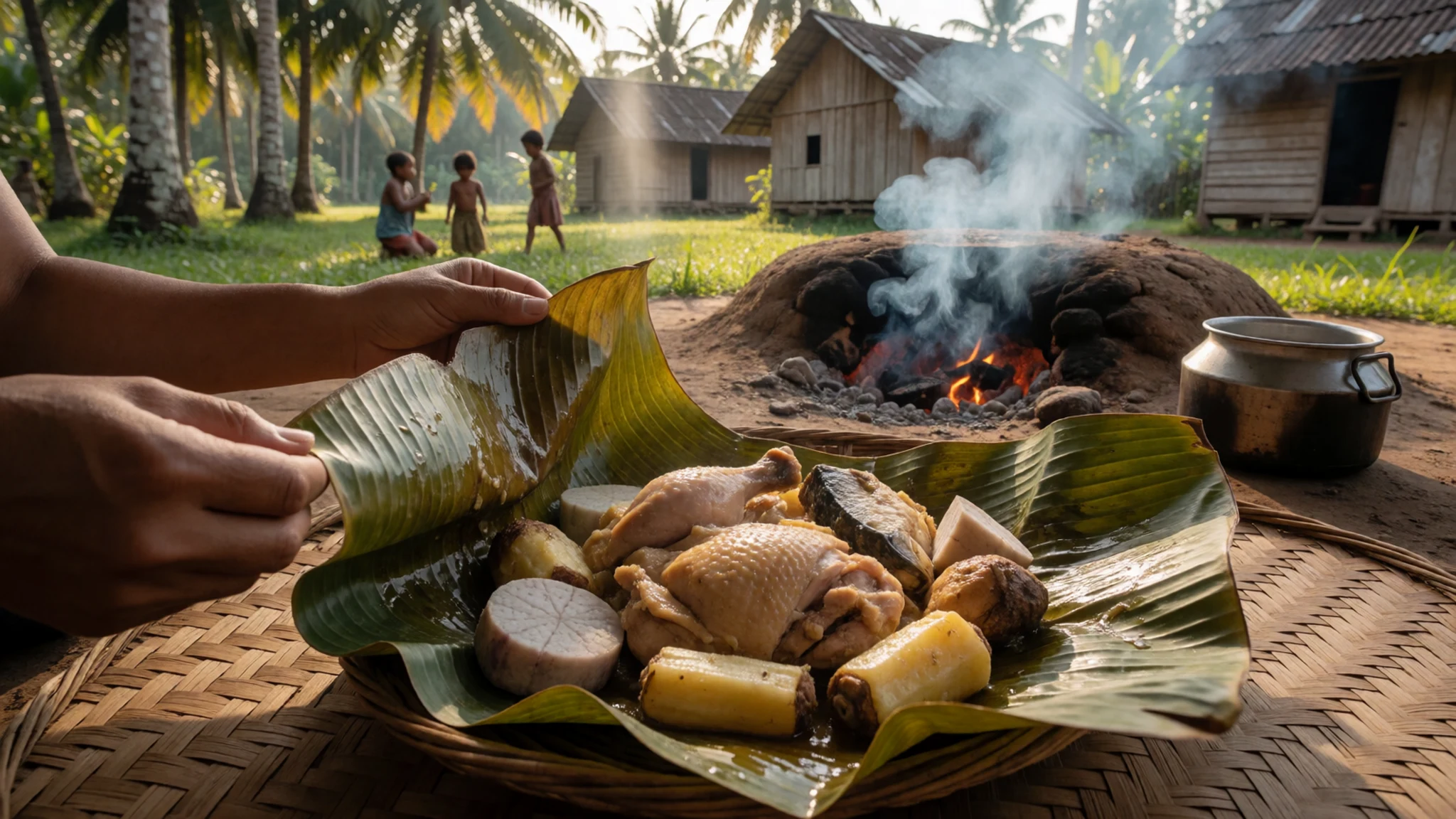
- Rourou — Village tables and municipal markets
Rourou is made from young taro leaves slowly cooked in coconut milk until soft and rich. It resembles a green, mild curry, and is often served beside fish or root crops in homes, where it is a staple rather than a restaurant dish. - Curry and roti — Eateries in Labasa and other cane-belt towns
Indo-Fijian cooking is strongest around Labasa, where small eateries serve vegetable, lentil, goat and fish curries with roti or rice. Spice levels vary, so ask. A plate like this is a filling, practical lunch. - Dalo and cassava — Municipal markets and village gardens
Boiled or baked dalo (taro) and cassava are everyday staples, sold in bundles at markets across Vanua Levu. Plain and starchy, they are the base of most meals and the usual partner for fish, stews and coconut-cream sauces.
Plan it
Best time. May to October is the drier, cooler and less humid season, best for walking, diving and road travel. November to April is hotter and wetter, with heavy rain and some risk of cyclones.
How long. 4–6
Getting there. Take a domestic flight from Nadi or Suva to Labasa or Savusavu, and check current airline schedules. Alternatively take the Patterson Brothers ferry from Viti Levu to Nabouwalu, then a bus or hired car along the island's roads; check the operator's site for sailing days.
Budget. mid
Tips
- Book flights and ferries early in school holidays and festival periods, and expect delays in bad weather
- Carry cash for village shops, buses and markets, as card machines are scarce outside the towns
- Drink bottled or boiled water, and carry sun protection and insect repellent
- Allow extra time for roads, which can be rough and slow after rain
- Arrange forest and birdwatching trips with a local guide through your lodge
Etiquette
- Bring kava root as a gift when visiting a village, and ask before taking photographs
- Dress modestly away from the beach, with shoulders and knees covered
- Keep Sundays quiet and respect church services
Nearby
Sources
- Wikidata Q327733 (CC0)
- Wikipedia: Vanua Levu (rev 1364341082) (CC BY-SA 4.0)
- Wikivoyage: Vanua Levu (rev 5244709) (CC BY-SA 4.0)
- Fiji June 2001.jpg (Public domain)
- VanuaLevu2021OSM.png (Kelisi) (CC BY-SA 4.0)
- 2004.03.04 08 Vanua Levu ferry Fiji.jpg (Hermann Luyken) (CC BY 3.0)
- 2004.03.04 Bus ferry Nabouwalu Fiji.jpg (Hermann Luyken) (CC BY-SA 2.5)
- The Gnauna Vinaka Passing the Island of Tavea (Wesleyan Methodist Missionary Society) (Public domain)
- 10 Minutes west of Labasa, Vanua Levu, Fiji (catlin.wolfard) (CC BY 3.0)
- 2004.03.04 09 Ferry Nabouwalu Fiji.jpg (Hermann Luyken) (CC BY 3.0)
- Admiralty Chart No 379 Vatu Ira Channel (UK Hydrographic Office) (Public domain)


