Mukhtarov Mosque
Mukhtarov Mosque, Russia
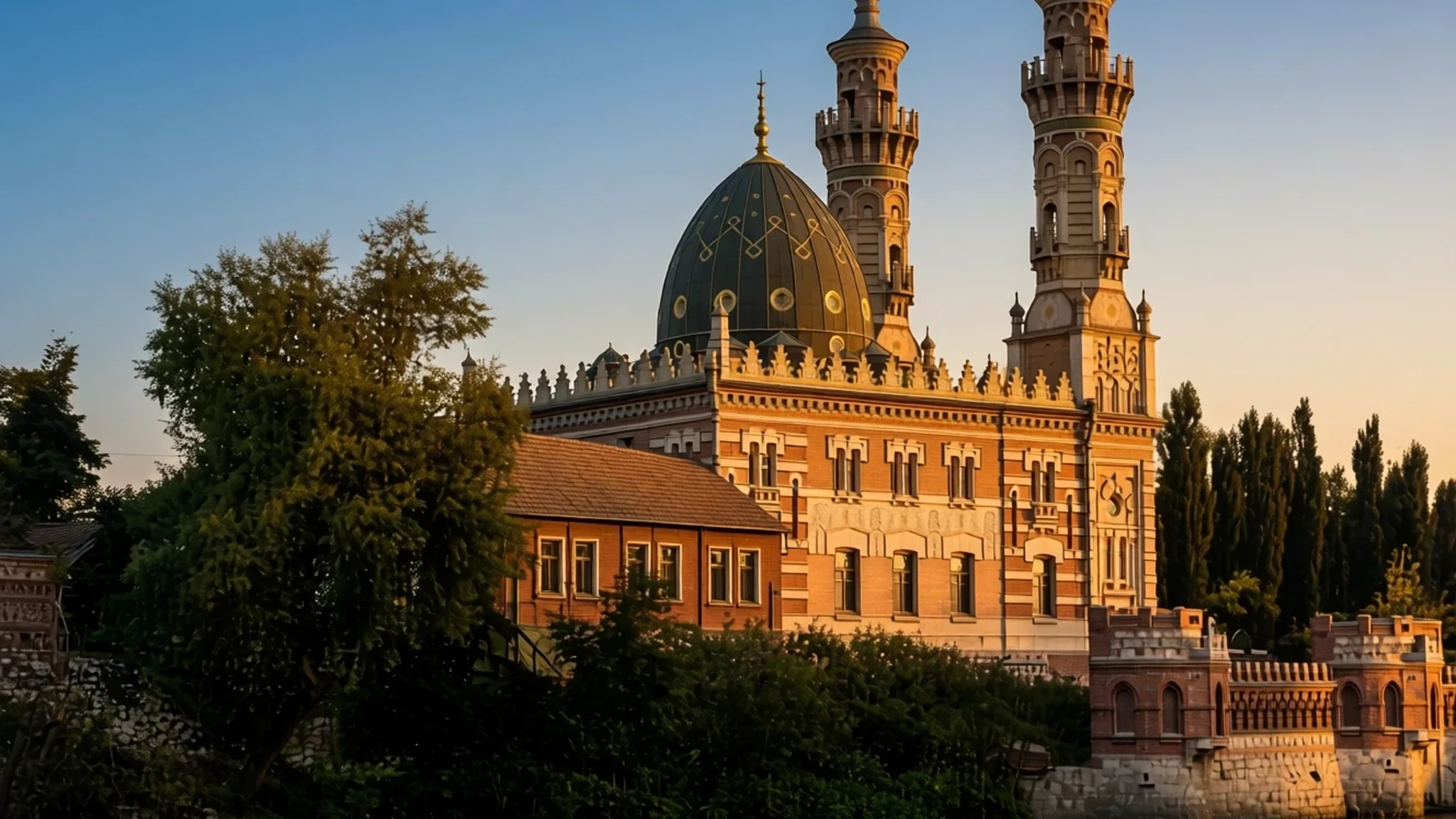
Mukhtarov Mosque is a Cairo-inspired landmark of 1908 on the Terek, set against the Caucasus, and it is a quiet, human-scaled stop in Vladikavkaz.
The place
Mukhtarov Mosque stands on the left bank of the Terek River in Vladikavkaz, the capital of North Ossetia, with the Caucasus ridges rising behind its minarets. The city itself grew from a fortress founded in 1784 at the mouth of the Daryal gorge, the old route through the mountains towards Georgia. The mosque is often called the Sunni Mosque locally, and it is named after Murtuza Mukhtarov, an Azerbaijani oil millionaire and philanthropist who paid for most of the construction.
Its architect, Józef Plośko, looked to the mosques of Cairo, and to Al-Azhar in particular, for ideas. That explains the look: banded stonework, slender minarets and a restrained, geometric front, quite unlike the onion domes of the Orthodox churches elsewhere in the city. Plośko also designed the Mukhtarov Palace in Baku, so the patron and the architect had worked together before.
The building serves the Muslim community of North Ossetia. It has had legal protection as a landmark since 1934, which kept it standing through the Soviet decades. A bomb blast in 1996 badly damaged it, and it was repaired afterwards. Today it is a working place of worship rather than a museum, and the surrounding streets are calm, residential and easy to walk. Most visitors spend an hour here, take photographs from the river side, and then go on to the centre of town.
Its story
Mukhtarov Mosque began with a permit in 1900, when the city authorities set aside a plot on the left bank of the Terek. A newspaper of the time, Priazovsky Krai, put the cost at 80,000 rubles, and more than 50,000 of that came from Murtuza Mukhtarov, a wealthy Azerbaijani who gave generously to causes across the Caucasus. He chose Józef Plośko, an architect he already trusted, to design it. Building took eight years, and the mosque opened on 14 October 1908.
It was never only a local Ossetian institution. Before the 1990s it also served Ingush residents of Vladikavkaz, until they were expelled from North Ossetia. Earlier, in January 1914, the Muslim Newspaper printed a letter from Ingush representatives thanking Mukhtarov. He had given 5,000 rubles to their education society for a school, and the society wanted to make him an honorary member. The letter was read out in this very mosque by an agronomist, which shows how much it served as a meeting point for the wider Muslim community of the town.
The twentieth century was hard on the building. Landmark protection arrived in 1934, yet worship was difficult under Soviet rule. In 1996 an explosion did serious damage, and restoration followed. What visitors see now is a 1908 design that has been patched, protected and reopened more than once.
What to see
- Mukhtarov Mosque — Left bank of the Terek, Kotsoev Street
The mosque itself is the reason to come. Look at the banded masonry, the pair of slim minarets and the Cairo-style detail, then walk to the river side for the view with the mountains behind. It is compact, so an unhurried visit takes well under an hour.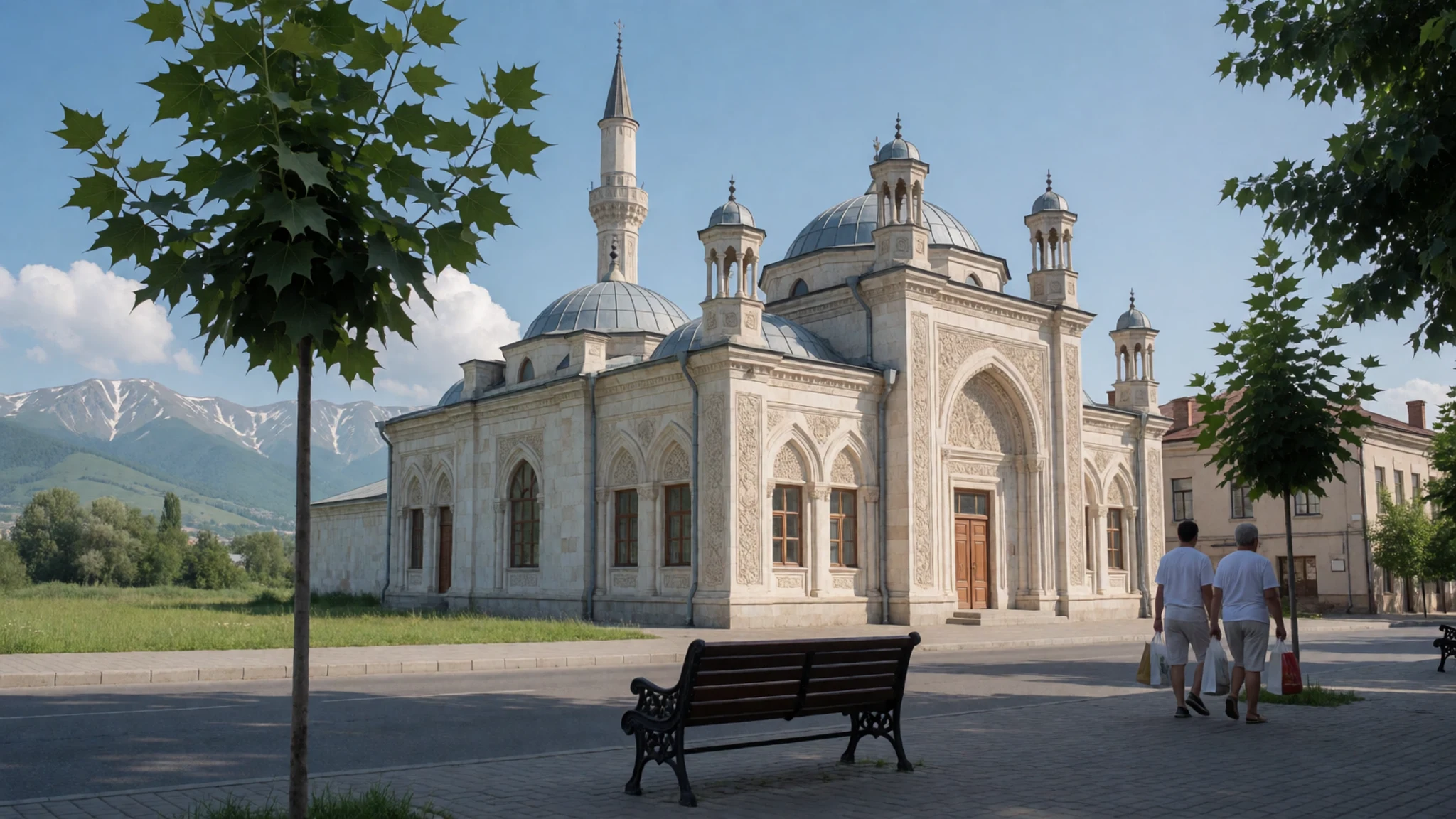
- The Terek embankment — Along the Terek
The river is only a short walk from the mosque and gives the clearest line of sight to the mountains. Locals stroll here in the evening. It is a good spot for photographs of the minarets with water in front, and the light is kindest early or late in the day.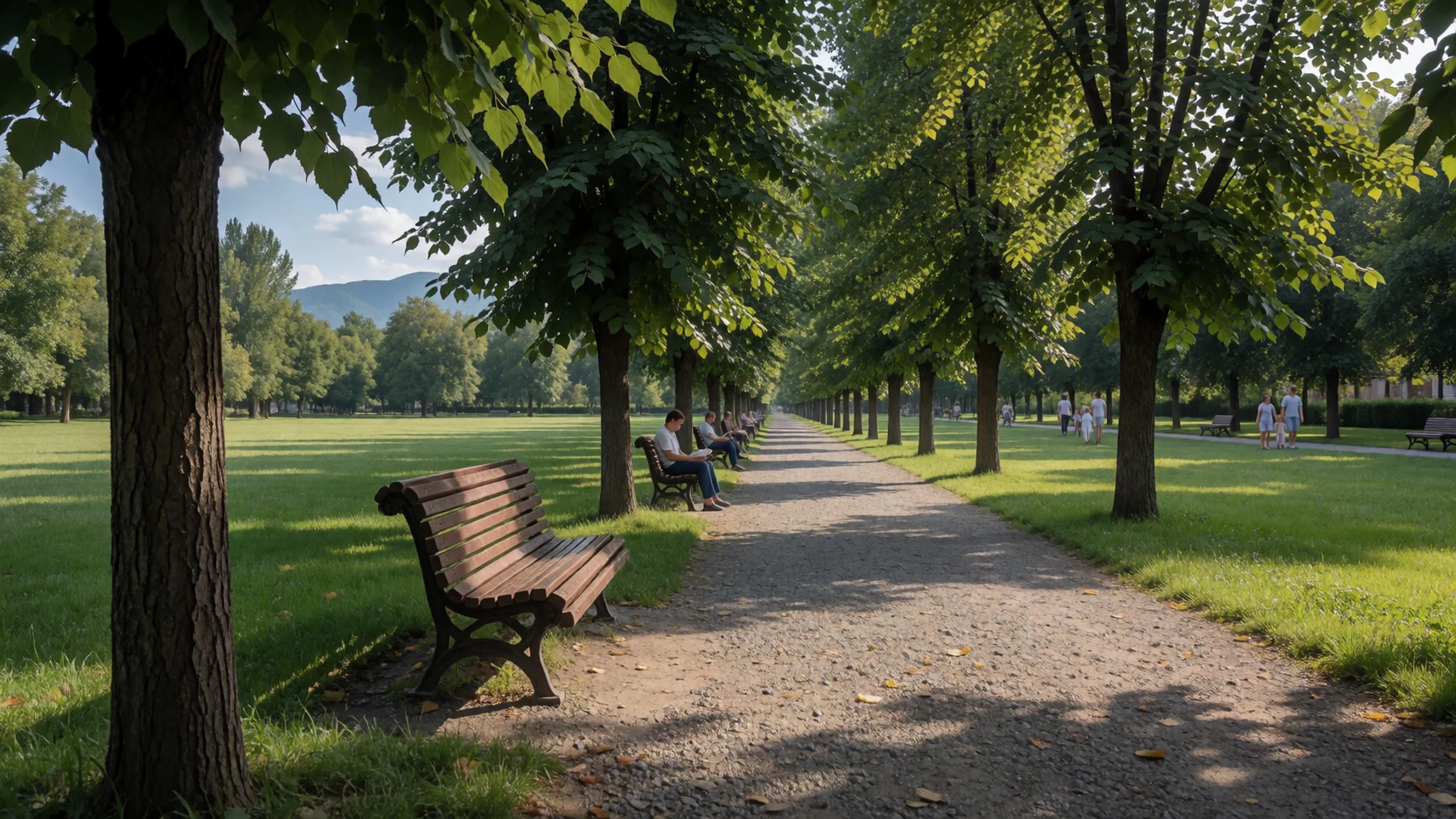
- Central Park — Central Vladikavkaz
A city park a short walk east of the mosque, useful for a pause between sights. Expect families, benches and shade in summer. It is an ordinary, pleasant slice of everyday Vladikavkaz life, and a fair place to get your bearings before heading into the centre.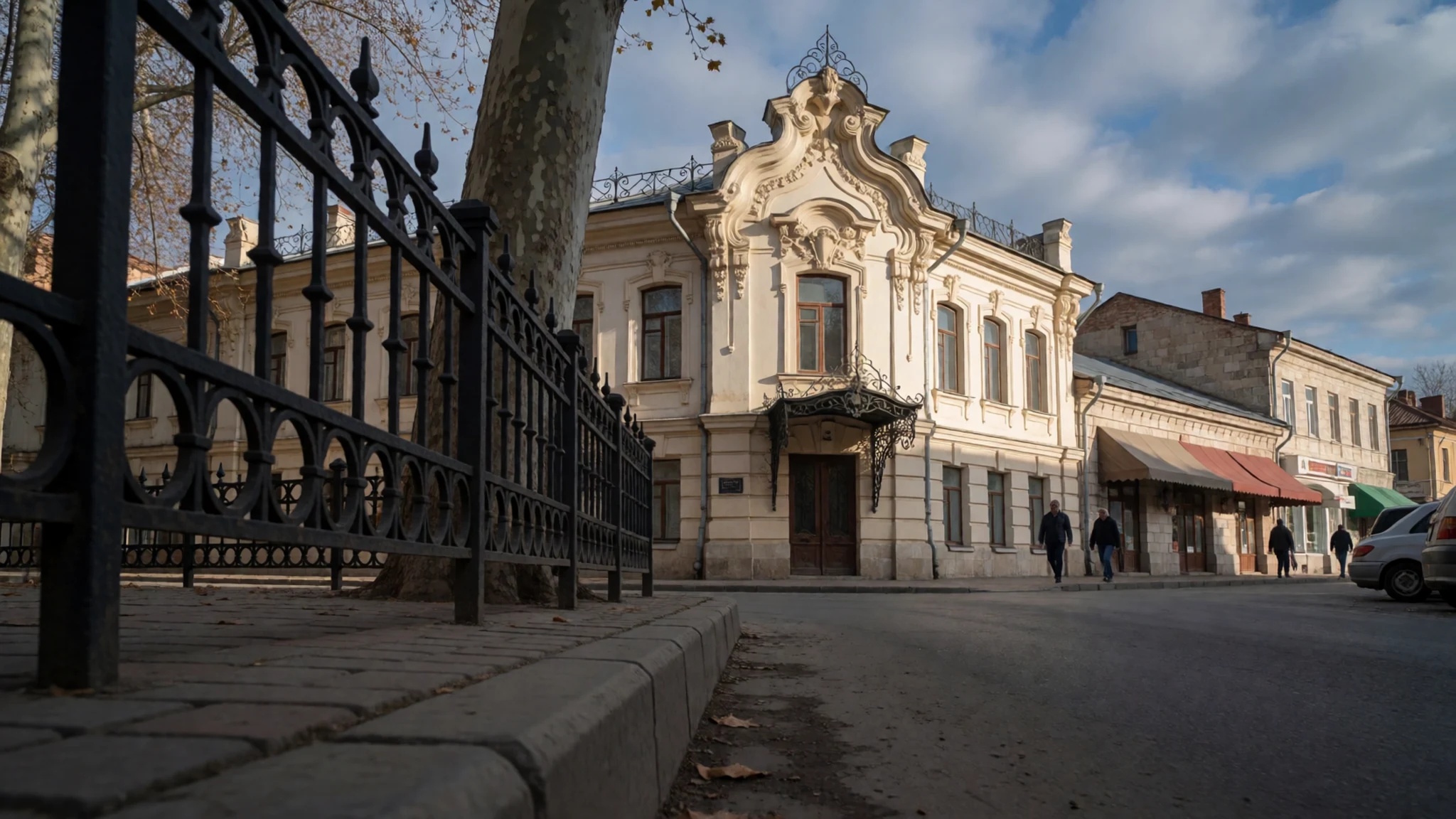
- Tuganov Art Museum — Central Vladikavkaz
The Tuganov museum is housed in an Art Nouveau merchant's house from 1903. The building is part of the attraction, and inside are paintings and frescoes. Check the official listing before you go for opening days, as small regional museums often change their schedule.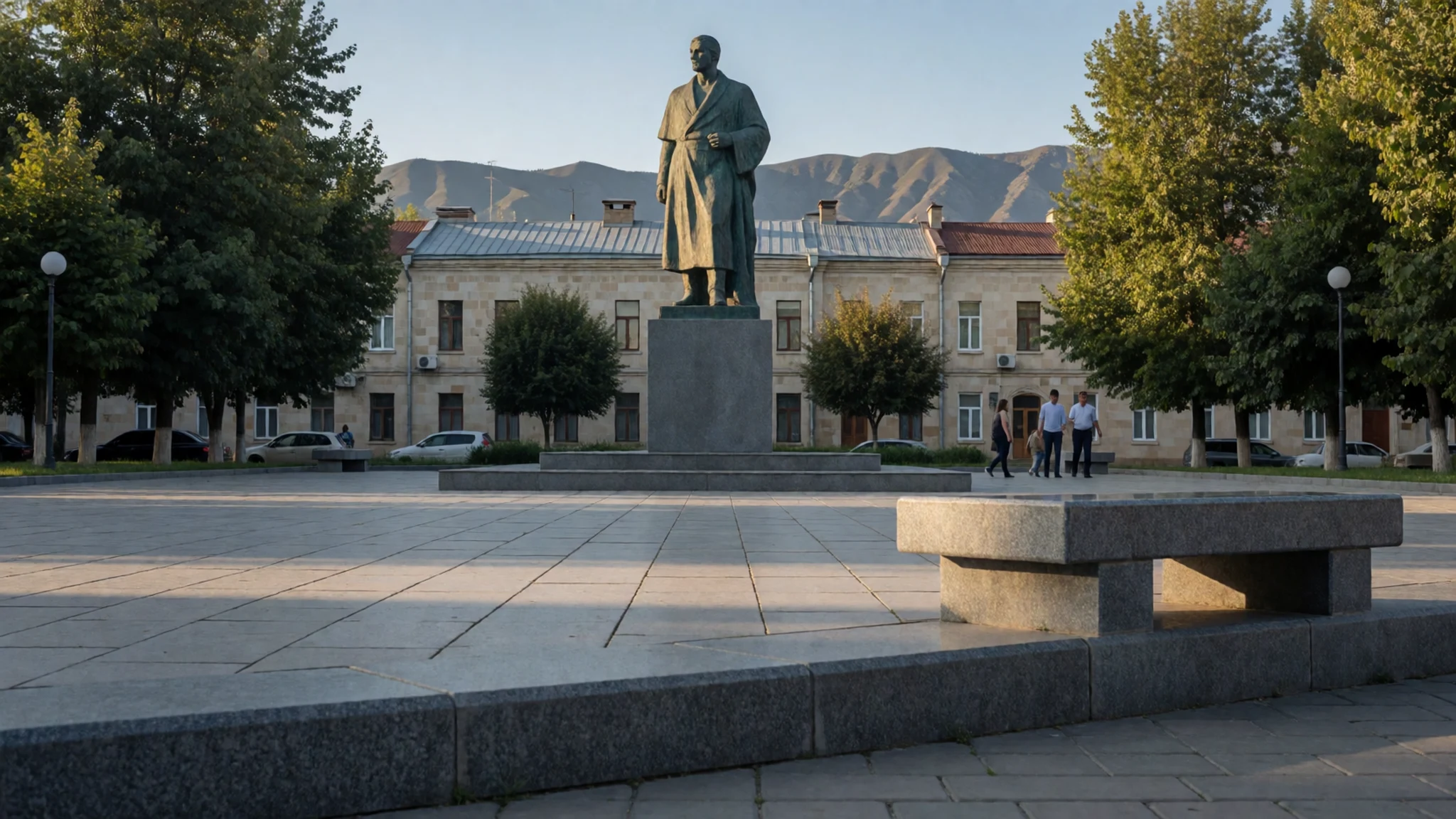
- Mariinsky Theatre branch — Central Vladikavkaz
Vladikavkaz has a branch of the Mariinsky Theatre, which is unusual for a city of this size. If your dates allow, look at the programme and consider an evening performance. Book through the official channels and confirm the schedule locally, since touring seasons vary.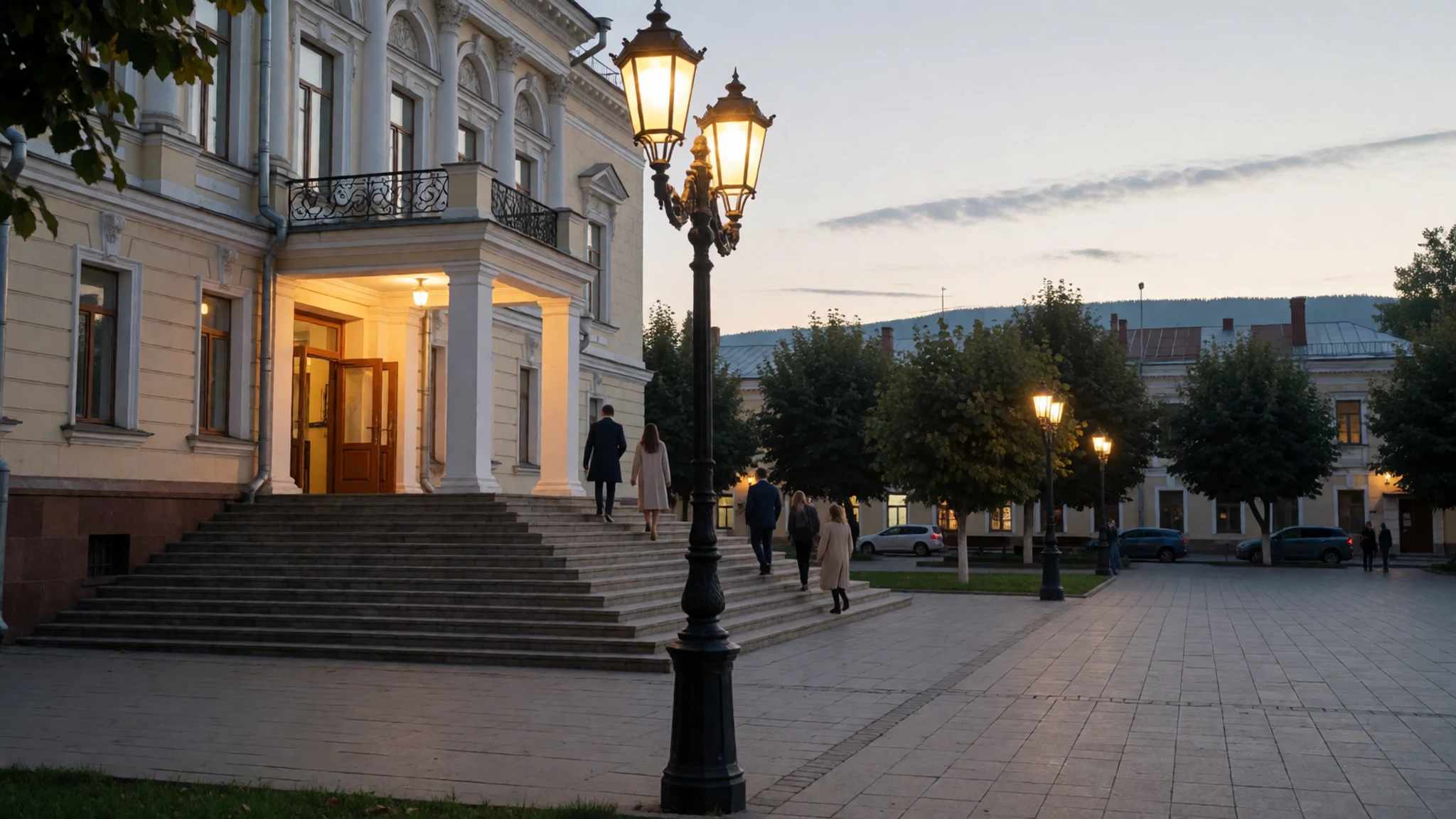
- Street sculpture — Central avenues
The city is dotted with outdoor sculptures and monuments, and wandering the central avenues turns up a good number of them. It is a free way to spend an hour, and it helps explain how Vladikavkaz sees its own history, from the fortress era to the present.
Culture
Mukhtarov Mosque belongs to the Muslim minority of North Ossetia, a republic where Orthodox Christianity, Islam and older Ossetian traditions sit side by side. Plośko's design borrowed from Cairo, and the patron came from Azerbaijan, so the building is itself a record of links across the Caucasus and the wider Muslim world in the early twentieth century.
It is a living congregation's mosque, not a monument kept for tourists. Friday midday prayers and the great festivals draw the most people, and the neighbourhood feels different then. At other times it is quiet. Its history is part of local memory too: the Ingush community once prayed here, and the expulsions of the 1990s remain a sensitive subject in the region, so it is kinder to listen than to ask pointed questions.
North Ossetia is hospitable in the way mountain regions often are, and visitors who show curiosity and a little patience are usually welcomed. Dress modestly, speak softly in and near the building, and treat the courtyard as a place of worship rather than a backdrop.
Before going inside or photographing worshippers, ask permission, cover your shoulders and knees, and take off your shoes at the door.
What to wear
Traditional Ossetian dress is best known through the men's chokha, a long wool coat with cartridge pockets across the chest, worn with a papakha, the tall sheepskin hat of the Caucasus. Women's formal costume uses richly embroidered velvet and silk with decorative belts. These garments now appear mainly at weddings, folk festivals and dance performances rather than in the street.
Everyday clothes in Vladikavkaz are much like those in any Russian provincial city: jeans, jackets, smart casual outfits in town and a fairly polished look on evenings out. Some Muslim women wear headscarves and long skirts, and older men may wear a skullcap, especially around Friday prayers.
Visitors should dress for both the mosque and the mountain weather. Cover shoulders and knees, and women should carry a light scarf for the head when entering the mosque grounds. Wear shoes that slip off easily, since they come off at the door, and bring clean socks. Summers can be warm, so choose breathable cotton or linen, while spring and autumn evenings call for a jumper or light jacket. Winters are cold, and a proper coat, hat and grippy boots are worth packing. Cobbles and pavements can be uneven, so comfortable soles matter more than smart shoes.
What to eat
- Ossetian pies (fydjyn and others) — Bakeries and cafés in central Vladikavkaz
Ossetian pies are round, flat and filled with cheese, potato, beet leaves or meat. They are the signature local food and are cut in wedges to share. Look for them in bakeries and family cafés in the city centre.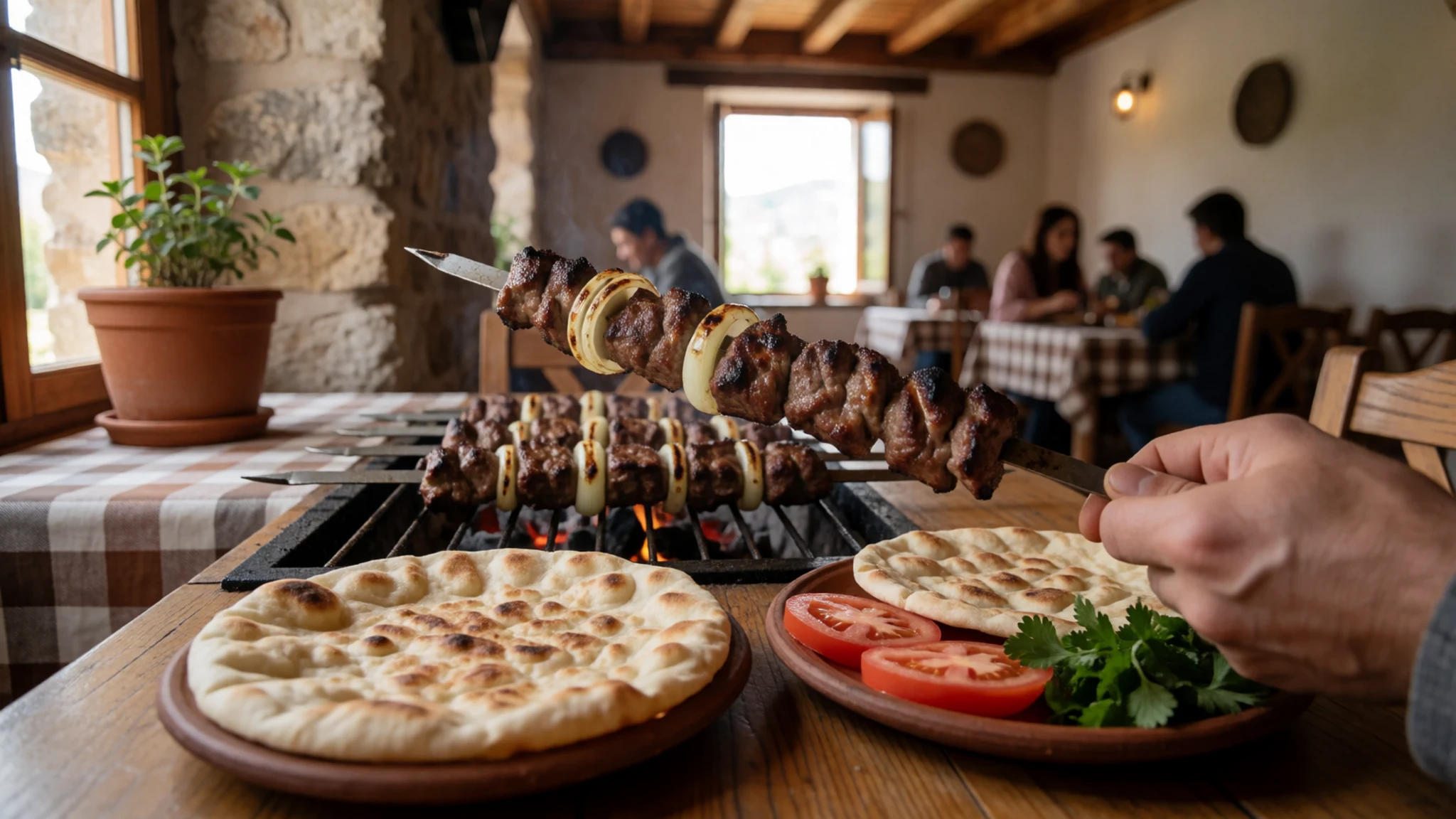
- Shashlik — Georgian and Caucasian grill restaurants in the centre
Skewered grilled meat, usually served with onions, bread and a tangy sauce. It suits a long lunch after a morning of sightseeing, and it is a regional favourite across the Caucasus.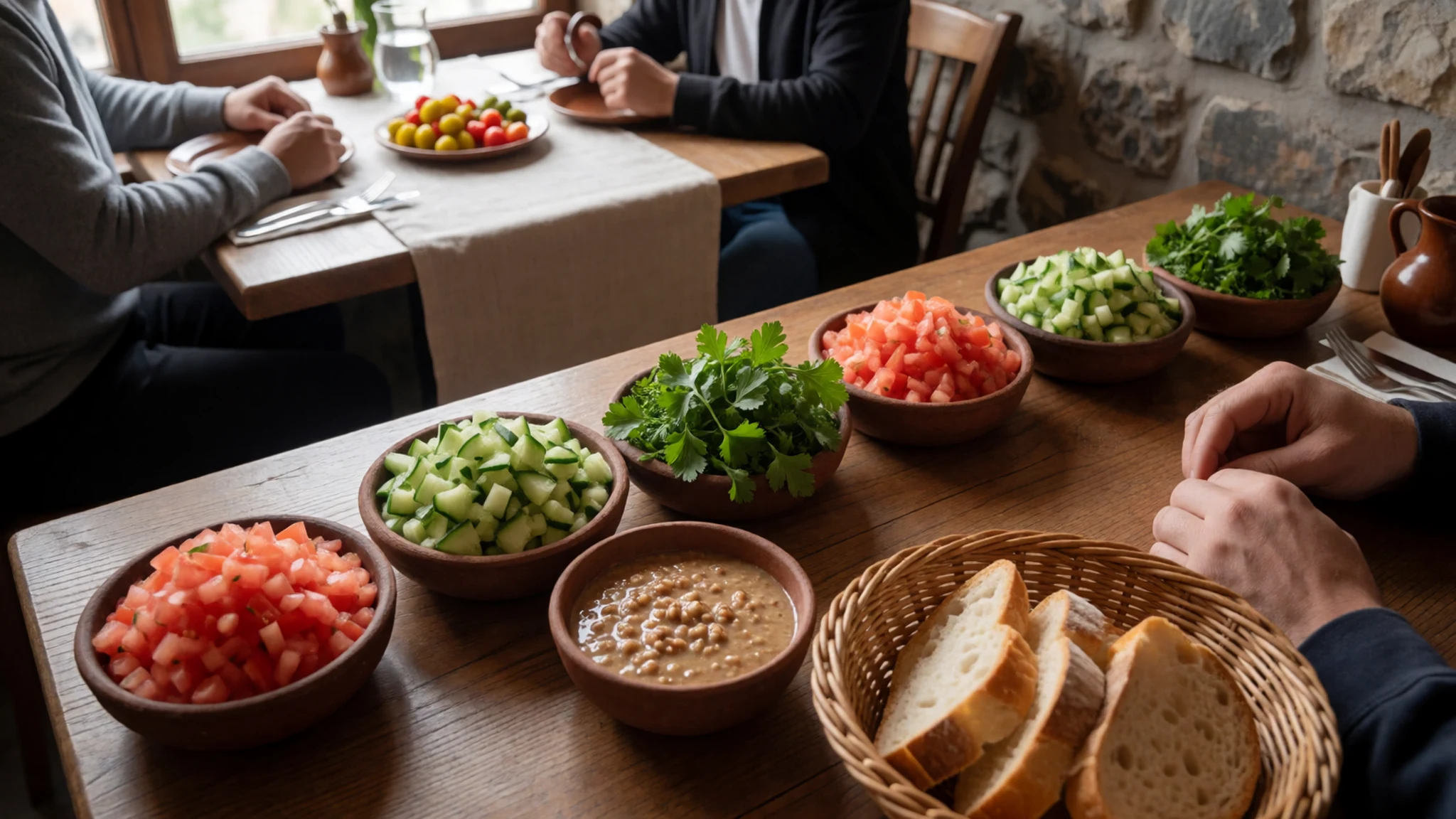
- Georgian dishes — Georgian restaurants in the centre
Georgian cooking is popular in Vladikavkaz given the close road link to Georgia. Expect khachapuri cheese bread, khinkali dumplings and walnut-based salads, usually brought out for sharing across the table. - Desserts and coffee — Cafés on the main avenues
Several cafés in the centre serve good cakes, light meals and proper coffee, which makes them a handy place to rest after walking. They are also pleasant for people-watching on the main streets. - Salads, pasta and pizza — Larger cafés in the centre
For a simple, familiar meal, the larger cafés offer salads, pasta, pizza and desserts, some with outdoor seating in summer. It is an easy choice if you are travelling with children or want something light.
Plan it
Best time. May–June and September–October, when the weather is mild and the mountains are clear. Summer can be warm, and winter is cold with snow on the ranges.
How long. 1–2
Getting there. Vladikavkaz has its own airport with flights from Moscow, and a railway station in the city. From either, the mosque is a short taxi ride or a walk across the centre towards the left bank of the Terek.
Budget. low
Tips
- Check visa and permit rules before you travel, as foreign visitors are restricted to the main towns of the republic
- Carry some cash as well as a card for small cafés
- Go in the morning for the best light and the quietest streets
- Bring a layer, since mountain weather changes quickly
Etiquette
- Remove shoes before entering and keep your voice low
- Cover shoulders and knees, and bring a scarf for the head if you are a woman
- Ask before photographing worshippers
Nearby
Sources
- Wikidata Q1973736 (CC0)
- Wikipedia: Mukhtarov Mosque (rev 1367271958) (CC BY-SA 4.0)
- Wikivoyage: Vladikavkaz (rev 5388249) (CC BY-SA 4.0)
- Photo 01-.jpg (CC BY-SA 4.0)
- Photo 02-vladikavkaz-new-mosque-04.jpg (Public domain)
- Photo 03-caucasus-by-granberg-vgd-036.jpg (Public domain)
- Photo 04-city-s-mosque.jpg (CC BY 3.0)
- Photo 05-gorskii-21640u.jpg (Public domain)
- Photo 06-mechetvladik.jpg (Public domain)
- Photo 07-mukhtarov-mosque-vladikavkaz.jpg (CC BY 3.0)
- Photo 08-rusmarka-3283.jpg (Public domain)


