Mount Usborne
Mount Usborne, United Kingdom
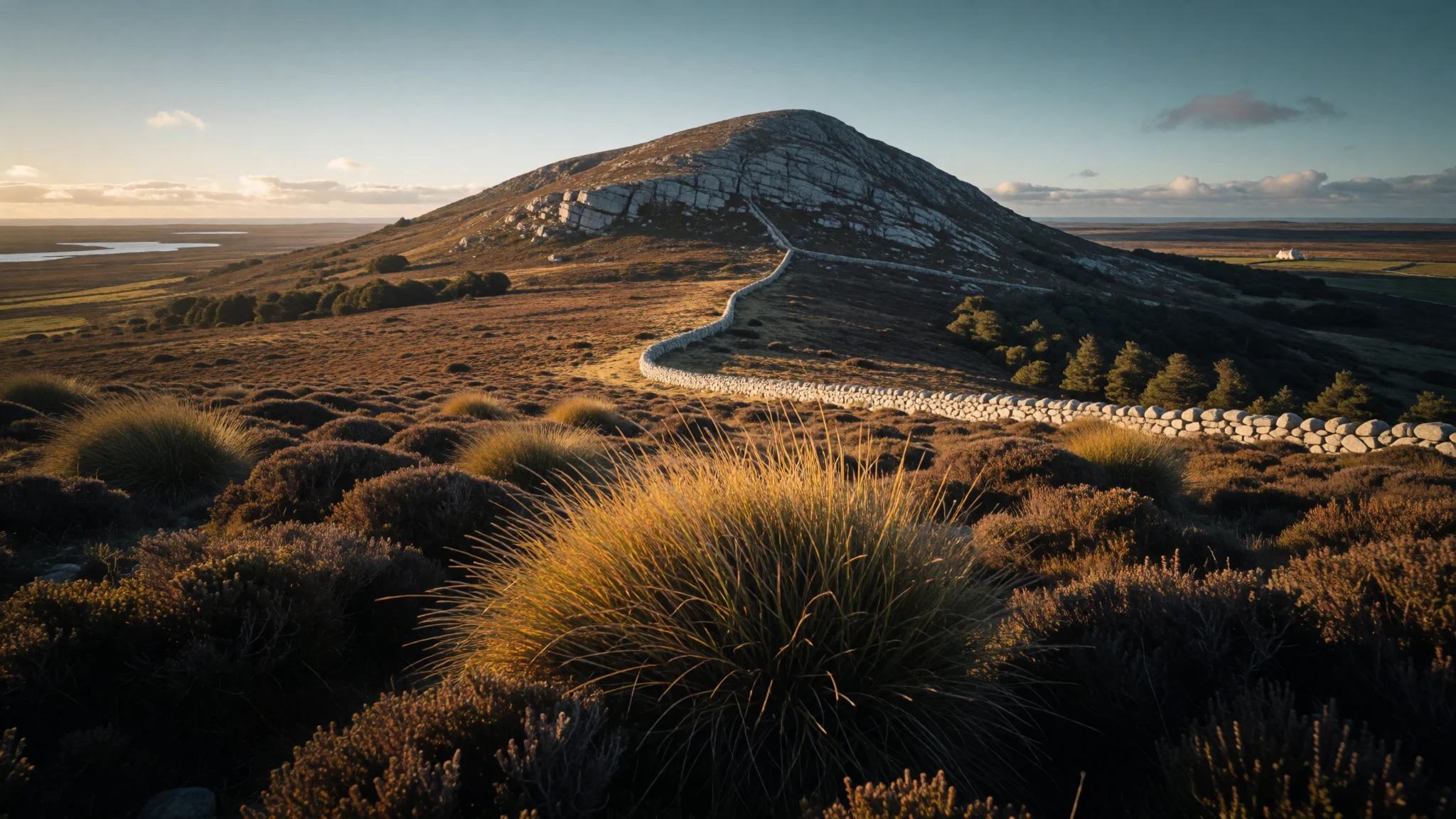
Mount Usborne is the Falklands' highest point: an empty, wind-swept summit with ice-age hollows, Darwin's ship in its name and a long view of the islands.
The place
Mount Usborne stands on East Falkland and, at 705 m, is the highest point in the Falkland Islands; Spanish speakers know it as Cerro Alberdi. It is a broad, wind-scoured massif rather than a pointed summit, and its appeal is space rather than drama: treeless heath, grey rock fields and a horizon where almost nothing rises to interrupt the sky. The mountain lies about 53 km west of Stanley, the capital, so reaching its foot means leaving the small town for farmland and rough tracks, the country islanders call camp. Mount Adam, on West Falkland, is the nearest rival and falls short by five metres. The Falklands are a UK Overseas Territory with very few residents, so even on a clear summer day the mountain is likely to be quiet. Weather is the real variable. Wind, sudden showers and shifting cloud are normal, and a bright morning can turn raw by afternoon. On the upper slopes the ground is a jumble of angular stones, and on the north-eastern side a dark pool called Black Tarn fills a hollow shaped by ice. The San Carlos River begins on the northern flank and runs towards the settlement it is named for. The penguins that bring most people to the islands live on the coast instead. This is a mountain for those who like open, empty country and are content with a modest summit and a long view.
Its story
Mount Usborne carries the name of Alexander Burns Usborne, a master's assistant aboard HMS Beagle, the survey ship that also carried Charles Darwin. Darwin refers to the mountain in the zoological account of that voyage, which gives a modest Falklands summit a place in the writing of one of the best-known naturalists. Its deeper story is geological. By Falklands standards the mountain is high enough to have held ice in the past. Scoop-shaped hollows called cirques survive on its flanks, and below them lie ridges of rubble pushed along by glaciers. Those ridges suggest the ice stayed on the highest ground while the rest of the islands endured a cold, frost-shattered climate without glaciers. Black Tarn, on the north-eastern slope, has been probed by researchers. Soundings in 1981 and 2014 gave different depths, a reminder that measuring a peaty pool is harder than it sounds. In 2014 the team also took cores from the shore and found charcoal from old fires, which may point to people being active here before Europeans arrived, though that is a suggestion rather than a settled fact. The mountain played a small part in the 1982 conflict too. The peak acted as a landmark for radar navigation during the initial successful Black Buck strike on Stanley's airfield. Few hills this quiet carry survey history, ice-age geology and wartime navigation in a single outline.
What to see
- The summit of Mount Usborne — East Falkland, west of Stanley
The top of Mount Usborne, at 705 m, is the high point of the whole archipelago. It is a bare, windy plateau-like crest, so the reward is the view across East Falkland's heath and inlets rather than any dramatic ridge. Go on a clear day and carry full wind protection.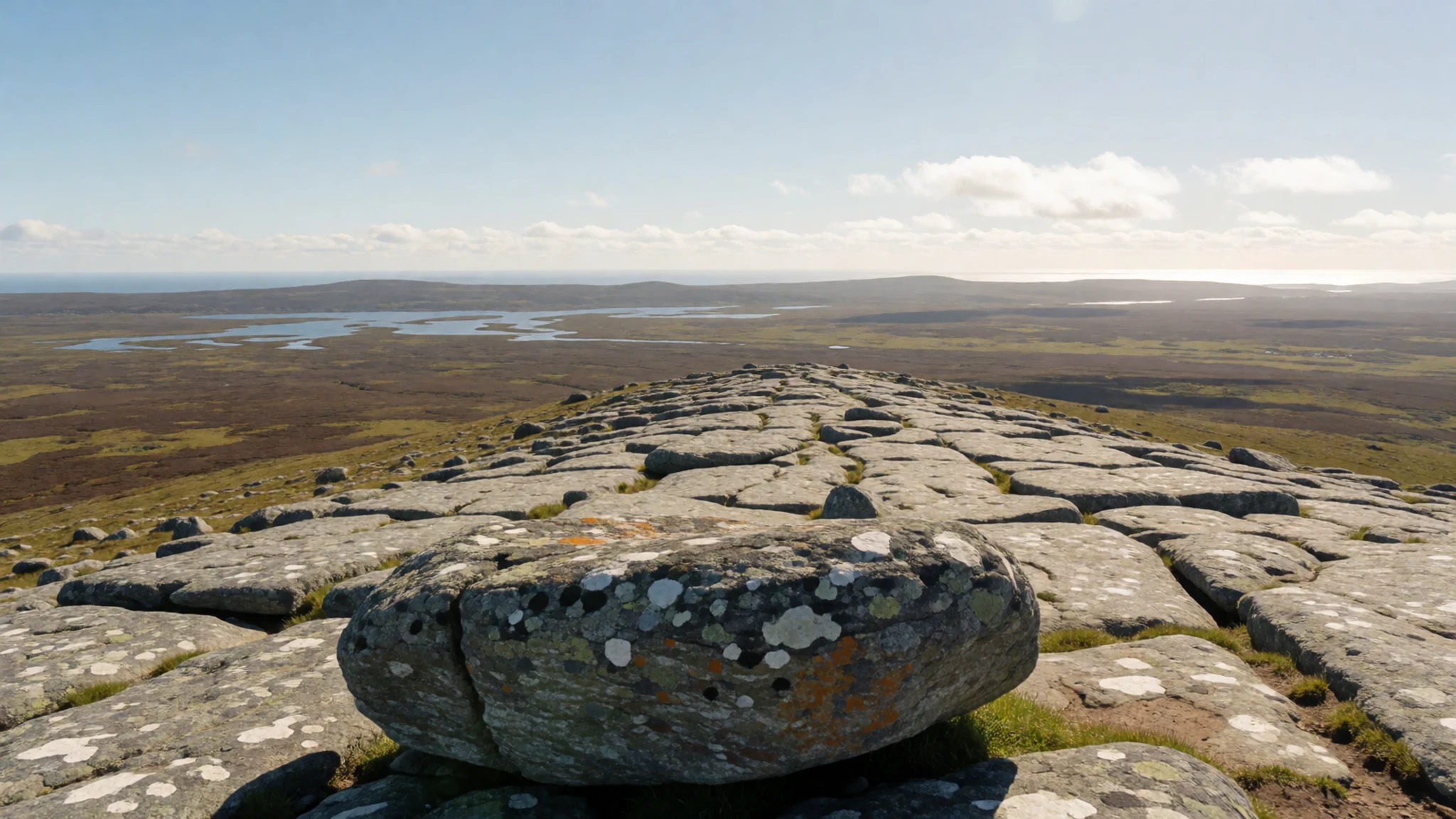
- Black Tarn and the glacial cirques — North-eastern slope of Mount Usborne
On the north-eastern slope, Black Tarn sits at the foot of a hollow cut by ice long ago. The cirque walls and the ridges of debris below them make the ice-age story easy to read in the landscape. The ground here is boggy, so waterproof boots matter more than speed.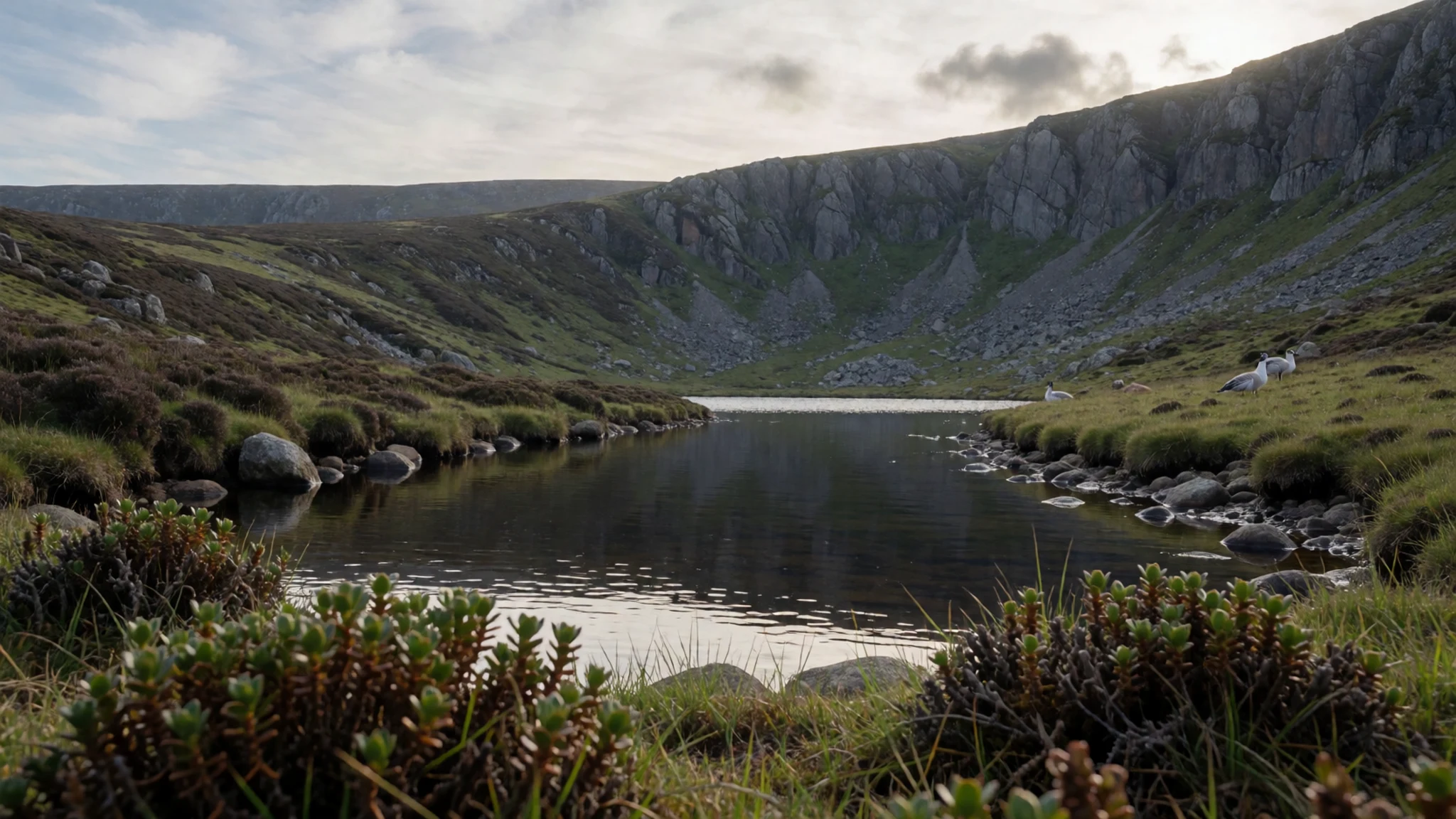
- The stone runs — Slopes of Mount Usborne
Rivers of angular grey rock spill down the slopes, a feature of the Falklands that looks like a frozen torrent. Higher up, the stones are finer and more jumbled than those on lower ground. They are slow and awkward to cross, so pick a line carefully and watch your ankles.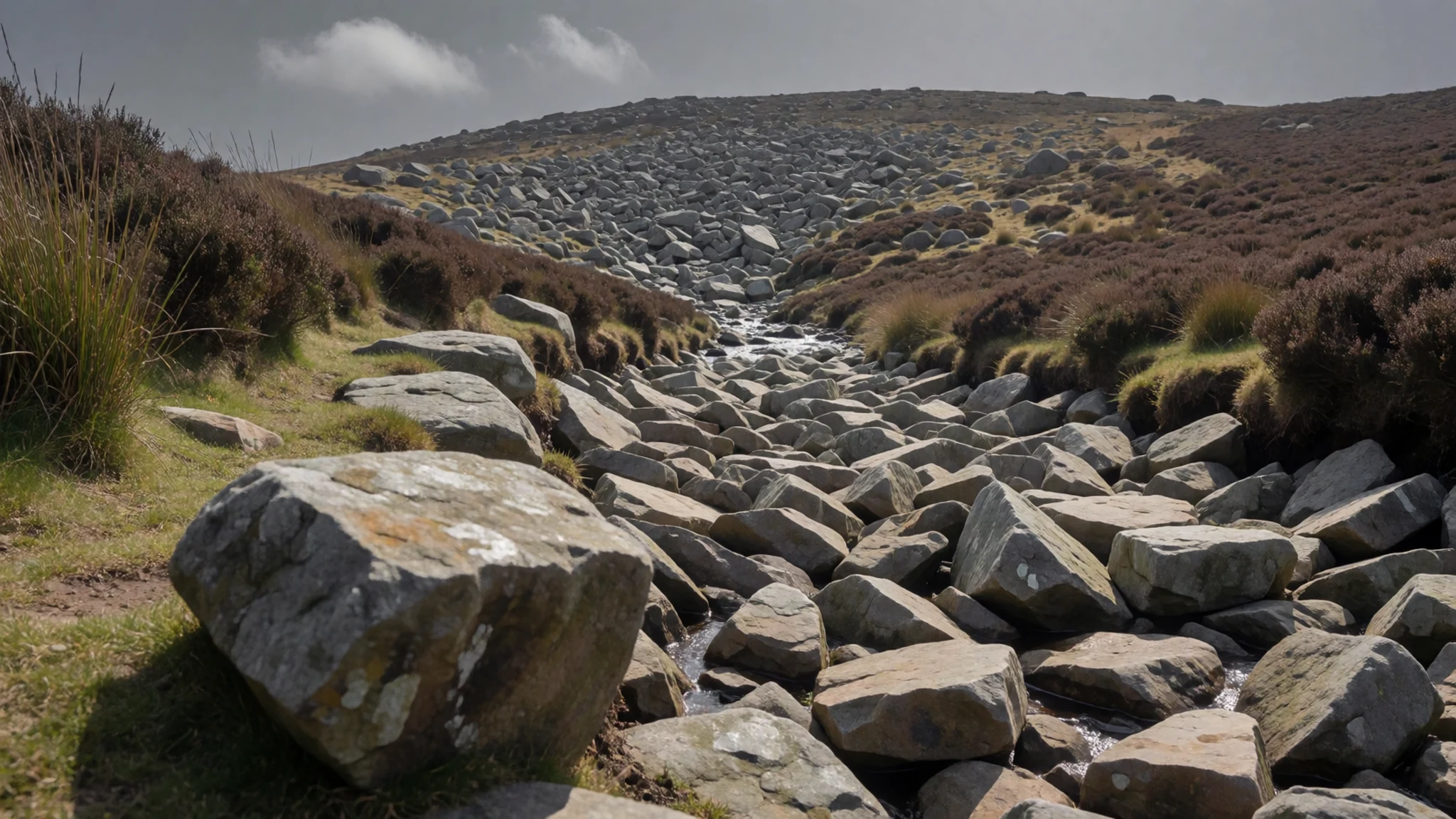
- Museum on Holdfast Road, Stanley — Stanley
Stanley has a museum on Holdfast Road, a sensible first stop before heading out to the mountain. It gives context on island life, history and the 1982 conflict that the mountain itself cannot. Opening hours change, so check the official site or ask locally before planning around it.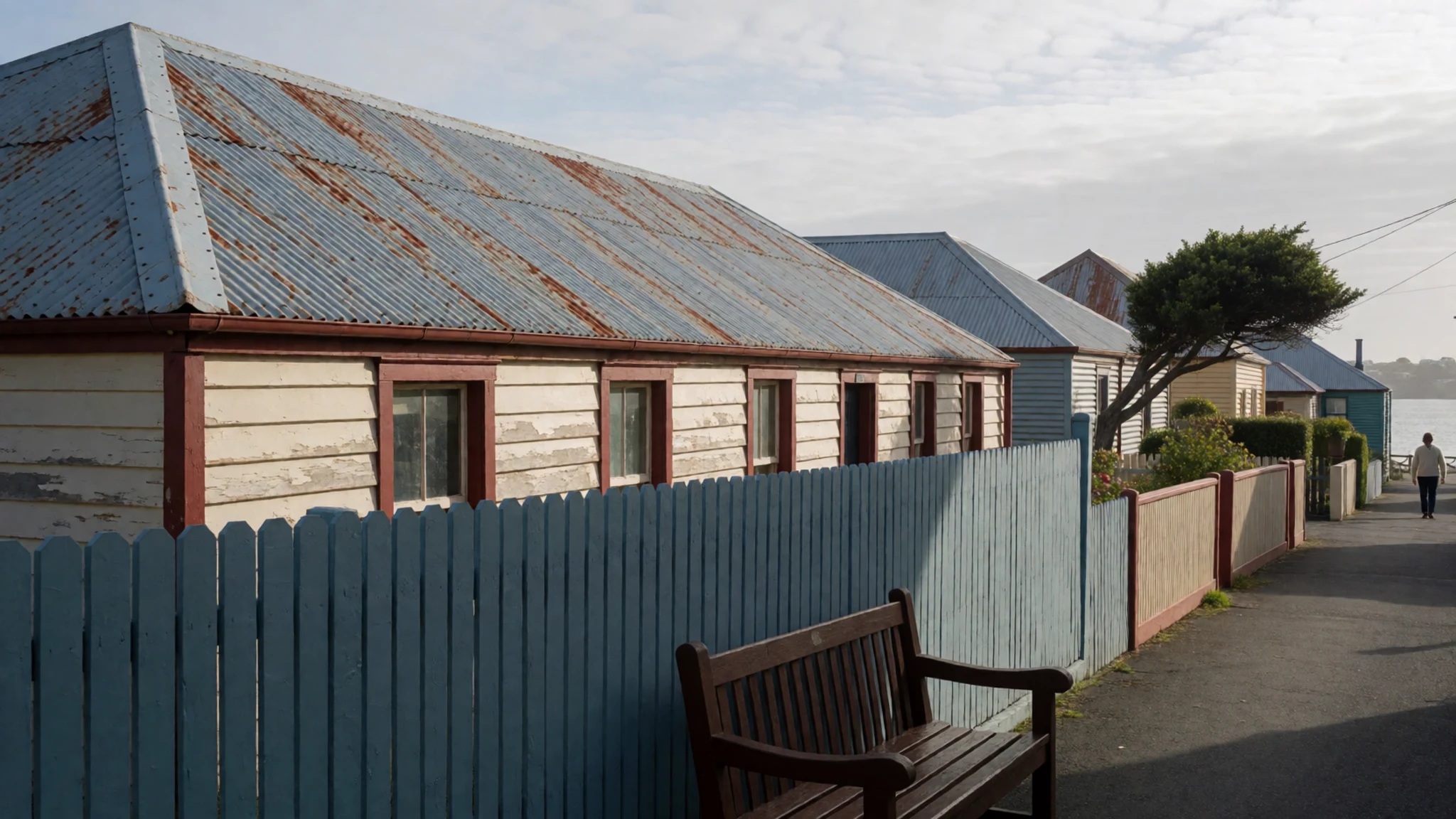
- Penguin watching on the coast — Coastal sites around East Falkland
The penguin colonies are on the shoreline, not the mountain, but they fit naturally into a trip that includes Usborne. Several species breed in the islands. Keep well back, since animals that react to your presence are already too close, and follow any rules set by the landowner.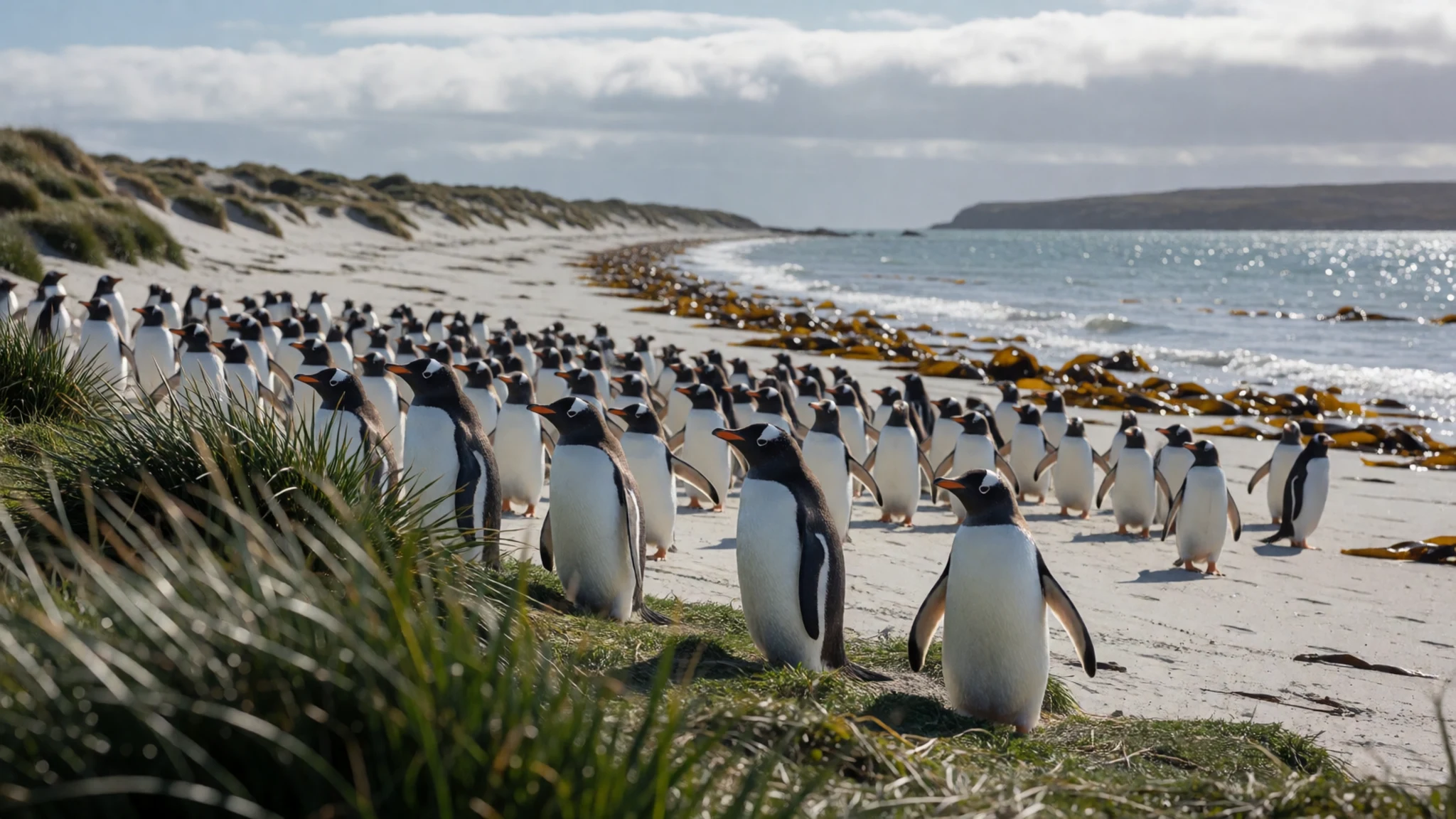
Culture
Mount Usborne belongs to a community whose customs lean British, though islanders are in many ways more conservative than people in Britain. Tea, pubs, roast dinners and polite understatement all feel familiar to a UK visitor, and village-scale hospitality in camp is warm and unhurried. Drugs are not tolerated. Attitudes to LGBT people are overwhelmingly positive, same-sex marriage is legal, and discrimination on the basis of sexual orientation is against the law. Politics is more sensitive. Many residents remember the 1982 conflict, and some still mistrust Argentines because of it. Margaret Thatcher, prime minister at the time, is viewed very positively, quite unlike the divisive figure she remains in much of Britain. A 2013 referendum produced an overwhelming vote to remain British, so the islands' status is not a subject for casual debate. The mountain's Spanish name, Cerro Alberdi, is fine as a piece of geography, but the surrounding land is British territory and farmland, usually privately owned, and the people who work it expect visitors to respect gates, livestock and the weather. Crime is rare, but normal care with belongings still applies. When talking to locals about the islands, never describe them as Argentine, and avoid raising the 1982 conflict unless a resident brings it up first.
What to wear
Mount Usborne and the Falklands have no formal national costume with named textiles of the kind found in many countries. The nearest thing to a traditional wardrobe is the working clothing of sheep-farming camp: wool jumpers and socks, windproof or waxed jackets, sturdy trousers and rubber boots, worn through every season because the weather demands it. Today, islanders dress much as people do in rural Britain. Stanley is casual, with smarter clothes saved for a dinner or a special occasion, and nobody looks twice at muddy boots in a pub. There are no religious dress codes to plan around on the mountain. For a visitor, the sensible approach is layering. Pack a warm base layer, a fleece or wool mid-layer, and a waterproof, windproof shell, even in the southern summer. A hat and gloves are worth carrying in every month. Waterproof walking boots with good ankle support suit the boggy heath and the awkward stone runs, and gaiters help in wet ground. Sunglasses and sun cream matter more than people expect, because the air is clear and the wind hides how strong the light is. Leave anything delicate at the lodge: the terrain is rough and the weather changes quickly.
What to eat
- Fish and chips — Pubs and cafés in Stanley
Fish and chips is standard fare across the islands and a comforting end to a windy day. Look for it in Stanley's pubs and cafés. It tastes like the British version, with the pleasure that the sea is close by.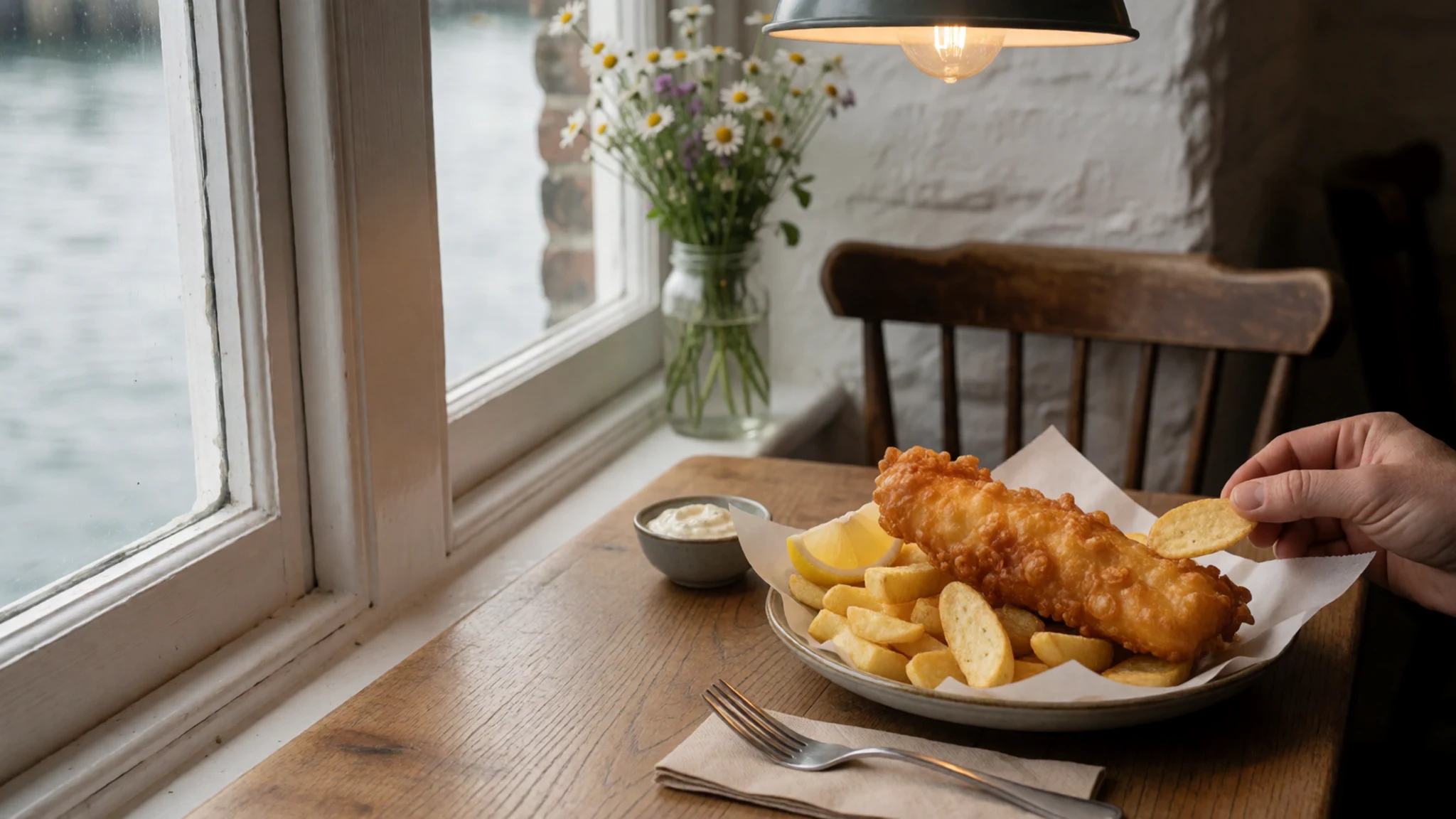
- Roast mutton — Farm lodges in camp and Stanley restaurants
Mutton is the everyday meat of a sheep-farming country, served roasted with vegetables and gravy in the British manner. It is also the main fresh meat in the supermarket. Lodges in camp tend to do it generously.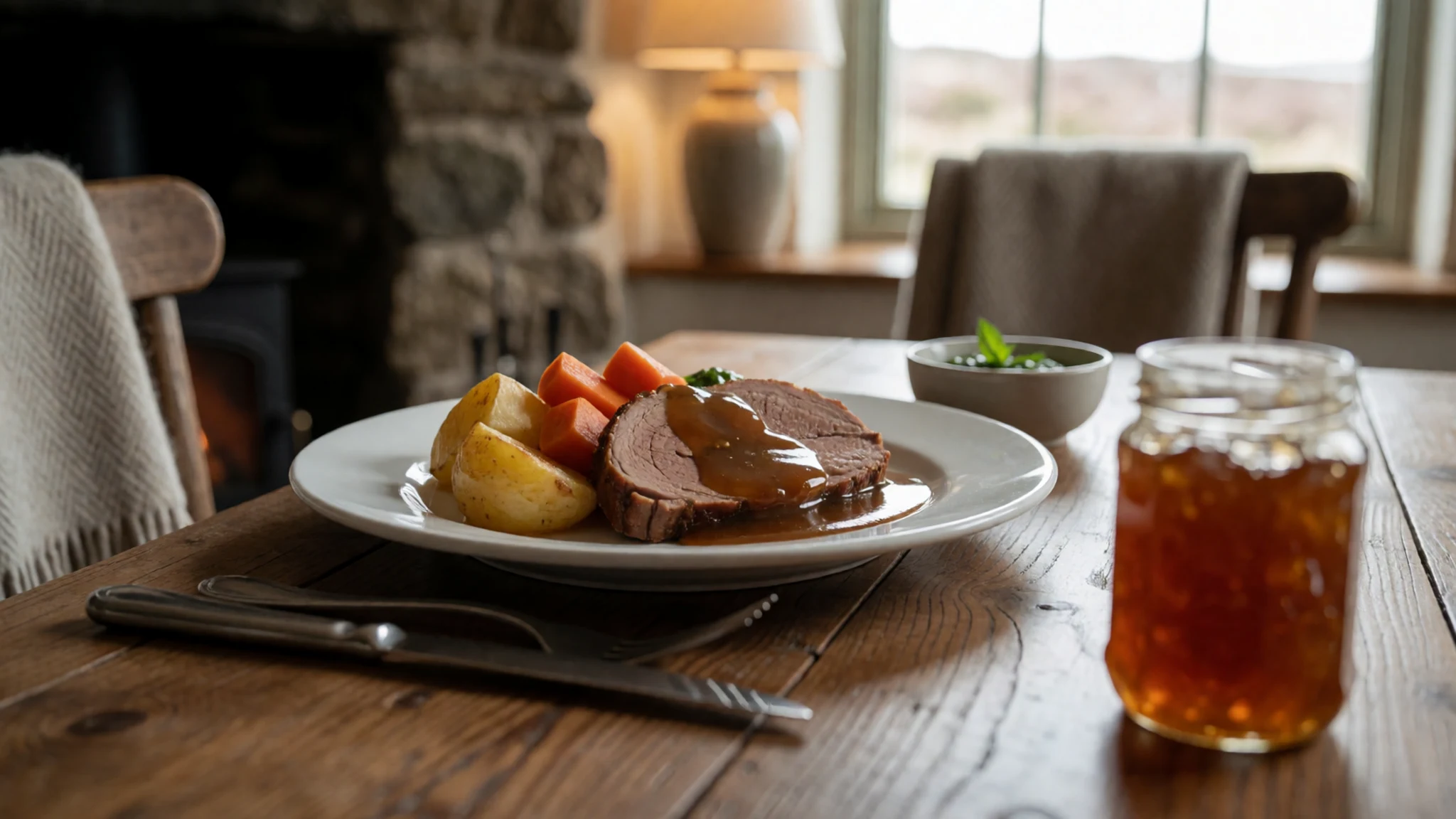
- Diddle-dee jam — Gift shops in Stanley and lodge breakfast tables
A local speciality made from diddle-dee, the red crowberry that grows wild on the heaths. The jam is tart, deep red and good on toast or scones. Buy a jar as a souvenir of the same heath that surrounds the mountain. - Milanesa — Restaurants in Stanley
A breaded cutlet, one of the Spanish-influenced dishes that sit alongside the British menu. It is less common than fish and chips, but a few Stanley kitchens offer it as a change from the usual roast. - Local microbrewery beer — Gift shops and bars in Stanley
Small local breweries make beers inspired by the surrounding landscape. Drinks usually arrive in a bottle or can rather than from a tap, though some are on draught in Stanley bars. Alcohol carries no tax, which keeps beer reasonable.
Plan it
Best time. November to March, the southern summer, gives the longest days and the best chance of a calm, clear day for the mountain. Wind, rain and cloud are possible in any month, so build in spare days. The fishing season runs from September to April.
How long. 2–3
Getting there. Fly to the Falklands, then travel to Stanley, the islands' capital. Mount Usborne lies roughly 53 km west of Stanley on East Falkland. The last leg is by road and rough farm track, ideally with a local guide or lodge transfer. Check with the landowner or Stanley's visitor information before setting out.
Budget. high
Tips
- Arrange access and transport in advance, as the mountain is reached across farmland and conditions on the tracks change.
- Carry full wind and waterproof layers even on a sunny morning, since the weather can turn quickly.
- Bring a passport even if British, a return ticket, proof of accommodation and funds, and travel insurance with medical evacuation cover; check the official Falkland Islands government site for current rules.
- Many places are self-catering, so buy supplies in Stanley, where fresh fruit and vegetables are limited and costly.
- Keep a safe distance from seals and sea lions; if an animal reacts to you, you are too close.
Etiquette
- Ask the landowner's permission before camping or crossing farmland, and close gates behind you.
- Do not describe the islands as Argentine, and avoid raising the 1982 conflict first.
- Stay well back from wildlife, especially animals with young.
Nearby
Sources
- Wikidata Q1064229 (CC0)
- Wikipedia: Mount Usborne (rev 1381387886) (CC BY-SA 4.0)
- Wikivoyage: Falkland Islands (rev 5400949) (CC BY-SA 4.0)
- Mount Usborne, photo by chris lovelock (CC BY 2.5)
- Relief Map of Falkland Islands, by Nzeemin (CC BY 3.0)

