Mount Unzen
Mount Unzen, Japan
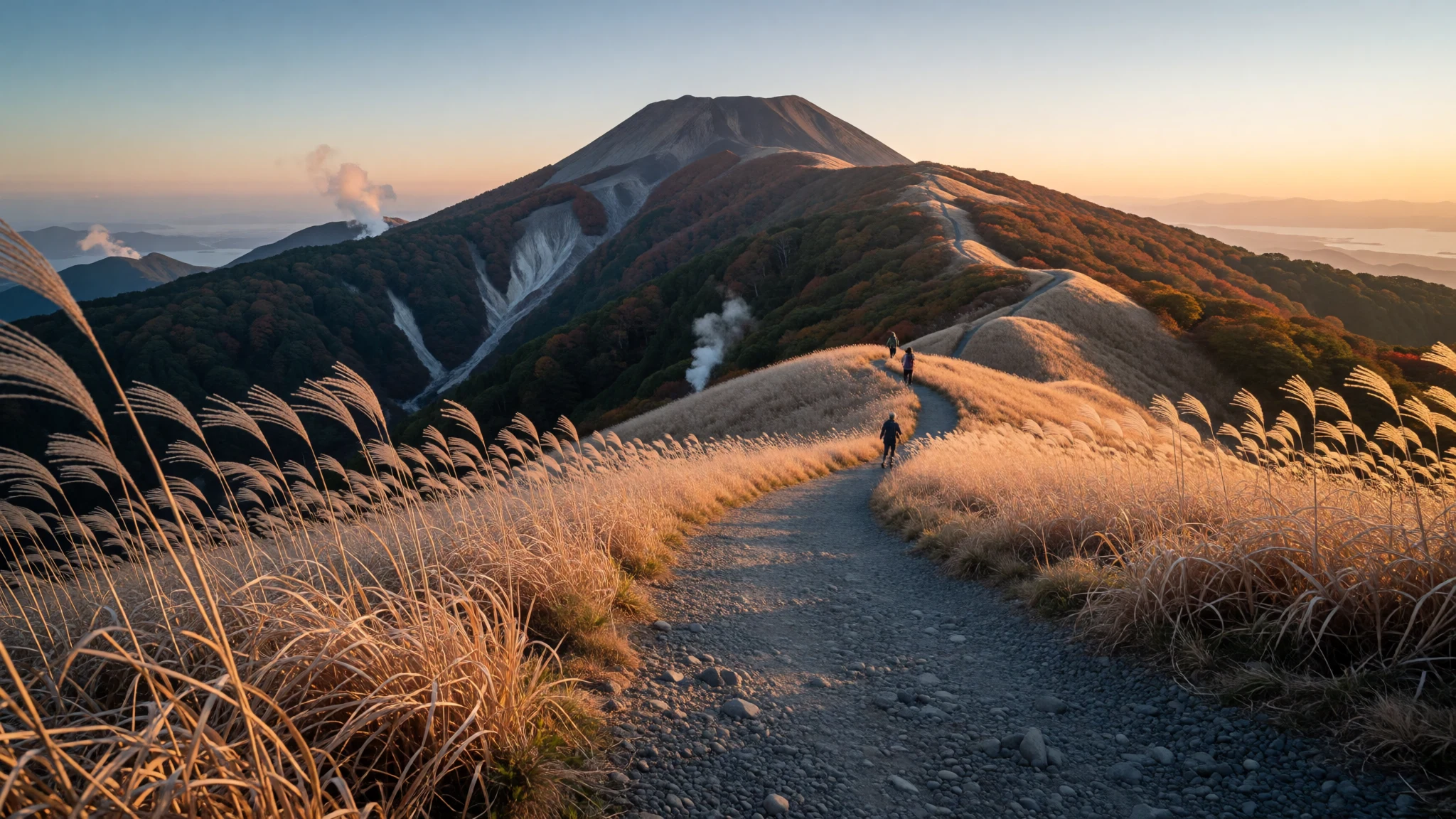
Mount Unzen is a living volcano in western Kyushu, where steaming hot springs, a fresh lava dome and a castle town share one peninsula.
The place
Mount Unzen is not a single peak but a cluster of small overlapping volcanic cones on the Shimabara peninsula, in Nagasaki Prefecture on the island of Kyushu. It is an active stratovolcano. Its highest point, at 1,486 metres, is Heisei-shinzan, a lava dome that pushed up during the eruptions of the early 1990s. Fugen-dake, the older summit next to it, rises to 1,359 metres. In Japanese the mountain is 雲仙岳, Unzen-dake.
The volcanic character is easy to read in the landscape: steaming vents, hot springs, pale slopes of loose debris and river valleys scoured by mudflows. The ground itself tells the story of an unsettled mountain. Around its lower flanks sits Shimabara, a castle town on the south-eastern coast, which works as the usual gateway for visitors. The town is a short ferry crossing from Kumamoto across the water, and it can also be reached by a private railway line from Isahaya, near Nagasaki.
A visit here is really two trips in one. Higher up, Unzen is a walking mountain with cooler air, forest and wide views across the bay, popular with day hikers and families. Lower down, it is a place where people live beside a volcano and have turned the experience into museums, memorials, footbaths and drinkable springs. The whole area is recognised as the Unzen Volcanic Area Geopark, a UNESCO Geopark, which gives the trails and exhibits a loose common thread. It is quieter than Japan's famous mountains, and a good fit for a slow, curious few days.
Its story
Mount Unzen's history is one of repeated catastrophe followed by patient recovery. In 1792 one of its lava domes collapsed, and the mass of rock sliding towards the sea set off a megatsunami. It killed 14,524 people and remains Japan's worst volcanic disaster. Nearly two centuries of dormancy followed, long enough for the event to feel like distant history.
Then the mountain woke. From 1990 it was active again, and a new lava dome began to grow. In 1991 a large eruption sent a pyroclastic flow racing down the slopes, killing 43 people, among them three volcanologists who had been studying the volcano at close range. The southern district of Shimabara was devastated. The dome built during those years became Heisei-shinzan, named after the era in which it appeared, and it is now the mountain's summit.
Shimabara carries another heavy chapter. Under the Tokugawa shogunate, farmers squeezed by punishing taxes joined Christians facing persecution in an uprising, and they held out at Hara Castle. The authorities crushed the revolt with Dutch help, and tens of thousands of rebels and peasants were killed. The aftermath reshaped Japan's foreign relations: the Portuguese were expelled, the Dutch became the only Europeans permitted to trade, and the ban on Christianity was enforced even more strictly.
Today both histories are remembered locally, in memorial halls, restored samurai streets and museums about the Hidden Christians of the peninsula.
What to see
- Heisei-shinzan and Fugen-dake — Unzen highlands, Shimabara peninsula
Mount Unzen's twin summits make the obvious focus. Fugen-dake is the forested older peak, while Heisei-shinzan is the raw grey dome that grew in the 1990s. Walking routes and ropeway access change with volcanic activity, so check the local tourist association for current conditions before setting out.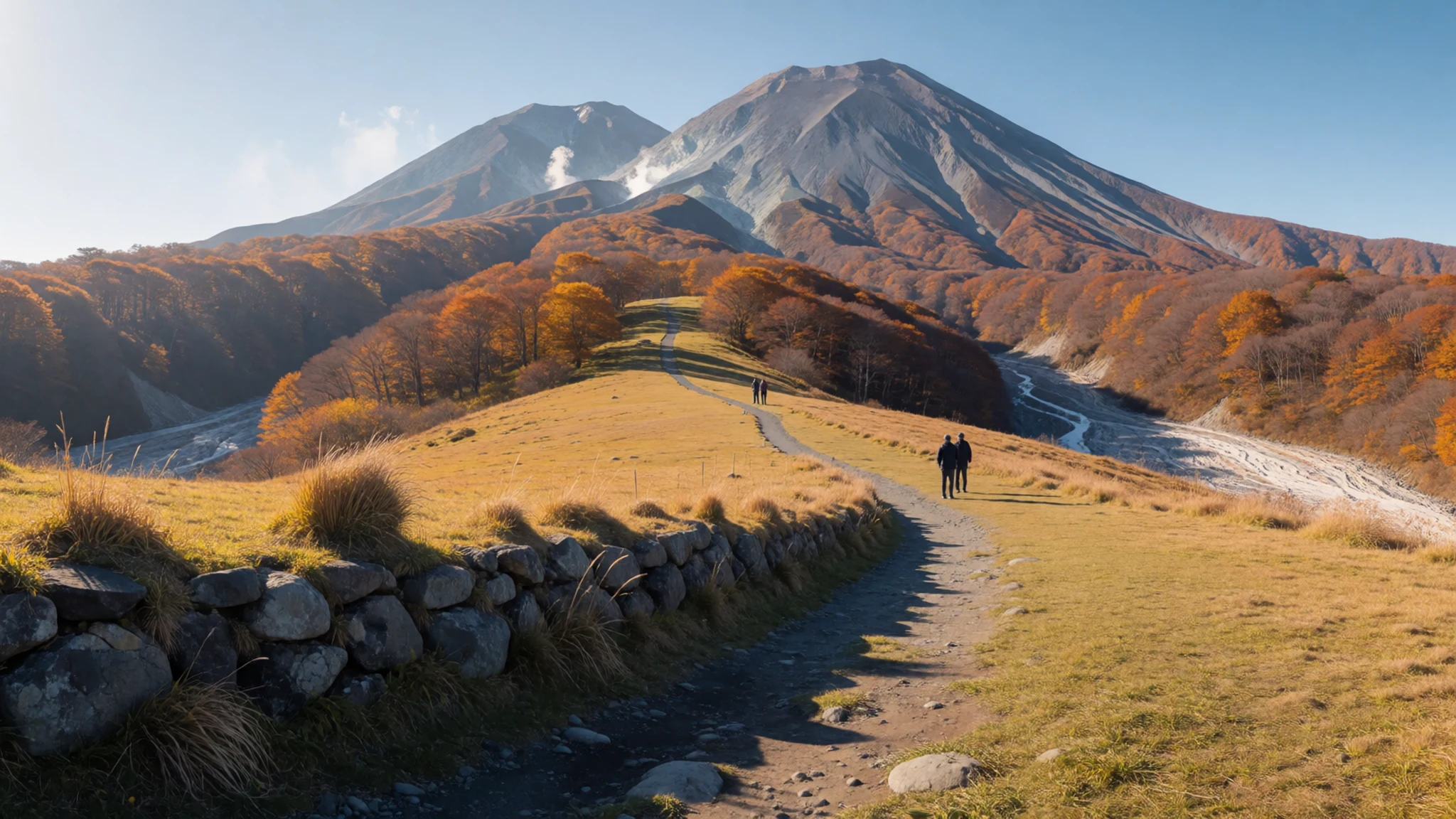
- Mt Unzen Disaster Memorial Hall — Southern Shimabara, near the Mizunashi river
A museum on the southern edge of Shimabara dedicated to the pyroclastic flows that destroyed this part of town. It explains how the eruption unfolded and how the region now prepares for the next one. Allow an unhurried hour. A road station near the river is within walking distance.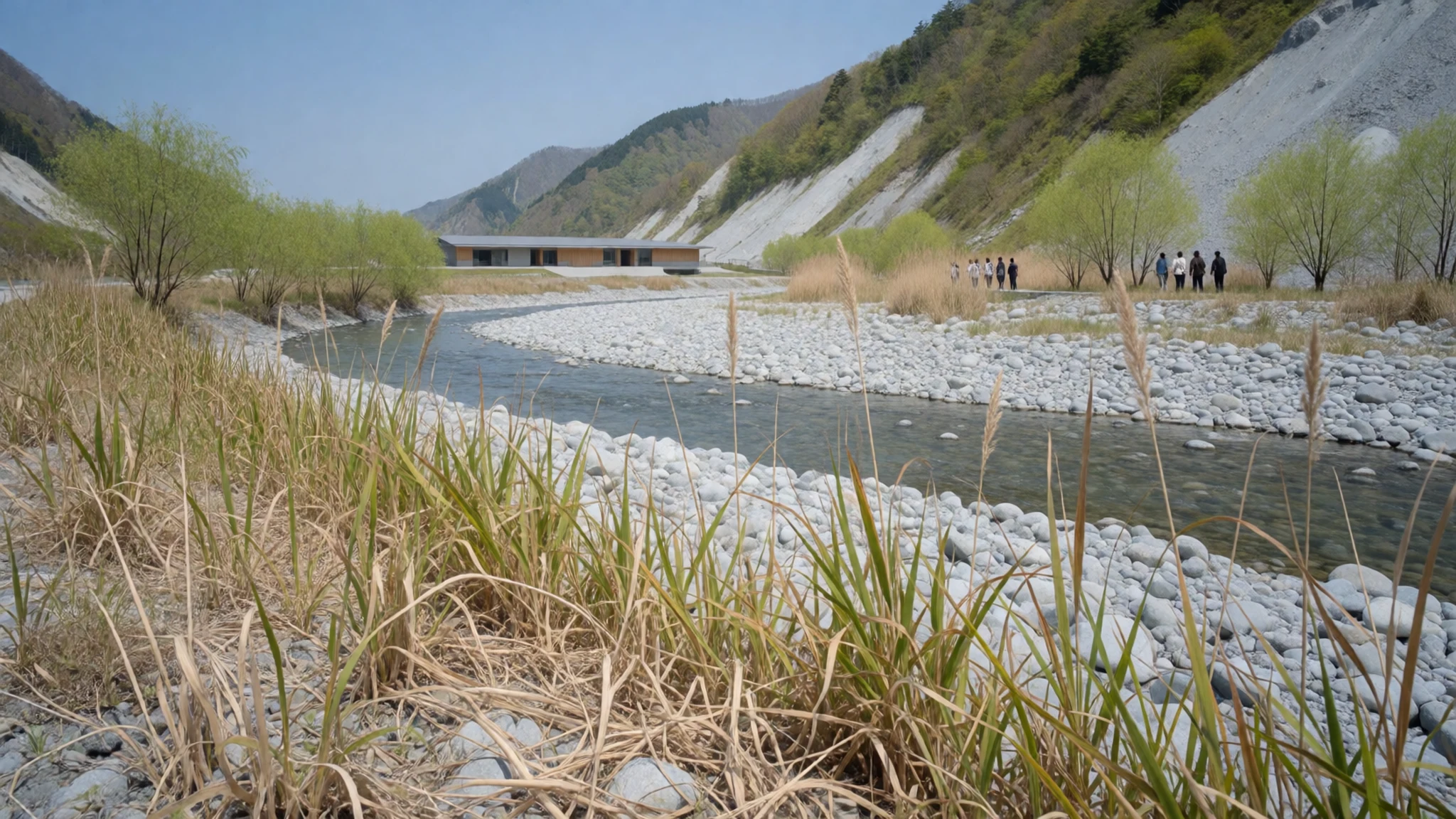
- Shimabara Castle — Central Shimabara
A rebuilt castle with a tall, almost pyramidal profile. The town chose practicality over ornament, so there is no formal garden. Inside, displays cover local history, including the uprising and the Christian past. The grounds make an easy first stop, close to the port and the main streets.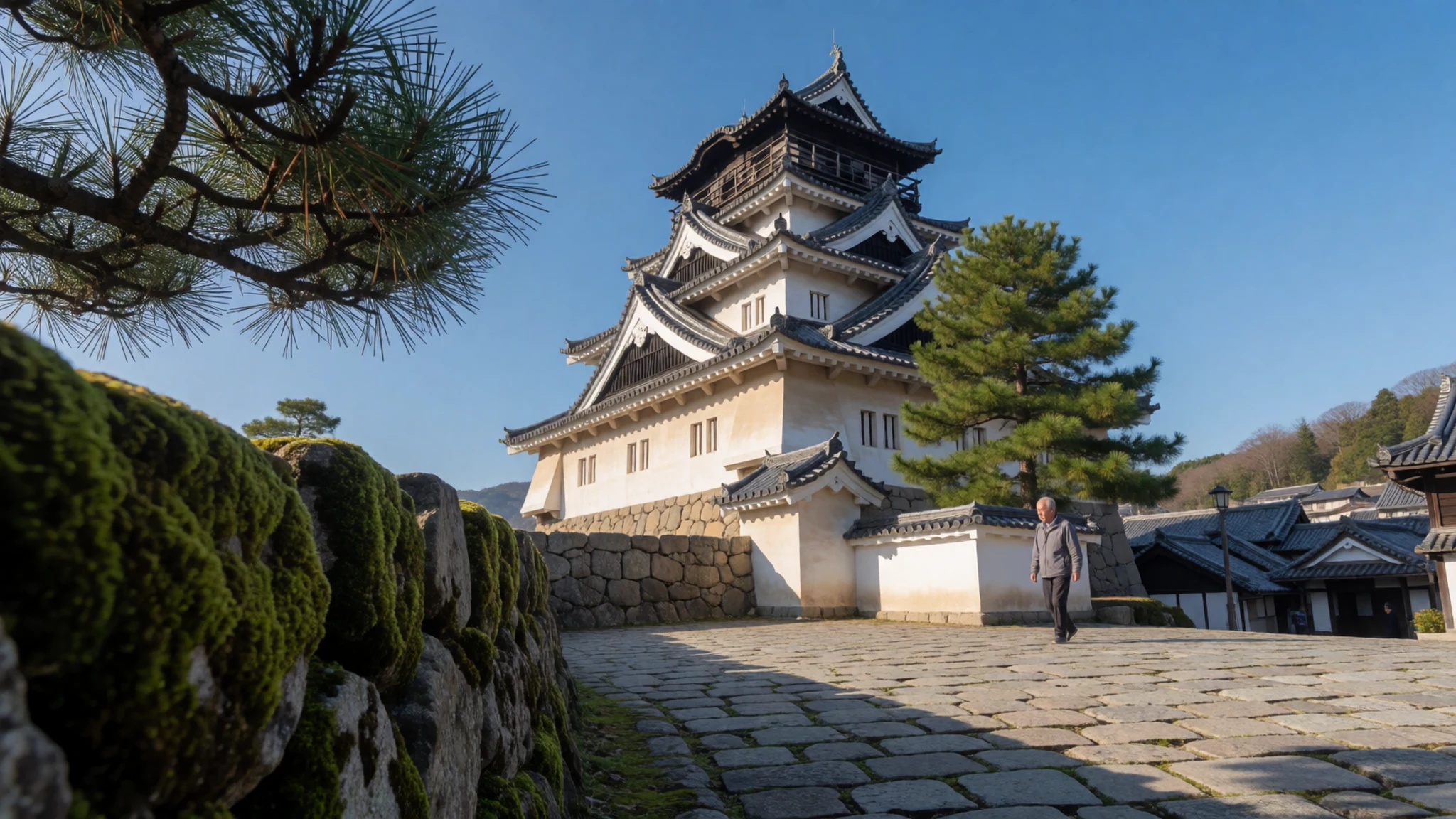
- Samurai residences — Samurai district, north-west of the castle
A short lane of former homes of Shimabara's vassals and officials, including the Shinozuka, Yamamoto and Shimada houses. Narrow channels of spring water run alongside. The houses are modest and spare, and they give a clear sense of how lower-ranking retainers lived under the castle's lords.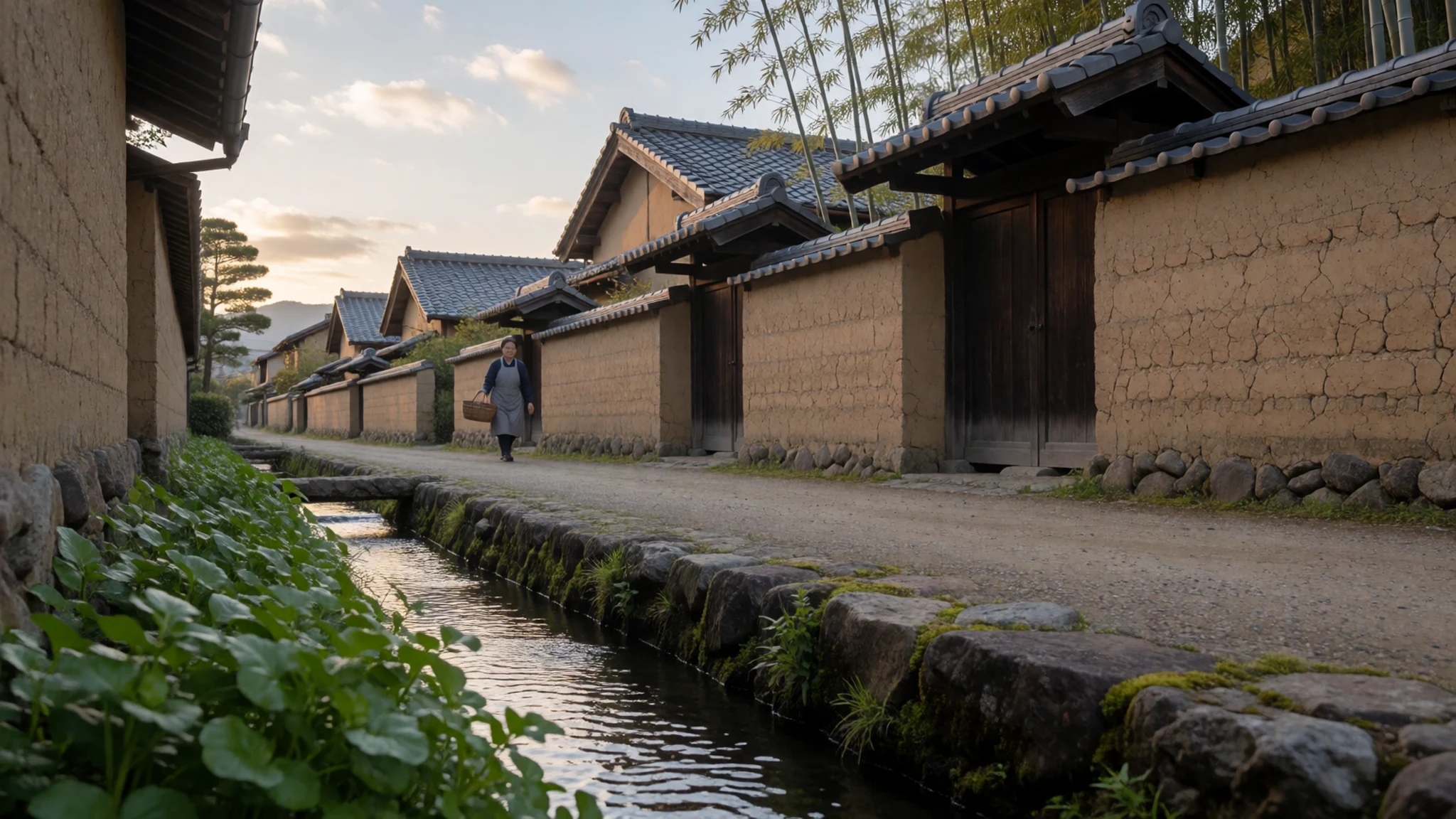
- Hara Castle ruins — South of Shimabara, on the peninsula coast
The remains of the stronghold where Christians and farmers made their last stand during the Shimabara Rebellion. Little of the structure survives, so the site is more about atmosphere and history than architecture. It pairs naturally with a visit to the Arima Christian Heritage Museum nearby.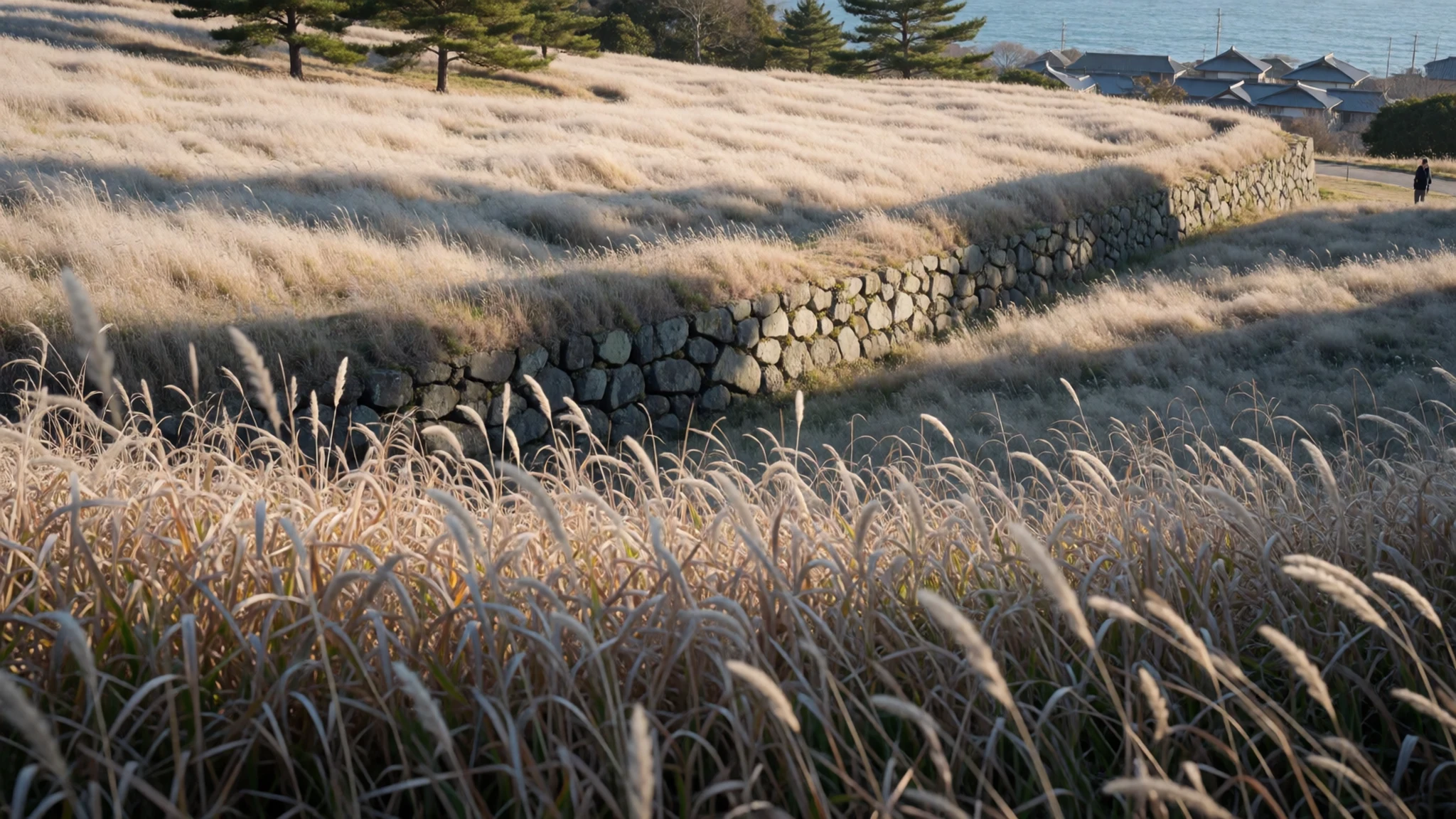
- Arima Christian Heritage Museum — Southern Shimabara peninsula
A small museum telling the story of the Hidden Christians of the Shimabara peninsula and the rebellion that ended so brutally. It is a quiet, reflective stop, and it makes sense of the region's layered past for anyone who has only come for the volcano.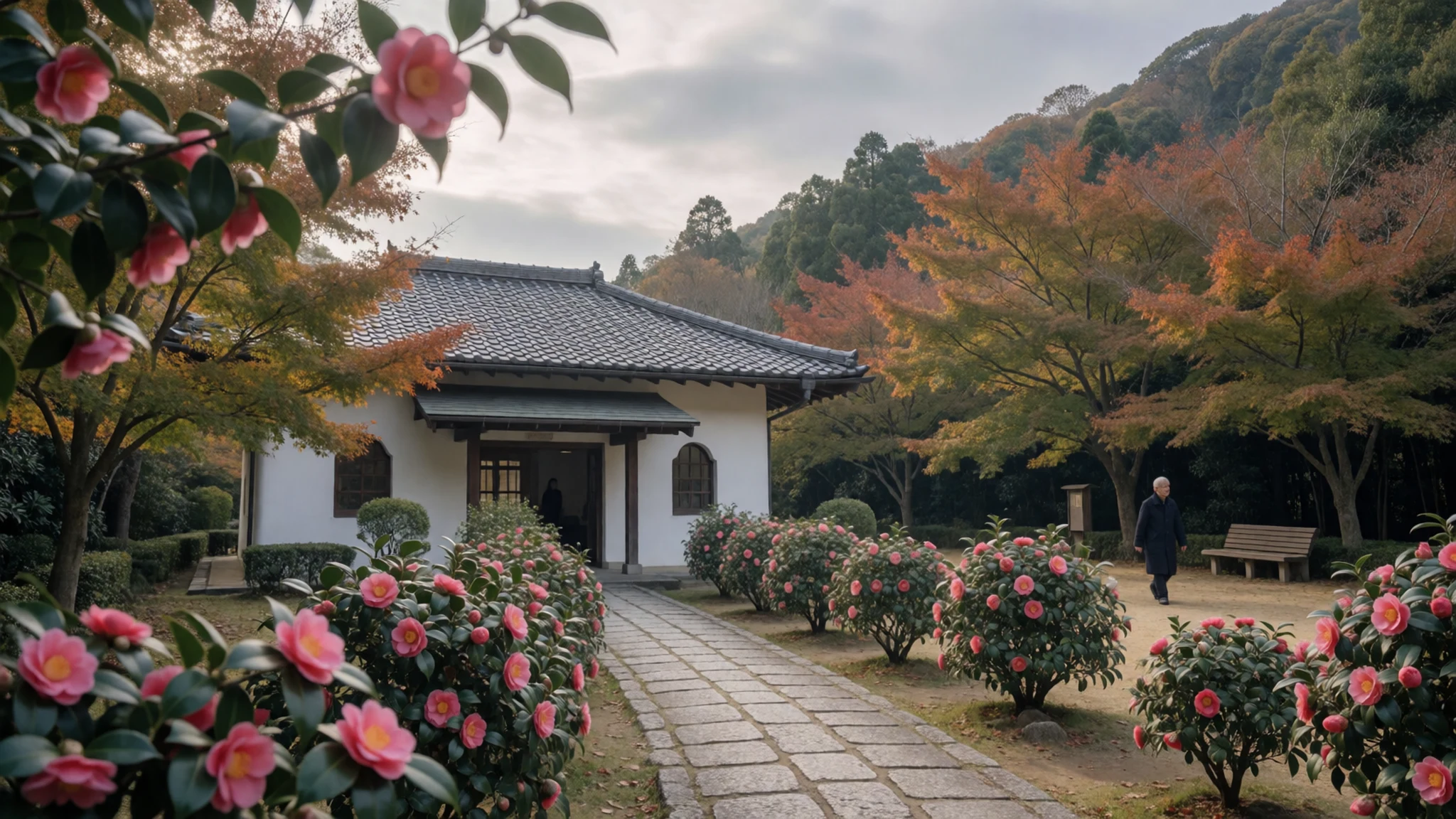
Culture
Mount Unzen's culture is shaped by two things: living with a volcano and a history of hidden faith. Around Shimabara, springs are part of daily life. Some are drinkable, some run into small basins once used for washing clothes or cleaning fish, and the town keeps free footbaths where locals and visitors sit side by side. Public bathing in hot springs, known as onsen, is the most common way of absorbing the mountain's warmth.
The memory of the 1991 eruption is present in memorials and in an unshowy local pragmatism about disaster preparation. Residents talk about the volcano plainly, as a neighbour that has to be respected. The Christian history is just as visible. The Hidden Christians, who practised in secret after the ban, are remembered in local museums, and the Hara Castle site is treated with solemnity rather than as a tourist attraction.
Samurai quarters, castle displays and small shrines round out the picture of a provincial castle town that has kept its own character. Festivals and seasonal customs follow the farming and bathing calendar more than any tourist schedule, so the best encounters tend to be unplanned ones: a conversation at a footbath, a stall of local produce, a neighbourhood shrine.
At onsen, wash thoroughly at the shower stools before entering the shared bath, keep towels out of the water, and follow any signs about tattoos and mixed or separate bathing.
What to wear
Around Mount Unzen, traditional dress is a matter of occasion rather than daily habit. The kimono, made from silk for formal wear and cotton for summer, is worn at weddings, coming-of-age ceremonies and festivals, while the lighter cotton yukata is the garment of summer evenings and onsen towns. After a bath, guests in hot-spring districts often stroll in a yukata and wooden sandals, a custom that suits the setting.
Day to day, people in Shimabara and the Unzen highlands dress practically. Farm workers wear hard-wearing trousers and boots, office workers in town wear plain smart-casual clothes, and older residents often favour neat layers in muted colours. Hikers on the mountain wear the usual outdoor kit of technical fabrics, hats and sturdy shoes.
For a visitor, the main considerations are the terrain and the weather. Sturdy walking shoes with good grip are essential on volcanic paths, which can be loose and rocky. The highlands are cooler than the coast, so carry a light waterproof and a warm layer even in spring and autumn, with a hat and sun protection in summer. For shrines, museums and memorial sites, modest, tidy clothes are enough; there is no strict dress code, but bare shoulders or beachwear feel out of place. Wear slip-on shoes where possible, as removing footwear at homes, some museums and onsen is routine, and bring clean socks.
What to eat
- Guzoni — Family-run eateries in central Shimabara
A warming soup of rice cake, chicken, vegetables and local greens in a clear broth, associated with Shimabara's home cooking. It is usually eaten at New Year but served in some local eateries through the colder months. Look for small family-run places in the old town.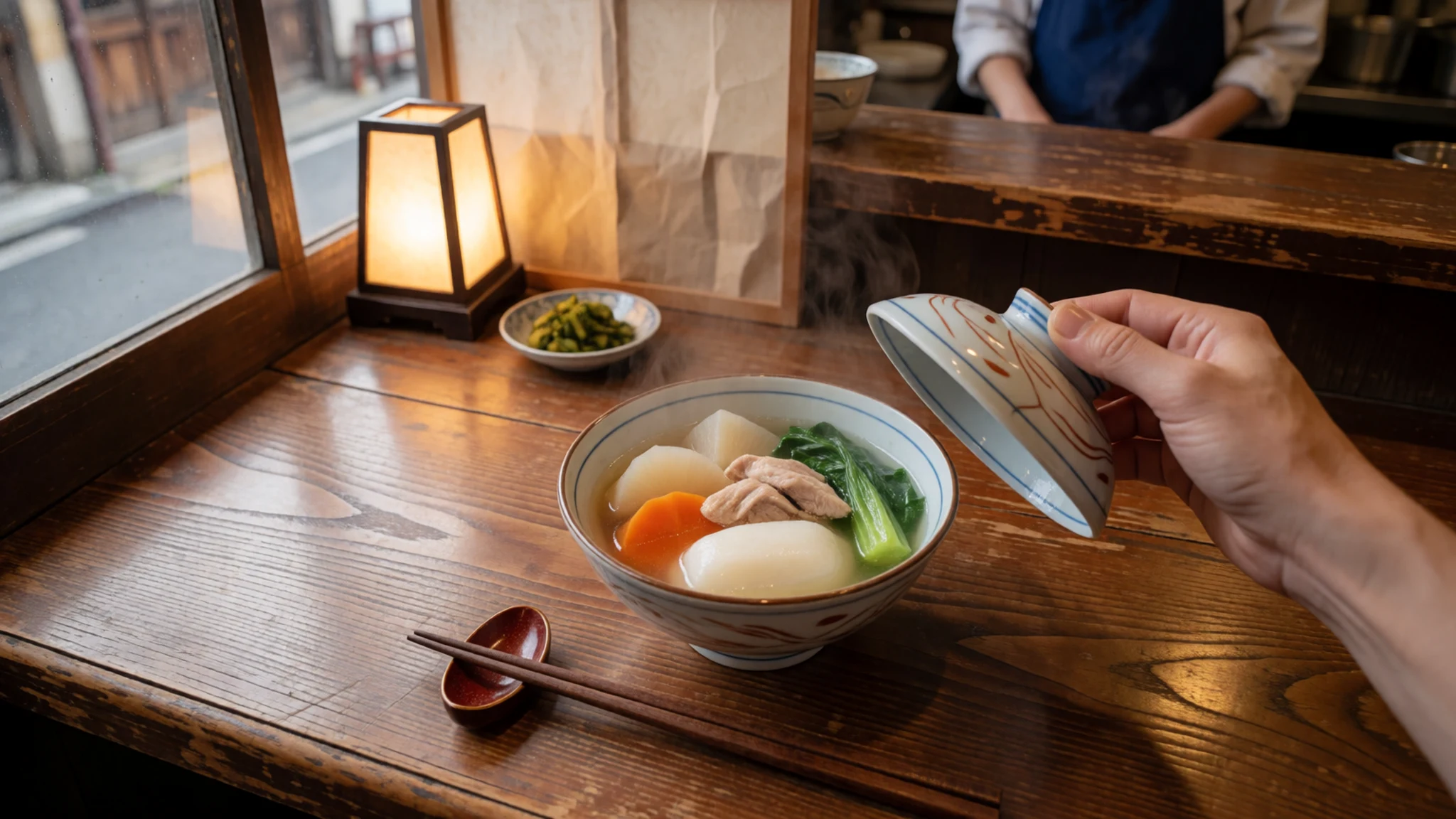
- Kanzarashi — Cafes near Shimabara Castle and the spring-water streets
A chilled dessert of small glutinous rice dumplings served in sweet syrup, often with fruit, and sometimes made with spring water. It is a classic Shimabara treat and a good counter to warm days. Cafes near the castle and the springs commonly serve it.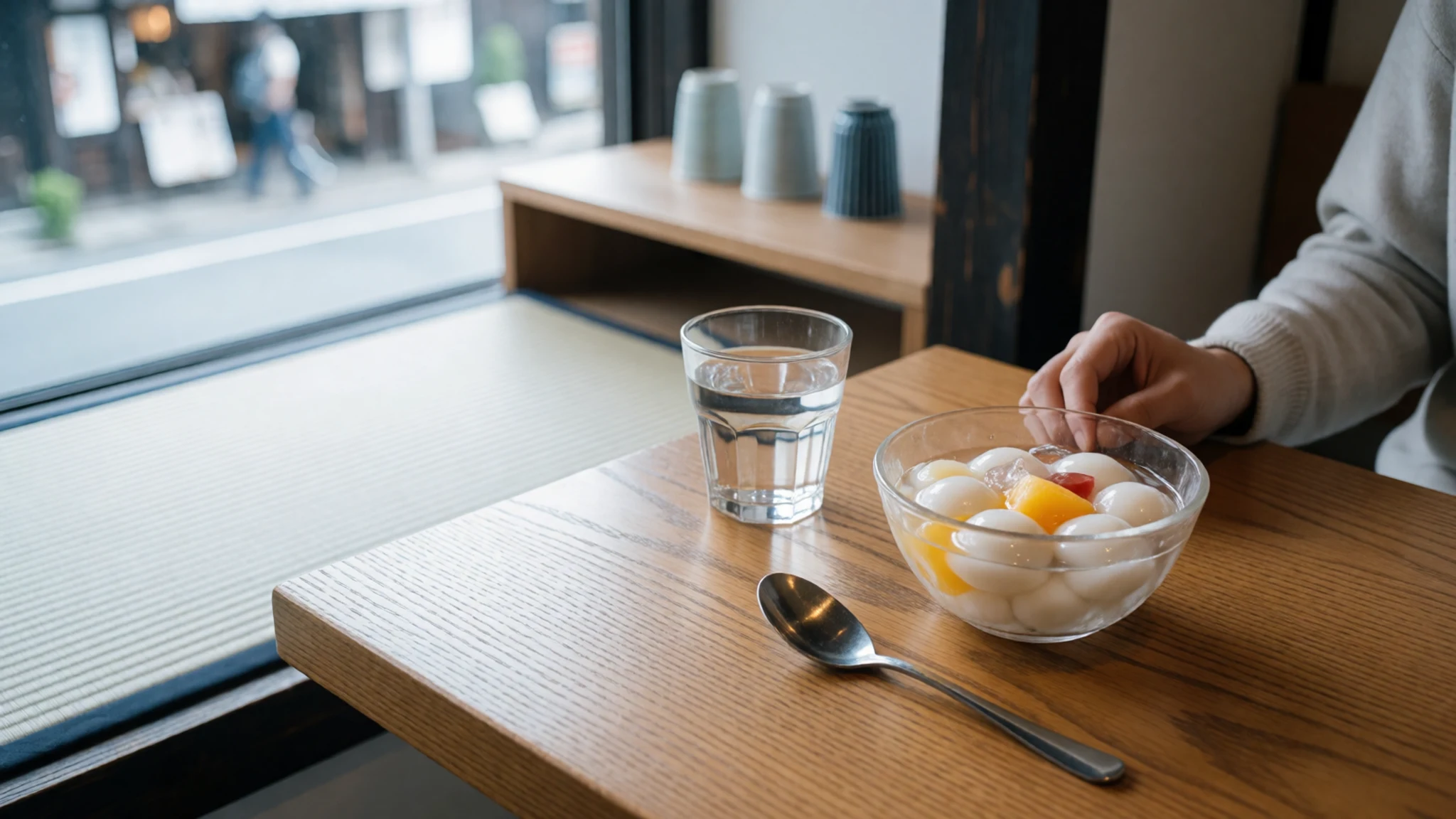
- Jigoku-mushi cooking — Unzen hot-spring town, near the steaming vents
Food steamed directly over volcanic vents, such as eggs, vegetables and sweet potatoes, so that the mountain does the cooking. The results are simple, soft and faintly mineral. It is a good way to taste the volcano at the highland hot-spring town. - Champon — Casual noodle shops in Shimabara and Unzen
A hearty noodle soup of pork, seafood and vegetables in a milky broth, typical of Nagasaki Prefecture. It is cheap, filling and exactly right after a day on the mountain. Casual noodle shops serve it all across the region. - Fresh peninsula seafood — Harbour-side eateries near Shimabara Port
The Shimabara coast is a working fishing area, and seafood appears on menus as sashimi, grilled fish and simple set meals. Ask for whatever is local that day. Ferry-port eateries and fish counters near the harbour are the easiest places to try it.
Plan it
Best time. April–May and October–November are the most comfortable for walking, with mild days and clear air. Summer is hot and humid at sea level, though the highlands are cooler. Winter brings frost and rime ice on the summit slopes, which is attractive but needs warm layers.
How long. 2–3
Getting there. Fly to Nagasaki or Kumamoto and continue by land. From Isahaya, near Nagasaki, a private railway runs to Shimabara; its platform is tucked inside the JR station, so look for it before leaving through the gates. Ferries cross from Kumamoto Port to Shimabara Port, with a further crossing from Nagasu Port near Kumamoto to Taira Port north of Shimabara. Check operators' official sites for timetables and fares.
Budget. mid
Tips
- Check the local tourist association's current advice on trails and ropeway access, as volcanic activity can close routes
- Take the ferry from Kumamoto for an easy approach, and check the last sailing back before planning a day trip
- Carry some cash for small eateries, springs and rural shops, as cards are not accepted everywhere
- Bring a warm layer and water to the highlands, where weather changes quickly
- Start early on the mountain, as cloud often builds later in the day
Etiquette
- Wash before entering any shared hot-spring bath and keep towels out of the water
- Treat memorial sites and the Hara Castle ruins quietly, as they commemorate large losses of life
- Follow trail closures and warning signs on the volcano without exception
Nearby
Sources
- Wikidata Q620860 (CC0)
- Wikipedia: Mount Unzen (rev 1386760346) (CC BY-SA 4.0)
- Wikivoyage: Shimabara (rev 5217896) (CC BY-SA 4.0)
- Unzen pyroclastic and lahar deposits.jpg (Public domain)
- Natural Location map of Japan, Alexrk2 (CC BY 3.0)
- Unzen Volcano Relief Map, SRTM-1, Batholith (Public domain)
- Mt. Fugen and Mt. Heiseishinzan (Public domain)
- Mount Unzen under cloud, seen from Shimabara, NevinThompson (CC BY-SA 4.0)
- 雲辺寺山頂公園, Araiyasushige (CC BY-SA 4.0)
- 雲仙岳の霧氷(花ぼうろ), Shirakawa-yobune (CC BY-SA 1.0)
- 雲仙岳 Mount Unzen, lienyuan lee (CC BY 3.0)


