Mount Ramelau
Mount Ramelau, Timor-Leste
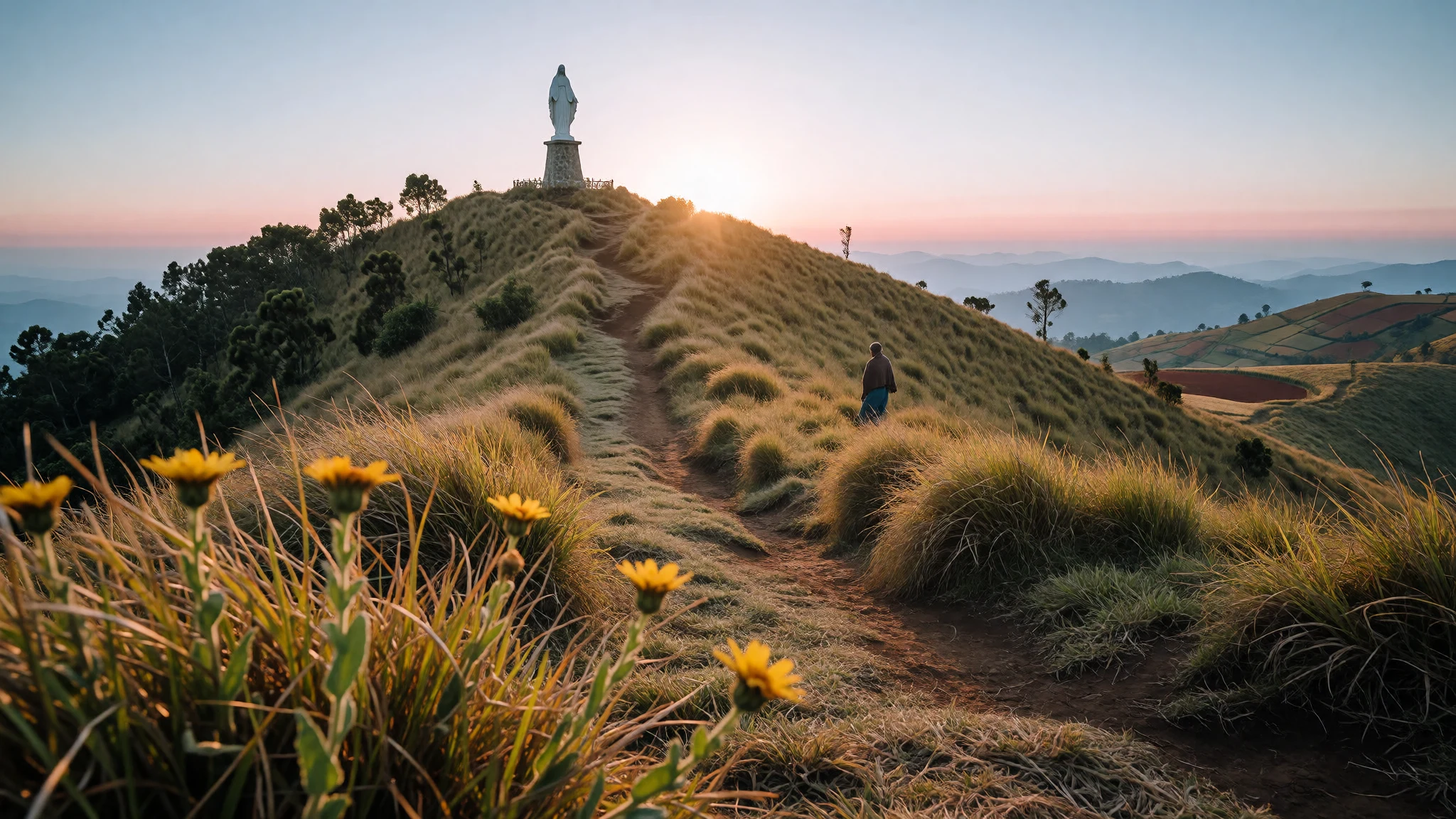
Mount Ramelau is a pre-dawn walk from Hato Builico to a summit statue, over highland cloud and quiet villages.
The place
Mount Ramelau stands in the central highlands of Timor-Leste, above Hato Builico in Ainaro. The same peak is also called Tatamailau. It is a broad massif of grass on the lower slopes and eucalypt regrowth above, with only a few patches of original forest near the crests, and the upper slopes spend much of the year in cloud while the valleys stay brighter. From the flank, a clear morning often shows a pale floor of cloud tops, with only the next ridges breaking through.
The walk starts in Hato Builico, a small settlement on the road up from Maubisse. The air is already cool, and houses, a church and simple lodgings sit among maize gardens. A footpath follows the ridge through grass, scrub and pockets of montane trees. In drier months the ground is firm. In the rains it turns to mud and the cloud drops onto the path.
The summit holds the Santuariu Inan Santa Ramelau, a statue of the Virgin Mary. Pilgrims and day-walkers share the last rise. On a clear dawn the hills towards Ainaro, the ranges towards Atsabe, and the cloud in the hollows all show at once. A head-torch climb becomes a wide, cold morning as the sun clears the ridges.
There is no cable car and no road to the top. A visit needs water, a warm layer, and someone from the village who knows the path when the mist closes. Around Mount Ramelau, life is rural and Catholic: coffee on the lower slopes, maize in the plots, and the church week shaping the days.
Its story
Mount Ramelau has long been more than a high point on a map. Around Ainaro the peak is Tatamailau, a Mambai name bound up with an ancestral mountain, and communities have treated the massif as sacred ground for generations. Uma lulik, the sacred houses, and the stories kept by elders sit in the valleys, even when a visitor sees only the path and the statue.
Catholicism did not replace that regard. It settled over it. The Santuariu Inan Santa Ramelau, the Virgin at the summit, is the visible join: a Christian shrine on a mountain people already climbed with reverence. Pilgrimage now draws families from across Timor-Leste for the Feast of the Annunciation, on or around 25 March. They walk, pray, and return to Hato Builico. Foreign walkers use the same path for the sunrise.
In the years of occupation and the fight for independence, the interior mountains were refuge and symbol. Foho Ramelau, named in song, stood for a homeland that administration could not cancel. The peak entered public memory as the roof of the country. That history is not on a plaque at the trailhead. It is in the way people speak of the mountain, as kin and as a flag in the land.
Mount Ramelau is a parish pilgrimage, an ancestral height and a national image together. The fitting approach is to walk with someone from Hato Builico and to leave the shrine as one found it.
What to see
- Summit of Mount Ramelau — Ainaro highlands
The summit of Mount Ramelau is a small exposed platform above Hato Builico. Walkers reach it in the dark and wait over a sheet of cloud, with neighbouring ridges standing clear of it. Wind is usual and shelter is slight, so a warm layer matters as much as the outlook.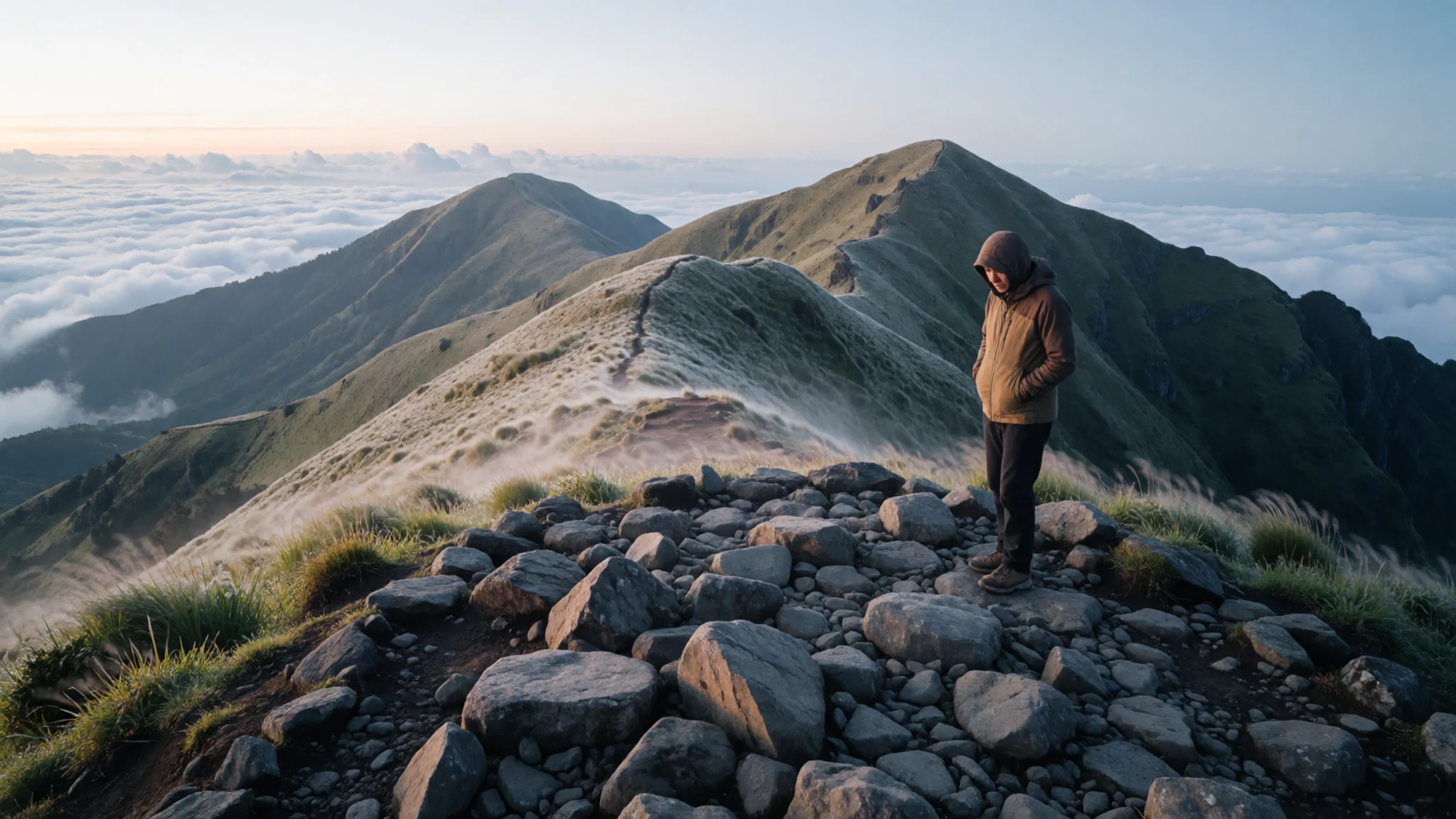
- Santuariu Inan Santa Ramelau — summit, Ainaro
The Santuariu Inan Santa Ramelau is the statue of the Virgin Mary on the summit of Mount Ramelau, a place of prayer before it is a photograph. Families bring flowers, stand quietly and leave for Hato Builico. The figure marks the end of the path even when cloud has taken the view. The plinth is not a seat.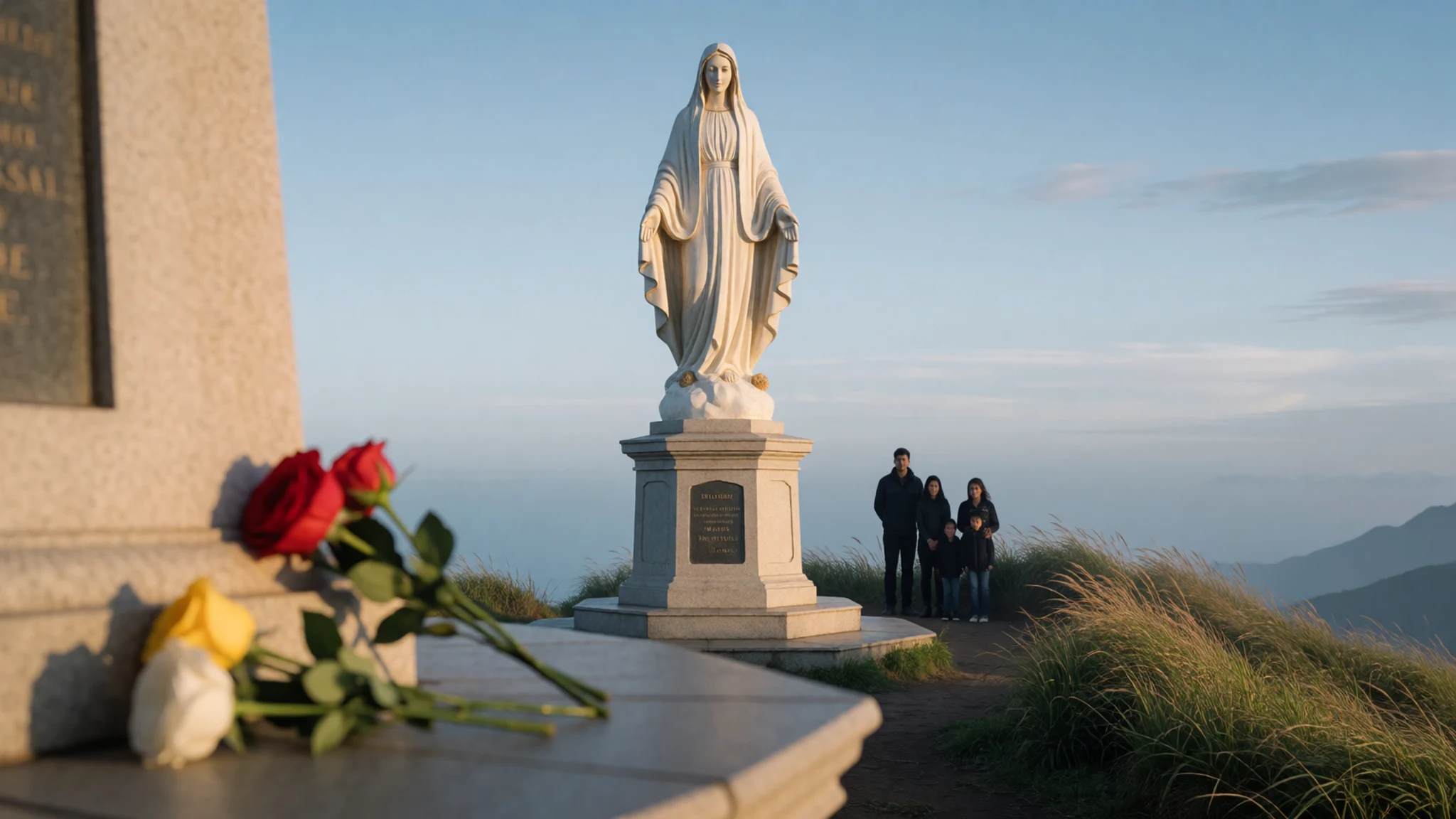
- Hato Builico — Hato Builico, Ainaro
Hato Builico is the highland village under Mount Ramelau and the place where the walk starts. At sunset the houses take a warm light and the peak sits over the roofs. It is a small settlement: a church, gardens, and a few simple places to sleep and eat. This is where water and a guide are found.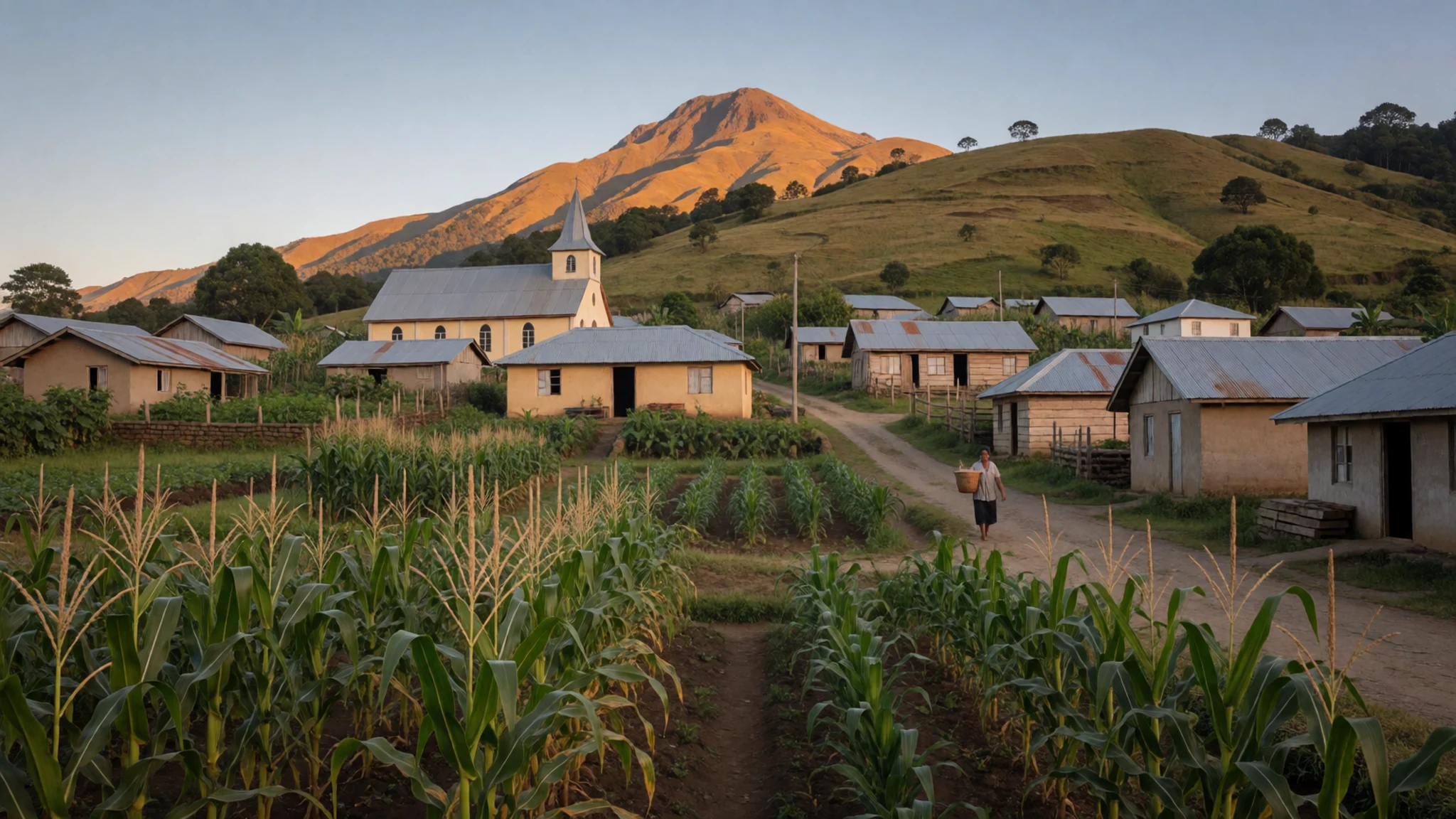
- Ridge path — ridge above Hato Builico
The path up Mount Ramelau leaves Hato Builico and follows the ridge to the statue. It is a walk rather than a roped climb: grass, earth, low shrubs and a few steeper bends. Dry weather still means a washed-out former vehicle track, with long detours, about four hours and 910 m of climbing for a fit walker, and a monotonous path with few views. Rain makes it slippery, and cloud can hide the next turn.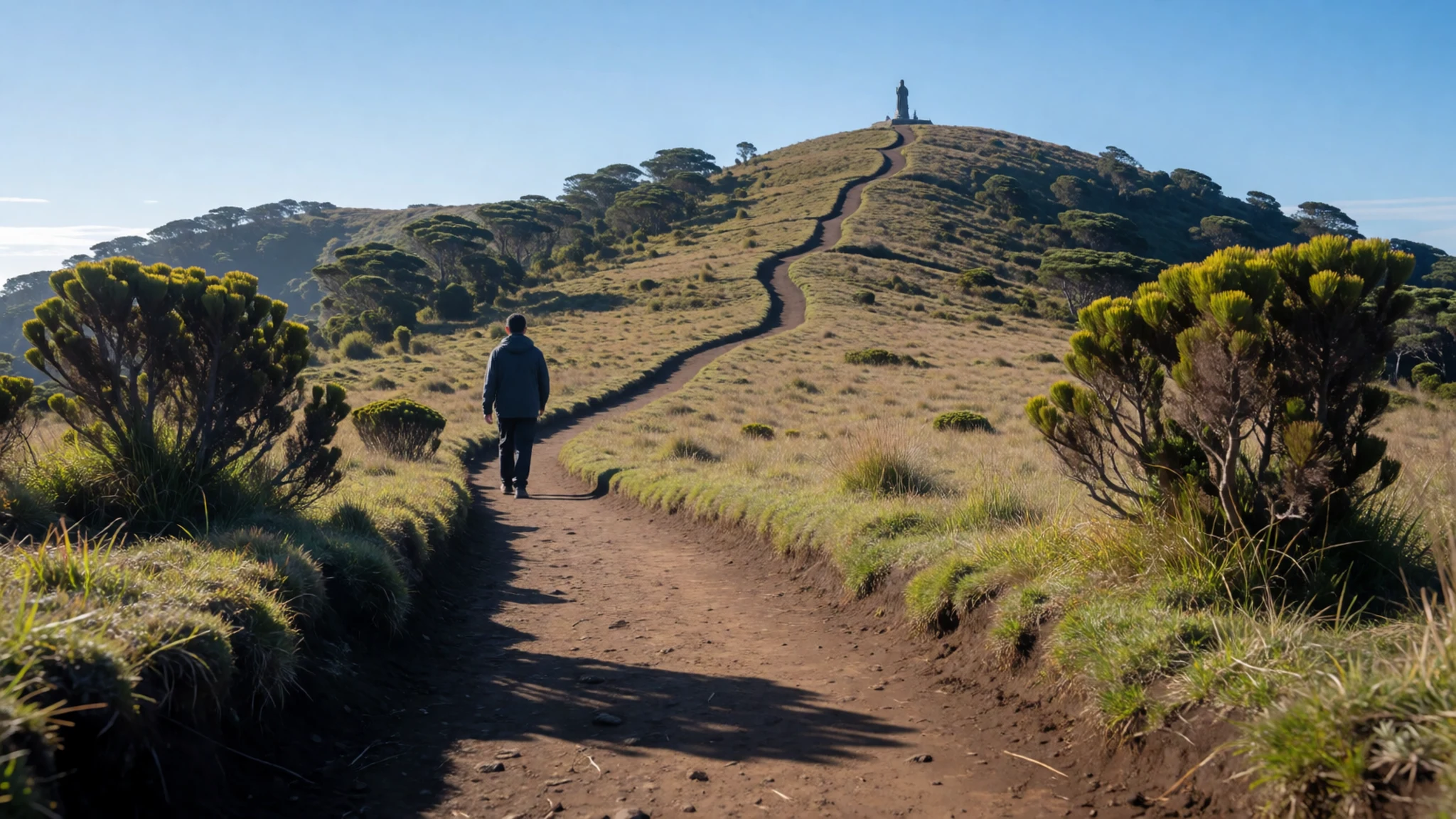
- View towards Ainaro — Ainaro
From the south side of Mount Ramelau, Ainaro lies in the hills below, a spread of ridges, gardens and red-brown tracks on a clear morning. From the town, the peak reads as a wall on the horizon. Cloud often cuts the summit away later in the day, so the open view belongs to the early hours.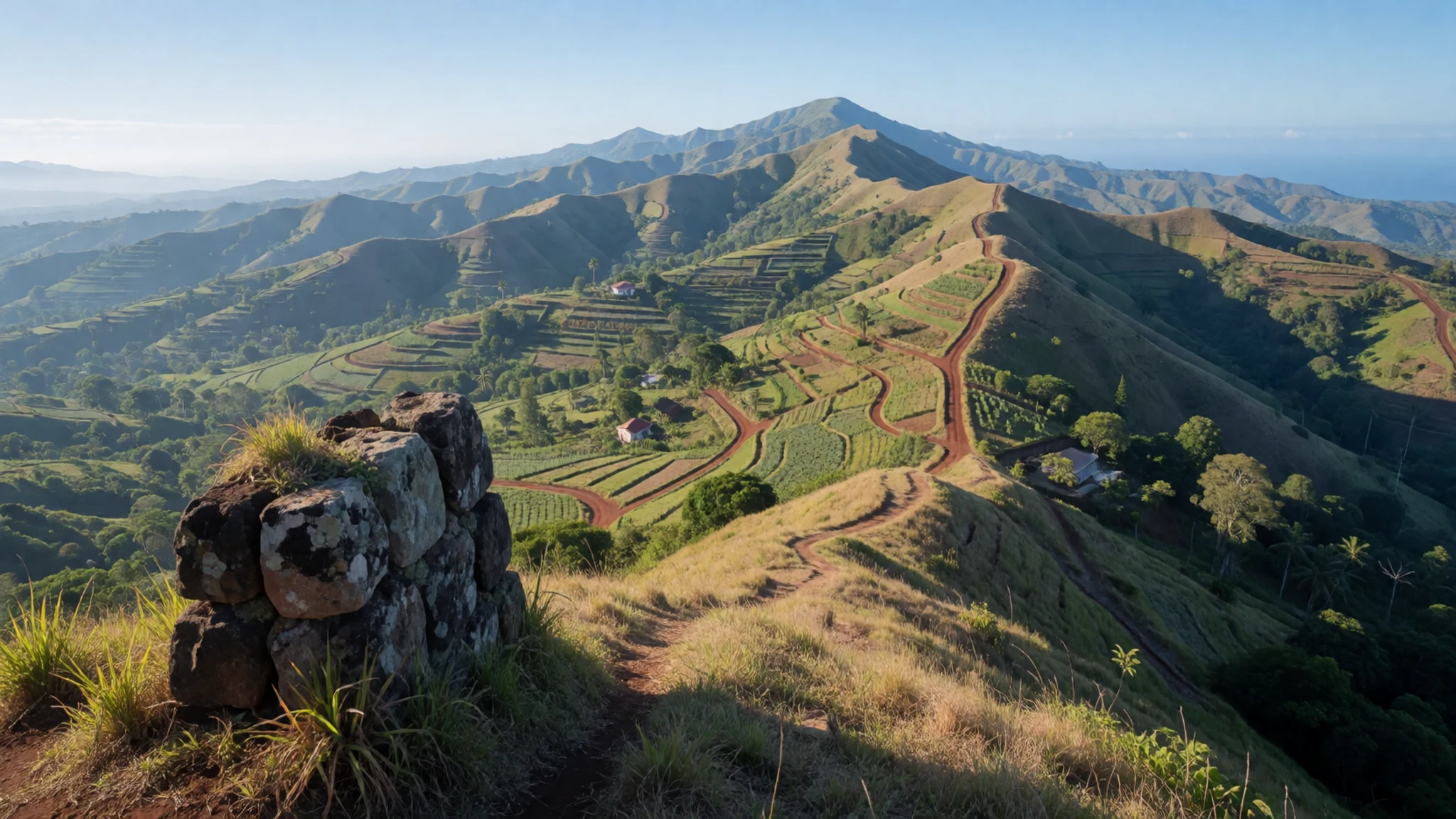
- Atsabe horizon — Atsabe
Atsabe, west of Mount Ramelau, looks towards Tata Mai Lau from its central street and the horizon beyond. The peak is part of daily life there, not a picture on a poster. The road between them crosses coffee gardens and small settlements, the mountain showing and vanishing as cloud moves along the ridge.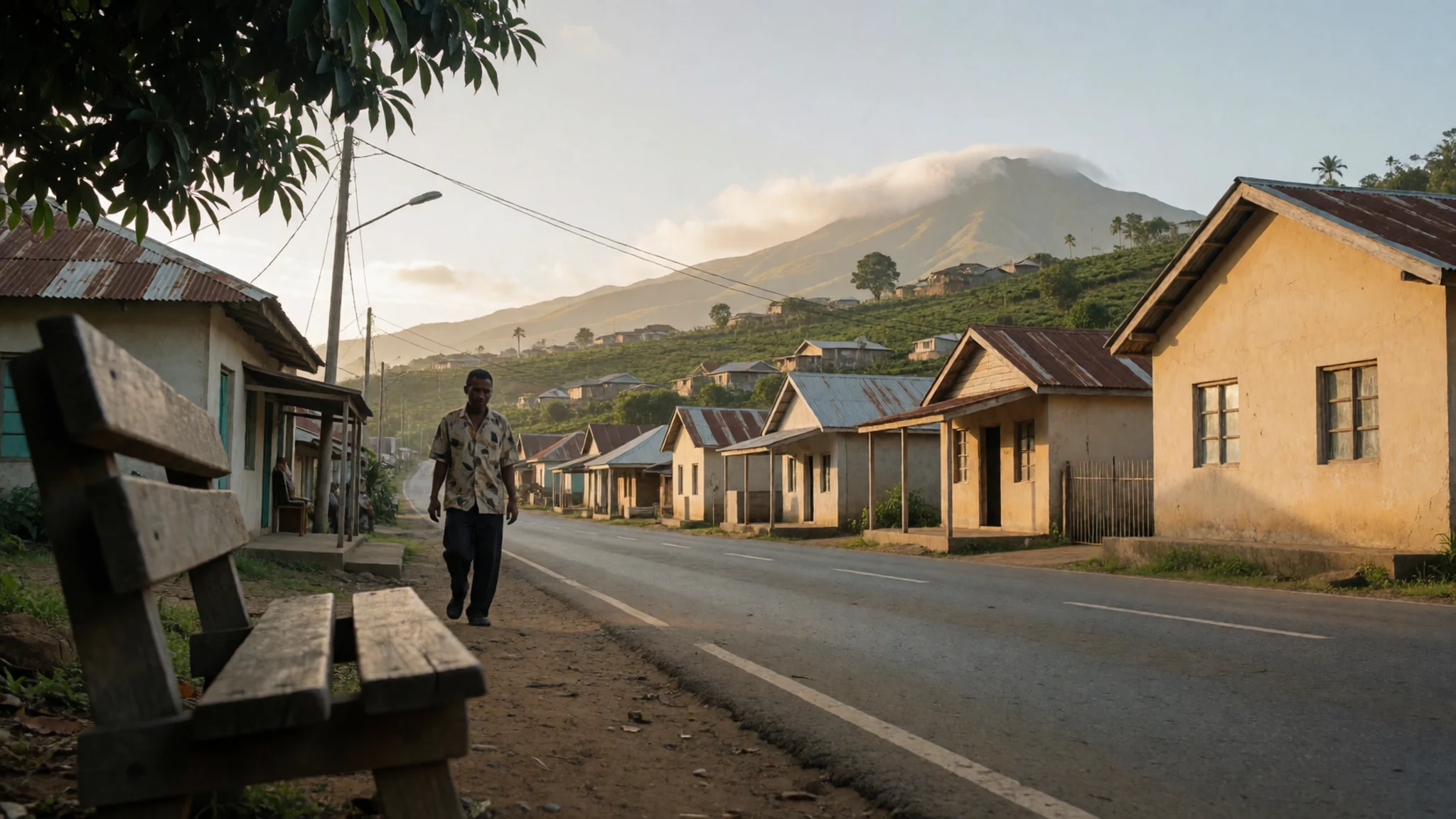
Culture
Mount Ramelau sits in a Catholic highland culture that still keeps older Mambai duties. In Hato Builico and the hamlets of Ainaro, Sunday follows mass, and feast days draw families up to the Virgin. Uma lulik, the sacred houses of the clans, are the other centre of respect. They are not interiors for visitors, and their rules stay with the people who keep them. Tetum and Mambai are the village languages; Portuguese appears in church and school; Indonesian is still heard in trade. A greeting comes before any request. Bondia, a simple good morning, is enough to start.
Tais, cotton cloths with local patterns, come out for ceremonies, guests and funerals, while ordinary days are t-shirts, skirts and trousers. A feast is loud. The last stretch to the statue is not. Prayer, not a party, belongs on the platform, and a guide from the village is how an outsider crosses land that is named and watched.
At the Santuariu Inan Santa Ramelau, cover your shoulders and knees, speak quietly, and do not climb on the statue or photograph people at prayer without asking.
What to wear
Around Mount Ramelau the ceremonial cloth is tais, hand-woven cotton with geometric bands. Women wear a tais feto as a tube skirt; men drape a tais mane at the shoulder or waist for weddings, funerals and feasts. Patterns belong to place and clan. A strong cloth is a serious gift, not a print run for a stall, and people do not climb in full ceremonial tais. They wear it when the occasion asks.
Ordinary dress is practical: t-shirts, football shirts, long skirts, trousers, sandals in the village, and a jacket once cloud settles. Uniforms and church clothes appear on the morning road. The cold before dawn is real even when the coast is hot, and a visitor packed only for Dili will feel the ridge.
The walk calls for long trousers, a shirt that can be rolled, and shoes that grip mud. A warm layer and a light scarf cover the shoulders at the statue and come off on the way down. Ceremonial tais belong to the families whose patterns they carry; a cloth from a weaver or market stall should come with a word about the design.
What to eat
- Batar daan — village kitchens and cookshops in Hato Builico and Maubisse
Batar daan is boiled maize, often with beans or pumpkin, and the everyday starch of the highlands around Mount Ramelau. Village kitchens and small cookshops in Hato Builico and Maubisse serve it when rice is not the centre of the meal. It comes hot, with a little salt and greens.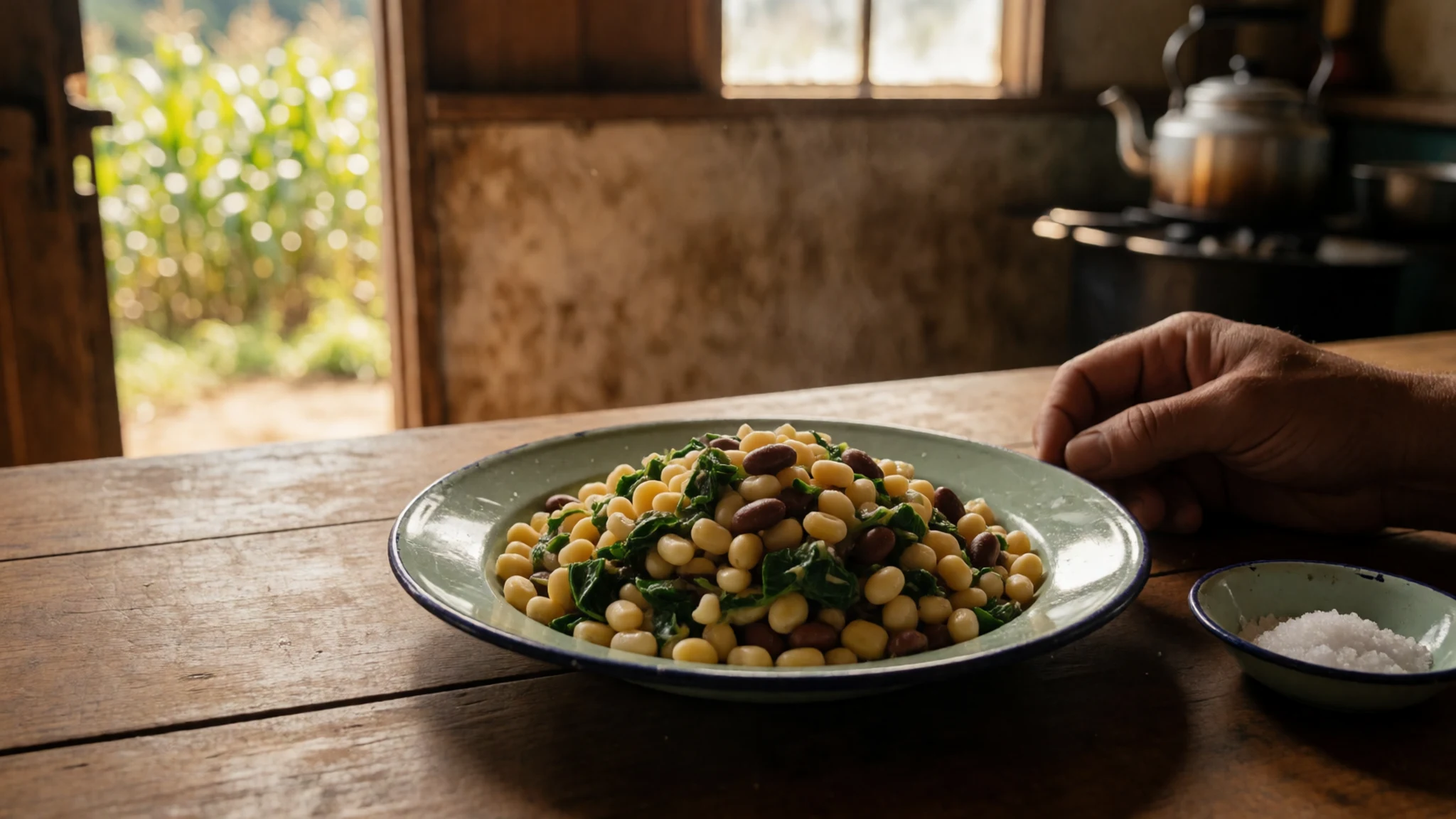
- Fehuk midar — stalls and house yards in Maubisse and Hato Builico
Fehuk midar, sweet potato, is roasted or boiled with cassava and eaten along the highland road to Mount Ramelau. House yards and stalls in Maubisse and Hato Builico put it out in the morning. It suits a cold start and travels in a pocket on the pre-dawn path.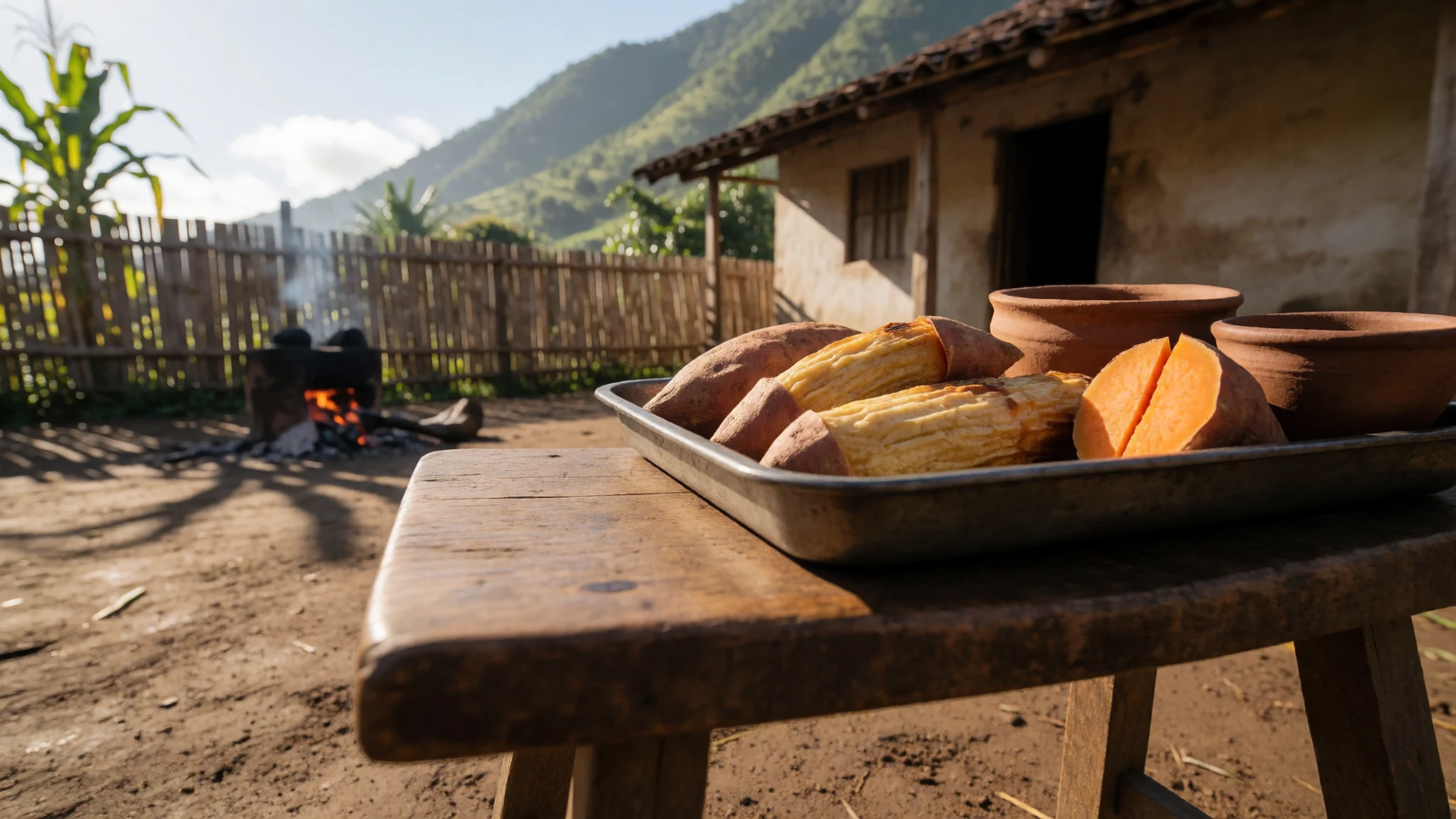
- Timor coffee — market stalls and family eateries in Maubisse and Ainaro
Coffee grown on the slopes around Maubisse and Ainaro is the morning drink for a Mount Ramelau walk. Market stalls and family eateries serve it strong and sweet, in a glass, sometimes with condensed milk. The cup belongs in the village, not on the shrine platform. - Na'an — small eateries in Maubisse and kitchens in Hato Builico
Na'an means meat, here usually goat, chicken or pork, grilled or stewed and eaten with rice or maize after Mount Ramelau. Small eateries in Maubisse, and sometimes a kitchen in Hato Builico, cook it at lunch for people coming off the ridge. - Budu — home kitchens and highland eateries
Budu is a sharp condiment of fermented fish, chilli and tomato, and a little of it changes rice or batar daan near Mount Ramelau. Home kitchens make it and highland eateries set it on the table. It is salty and hot, a seasoning rather than a dish of its own.
Plan it
Best time. On Mount Ramelau the drier months, from about May through October, bring a firmer path and a better chance of dawn over the cloud. Around 25 March, for the Feast of the Annunciation, pilgrims head for the statue. In the wet months the track is mud and the summit sits in cloud for much of the day.
How long. 2–3
Getting there. Fly to Presidente Nicolau Lobato Airport in Dili, then follow the inland road through Aileu and Maubisse to Hato Builico. The last stretch to the summit of Mount Ramelau is on foot, before dawn if sunrise is the aim. Shared cars and hired vehicles cover the road. There is no railway on this route.
Budget. mid
Tips
- Leave Hato Builico long before dawn if you want sunrise at the statue.
- Take a village guide; mist hides the path on Mount Ramelau.
- Carry water for the whole ridge. Do not expect a tap or a spring.
- Pack a warm layer. Highland nights are cold when the coast is hot.
- Bring cash for the guide, the bed and meals. Cards are not the plan in Hato Builico.
Etiquette
- Cover shoulders and knees at the Santuariu Inan Santa Ramelau.
- Ask before photographing people, especially at prayer or near a sacred house.
- Greet villagers before asking for a guide, a bed or a meal.
- Carry every wrapper and bottle back down. The ridge is not cleaned for you.
Nearby
Sources
- Wikidata (CC0)
- Wikipedia (CC BY-SA 4.0)
- Wikivoyage (CC BY-SA 4.0)