Com
Com, Timor-Leste
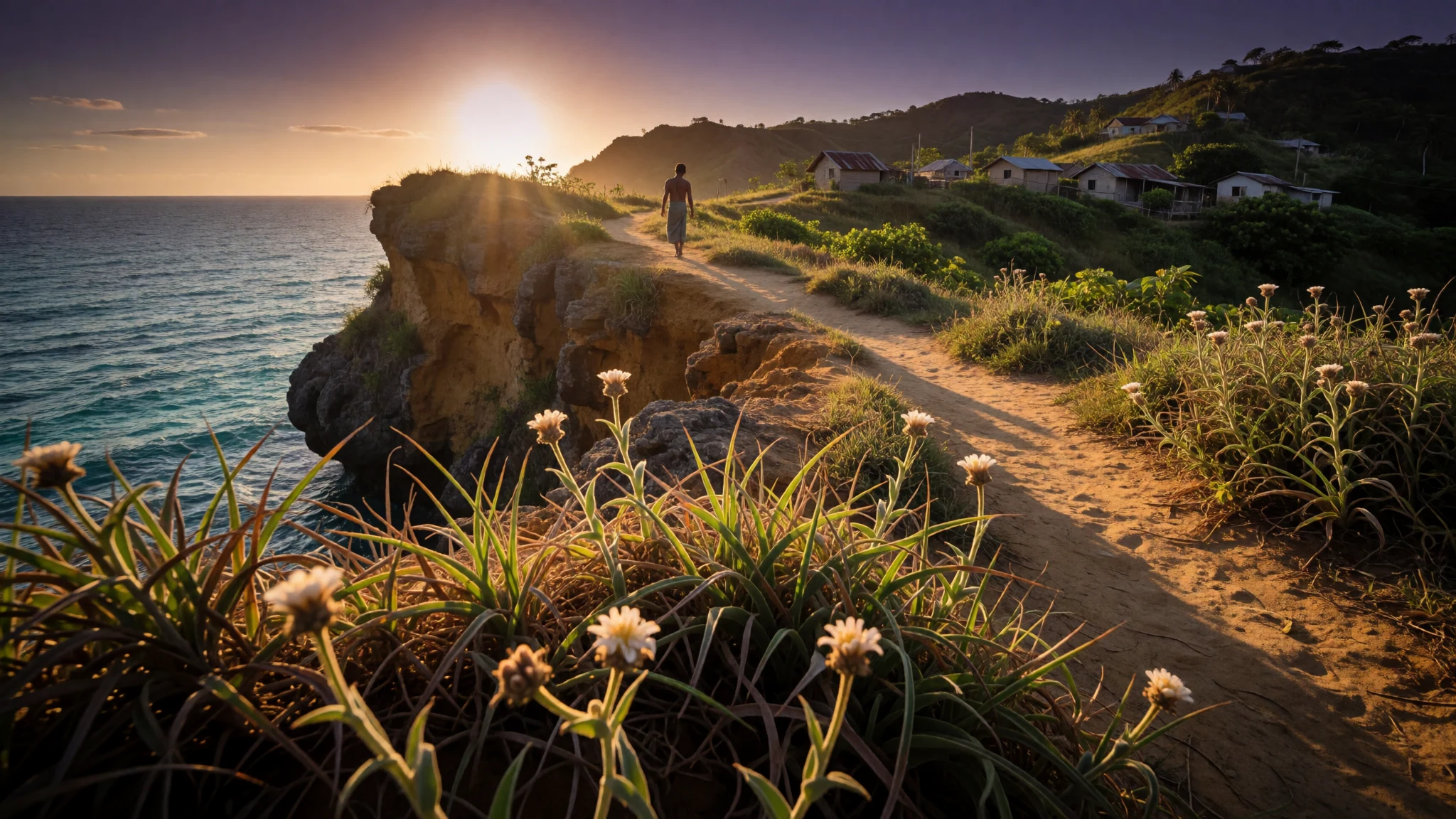
Com is a quiet fishing village on Timor-Leste's eastern coast, where the reward is a calm shoreline and a rare look at everyday rural life.
The place
Com is a suco, the village-level administrative unit of Timor-Leste, in Lautem municipality at the far eastern end of the country. About 2,717 people live in it, so this is a settlement of fishing households, small gardens and a few shops, not a resort. The Wikipedia page for the name is only a disambiguation list, and the sources behind this reading say very little more, so what follows is general and cautious.
The suco sits on the northern coast of the island, facing the Banda Sea side of the Timor shoreline. The landscape around it is dry tropical: scrubby hills, coconut and palm trees near the water, and a road that runs along the coast rather than inland. Lautem municipality has a reputation for clear water and sparse tourism, and Com shares both. Expect very simple facilities, and do not expect the infrastructure of Bali or the Thai islands.
The pace is the point. Mornings belong to the boats and the tide, the middle of the day is hot and slow, and evenings are for cooking fires and conversation. It suits people who are happy with a long journey, a plain room and few arrangements made in advance. It will disappoint anyone looking for nightlife, a famous monument or a polished beach club. Phone signal and cash machines should not be assumed, and the nearest large town is some way off.
Its story
Com's own history is thinly documented in the sources used for this reading, so it is better to describe the setting than to invent a past. What can be said is that Com belongs to the Lautem region, whose people speak Fataluku and neighbouring languages, and whose rock-shelter art and house traditions near Tutuala are among the better-known features of the east.
Like every part of Timor-Leste, Com lived through the Portuguese colonial period, the years of Indonesian occupation and the vote for independence. Those events shaped the road network, the language of schooling and the way villages are organised today. Many families still speak a local language at home, Tetun with neighbours from other regions, and Portuguese or Indonesian in official settings.
The suco is a modern unit of local government, headed by an elected chief, the chefe de suco. A photograph from a presidential dialogue with the Com community shows how this works in practice: villagers, local leaders and national officials sit together in the open to talk about services and needs. That habit of community meeting tells a visitor more about Com than any monument does.
For anyone wanting real history here, the best source is people. Ask politely, through a local guide or host, and expect stories about land, fishing, family and the years of conflict. Some memories are painful, so let people decide how much to share.
What to see
- Com shoreline — Com village waterfront
The beach and shallows at Com are the reason most visitors come. Walk it early, when the water is calm and the light is soft, and watch the fishing boats. Swimming and snorkelling depend on the tide and the day's conditions, so ask a local before getting in.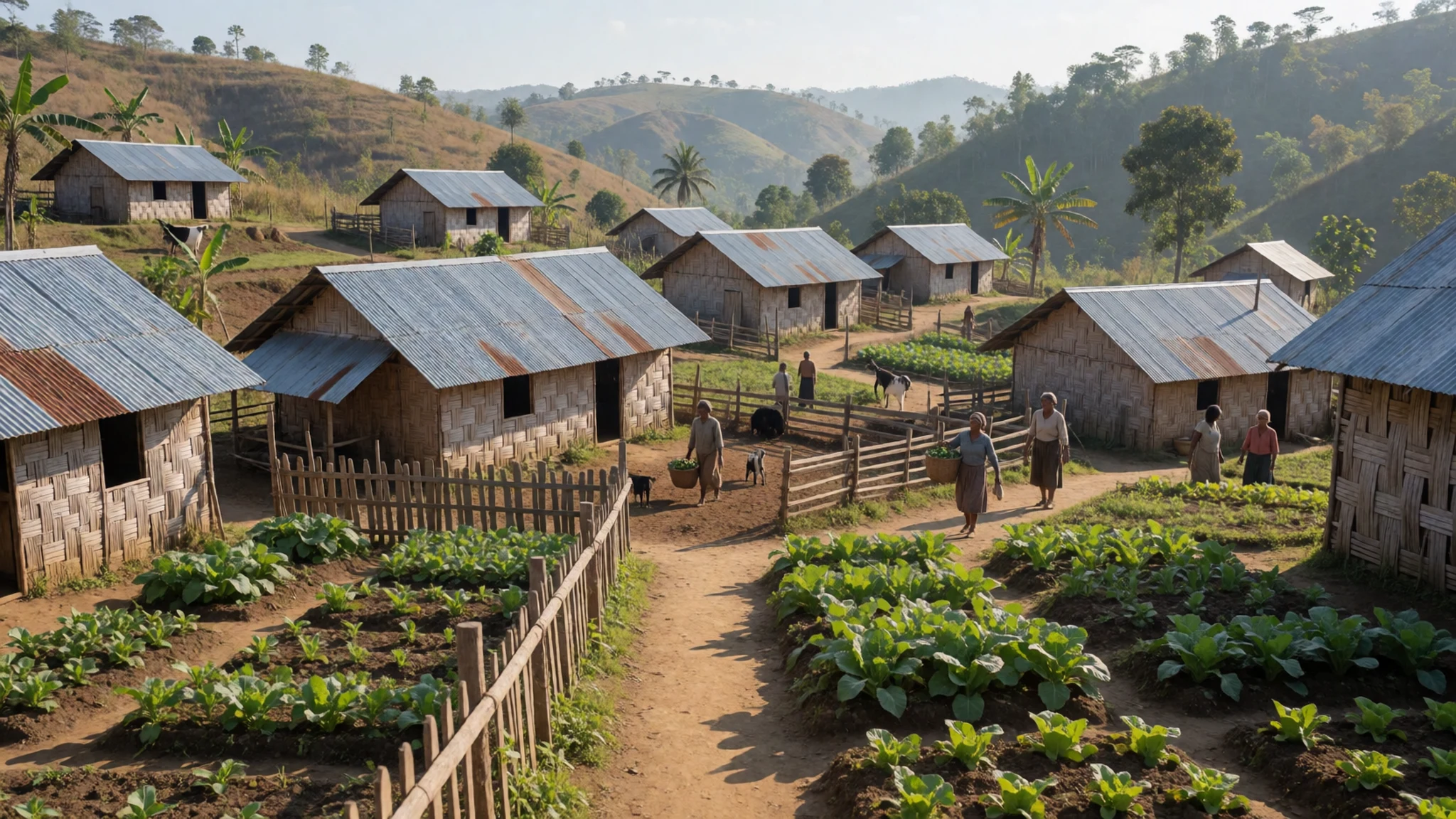
- Fishing boats and the morning catch — Com shore
Small boats go out and return near the village, and the landing is a good place to see how the community lives. Stand back, ask before photographing, and buy fish if someone offers. It is a working place, not a performance, and times shift with weather and tide.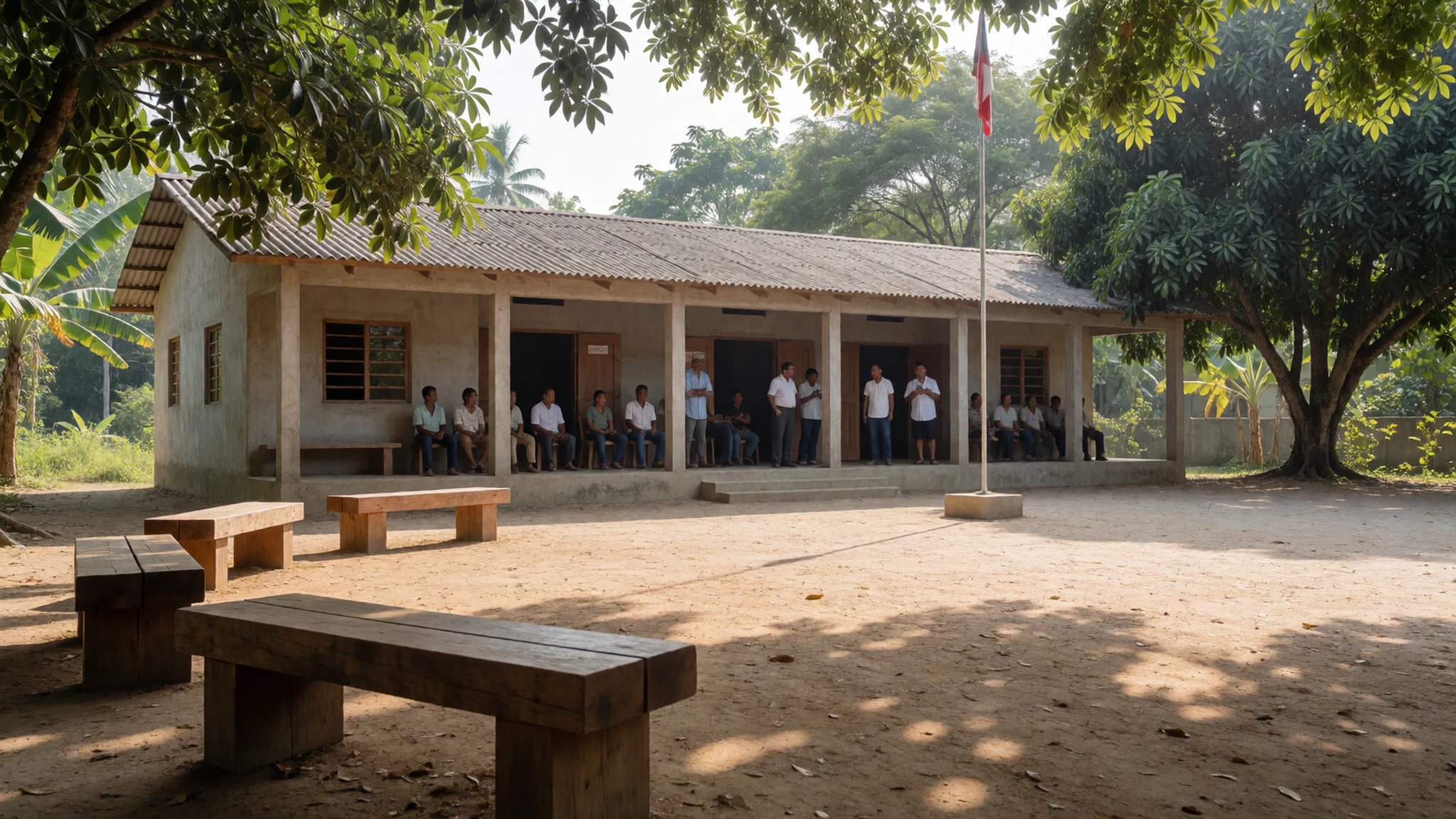
- The Lautem coast road — North coast, Lautem municipality
The road along this coast is as much a sight as any stop on it, with sea on one side and dry hills on the other. Drive or ride slowly, expect livestock and children near the verge, and allow far more time than the distance suggests.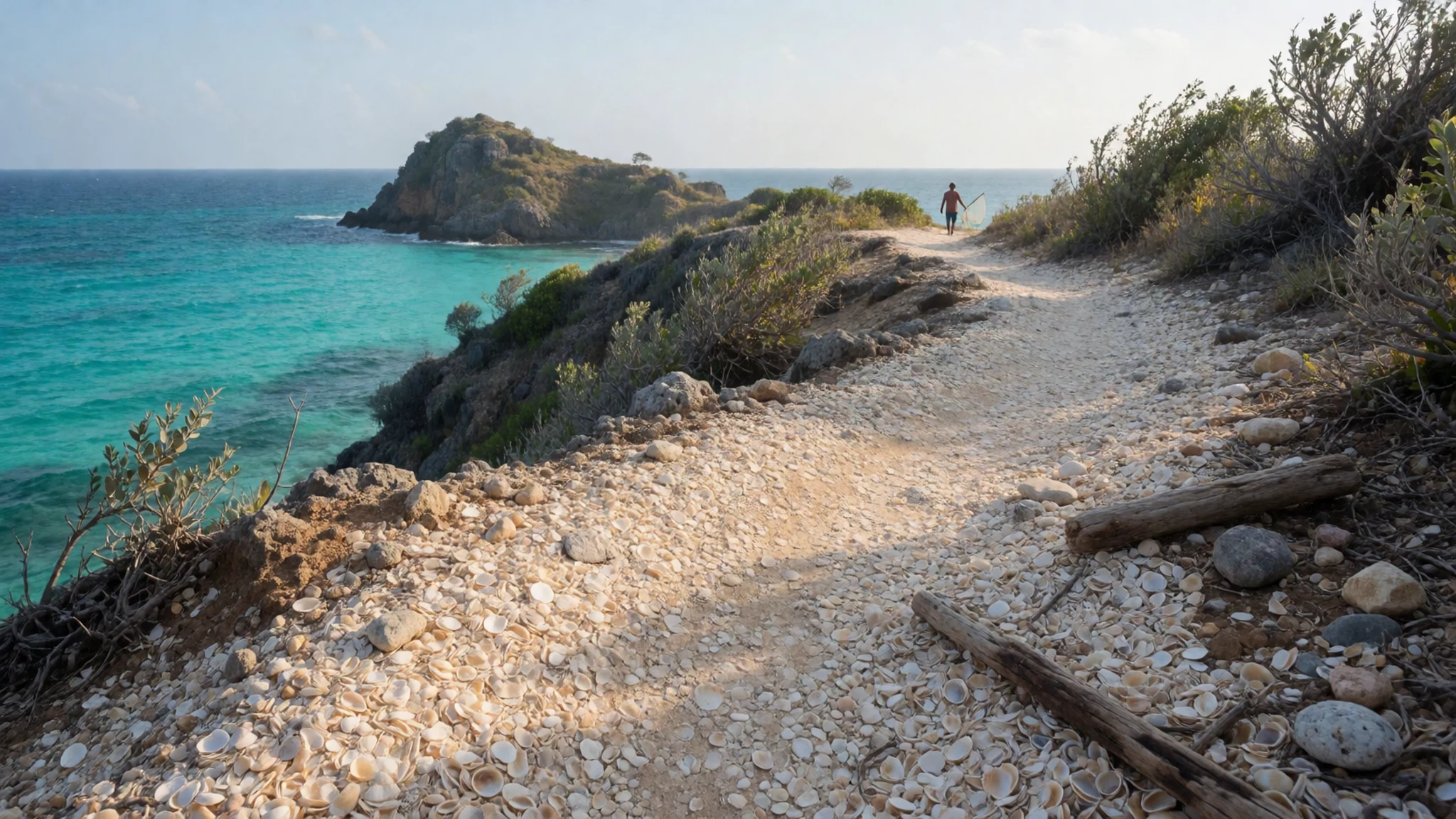
- Tutuala and Nino Konis Santana National Park — East of Com, Lautem
Further east, the Tutuala area leads into Nino Konis Santana National Park, with forest, coastline and rock-shelter sites tied to Lautem's long human history. It is best visited with a local guide arranged in advance. Check current access, conditions and any permit requirements locally.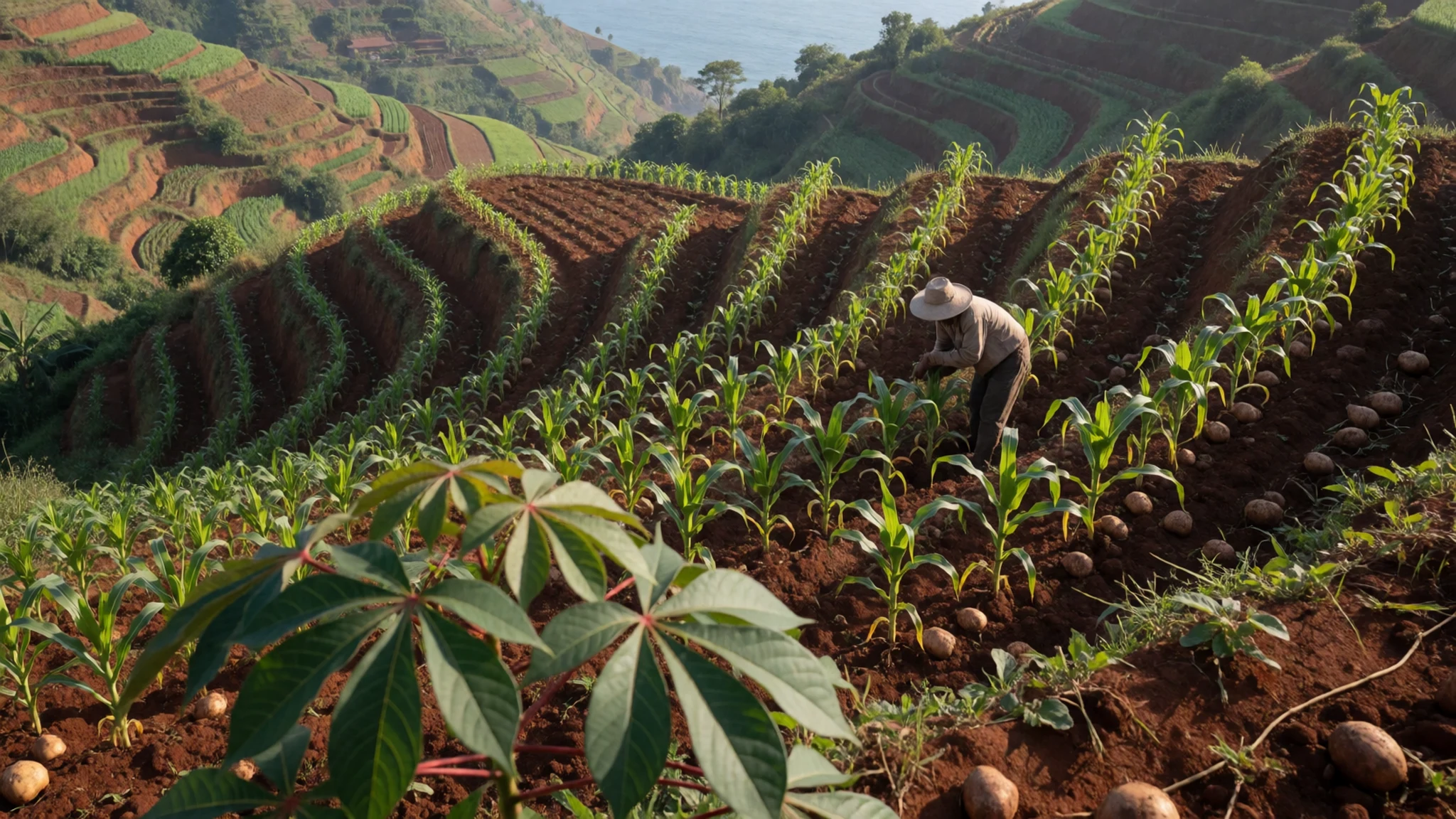
- Jaco Island — Off the eastern tip of Timor-Leste
Jaco is a small island off the eastern tip of Timor-Leste, reached by boat from the Tutuala side. It is known for its clean water and sense of remoteness. Boat crossings depend on weather and local arrangements, so confirm everything with a guide or community contact before travelling.
Culture
Com is a rural community, and its culture is local, Timorese and strongly family based. Most people in Timor-Leste are Catholic, and church life, saints' days, weddings and funerals shape the calendar. Alongside this runs older custom: respect for ancestors, sacred houses called uma lulik in many regions, and obligations between families that involve gifts of cloth, animals and food.
In the Lautem area the Fataluku language and its traditions are strong, and a visitor may hear several languages in one conversation: a local language, Tetun, Portuguese and some Indonesian. Greetings matter. A friendly 'bondia' in the morning, 'botarde' in the afternoon and 'boa noite' after dark go a long way, and a handshake is common.
Community decisions are often made through meetings, as the photographs of the 2015 dialogue in Com show, so a visitor who wants to stay, camp or film may be sent to the village chief first. That is not bureaucracy; it is how the place works. Hospitality is real but resources are limited, so offer to pay for meals and lodging, and accept refusals gracefully.
The years of conflict are still recent for many families, so listen more than you ask. Always ask permission before entering a sacred house or taking a photograph of a person, and cover your shoulders and knees when you walk through the village or into a church.
What to wear
The traditional cloth of Timor-Leste is tais, handwoven on a backstrap loom, usually in cotton, with patterns that differ by region and community. Women often weave it, and it is worn as a wrap skirt or sash, and given at weddings, funerals and in exchanges between families. Colours and motifs signal where a family comes from. In the east, Lautem has its own designs, so ask a weaver what a pattern means and do not assume it is decoration.
Everyday clothing in Com is simple and practical: T-shirts, shorts or long skirts, sarongs, rubber sandals and caps against the sun. Fishermen work in light clothes that dry quickly. On Sundays and church days, people dress up, with neat shirts, dresses and sometimes tais worn over the top. Tais also appears at official events and ceremonies, where it is worn with pride.
Visitors should pack for heat and for modesty. Light cotton or linen that covers shoulders and knees is respectful in the village and cooler than it sounds. Swimwear belongs on the beach, so cover up with a sarong or shirt when walking back. Bring a hat, sunglasses and reef-safe sun cream. Sturdy sandals or trainers help on rough tracks, and a light rain layer is useful in the wetter months. If you buy tais, buy it from the weaver or a local cooperative.
What to eat
- Grilled fresh fish — Village eateries and homestays near the shore
The simplest meal in Com is fish caught nearby, grilled over coals and served with rice and a spicy chilli sauce. What you get depends on the day's catch, so ask what came in that morning.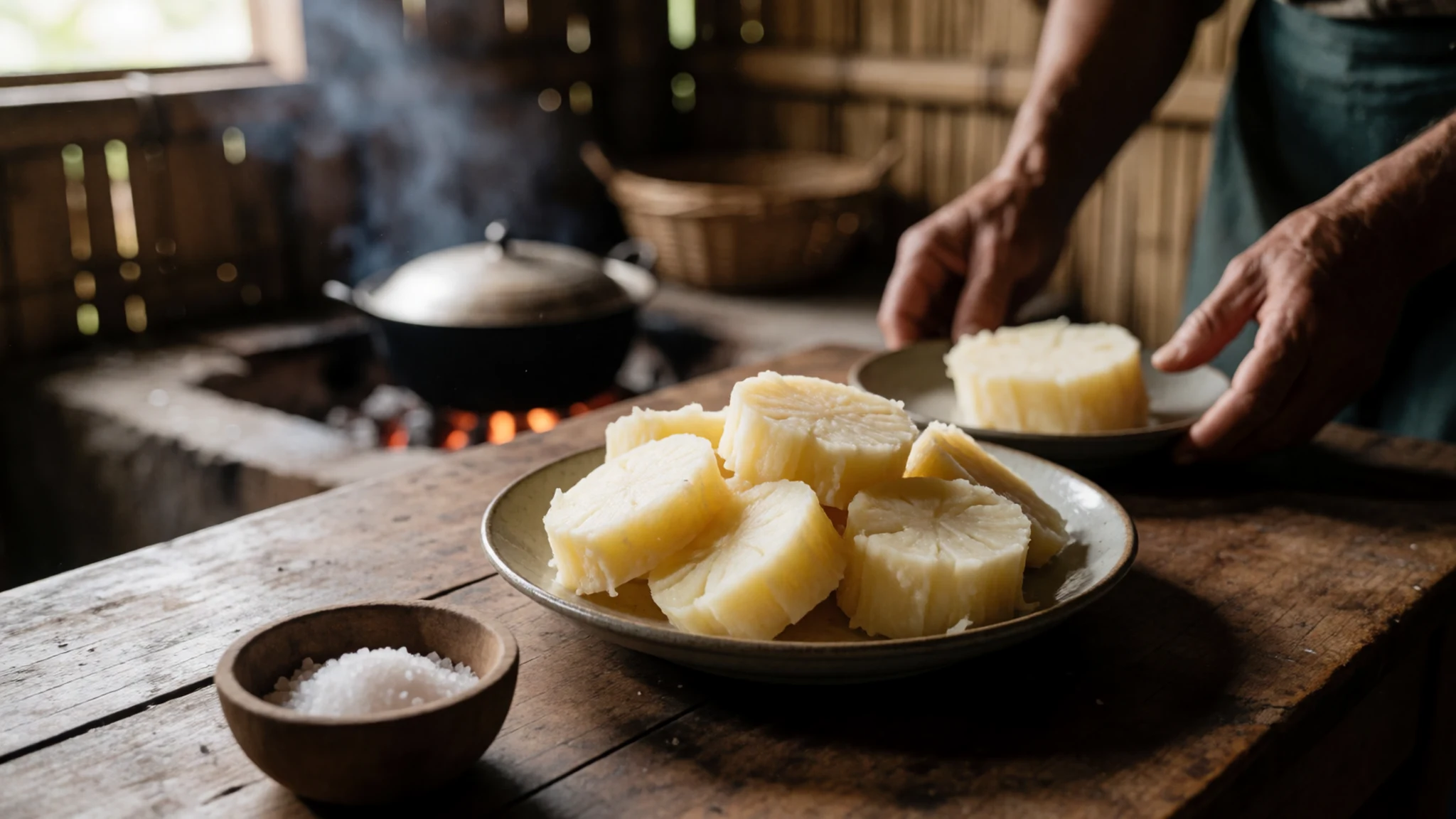
- Batar da'an — Family kitchens, homestays and simple village food stalls
A Timorese comfort dish of maize, beans and pumpkin or greens cooked together into a soft, filling stew. It is everyday food in the countryside, and often eaten with a little meat or fish when available.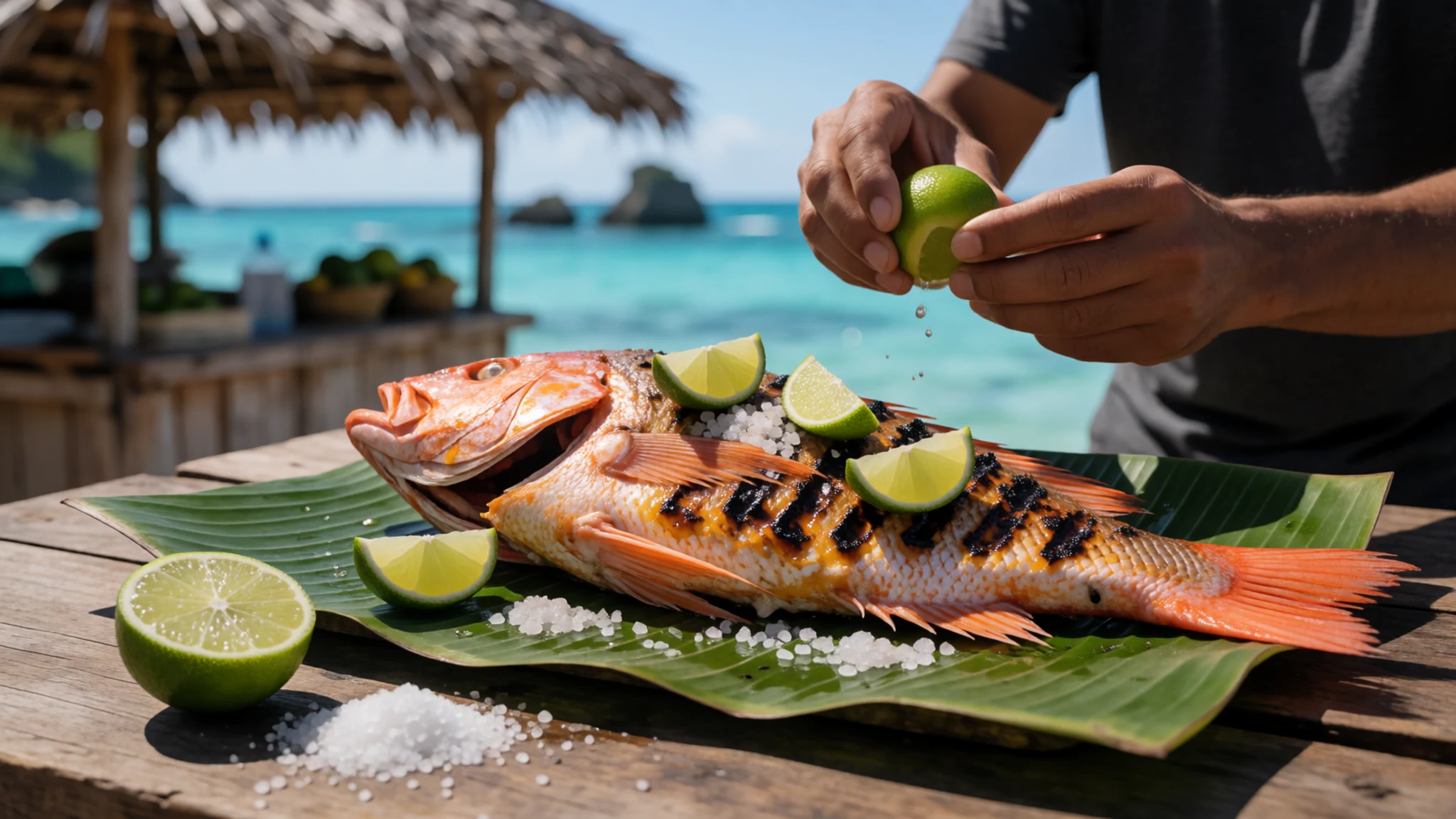
- Cassava and sweet potato — Village kiosks and roadside sellers
Root vegetables are a staple across rural Timor-Leste, boiled, roasted or fried and eaten with chilli sauce or a bit of fish. They are filling, cheap and a good snack after walking along the coast. - Fresh coconut — Roadside sellers and village homes
Young coconuts are an easy way to rehydrate on a hot day, sold by the roadside or cut from trees near the house. Ask first before taking one, because every palm belongs to someone. - Timorese coffee — Homestays, village shops and meetings
Timor-Leste grows coffee in its hills, and a cup is often offered to guests, usually strong and sweet. Drink it slowly, and if you like it, ask where the beans came from.
Plan it
Best time. May to October, the drier months, when the sea is usually calmer and roads are easier. The wet season, roughly December to March, brings heavy rain, rougher seas and sometimes difficult roads.
How long. 2–3
Getting there. Fly into Presidente Nicolau Lobato International Airport at Dili, then travel east by road towards Lautem municipality and on to Com. The journey is long, so allow a full day with a driver or hired vehicle, or check local public transport. Confirm the final stretch locally.
Budget. low
Tips
- Arrange lodging and transport before arriving, because options in Com are limited
- Carry enough cash in small notes, since cash machines and card payments should not be assumed
- Bring drinking water or purification, plus sun protection and insect repellent
- Ask a local guide before swimming, boating or visiting Jaco, as conditions change with tide and weather
- Allow slack in your schedule, because roads and boats can be slow
Etiquette
- Greet people and ask permission before photographing them or their homes
- Cover shoulders and knees in the village and in church
- Check with the chefe de suco or your host before camping, filming or visiting sacred sites
Nearby
Sources
- Wikidata Q1113151 (CC0)
- Wikipedia: Com (rev 1368319070) (CC BY-SA 4.0)
- Photo 2015-07-27 Com 1 (Presidência da República Timor-Leste) (Public domain)
- Photo 2015-07-27 Com, CdS Calisto Bernadino Vilela (Public domain)
- Map: Com suco (Jezinho Rosario, DGE) (Public domain)
- Photo Etepiti 07 (Melino Jokito) (CC BY 4.0)
- Photo Etepiti 08 (Melino Jokito) (CC BY 4.0)
- Photo Etepiti 09 (Melino Jokito) (CC BY 4.0)
- Photo Etepiti 10 (Melino Jokito) (CC BY 4.0)
- Photo Etepiti 11 (Melino Jokito) (CC BY 4.0)
- Wikivoyage (CC BY-SA 4.0)


