Baucau
Baucau, Timor-Leste
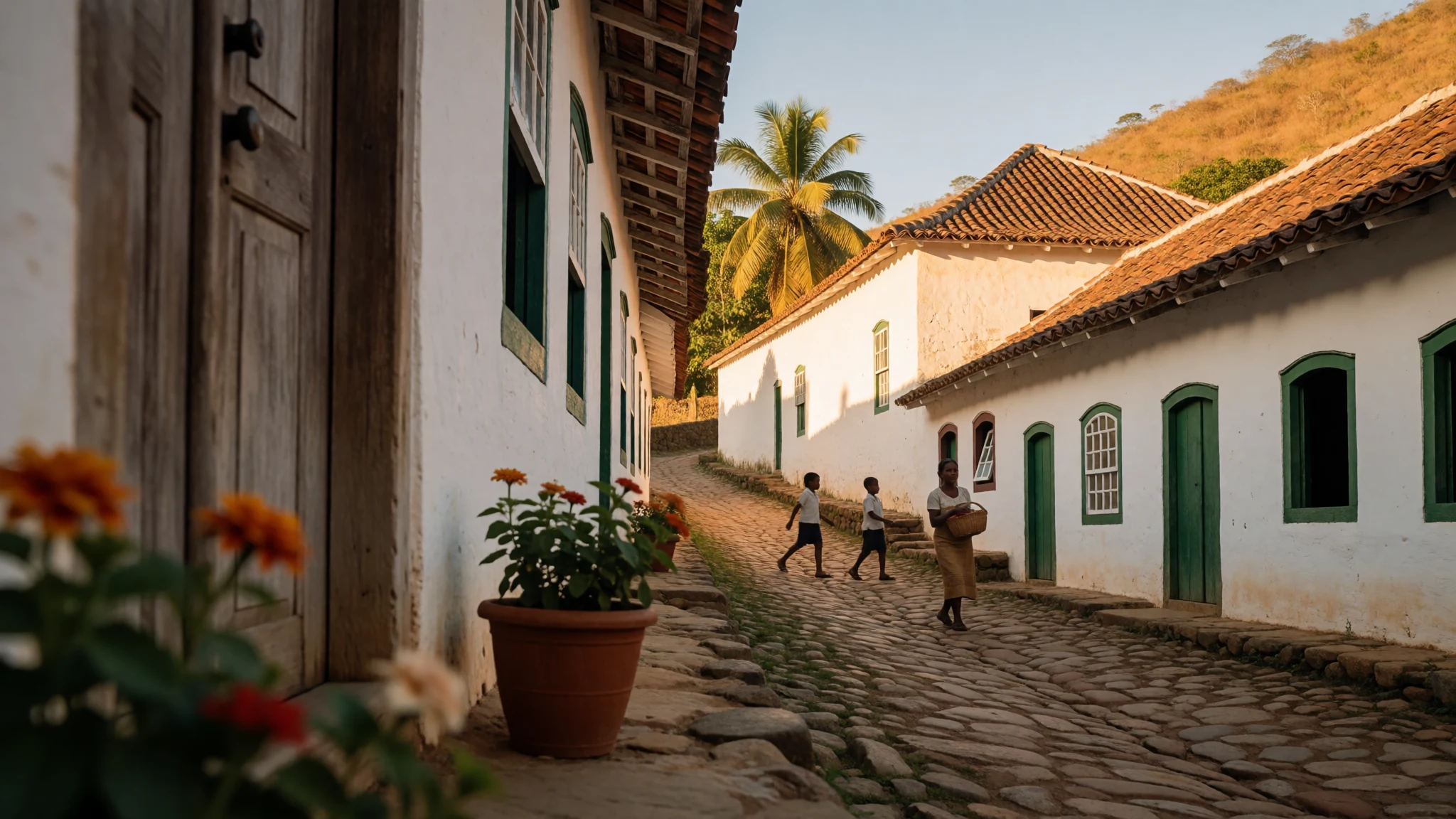
Baucau keeps a Portuguese old town on a sea terrace, with the pousada's pool, a market in the newer town and views toward Matebian.
The place
Baucau sits on the north coast of Timor-Leste, on a limestone terrace that steps down toward the Wetar Strait. The upper town, still called Cidade Velha, is a small Portuguese colonial quarter: whitewashed walls, clay-tile roofs, deep verandas and shuttered windows arranged for shade rather than for show. Lanes are short. At noon the stone throws the heat back; late in the day the same walls turn warm and the streets fill with people walking home from school and the market.
Below and inland the landscape changes. Rice fields spread through Suco Buruma toward Seical, and Mount Matebian rises beyond them, a mountain associated with the ancestors and treated with care by families who live in its sight. Trade, worship and conversation gather at the municipal market, the churches and the pool kept by the pousada in the old town.
Baucau functions as a district centre. The colonial pousada still takes the plateau breeze, while the district offices sit lower, where the cliffs come down to the town. Some of those buildings are in use as guesthouses, classrooms, shops and homes; others remain empty shells from the 1999 fires. Gardens, frangipani and large shade trees break the masonry. The dry months leave the terrace bright and dusty and the paddies pale; the rains turn the escarpment green and slow any journey that leaves the paved streets. Baucau reads as that stack of levels: old town, fields, sacred mountain and strait, lived in at once.
Its story
Baucau grew into a seat of authority because the terrace could see both the coast and the roads inland. Under Portuguese rule the upper town was laid out for officials, merchants and the Church, and the white civic frontages date from that long colonial presence. Catholicism settled in beside older obligations to the sacred house, the uma lulik, so a family might keep the feast days of the Church and the rituals of the ancestors without treating them as a contradiction.
The airfield on the plateau pulled later conflicts toward Baucau. In the Pacific war Japanese forces held the town and used the runway; afterwards the same strip remained a military prize. When Indonesia occupied Timor-Leste, Baucau's position on the north-coast road and its district offices made it a place of surveillance and supply as much as a home.
Mount Matebian, visible from the rice fields, belongs to that history. Its name is commonly linked with the souls of the dead, and its slopes and caves are part of how the east of the island remembers both ancestors and the occupation. Independence did not replace Baucau with a different town. The market was restored, the pousada still keeps the pool, and colonial rooms house guesthouses, schools and offices. Baucau's story, told from the street, is use beside ruin: walls left hollow by the 1999 fires still stand, while a Catholic week and an ancestral map still share the calendar.
What to see
- Cidade Velha — Cidade Velha
Baucau's old town, Cidade Velha, is the Portuguese quarter on the upper terrace. Short streets hold white walls, tile roofs and verandas, with houses, offices and a church still sharing the blocks. The scale is the point: a district centre crossed on foot, the strait in the light at the plateau's edge and gardens between the walls.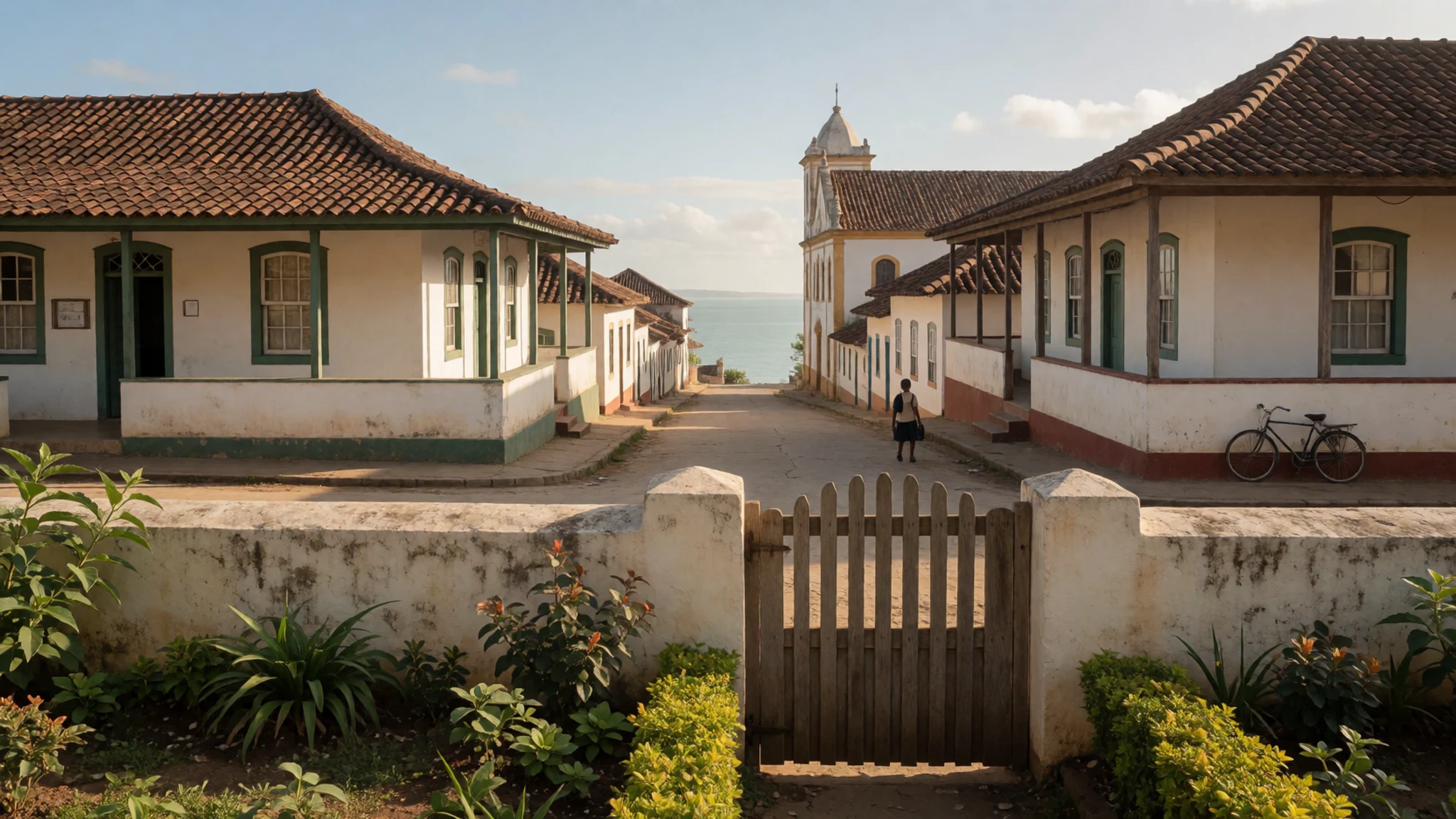
- Mercado Municipal — Cidade Velha
Baucau's Mercado Municipal, in Kota Baru, is the working market of the new town, a concrete hall rebuilt by the bus roundabout and still the place for vegetables, fruit, fish and household goods. The balcony view takes in the roof and the streets around it. The morning hours carry most of the day's trade. This is the straightforward way to see what the district eats and grows.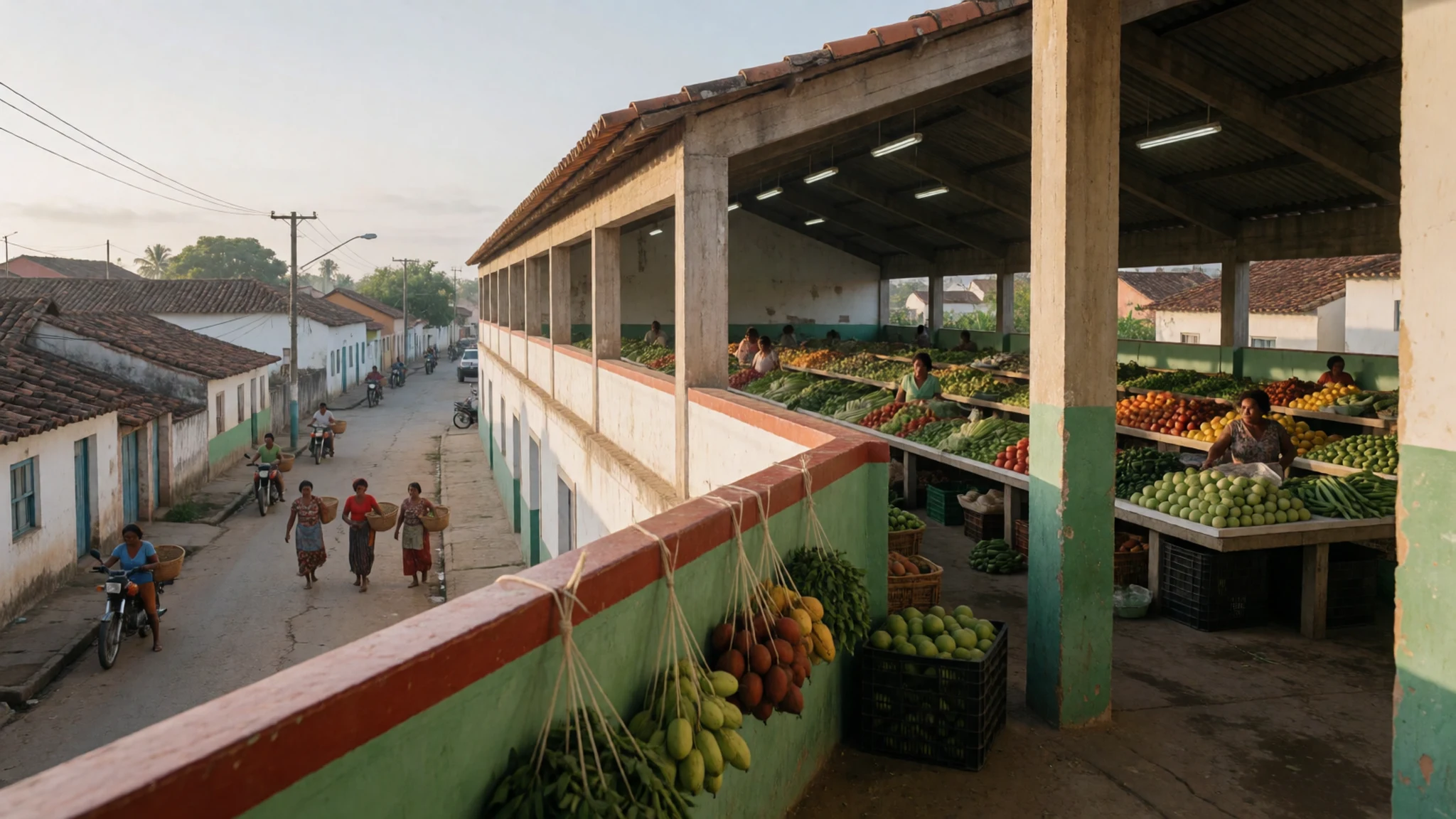
- Piscina de Baucau — Old town
The Piscina de Baucau is the pousada's pool in the old town, kept with the hotel rather than run as town baths. Families and children use it as an ordinary swimming place on hot afternoons, not as a resort attraction. Portuguese-era tanks and plain surrounding walls give the terrace a civic landmark that is still in daily use. The water is the point: cool, local, and shared.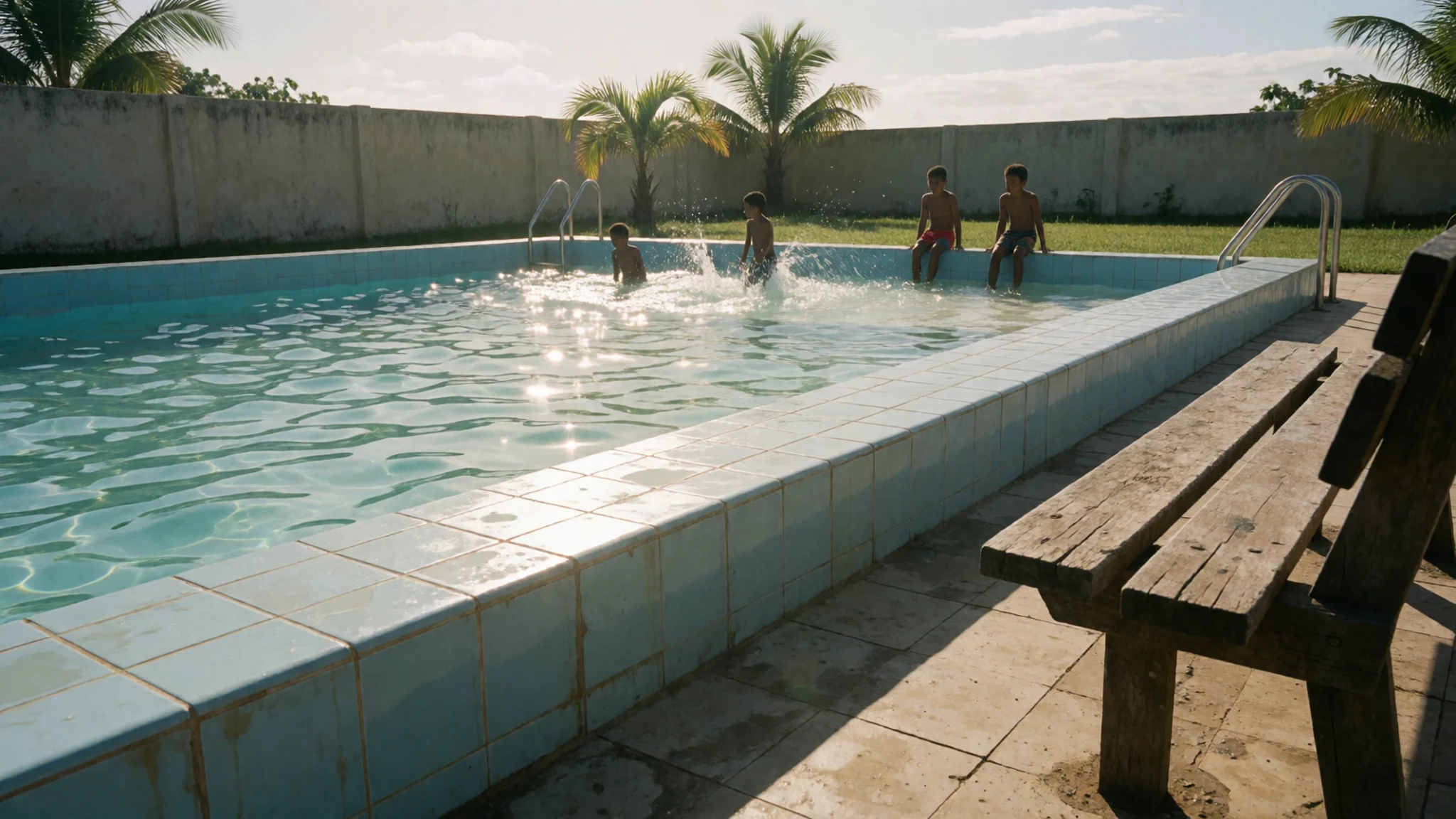
- Rice fields toward Seical — Suco Buruma
From Baucau, the view across Suco Buruma takes in rice fields running toward Seical, with Mount Matebian on the horizon. In the growing season the paddies are green; later they dry to gold. People speak of the mountain as a place of the dead, so the sightline is sacred geography rather than a casual climb.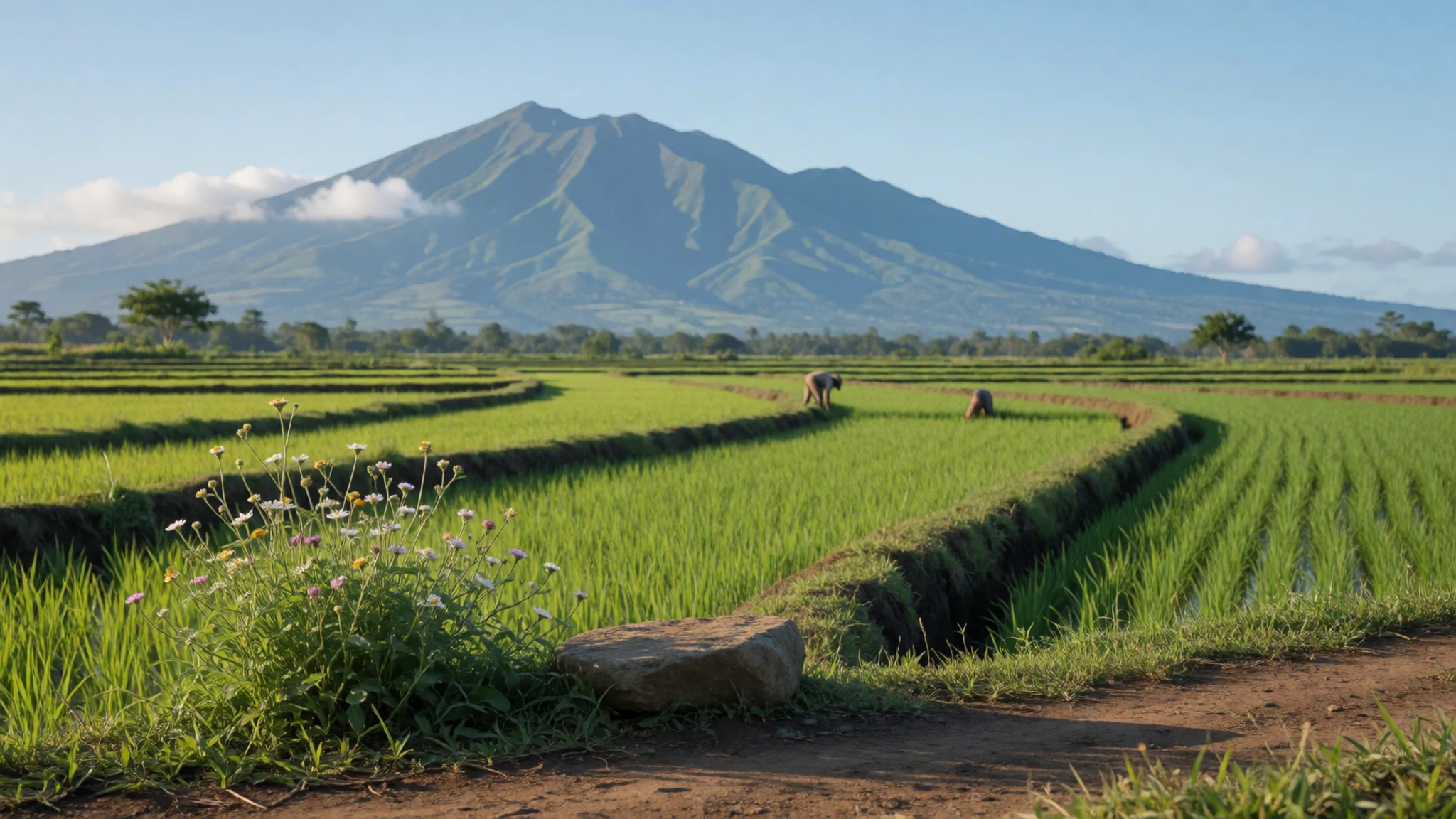
- Town centre — Town centre
Baucau's town centre is the everyday layer around the old administrative core: shops, churches, school traffic and the slow movement of motorbikes and pedestrians. Low-rise frontages carry newer signs on an older street line, busier and more patched than the colonial town but still compact. There is no ticketed sight. The interest is ordinary public life in a provincial capital on the north-coast road.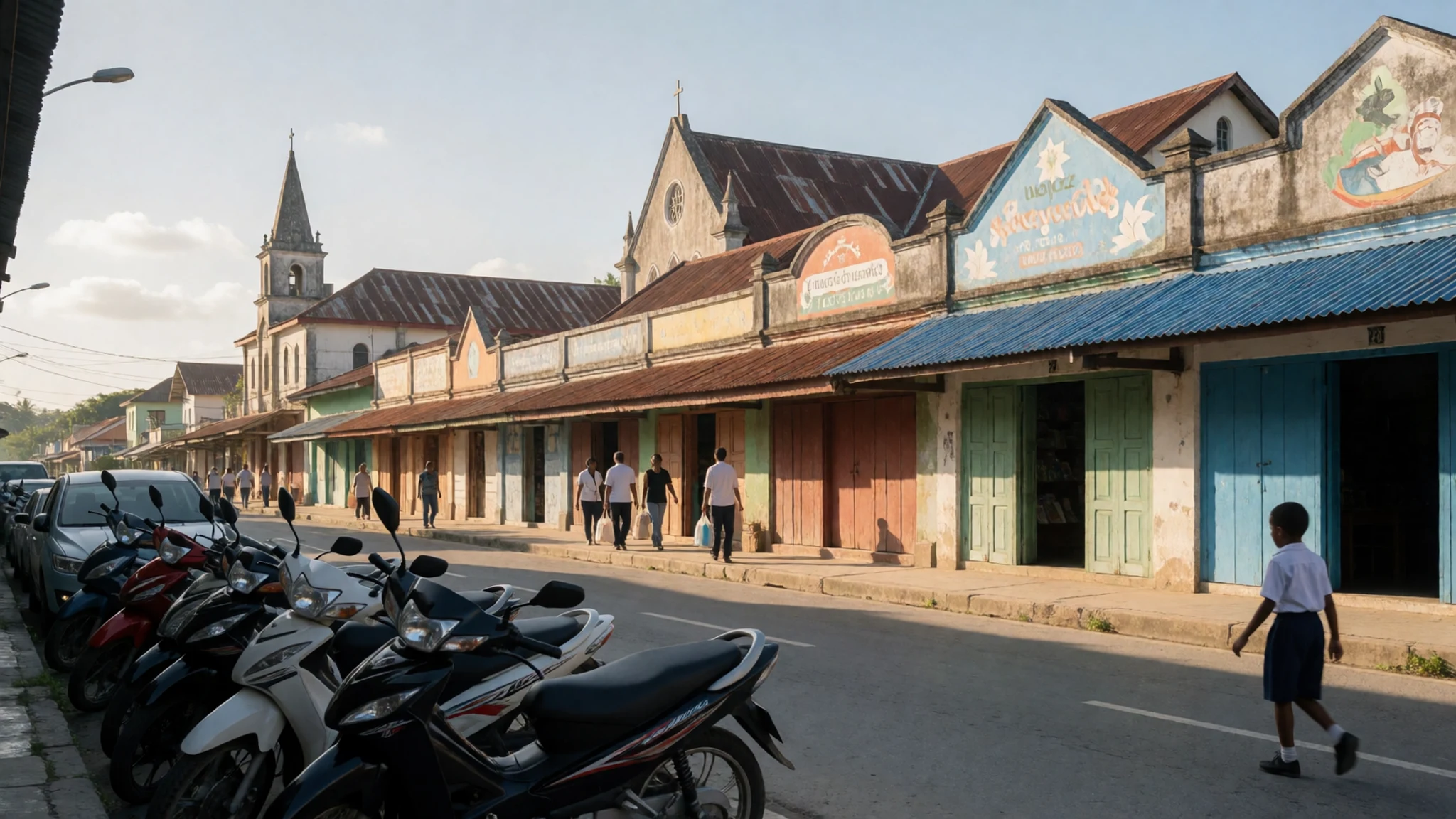
Culture
In Baucau, public life moves between the Catholic parish and the sacred house. Sunday mass, saints' days and the great feasts structure the week, while the uma lulik still holds family obligation, marriage talk and the care of the dead. Mount Matebian is part of that second map: a mountain of souls, remembered in speech and in visits, not only in the view from the rice fields. People may chew betel, share news in the shade of the market, and switch among Makasae, Tetum and Portuguese depending on who is listening. Weaving and the exchange of tais mark weddings, mourning and formal visits; cloth is a social act, not a souvenir by origin. Hospitality is real and often quiet: a seat, a glass of water, a question about family, and it expects the same restraint back. Ask before you photograph people at the market or a ceremony, and do not step into a sacred house unless someone from that house invites you.
What to wear
Baucau dresses in layers of ceremony and climate. The textile that matters is the tais, a hand-woven cotton cloth with geometric motifs whose patterns vary by community. Women wrap it as a skirt or carry it as a sash; men wear a narrower cloth at the waist or over the shoulder when a wedding, a funeral or a formal welcome requires it. The dyes and the time in the weaving are the value, and a tais given in Baucau is a form of respect before it is a garment. Day to day the town looks different: t-shirts, football shirts, jeans or simple trousers, cotton skirts, school uniforms, sandals and caps, with a jacket only when rain arrives on the terrace. Light, breathable clothes suit the heat. Cover shoulders and knees for church and for any invitation to a sacred house. Bring closed shoes for uneven lanes and the escarpment steps, and sandals for the pool. In the rains, add a light waterproof layer.
What to eat
- Batar daan — Mercado Municipal
Baucau eats batar daan when meals turn to stored staples: maize boiled with mung beans, sometimes pumpkin, a heavy everyday plate rather than a feast. Stalls around the Mercado Municipal serve it in the morning, when workers eat before the heat.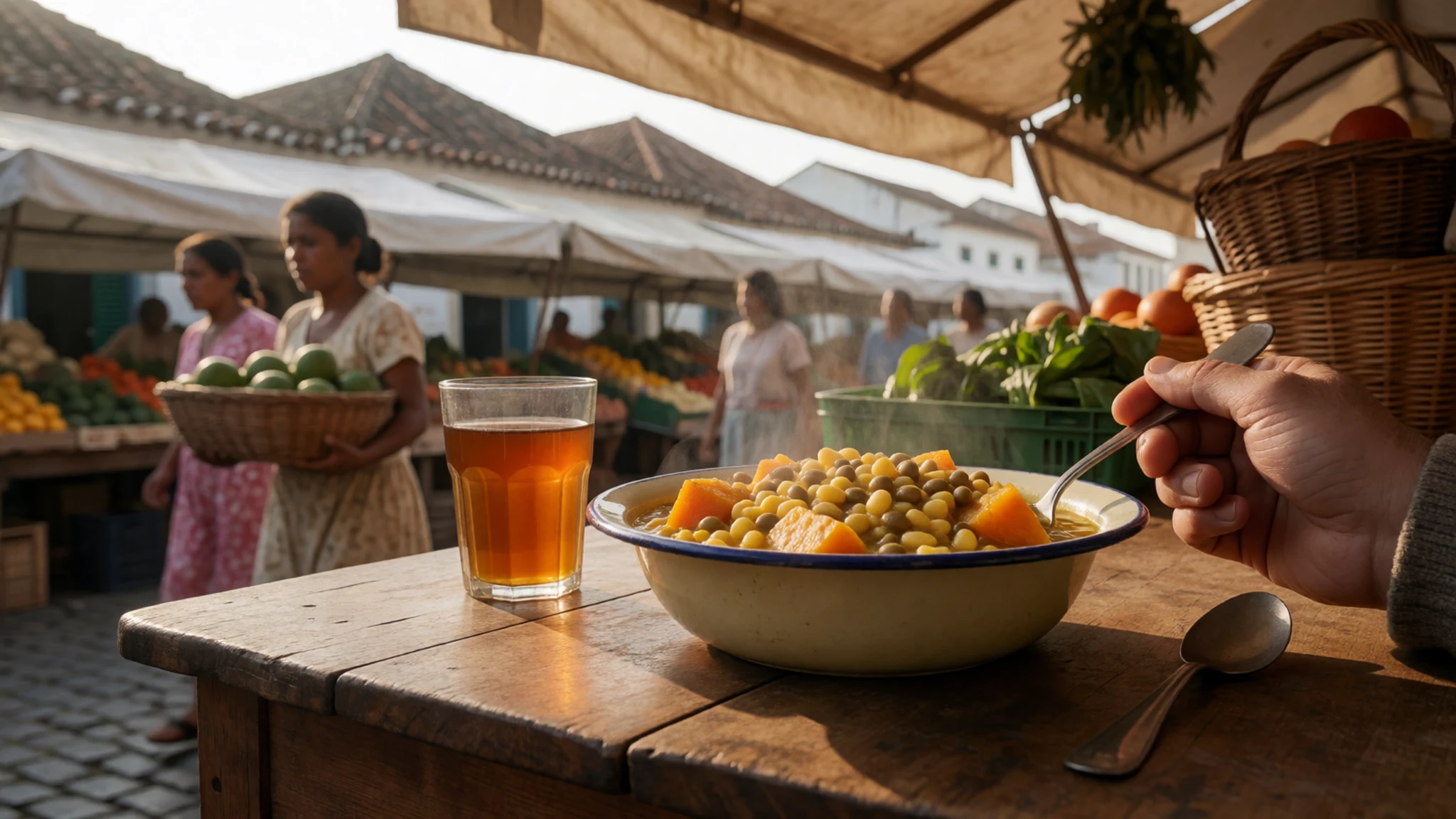
- Grilled fish — Municipal market and nearby eateries
Fish in Baucau is a coast-town staple, grilled or fried and eaten with rice and a sharp chilli relish. The morning trade at the municipal market shows the catch; simple eateries nearby cook it the same day, bones and lime included.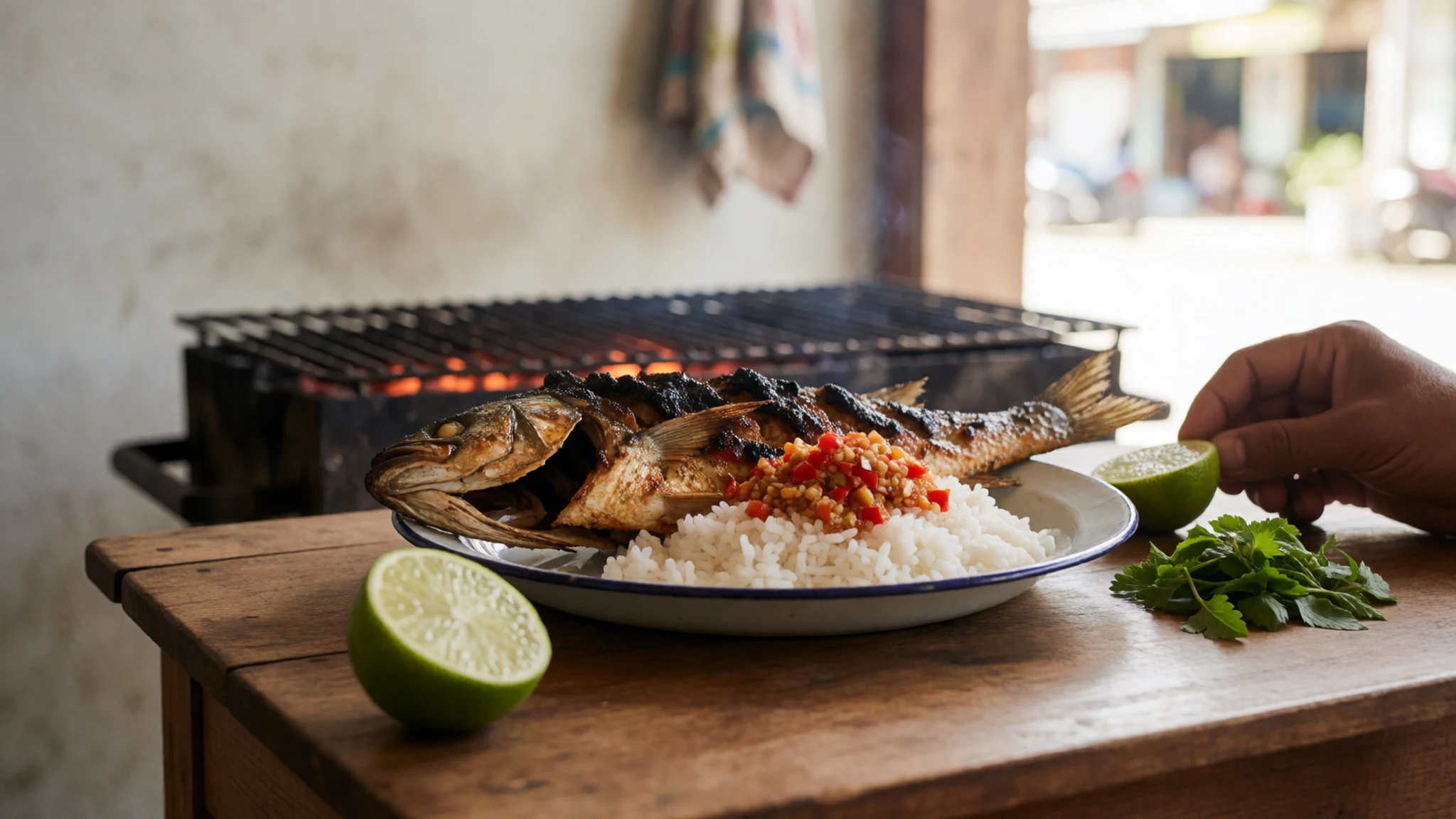
- Rice with greens and sambal — Midday stalls around the municipal market
The ordinary plate in Baucau is rice with leafy greens, a little fish or egg, and sambal. Midday stalls around the municipal market serve it as the default meal, hot rice and sour chilli with whatever the field or the boat offered that morning. - Timorese coffee — Market stalls and bakery counters
Coffee in Baucau is the highland crop drunk in town, strong and often very sweet, in small glasses at market stalls through the morning. Beans may be local or from the interior. It marks a pause in the shade and sits easily with plain bread from a bakery counter. - Cassava, sweet potato and banana — Mercado Municipal and town-centre streets
Between meals Baucau snacks on boiled or fried cassava, sweet potato or banana, sometimes with grated coconut. Sellers with baskets at the Mercado Municipal and along the town-centre streets offer them late in the day, food to eat while walking home.
Plan it
Best time. June to August is the most comfortable time in Baucau, cooler and nearly rainless, with firmer roads and a clearer view toward Matebian; October to December is hottest and January wettest. December to March brings the heavy rain, greener slopes and slower travel off the paved streets.
How long. 2–3
Getting there. Fly into Dili at Presidente Nicolau Lobato Airport, then take the north-coast road east, the usual last leg into Baucau. Shared minibuses and hired cars ply that road; confirm the day's departure in Dili, since timetables shift.
Budget. mid
Tips
- Begin at the old town and the pool in the morning, before the glare on the terrace.
- Carry cash for market stalls and shared rides, which may not take cards.
- In the rains, ask locally before you leave the paved streets for the interior.
- Drink bottled or boiled water, and keep the hot afternoon for shade or the pool.
Etiquette
- Cover shoulders and knees at churches, and enter a sacred house only when invited.
- Ask before photographing people at the market, a funeral or a ceremony.
- Treat Matebian and roadside shrines as sacred; do not climb or handle offerings uninvited.
Nearby
Sources
- Wikidata Q811932 (CC0)
- Wikipedia: Baucau (CC BY-SA 4.0)
- Wikivoyage: Baucau (CC BY-SA 4.0)