Dili
Dili, Timor-Leste
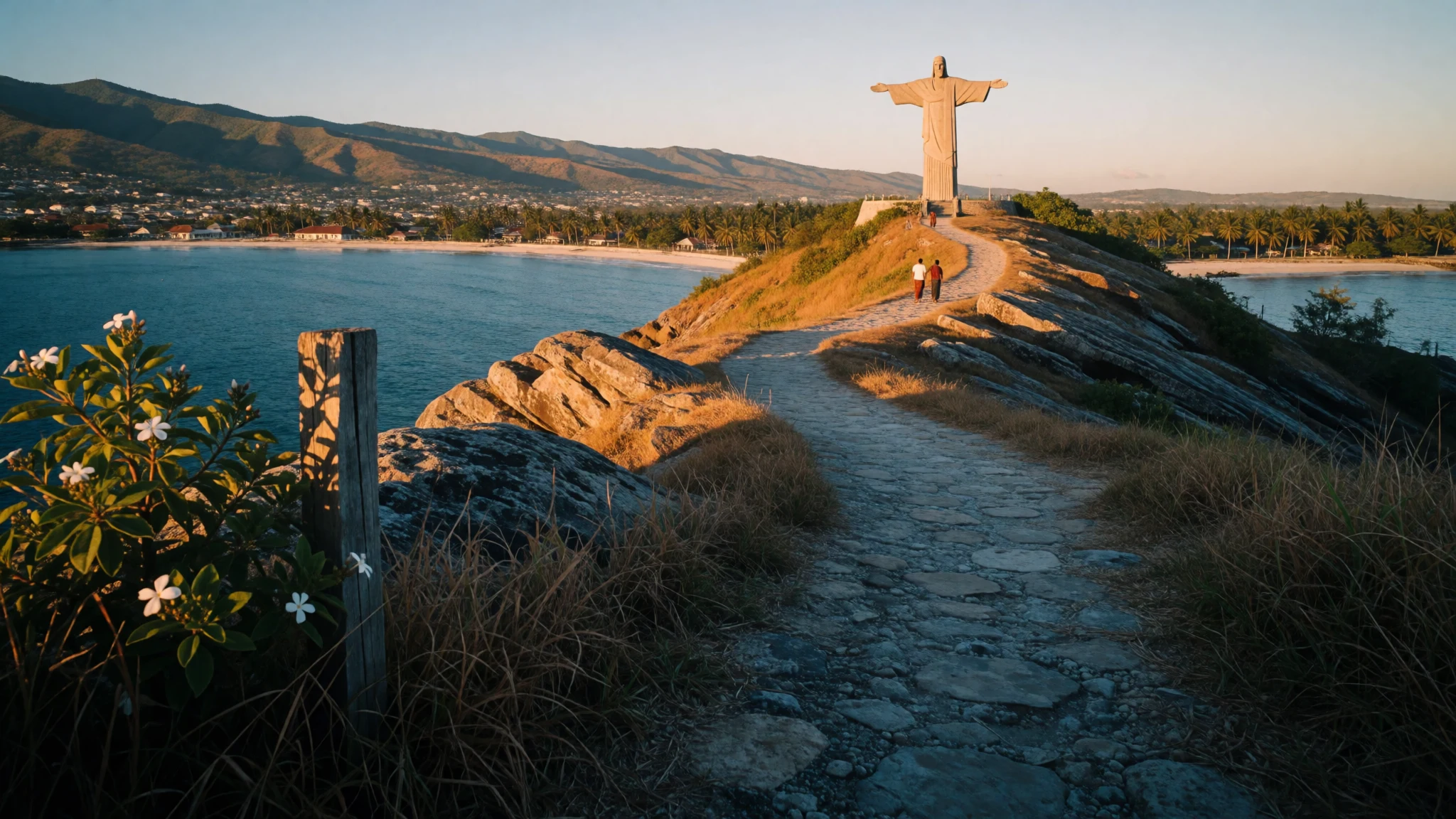
Dili is a small, sunlit capital on Timor's north coast, where Portuguese, wartime and Indonesian-era layers meet beaches, mountains and Timorese culture.
The place
Dili sits on the north coast of the island of Timor, on a strip of flat ground squeezed between the sea and a wall of mountains. The elevation is only 11 m, so the heat is constant, and the year divides into a wet season and a dry one rather than into four neat seasons. About 222,000 people live here, and the city works as the country's capital, main port and economic centre. The population is young and mostly of working age. Tetum is the everyday language, though many residents have moved in from other districts and still carry their own languages and village ties. The city grew from a first settlement in what is now the old quarter on the eastern side, and the Portuguese made it the capital of their colony in 1769. Walking around shows the layers: pale colonial-era buildings along the waterfront, ministries and a parliament built since independence, and a cathedral and a giant statue of Christ left over from the Indonesian years. Honest expectations help. Dili is small, hot and unhurried, pavements are patchy, and the sights are strung along a seafront road rather than packed into one centre. Its pleasures are the sea air, the markets and cafés, the museum that tells the independence story, and easy access to beaches and mountain roads beyond the last suburbs.
Its story
The story of Dili is hard to read in detail, because paper records are thin and archives were lost in several upheavals. What does survive points to sandalwood. Timor was a source of the fragrant wood, and a Portuguese voyage from Malacca brought a cargo home in 1516. Trade grew through the following years, and once the crown stopped reserving sandalwood for itself, most of it passed into private hands. Settlement at Dili is dated to 1520 in the facts, and officials posted to nearby Solor later oversaw Timor as well. The Dutch began contesting the island from 1613, and a rebellion briefly pushed the Portuguese out. In 1641 several Timorese kings turned to Catholicism while seeking Portuguese protection, which helps explain the strong Catholic character of the country today. Dili became the capital of Portuguese Timor in 1769 and stayed the main port. During the Second World War the city was a battleground between Allied and Japanese forces, and it came out damaged and returned to Portuguese control. Then came 1975: a civil war between Timorese parties, a declaration of independence and an Indonesian invasion. Indonesian rule brought new roads and buildings, including the cathedral and the Cristo Rei statue, while the long resistance that followed shaped the independent nation. Much of that memory is now kept in the city's museums and memorials.
What to see
- Cristo Rei — Headland east of the city
A large statue of Christ stands on a headland east of Dili, built during the Indonesian period and visible from much of the bay. Go early, before the sun is high, for cooler air and clear views back over the city, the harbour and the mountains behind.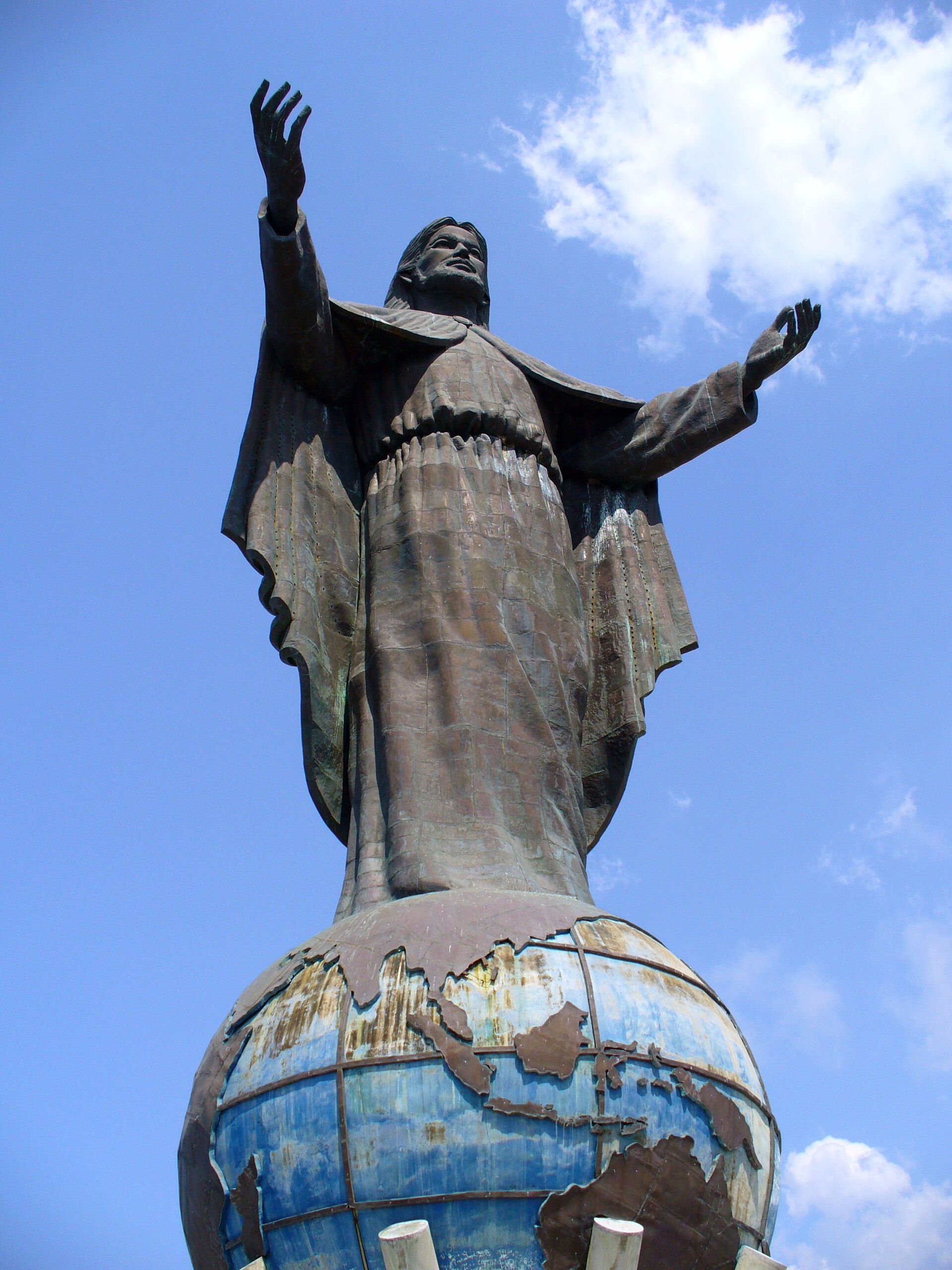
- Cape Fatucama (Backside Beach) — Beyond the Cristo Rei headland
The beach behind the Christ statue curves in a shallow crescent with very clear water. It is the usual swimming and snorkelling stop for people based in Dili, calmer and clearer than the town beaches. Bring water, shade and your own snacks, and leave nothing behind.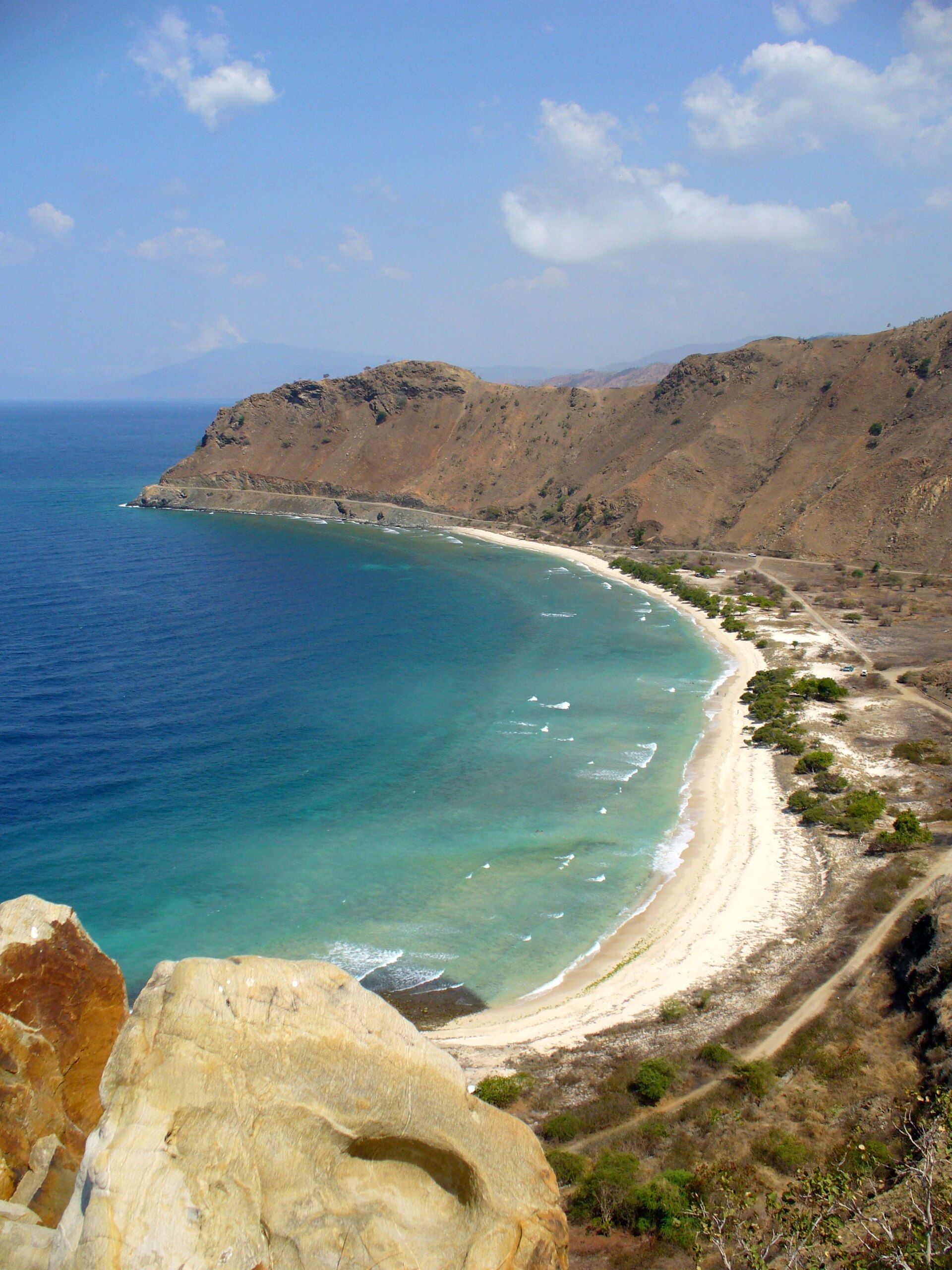
- Resistance Museum — Central Dili
This museum tells the story of the long independence struggle and what ordinary Timorese went through. It is a sober, worthwhile start for making sense of the city. Allow a couple of hours, check the official site for opening times, and expect some difficult material. - Motael Church — Old quarter, west of the centre
Motael Church has origins around 1800, though the present building dates from 1955. It is a working parish church close to the sea, and it is most rewarding on a Sunday morning, when the congregation fills the pews and spills onto the forecourt. Visit quietly and dress modestly. - Immaculate Conception Cathedral — Central Dili
The cathedral was built during the Indonesian period and is one of the city's best-known landmarks, a pale, modern building facing a broad lawn. It matters to Timorese Catholics as a place of worship and public gathering. Visit outside service times unless attending, and keep voices low inside.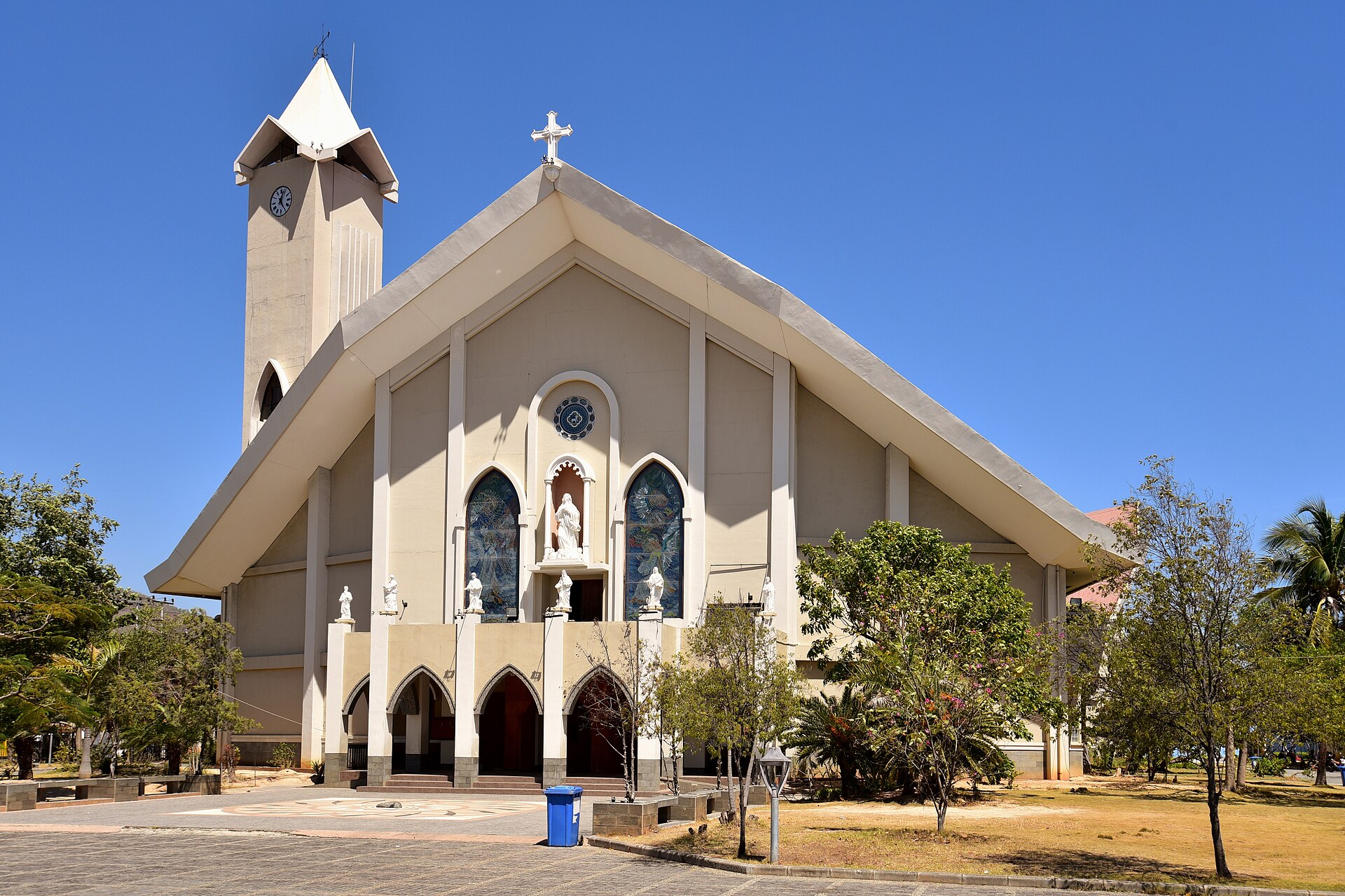
- Dare War Memorial — Hills south of the city
Up in the hills south of Dili, this memorial honours Sparrow Force, an Australian unit that fought the Japanese on Timor, and has an exhibition that also covers Timorese experience of the war. The drive climbs out of the heat, so the air is cooler and the views over the bay are wide.
Culture
Dili's culture is a blend of Timorese roots and several layers of outside influence. Its neighbourhoods hold people from different ethnolinguistic groups, long-established families beside recent arrivals from the districts, and each keeps its own customs. Many newcomers stay tied to their home villages, and city residents often travel back for ceremonies, especially in the dry season and around elections. Catholicism, strengthened under Portuguese rule, shapes the calendar and the skyline, with churches full on Sundays. Alongside it runs customary belief: communities honour sacred houses called Uma Lulik, as well as particular trees, rocks and wells, and village chiefs still carry weight in local decisions. The legal systems left by Portuguese and Indonesian administrations do not always match customary practice, for example over the recognition of marriages, so what the law says and what a family does can differ. Memory of the independence struggle is close to the surface, in museums, murals and the way older people talk about the past. Languages are layered too, with Tetum, Portuguese, Indonesian and English each turning up in different settings. Greetings matter, service is unhurried, and patience is rewarded. Ask before photographing people or sacred houses, and cover shoulders and knees when entering a church.
What to wear
Traditional dress in Timor-Leste centres on tais, hand-woven cloth. It is woven on simple looms, usually from cotton, in patterns that vary by region and family, and many cloths are coloured with natural dyes. Tais is worn as a wrap skirt or sarong, as a shawl, and as a cloth tied at the waist by men. It appears at weddings, funerals, church feasts, political events and when guests are formally welcomed. Ceremonial outfits can add metal ornaments such as crescent necklaces and headpieces. Day to day in Dili, people dress for the heat: light shirts, T-shirts, trousers or jeans, long skirts and dresses, with sandals or trainers. Office workers and officials favour collared shirts or blouses, and school uniforms are a common sight. Tais often shows up in modern form as a scarf, a bag trim or a tie. Visitors should pack light, breathable cotton or linen with shoulders and knees covered for churches and government buildings. Swimwear belongs on the beach, not in town. Bring a hat, sunglasses and a refillable water bottle, plus sturdy sandals or walking shoes for uneven pavements and rocky headland paths. A light rain jacket is useful in the wet season.
What to eat
- Grilled fish with sambal and rice — Indonesian-style warung (small eateries) around central Dili
Simple grilled fish served with rice and a sharp chilli sambal is an easy lunch. Warung in the central streets also serve nasi goreng and noodle dishes, usually quick, filling and cheap by the standards of a capital city. - Beach barbecue skewers — The evening beach stalls at Bebonuk, west of the centre
Each evening a row of near-identical stalls sets up on the sand and grills chicken, pork and fish skewers over charcoal. Go around sunset, choose a stall with a busy grill, and agree what you are ordering before it is cooked. - Fresh baguettes and fillings — Bakery cafés in the centre
A Portuguese and French-influenced bread habit survives in the city's bakery cafés, which sell baguettes with savoury fillings and strong coffee. It is a good breakfast or picnic base before heading east to the beaches. - Timorese coffee — Cafés along the waterfront and in the centre
Coffee grown in the mountains behind the city is served in many cafés, black and often sweet. A cup on a shaded terrace by the water is one of the pleasantest ways to spend the hottest part of the day. - Batar da'an — Home-style eateries and family kitchens
A hearty stew of maize, beans and vegetables, sometimes with pumpkin or greens, batar da'an is everyday Timorese comfort food. It is easiest to find at small local eateries serving home cooking, and is kind to vegetarians when made without meat.
Plan it
Best time. The drier months, roughly June to October, bring clearer skies and easier beach and mountain trips. The wet season brings heavy rain, humidity and muddier roads, and the heat is steady all year.
How long. 2–3
Getting there. Flights reach Dili from Denpasar (Bali), Darwin, Singapore and Kuala Lumpur, with Bali the usual transit point. From the airport, take a taxi, agreeing the fare before you set off, a pre-booked car or a metered Blue Taxi; a cheaper mikrolet runs along the main road. Small planes link Dili with Atauro Island and some district towns.
Budget. mid
Tips
- Agree taxi fares before you get in, or pre-book a car
- Do beach and headland visits early, before the heat builds
- Carry small cash notes, and check which cafés and shops take cards
- Drink bottled or filtered water and use sun protection
- Check official sites for museum opening times before you go
Etiquette
- Cover shoulders and knees in churches and government buildings
- Ask permission before photographing people, services or sacred houses
- Greet people politely and be patient with slow service
Nearby
Sources
- Wikidata Q9310 (CC0)
- Wikipedia: Dili (rev 1381709153) (CC BY-SA 4.0)
- Wikivoyage: Dili (rev 5406330) (CC BY-SA 4.0)
- Photo: Government Palace, Dili (Bahnfrend) (CC BY-SA 4.0)
- Photo: Immaculate Conception Cathedral, Dili (Bahnfrend) (CC BY-SA 4.0)
- Photo: National Parliament building, Dili (Bahnfrend) (CC BY-SA 4.0)
- Photo: Jesus Backside Beach, Dili (yeowatzup) (CC BY 2.5)
- Photo: Christ statue, Dili (Kok Leng, Maurice Yeo) (CC BY 2.5)
- Photo: Casa Europa, Dili (Bahnfrend) (CC BY-SA 4.0)
- Photo: Municipal Market of Dili (Bahnfrend) (CC BY-SA 4.0)
- Photo: Dili map (unknown author) (Public domain)


