Balibo
Balibo, Timor-Leste
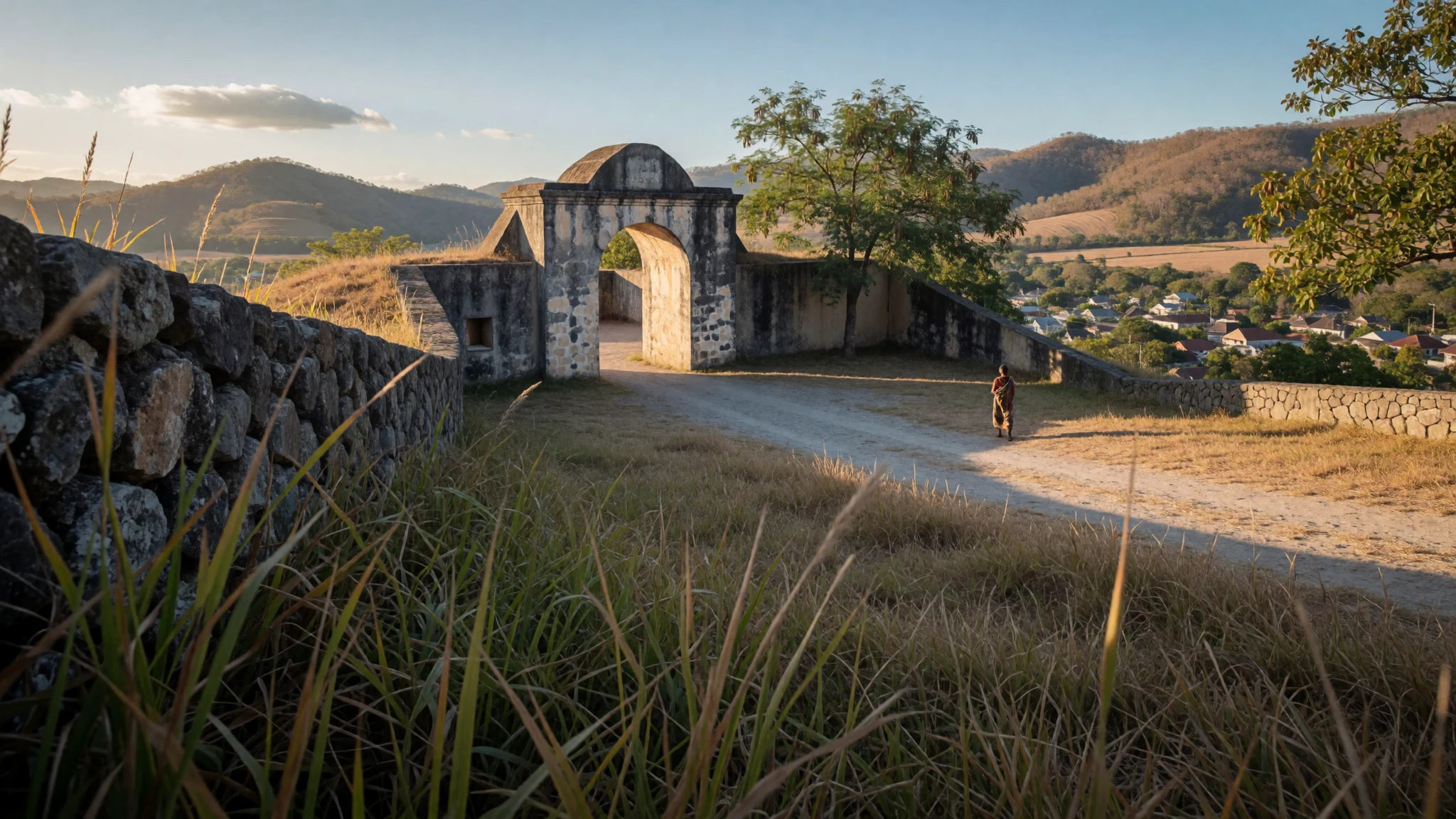
Balibo is a quiet hill town on the Indonesian border where a fort, a painted flag and a ridge walk tell a national story.
The place
Balibo is a small hill town in the west of Timor-Leste, in Bobonaro District, about 10 kilometres from the Indonesian border and at an elevation of 548 metres. That height matters more than the map suggests. The air is cooler than on the coast, and from the old fort and the slopes above town the land falls away towards the sea and, in clear weather, into Indonesian West Timor. The centre is compact. A market, a square named for independence, the administrative post, a few lanes of houses and a fort on the high ground make up most of what a visitor walks through, and an afternoon on foot covers it. It is not a resort and does not try to be. Facilities are thin, food choices are few and the nights are quiet. What Balibo offers is a close look at how one border town carried the weight of a national story, plus walks into farmland, caves and a waterfall in the surrounding hills. Local guides run those walks from beside the Flag House. Much of the town was damaged during the militia violence before the independence vote, and rebuilding is still visible, including work on the market. Getting here is part of the experience. The road climbs from the coastal strip at Batugade, paved but rough, and carries on inland to Maliana. Expect few other foreigners, plenty of friendly curiosity from neighbours, and a pace set by buses and weather rather than timetables.
Its story
Balibo's name has travelled much further than the town itself, mostly because of October 1975. Portuguese rule in Timor was coming apart, and Indonesian forces were pushing in from the west. Five Australia-based television journalists came to Balibo to report on that incursion. They lodged in a house in the town, painted an Australian flag on its wall in the hope of being seen as neutral, and filmed from the fort. On 16 October 1975 they were killed by Indonesian special forces. Accounts say the aim was to keep the invasion out of the news. In December a sixth reporter, Roger East, who had come to investigate their deaths, was reportedly seized by Indonesian soldiers and shot by firing squad. The fort, which had stood for roughly four centuries, saw fighting during the invasion. A text called the Balibo Declaration later gave Indonesia a partial justification for its actions. It is said to have been signed here, but it was drafted by Indonesian intelligence and signed in Bali. After the Indonesian withdrawal, the fort housed a base for about one thousand UN troops. Human Rights Watch estimated that 70 percent of the town was destroyed in the militia violence before the independence vote. The fort has since been restored as lodging by the Balibo House Trust, with support from the Rotary Club of Port Melbourne.
What to see
- Balibo Fort — Upper Balibo
The fort stands on the high ground above Balibo and has watched over the town for about four centuries. Its stone entrance is the obvious photograph. The journalists filmed from here in 1975, and it later became a UN base. Today it holds a lodging and a terrace restaurant with long views towards the sea.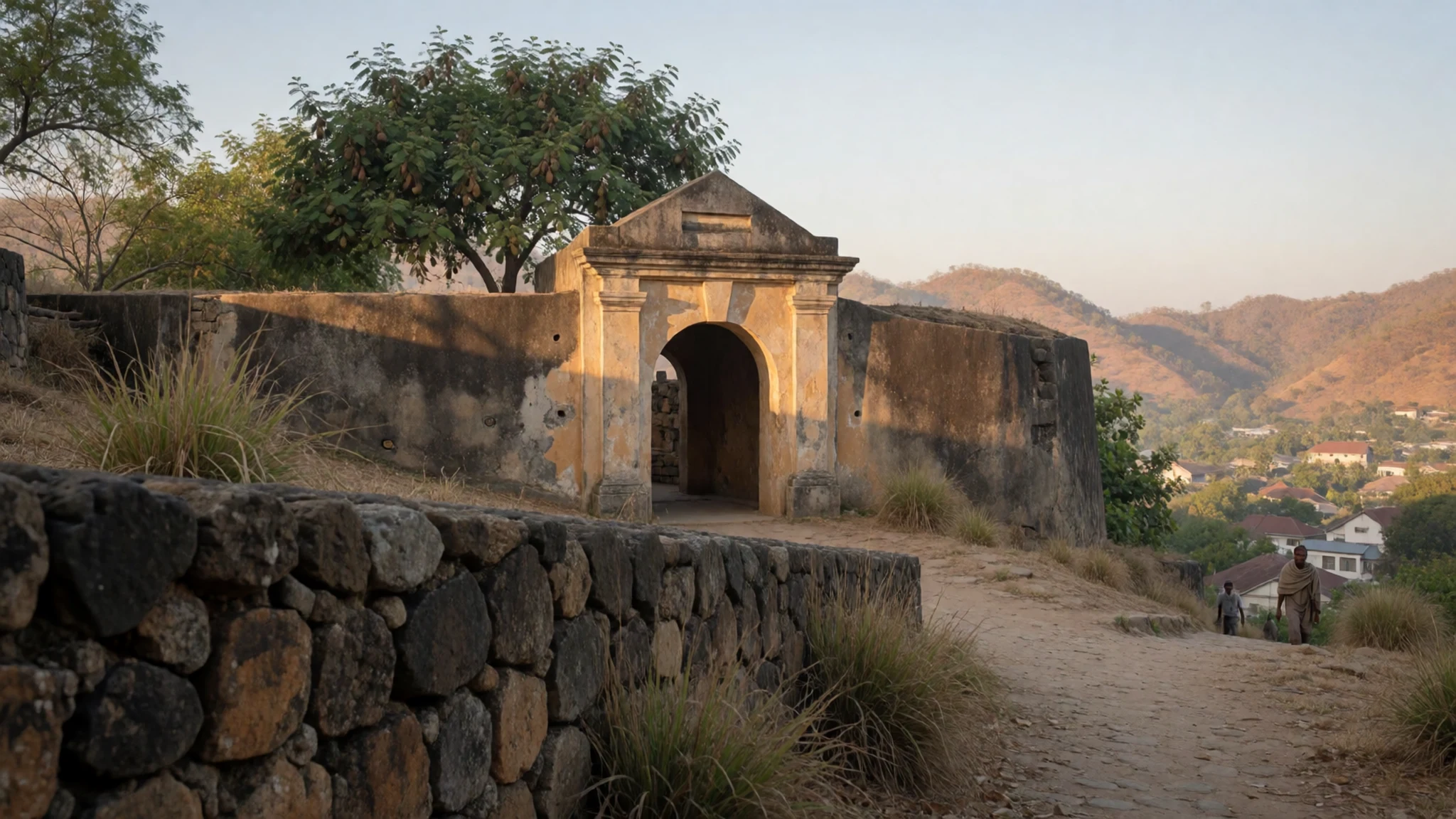
- Balibo Flag House and Memorial — Town centre
This is the house where the five journalists were staying when they were killed. The Australian flag they painted on the wall to avoid being targeted can still be seen. It is small, quiet and moving, and worth visiting with a local guide. A memorial in the town marks the same events.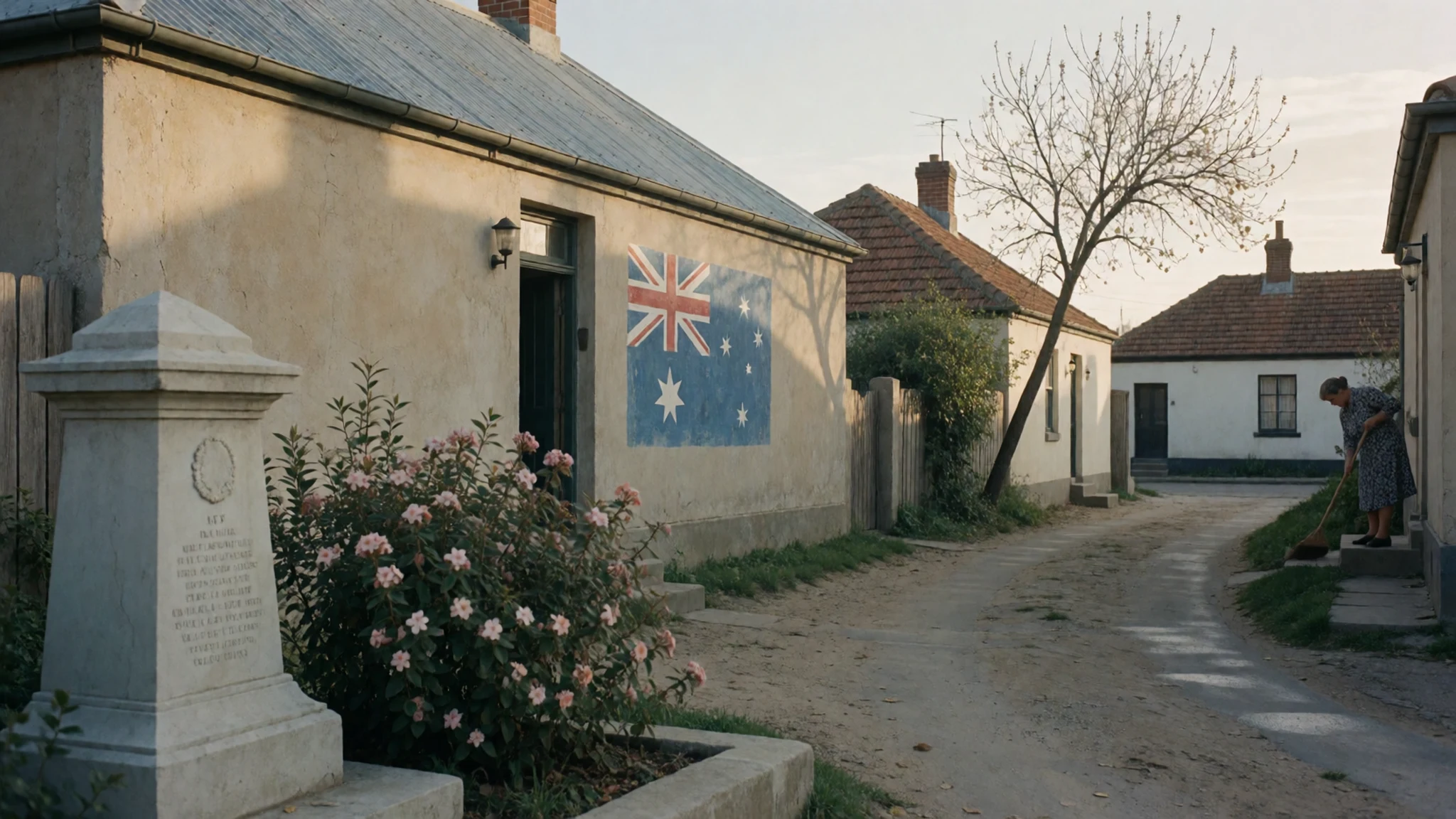
- Balibo Fort Veteran's Museum — Balibo Fort
A modest exhibition inside the fort grounds covers the Timorese struggle for independence, the Indonesian invasion and the role of foreign governments and journalists. It works best as context before walking the town. Opening arrangements can change, so ask at the fort lodging when you arrive.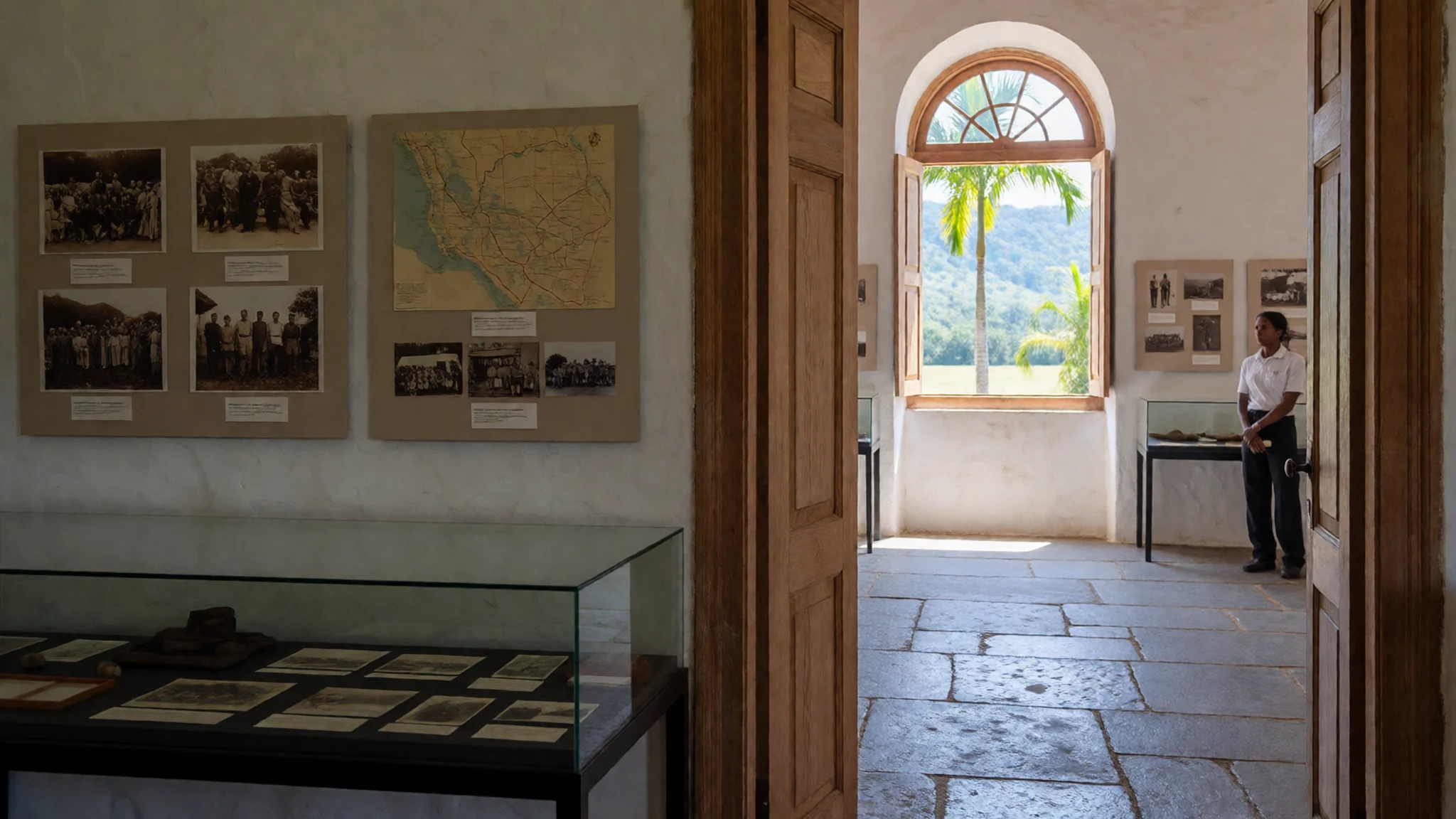
- Gruta Morutau — Hills above Balibo
A small grotto in the style of Lourdes, with an open-air church and a cross, sits on a hillside outside town. The reason to climb is the view: Balibo below, farmland beyond, and on a clear day the land across the border. Go early, before heat and haze build, ideally with a guide.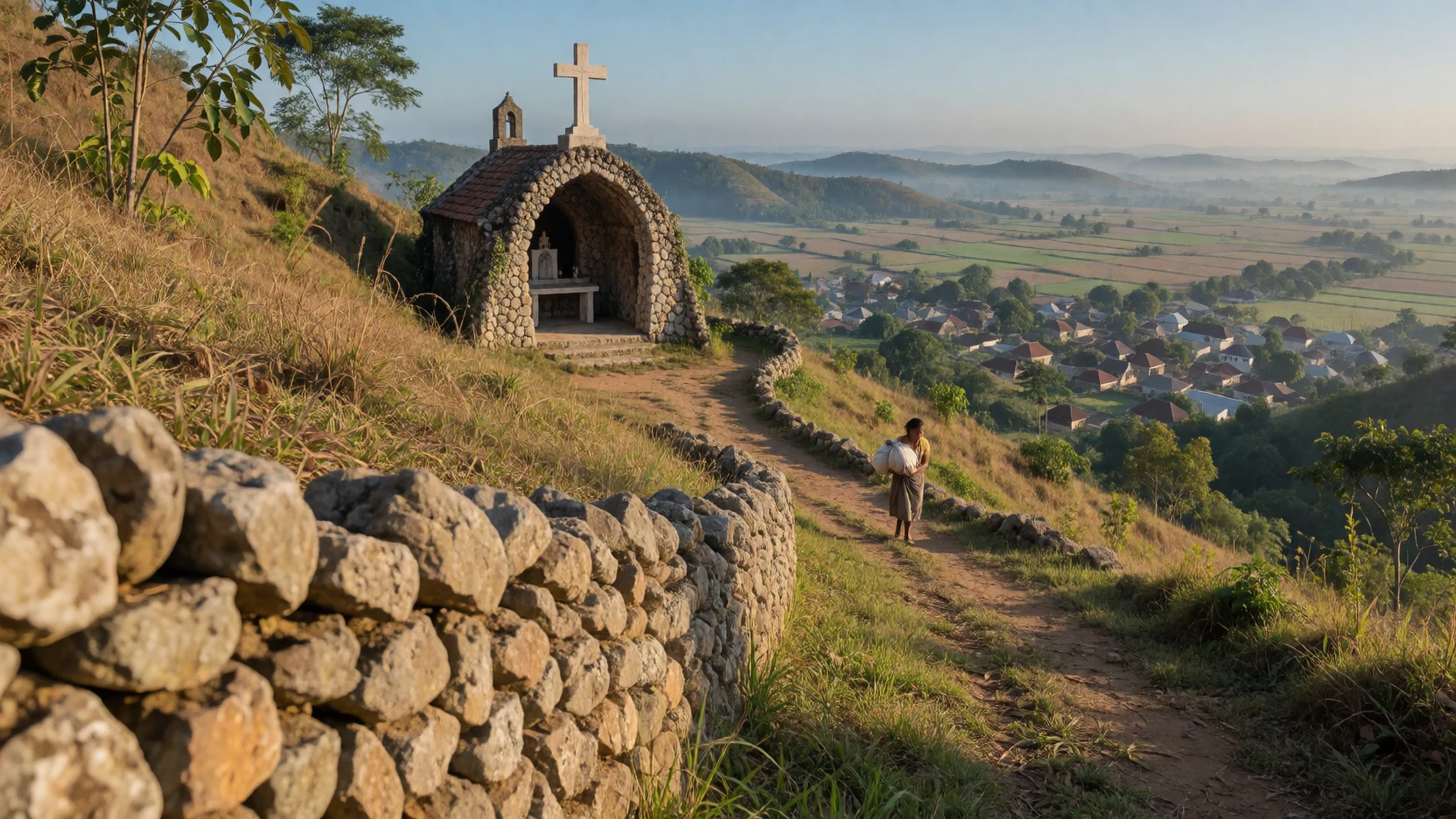
- Balibo market and square — Town centre
The market and the Praça da Independência are where ordinary life happens, from vegetables and snacks to conversation under the trees. Parts of the market were being rehabilitated when the reference photos were taken. It is a gentle place to watch the town and pick up fruit for a walk.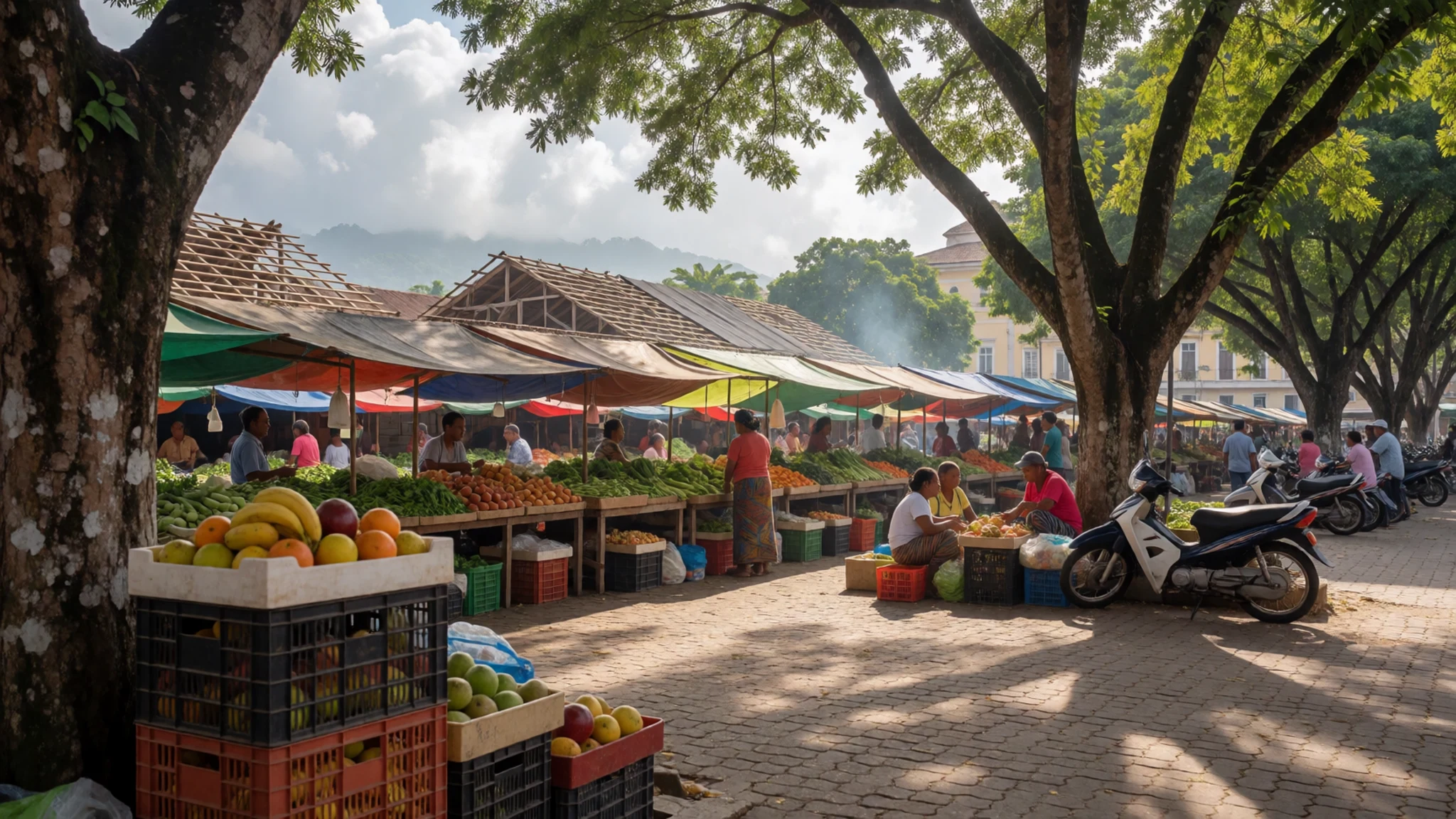
- Guided walks around Balibo — Hills around Balibo
Balibo Trails Tours, next to the Flag House, organises guided walks to Gruta Morutau, Duanele Cave, Leohitu Waterfall and other places in the surrounding hills. Paths cross farmland and can be slippery after rain. A guide helps with directions and gives local context that signs do not.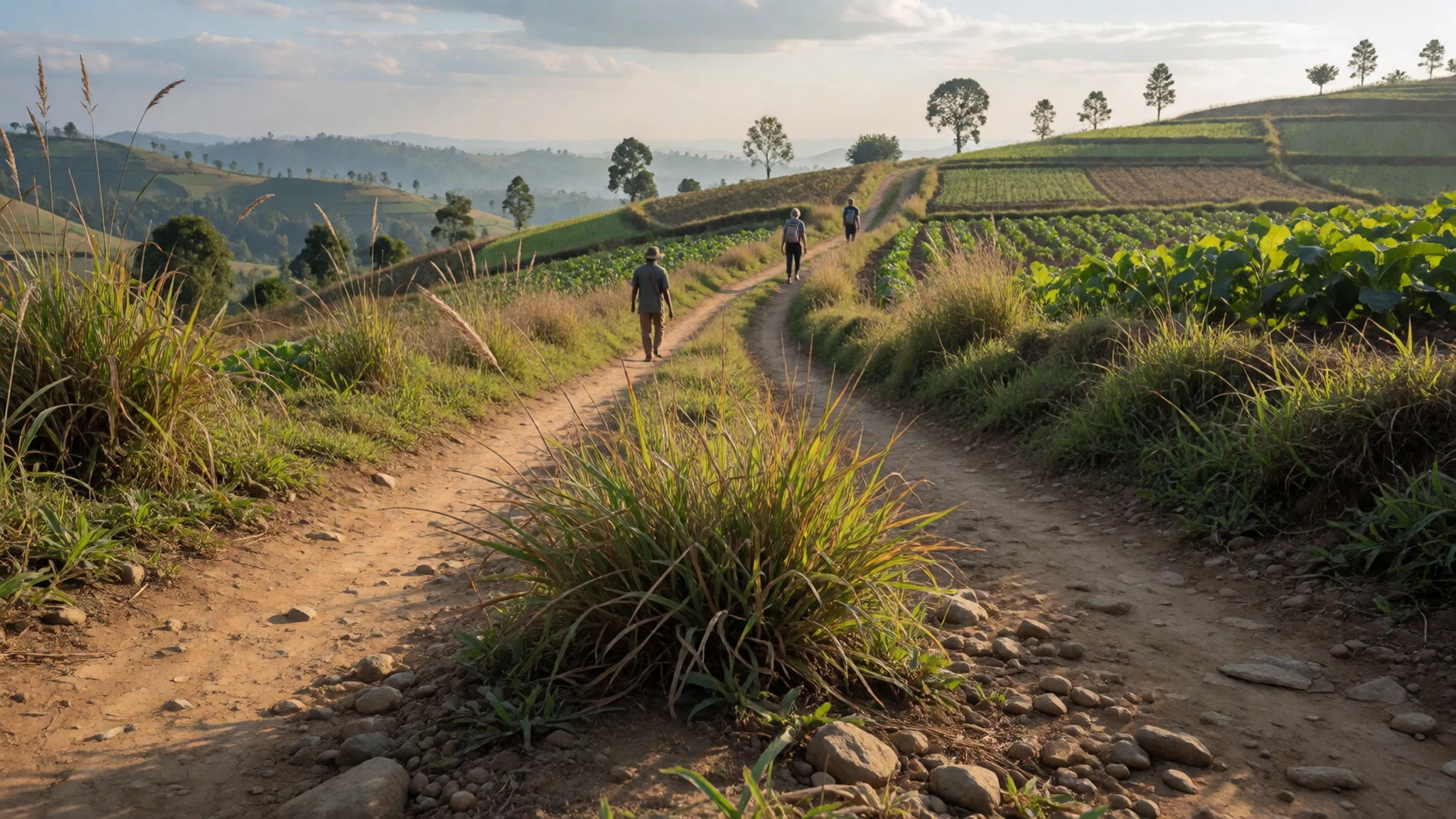
Culture
Balibo sits inside a country shaped by several layers of history: centuries of Portuguese colonial presence, a brutal Indonesian occupation, and a young independent state that still talks openly about memory. Tetum and Portuguese are used in public life, Indonesian is widely understood near the border, and the Catholic Church is a strong presence, visible in the grotto above town and in village chapels. In Balibo the past is not a museum subject. The journalists' deaths, the destruction of the town and the long resistance are family stories for many residents, and conversations can turn to them quickly. Listen more than you speak, and let people lead on how much they want to share. Hospitality is real but unfussy: a greeting, a seat in the shade and a cup of local coffee are normal gestures, and a small thank-you goes a long way. Community life runs on church days, market days and the rhythm of farming, so plans made on a tight schedule often slip. Around the border, officials and soldiers are used to travellers, but it is sensible to carry your passport and be polite at any checkpoint. At the memorial and the Flag House, speak quietly, ask before photographing local people, and do not treat the sites as a backdrop for jokes or selfies.
What to wear
Balibo and the wider Timorese highlands have a strong weaving tradition. The best-known textile is tais, a handwoven cloth made from cotton, traditionally dyed with plant colours and now often with commercial dyes. Patterns and colours differ by district and family. Tais is worn as a wrapped skirt or sarong, as a shawl, and as a ceremonial cloth at weddings, funerals, church festivals and exchanges between families. Men may wear it over the shoulder with a belt and a headcloth on formal occasions. Everyday dress in Balibo is simple and practical: shorts or trousers, T-shirts, cotton dresses and skirts, rubber sandals or trainers, and a hat for farm work. On Sundays people dress up noticeably for church, with ironed shirts, long skirts and tais. Visitors should dress for warm days and cooler nights at this elevation. Pack light, breathable cotton, with a layer for evenings and rain. Cover shoulders and knees at the grotto, in the church and at the memorial, and avoid very brief clothing in town, where it draws attention. Sturdy shoes with grip matter for the hill paths, caves and waterfall walks, and a hat and sun protection help on the open slopes. Buying a small tais directly from a weaver is a good souvenir.
What to eat
- Pizza — The restaurant at Balibo Fort
The restaurant at the fort serves pizza alongside a range of Asian and international dishes. It is relatively smart by local standards, with quiet outdoor seating and views towards the sea. Most foreign visitors eat here, so it is the dependable option if you want a familiar meal.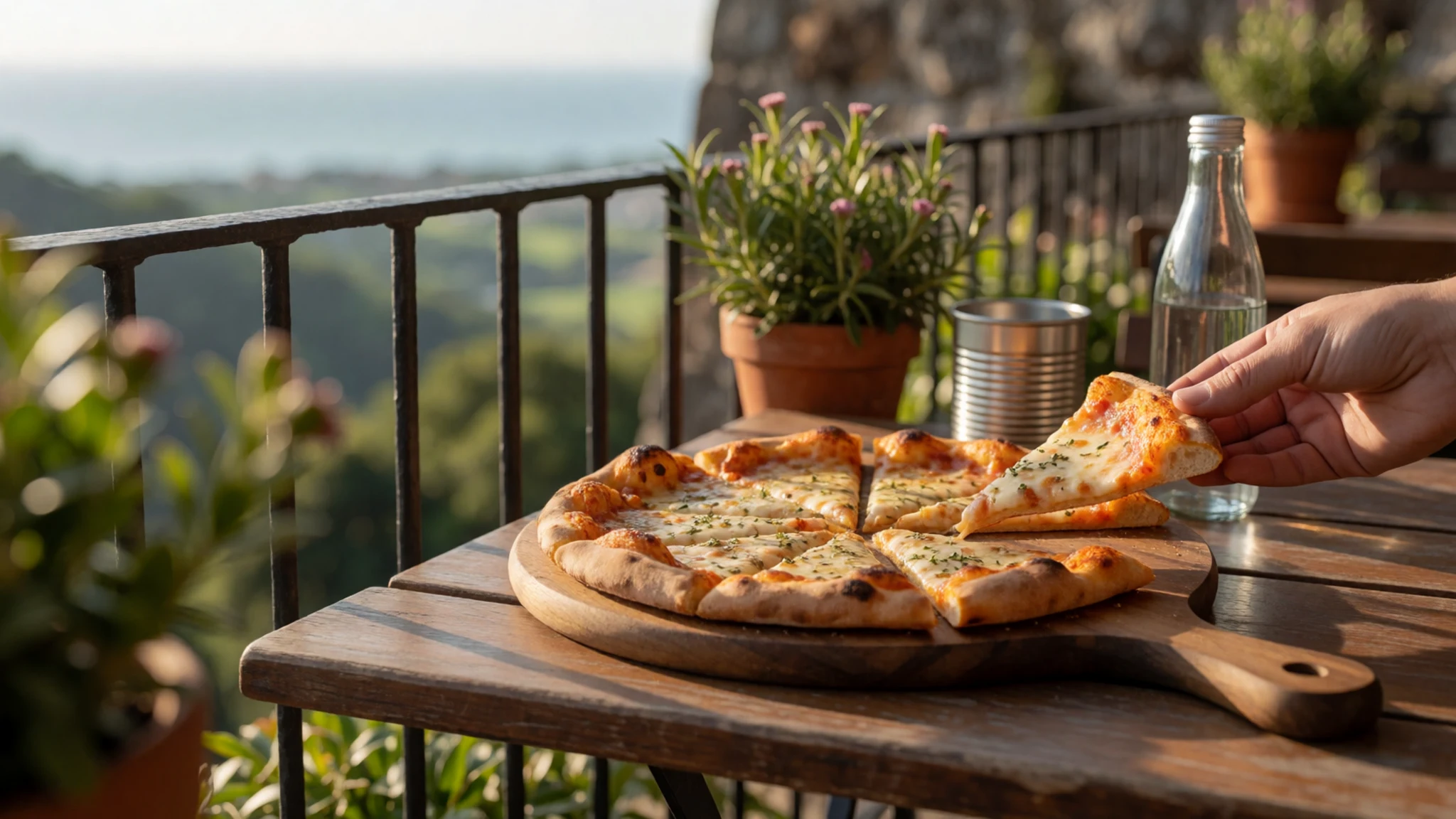
- Rice with fish or egg — The small warung near the market
A plate of rice with grilled fish, egg or vegetables is the most likely thing to find at a simple local eatery. It is filling, cheap by most visitors' standards and cooked to order. Ask what is available that day, as menus are short.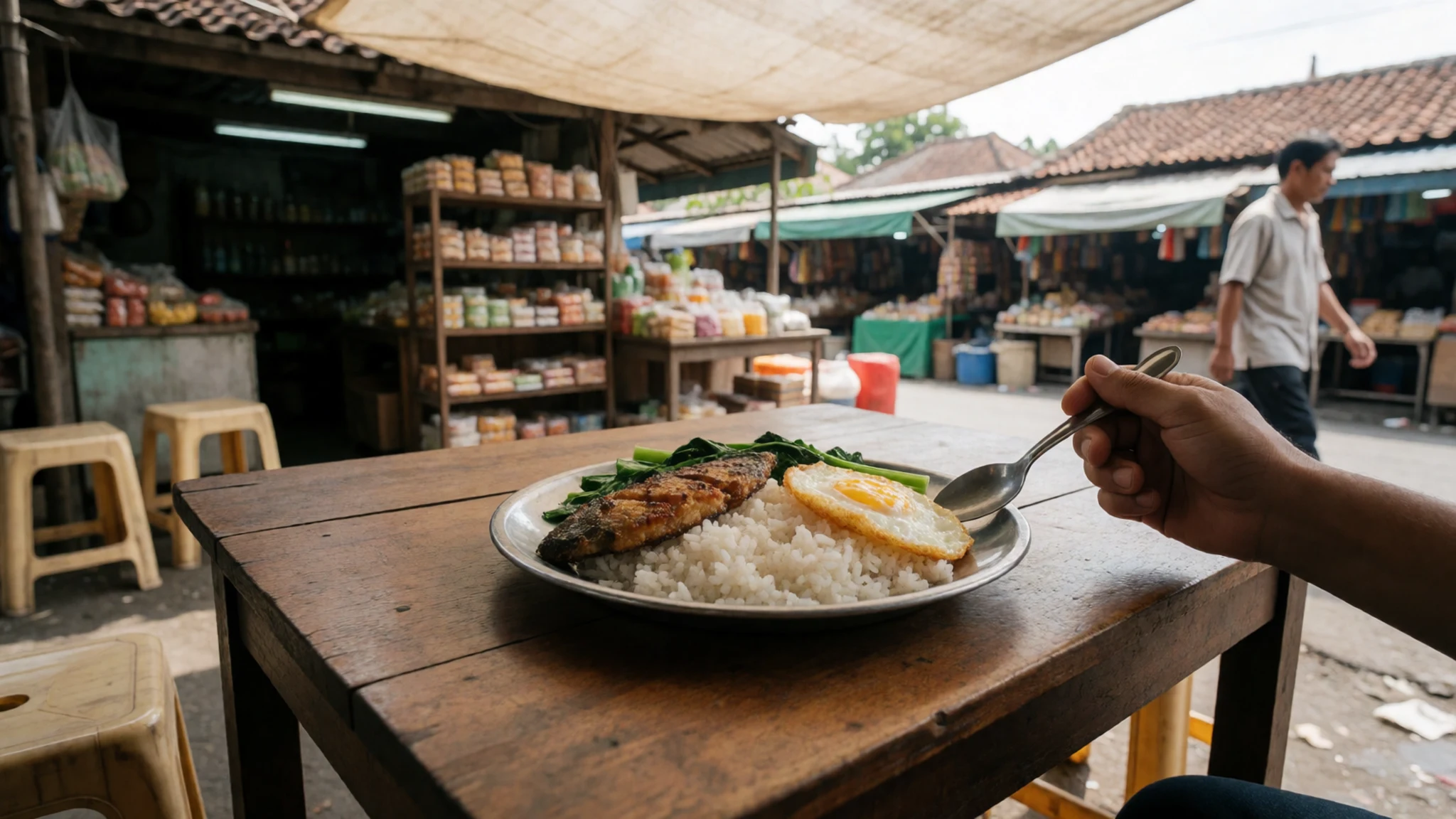
- Batar da'an — Local eateries and family kitchens, by arrangement
A comforting Timorese stew of maize, beans and pumpkin or leafy greens, sometimes with a little meat. It is home cooking rather than restaurant food, so it appears only when someone has made it. Ask politely at local eateries or through your guide. - Fried bananas and snacks — Stalls around the market and square
Market stalls sell fried bananas, simple cakes and seasonal fruit that suit a walking day. Choices change with the harvest and the hour, and the morning is usually best. Carry small notes, since stallholders rarely have change for large ones. - Timorese coffee — The warung near the market and the fort restaurant
Coffee is grown in the Timorese hills and is served strong, often sweet, in a small glass or cup. A cup after a morning walk is an easy way to sit among locals. Ask for it less sweet if you prefer.
Plan it
Best time. May to October, the drier months, when hill paths are firmer and roads are more reliable. The wet season brings slippery trails and rough roads, and the brief has no detailed climate figures, so ask locally before booking.
How long. 1–2
Getting there. Fly to Dili, then take the good road west to Batugade on the coast. From Batugade a paved but bumpy road climbs to Balibo. Public buses from Dili towards Maliana stop in Balibo and leave very early in the morning, taking about three hours. Alternatively, take a bus to Batugade and continue by motorbike taxi (ojek). Return buses from Maliana pass Balibo in the morning.
Budget. low
Tips
- Check bus times in Dili the day before, as the buses leave very early
- Book the fort lodging ahead by contacting it directly, since rooms are limited
- Carry enough cash from Dili and plenty of drinking water
- Hire a local guide for the hill walks and the Flag House
- Start walks early to avoid heat and afternoon cloud
Etiquette
- Dress modestly at the grotto, church and memorial
- Ask before photographing people, and speak quietly at the Flag House
Nearby
Sources
- Wikidata Q804960 (CC0)
- Wikipedia: Balibo (rev 1373549472) (CC BY-SA 4.0)
- Wikivoyage: Balibo (rev 4683422) (CC BY-SA 4.0)
- Photo: The administrative post of Balibo, J. Patrick Fischer (CC BY 3.0)
- Photo: Balibo fortress entrance, Isabel Nolasco (CC BY-SA 4.0)
- Photo: The Balibo Memorial, DTC East Timor (CC BY 3.0)
- Photo: Der Ort Balibo (market rehabilitation), Jose Fernando Real (CC BY-SA 4.0)
- Photo: Der Ort Balibo (Leohitu road, Independence Square), Jose Fernando Real (CC BY-SA 4.0)
- Photo: Der Ort Balibo (Leohitu road, Independence Square, second view), Jose Fernando Real (CC BY-SA 4.0)
- Photo: Der Ort Balibo (market rehabilitation, second view), Jose Fernando Real (CC BY-SA 4.0)
- Photo: Market of Balibo, Isabel Nolasco (CC BY-SA 4.0)


