Ira Lalaro Waterfall
Ira Lalaro Waterfall, Timor-Leste
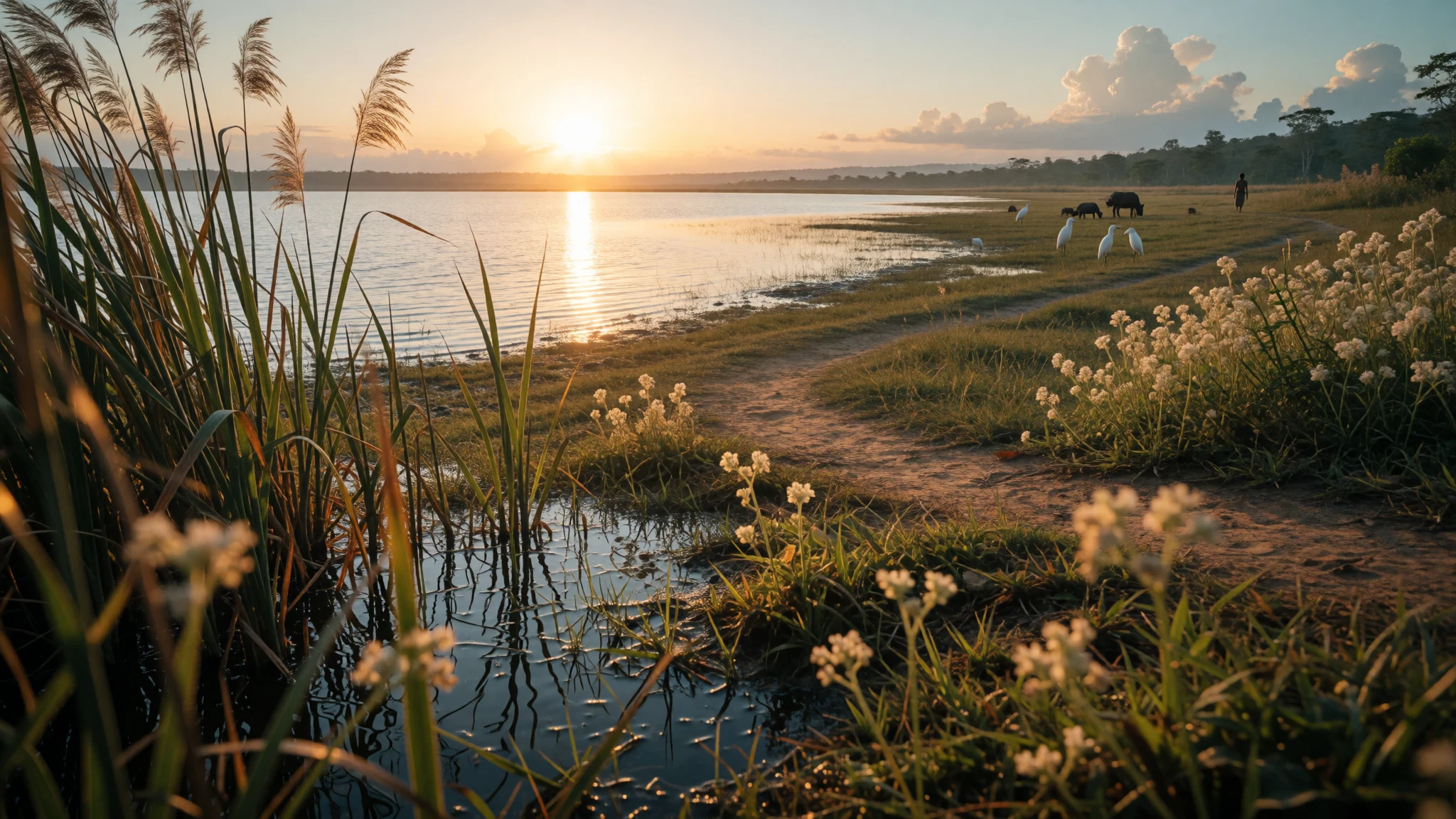
Ira Lalaro is a remote lake in Timor-Leste's far east, where karst, birdlife and a vanishing river make a quiet, rarely visited wetland.
The place
Ira Lalaro, also written Iralalaro and known locally by other names, is a freshwater lake in the far east of Timor-Leste, in Lautém District near the village of Malahara. Despite the Waterfall in this listing's title, it is a lake and floodplain rather than a single cascade, and the place is better understood as a wetland than a waterfall stop. It sits at an elevation of 318 metres on the Lospalos plateau, in a basin ringed by the Paitchau Mountains. The lake lies inside Nino Konis Santana National Park and forms part of the Mount Paitchau Important Bird Area.
The ground here is karst: limestone with sinkholes, blind valleys, caves and springs. The lake fills a huge natural depression of this kind, and its size changes with the seasons. In the wet months it spreads wide across the floodplain; as it recedes in the dry season, the exposed ground turns to pasture and scrubby grassland where cattle and water buffalo graze. Dry tropical forest surrounds the basin.
The water has no ordinary exit. The Irasiquero River leaves the lake, runs a short way, then drops into a sinkhole called the Mainina and does not come back to the surface. Tracer studies suggest the water travels underground towards the coast. For a visitor, that means a landscape of open water, grass and hills, with few facilities and a strong sense of being far from anywhere.
Its story
The story of Ira Lalaro is mostly a story of water and rock. The lake is part of a closed system, joined to the Irasiquero River, and it occupies a polje, a broad flat-floored basin typical of limestone country. Water arrives, collects, and then escapes through the Mainina sinkhole, so the lake behaves like a basin that fills and drains rather than a river's widening.
That rhythm shapes everything around it. When the lake is full, lagoons spread through the lowlands and waterbirds gather. When it shrinks, grazing land appears and local people use it for their animals. Villagers around Malahara have long lived alongside this cycle, and scientists have recorded reptiles and birds here with the help of residents, including a freshwater turtle shown to researchers by someone from the village.
The protected status is recent. Nino Konis Santana National Park, which covers the lake, was established in August 2007, soon after independence, and Timor-Leste has written community-based ecotourism into its tourism strategy. Ira Lalaro fits that thinking: it is valued for wildlife and landscape, and any visit is likely to depend on local guides and hosts rather than on built attractions.
It is also a reminder that eastern Timor-Leste has barely been developed for travellers. Facilities are thin, information is patchy, and the best accounts come from naturalists rather than guidebooks.
What to see
- Flooded lake shoreline — Malahara, Tutuala
The main reason to come is the open water itself, spreading across the floodplain when levels are high. Calm early mornings give still reflections and soft light over the lagoons, and the hills of the Paitchau range frame the view. Conditions change a great deal between wet and dry months.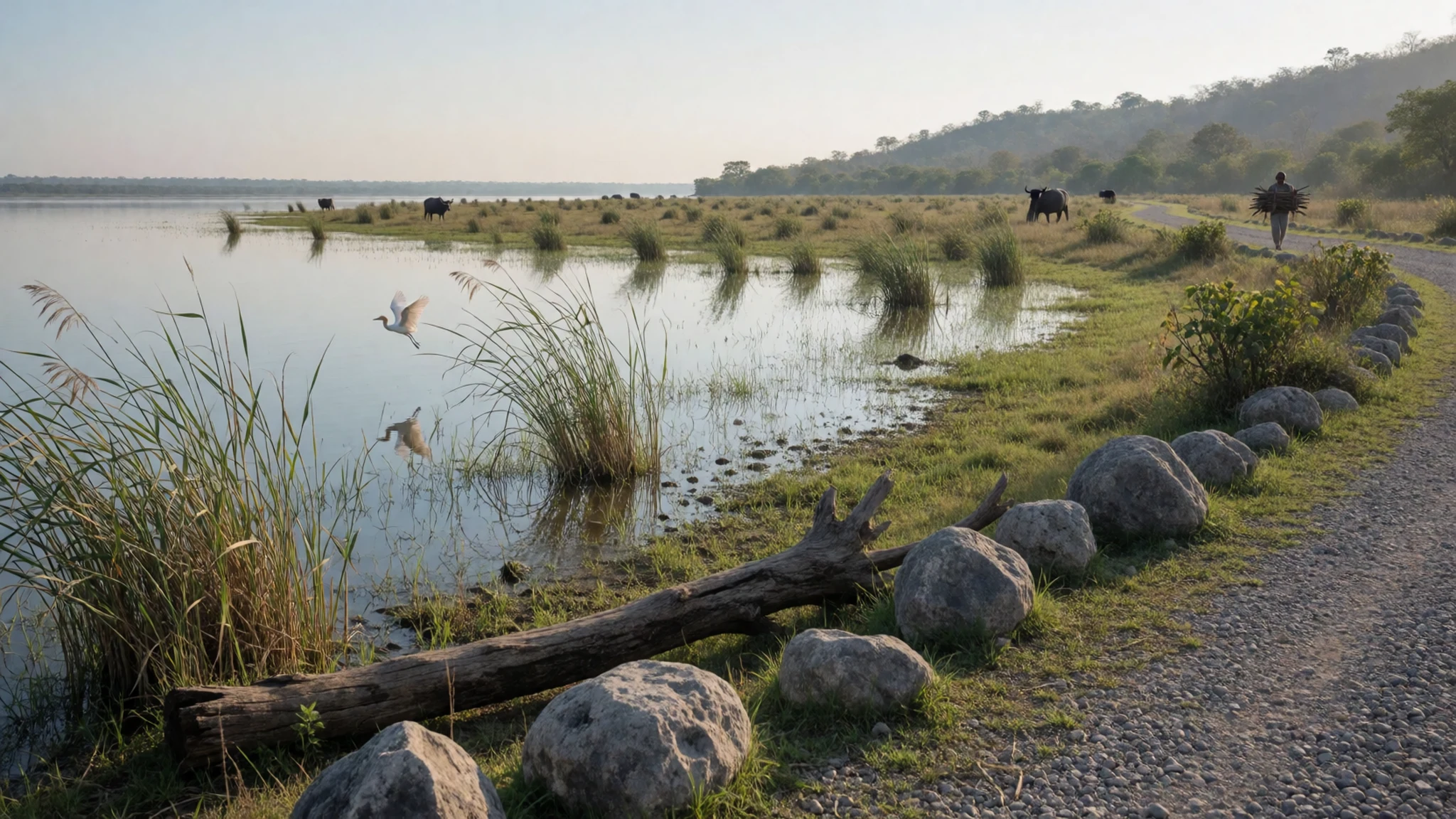
- Early-morning lagoons — Malahara, Lautém
Shallow lagoons linked to the lake are best at first light, when mist and low sun suit photography and birds are most active. Go with a local guide who knows which tracks are passable, because the ground can turn soft and the water level decides what you can reach.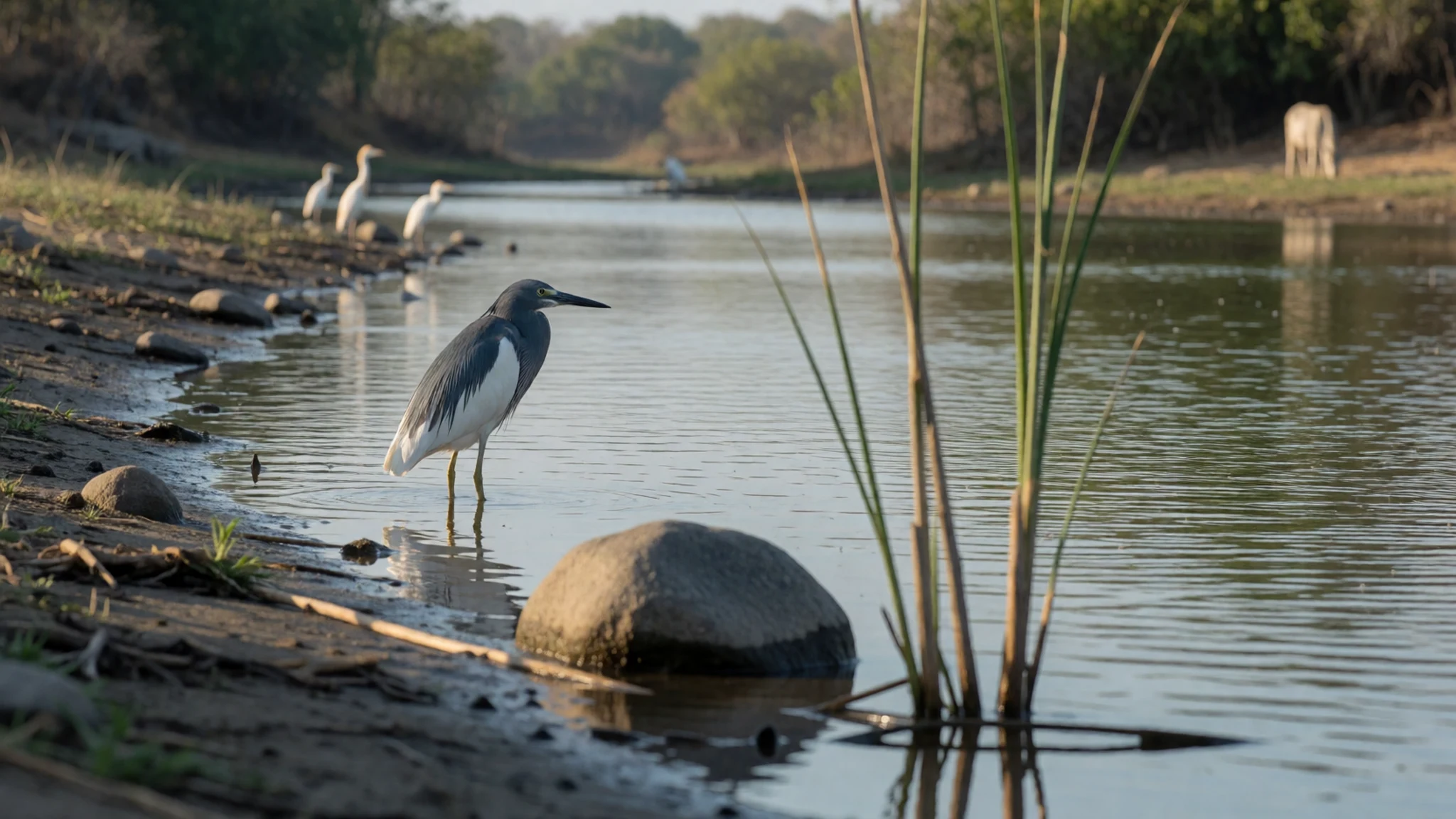
- Floodplain grazing land — Lake margins
Cattle and water buffalo graze the floodplain, and cattle egrets follow them, picking insects from the disturbed grass. It is an easy way to watch how local people use the land as the lake retreats and pasture appears.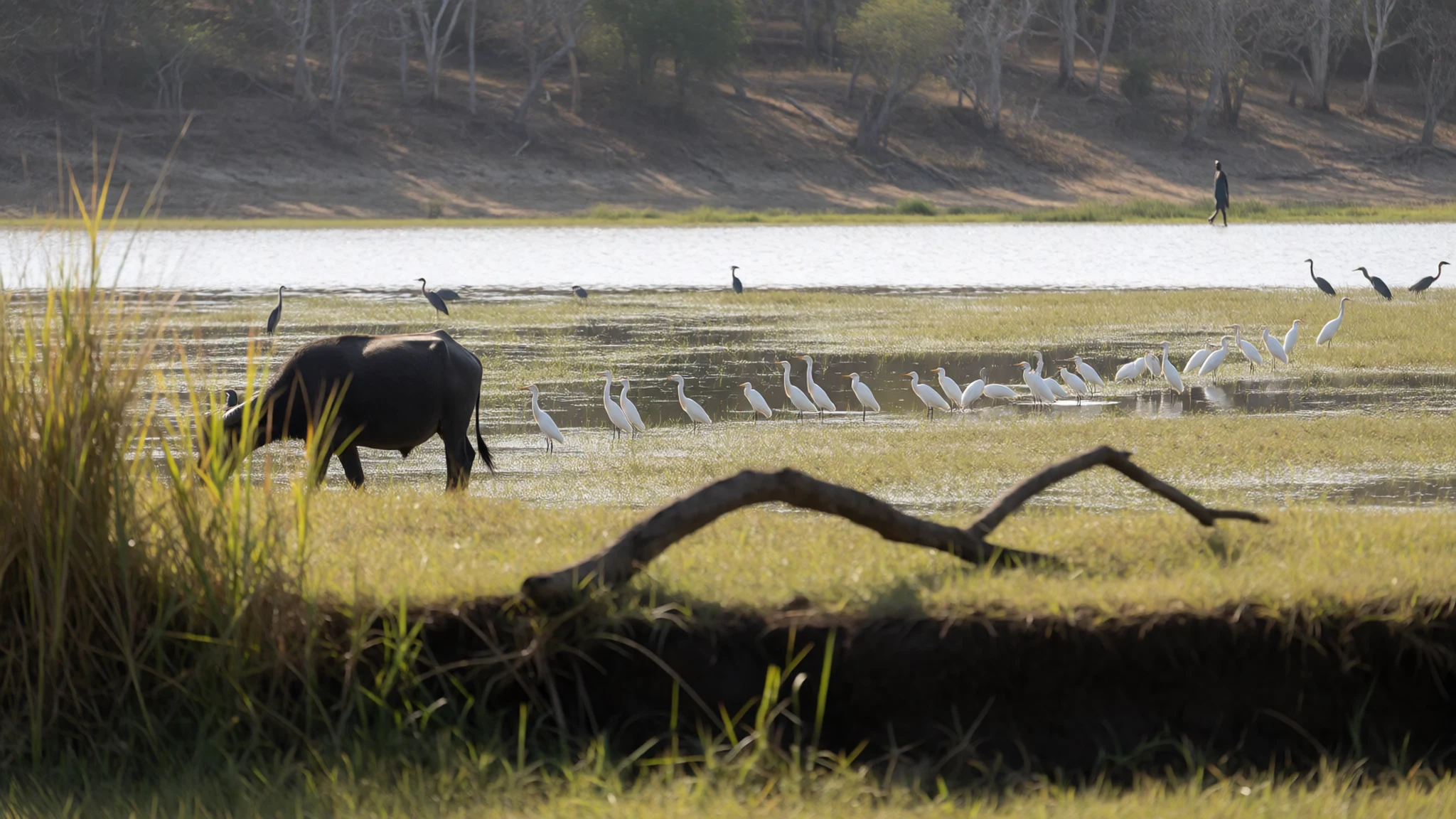
- Birdwatching at the edge — Lake margins
The lake lies within the Mount Paitchau Important Bird Area. Herons, egrets and other waterbirds use the margins, including pied herons, an uncommon visitor to wetlands in the country. Bring binoculars, a field guide and patience; a local guide helps with finding good spots.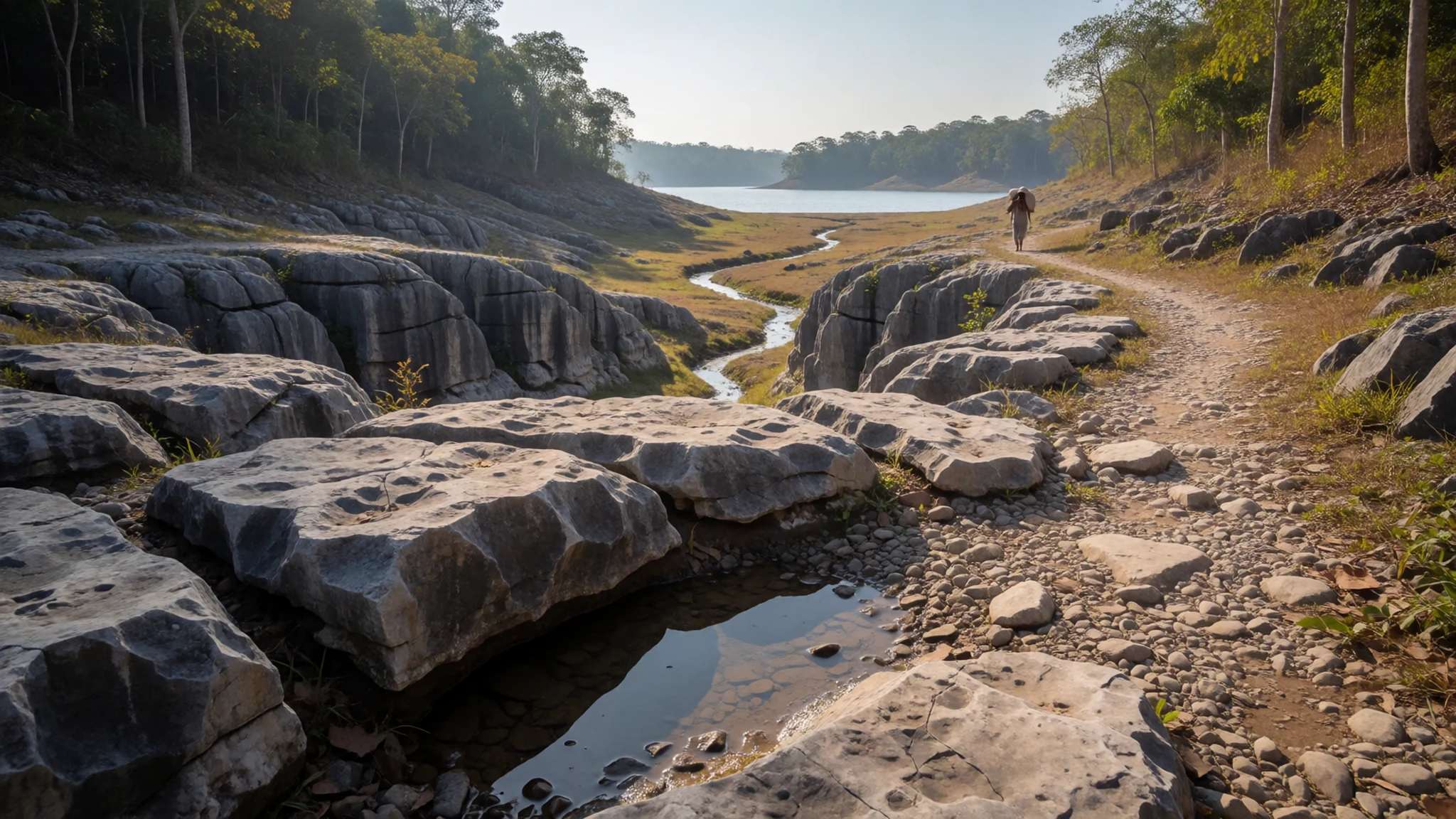
- Mainina sinkhole — Downstream of the lake outlet
Downstream of the lake outlet, the Irasiquero River vanishes into the Mainina sinkhole and does not reappear. It is a striking piece of karst behaviour. Ask locally about access and safety before approaching, since sinkhole edges can be unstable and the route may be hard to find.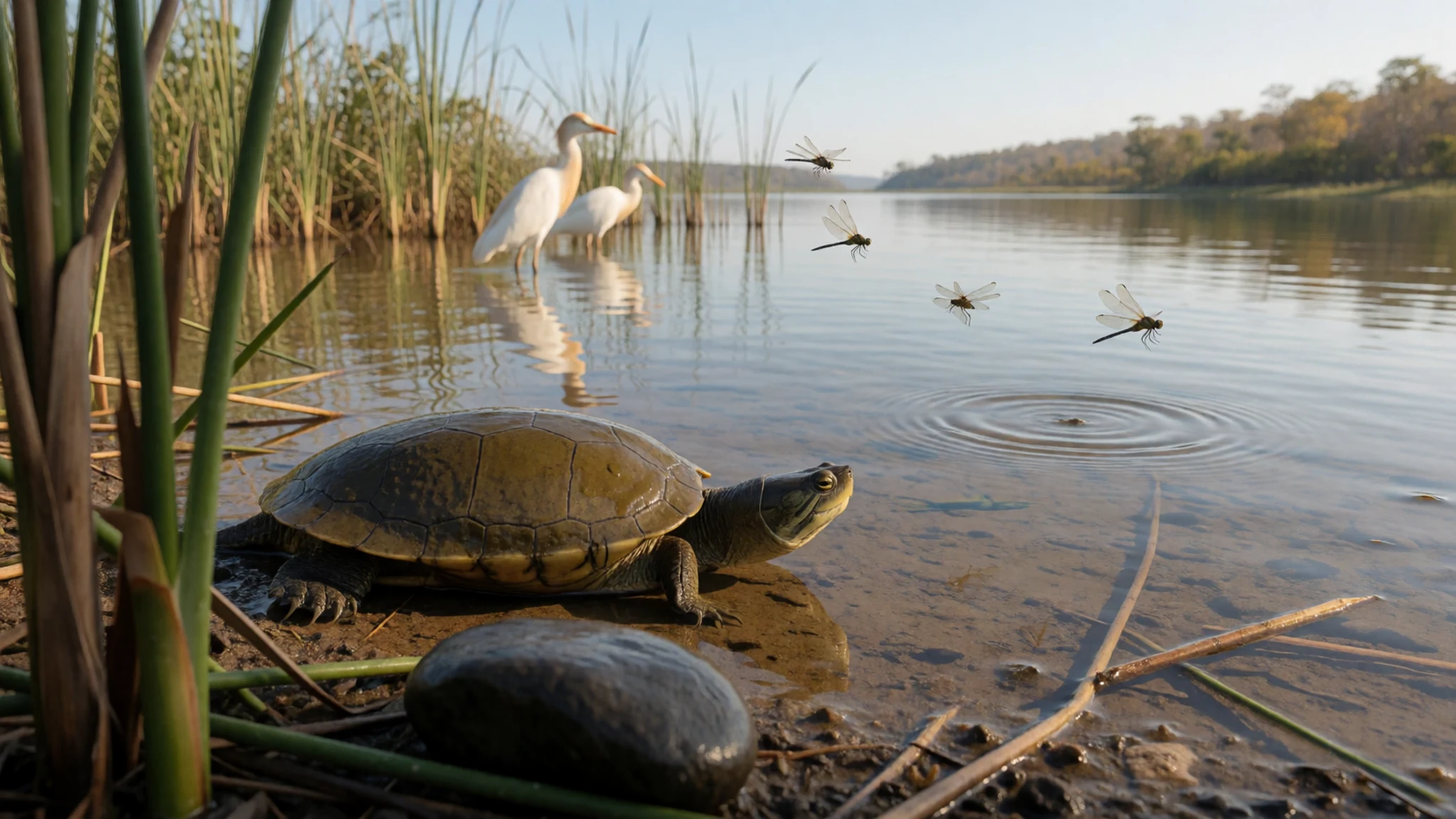
Culture
Ira Lalaro lies in Lautém District, in the far east of Timor-Leste, where village life around Malahara revolves around farming, livestock and the lake's seasons. Visitors are few, so hospitality tends to be personal and informal, and a guide from the community is the natural way in.
Timor-Leste's recent history shapes conversation. The Indonesian occupation killed a very large share of the population, and many families carry that memory. Praising the occupation or the idea of Timor-Leste belonging to Indonesia will not go down well, although relations between the two countries today are positive. Some people also speak warmly of the Portuguese period, when communities were largely left alone. As anywhere, if you are unsure how a political topic will land, leave it.
Community-based ecotourism is part of the national strategy, which means money spent on local guides, homestays and food does reach villages directly. That is worth remembering when deciding how to travel and whom to hire. Expect modest facilities, slow timekeeping and plenty of goodwill if you arrive with patience.
Ask permission and agree arrangements with the village or your guide before walking across grazing land or farmland, and ask before photographing people or their homes.
What to wear
Ira Lalaro is a rural lake, and fashion here means practical village clothing rather than anything staged for visitors. Timor-Leste's best-known traditional textile is tais, a hand-woven cloth made on a backstrap loom, usually of cotton, in patterns that differ by region and community. Tais is worn as a sarong or shawl and appears at ceremonies, weddings and important gatherings, and as a gift of respect. I have not found a brief-confirmed description of the specific Lautém patterns, so ask locally rather than assume.
Day to day, people around Malahara wear simple, durable clothes: T-shirts, shirts, shorts or trousers, sarongs for women, and sandals or rubber boots for working in wet ground. Church clothing is tidier on Sundays.
Visitors should dress for heat, sun and mud. Lightweight long trousers and long-sleeved cotton or quick-dry shirts protect against sun, insects and scratchy grass, and a wide-brimmed hat helps on open floodplain with little shade. Wear sturdy closed shoes or boots with grip, since the ground can be soft and snakes are present in the floodplain. Sandals suit the car, not the lake edge. Keep clothing modest in villages and churches, with shoulders and knees covered, and carry a light rain jacket in the wetter months. Bring a spare dry pair of socks.
What to eat
- Rice with fish — Village homes and small eateries around Lospalos
Rice is the staple in Timor-Leste, and fish is an important part of most meals. Expect simple plates of rice with grilled or fried fish, usually spiced, in village households or small roadside eateries in Lospalos and nearby.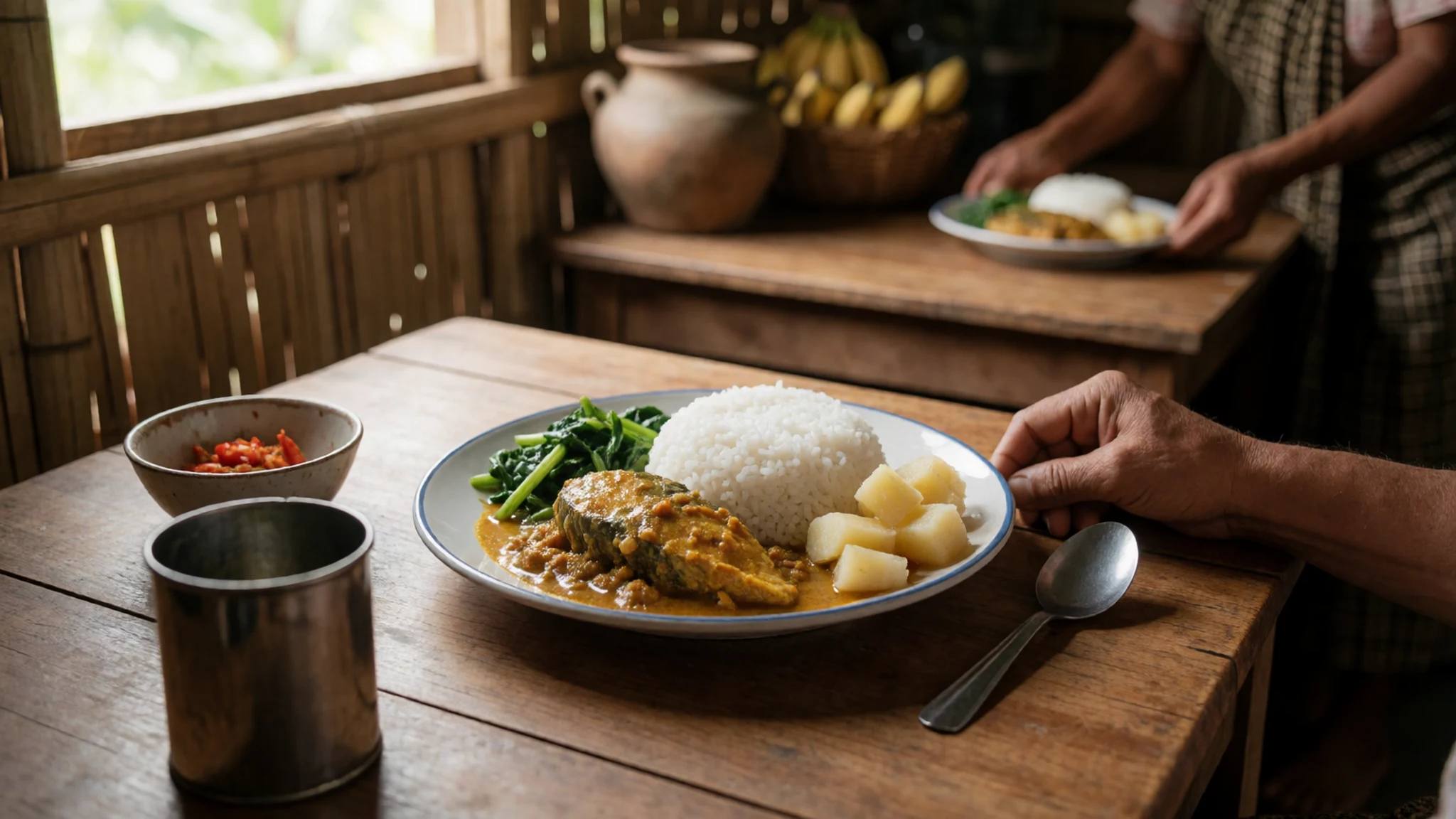
- Chicken curry — Local eateries in Lospalos
Curries are standard fare, and chicken curry is a favourite. Spicing is generous, and it is usually served with rice. Ask your host or guide where a good version is available near Malahara or in Lospalos.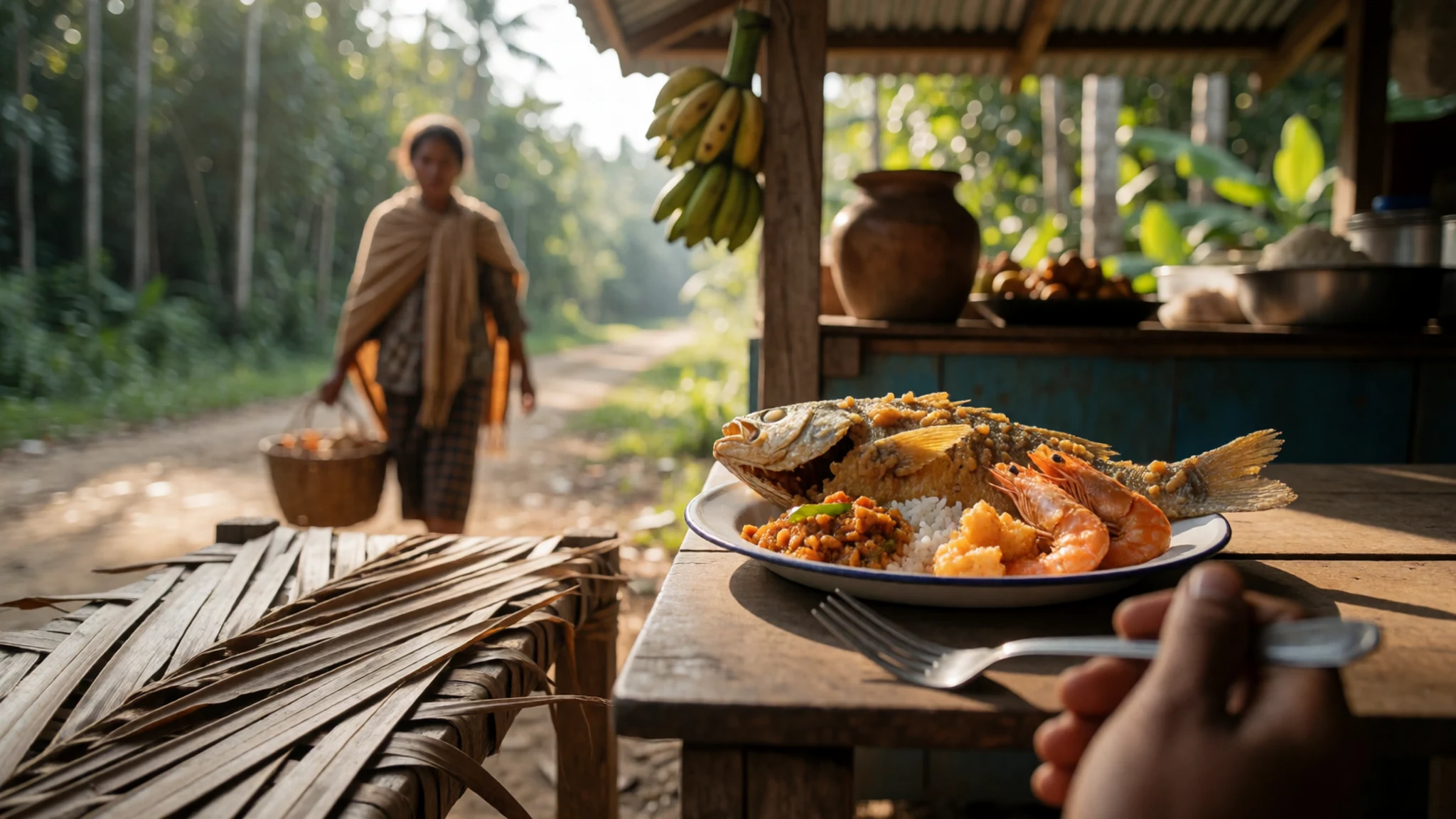
- Root vegetables — Village meals and local markets
Taro, cassava and sweet potato are commonly grown and appear boiled or fried alongside the main dish. They are filling, cheap and a useful snack for a day by the lake. - Fried fish and prawns — Coastal and town eateries
Fried fish is very popular, and prawns are considered a delicacy. Coastal supplies reach towns in the east, so look for them in small eateries rather than at the lake itself. - Timorese coffee — Village homes and town cafés
Coffee is grown organically in Timor-Leste and is strong. A cup is a fair way to thank a host, and local beans can be bought as a souvenir in larger towns.
Plan it
Best time. The lake is fullest in the wet season, which gives wide water and many birds but muddier tracks; the dry season exposes grassland and makes access easier. Dry-season months of about May to October are the more practical choice for most visitors, though check conditions locally.
How long. 1–2
Getting there. Fly to Dili's airport, then travel east by road towards Lospalos in Lautém District and onward to Malahara; the last leg is on rural roads and a local guide or hired vehicle is advisable. Check current road conditions before you set out.
Budget. low
Tips
- Hire a local guide through the community or park office, which also supports ecotourism
- Start at dawn for cooler air and the best birdlife
- Carry cash, water and snacks, as facilities are very limited
- Wear closed shoes and watch your step on the floodplain, where snakes live
- Most visitors from outside the Schengen area can get a visa on arrival; check the official government site before travelling
Etiquette
- Ask before photographing people, homes or livestock
- Greet villagers politely and agree guide arrangements in advance
- Take all rubbish away and keep clear of nests and wildlife
Nearby
Sources
- Wikidata Q1672323 (CC0)
- Wikipedia: Ira Lalaro (rev 1366031071) (CC BY-SA 4.0)
- Wikivoyage: Timor-Leste (rev 5406324) (CC BY-SA 4.0)
- Flooded Lake Iralalaro view — Colin Trainor (CC BY 3.0)
- Physical location map of East Timor — Carport (CC BY 3.0)
- Map of administrative post of Tutuala — J. Patrick Fischer (CC BY 3.0)
- Trimeresurus insularis — Hinrich Kaiser (CC BY 3.0)
- Cattle Egret and Water Buffalo — ColinTrainor (CC BY-SA 4.0)
- Pied Heron at Lake Ira Lalaro — ColinTrainor (CC BY-SA 4.0)
- Chelodina mccordi timorensis — Hinrich Kaiser (CC BY 3.0)
- Early morning views over flooded lagoons — Colin Trainor (CC BY 3.0)


Wildlife
- Cattle egret (animal)
The cattle egret is a heron that likes to walk wet ground, picking about like a tiny farm helper. At Ira Lalaro, in the lake area within the wider Nino Konis Santana National Park, it is seen on the flooded plain, and the early hours are the best time to notice it. Arrive at first light, keep your distance, speak softly and move slowly. A guide will know the best spots. Never feed it. - Pied heron (animal)
The pied heron is a quiet wading bird of warm, coastal lands, found from northern Australia to New Guinea and parts of Wallacea. Around the lake, look for it along the margins and the channels as the water draws back, when the light is soft and the air is calm. Stand well back, stay still and quiet, and let a guide help you find it. Never feed it. - Cattle egret (bird)
The cattle egret is a heron that likes to walk wet ground, picking about like a tiny farm helper. At Ira Lalaro, in the lake area within the wider Nino Konis Santana National Park, it is seen on the flooded plain, and the early hours are the best time to notice it. Arrive at first light, keep your distance, speak softly and move slowly. A guide will know the best spots. Never feed it. - Pied heron (bird)
The pied heron is a quiet wading bird of warm, coastal lands, found from northern Australia to New Guinea and parts of Wallacea. Around the lake, look for it along the margins and the channels as the water draws back, when the light is soft and the air is calm. Stand well back, stay still and quiet, and let a guide help you find it. Never feed it.