Aileu
Aileu, Timor-Leste
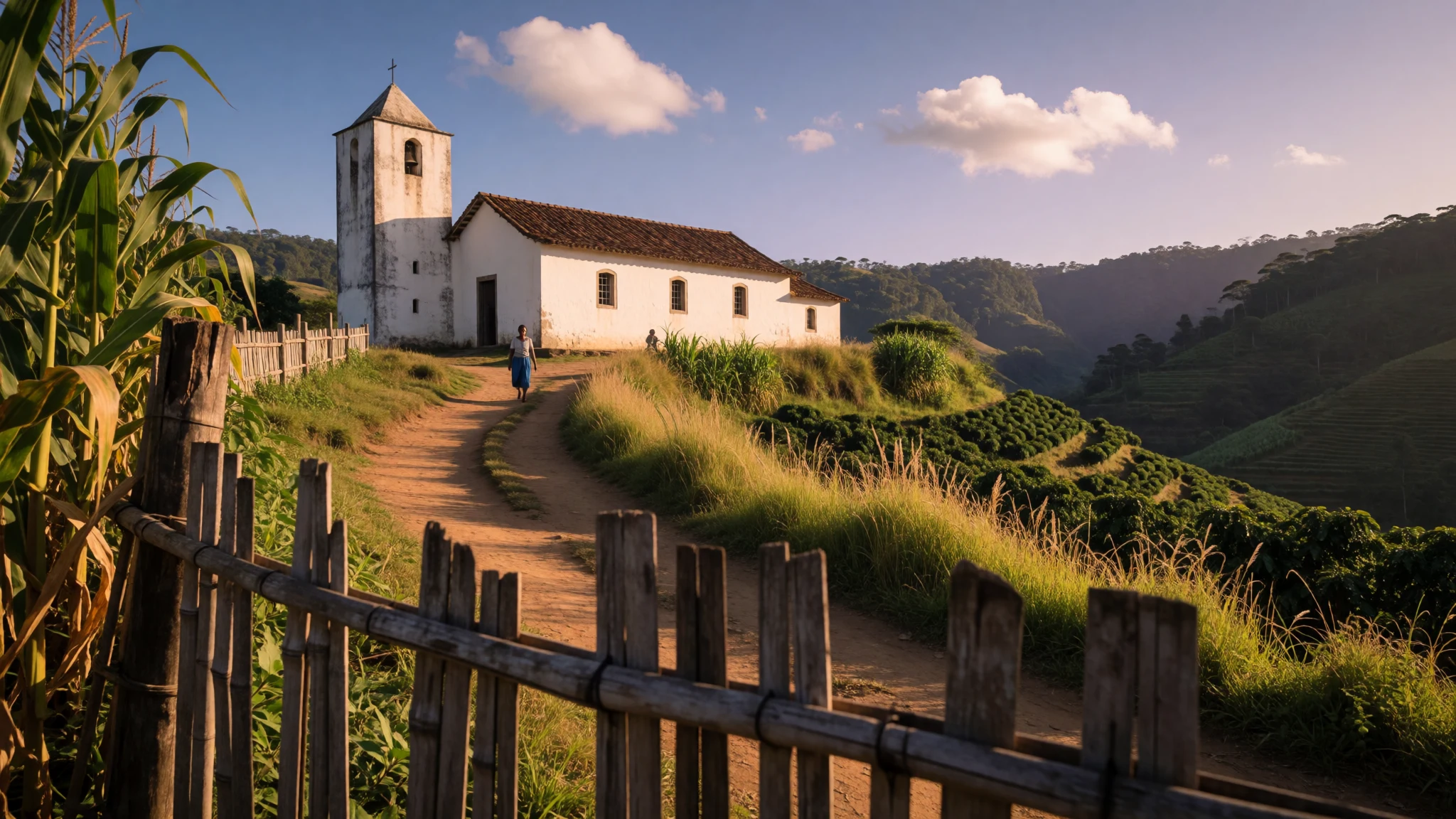
Aileu is a cool, quiet mountain town in Timor-Leste where ordinary highland life sits beside recent and deeply felt history.
The place
Aileu is a small hill town about 47 km south-west of Dili, the capital of Timor-Leste, and the administrative centre of Aileu District. Its population is about 2,900, and it sits at 1,182 m, so the air is noticeably cooler than on the coast. Mornings bring mist and a chill, afternoons bring sun, and the surrounding slopes are a patchwork of gardens, farms and scrub. The name comes from Mambai, the local language, and refers to a bent tree. Under Portuguese rule the town was called Vila General Carmona, after a Portuguese head of state, and the name was dropped after the Second World War. Today Aileu is a working district seat rather than a destination built for visitors: a market, government offices, a church, schools, and minibuses heading off to villages up the valleys. There is no sightseeing circuit and there are no crowds, which is both the appeal and the limitation. Visitor facilities are basic, English is not widely spoken, and a few words of Tetum or Portuguese help a great deal. Most outsiders come as a day trip from Dili, or pause here on the way into the interior. The town suits people who enjoy mountain air, slow conversation and everyday Timorese life, and who are content without a list of monuments. Expect to stop, look and talk rather than tick things off.
Its story
Aileu has been a place of colonial administration, rebellion and refuge, and much of that history is recent enough to be remembered first-hand. In 1903 a rising against Portuguese rule was planned here and failed. In January 1912 the town served the colonial authorities as a base while they dealt with a separate rebellion in Manufahi. During the Japanese occupation of Portuguese Timor, between 1942 and 1945, Aileu was attacked on 31 August 1942 by the Colunas Negras, Timorese allies of the Japanese. Five Portuguese soldiers were killed, along with several civil servants and missionaries, and a memorial in the town now records the event. Timor-Leste declared independence on 28 November 1975, but Indonesian forces invaded days later and the country was annexed the following year. At the end of 1979 the Indonesian military set up a relocation camp for East Timorese people in Aileu. In September 1999, during the violence around the independence vote, militia groups drove residents of several villages in the area from their homes. The village of Seloi Craic was destroyed on 6 September, with houses burned and livestock killed. As 1999 ended, there was brief talk of making Aileu the capital of the new nation, because of its altitude and distance from the coast. That idea was set aside and Dili kept the role, leaving Aileu a quiet district town.
What to see
- Aileu town centre — Aileu town
Aileu town centre is easy to cover on foot: the market, the church, government buildings and low houses facing the surrounding hills. Go in the morning, when stalls are busiest and the air is cool. It is a good place to watch daily life, buy fruit or coffee, and ask directions with a smile and a few Tetum words.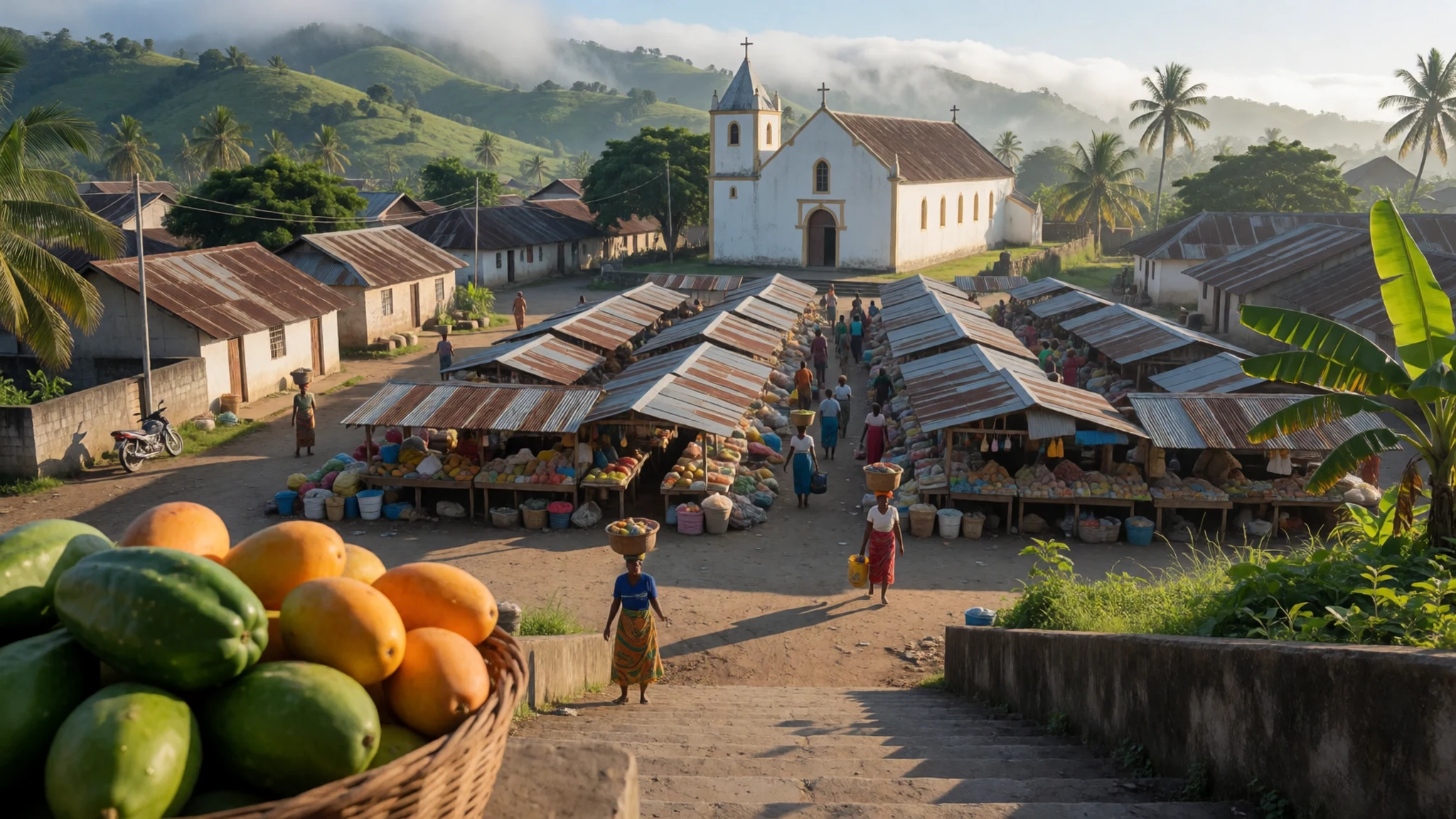
- The 1942 memorial — Aileu town
A memorial in Aileu marks 31 August 1942, when Timorese allies of the Japanese forces attacked the town and killed five Portuguese soldiers, together with civil servants and missionaries. It is a modest site rather than a grand monument. Visit quietly, and ask a local resident for the way, since the history still matters to families here.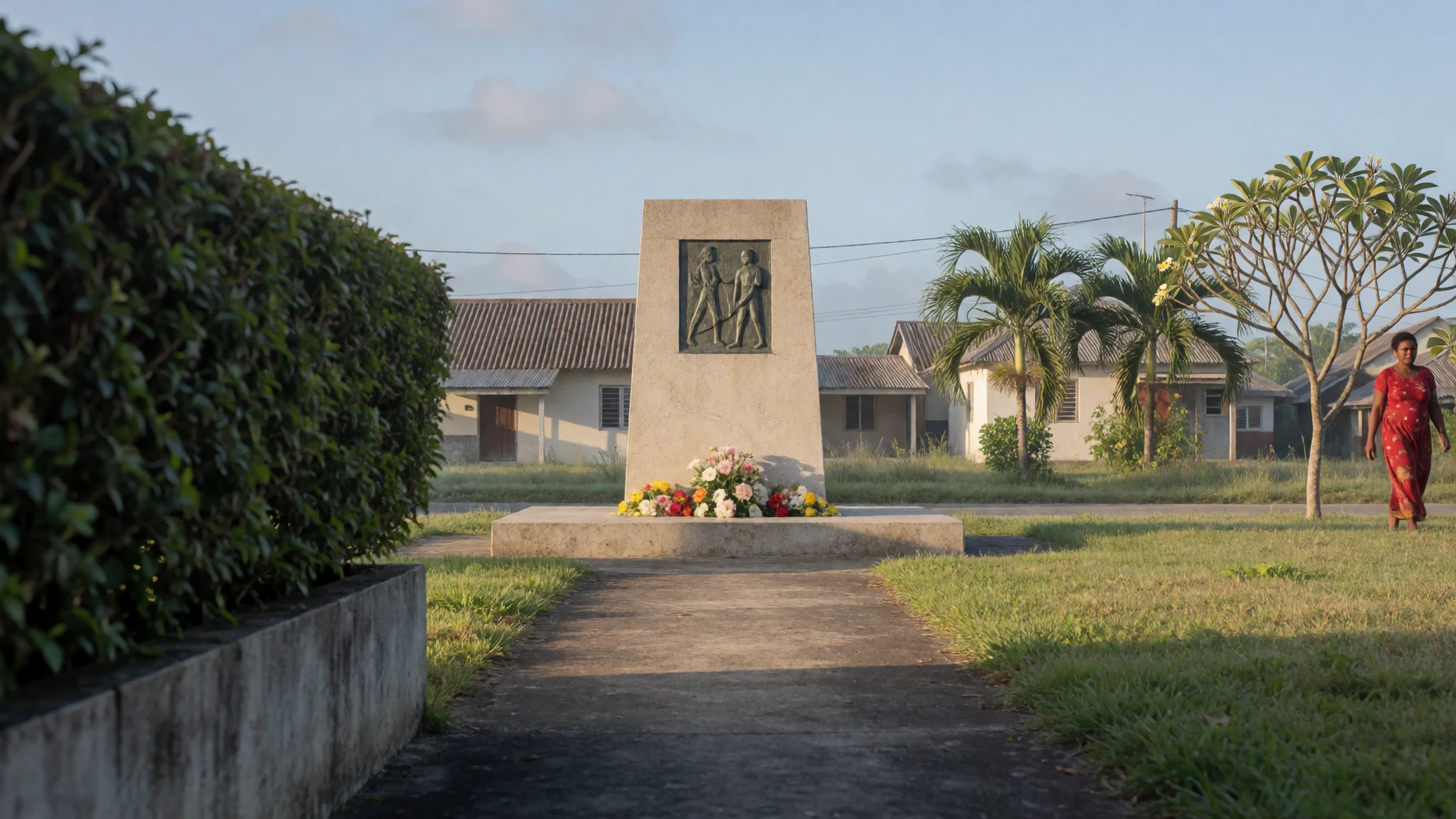
- 28 November ceremonies — Aileu town
A ceremony on 28 November, the date of the 1975 declaration of independence, has been held in Aileu, and the national president took part in 2014. Photographs of that day show flags, uniforms and large gatherings. If planning around the date, check locally first, as public events can affect roads and transport.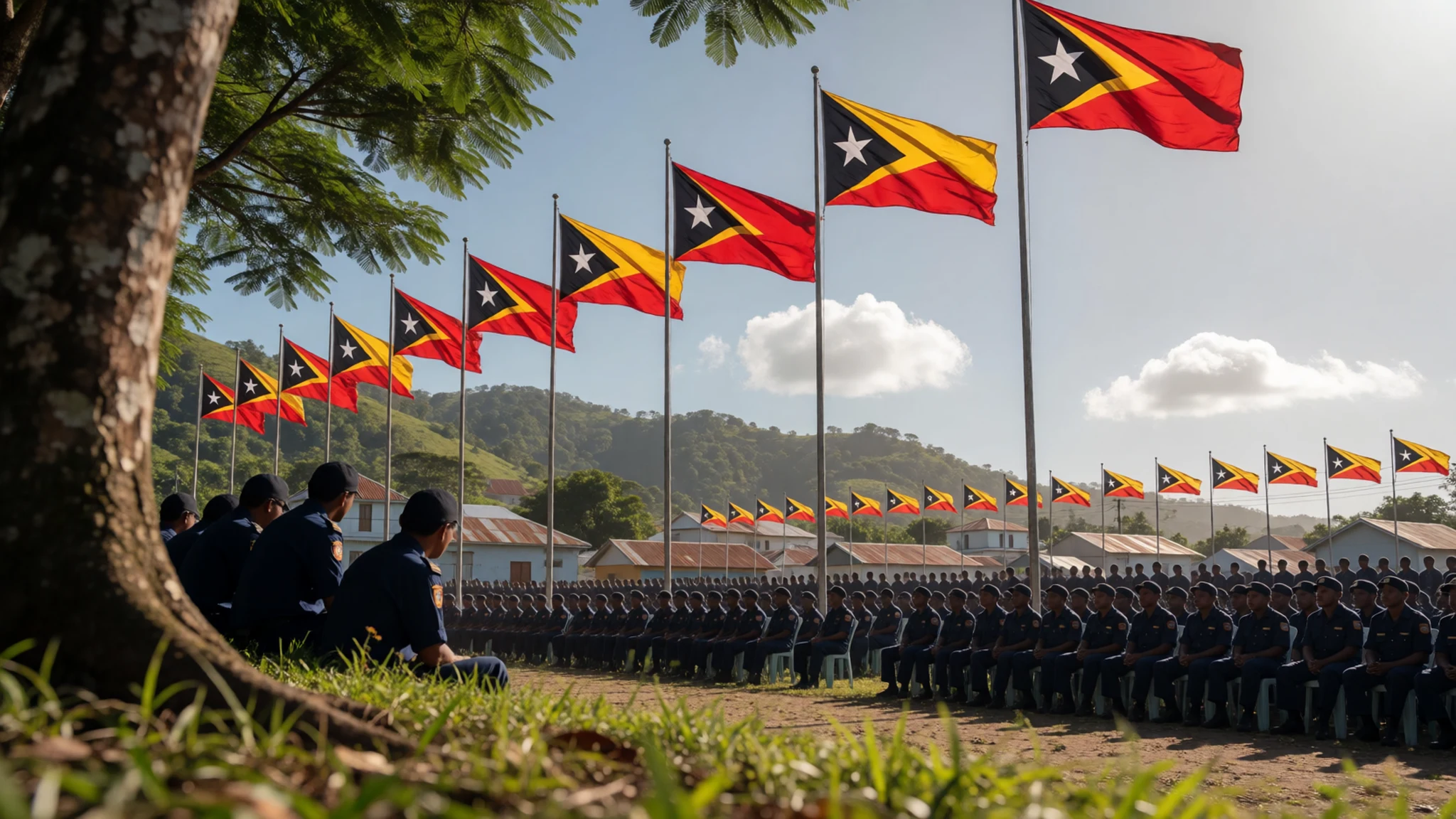
- FALINTIL anniversary history — Aileu town
In 2000 Aileu hosted celebrations for the 25th anniversary of FALINTIL, the Timorese resistance force, and photographs of the gathering survive from that year. The town is a useful stop for understanding the resistance period. Local people can often explain what those years meant here; listen more than you question, and let them lead.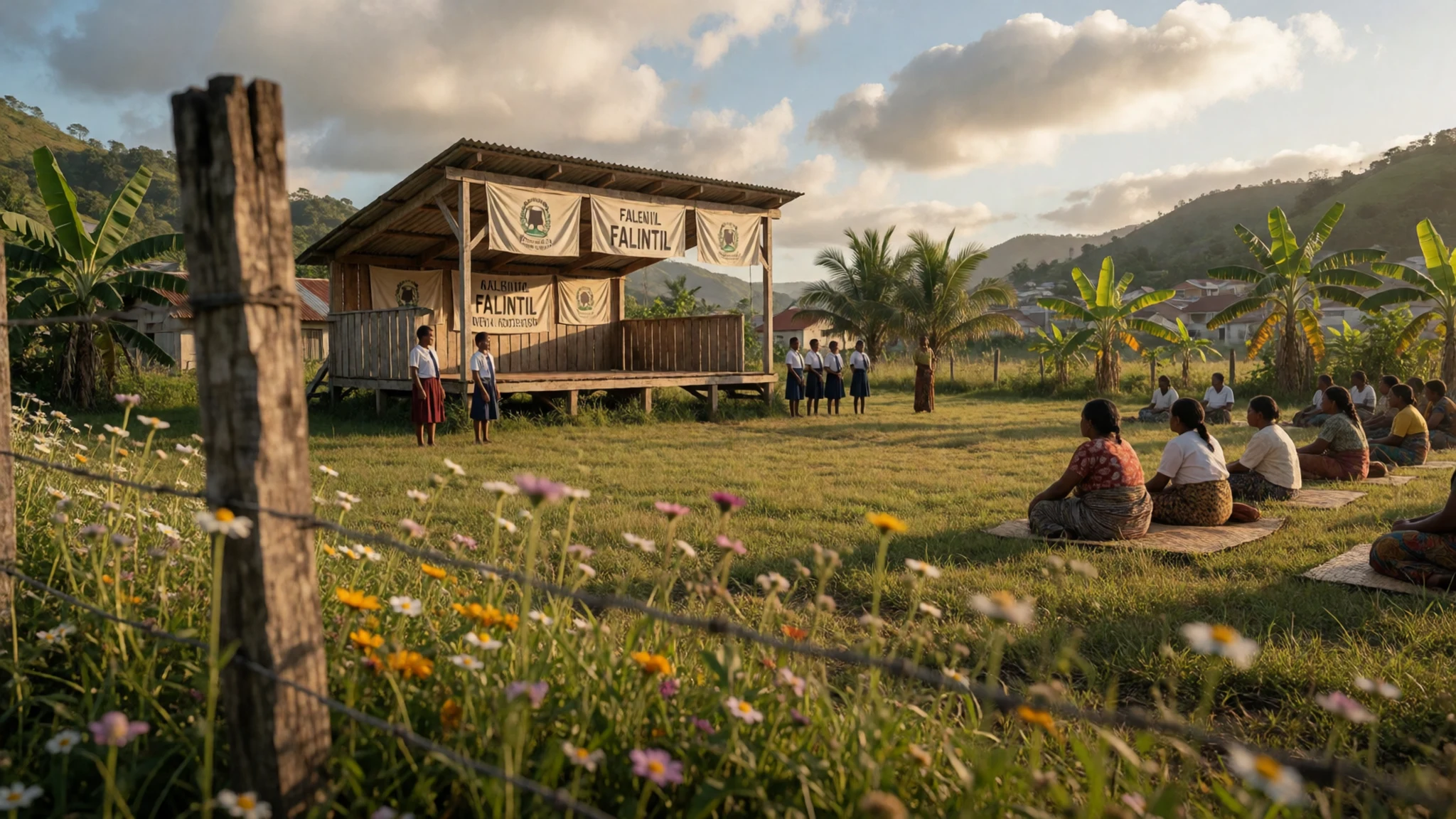
- Hill walks around the town — Hills around Aileu
At 1,182 m, the slopes around Aileu are good for gentle walks past gardens, small farms and villages. The paths are in daily use by locals, so go slowly and greet people you pass. Ask in town about a guide or a safe route, carry water and a rain layer, and start early before cloud builds.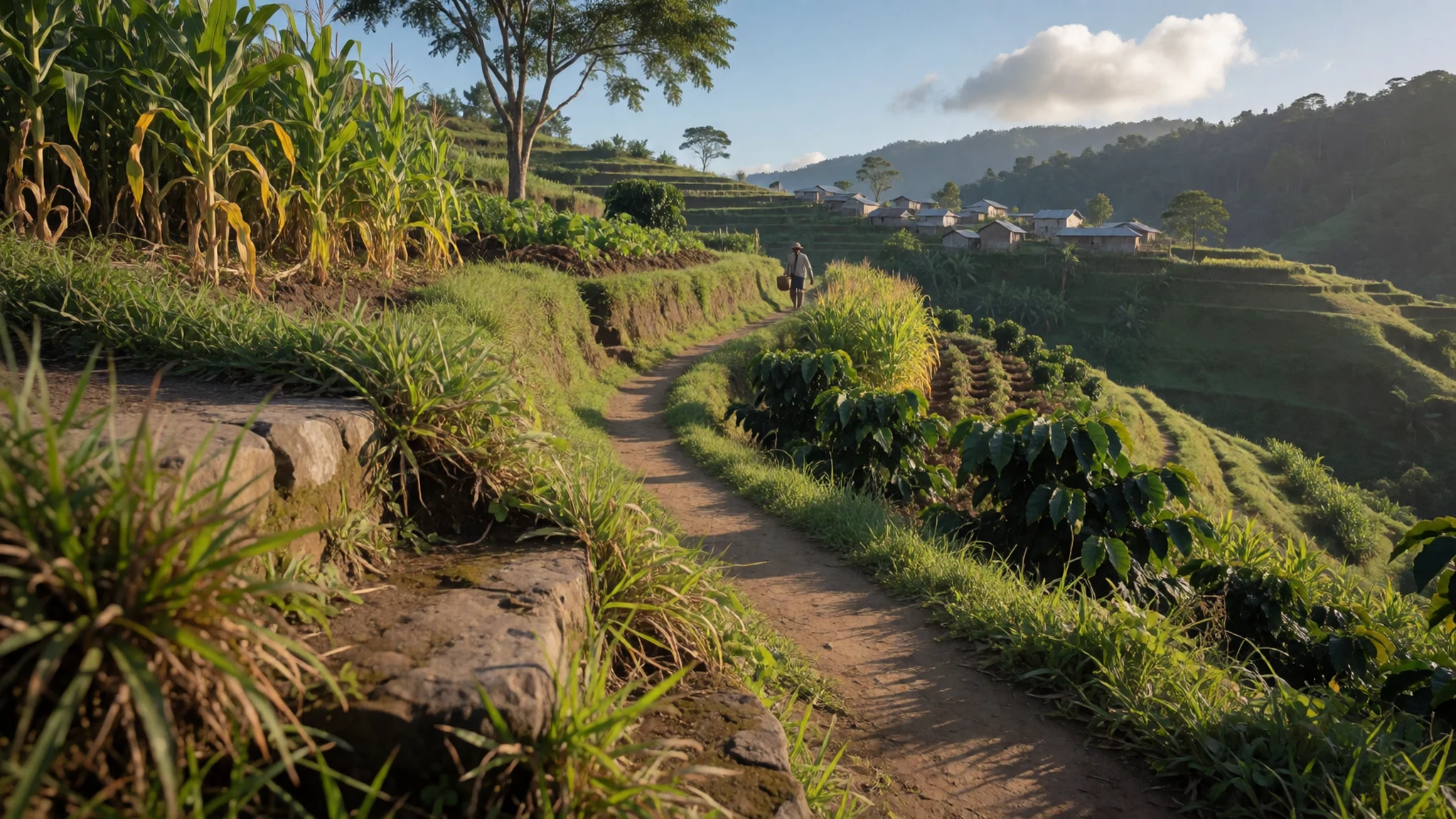
Culture
Aileu is a town where the recent past is part of ordinary conversation. The Indonesian occupation brought enormous loss to Timor-Leste, and many families in the district lived through displacement, camps and burned villages. Praise for the occupation, or for the idea of Timor-Leste being part of Indonesia, will not be well received, even though the two countries now have a friendly relationship. Attitudes to the Portuguese period are more mixed, and some older people recall it with a degree of fondness, because the colonial government largely left villages to run their own affairs. Life in the highlands revolves around family, farming, church and the local market, and Catholic observance is strong in the district. Tetum is the common language across Timor-Leste, Portuguese is also official, and Mambai is widely spoken around Aileu, so even a greeting in Tetum earns warmth. People are generally hospitable to strangers who arrive without hurry. Politics is best left to others to raise, and if you are unsure how a sensitive topic will land, it is wiser not to start it. Ceremonies, funerals and church services are community occasions rather than shows. When something is happening, keep a respectful distance and wait to be welcomed in. Ask permission before photographing people, ceremonies or the memorial, and let anyone who declines be.
What to wear
Aileu sits in a part of Timor-Leste where hand-woven cloth, known as tais, remains central to traditional dress. Tais is typically woven on a backstrap or simple frame loom from cotton, often dyed with plant colours, in patterns that vary by region and community. It is worn as a wrap skirt or sarong, a shoulder scarf or a sash, and appears most prominently at weddings, funerals, church feast days and national ceremonies. Cloth is also exchanged between families as a gift. In daily life, people in town wear practical modern clothes: T-shirts, shirts, trousers, long skirts and rubber sandals or trainers, with a jacket or sweater on cool mornings. Church on Sunday brings out neater clothes, and tais may be added on special days. Visitors should dress for mountain weather and local modesty. Light layers work best, with a fleece or light jacket for evenings at altitude and a waterproof for rain. Shoulders and knees should be covered in town and certainly at church or memorials, for women and men alike. Sturdy closed shoes or walking sandals suit uneven paths, and a hat and sunscreen help in the midday sun. A scarf is useful for sun and for covering up in a hurry. Buying a piece of tais directly from a weaver is a good way to support local makers.
What to eat
- Rice with fried fish — Small local eateries near Aileu market
Rice is the staple of Timor-Leste, and fried fish is among the most popular things to eat with it. Fish is generally brought up from the coast, so it is a treat in the hills. Look for it at simple local eateries around the market.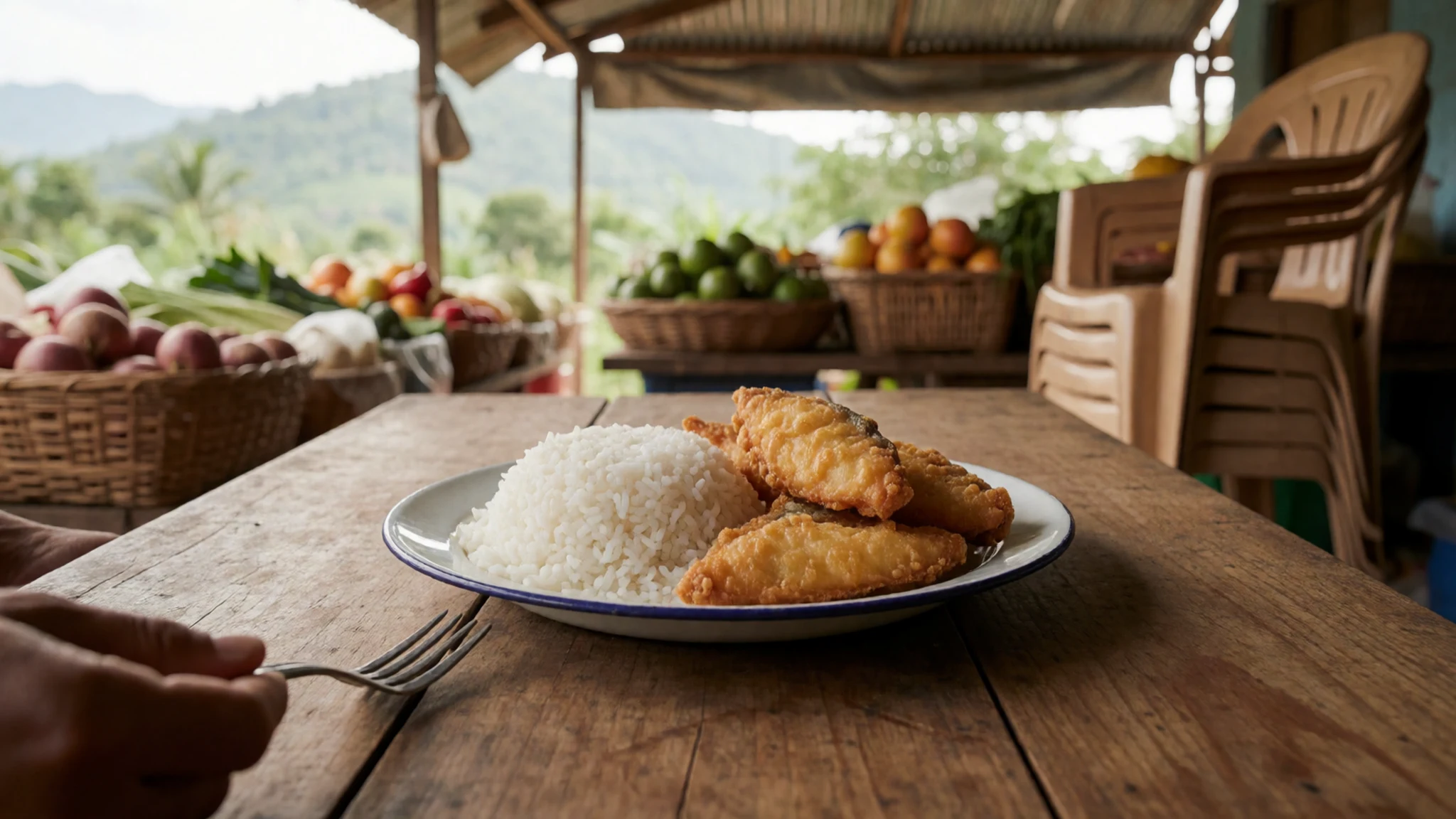
- Chicken curry — Family-run eateries in the town centre
Curries are a standard dish across the country, and chicken curry is a favourite. Spicing is generous but varies from cook to cook. Order it with rice for a filling, warming meal on a cool highland evening.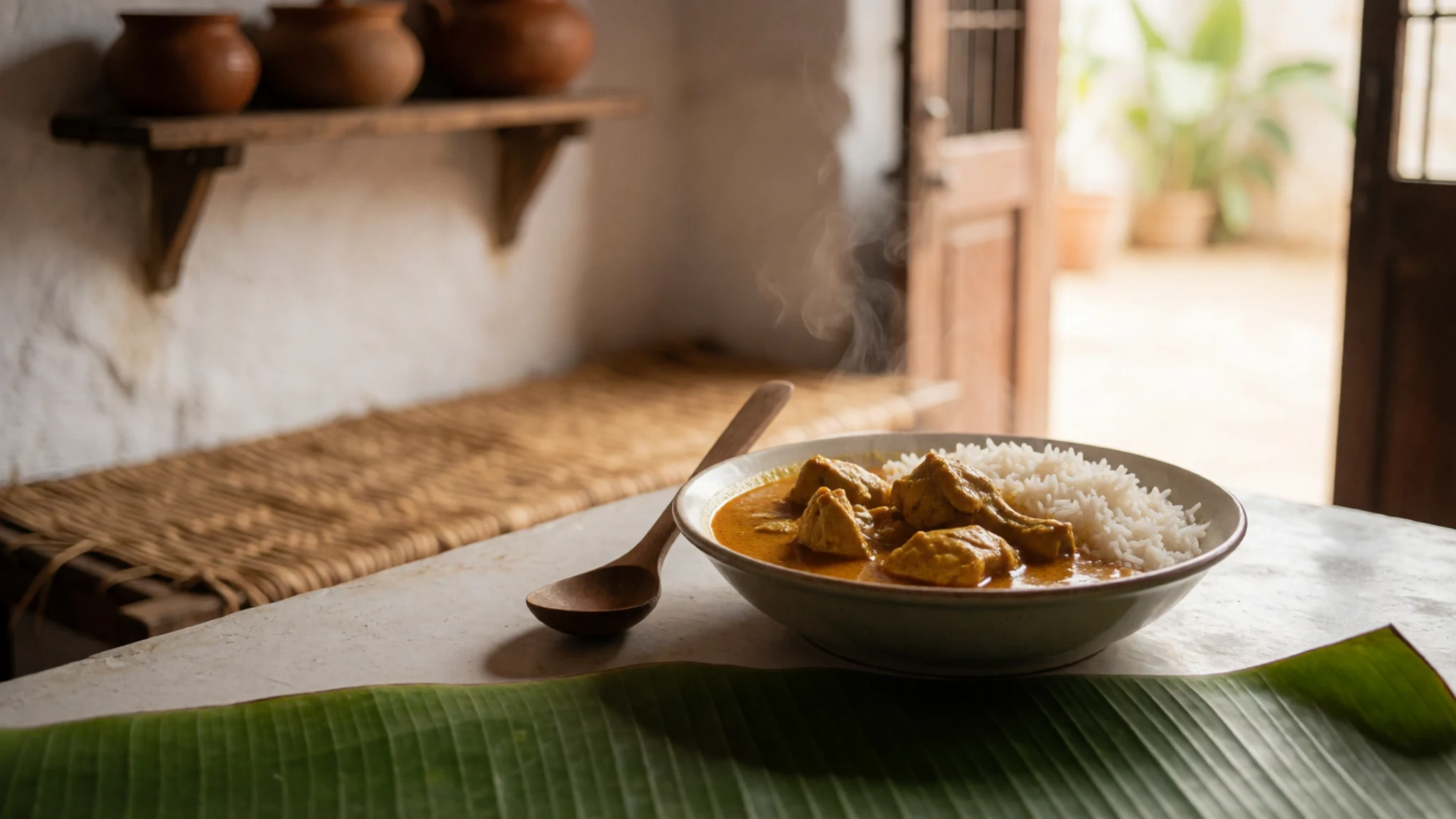
- Cassava, taro and sweet potato — Aileu market and village kitchens
Root crops are staples alongside rice, and are commonly boiled, steamed or fried. They are filling, mild and good with chilli or fish. Stalls and village kitchens around Aileu serve them as everyday food rather than special dishes. - Greens and beans — Local eateries and the town market
Cabbage, spinach, cowpeas and onions are widely grown vegetables, and they turn up stir-fried or stewed with rice. This is the easiest option for vegetarians, though it is worth asking whether fish or meat has been added. - Timorese coffee — Market stalls and roadside tea and coffee stands
Coffee is grown organically in Timor-Leste, and a cup in the cool hills tastes best at breakfast. It is often served strong and sweet in small glasses. Buying beans or ground coffee is a way to support local growers.
Plan it
Best time. May to October is generally the drier stretch, when mountain roads and walks are easier; the wet season brings heavy rain and slippery tracks. At 1,182 m, evenings are cool all year, so pack a warm layer. Check recent weather before setting out.
How long. 1–2
Getting there. Fly to Dili's airport, then travel about 47 km south-west by road to Aileu; minibuses and taxis serve the route, so ask locally for current options. There is no rail. The last stretch climbs into the mountains and can be slow.
Budget. low
Tips
- Check visa rules with the official Timor-Leste immigration authority before travelling, as many visitors can get a visa on arrival at Dili airport
- Start from Dili early to allow time for the mountain road and to be back before dark
- Carry cash, as cards and cash machines are scarce outside Dili
- Bring a warm layer and a rain jacket, because weather turns quickly at altitude
- Carry drinking water and ask in town before heading into the hills
Etiquette
- Ask permission before photographing people, ceremonies or the memorial
- Avoid raising politics or the occupation unless a local person starts the conversation
- Greet people you pass, and dress modestly in town and at church
Nearby
Sources
- Wikidata Q405087 (CC0)
- Wikipedia: Aileu (rev 1377048222) (CC BY-SA 4.0)
- Wikivoyage: Timor-Leste (rev 5406324) (CC BY-SA 4.0)
- Photo: Aileu town, East Timor — David Stanley (CC BY 2.5)
- Photo: FALINTIL 25th anniversary in Aileu, 2000 — Jörg Meier, Watch Indonesia! (CC BY-SA 2.0)
- Photo: Taur Matan Ruak at the FALINTIL anniversary, Aileu, 2000 — Jörg Meier, Watch Indonesia! (CC BY-SA 2.0)
- Photo: 28 November ceremony, Aileu, 2014 — Prezidénsia Repúblika Timor-Leste (Public domain)
- Photo: 28 November ceremony 1, Aileu, 2014 — Prezidénsia Repúblika Timor-Leste (Public domain)
- Photo: 28 November ceremony 2, Aileu, 2014 — Prezidénsia Repúblika Timor-Leste (Public domain)
- Photo: 28 November ceremony 3, Aileu, 2014 — Prezidénsia Repúblika Timor-Leste (Public domain)
- Photo: 28 November ceremony 4, Aileu, 2014 — Prezidénsia Repúblika Timor-Leste (Public domain)


