Mount Myōkō
Mount Myōkō, Japan
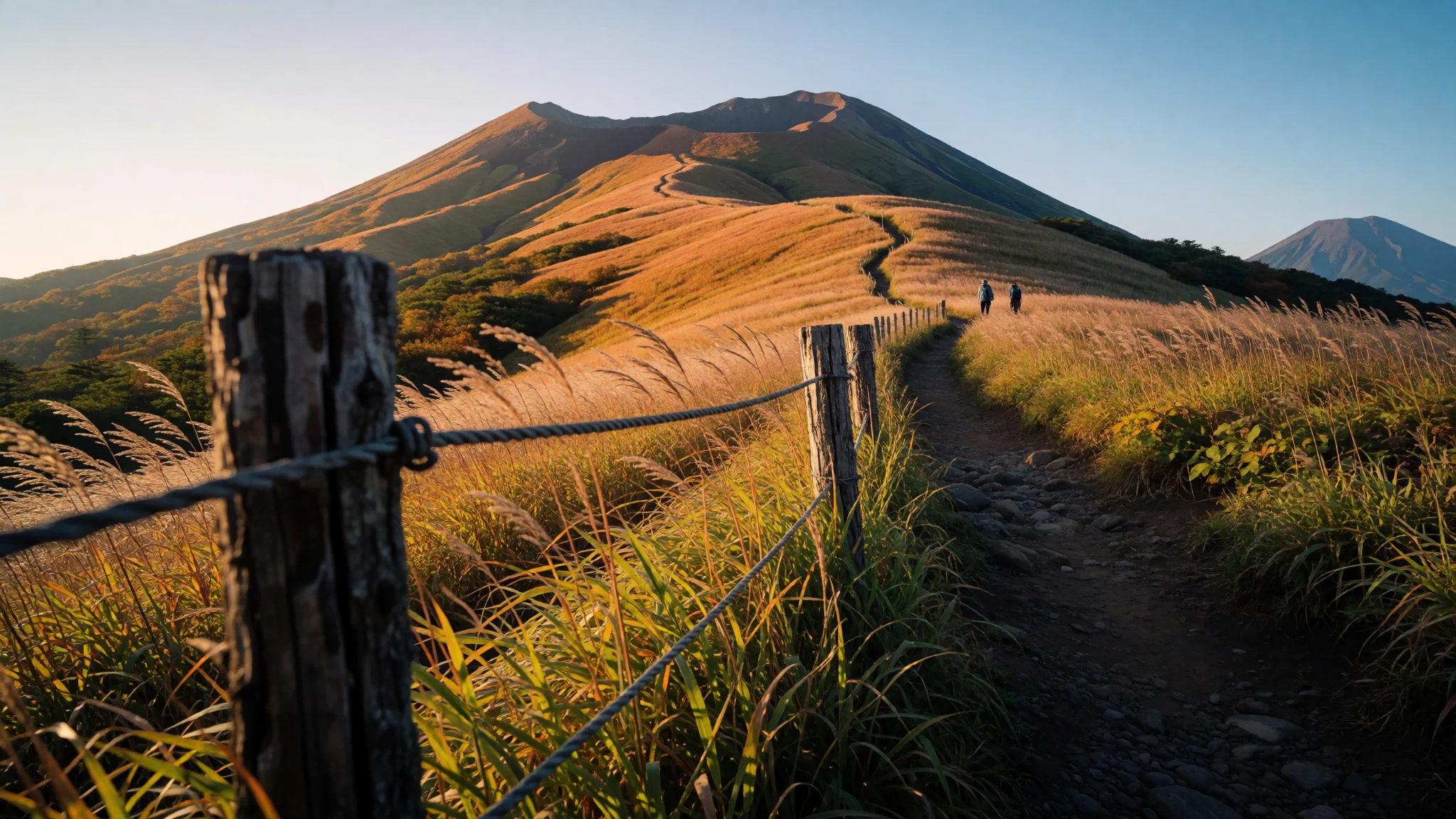
Mount Myōkō is a snowy Niigata volcano with hot-spring villages at its foot, good for powder in winter and ridge walks once the snow melts.
The place
Mount Myōkō (妙高山, Myōkō-san) is an active stratovolcano rising to 2,454 m in Niigata Prefecture, on the Sea of Japan side of Honshu. It stands at the southwest edge of Myōkō city and lies inside Myōkō-Togakushi Renzan National Park, a landscape of beech woods, crater walls, wetlands and high pastures. Japanese walkers know it as one of the country's listed famous mountains, and Niigata people treat it, together with Mount Yahiko, as the prefecture's signature peak. The summit is not a single clean cone. Over a very long volcanic history the mountain has been built up, broken open and built again, so its skyline reads as a ring of ridges around a lava dome. From the north, with Mount Kurohime beside it, it looks like a heavy, slightly lopsided pyramid; from the east its ragged flank shows. Winters are famously snowy, and that snow shapes everything about the place. The villages at the foot, including Akakura, Suginohara and Ikenotaira, grew up around hot springs and now work as ski towns in winter and walking bases the rest of the year. The mountain is wild enough that weather decides plans, yet the valley below is served by local trains, which makes it a realistic stop for anyone travelling between Tokyo, Nagano and the Sea of Japan coast. Visitors tend to fall into two camps: skiers who come for powder, and walkers who arrive once the slopes have cleared.
Its story
Mount Myōkō has a geological biography that reads like a cycle of building and demolition. The volcano began growing hundreds of thousands of years ago, and its eruptions produced several kinds of lava, from dark basalt to paler andesite and dacite. At its peak the cone probably stood a good deal higher than the 2,454 m it reaches today. Then, many thousands of years ago, a huge eruption removed the top and left a wide caldera, a bowl-shaped scar that still defines the mountain's outline. Later, a new crater formed inside it and settled into the shape seen now, and a lava dome rose to become the present summit. The last big eruptions came in prehistoric times and sent pyroclastic flows, fast avalanches of hot gas and ash, down the eastern slopes. Nothing like that has been recorded in living memory, but the volcano is classed as active. Gas still seeps from vents near the dome, and sulphur was once dug out of the ground there. The human story is gentler. Hot springs at the base drew bathers long before ski lifts, and in more recent times the surrounding communities merged into Myōkō city. Today the old volcano is valued mostly for its snow, its onsen and the views that its broken, many-layered profile makes possible.
What to see
- The summit and lava dome — Upper slopes of Mount Myōkō
The lava dome at the top of Mount Myōkō is the goal of the serious walk, a scramble over rough volcanic ground above the caldera rim. It needs fine weather, proper boots and an early start, and snow can linger on the upper slopes well into early summer.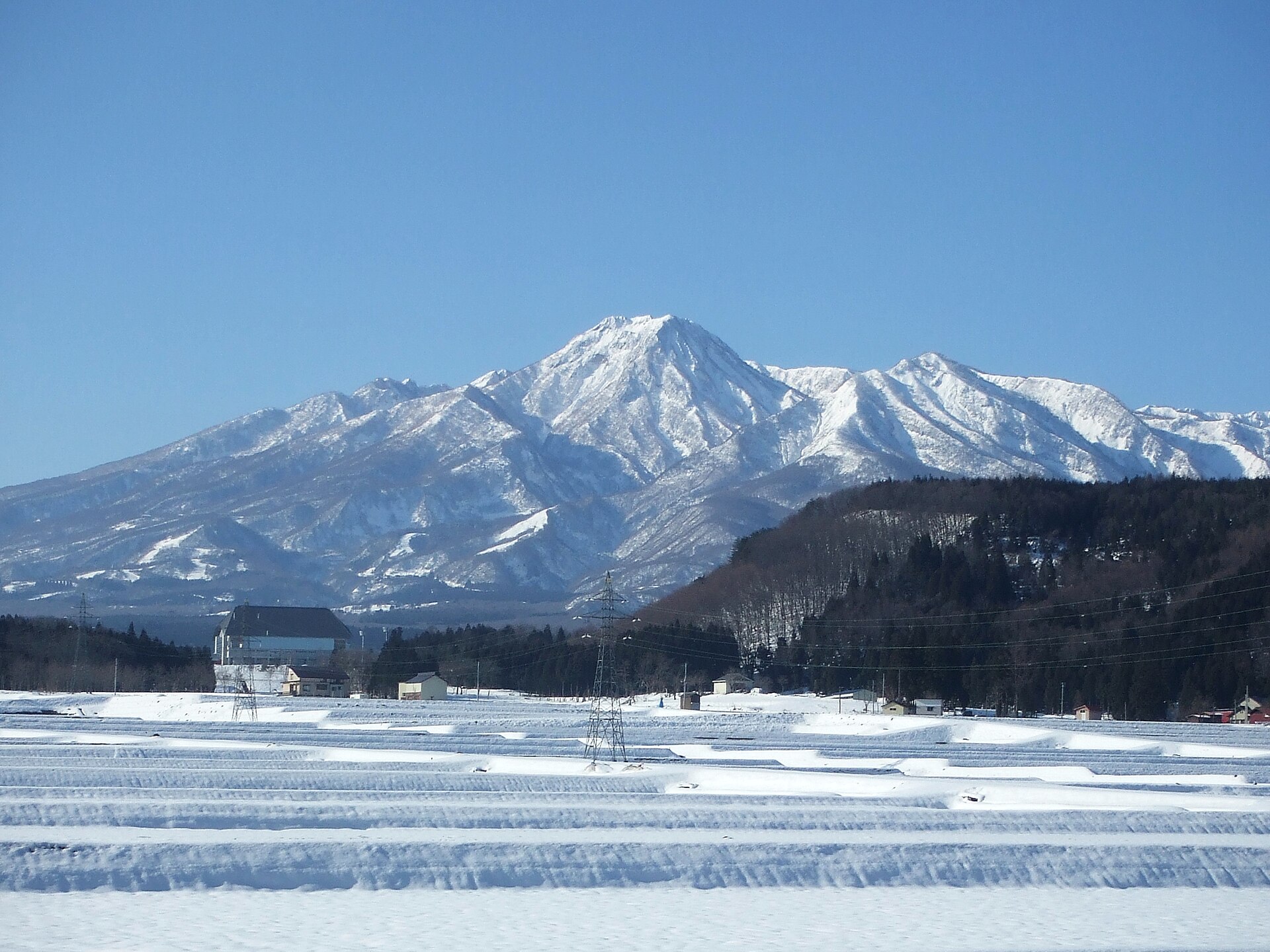
- Akakura Onsen — Northern foot of the mountain
Akakura is the best-known of the foothill villages, a cluster of guesthouses, bath houses and small eateries spread along a slope. In winter it is busy with skiers; in summer it is quiet and cool, and a good base for day walks and soaking tired legs. - Suginohara and Ikenotaira ski areas — Eastern and southern foothills
Suginohara and Ikenotaira are two of the main ski resorts around the mountain, alongside Akakura and some smaller areas. Snowfall here is heavy and reliable by Japanese standards, so these slopes draw powder seekers. Check each resort's official site for lifts and seasons before planning. - Views from the Nojiriko Terrace — Lake Nojiri, Shinano, Nagano Prefecture
Across the prefectural border, a terrace above Lake Nojiri frames Mount Myōkō from the south-west. It is an easy, low-effort way to appreciate the shape of the volcano, particularly in clear early light when the summit stands out sharply above the haze.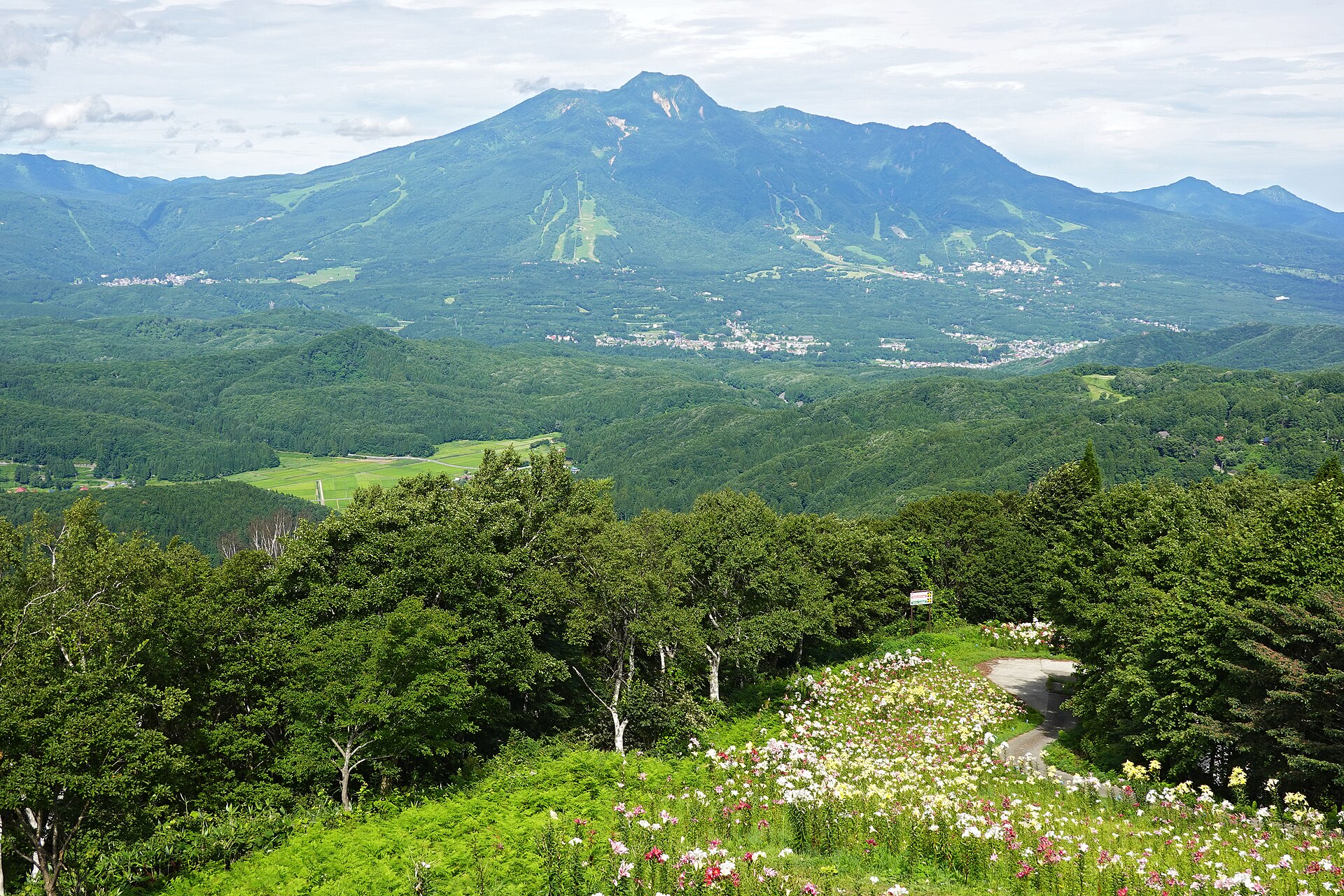
- Myōkō Sunshine Land — Just over the city border in Jōetsu
Myōkō Sunshine Land is a leisure park with rides for children and adults, set against the mountain backdrop. It sits just inside Jōetsu city rather than Myōkō, and the nearest station is Sekiyama on the Echigo Tokimeki Line. Check the official site for opening days before going.
Culture
Mount Myōkō sits in a part of Japan where mountains, snow and hot water shape daily life. Like other Japanese peaks, it is treated with a quiet respect that mixes old mountain veneration with plain outdoor sense; walkers greet each other on the trail and carry their rubbish back down. The foothill villages have lived with heavy winters for generations, and houses, roads and routines are all built around clearing and managing snow. The onsen tradition is central to the experience. After a day on the slopes or the ridge, locals and visitors alike head to a bath house, and a long soak is part of the rhythm of a stay rather than an extra. Many guesthouses serve evening meals built on rice and mountain vegetables, eaten together at set times, so arriving late can cause real inconvenience for the hosts. The area has been a ski destination for a long time, and a small international crowd mixes with Japanese families and groups, especially in the colder months. Even so, the villages remain small and community-minded, and staff will appreciate simple courtesy and a few words of Japanese. Summer is far quieter, and many places keep short hours outside the main seasons. Wash and rinse thoroughly at the washing stations before stepping into any onsen bath, keep towels out of the water, and check in advance if you have tattoos, since some baths restrict them.
What to wear
Mount Myōkō's region has a textile heritage tied to Niigata's snowy climate. Traditional cloths from the prefecture include fine ramie and linen fabrics woven for summer kimono, a craft that grew from long winters spent indoors at the loom. Kimono are now worn mainly for ceremonies and festivals, while the cotton yukata is the everyday garment of the onsen, handed out by guesthouses to wear after bathing. At festivals, short happi coats may appear. What people actually wear on the mountain is practical outdoor clothing: waterproof shells, fleece, hiking trousers and sturdy boots in the walking season, and bright ski jackets and goggles in winter. In the villages, locals dress plainly in layers and often change into house slippers indoors. A visitor should plan around the weather rather than style. In winter, bring insulated waterproofs, thermal layers, gloves, a hat and good boots with a firm grip for icy lanes. For walking, wear broken-in boots with ankle support, carry a rain jacket even on clear mornings, and add a warm layer, as temperatures drop fast with height. Sun protection matters on exposed ridges. Modest dress is not an issue on the trails, though covering up is polite in village bath houses and any small shrine, where shoes and bare shoulders can cause awkwardness. Pack a spare pair of socks for the onsen.
What to eat
- Koshihikari rice with pickles — Guesthouse breakfasts and village eateries
Niigata is a rice prefecture, and a bowl of freshly cooked local rice with pickles, grilled fish and miso soup is the standard breakfast at foothill guesthouses. It is plain, filling and exactly right before a long day on the slopes. - Sansai tempura — Village eateries and ryokan dinners
Sansai are wild mountain vegetables picked in spring, such as fern shoots and butterbur buds. Fried lightly as tempura, they taste slightly bitter and green, a seasonal dish that shows up in spring and early summer at family-run places. - Hegi soba — Soba restaurants in nearby towns
Hegi soba is a Niigata style of buckwheat noodle, served in neat bundles on a wooden tray. The noodles are bound with a seaweed binder, which gives them a smooth, slightly springy bite. Look for it at small noodle shops along the valley. - Noppe stew — Home-style eateries and guesthouse dinners
Noppe is a warming Niigata stew of root vegetables, taro and sometimes chicken or fish in a light soy broth. It suits cold evenings after skiing and tends to appear at traditional guesthouses as part of a multi-dish dinner. - Local sake — Izakaya and sake shops in Myōkō and Jōetsu
Niigata is known for clean, dry sake, and shops and bars near the mountain pour regional bottles. A small glass pairs well with pickles and grilled fish. Ask staff for a local recommendation, and accept a taste before committing to a bottle.
Plan it
Best time. Late December to March for deep snow and skiing; July to early October for walking once the slopes have cleared, with October the pick for autumn colour. The shoulder months can be muddy or wet.
How long. 2–3
Getting there. Fly to Niigata, Toyama or Matsumoto, or more simply to Tokyo, then take the Shinkansen to Nagano and change to the Shinano Railway towards Myōkō-Kōgen station. Local buses and taxis cover the last leg to the villages. These local lines are not part of the JR network, so a Japan Rail Pass does not cover them.
Budget. mid
Tips
- Check each ski resort's official site for lift days and seasons before booking
- Book guesthouses early for winter weekends and holiday periods
- Start summit walks early and watch the weather, since cloud and snow patches change quickly
- Carry some cash for small village eateries and bath houses
- Allow extra time in winter, as snow can slow roads and buses
Etiquette
- Rinse and wash before entering any onsen bath, and keep towels out of the water
- Carry your rubbish off the mountain
- Tell your guesthouse in advance if you will arrive after dinner time
Nearby
Sources
- Wikidata Q717458 (CC0)
- Wikipedia, Mount Myōkō (rev 1369579127) (CC BY-SA 4.0)
- Wikivoyage, Myoko (rev 5279014) (CC BY-SA 4.0)
- Photo: Mt Myoko, jenterri (CC BY 3.0)
- Photo: Mt Myoko from Northeast, 西城越 (Public domain)
- Photo: Myoko Volcano Relief Map, Batholith (Public domain)
- Photo: Kubiki Sankai & Fuji San, BehBeh (CC BY 3.0)
- Photo: Mt Myoukou, BehBeh (CC BY 3.0)
- Photo: Myōkō and Kurohime tagged, BehBeh (CC BY 3.0)
- Photo: Nojiriko Terrace view 1, 663highland (CC BY-SA 4.0)
- Photo: Nojiriko Terrace view 2, 663highland (CC BY-SA 4.0)


