Mount Matebian
Mount Matebian, Timor-Leste
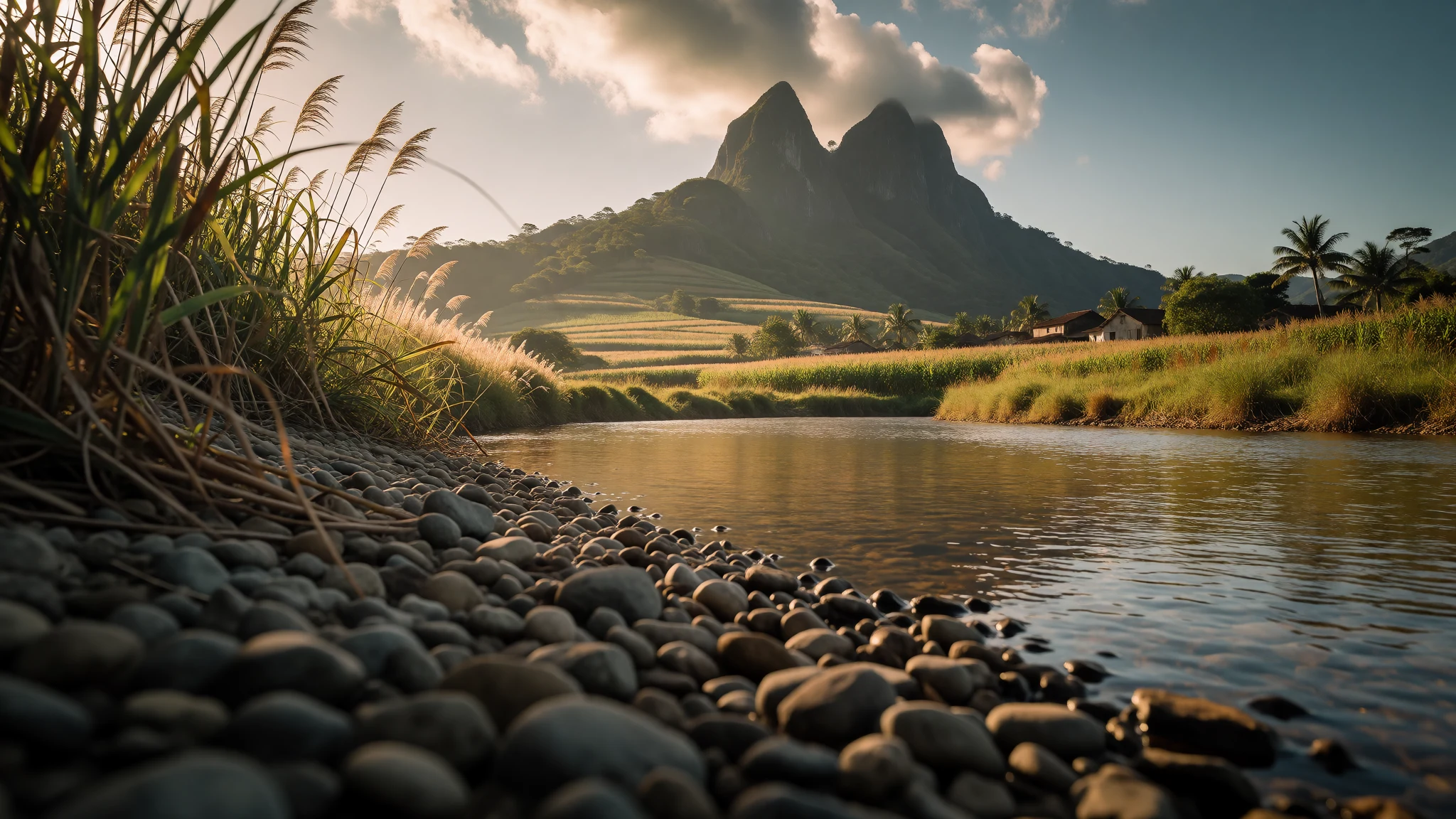
Mount Matebian rises over the villages of eastern Timor-Leste as a sacred mountain of the ancestors, walked rather than simply looked at.
The place
Mount Matebian stands in the east of Timor-Leste, a steep massif above Baucau and the villages that look towards Quelicai, Letemumo and the Seical River. From the lowland the peak reads as a long dark wall; closer in, the slopes break into ridges, gullies and rock, with hamlets and garden plots in the folds. Local speech gives the mountain two summits, Matebian Mane and Matebian Feto, the male and the female, treated as a pair.
The name says what the mountain is for. In Tetum, mate refers to the dead and bian to a spirit, and together they name this peak for the ancestors who are believed to gather there. Families in the east understand it as a place the dead belong to. Paths visitors use are the same paths people walk to gardens, ceremonies and graves. Stone, shade and a sudden quiet mark spots that are sacred. A visitor who cannot read those signs should stay with someone who can.
The country around the mountain changes quickly. Baucau sits on a coral terrace towards the coast, the Seical River in the foreground of the view back to the peak. South and east the land drops towards Viqueque and the villages of Afaloicai and Uato-Lari. At the foot the air is hot. Higher up the wind picks up, cloud sits on the ridge, and a clear morning can close in by midday.
There is no resort fringe. A night, when one is needed, means a guesthouse in Baucau or a room arranged in a village, and the last stretch is on foot. Water, shade and a local guide matter more than equipment. Mount Matebian suits people who come slowly, ask first, and treat the climb as a visit to someone else's sacred ground.
Its story
Mount Matebian is more than a high point on the eastern skyline. In the ritual life of the Makasae-speaking villages around Quelicai, Baguia and the Baucau hills, the mountain is where the dead are understood to go, and where the living still have duties to them. People speak of the male and female peaks as a couple who hold those souls. Graves, sacred rocks and the old houses of a clan are not scenery; they are the reason the paths exist.
Outsiders mostly met the mountain as a fortress. Its ridges are hard to climb and harder to surround, with water in the gullies and sightlines over the coast and the southern plain. During the Indonesian occupation the resistance lived in that country for long periods, and civilians followed them up when the lowlands became unsafe. Families who were there still tell of cold nights, thin food and the decision to come down. That history is recent enough that a walker can share a path with someone who remembers it, so a visit is set by listening rather than by treating the war as a finished chapter.
Since independence the mountain has stayed inside ordinary life. Catholics in these villages keep Mass and the ancestors in the same week, and a funeral can still end with obligations that point towards Matebian. National remembrance and clan remembrance are not the same thing, and on this mountain the clan comes first.
What has not changed is permission. The slopes are inhabited and owned in the Timorese sense, by origin houses and their custodians, not by a park gate. Mount Matebian's story is still being walked by the people who name the dead there.
What to see
- Matebian Mane and Matebian Feto — Summit ridge above Quelicai
Mount Matebian's two peaks are spoken of as a pair, male and female. The ridge between them is rock, low scrub and wind, and the coast shows when the cloud lifts. A local guide knows which stones and groves are not for resting. Walkers come for the relationship between the peaks and leave graves and offerings undisturbed.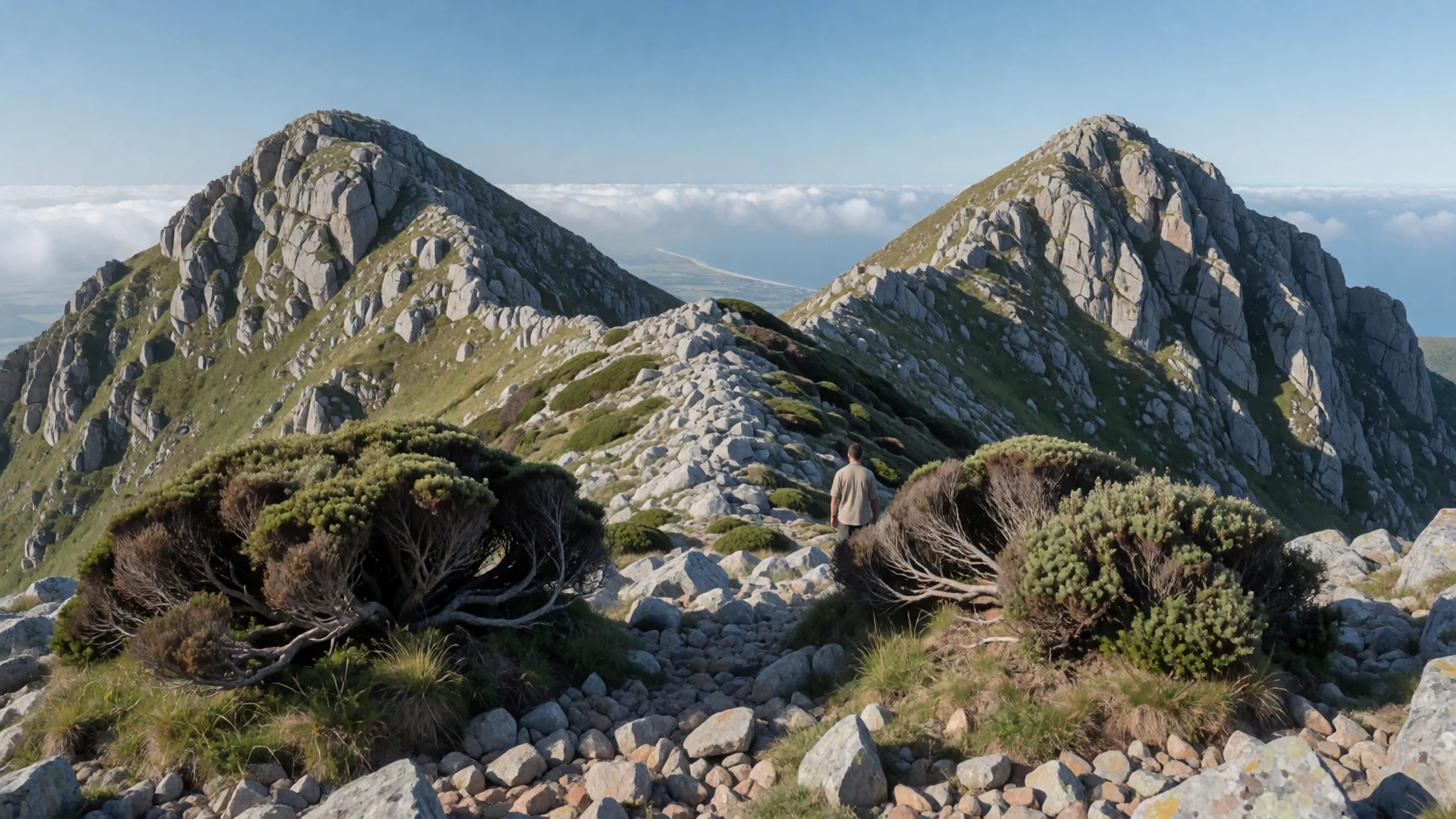
- Seical River view — Seical River, Baucau side
From the Seical River country Mount Matebian sits in one frame, a dark mass behind water, trees and gardens. It is the long view to take before a climb, while the twin peaks are still a silhouette. The flats are lived in, so the foreground is fields and paths. Late light picks out the ridges; midday haze flattens them.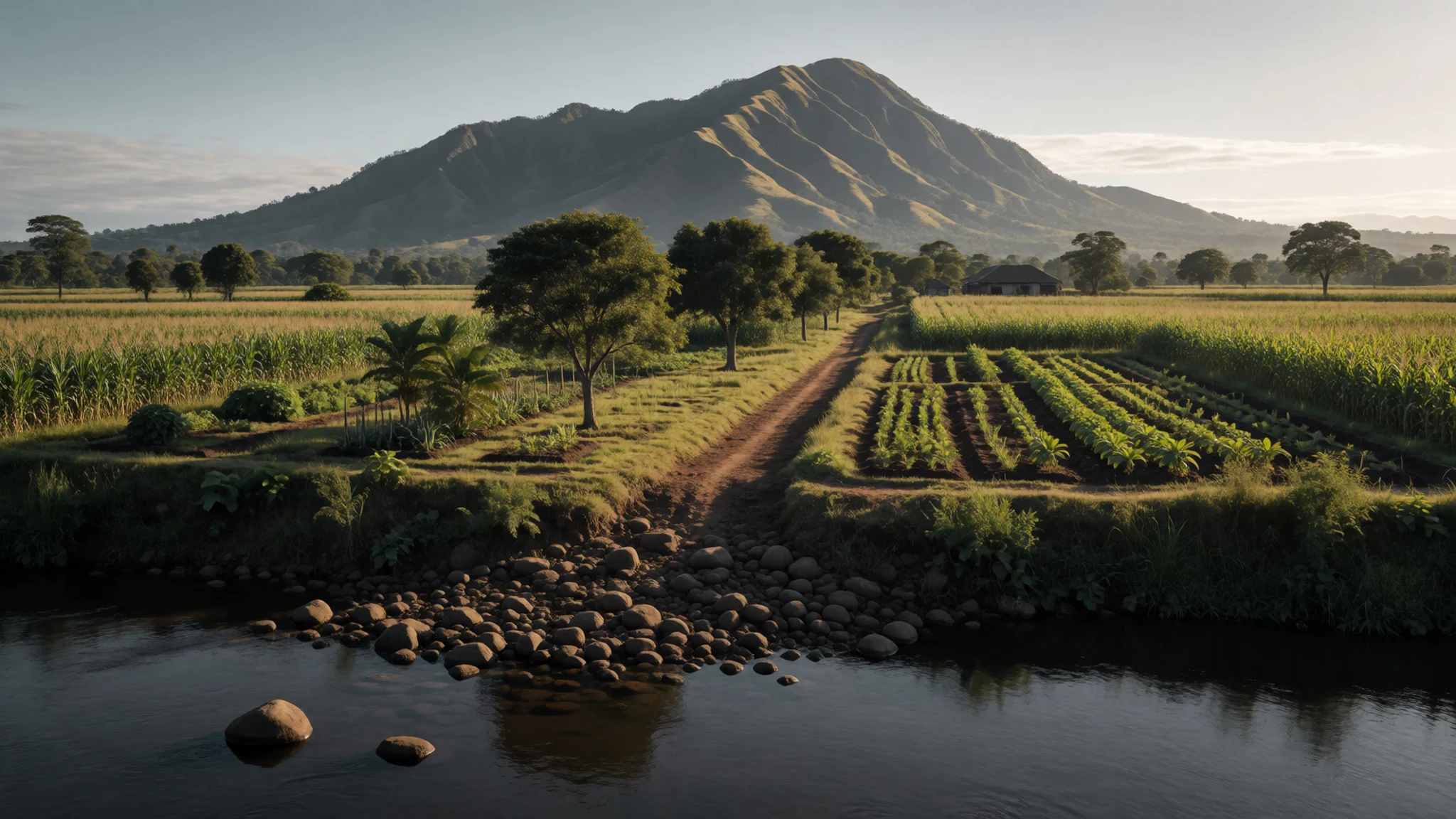
- Look from Ahabu'u — Ahabu'u
Ahabu'u gives a nearer, side-on reading of Mount Matebian than the river view, the bulk of the mountain rising over village roofs and trees. Gardens run close to the sacred slopes, and people work in the foreground. That nearness shows the peak is not an empty park. Visitors ask before pointing a camera at a house, a grave or a person.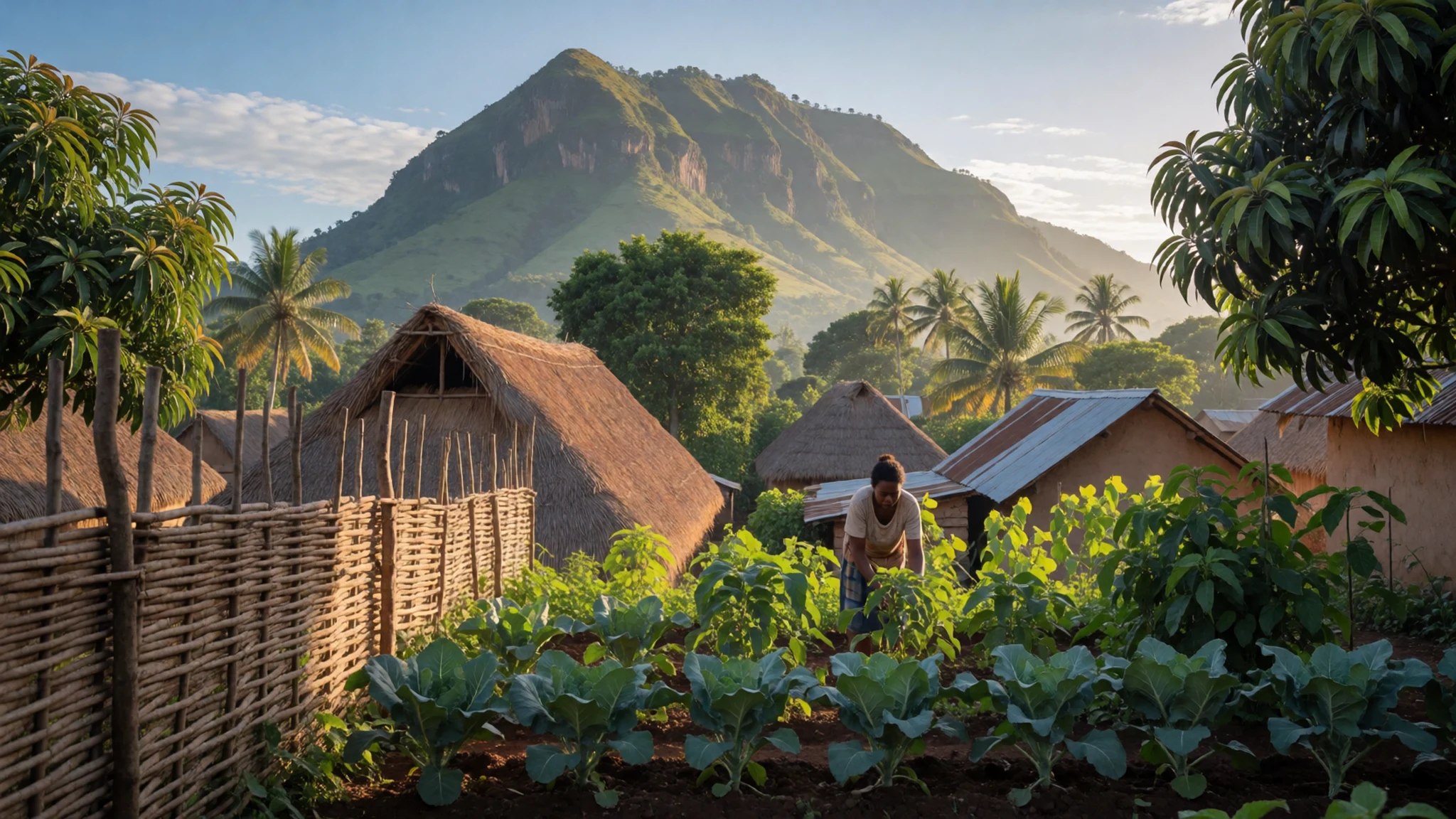
- Quelicai and Letemumo — Quelicai
Quelicai is the usual gateway on Mount Matebian's northern side, with Letemumo among the hamlets where the path steepens. The walking is village walking: shade trees, gardens of corn and cassava, and a track that eventually gives out to foot. Guides are arranged in these settlements rather than at a ticket window. The pace follows the heat and the people hosting the day.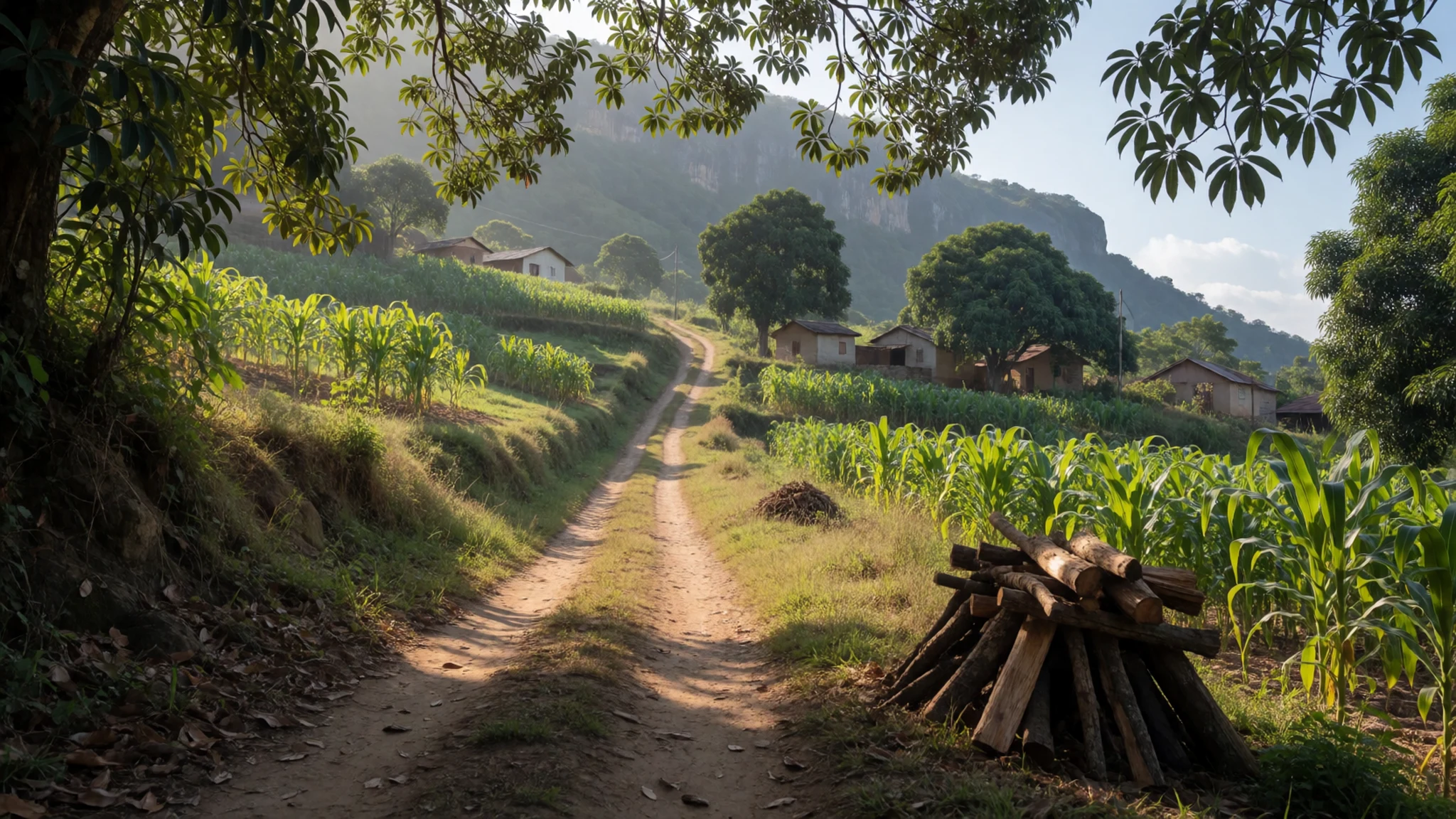
- Afaloicai and Uato-Lari — Viqueque side
From Afaloicai and Uato-Lari, on the Viqueque side, Mount Matebian reads as a southern wall across open country. Outsiders walk this approach less often; local movement between gardens and kin is what the paths are for. Roads here are practical links and can be rough after rain. A visit begins with a greeting in the village.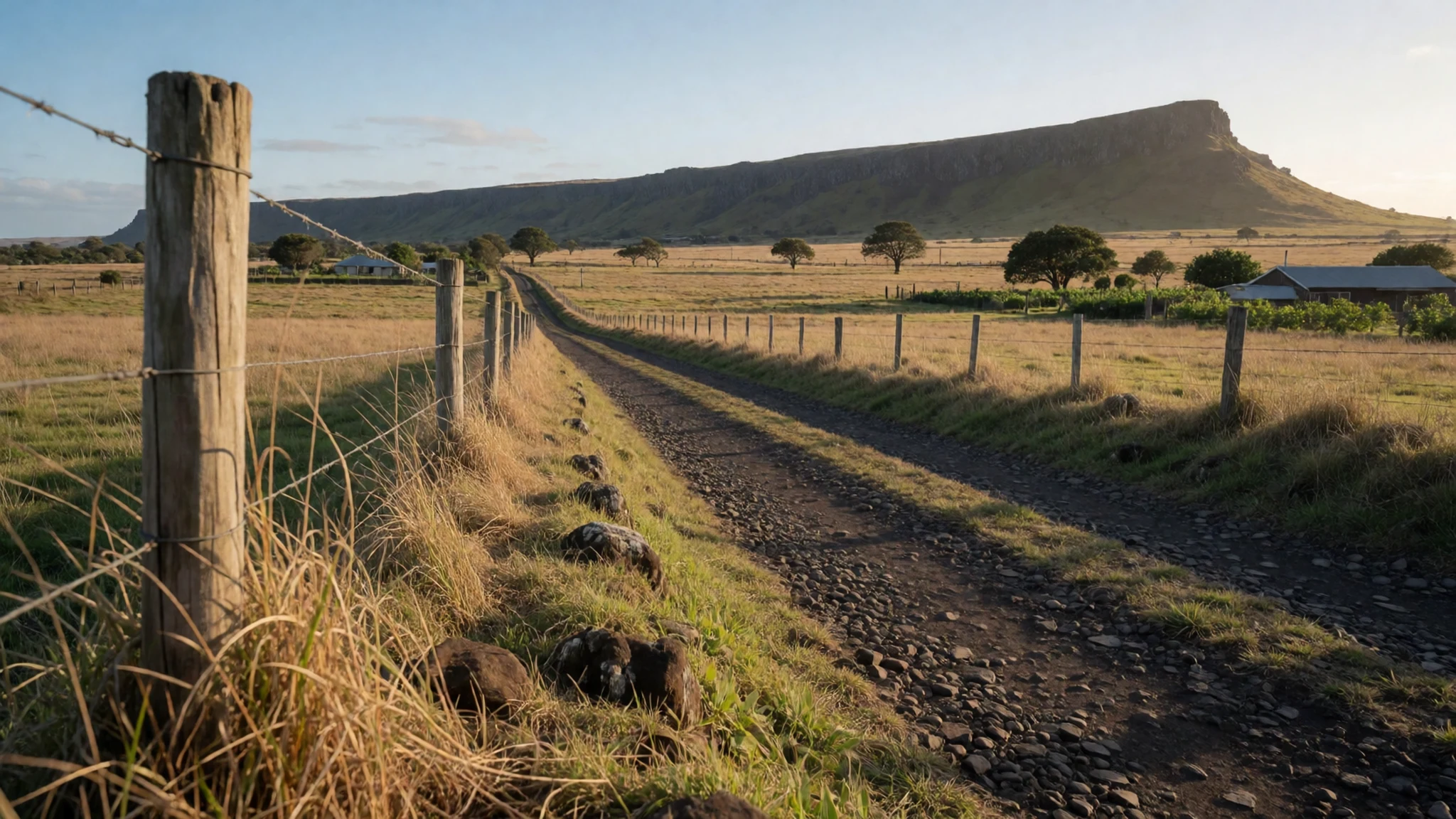
- Sacred stones and origin houses — Lower slopes
Around the foot of Mount Matebian the sacred places are often small: a fenced stone, a grove, an uma lulik with carved posts. They belong to one origin house, and the rules are local rather than printed. Some sit beside the trail. The right to enter or to take a photograph is given by the custodian. Passing with a nod is always acceptable.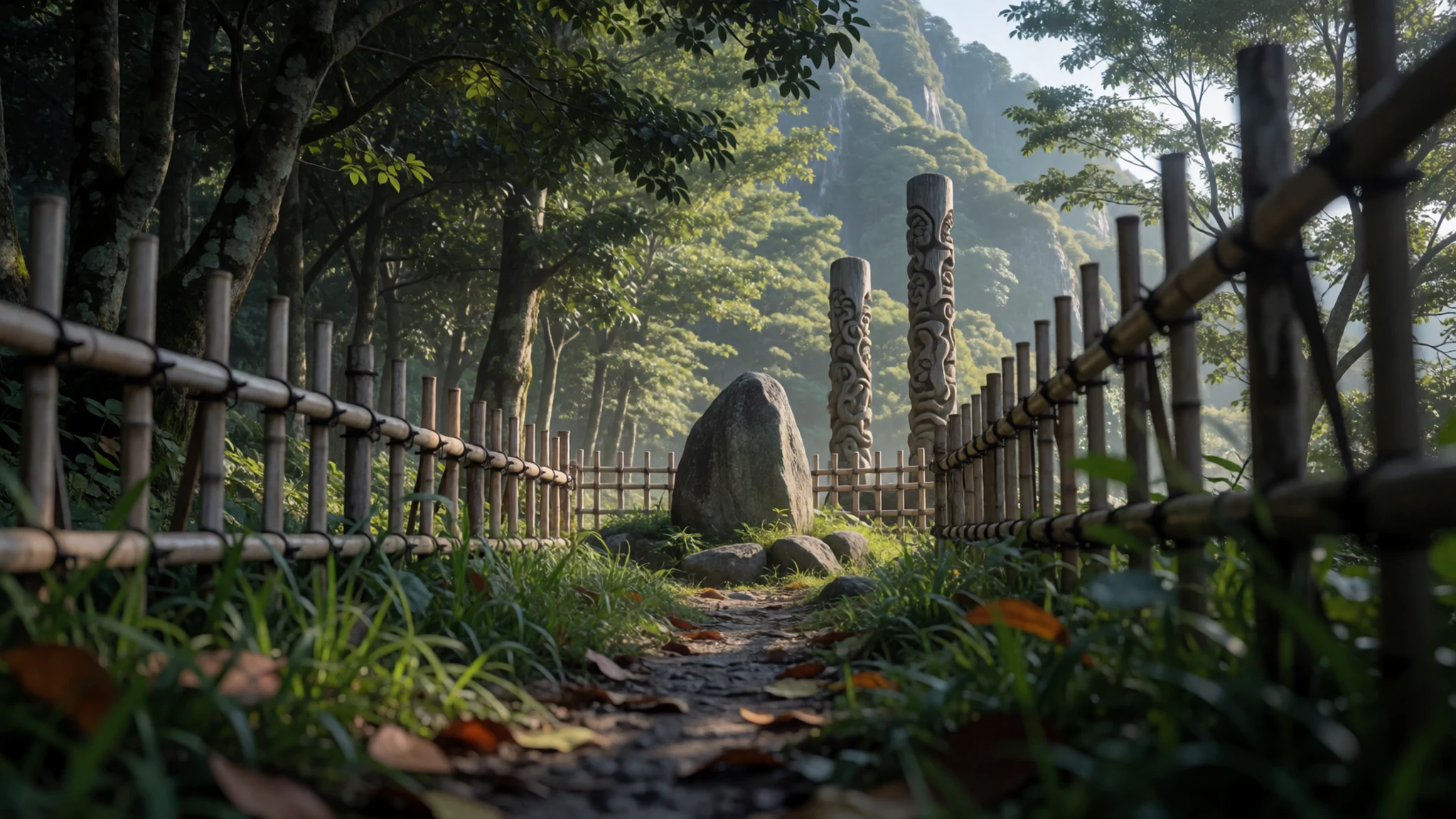
Culture
Mount Matebian sits inside a culture that is Catholic in public and ancestral at home. In the Makasae villages of the Baucau hills, an origin house, uma lulik, holds the heirlooms and the names of a lineage, and a lia nain, a custodian of words, speaks for that house when land, marriage or the dead are in question. The mountain is part of this system. People describe the dead as belonging to Matebian, and funerals can involve long obligations between houses, with tais cloth, betel nut and livestock moving as signs of respect. Ceremony and ordinary weeks overlap. A weekday market, a school run and a ritual quiet can occupy the same hamlet. Portuguese, Tetum, Makasae and Indonesian all turn up in conversation; a greeting in Tetum, bondia in the morning, is enough to begin. Outsiders are noticed and usually met with patience if they move slowly. What reads as a photo stop may be a grave or a promise. Some rocks, trees and house yards belong to one family, and access follows that house's own rule. Guessing is worse than asking. On Mount Matebian, ask the custodian before you enter an uma lulik, photograph a grave, or step off the path onto a fenced stone.
What to wear
Mount Matebian's villages dress for ceremony in tais, the handwoven cotton cloth of Timor-Leste. Threads are spun and dyed, then woven in bands of geometry, and weavers recognise a district's motifs where a visitor sees only colour. A tais feto is worn by women as a wrap skirt; a tais mane is worn by men over a shoulder or at the waist. Both come out for weddings, funerals and ritual exchanges, and a cloth given between families records the relationship. Natural dyes and tied-thread patterns still appear, alongside brighter shop-bought thread. On an ordinary day the mountain looks different. Men wear trousers, football shirts and sandals; women wear skirts or trousers and T-shirts; schoolchildren wear uniform. A tais may be added for a meeting or a Mass and taken off again for the garden. A visitor's useful wardrobe is modest and practical. Covered shoulders and trousers or longer shorts read as respectful in villages and churches, and they also protect skin on a scratchy trail. Shoes with grip matter on rock, mud and village concrete. A hat and a light layer for wind on the ridge cover the change from hot foothills to a cloudy summit. A tais, when wanted, comes from a weaver or a Baucau market stall, and is worn only after someone local has shown the way.
What to eat
- Batar daan — Village kitchens in Quelicai and stalls towards Baucau
Batar daan is maize boiled with mung beans, pumpkin and garden greens, often moringa, and it is the everyday pot around Mount Matebian. Village kitchens in Quelicai and simple stalls towards Baucau serve it thick, mildly salted, with chilli on the side.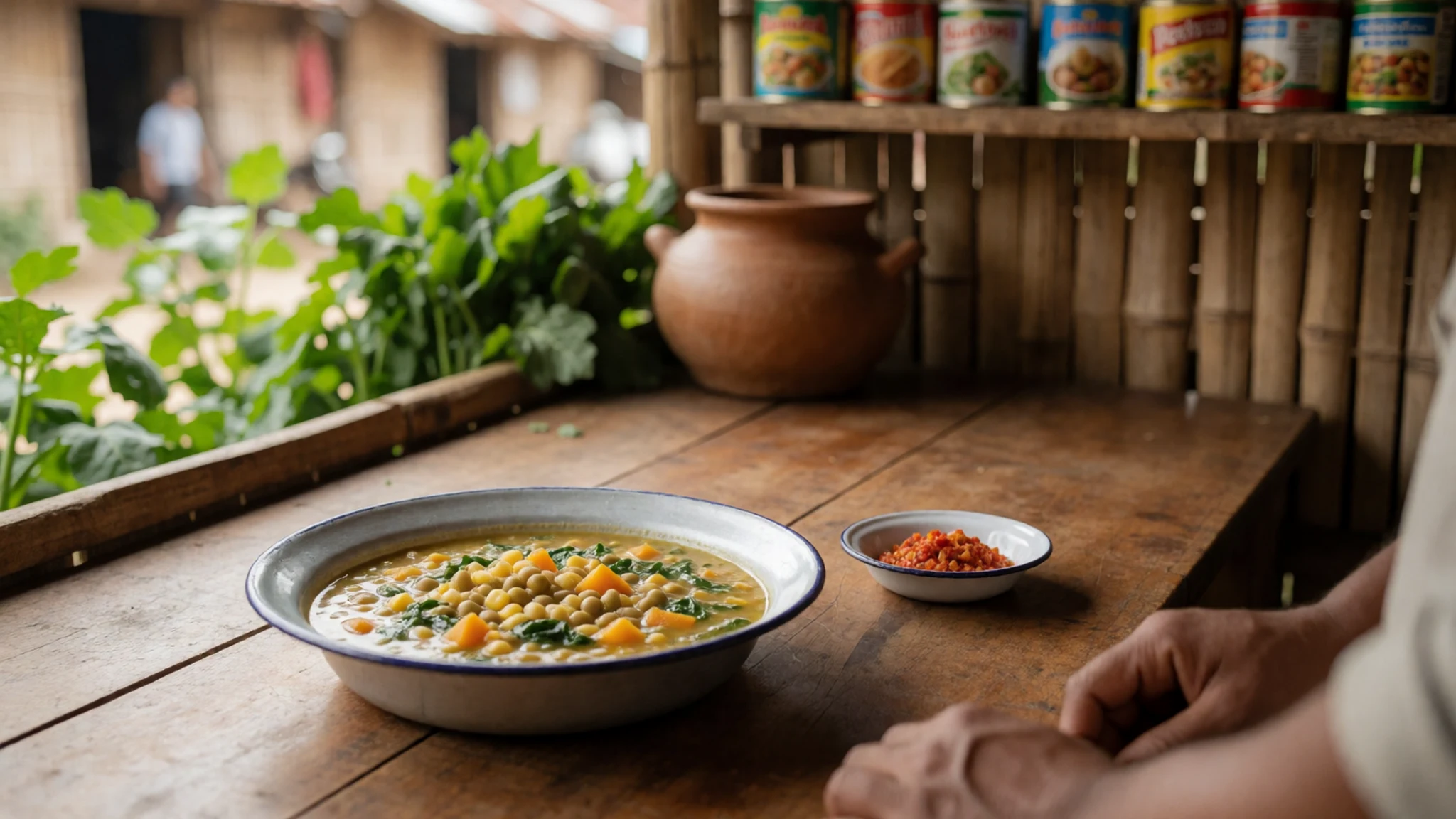
- Fish with saboko — Baucau market and coast-road eateries
Fish with saboko, a sour sauce of tamarind, chilli and tomato, is what walkers eat once they are back in Baucau. Grilled or fried fish arrives with rice. Ask for it at the town market or a plain coast-road eatery.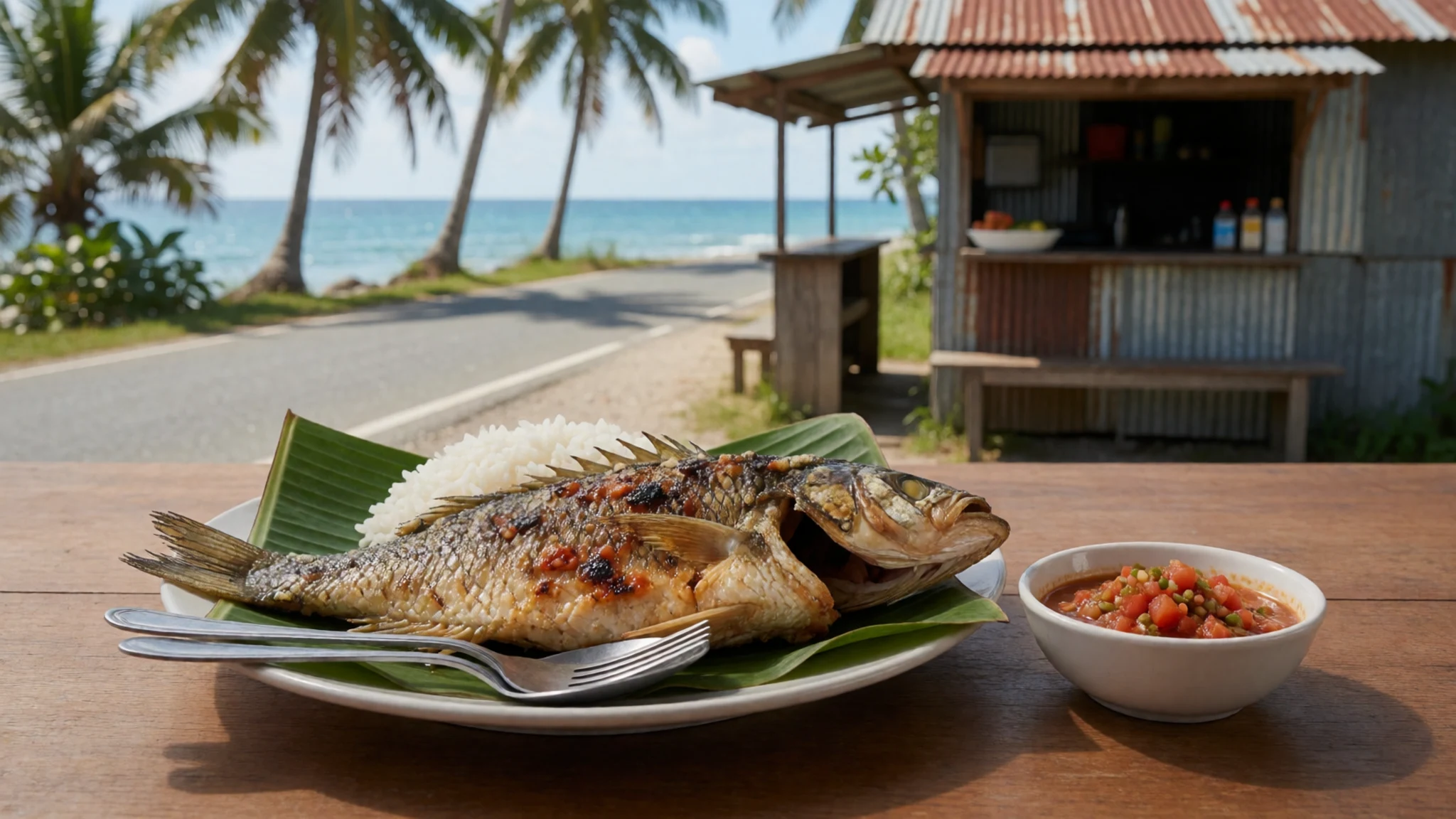
- Budu — Home kitchens and Baucau market
Budu is the relish that makes plain rice or maize worth sitting down for: dried or fresh fish pounded with chilli, tomato, garlic and lime. Around Mount Matebian it is made at home and also sold in small jars at Baucau market. It keeps without a fridge for a trip. - Na'an tunu — Village gatherings and roadside eateries between Baucau and Quelicai
Na'an tunu is meat grilled over wood, usually pork, chicken or goat, shared when a family hosts a guest. Around Mount Matebian it belongs to gatherings more than to a daily menu. Roadside eateries between Baucau and Quelicai sometimes serve it with rice. - Tua mutin with boiled cassava — Village homes on the slopes
Tua mutin, the pale sap of the palm, is tapped in the morning and drunk the same day. With it come boiled cassava or sweet potato from hillside gardens. Villages on the slopes of Mount Matebian offer both to a guest who has been properly introduced.
Plan it
Best time. June to September is the easier window on Mount Matebian, in the dry season, when paths are firmer and the ridge clears more often. December to March brings heavy rain, slippery rock and swollen creeks. October stays in the dry season with June to September; May is wetter, December is the hottest month, January the wettest, and July and August the most comfortable.
How long. 2–3
Getting there. Fly into Dili at Presidente Nicolau Lobato Airport, then follow the coast road east to Baucau. Local transport continues towards Quelicai, and the last leg on Mount Matebian is on foot with a village guide.
Budget. low
Tips
- Arrange a guide in Quelicai before the walking day, and do not head onto the sacred slopes alone.
- Carry extra water; the ridge is exposed and hamlets may not sell bottles.
- Set off early so most of the climb is done before heat and cloud build.
- Bring small notes; cards are little use beyond Baucau.
- Tell your guesthouse in Baucau which village you are walking to and when you expect to be back.
Etiquette
- Ask before you photograph people, graves or an uma lulik.
- Keep to the path, and do not sit on or shift ritual stones.
- Dress so shoulders are covered in villages and at church.
Nearby
Sources
- Wikidata (CC0)
- Wikipedia (CC BY-SA 4.0)
- Wikivoyage (CC BY-SA 4.0)