Mount Fanjing
Mount Fanjing, People's Republic of China
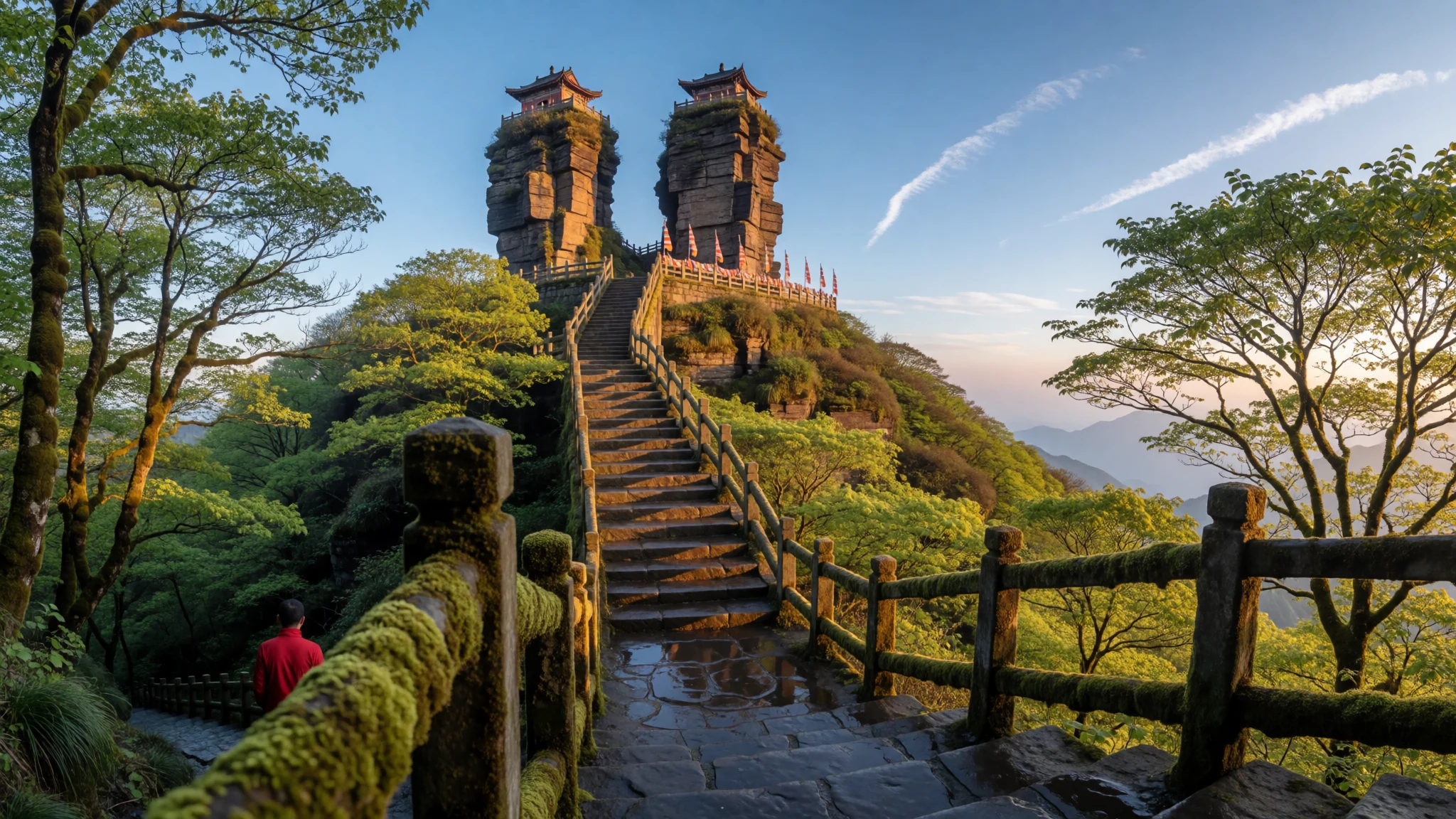
Mount Fanjing is a Guizhou mountain of cloud forest, Buddhist temples and rock towers that rise out of mist.
The place
Mount Fanjing (Fanjingshan, 梵净山) stands in Tongren, in the southeast of Guizhou province, and is the highest peak of the Wuling Mountains at 2,570 m. The land around it begins far lower, at about 480 m, so a climb passes through several bands of vegetation: broadleaf woodland low down, moss-draped forest in the middle, and wind-bent trees and bare rock near the top. Cloud sits on the ridge for much of the year, which is why photographs so often show the summit towers floating above white. The protected area covers 567 square kilometres. It became a national nature reserve in 1978, joined the UNESCO Biosphere Reserve network in 1986 and was inscribed as a World Heritage Site in 2018. Because the range is cut off from neighbouring uplands, some plants and animals here live almost nowhere else, among them the Guizhou golden monkey and the Fanjingshan fir. Seeing the monkey is unlikely; it is shy and scarce, and most people leave with memories of forest, rock and weather instead. The mountain is also a place of worship, so the paths carry pilgrims as well as hikers. Tongren is the practical base for the region, and the reserve works best as a full day on foot or, better, a night or two nearby. Holiday weeks and summer weekends bring queues on the stairways.
Its story
Mount Fanjing's story runs on two tracks: faith and isolation. In Chinese Buddhism the mountain is regarded as the bodhimaṇḍa, the seat of teaching, of Maitreya, the Buddha of the future. Monks built temples on and around the heights over the centuries, and the summit's rock pinnacles, topped with small shrines, became the focus of pilgrimage. The terrain made that devotion hard work: steep, damp and often wrapped in cloud. The same difficulty protected the forest. While lowland Guizhou was cleared for farming, Fanjing's upper slopes stayed largely uncut, and species that had retreated uphill found a refuge. In 1978 a national nature reserve was set up to guard that inheritance, and in 1986 UNESCO recognised it as a biosphere reserve, a label for places where conservation and local life are meant to work together. Researchers kept describing creatures and plants found only in this small region, which strengthened the case for the World Heritage listing in 2018. Today the two tracks meet on the staircases: pilgrims bring incense and offerings, tourists bring cameras, and rangers try to keep numbers and litter under control. The balance between a place of worship, a wildlife refuge and a popular destination is the live question on the mountain, and one good reason to avoid the busiest holiday weeks.
What to see
- Red Clouds Golden Summit — Summit ridge, Fanjingshan National Nature Reserve
The twin summit towers are the image most people associate with Mount Fanjing: narrow pillars of rock, each crowned with a small temple, linked by a short bridge of steps. Mist often hides them, then clears in minutes. The final climb is steep, narrow and slow when crowded.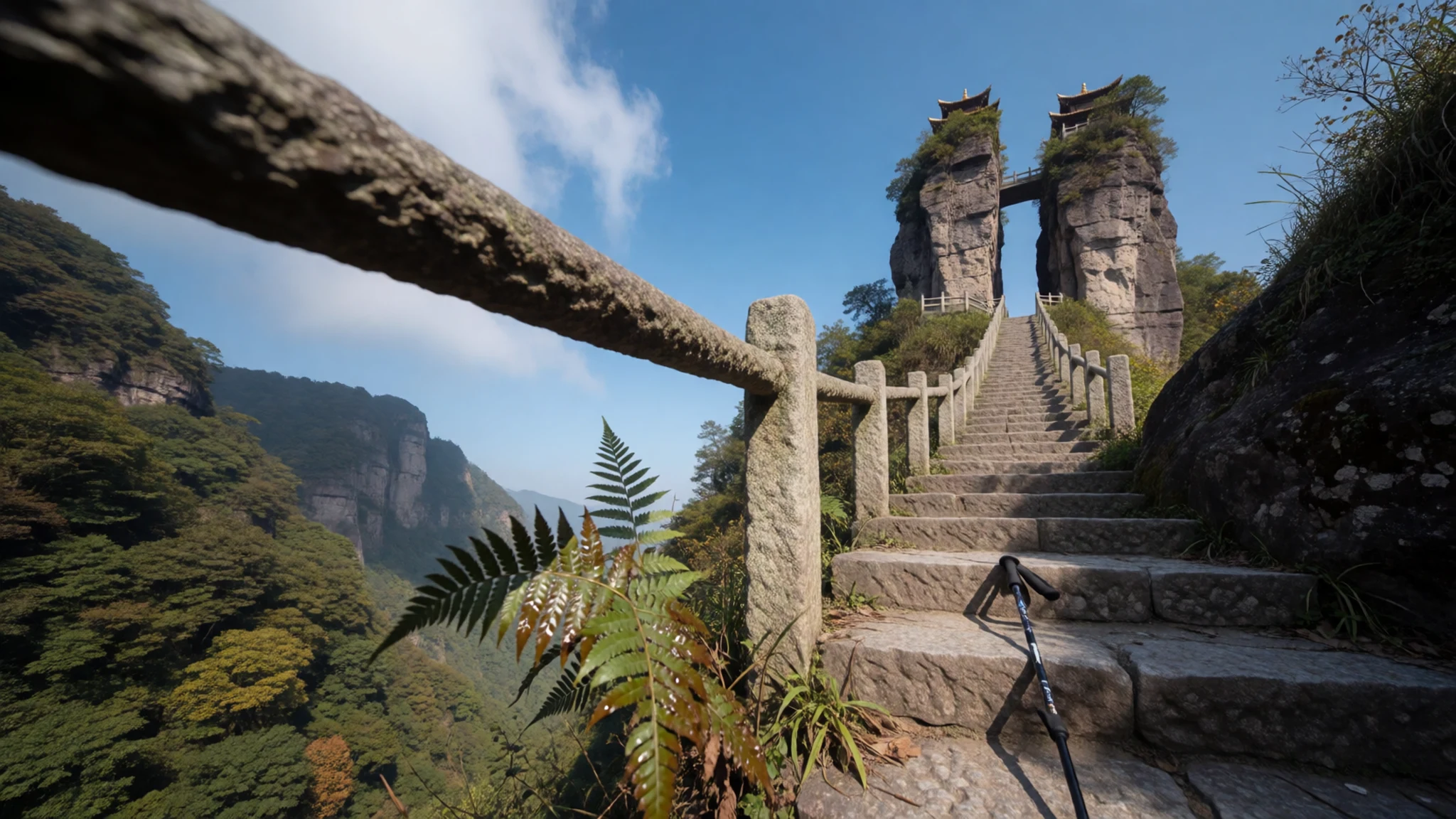
- Mushroom Rock — Upper trail, Fanjingshan
A stack of stone balanced on a slender neck, shaped like a giant toadstool, stands beside the main path up the mountain. It is a natural stopping point for rest and photographs. Come early or late in the day, because tour groups gather here and the viewing space is small.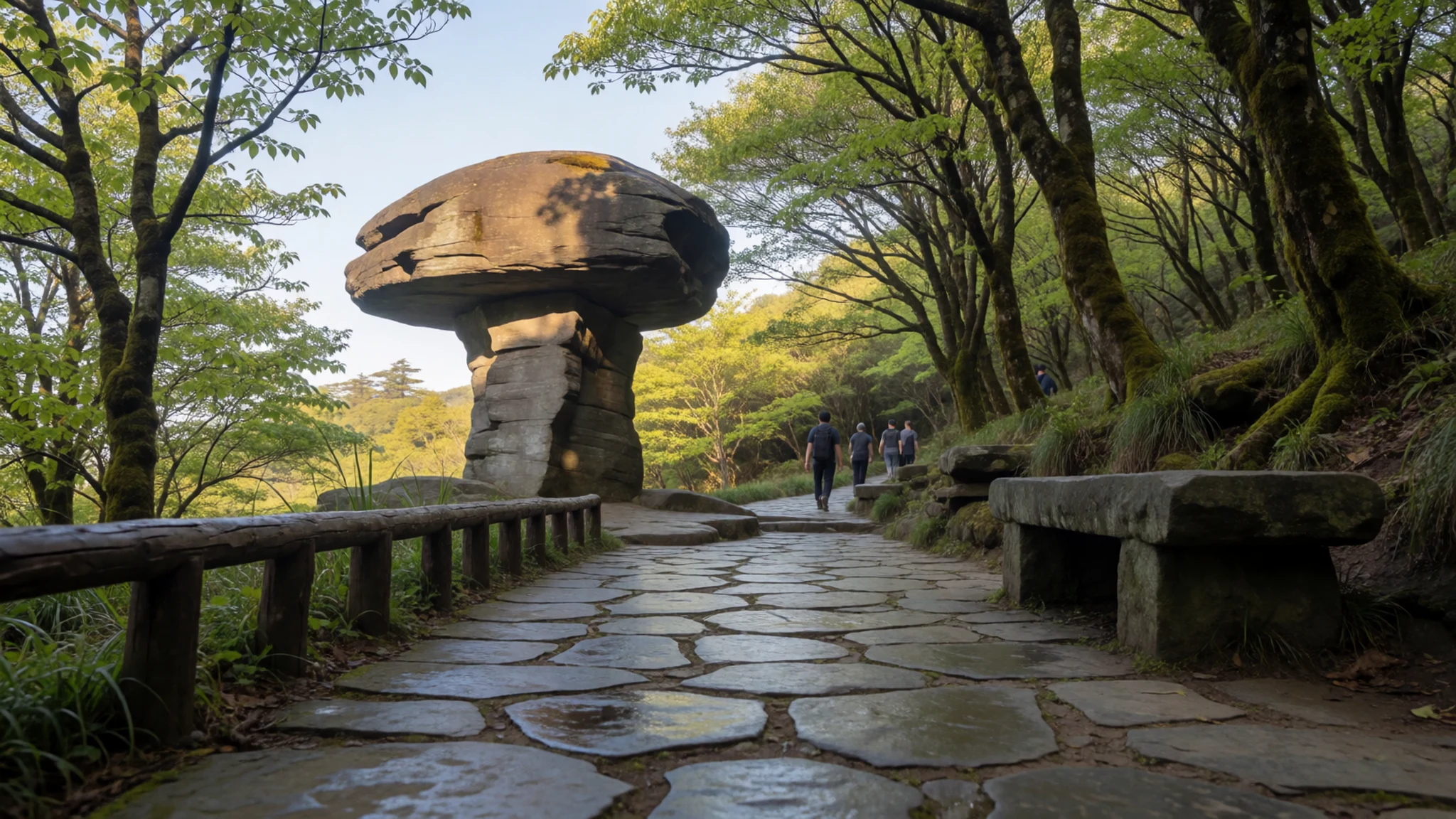
- The cloud forest stairway — Lower and middle slopes, Fanjingshan
Much of the climb is a stone staircase through damp, mossy woodland, with streams, ferns and sudden views down into valleys. The pace is gentle if you stop often. Take the time to look at the trees themselves, since this forest is the reason the mountain is protected.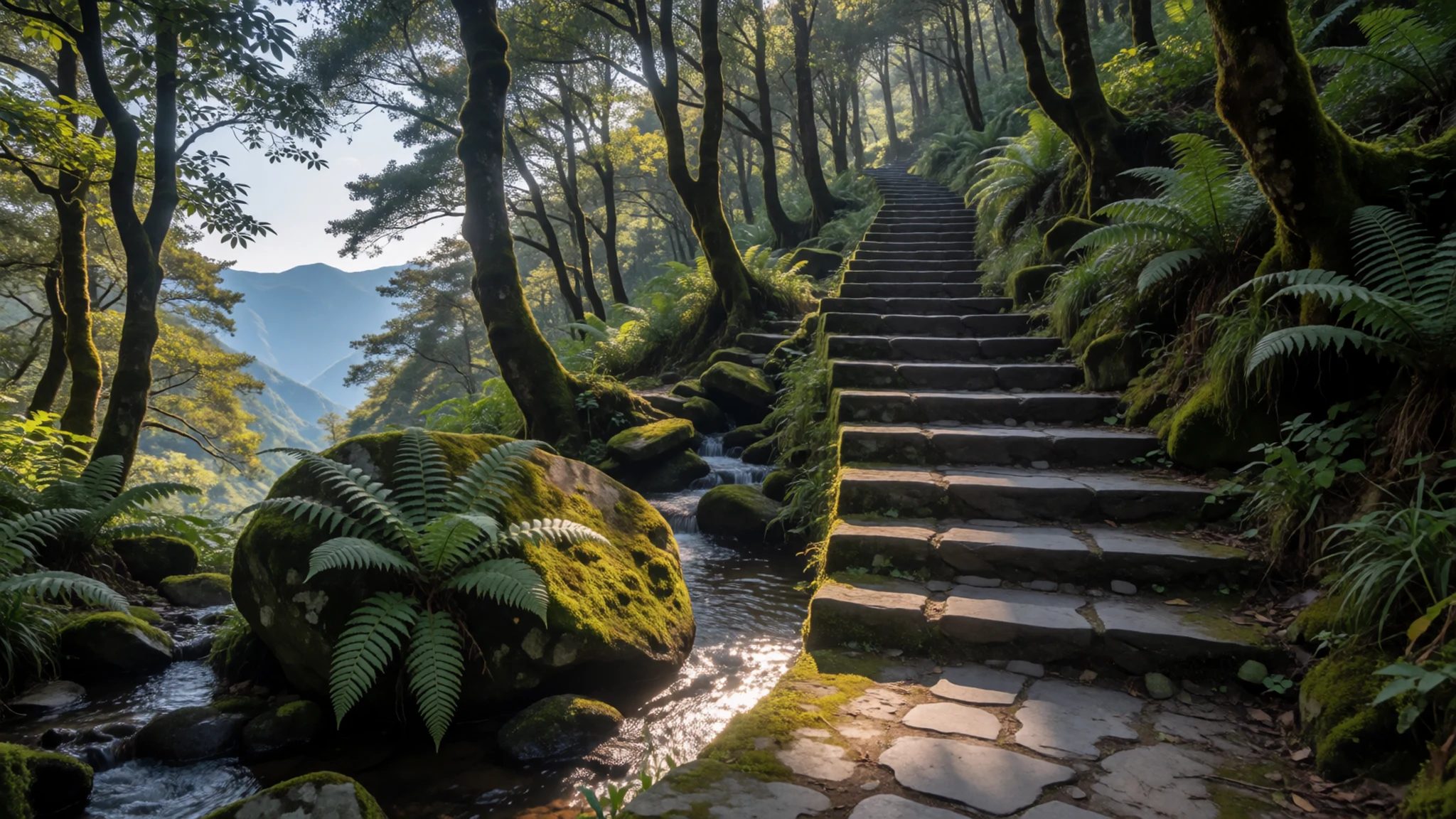
- Temples and shrines on the heights — Upper slopes and summit area
Small Buddhist halls and shrines are tucked along the upper paths and around the summit, tied to the mountain's role as the seat of Maitreya. Some are simple and quiet, others busy with incense. They are active places of worship, so keep voices low and watch where you step.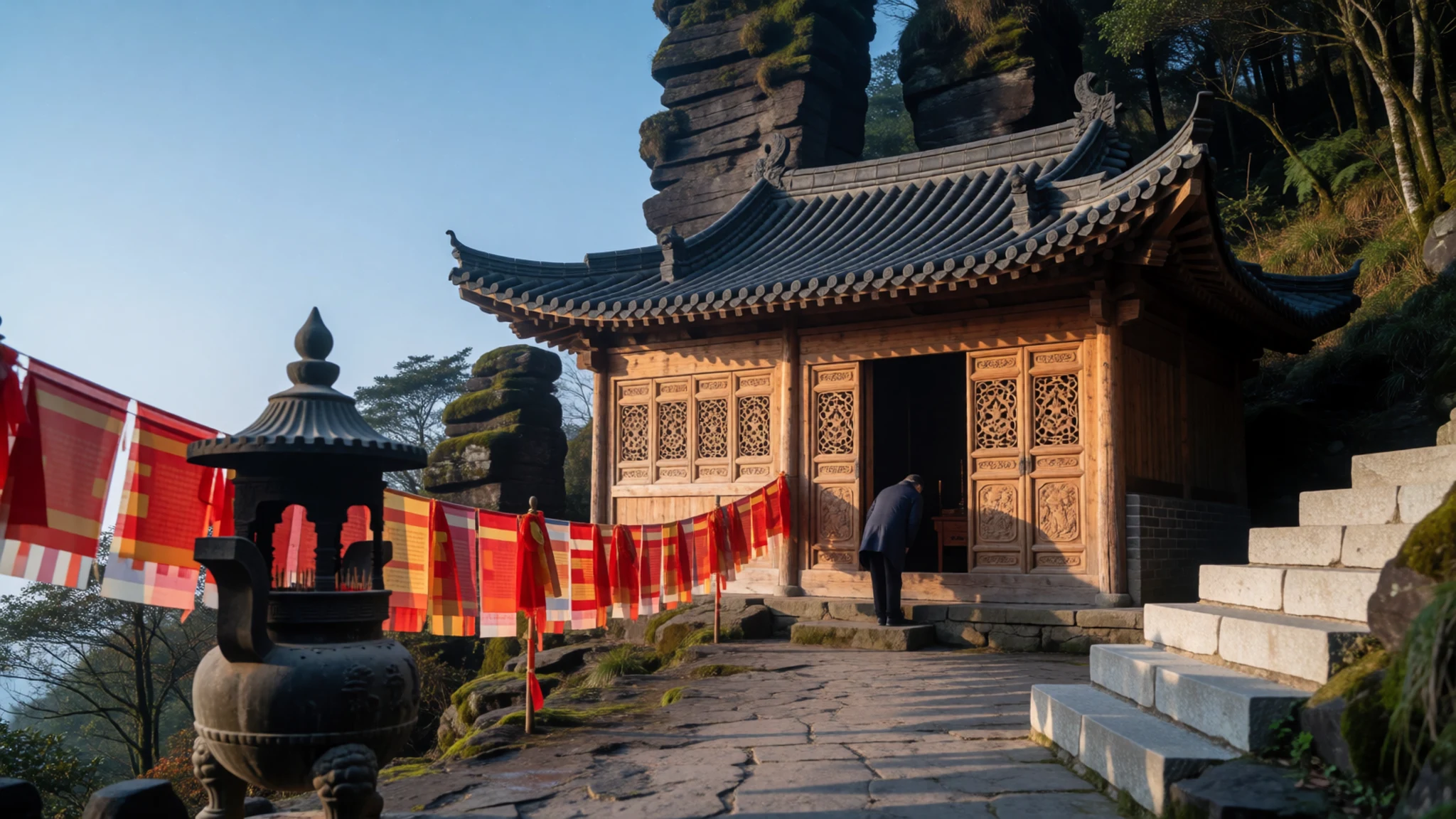
- Tongren and the reserve gates — Tongren, Guizhou
Tongren is the regional city from which most visits start, and it is worth a short wander for its markets and eateries before or after the mountain. The reserve itself has entrance areas with visitor facilities. Check the official reserve channels for current entry arrangements before travelling.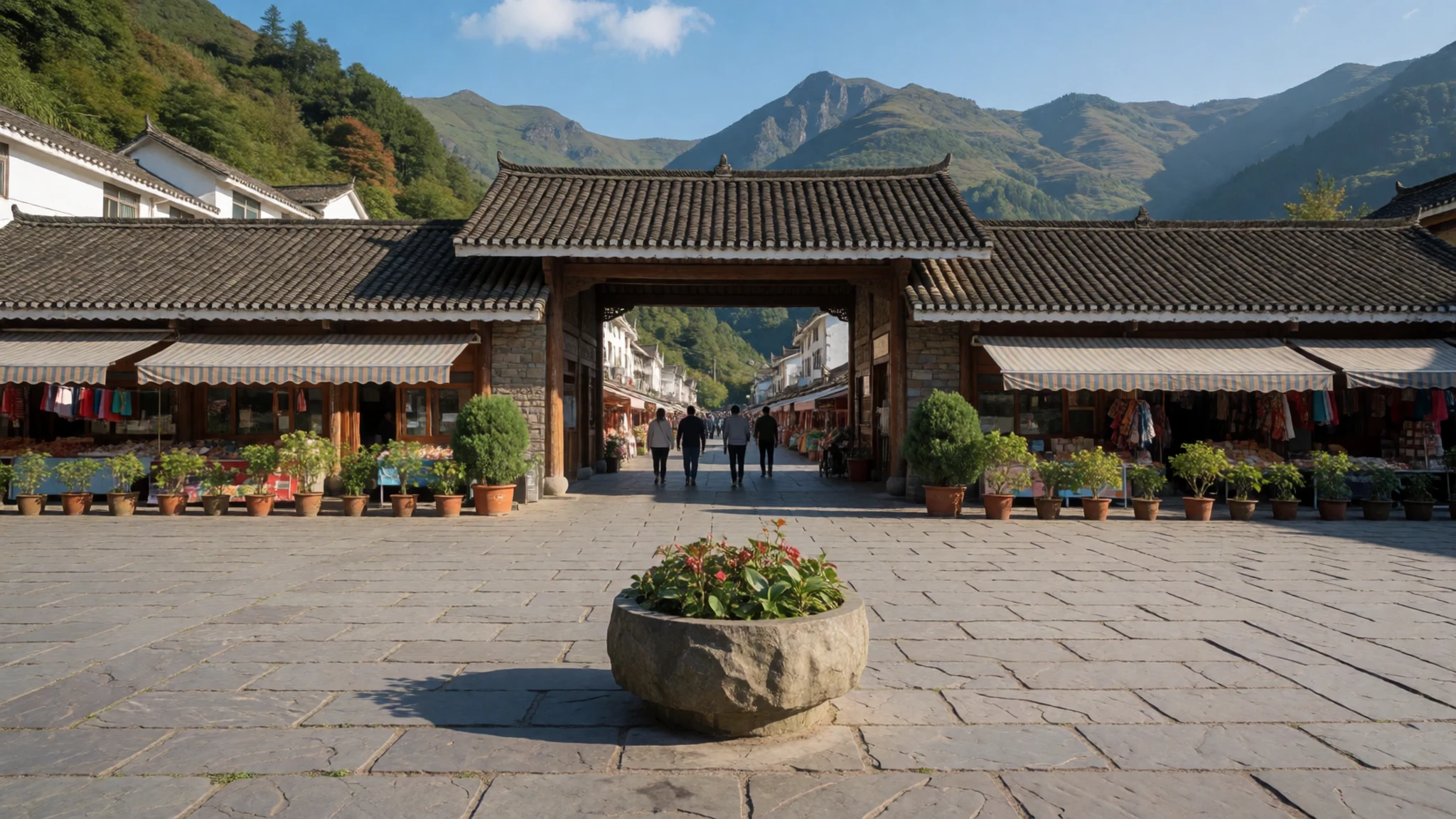
Culture
Mount Fanjing is first of all a Buddhist mountain. For believers it is the bodhimaṇḍa of Maitreya, so the climb is more than exercise: people come to burn incense, make offerings and ask for blessings, and some walk the stairs in a spirit of devotion. That shapes the atmosphere at the temples near the summit, which is part tourist trail and part working shrine. Monks and local worshippers share the space with school groups and holiday crowds, and the mood shifts between lively and hushed within a few steps. The wider region of Tongren is also home to several minority communities, including Miao and Tujia people, whose songs, festivals and crafts are part of Guizhou's character, so a visit to local markets or a festival, if one happens to coincide, adds context to the mountain. Conservation is a cultural matter here too. The reserve exists because forests and rare species were judged worth protecting, and rangers expect visitors to stay on marked paths, carry rubbish down and leave wildlife alone. Weather can delay or close routes, and patience is simply part of the experience. At the summit shrines, keep to the marked path, speak quietly, and never photograph worshippers or monks at prayer without asking first.
What to wear
Around Mount Fanjing, traditional dress belongs mainly to the minority communities of Guizhou, among them Miao and Tujia people. Miao festival clothing is known for dense embroidery on dark, often indigo-dyed cotton, with pleated skirts and silver headdresses, necklaces and collars worn at celebrations rather than every day. Tujia dress traditionally used woven cotton and brocade, with bold patterns on borders and bags. These outfits appear at festivals, weddings and performances, and in craft shops where embroidery is sold. Day to day, people in Tongren dress as in most Chinese towns: jeans, shirts, light jackets and sportswear, with waterproofs in wet weather. On the mountain, the crowd is a mix of serious hikers in technical gear and casual day-trippers in trainers and rain ponchos. A visitor should dress for a cool, damp, changeable mountain, whatever the season in the valley. Wear layers, bring a light waterproof, and choose shoes with real grip, since the stone steps are slippery when wet. Gloves and a warm hat help near the summit in cooler months. Shoulders and knees do not need strict covering, but modest, tidy clothes are polite at the temples. Leave sandals and smooth soles at the hotel or guesthouse.
What to eat
- Sour soup hotpot — Family eateries in Tongren
Guizhou is known for tangy, fermented tomato or chilli broths, often cooked with fish or meat at the table and finished with fresh herbs. It is sharp, spicy and warming after a damp day in the hills. Look for it at family-run eateries in Tongren.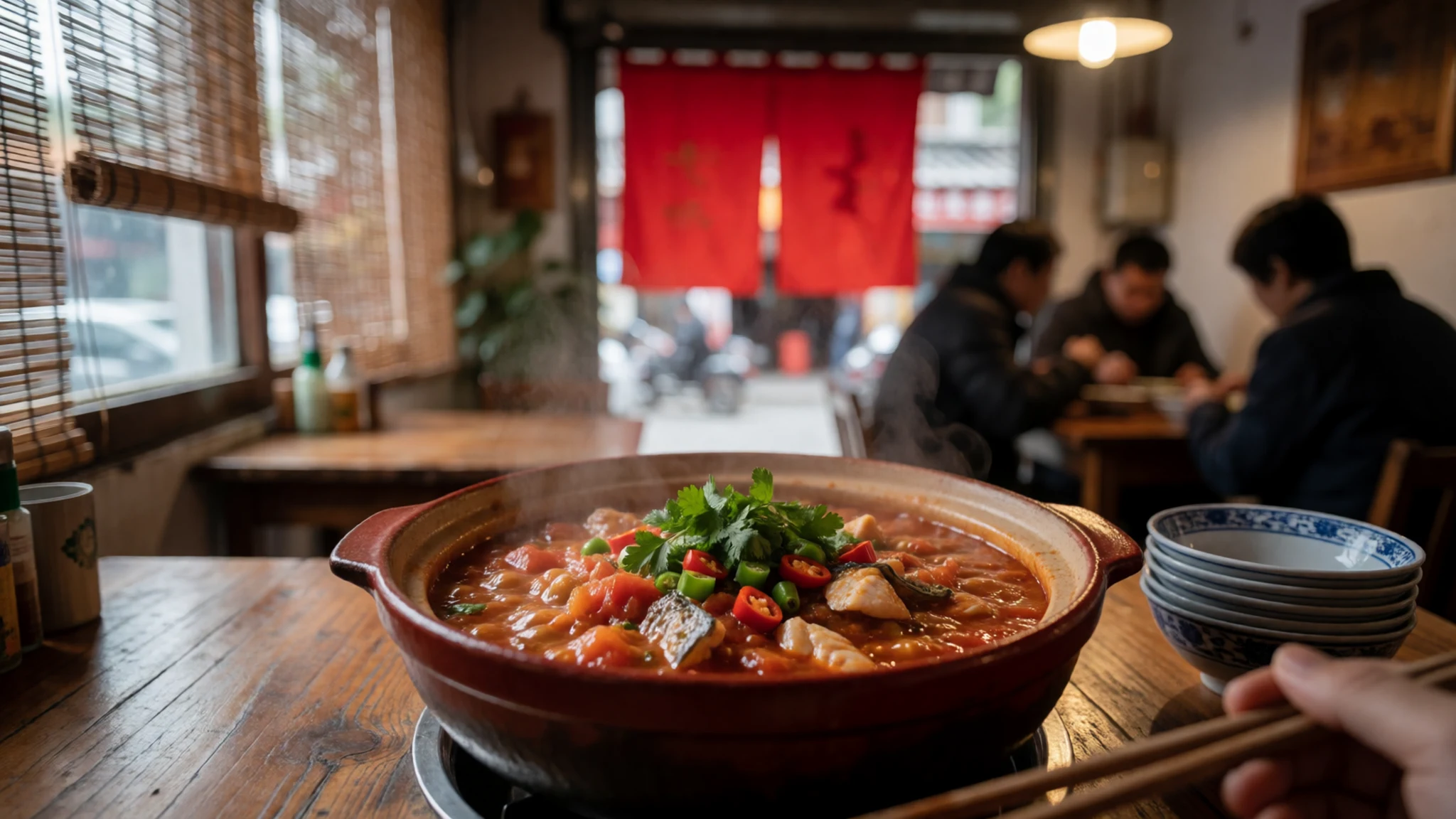
- Tongren rice noodles — Breakfast noodle shops in Tongren
A bowl of rice noodles with chilli oil, pickles, minced or sliced pork and herbs is the standard quick breakfast across Guizhou. Toppings and heat vary from shop to shop. It is cheap, filling fuel before an early start on the mountain.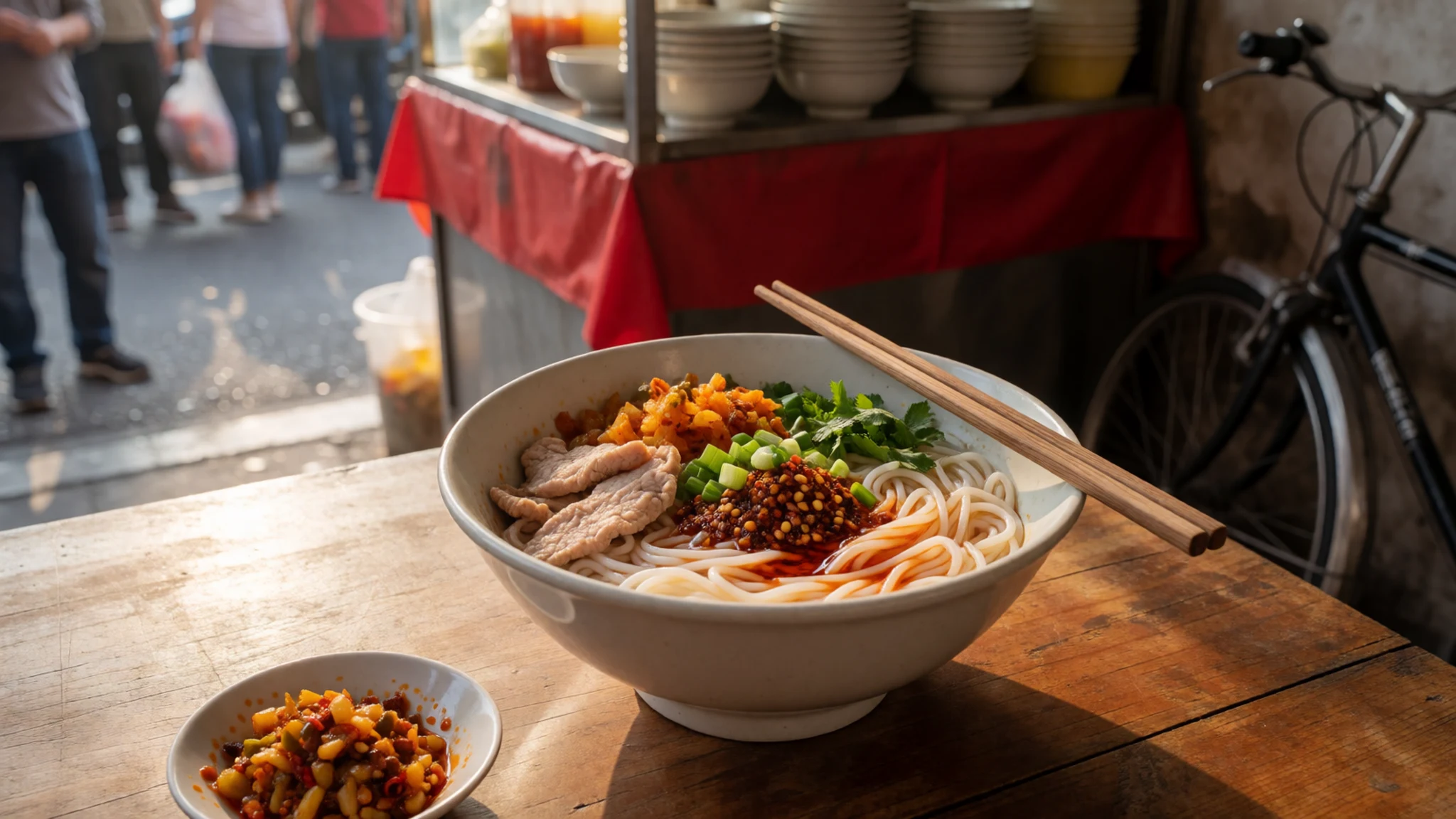
- Cured and smoked pork — Home-style restaurants around Tongren
Smoked and air-dried pork is a staple in the Guizhou uplands, often stir-fried with garlic shoots, dried chilli or peppers. The flavour is deep and salty. It suits rice well, and many local restaurants cook it in a hot wok to order. - Fanjing mountain green tea — Tea shops and markets in Tongren
Tea is grown on slopes in the area, and local green tea is sold in shops and sampled in tea houses. Expect a light, fresh, slightly grassy cup. Buying a small packet is an easy souvenir, and tea shops often let you taste before choosing. - Glutinous rice cakes (ciba) — Street stalls and local markets
Pounded sticky rice is shaped into chewy cakes, then toasted and served with brown sugar, sesame or a chilli dip. They are a common snack at markets and festivals in Guizhou. Eat them hot, when the outside is crisp and the middle soft.
Plan it
Best time. April–May and September–October are usually the most comfortable months for walking: mild, with views opening between clouds. Summer can be warm in the valleys but cooler and wetter on the mountain, with heavy rain possible, and winter brings cold, cloud and the chance of ice on the steps. Mist and showers can arrive in any season, so pack for them.
How long. 2–3
Getting there. Tongren is the usual gateway, with its own airport and a railway station, and connects to the main cities of Guizhou and beyond. Confirm current routes and timetables before booking. The last leg is by road from Tongren to a reserve entrance, by bus, taxi or organised transfer; check the official reserve channels for current entrance and transport arrangements.
Budget. mid
Tips
- Book accommodation early for national holidays and summer weekends, when the mountain gets crowded
- Start the climb early to reach the summit towers before the tour groups and before cloud builds
- Carry water, snacks and a waterproof, and keep some cash as well as a card for smaller shops and stalls
- Check the weather and the official site on the day, as routes can close in poor conditions
- Take your time on the stairs; the climb is long, so pace yourself and rest where the path allows
Etiquette
- Stay on marked paths and carry all rubbish back down
- Speak quietly and step carefully around worshippers at the shrines
- Ask before photographing monks or people praying
Nearby
Sources
- Wikidata Q24434043 (CC0)
- Wikipedia: Mount Fanjing (rev 1385219551) (CC BY-SA 4.0)
- Wikivoyage: Mount Fanjing (CC BY-SA 4.0)
- Photo: Fanjingshan-new.jpg, sizzhot0, via Wikimedia Commons (CC0 1.0)

Wildlife
- Guizhou golden monkey (animal)
The Guizhou golden monkey is a snub-nosed primate that lives almost nowhere else in the world, and it is among the rarest monkeys in China. Mount Fanjing's uplands are cut off from neighbouring highlands, which is why it is found here, and the loss of its forest home threatens it. Ask a local guide where and when you might glimpse one. Keep a respectful distance, stay quiet so it is not disturbed, and never feed it, however curious it seems.