Beidaihe
Beidaihe, People's Republic of China
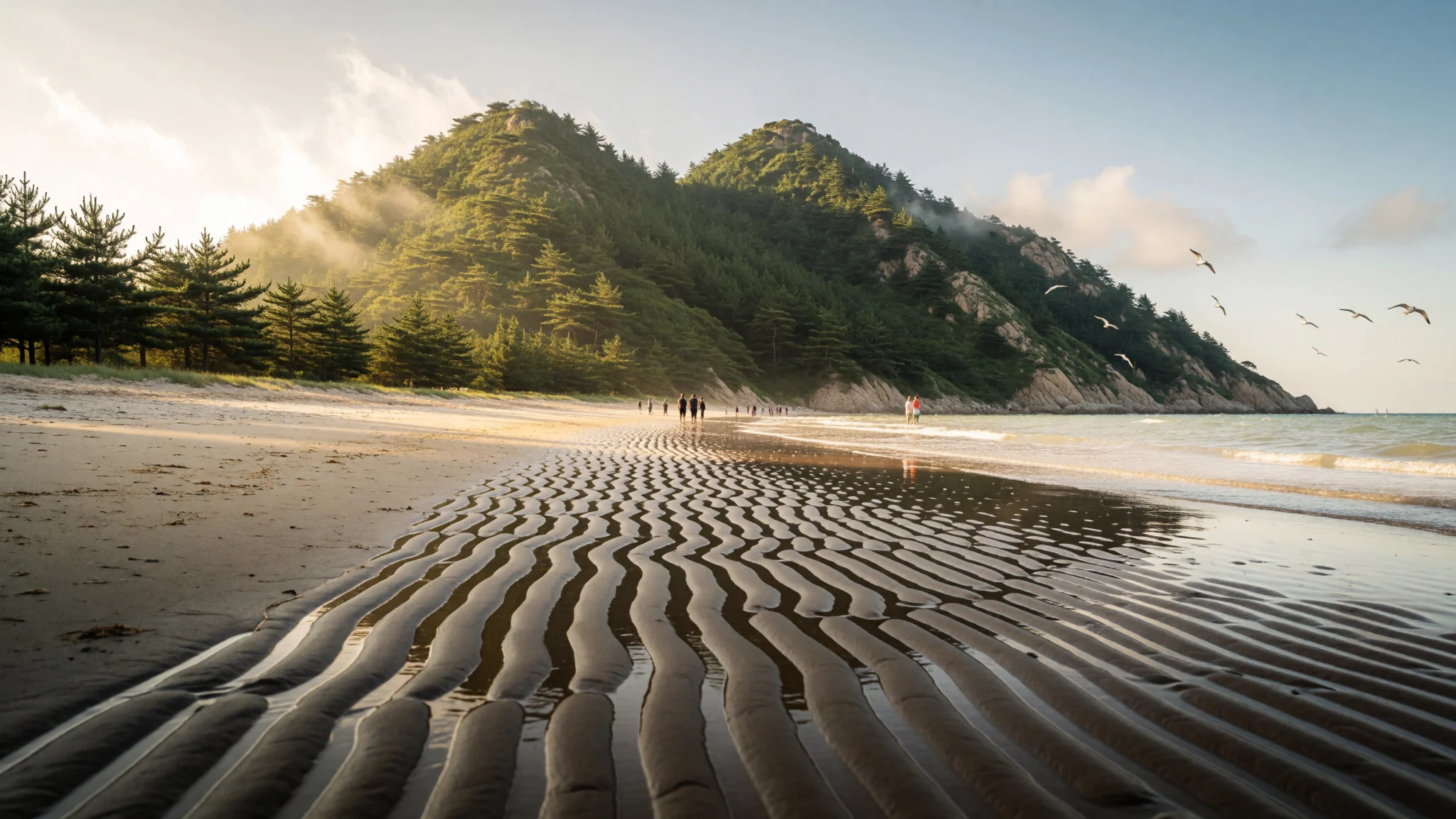
Beidaihe is the old summer beach of northern China: pine-shaded villas, a shallow yellow shore, and the Great Wall running into the sea nearby.
The place
Beidaihe is a seaside district of Qinhuangdao, on the Bohai Sea coast of Hebei province, and it serves as the beach getaway for the big cities of northern China. About 130,104 people live here, a number that swells in summer when families arrive from Beijing and Tianjin. The land is low, only 13 m above sea level, with a green, wooded hill called Lianfeng Mountain rising just behind the shore. The beach is broad, pale yellow and shallow, which suits paddling children and slow evening walks more than serious swimming. Behind it sit pine-shaded lanes, old villas, small parks, pavilions and winding paths, giving the resort a leafy, slightly faded feel quite unlike a modern concrete strip. Beidaihe is also known among birdwatchers, since migrating birds pass along this coast in spring and autumn. The district is the quiet, residential part of a wider stretch of coast. Shanhaiguan, where the Great Wall meets the sea, lies a short way to the north-east, while Nandaihe, with its own beaches and a young arts scene, lies to the south-west. Haigang, the port and railway hub of Qinhuangdao, is the usual point of arrival. Summer means crowded sands and sticky heat, and in July the district also hosts senior Chinese officials on retreat, so security can feel noticeable. The shoulder months are calmer, and winter is cold, windy and nearly empty, with many seaside cafés shut.
Its story
Beidaihe's career as a resort began in the late Qing dynasty. Before that it was a quiet corner of farmland and fishing villages, shuffled between prefectures and counties under the Ming and Qing administrations. Then foreigners living in Beijing began asking for permission to build holiday villas on this coast, escaping the capital's summer heat by train. In 1898 the Qing government formally declared Beidaihe a summer resort open to people of all nations. By 1949 the villas numbered 719, a scatter of European-style houses among the pines, and some still stand today. After the Communist Party took power in 1949, the new leadership developed its own taste for the seaside. Sanatoriums, rest homes and guest compounds spread through the pine woods, and the town's closeness to Beijing made it a convenient place for official meetings. The party's top leaders still head here each July, away from the capital's heat and in relative privacy, and an American diplomat once nicknamed the place China's smoke-filled room. Older stories sit under the modern ones. A coastal park near Beidaihe commemorates the legend that Qin Shi Huang, the first emperor, sent people to this shore in search of an elixir of immortality. The result is a resort with three layers: imperial legend, foreign-built villas, and the habits of a modern Chinese summer holiday.
What to see
- Lianfeng Mountain Park — Beidaihe, behind the beach
Lianfeng Mountain rises behind Beidaihe's beach with two green peaks covered in pine and cypress. Paths, small pavilions, caves and bridges thread through the woods, and the climb gives a view over the coast and the town. It is a cool, shaded break from the sand on hot afternoons.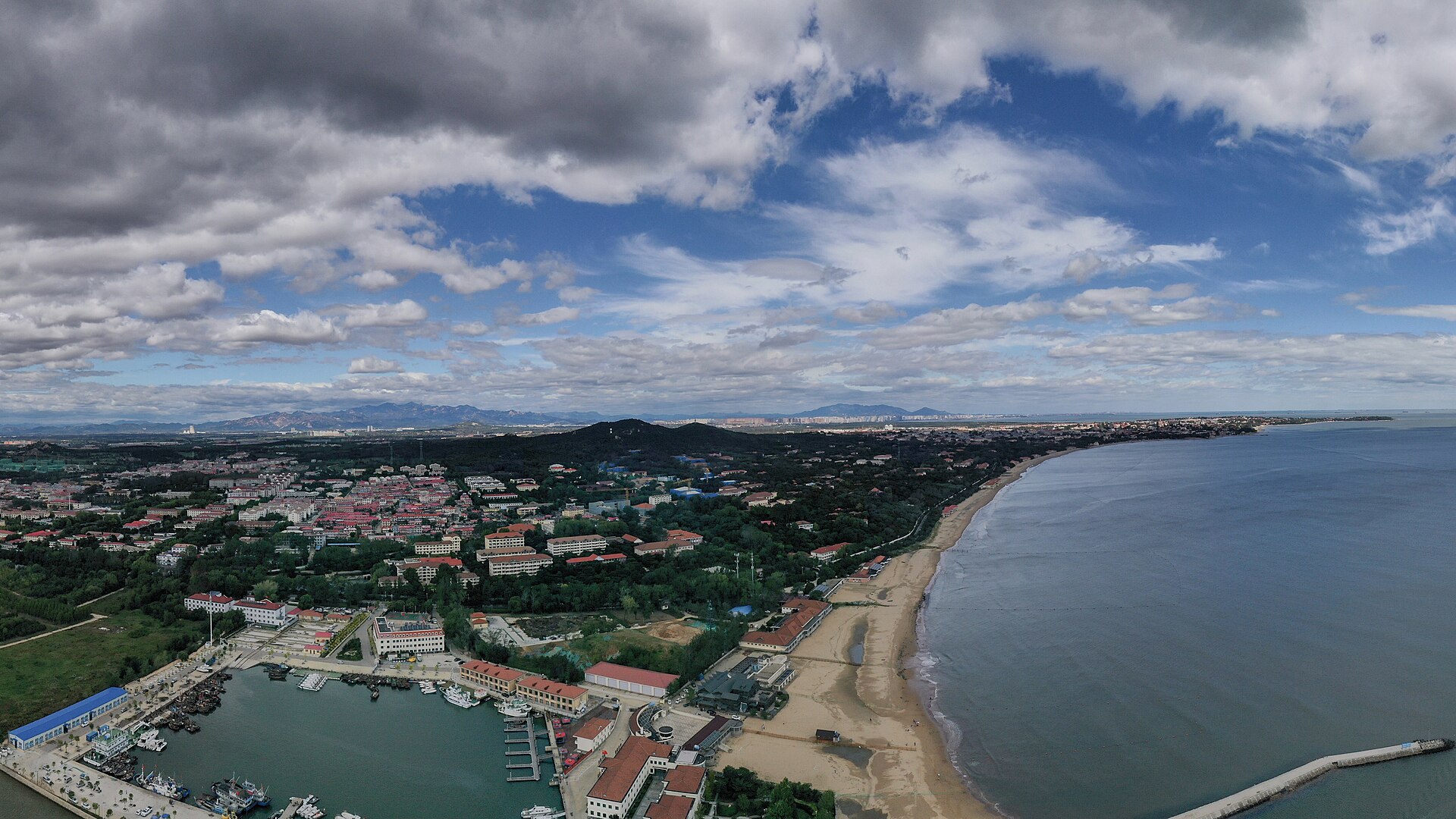
- Beidaihe's old villas — Residential lanes of Beidaihe
Scattered through the leafy lanes are villas from the decades when foreign residents of Beijing came here for the summer. Their styles are mixed, from European country houses to local adaptations. Many are now rest homes or guesthouses, so some can only be admired from the street.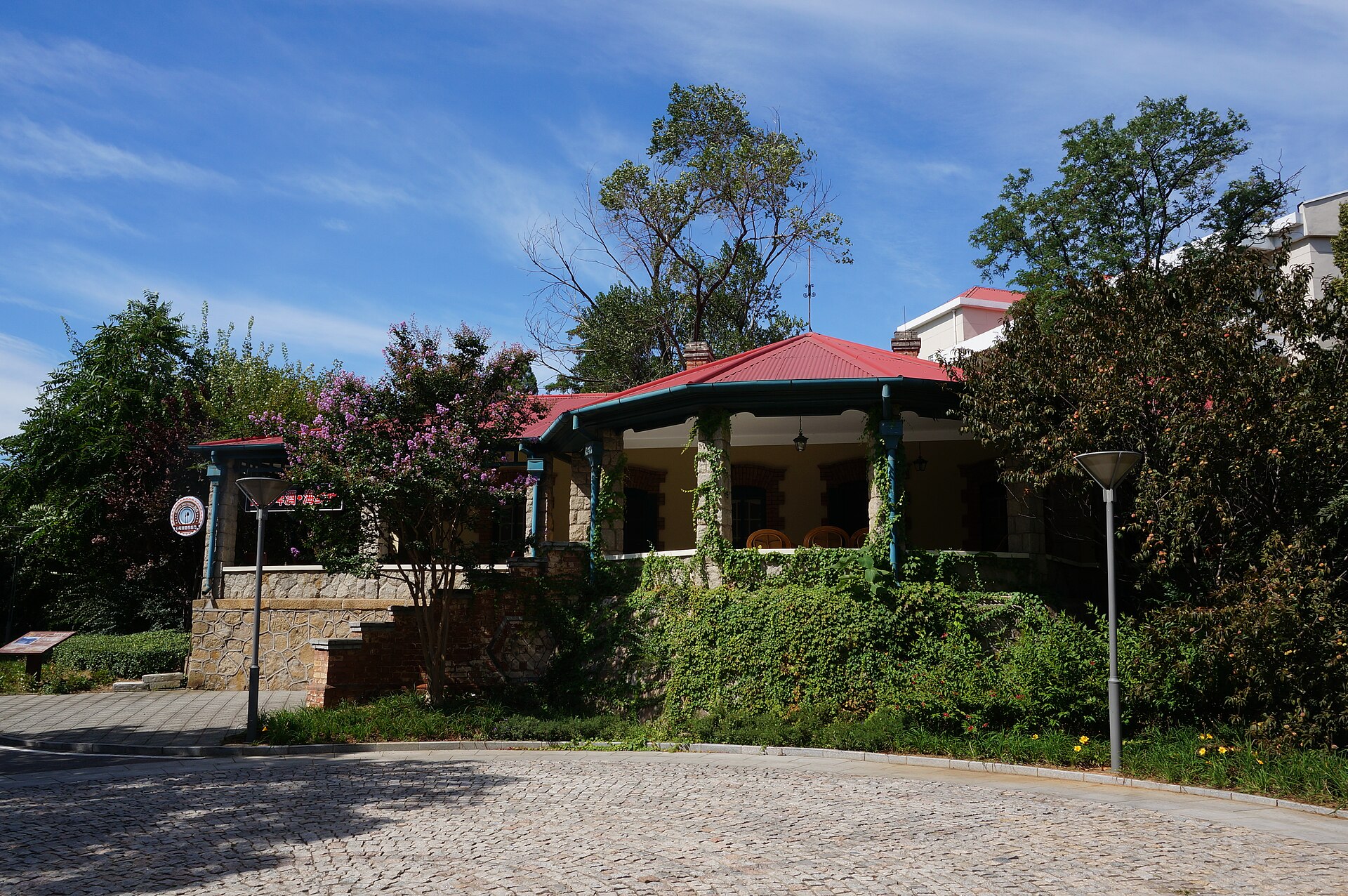
- Old Dragon Head — Qinhuangdao, near Shanhaiguan
At Old Dragon Head, the Great Wall runs out into the Bohai Sea. The original wall here is long gone and what stands is a large rebuilt section, so it is best seen as a reconstruction. A local bus runs from Qinhuangdao; check current fares and times locally. - Shanhaiguan Pass — Shanhaiguan, Qinhuangdao
Shanhaiguan sits where the mountains almost meet the sea, and it is the place where the Ming dynasty Great Wall began. The old walled town was built as a fortification to guard this narrow gap. Allow a half day for the walls, gate towers and the nearby Great Wall museum. - Park of the Shrine of the Emperor's Quest — Coast near Beidaihe
This coastal park commemorates the legend of Qin Shi Huang and his hunt for immortality. It is more about story and sea air than major monuments, and works well as a slow, shaded stop on a day along the shore, away from the busiest stretch of beach.
Culture
Beidaihe's culture is shaped by the Chinese summer holiday. For generations, families, work groups and retired couples have come here for a week by the sea, and the town keeps that rhythm: early swims, long lunches of seafood, evening strolls along the promenade and plenty of card games under the trees. The beach is a social space, noisy and cheerful, with children digging in the sand and groups of friends photographing one another against the water. The older layer is political and historical. Beidaihe has hosted foreign villa owners, official conferences and the Communist Party's leadership in July, and that gives the town a slightly guarded, institutional air, with walled compounds and guarded gates tucked among the pine woods. Nearby, the legend of Qin Shi Huang searching this coast for immortality is part of local identity, and the Great Wall at Shanhaiguan reminds visitors that this has long been a frontier between the sea, the mountains and the plains. Younger visitors now favour the cafés, bookshops and cultural spaces of the newer seaside districts, while older residents keep to quieter lanes. Expect lively, friendly crowds in July and August and an empty, almost sleepy town outside the season. Do not photograph or linger near the gated official compounds and their guards, and follow any instruction to move on.
What to wear
In Beidaihe, as across northern China, traditional dress is a matter of occasion rather than daily wear. The qipao, a close-fitting silk or brocade dress that grew out of Manchu styles of the Qing period, appears at weddings, performances and photo studios, while the revived hanfu is popular with young people at festivals and heritage sites. Padded cotton jackets were once the standard winter layer in the north. Day to day, local people wear what suits a beach town: light cotton shirts, shorts, sandals and wide-brimmed hats. Sun protection is taken seriously, so look out for visors, long-sleeved cover-ups, umbrellas and the full-face fabric masks sometimes worn on the sand. Evenings call for a light layer, and in winter heavy down coats are the norm. A visitor should pack for the season. In summer, bring breathable cotton, a hat, sunglasses and sun cream, with swimwear kept to the beach and a shirt or wrap for the promenade and cafés. Spring and autumn need a jacket for sea winds. Sandals are fine on the sand, but wear sturdy, grippy shoes for the Great Wall at Old Dragon Head and Shanhaiguan, where steps and uneven stone are common. Dress is relaxed and modest norms are light, though covering up is sensible in any temple.
What to eat
- Steamed crab — Seafood restaurants and eateries near the beach and harbour
Crab is a classic of the Bohai coast, usually steamed whole and eaten with vinegar and ginger. It is messy, slow and sociable, best shared. Seasonal availability varies, so ask what is fresh and agree the price before ordering by weight. - Garlic grilled scallops — Seafront night stalls and beach-side eateries
Scallops in the shell are topped with garlic, sometimes with glass noodles, and grilled until just set. They make an easy first seafood order and are common at evening stalls and casual eateries along the seafront. - Seafood jiaozi — Small local dumpling eateries in town
Northern China loves dumplings, and on the coast they are often filled with prawn, fish or squid along with pork or chives. Served boiled with black vinegar, they are a reliable, filling meal after a day in the wind. - Stir-fried sea snails — Night-time seafood stalls and barbecue-style eateries
Small sea snails, often called whelks, are wok-fried with chilli, garlic and spring onion, then picked from the shell with a toothpick. Locals treat them as a beer snack. Cooked fresh, they are chewy and savoury. - Coffee and brunch by the sea — Aranya district and cafés along the beachfront
Newer cafés and bars in the seaside districts, including the Aranya cultural area near Nandaihe, serve coffee by day and cocktails by night. They suit travellers who want a break from seafood, though some close in winter.
Plan it
Best time. May–June and September–October, when the sea breeze is mild, the crowds are thinner and migrating birds pass through. July and August are hot, humid and very busy, and winter is cold, windy and quiet with many seaside businesses closed.
How long. 2–3
Getting there. Fly to Beijing Capital (PEK) or Tianjin (TSN), then take a fast D-series train to Qinhuangdao, the most common route from either city; slower K and T trains also run. Long-distance buses are another option, including a direct service from Beijing Capital Airport. From Qinhuangdao, continue to Beidaihe by local bus or taxi.
Budget. mid
Tips
- Book trains and summer accommodation well ahead for July and August, when the resort is at its busiest.
- Visit Lianfeng Mountain and the beach early in the morning, before the heat and the crowds build.
- Combine Beidaihe with a day trip to Shanhaiguan and Old Dragon Head by bus or train.
- Carry some cash and a mobile payment option, since small stalls may not accept foreign cards.
- Check local conditions and events on the official site, http://www.beidaihe.gov.cn/, as access can change when official meetings are held.
Etiquette
- Swim only in designated areas and follow lifeguard flags.
- Do not photograph official compounds or guards.
- Queue patiently and keep voices moderate in shared spaces.
Nearby
Sources
- Wikidata Q814657 (CC0)
- Wikipedia: Beidaihe, Qinhuangdao (rev 1375110546) (CC BY-SA 4.0)
- Wikivoyage: Qinhuangdao (rev 5415366) (CC BY-SA 4.0)
- Photo: Beidaihe panorama from the south — Charlie fong (CC BY-SA 4.0)
- Photo: 1 Dong Hai Tan Lu, Beidaihe Qu — liyuhanrenll (CC BY 3.0)
- Photo: Admiralty Chart No 3378 Chinwangtao, 1946 — UK Hydrographic Office (Public domain)
- Photo: Admiralty Chart No 3378 Gulf of Chihli — UK Hydrographic Office (Public domain)
- Photo: At the Beidaihe beach during winter — Dr. Hans-Günter Wagner (CC BY-SA 2.0)
- Photo: Bandeenium Villa — 猫猫的日记本 (CC BY-SA 4.0)
- Photo: Beidaihe skyline from the north — Charlie fong (CC BY-SA 4.0)
- Photo: Beidaihe, Qinhuangdao, Hebei, China — pzhui (CC BY 3.0)


