Changsha
Changsha, People's Republic of China
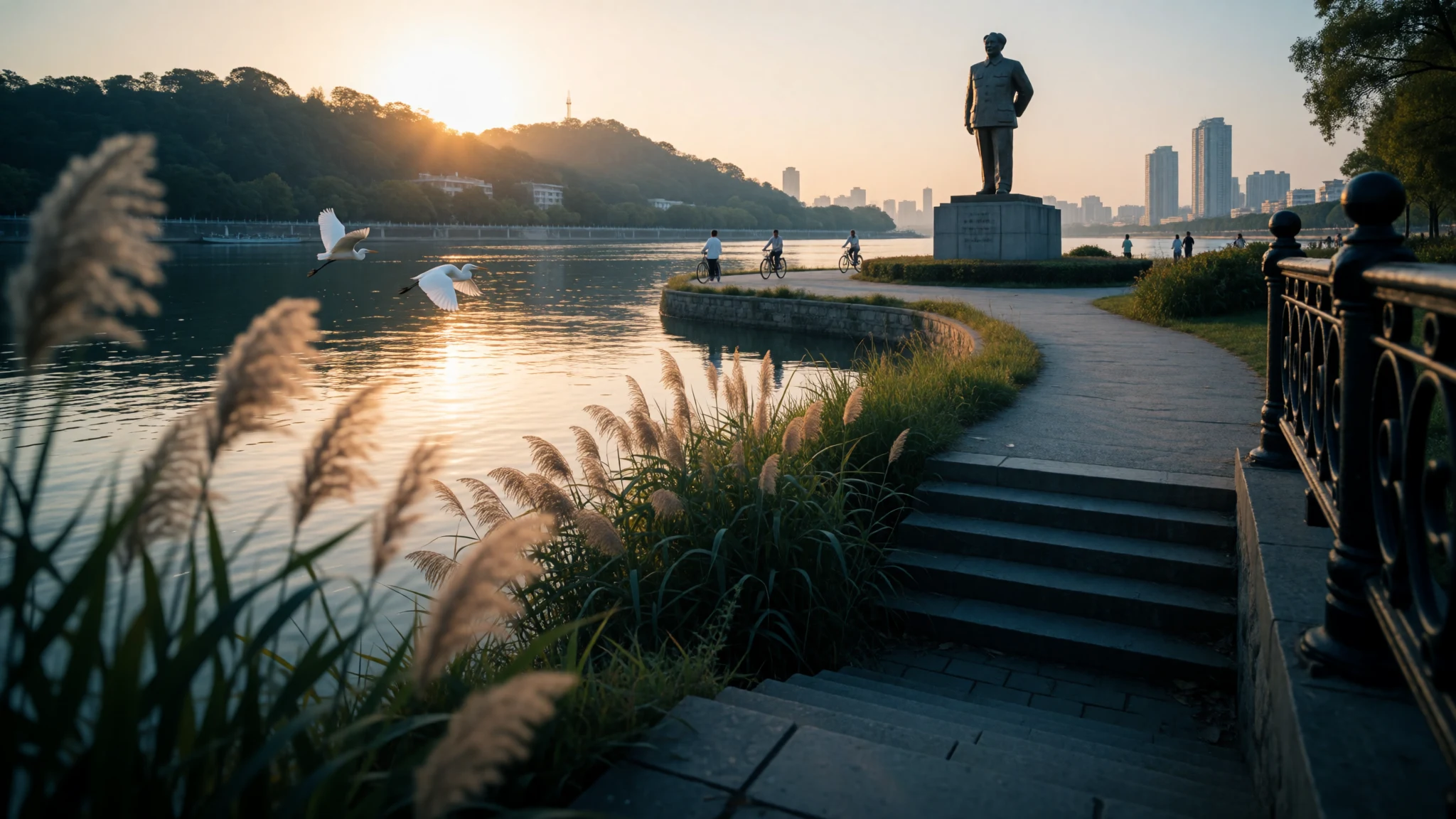
Changsha is a spicy, lively Hunan capital where Han-dynasty treasures, a river island and a hillside academy sit among neon-lit night streets.
The place
Changsha is the capital of Hunan province, set on the lower Xiang River in the north-east of the province at about 63 metres above sea level. The city is home to roughly 10 million people, and it is closely tied to its neighbours Zhuzhou and Xiangtan, together known as the Changzhutan cluster. That makes it a large, busy regional capital rather than a quiet heritage town, and the first impression is of towers, flyovers and a wide river with a long island lying in it. Beneath the modern layer there is real age. The city is counted among China's early nationally listed historical and cultural cities, and the story shows up in the pavilions of Mount Yuelu, the old academy at its foot and the museums east of the river. The local speech, Changshanese, belongs to the Xiang branch of Chinese and differs enough from standard Mandarin that visitors with textbook phrases often need to repeat themselves. Changsha is also a media and nightlife centre. Hunan's main broadcaster is based here, and the evening economy of singing bars, dance clubs, theatres and late snack stalls grew up around it. Summers are hot and humid, winters are damp and chilly, and the shoulder seasons are far kinder. Distances are manageable by subway and taxi, so a first visit works well as one museum morning, one hill-and-river afternoon and one long evening of eating.
Its story
Changsha's story begins well before written history, with pottery and Bronze Age finds showing that people lived along this stretch of the Xiang River. Later Chinese legend placed the Yellow Emperor's family here, and the name Changsha itself first turns up in a text from the pre-Qin era, the Yi Zhou Shu. During the Warring States period the state of Chu took control, and thousands of Chu tombs have since been opened around the city. Under the Qin dynasty the area became a commandery and a staging post for campaigns to the south. In the Western Han, Changsha was the seat of its own kingdom, and the astonishing burial goods from the tomb of Xin Zhui, the Marquess of Dai's wife, come from that world. Under the Tang dynasty the Tongguan kilns in Changsha produced underglaze porcelain that travelled by sea to Western Asia, Africa and Europe. In the Five Dynasties period the city was the capital of the Southern Chu regime. In later centuries Changsha became a scholarly centre, with the Yuelu Academy training generations of Hunanese thinkers. The young Mao Zedong studied here, which is why a giant sculpted head of him looks over Orange Isle today. Much of the old street plan was rebuilt in the modern era, but the layers remain readable in its museums and hills.
What to see
- Hunan Provincial Museum — Kaifu District
This museum holds the Han-era finds from the tomb of Xin Zhui, the Marquess of Dai's wife, including her remarkably preserved body and painted lacquer coffins. It draws large crowds, especially at weekends and holidays, so arrive early and check the official site for entry rules.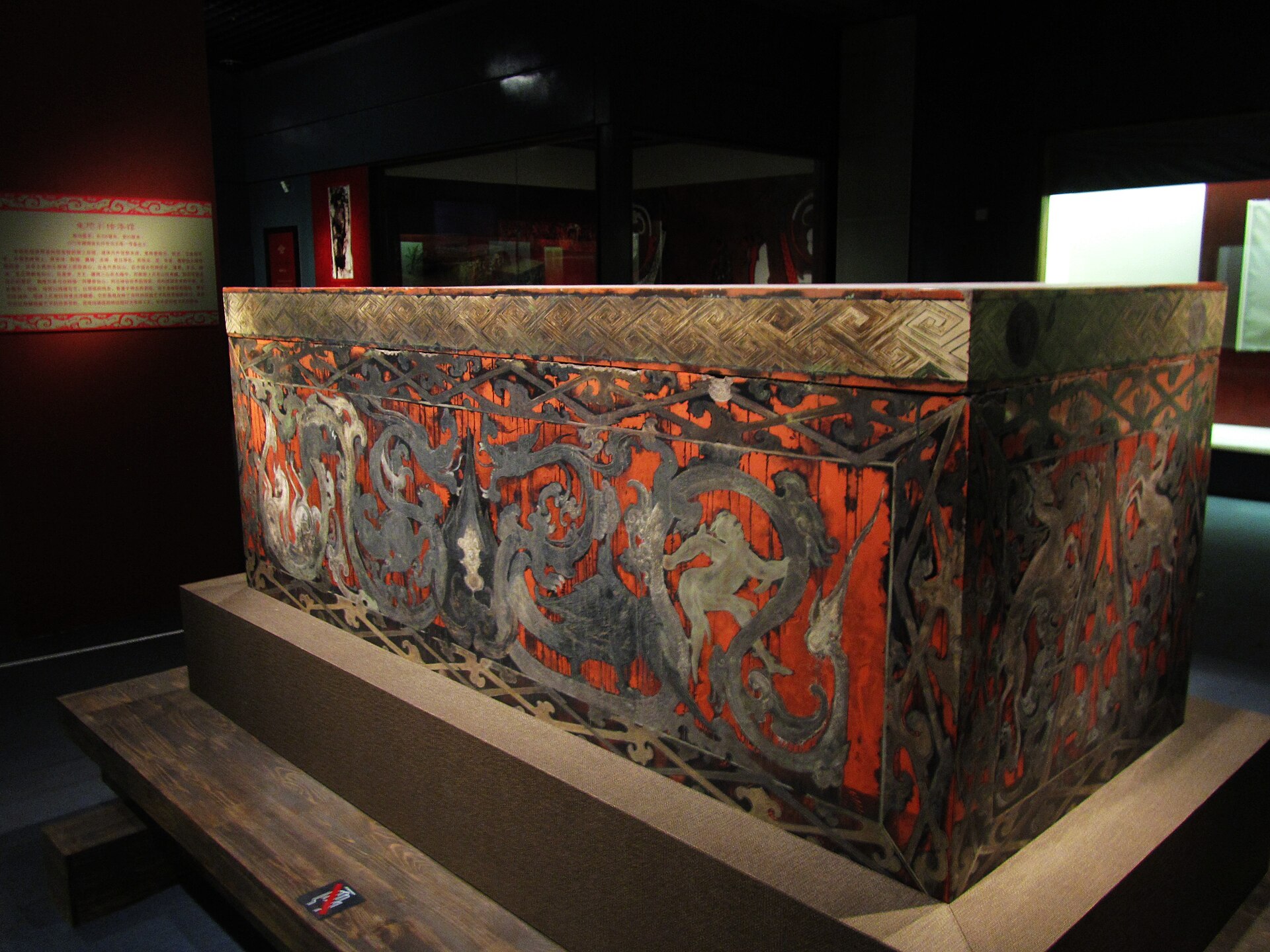
- Changsha Bamboo Slips Museum — Tianxin District
Ancient writing carved on narrow bamboo strips is the focus here, alongside a set of pottery pieces. The building itself is part of the appeal, with real bamboo growing from one side. It is smaller than the big provincial museum and suits a quieter, shorter visit. - Changsha Museum — Binjiang Culture Park
The main hall is a large modern building inside Binjiang Culture Park, beside the river. The park is pleasant for a stroll before or after the galleries, with open space that feels welcome on a hot afternoon. Check the official site for current opening arrangements. - Mount Yuelu and the Aiwan Pavilion — Yuelu District
Yuelu is the green hill on the west bank, and the Aiwan Pavilion, whose name refers to admiring autumn, is the classic stop. Paths wind through trees, with temples and old academy buildings nearby. Autumn colour is the best reason to go, and weekdays are calmer.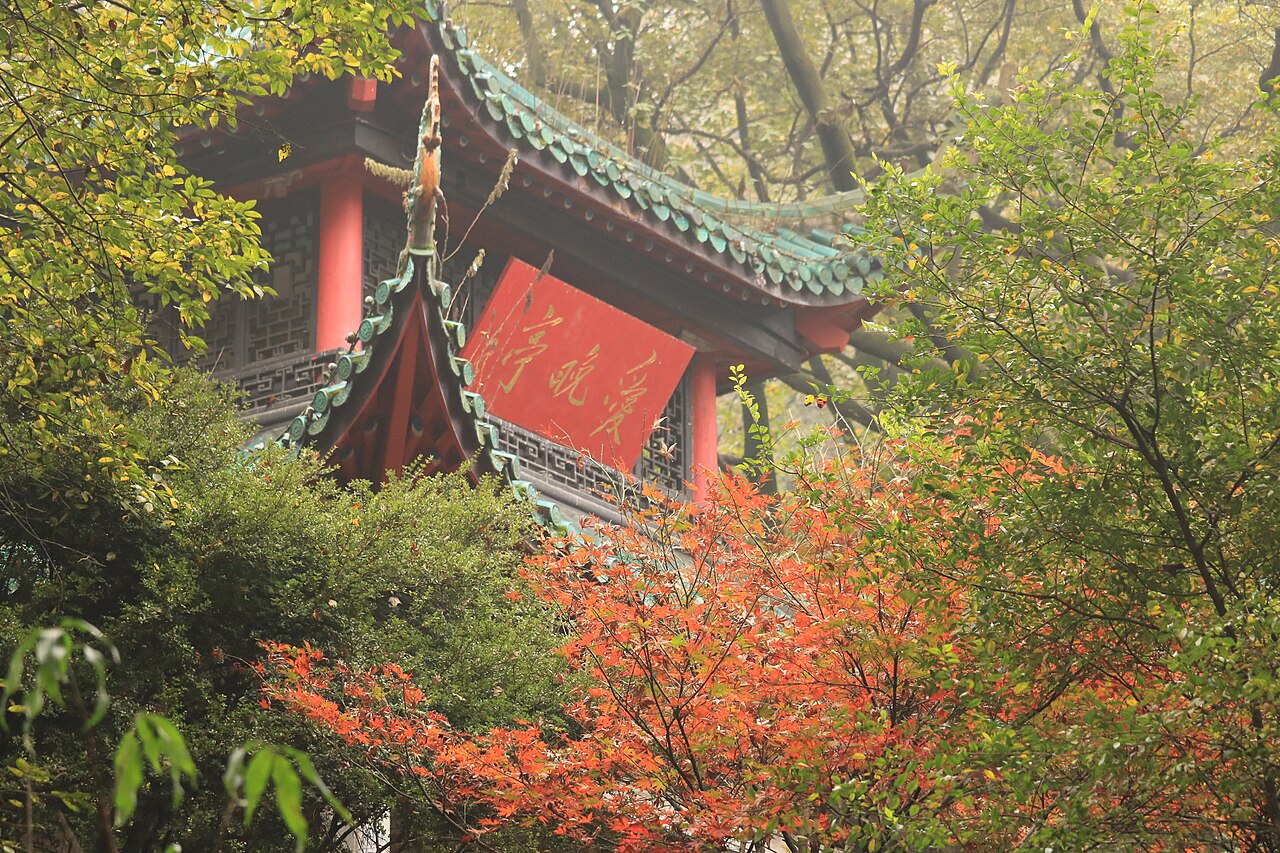
- Yuelu Academy — Yuelu District
This historic academy stands at the foot of Mount Yuelu and gives a sense of Changsha as a scholarly city. Timber halls, courtyards and a formal gate evoke centuries of teaching. Pair it with a walk up the hill, and check the official channels for visiting rules.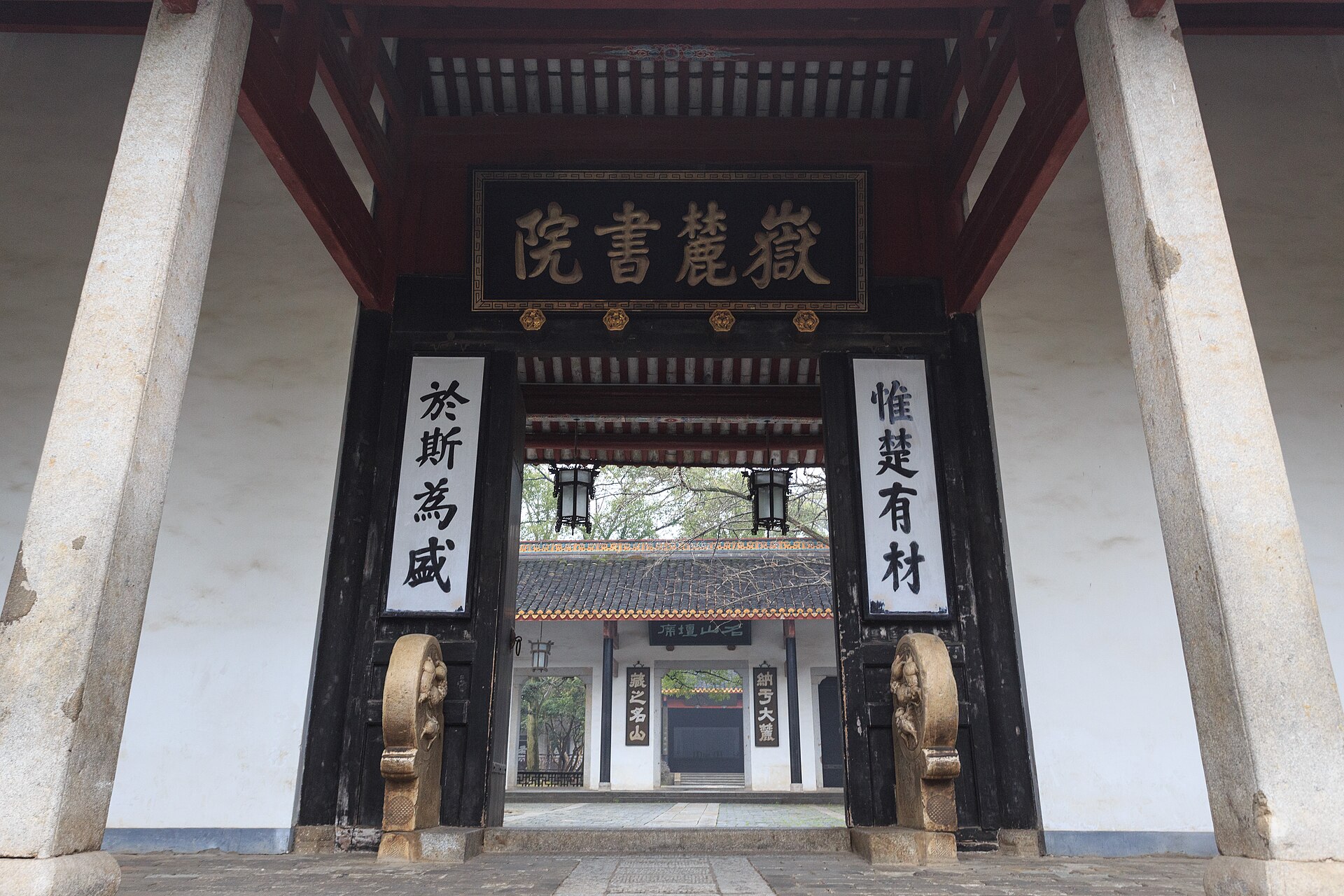
- Orange Isle and the Young Mao statue — Xiang River, central Changsha
Orange Isle is a long, narrow island in the Xiang River, reached by bridge and given over to parkland. Its best-known feature is the huge statue of the young Mao Zedong, which is a popular photo stop. Breezes off the water make it a good late-afternoon walk.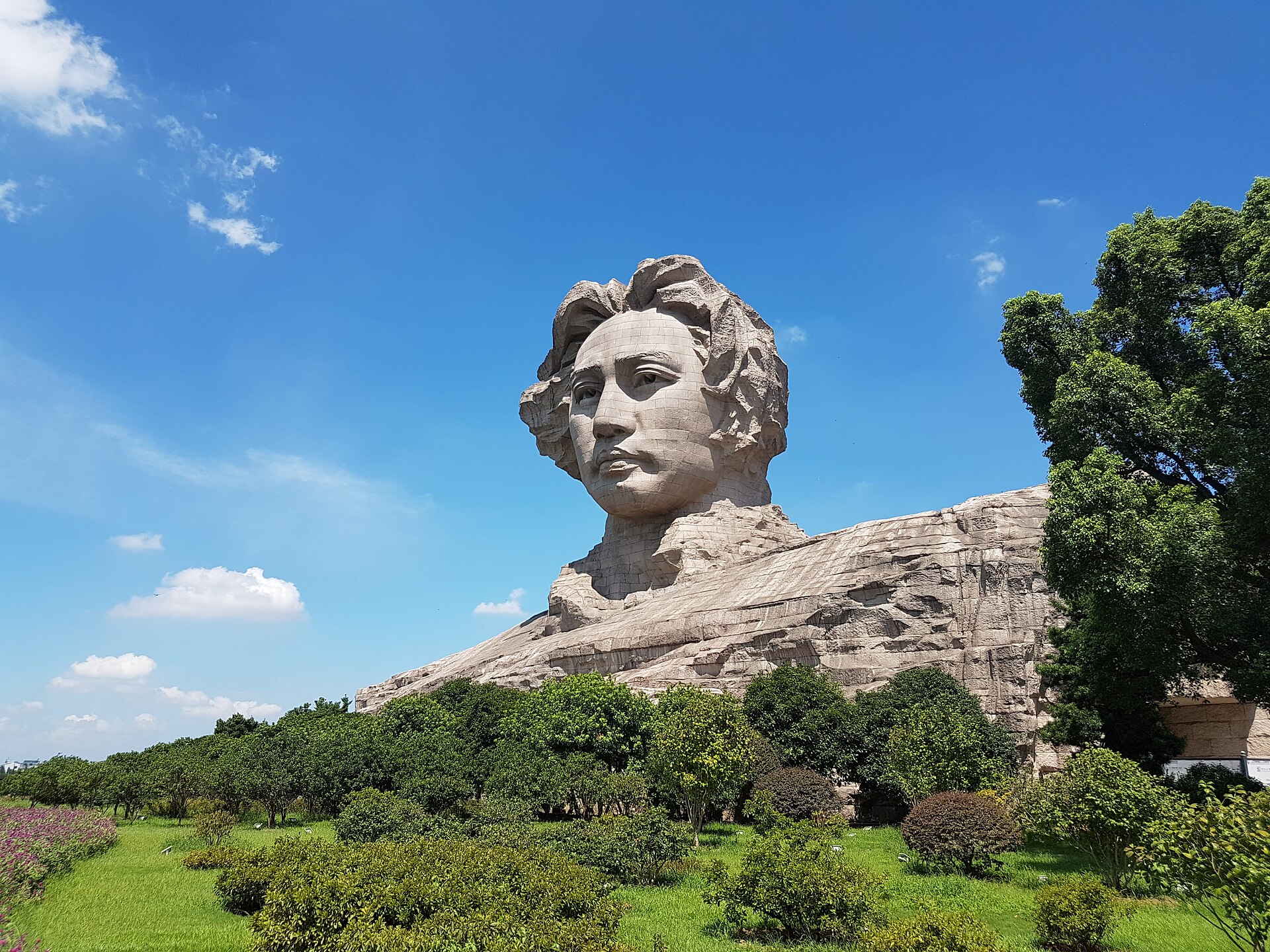
Culture
Changsha is a city that wears its entertainment and its scholarship side by side. Hunan Broadcasting System is based here and makes some of China's most watched programmes, including the talent show Super Girl, and the city's reputation for singing bars, dance clubs, theatre shows and late-night snacks grew out of that television culture. At the same time, the Yuelu Academy and the museum collections show a long habit of reading, writing and arguing, and the region produced many political and intellectual figures, which is part of why Mao-era heritage is a visible theme. The language is Changshanese, a Xiang Chinese dialect, and conversations in markets and taxis can sound quite different from the Mandarin of television. Food is the common thread of social life. Hunan cooking is hot and spicy, and meals are loud, shared and long, with friends ordering many dishes for the table. The city has become more cosmopolitan and attracts a growing number of foreign residents, so curious visitors are generally met with patience and humour. Young people gather around street food, karaoke and live shows late into the night, especially in summer, while older residents prefer tea, parks and the riverside. Buddhist temples such as Baoning Temple remain active places of worship, not just sights. At temples and academy halls, keep your voice low, dress modestly, and ask before photographing monks or worshippers.
What to wear
Changsha's traditional dress belongs to the wider Han Chinese wardrobe, with long silk robes and wrapped garments known today as hanfu. The region's textile story is old: silk painting and fine fabrics have been recovered from Chu and Han tombs near the city, which shows how much skill went into weaving and dyeing. Hunan embroidery is the local craft to know, with locally developed techniques that achieve very fine detail, and the city has a small museum devoted to it. Traditional dress is mostly seen now at festivals, photo shoots and on young people who enjoy dressing in historic styles. Everyday clothing is modern and casual: jeans, trainers, T-shirts and light jackets by day, and more fashionable, sometimes flashy outfits for the evening scene in the entertainment districts. As a visitor, plan for climate first. Summer calls for light, breathable cotton or linen, sun protection and an umbrella for sudden rain, while winter is damp and cold, so layers and a proper coat help. Comfortable walking shoes matter for museums and the hill paths of Mount Yuelu, which can be slippery after rain. At temples, cover shoulders and knees. Modest dress is also sensible in the older neighbourhoods, though nobody will mind casual clothes in the busy shopping streets.
What to eat
- Stinky tofu — Taiping Old Street and the stalls around it
Fermented tofu fried until crisp and served with chilli and sauce. The smell is strong, the taste milder and savoury. It is a fixture of Changsha street snacking and an easy first introduction to local flavours. - Hunan sausages and cured meats — Taiping Old Street, small food shops
Smoky, salty preserved meats are a Hunan staple, often steamed or stir-fried with chilli and garlic. Look for them hanging in shops or sold ready to eat as a snack on the historic streets. - Tomato and green pepper noodles — Neighbourhood noodle shops across the city
A simple bowl of noodles topped with tomato, green pepper or mushroom, with or without egg. It is cheap, filling and well loved by locals, and a gentle choice for anyone who wants less heat. - Trolley dim sum and soups — Old-style Hunan restaurants in the central district
Some long-established Hunan restaurants still bring trolleys round with soups, small dishes and dim sum. Point at what looks good and sample several plates. It suits a relaxed lunch after the museums. - Spicy night snacks — Changsha Walking Street and the late-night streets nearby
After dark the city turns to hot, spicy snacks, especially in summer, with stalls grilling skewers and serving shellfish and sauced dishes. Bring tissues and cold water, and ask for less chilli if needed.
Plan it
Best time. March–April and October–November are the most comfortable, with milder temperatures and less humidity. Summer is hot and humid, and winter is damp and chilly.
How long. 2–3
Getting there. Fly into Changsha's airport, then take the maglev line to Changsha South Railway Station and change to the subway for the city centre. High-speed trains also arrive at the South station, and taxis wait outside the airport arrivals area.
Budget. low
Tips
- Go to the Hunan Provincial Museum early and check the official site for booking rules
- Carry some cash as well as a phone payment app, since small stalls may not take foreign cards
- Ask for less chilli if you are not used to Hunan heat
- Carry an umbrella and a water bottle for sudden showers or hot days
- Use the subway between districts to avoid traffic around the river bridges
Etiquette
- Keep voices low and dress modestly at temples and academy halls
- Ask before photographing monks, worshippers or strangers at close range
- Queue patiently at museum entrances and ticket counters
Nearby
Sources
- Wikidata Q174091 (CC0)
- Wikipedia: Changsha (rev 1384786396) (CC BY-SA 4.0)
- Wikivoyage: Changsha (rev 5397272) (CC BY-SA 4.0)
- Photo: Helong Stadium in Changsha (CC BY 3.0)
- Photo: Skyline with Xiang River (CC BY-SA 4.0)
- Photo: Aiwan Pavilion, Mount Yuelu (CC BY-SA 4.0)
- Photo: Four Heavenly Kings Hall, Baoning Temple (CC BY 3.0)
- Photo: Yuelu Academy gate (CC BY-SA 4.0)
- Photo: Young Mao Zedong statue, Orange Isle (CC0 1.0)
- Photo: Lacquer coffin from Mawangdui Han Tomb No. 1 (CC BY-SA 4.0)
- Photo: Silk painting of a man and a dragon (Public domain)


