Bingling Temple
Bingling Temple, People's Republic of China
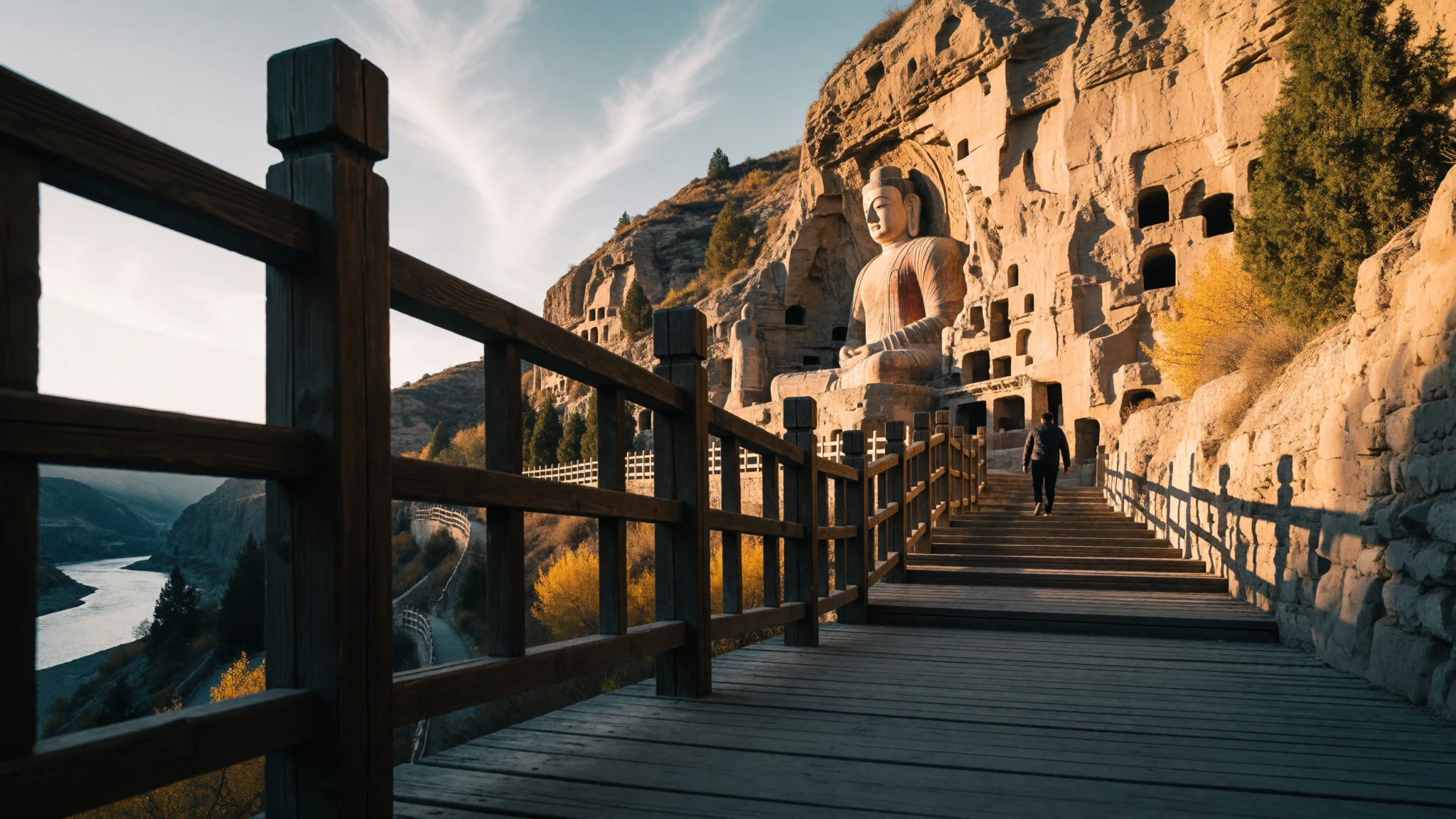
Bingling Temple is a Yellow River canyon whose cliffs hold Buddhist caves carved over a thousand years, reached by boat across a quiet reservoir.
The place
Bingling Temple is a stretch of Buddhist cave-shrines cut into the walls of a Yellow River canyon in Yongjing County, Gansu, within the Linxia Hui Autonomous Prefecture. The site sits just north of the point where the river runs into the Liujiaxia Reservoir, about 100 km from Lanzhou, the provincial capital. In Chinese the name is 炳灵寺 (Bǐnglíng Sì). Despite the word "temple", this is less a single building than a cliff face of niches, caves, carved reliefs and painted walls, strung along the northern side of the gorge for roughly 200 m. At its far end the line opens into a large natural hollow, where timber walkways climb the rock to caves set high above the water and to a seated Maitreya Buddha more than 27 m tall. Most visitors arrive by boat, because roads are few and the canyon is effectively cut off by land for much of the year. The crossing of green reservoir water, beneath tall canyon walls, is half the experience and gives the place a real sense of remove. Gansu itself is a long, narrow province where plateau, desert and river valley meet, and the weather can change quickly. Bingling is part of the Silk Roads: Routes Network of Chang'an-Tianshan Corridor, which UNESCO inscribed in 2014. The site is quiet compared with the famous grottoes further east, though tour groups gather around boat times.
Its story
Bingling Temple took shape over more than a thousand years. The first cave was begun around 420 CE, under the Western Qin dynasty, and later dynasties kept adding to the cliff: Wei, Sui, Tang, Song, Yuan, Ming and Qing. The result reads like a timeline in stone, since the style of a cave usually points to the period that made it. Geography matters too. The site lies roughly midway between the giant Buddhas of Bamiyan in Afghanistan and the great Chinese grottoes at Yungang, near Datong, and Longmen, near Luoyang. That position makes it a useful marker of how Buddhist art moved along the Silk Road, picking up local habits as it went. Time has taken its toll. Tremors, weathering and thieves removed or ruined a large share of what was once here, and some caves are now empty or bare. Even so, 183 caves survive, holding hundreds of stone statues, dozens of clay figures and fragments of painted walls. The canyon's isolation did not stop the damage, but it has kept the place from being swamped by development or crowds. Today the caves are protected as part of the Silk Roads World Heritage listing, and visiting means accepting a few limits, since access to some of the higher and more fragile caves can be restricted. Bingling is a good place to see how a sacred site grows slowly, one generation at a time.
What to see
- The Maitreya Buddha — Natural cavern at the far end of the cliff
The seated Maitreya, the future Buddha, is the figure most people come for. Carved into the rock inside the big natural cavern, it stands more than 27 m high and looks out over the river. Wooden stairs and walkways bring visitors up close enough to see the folds of the robe and the worn paint.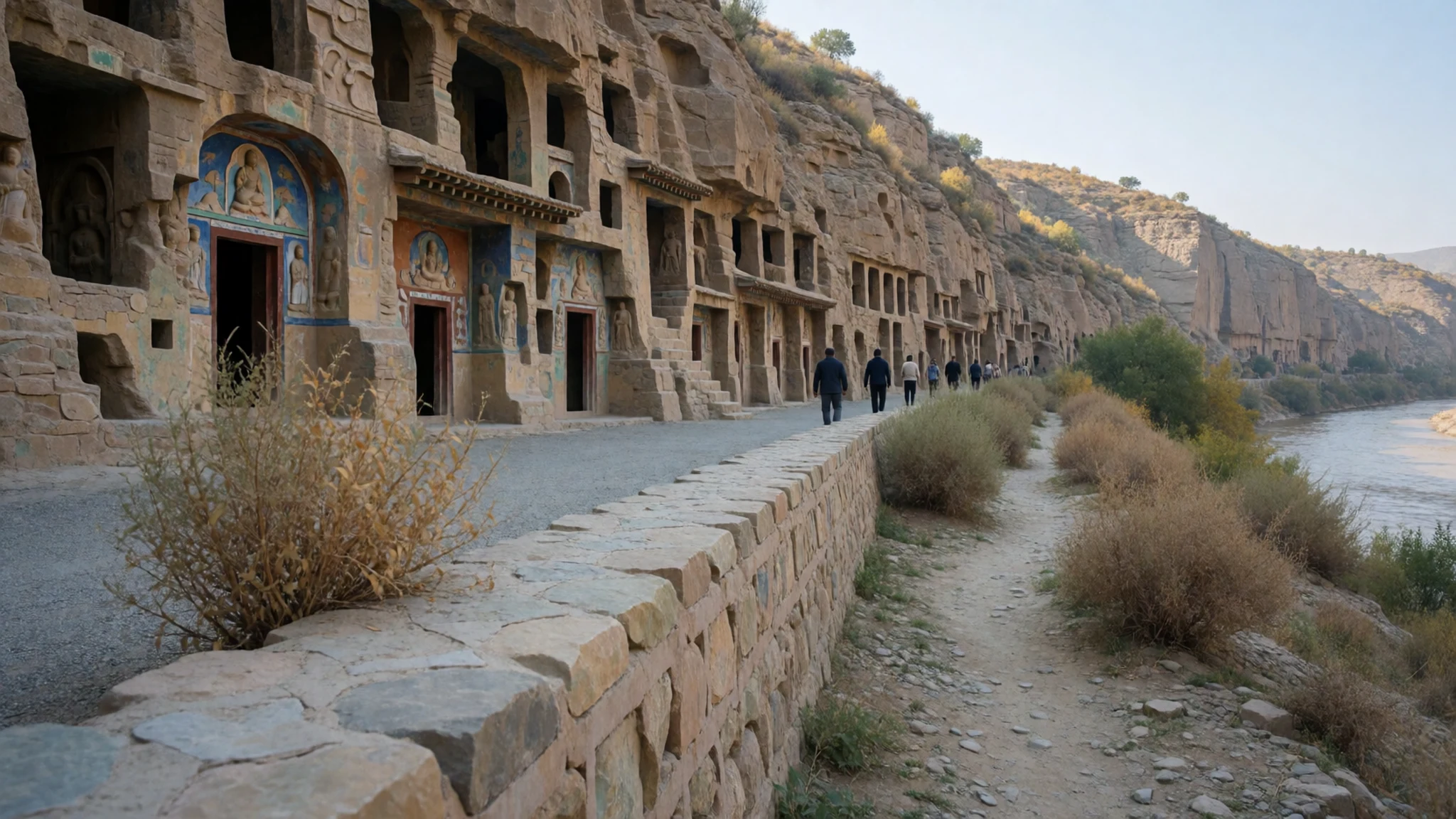
- The cliff of caves — Northern side of the canyon
Along the northern wall of the canyon, caves of many sizes sit side by side, each like a small chapel with its own statues, reliefs and traces of painted plaster. Walking the line is the best way to see how style changed from one dynasty to the next.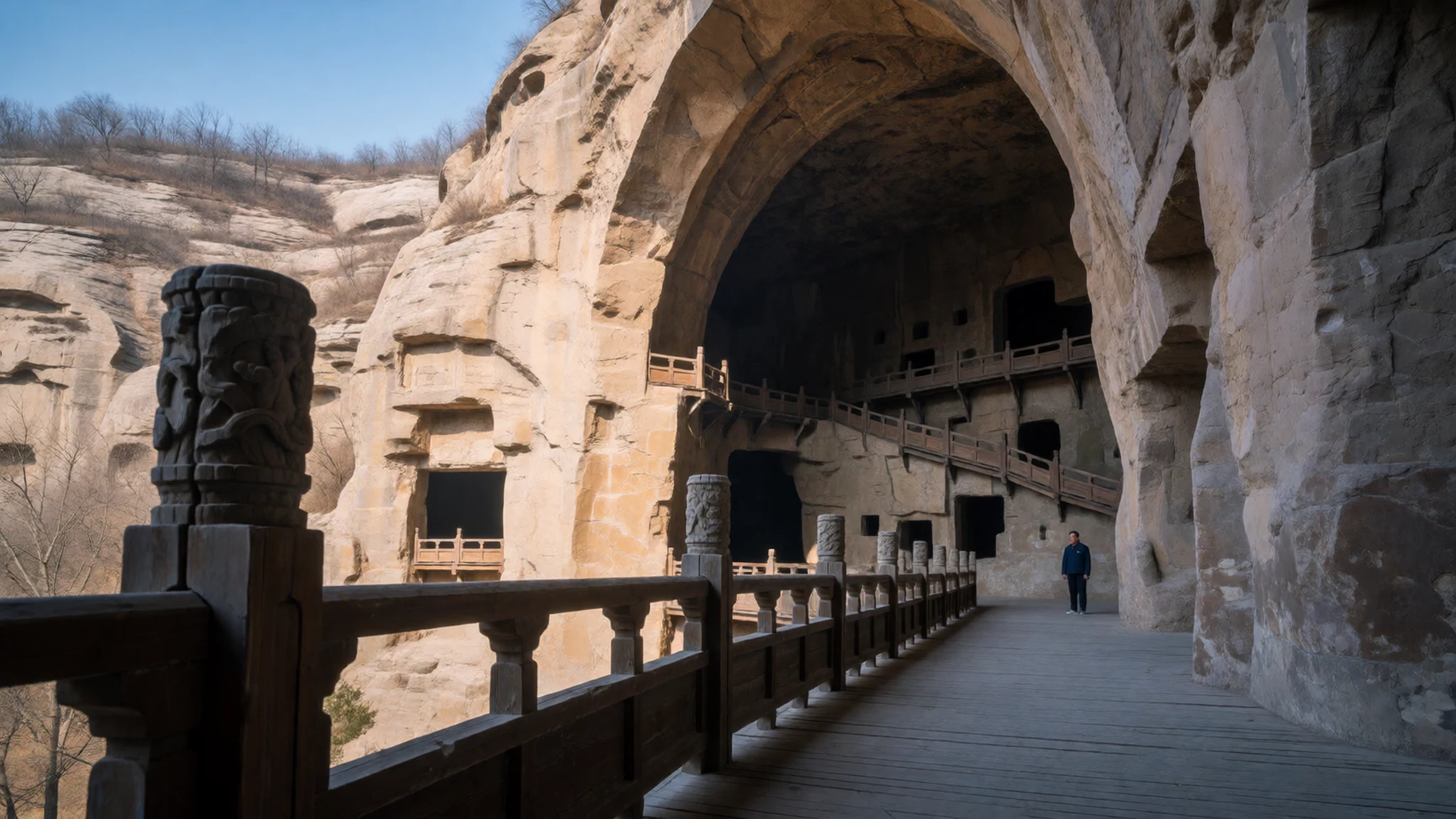
- The timber walkways — Rock face above the river
Wooden walkways and steps cling to the rock face and lead to caves that would otherwise be out of reach. The climb is short but airy, with the river far below. Check the weather, wear shoes with grip, and expect some parts to be closed to protect the carvings.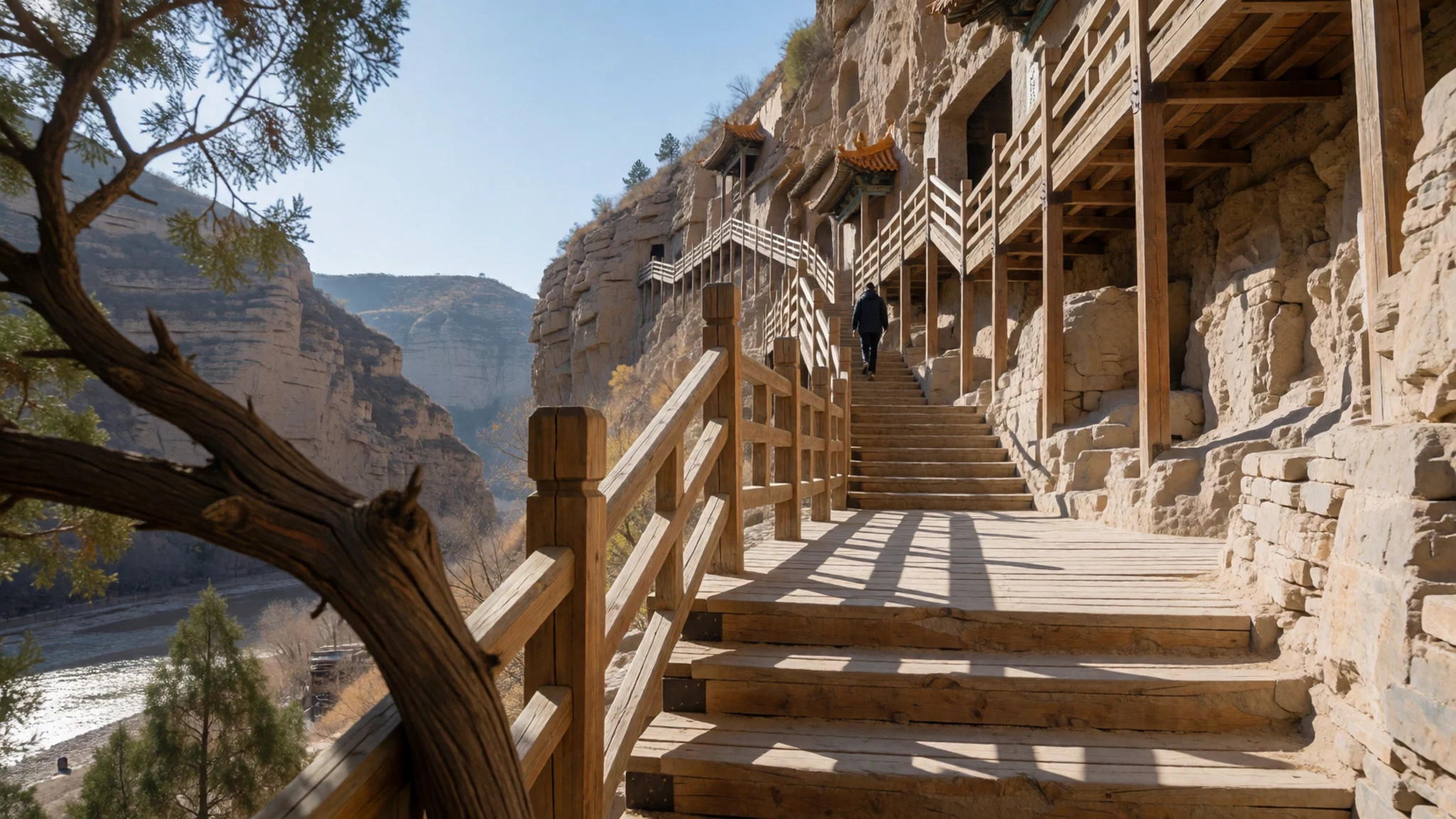
- The reservoir crossing — Liujiaxia Reservoir, Yongjing County
The boat ride across the Liujiaxia Reservoir is part of the visit, not just transport. The water is wide and calm, the cliffs rise on both sides, and the temple appears gradually. Boats leave from the Liujiaxia Dam area in summer and autumn; ask locally about the schedule.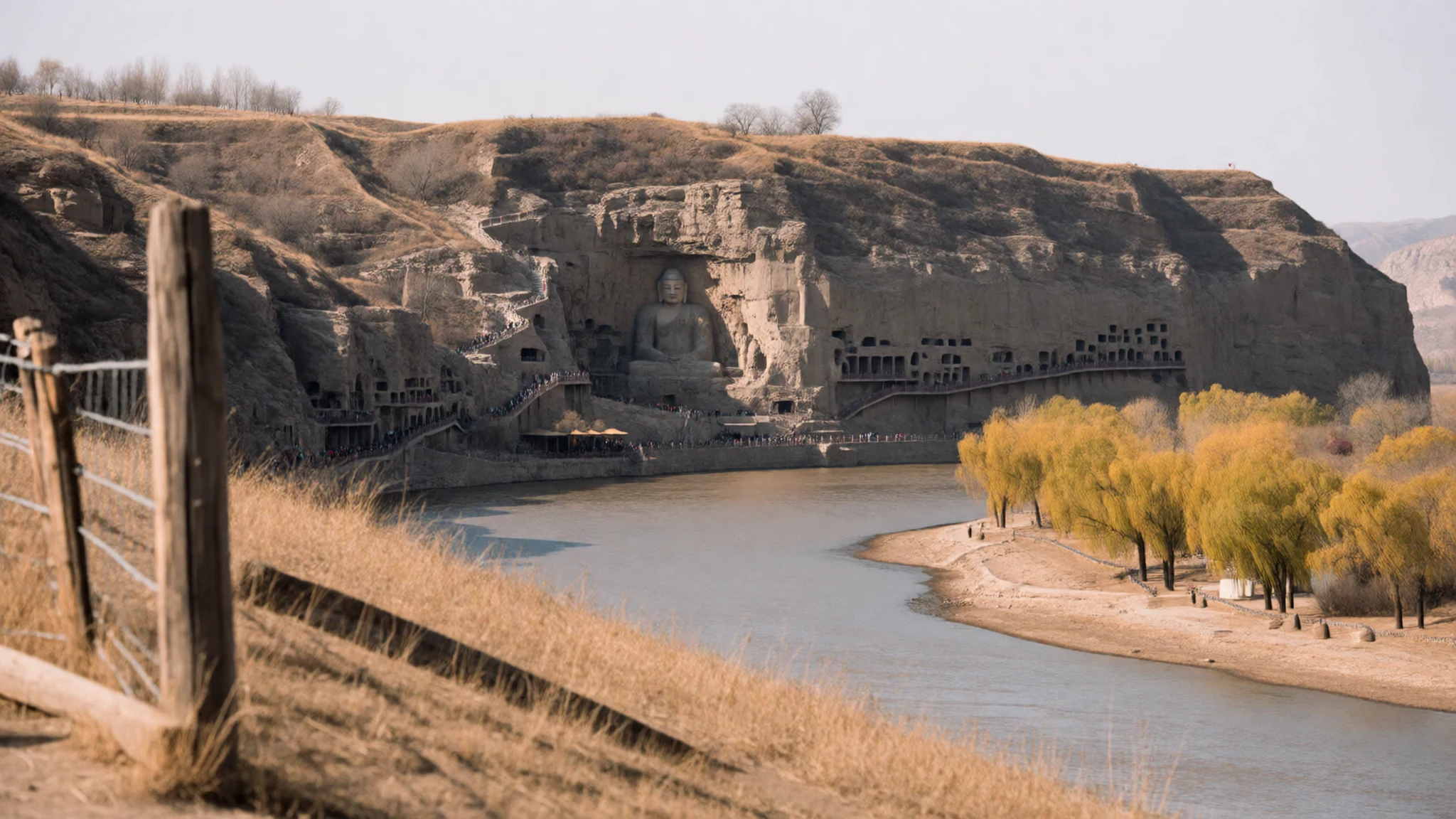
- Painted and sculpted details — Inside the individual caves
Look past the large figures to the smaller things: stone reliefs, clay sculptures and fading wall paintings inside individual caves. Their details show a mix of influences from the Silk Road and varying skill between workshops. A torch is useful, though some caves may only be seen from the doorway.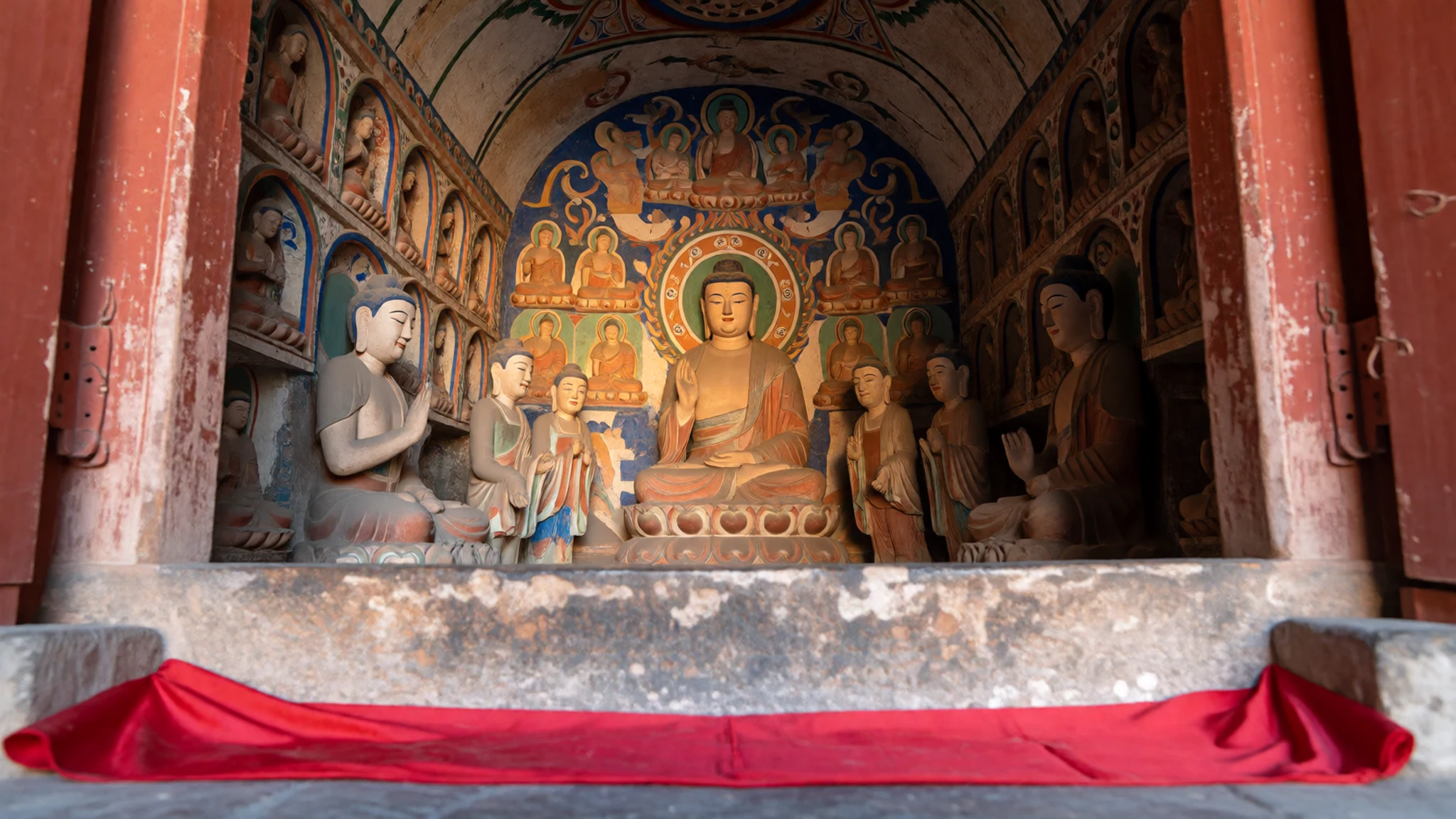
Culture
Bingling Temple is still a Buddhist place as well as a heritage site, and that shapes how it feels. The caves were made as acts of devotion, funded and carved by monks, local rulers and ordinary donors across many centuries, and their imagery follows the Buddhist tradition of the day: Buddhas and attendant bodhisattvas, with Maitreya, the Buddha of the future, as the great central figure. The site belongs to a region where Chinese, Tibetan and Muslim Hui cultures meet, and Linxia, the prefecture around it, has a strong Hui Muslim presence, while Tibetan Buddhist communities lie to the south and west. That mix is part of why Gansu was a crossroads for ideas and trade for so long. Remoteness has made the visit calmer than at better-known grottoes. Guides explain the dynasties and the iconography, but the experience is often quiet: the sound of water, wind through the canyon, boots on wooden steps. Local visitors may light incense or bow before a statue, and some caves are treated with real respect. Photography rules differ from cave to cave, and conservation staff have good reason to enforce them, since flash and touch both damage old pigments and carved stone. Keep your voice low, stay on the marked walkways, never touch the statues or walls, and obey any no-photography sign you meet inside a cave.
What to wear
Bingling Temple sits in a part of Gansu where dress varies with community, so there is no single costume of the area. Han Chinese residents wear ordinary modern clothes for daily life. Many Hui Muslim men in Linxia wear a white brimmed cap, and Hui women often wear a headscarf, usually in plain colours such as black, white or green, as everyday and festival dress. Tibetan herding communities to the south wear long wool or sheepskin robes with sashes, along with heavy boots, suited to cold pasture and high wind. Wool, felt and sheepskin are the textiles of the plateau, while cotton is common in the river valleys. In towns, people now wear what people wear across China: jeans, trousers, jackets, trainers, and quilted coats in winter. Visiting groups often wear hiking clothes and sun hats. For a visitor, practical comfort matters more than anything formal. Choose shoes with a firm grip, because the walkways are wooden and the paths uneven, and avoid sandals. Pack layers: the canyon can be hot in the middle of the day and cool on the water, and the boat crossing can be windy. A hat, sunglasses and sun cream help in summer. Because the caves are religious spaces, covered shoulders and knees are a sensible, respectful choice, and a light rain jacket is worth carrying in case the weather changes.
What to eat
- Lanzhou lamian (兰州拉面) — Noodle shops throughout Lanzhou and Liujiaxia
Hand-pulled noodles in clear beef broth, topped with slices of beef, chilli oil, coriander and spring onion. This is the best-known dish of Gansu and across China. It makes a cheap, quick meal before or after the boat trip.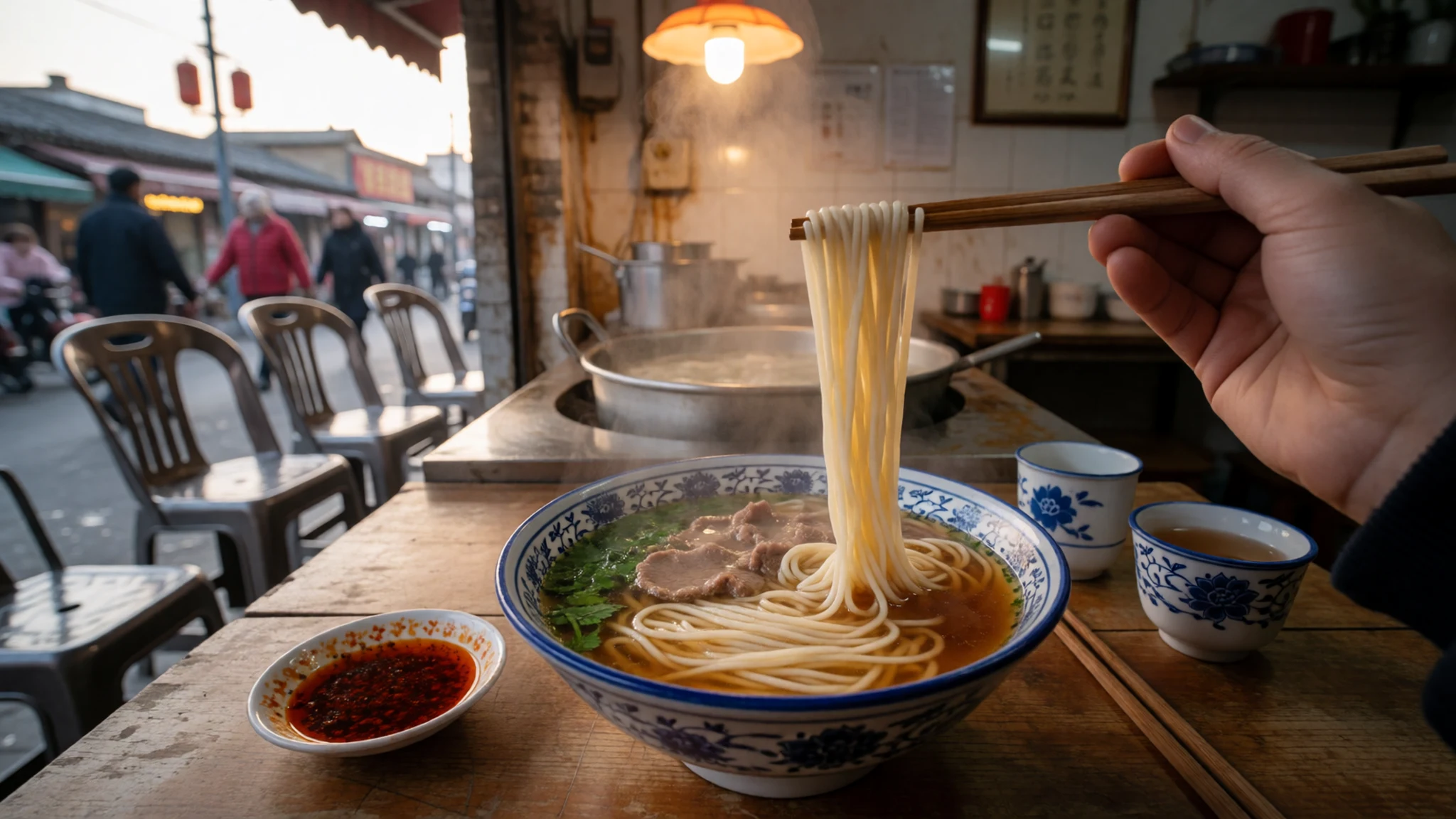
- Shou-zhua lamb (手抓羊肉) — Lamb restaurants in Lanzhou and county towns
Plain boiled lamb served on the bone, eaten by hand. Gansu lamb is mild and tender because the sheep graze on dry, salty pasture, and the simple cooking lets that flavour come through. A dipping sauce is usually served alongside it.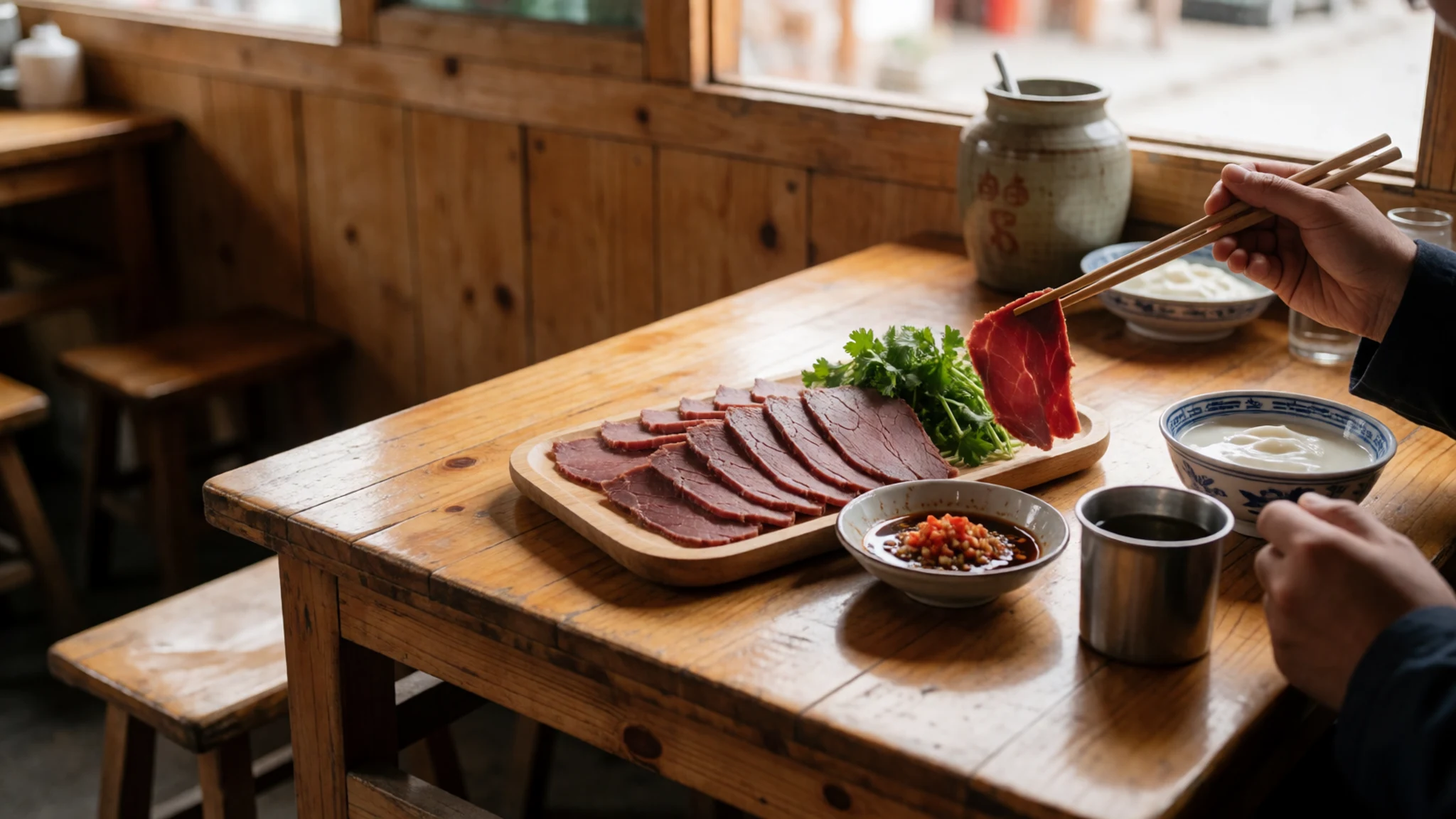
- Yak butter and yoghurt — Tibetan-run eateries and markets in southern Gansu
In the Tibetan areas of southern Gansu, yak butter, yoghurt and meat are everyday foods. The butter is rich and a little sharp, used in tea and with bread. Try them at least once, though the flavours take some getting used to. - Yak milk — Dairy stalls and markets in southern Gansu
Yak milk is thicker and creamier than cow's milk, with a slight sweetness, and it is often sold fresh or in drinks and dairy snacks in the pastoral south. It is a good way to taste what the high grasslands produce, and a simple pleasure after a day on the road. - Scrambled eggs with tomato — Simple restaurants and eateries near tourist stops
A mild, comforting dish of soft eggs cooked with sweet tomatoes, found on menus in places that cater to visitors. It is a safe choice when you want something familiar, and goes well with rice or flatbread alongside a stronger lamb dish.
Plan it
Best time. Summer and early autumn, roughly June to October, because boats cross the Liujiaxia Reservoir in those months and the rest of the year the site is effectively cut off. Summer days can be hot in the canyon, while autumn is usually clearer and more comfortable. Gansu weather is changeable, so check conditions before you go.
How long. 1–2
Getting there. Fly to Lanzhou Zhongchuan Airport (LHW), then travel to Liujiaxia in Yongjing County and take a boat across the Liujiaxia Reservoir from near the dam. The drive from central Lanzhou to the site takes about 2.5 hours on winding roads. Check locally that boats are running.
Budget. mid
Tips
- Confirm the boat schedule and whether the site is open before you set off, because access depends on season and weather
- Start early so there is time for the boat, the caves and the return before dark
- Carry some cash, water and snacks, as services near the site are limited
- Wear shoes with grip for the wooden walkways and steps
- Allow extra time for winding roads from Lanzhou, and keep a flexible plan in case of delays
Etiquette
- Do not touch the statues, walls or paintings
- Follow any no-photography or no-flash signs inside the caves
- Keep to the marked walkways and speak quietly
Nearby
Sources
- Wikidata Q259336 (CC0)
- Wikipedia: Bingling Temple (rev 1376358925) (CC BY-SA 4.0)
- Wikivoyage: Gansu (rev 5362885) (CC BY-SA 4.0)
- Bernard Gagnon, Statue of the Buddha Maitreya at Bingling Temple (CC BY-SA 1.0)
- Jonashtand, Bingling Temple 01 (CC BY-SA 4.0)
- Jonashtand, Bingling Temple 02 (CC BY-SA 4.0)
- Jonashtand, Bingling Temple 03 (CC BY-SA 4.0)
- Jonashtand, Bingling Temple 04 (CC BY-SA 4.0)
- Jonashtand, Bingling Temple 05 (CC BY-SA 4.0)
- Jonashtand, Bingling Temple 06 (CC BY-SA 4.0)
- Jonashtand, Bingling Temple 07 (CC BY-SA 4.0)


