Bezeklik Caves
Bezeklik Caves, People's Republic of China
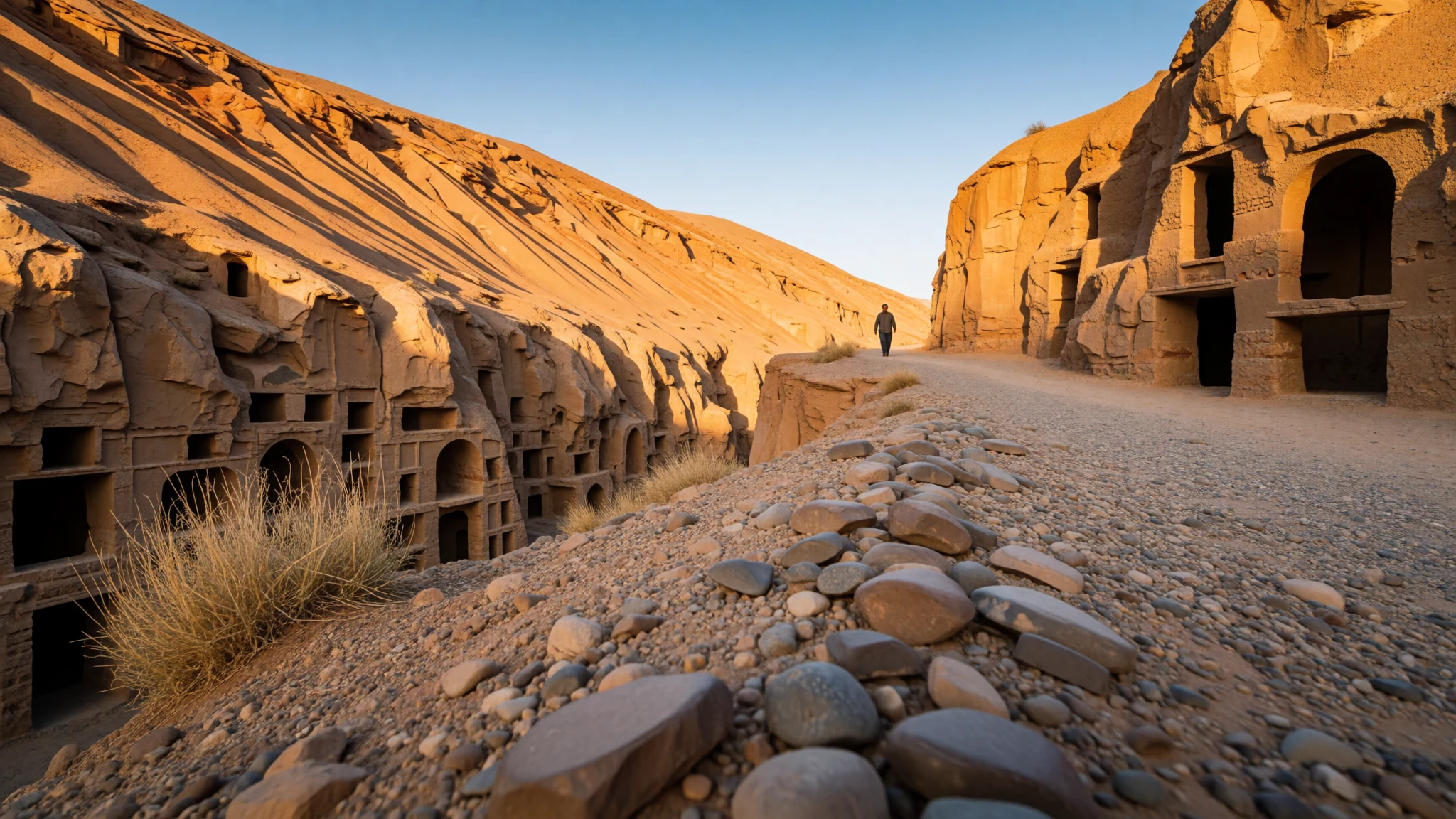
Bezeklik Caves offer a striking look into ancient Silk Road Buddhist art carved high into dramatic desert cliffs.
The place
Bezeklik Caves are situated in the Xinjiang region of western China, tucked away high on the rugged rock walls of the Mutou Valley. This dramatic gorge cuts directly through the dry ridges of the Flaming Mountains, positioned between the urban settlements of Turpan and Shanshan. The surrounding terrain is exceptionally arid and stark, sitting within the great sweep of the Turpan Depression. This basin is celebrated in geography as a place of extreme dryness, where summer temperatures regularly reach intense highs that test every traveller who arrives to explore the landscape. To counter the dry climate and scarce rainfall over the centuries, local communities engineered traditional underground water systems known as karez, linking subterranean mountain runoff through wells and channels to sustain life in the desert basin. Visitors travelling to see the cave sanctuaries navigate a landscape shaped by sun-baked clay hills, ancient trade routes, and sweeping vistas of barren rock. The journey to the grottos reveals a striking interplay between natural desert isolation and human ingenuity, where travellers encounter both the monumental scale of the Flaming Mountains and the quiet, hidden spaces hollowed out by monks and artists centuries ago. Despite the punishing heat of the daytime sun, the valley holds a profound stillness, offering a powerful reminder of the civilisations that once thrived along the northern and southern branches of the great overland routes connecting East and West.
Its story
Bezeklik Caves represent a remarkable chapter in the spiritual and artistic history of the Silk Road, with the surviving sanctuaries largely tracing their origins to the era of the West Uyghur kingdom. Between the fifth and fourteenth centuries, this rugged valley served as a vibrant crossroads where diverse cultures, languages, and religious traditions met and mingled. Monks, painters, and royal patrons carved dozens of chambers directly into the conglomerate rock cliffs, transforming the dry canyon walls into brilliant sanctuaries adorned with elaborate murals. These wall paintings portrayed scenes of devotional worship, celestial beings, and portraits of kings and princesses rendered in rich mineral pigments. Over succeeding centuries, shifts in trade routes, regional conflicts, and the gradual spread of Islam led to the abandonment of the Buddhist monasteries. The dry desert air helped preserve many of the fragile paintings until late nineteenth and early twentieth-century explorers removed numerous panels for European and Asian museums. Today, the remaining chambers stand as poignant archaeological testaments to a vanished medieval culture. The site tells a layered story of religious devotion sustained in extreme isolation, reflecting the rise and fall of kingdoms that once commanded the bustling desert passes between distant empires.
What to see
- Bezeklik Thousand Buddha Caves — Mutou Valley, Flaming Mountains
Bezeklik Caves comprise a dramatic series of rock-cut chambers clinging high to the cliffside above the Mutou Valley. Visitors can walk along the cliff pathways to examine the surviving sanctuaries, where faded murals and vaulted ceilings reveal ancient Buddhist artistry carved into the conglomerate rock face.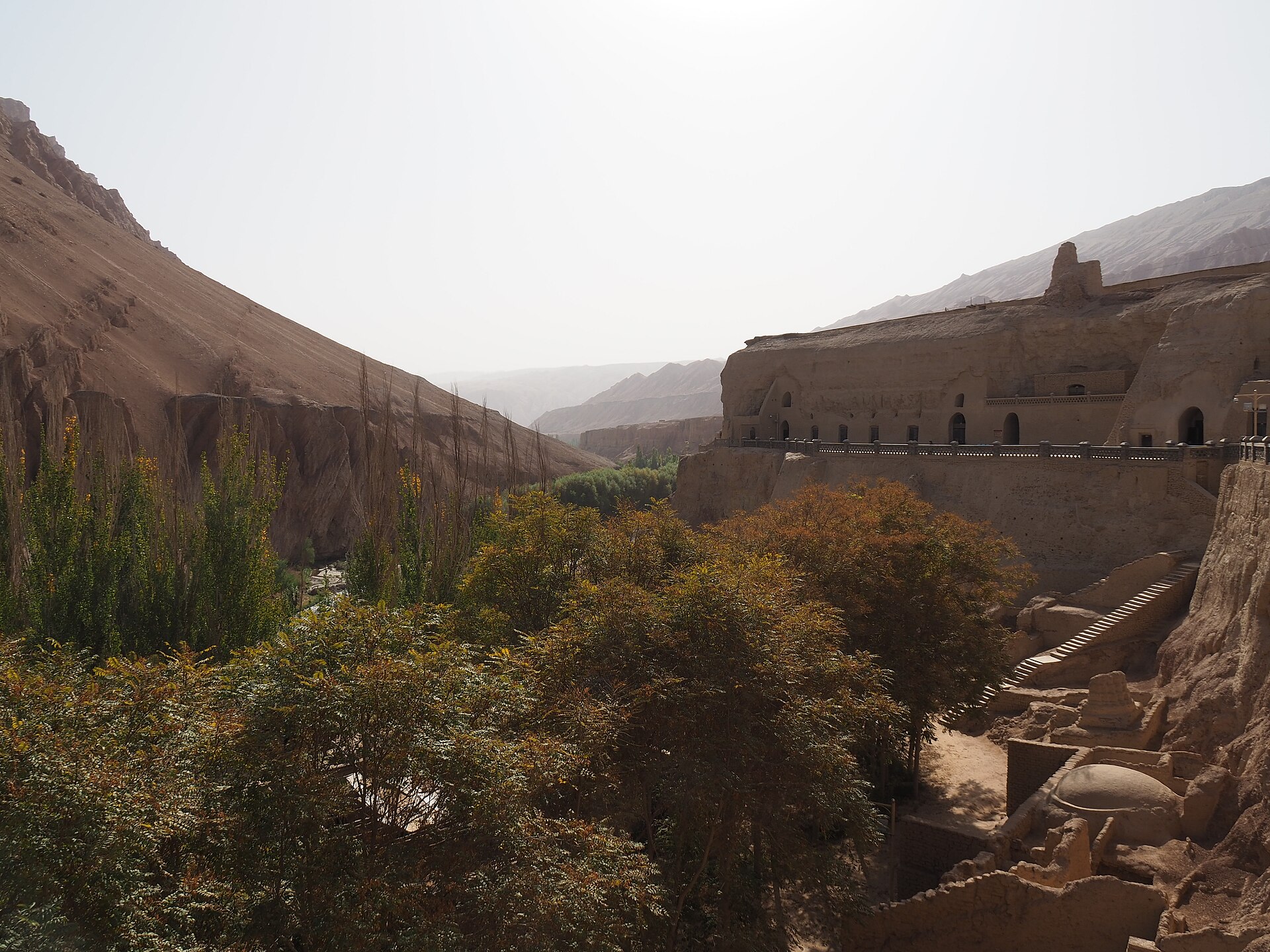
- Grape Valley — Turpan outskirts
Grape Valley is a lush agricultural oasis situated near the regional hub, renowned for dense canopies of vines producing sweet fruit for centuries. Shaded pathways beneath heavy green foliage offer a cool respite from the surrounding desert heat and showcase traditional viticulture methods. - Emin Minaret — Turpan outskirts
Emin Minaret is an architectural landmark constructed in the late eighteenth century, featuring an elegant tapering tower built from honey-coloured sun-dried bricks in traditional geometric patterns. Standing proudly near the edge of town, it honours a local leader and remains a masterwork of regional brickwork. - Tuyoq Valley — Tuyoq canyon
Tuyoq Valley is a historic Uyghur settlement nestled at the base of dramatic, eroded sandstone hills where traditional mud-brick homes cluster closely together. The village preserves an authentic rural atmosphere alongside ancient shrines, winding lanes, and terraced orchards fed by mountain streams. - Yarghol Ancient City — Yarghol plateau
Yarghol Ancient City preserves the extensive earthen ruins of a vast garrison town carved directly from a high plateau between deep river gorges. Walking through the abandoned streets reveals the monumental scale of ancient Silk Road fortifications established during early imperial dynasties.
Culture
Bezeklik Caves and the wider region are deeply rooted in traditional Uyghur culture, where hospitality, community gatherings, and Islamic customs shape daily life. Music and dance, particularly lively drum rhythms and intricate string melodies performed during family celebrations, form an essential part of local heritage. Social etiquette places a strong emphasis on respect for elders, modest greetings, and offering tea to guests upon arrival. Visitors exploring the local markets and rural villages will encounter an open, welcoming atmosphere driven by centuries of crossroads trade. Craftsmen continue to practice traditional trades, including carpet weaving, pottery, and intricate wood carving, passing skills down through generations within family workshops. When visiting religious sites, historic shrines, or rural communities near Bezeklik Caves, dress modestly with shoulders and knees covered, and always ask permission before taking portraits of local residents.
What to wear
Bezeklik Caves and the surrounding desert communities reflect a vibrant blend of traditional Uyghur attire and contemporary styles. Traditional everyday dress often features colourful embroidered caps known as doppa for men and women, alongside patterned silk or cotton dresses and waistcoats for formal occasions. Artisans weave rich textiles locally, utilizing bold geometric patterns and vibrant dyes that have characterised regional clothing for generations. In current daily life, younger residents and urban workers mostly wear modern Chinese apparel, including practical jackets, denim, and trousers, while retaining subtle cultural touches such as embroidered accessories. For travellers visiting Bezeklik Caves, practical clothing is essential due to the intense desert heat and dry climate. Lightweight, loose-fitting cotton or linen layers that cover the arms and legs protect against sunburn and dust while respecting regional modesty customs. Sturdy walking shoes or trainers are necessary for navigating rocky paths and uneven cliffside stairways around the grotto sites, and a wide-brimmed hat or scarf is invaluable for sun protection.
What to eat
- Laghman Noodles — Alleys near the main bazaar
Hand-pulled wheat noodles served in a rich, savoury tomato and lamb broth with peppers, onions, and local spices. These hearty noodles are a staple meal found in small eateries and street-side stalls throughout the regional bazaar alleys. - Tandoori Lamb Skewers — Downtown pedestrian zone stalls
Juicy chunks of mutton seasoned with cumin, chilli flakes, and salt, roasted over hot coals in traditional clay ovens or portable street grills. They offer a smoky, spicy flavour enjoyed by travellers and locals alike across the downtown pedestrian zone. - Baked Dumplings — Eastern side of the bazaar
Pockets of dough stuffed with minced lamb and onions, baked inside scorching clay walls until the pastry turns crisp and golden. These savoury bites provide a satisfying, portable lunch while exploring the bustling markets and bus stations. - Local Raisins — Local markets and fruit stalls
Naturally sweet dried grapes produced from the abundant vineyards grown across the valley floor using ventilated brick drying houses. Sweet and sun-ripened, they are sold by vendors in every market square as a traditional energy-boosting snack. - Wusu Beer — Local restaurants and cafes
A crisp regional lager brewed across Xinjiang, served cold to cut through the intense desert heat. It pairs exceptionally well with spiced mutton dishes and can be found in restaurants and cafes throughout the city.
Plan it
Best time. March to April and October to November offer pleasant temperatures, avoiding the extreme summer heat when temperatures frequently exceed forty degrees Celsius.
How long. 2–3
Getting there. Take a bullet train from Urumqi to Turpan (about 1 hour), then hire a local taxi or join a guided excursion for the final desert road journey to the Mutou Valley.
Budget. mid
Tips
- Start excursions early in the morning to avoid the punishing midday desert heat
- Carry ample drinking water and sun protection when visiting remote archaeological sites
- Keep physical cash handy for small entrance fees, rural markets, and local transport
- Be cautious of unofficial guides offering transport services around bus stations
Etiquette
- Dress modestly with shoulders and legs covered when visiting local villages and shrines
- Always ask permission before photographing local residents in markets and neighbourhoods
Nearby
Sources
- Wikidata Q980774 (CC0)
- Wikipedia (rev 1372632702) (CC BY-SA 4.0)
- Wikivoyage (rev 5410103) (CC BY-SA 4.0)