Chengde Mountain Resort
Chengde Mountain Resort, People's Republic of China
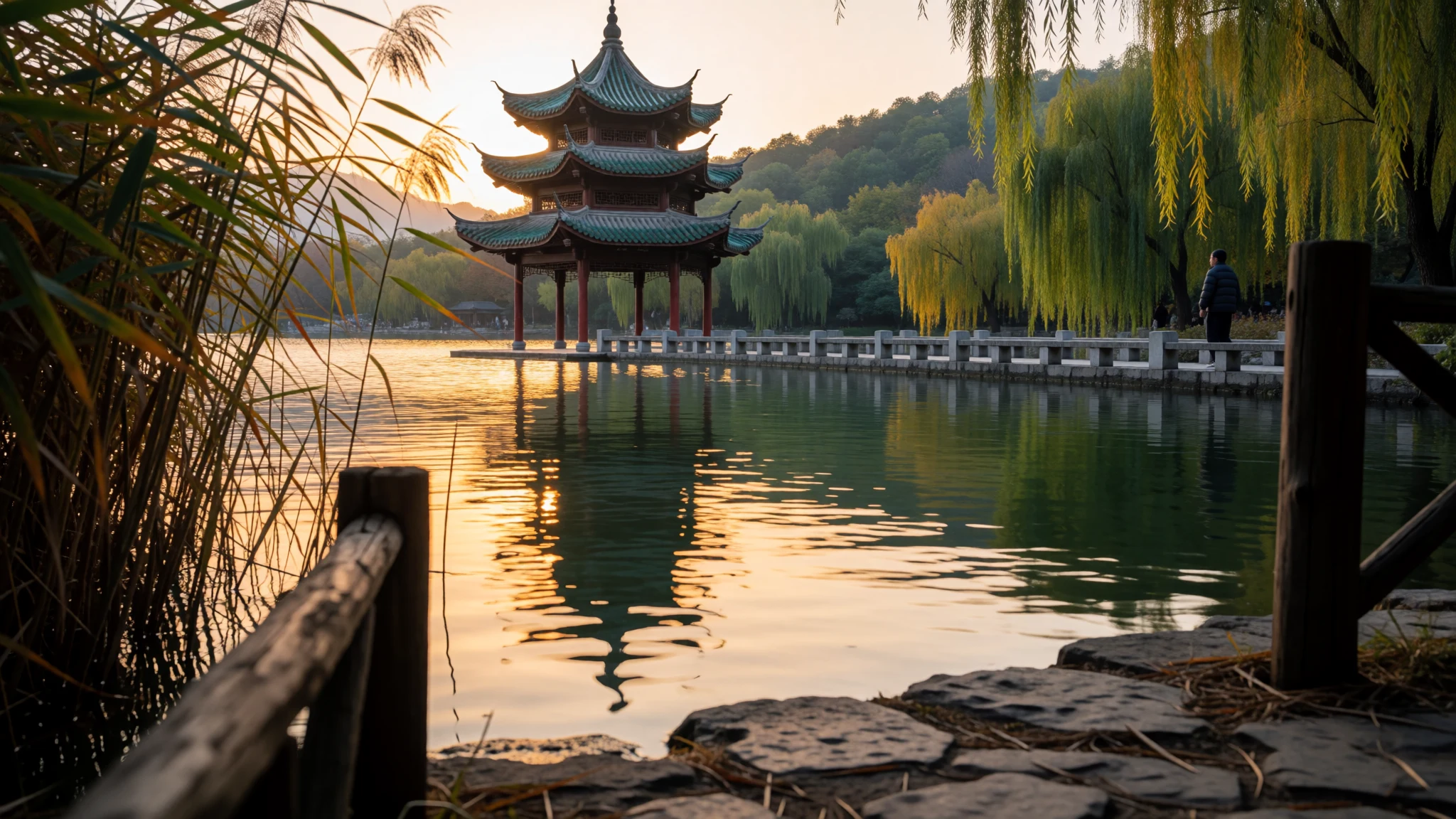
Chengde Mountain Resort is the Qing emperors' summer retreat, where lakes, palaces and Tibetan-style temples sit in cooler hills north-east of Beijing.
The place
Chengde Mountain Resort is an imperial retreat in Shuangqiao District, in the town of Chengde in northeastern Hebei province, about 225 kilometres from Beijing. Its classification as a Chinese garden undersells it. Inside one walled estate are palaces, lakes, meadows and wooded hills, and the whole was planned as a working summer seat of government, not a leisure park.
The layout falls into rough zones. The palace quarter lies to the south, a formal run of halls and courtyards. Beyond it comes a lake district of islands, causeways and pavilions, then open grassland, and finally hills to the west and north, crossed by paths and dotted with small shrines. A walker can pass from something that echoes the water gardens of the south to something closer to northern steppe in a single afternoon, which is why the place is often read as a sampler of Chinese landscape design.
The climate explains the choice of site. Chengde sits where warm and cold temperate zones meet, under a continental monsoon pattern: cold, fairly dry winters with little snow, big swings between day and night, and summer thunderstorms that break up the heat. The Qing court wanted relief from the lowland summer around Beijing, and the hills delivered it.
Today the estate is a calm, green interior at the edge of a modest provincial city. Distances are bigger than the map suggests, so most visitors choose a route, perhaps palaces, then lake, then one stretch of hills, rather than trying to cover everything. Weekends and national holidays bring tour groups, but the hills thin the crowds quickly.
Its story
Chengde Mountain Resort took 89 years to complete, from 1703 to 1792, and it grew from a hunting-ground retreat into a second centre of Qing power. The Qing rulers were Manchu, with a tradition of riding, archery and life under canvas, and the site gave them room for all of that alongside the business of government.
The southern palace zone was deliberately laid out in the manner of the Forbidden City. A front court served for receiving senior officials, nobles from the empire's many peoples and foreign envoys. Private rooms lay behind it for the imperial household. In other words, Chengde was not a holiday home but a court in summer dress, where audiences were held and decisions were made through the hot months.
Two emperors tie themselves most closely to the place in the record. The Kangxi emperor spent 12 summers in the residential hall called Yanbozhishuang, and the Qianlong emperor spent 52 summers there. Qianlong's long association is one reason so much building continued through his reign, including the temples that rose around the estate for visiting religious and tribal leaders.
The annual move north gradually lost its purpose as imperial power weakened, and the summer routine faded as the dynasty gave way to the Republic. The buildings and landscape survived as a public site rather than a court. What visitors see now is therefore less a ruin than a preserved working retreat, with the gardens, lakes and temples still reading much as their makers intended.
What to see
- Lizhengmen and the palace quarter — Southern palace zone
Visits usually begin at Lizhengmen, the main gate, which opens onto the southern palace zone. The halls follow the formal, axial order of Beijing's Forbidden City, with ceremonial courts at the front and private rooms behind. Interiors are plainer and darker than the gardens beyond, but they show clearly how the summer court worked.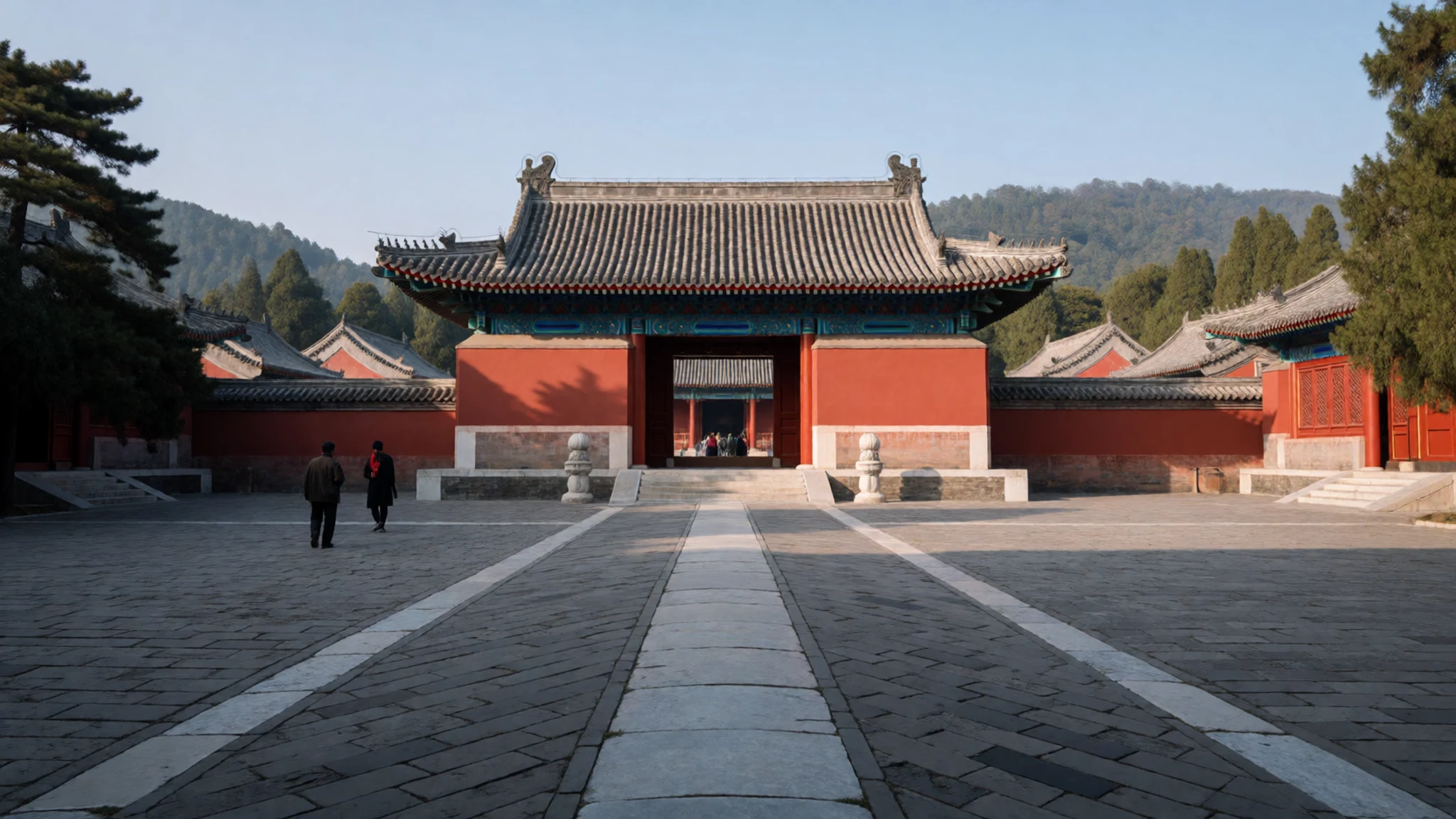
- Yanbozhishuang Hall — Rear palace quarter
The main residential hall in the rear palace quarter, where the Kangxi and Qianlong emperors spent their summers. Its modest scale surprises many visitors expecting grandeur: low rooms, carved timber and quiet courtyards. Arrive early, since tour groups funnel through the narrow doorways later in the morning.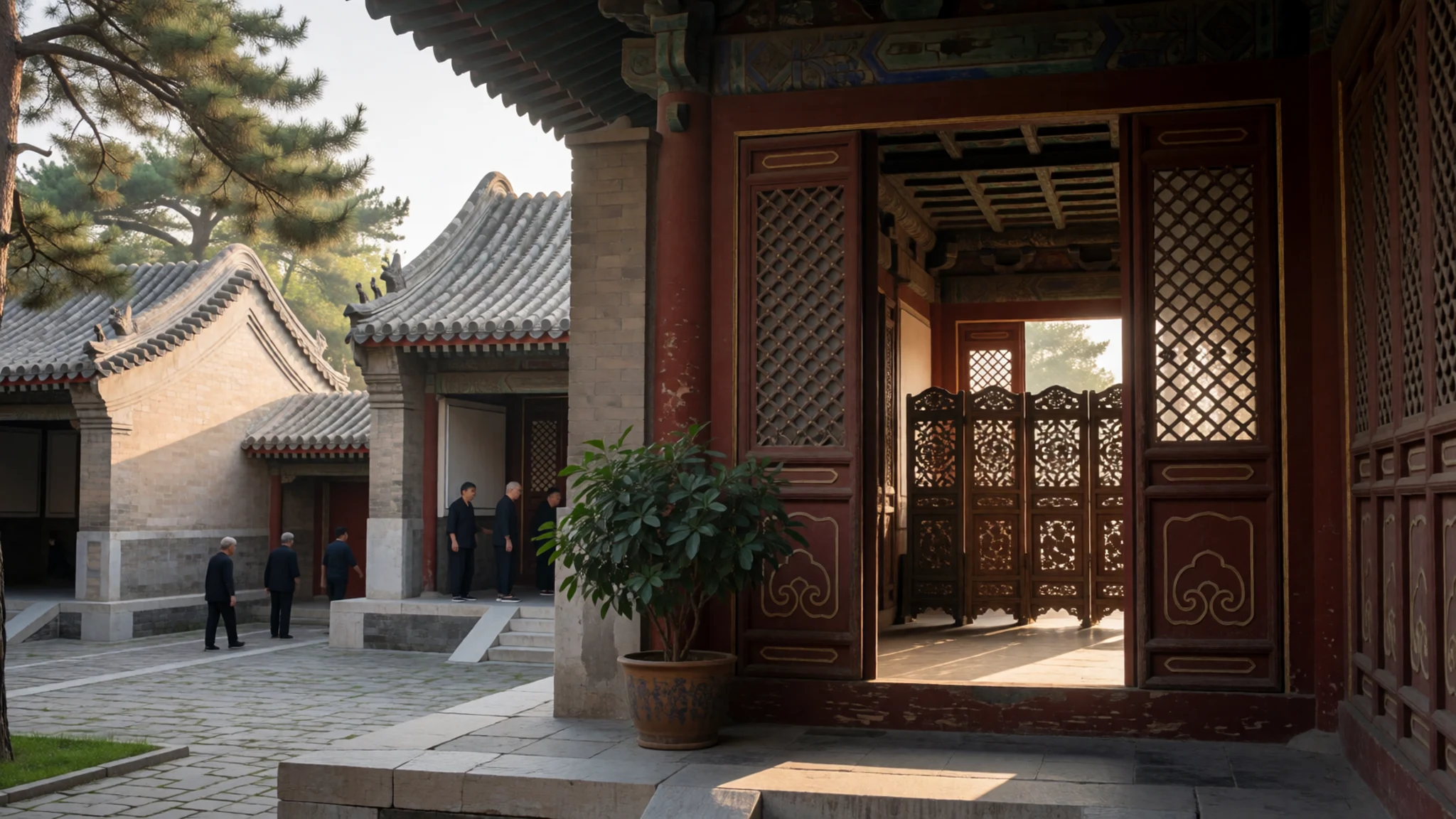
- The lake district and Jinshan Pavilion — Central lake area
Beyond the palaces the ground opens into a chain of lakes divided by causeways and small islands, with pavilions, bridges and willows at the water's edge. Jinshan Pavilion, a tiered tower on an island, gives a view across the water. Walking the shoreline at an easy pace fills a good part of a morning.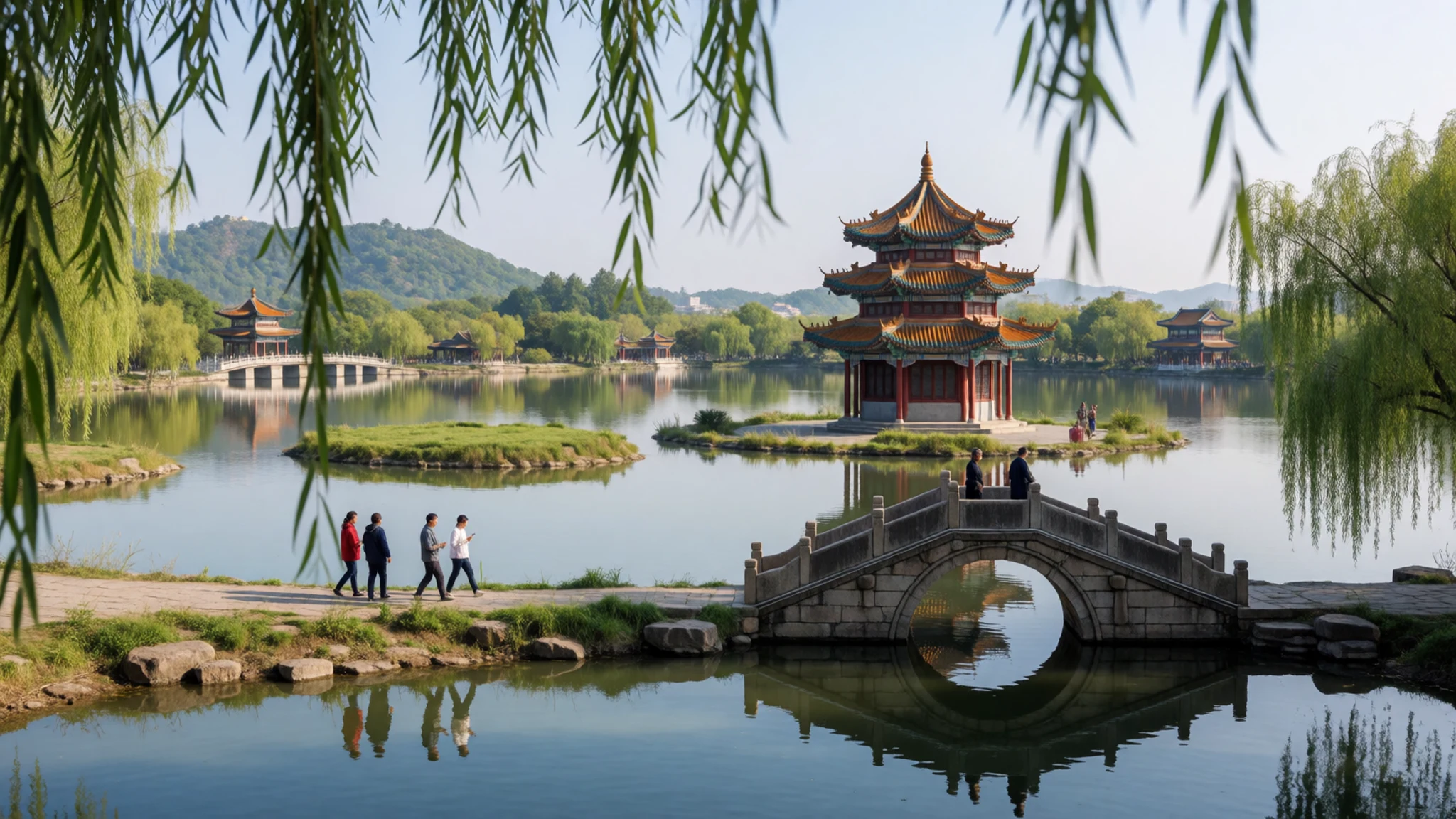
- Wenjin Pavilion — Garden grounds, west of the palace quarter
A library pavilion inside the garden grounds, built to hold a copy of the Siku Quanshu, the Qing compendium of Chinese writing. It sits beside a pond with rockwork and makes a small, shaded stop. Its look reflects how designers brought southern garden habits into a northern estate.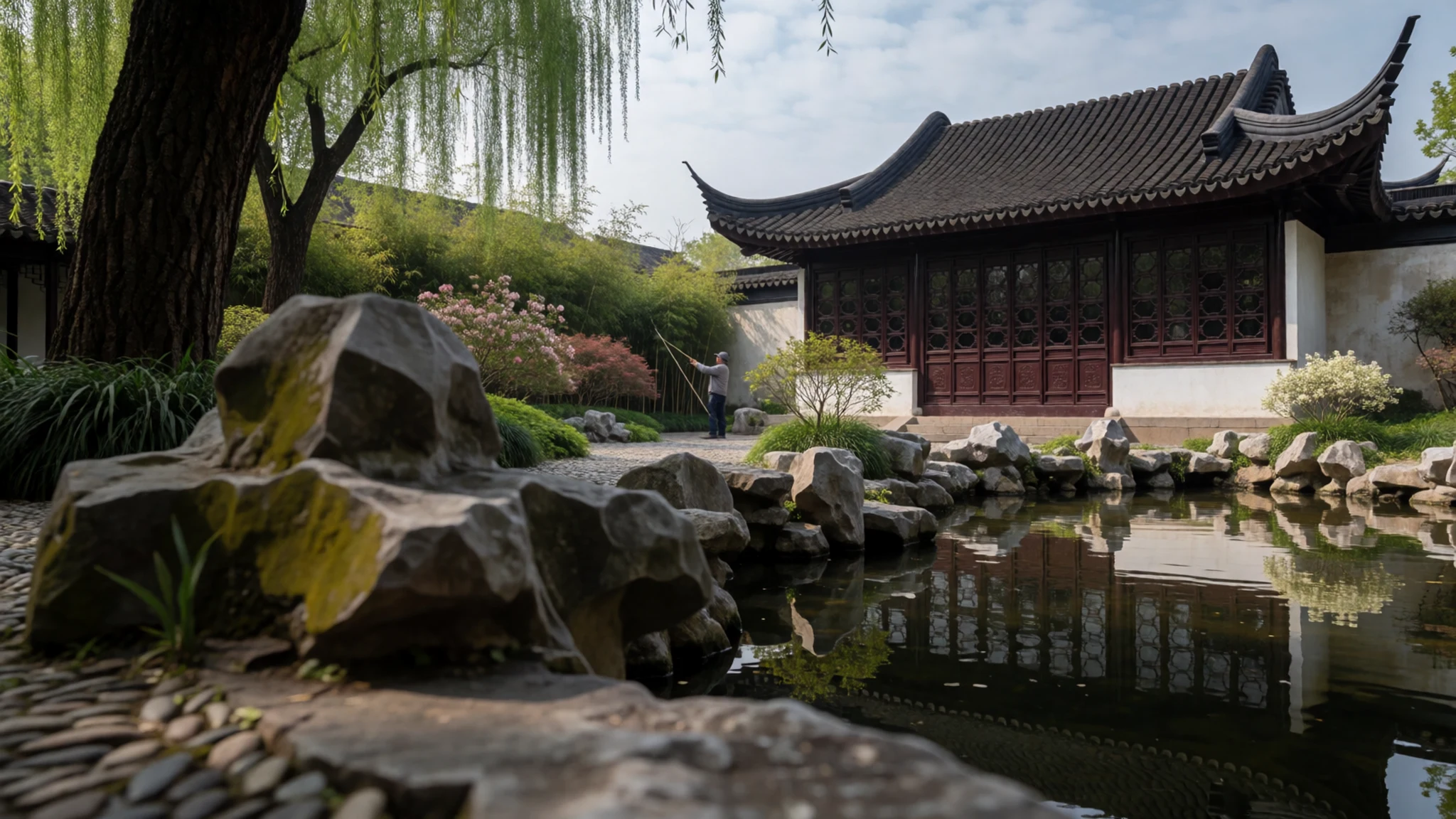
- Putuo Zongcheng Temple — Outer temples, north-east of the resort
Just outside the resort wall stands a group of temples built for Qing dealings with Tibetan and Mongol leaders. Putuo Zongcheng is the clearest example: a hillside complex in Tibetan style, with massive white walls and red details. A taxi or local bus reaches it; treat it as a separate half-day. Check the official site for opening arrangements.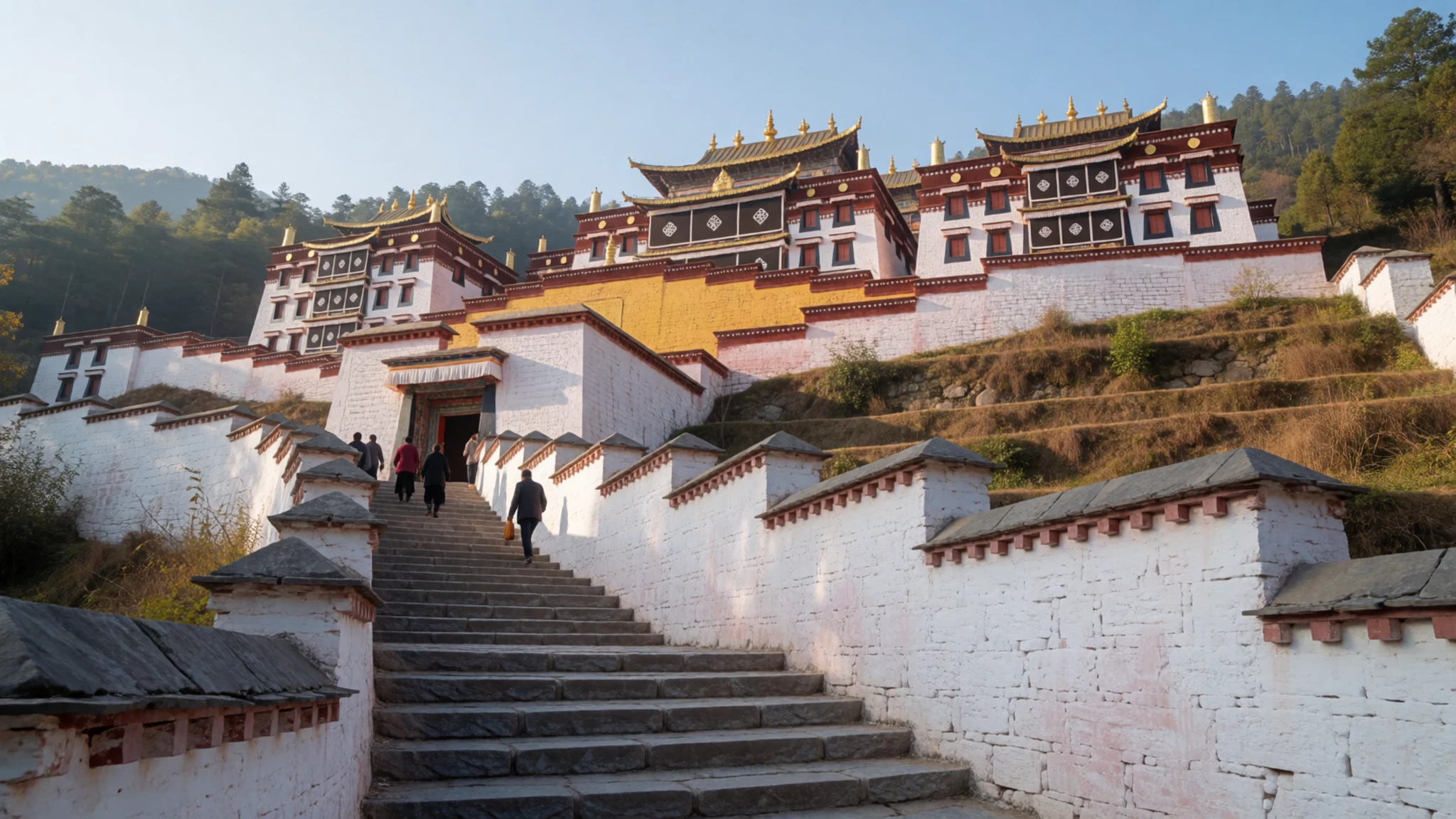
Culture
Chengde Mountain Resort carries the culture of the Qing court, which was Manchu in origin yet governed a multi-ethnic empire. The summer base mattered as much for diplomacy as for rest: Mongol nobles, Tibetan religious leaders and foreign envoys were received here, and the nearby temples were built in Tibetan and other styles to speak to those guests. The mix of Han garden design, Manchu habits of riding and hunting, and Tibetan Buddhist architecture is the heart of what the place expresses.
Modern Chinese visitors treat it as heritage and as green space at once. Early in the day, locals walk, practise tai chi, sing or play instruments in the park, and families stay on for picnics or a boat ride in season. City dwellers from the plains still come for the cooler summer air, as the court once did. In the temples, incense, prayer and offerings continue, though some halls function mostly as museums, so it is worth reading the signs to see which are active. In the temples, keep your voice low, do not touch statues or step on door thresholds, and ask before photographing monks or worshippers.
What to wear
Chengde Mountain Resort belongs to the Manchu court, whose formal dress was the long, side-fastened robe in silk satin or brocade. Court robes carried embroidered dragons, waves and clouds, with fur trim for the colder months, and Manchu women wore tall-soled shoes that raised the step. These garments belonged to ceremonies and audiences, and today they appear mostly in museums and in costume-hire photo shoots at heritage sites, where visitors sometimes dress up for the day.
What people wear now is practical and unfussy. Locals favour light layers, sun visors and walking shoes for park strolls, with a jacket added as the evening cools. Outside holiday periods, nobody dresses up to visit the gardens.
For a visitor, the main issue is weather. Chengde has big swings between day and night and sudden summer thunderstorms, so carry a light waterproof, a fleece or similar for mornings and evenings, and a sun hat for the open lake area. Wear closed, grippy shoes: the stone paths are uneven and the hill routes are steeper than they look. Temples do not enforce strict dress codes, but covered shoulders and knees are respectful, especially inside active Tibetan-style halls. In winter, bring proper insulation, since the dry cold feels sharper in the open.
What to eat
- Sachima — Bakeries and snack shops in the town centre
A sweet of fried egg-noodle strands bound with syrup and cut into soft, crumbly blocks, often credited to Manchu cooking. It travels well and suits a day of walking. Look for it in local bakeries and snack shops in the town centre.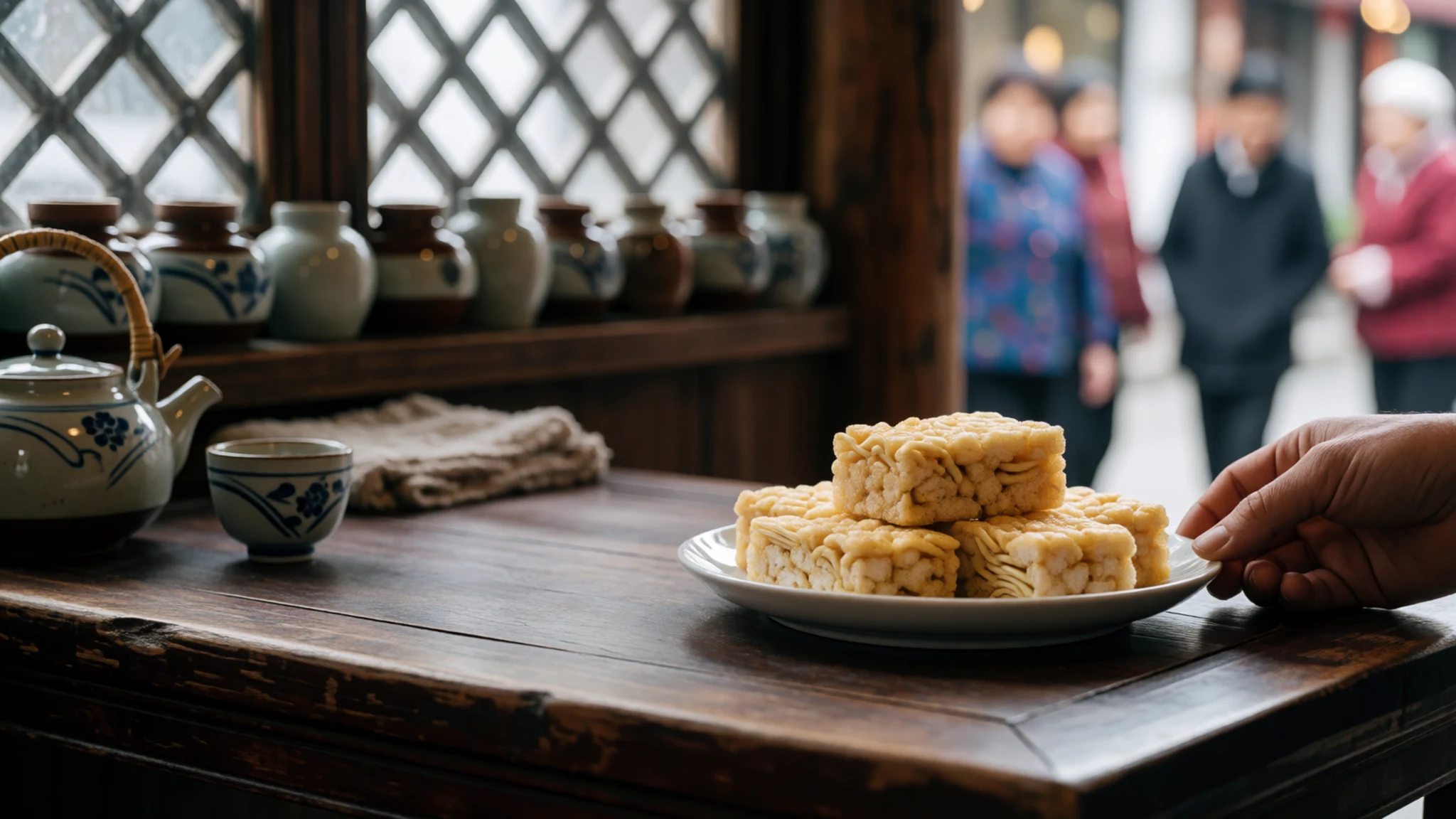
- Tanghulu (candied hawthorn) — Street vendors near park gates and pedestrian streets
Hawthorn berries on a stick, dipped in hard sugar syrup, tart inside and glassy outside. It is a northern Chinese street snack and tastes best in cool weather. Look for vendors near park gates and busy pedestrian streets.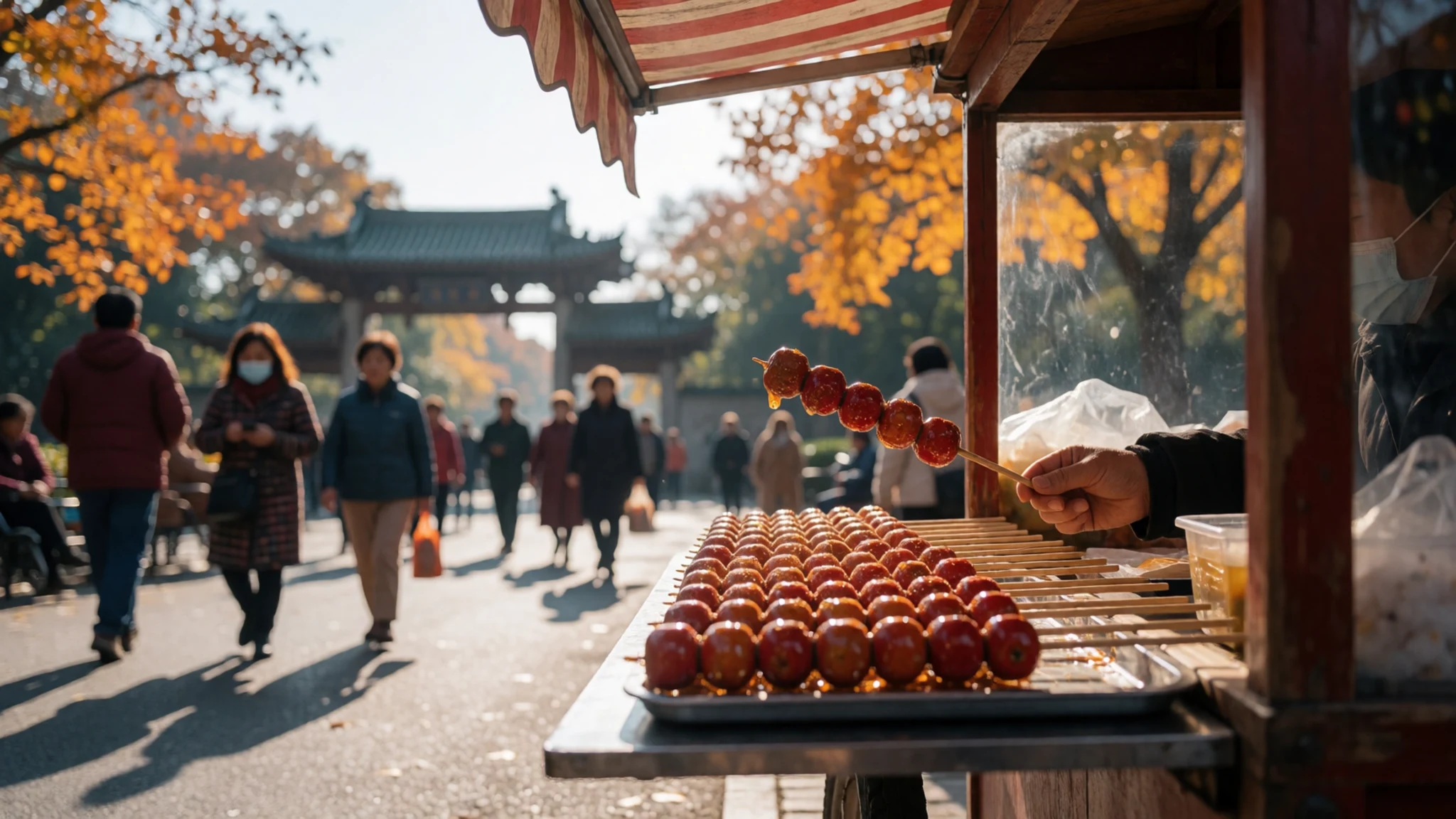
- Almond drink — Supermarkets, general shops and tourist stalls
A sweet, milky drink made from almonds, served cold and often sold in cans or bottles as a local favourite. It is mild and refreshing after a warm walk through the grounds. Try it at general shops and supermarkets, or at tourist stalls. - Lamb skewers and hotpot — Barbecue restaurants and evening food streets
Northern Chinese cooking leans on lamb, grilled on skewers with cumin and chilli, or cooked in a simmering hotpot at the table. It makes a hearty dinner when evenings cool. Look for busy barbecue restaurants and food streets after dark. - Zhajiangmian — Small noodle shops near the town centre
Wheat noodles topped with a thick, savoury fried bean sauce and shredded cucumber or other crisp vegetables. It is cheap, filling and found across northern China. Small noodle shops near the town centre serve it for lunch.
Plan it
Best time. April to October is the recommended window. Summers are cooler than Beijing's, but thunderstorms are frequent and day-to-night swings are large, so pack layers. Winter is cold and quiet with little snow, and the gardens are bare.
How long. 1–2
Getting there. Most visitors travel from Beijing, about 225 kilometres away, by train or long-distance coach; check current timetables and book ahead in holiday periods. In Chengde, the resort is reached by taxi, local bus or a walk from the town centre.
Budget. low
Tips
- Arrive at opening time to enjoy the palace quarter and lake path before tour groups arrive
- Carry a light waterproof and a warm layer, as weather turns quickly
- Check the official site for ticket options, opening times and any limits on visitor numbers
- Bring your passport for ticket checks, and carry some cash alongside any mobile payment option
Etiquette
- Keep your voice low and avoid touching statues in the temples
- Do not step on door thresholds in temple halls
- Ask before photographing monks, worshippers or other visitors
Nearby
Sources
- Wikidata Q11642673 (CC0)
- Wikipedia: Chengde Mountain Resort (rev 1366152868) (CC BY-SA 4.0)
- Wikivoyage (CC BY-SA 4.0)