Beihai
Beihai, People's Republic of China

A humid seaport on Guangxi's Gulf of Tonkin coast, good for beach days, seafood markets and colonial-era streets, best outside the rainy summer.
The place
Beihai holds prefecture-level status and lies in the southern reaches of Guangxi. It sits on the northern shore of the Gulf of Tonkin, in southern China. It has a population of about 1.85 million and also governs small islands, including Weizhou and Xieyang. The city lies directly west of the Leizhou Peninsula, and its seaport has long made it a gateway for trade with a wide inland hinterland, including Hunan, Hubei, Sichuan, Guizhou and Yunnan. Most of the money made here comes from trade, and a large shipyard sits alongside the commercial life of the port.
Beihai is not heavily visited by foreigners, and English is not widely spoken, so expect a quieter welcome than in the big eastern cities. The local dialect is a form of Cantonese, though many residents also understand or speak Mandarin. In Qiaogang, descendants of ethnic Chinese families who escaped Vietnam as refugees in the Sino-Vietnamese War continue to live among the wider population, enriching the city's variety of backgrounds. There is also a small expatriate community, which keeps a few bars and cafés busy.
Practically, the city works as a base for sea air, seafood and slow evenings. The old colonial core and the modern centre are a short ride apart, and the beaches and mangroves lie further out. Heat and humidity shape most days. Beihai suits an unhurried visit, with time for the markets and a long lunch by the water, rather than a checklist of monuments.
Its story
Beihai's modern history begins with the 1876 Treaty of Yantai, which opened the coast to foreign powers. In the decades that followed, eight Western countries, including Britain, the United States, Germany and France, established consular offices in the port, and missions and schools followed. Fifteen of those Western-style buildings still stand, and the old waterfront lanes that held them have become a focus for nightlife.
Local government changed often in the twentieth century. After the Communist takeover in 1949, Beihai was first a town under Hepu County. Over the next few decades it passed between the provinces of Guangdong and Guangxi and was alternately upgraded and downgraded in rank, at times a county-level city and at times a commune. It returned to prefecture-level status in 1983, a year after the city opened to international tourism in 1982.
That opening marked a turn in the city's identity. Trade remained the engine of its economy, supported by a large shipyard, while visitors began to arrive for the coast and the colonial streetscape. Beihai's story is one of a port shaped by outside traders, reshaped by administrative changes, and now welcoming travellers who come for its beaches and seafood.
What to see
- Old Street — Old town, city centre
Old Street preserves the original site of Beihai's first Western trading houses, and its colonial-era buildings are weathered, some close to crumbling. By day it is a relaxed pedestrian zone of souvenir shops and a few coffee shops. After dark, bars take over and the nightlife gets lively, so pick your hour to suit your mood.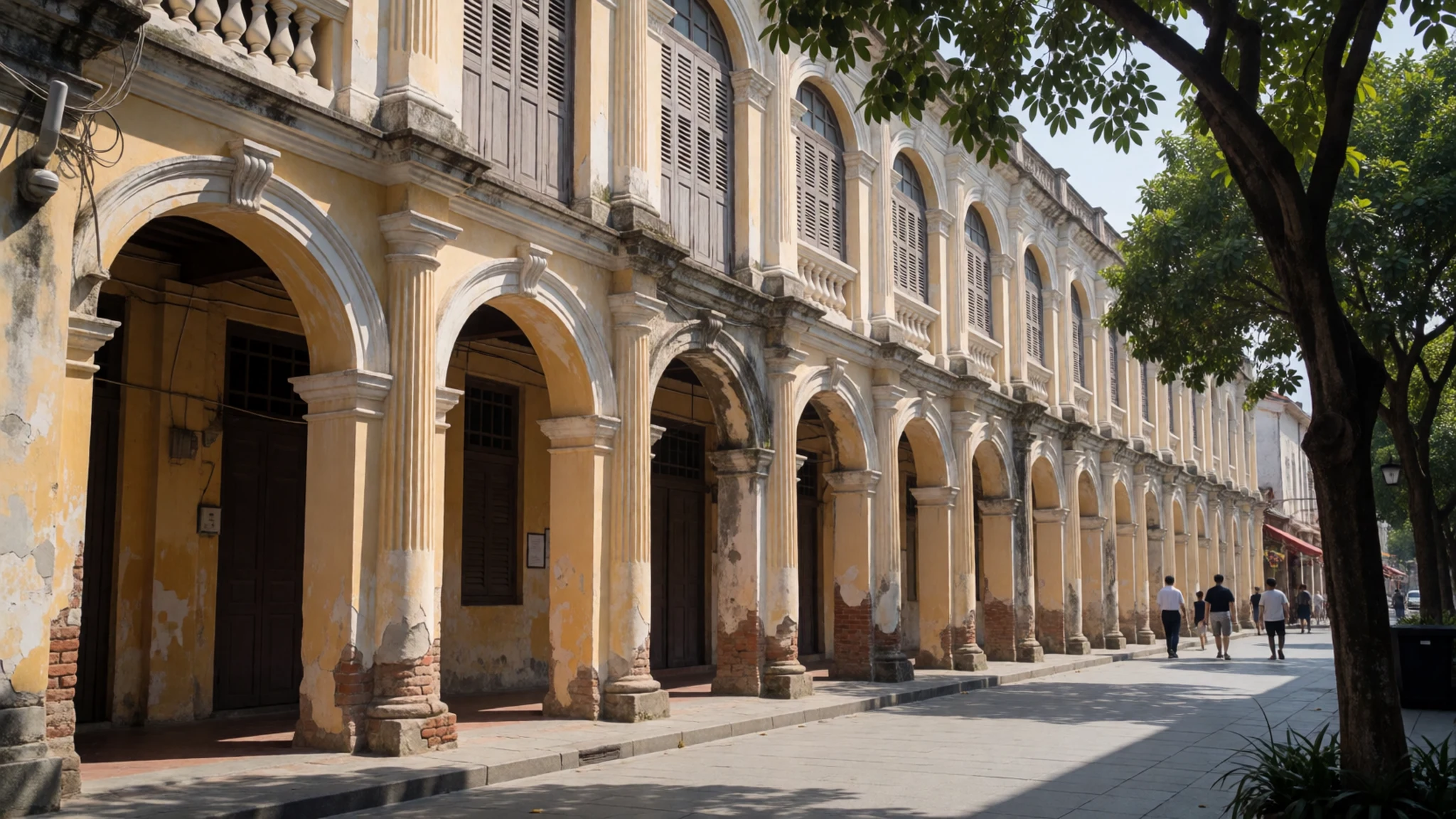
- Silver Beach — Beach district
Silver Beach, also known as Beihai Silver Beach, is a long shore of grey-white quartz sand and is worth the trip. Clear blue water is not what you get: the pale sand makes the sea look cloudy, although it is considered safe for swimming. Go for the sand, the sea breeze and an unhurried afternoon, and bring sun protection, as the open shore offers little cover.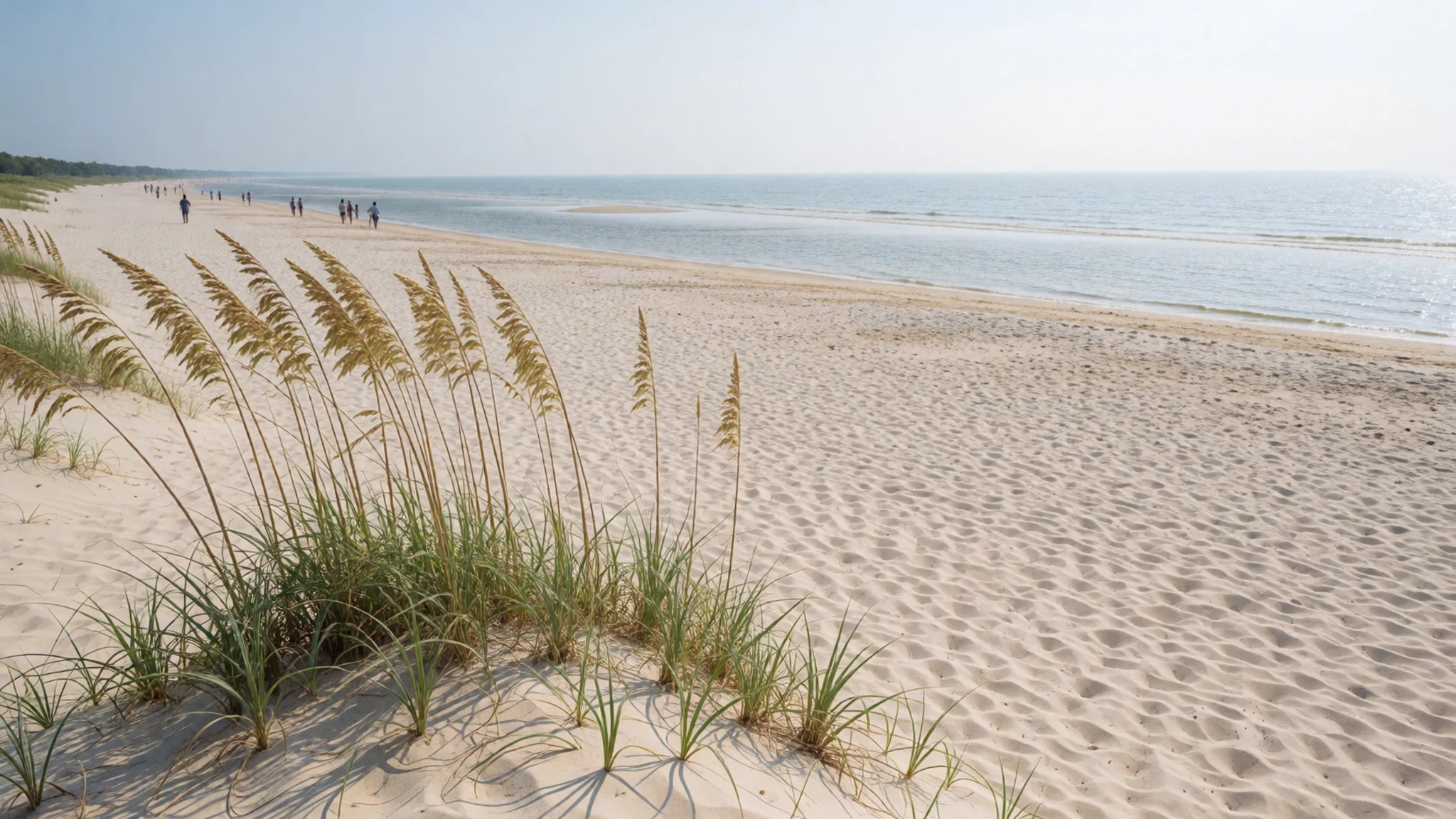
- Jinhaiwan Mangrove Forest — Jinhaiwan, south-east of the centre
The Jinhaiwan Mangrove Forest ecotourism area covers about 20 square kilometres and is home to a wide range of birds and sea creatures. Go in the cooler hours of the day, bring insect repellent, and wear shoes that cope with damp, muddy ground. Check the official site for opening times before you set out.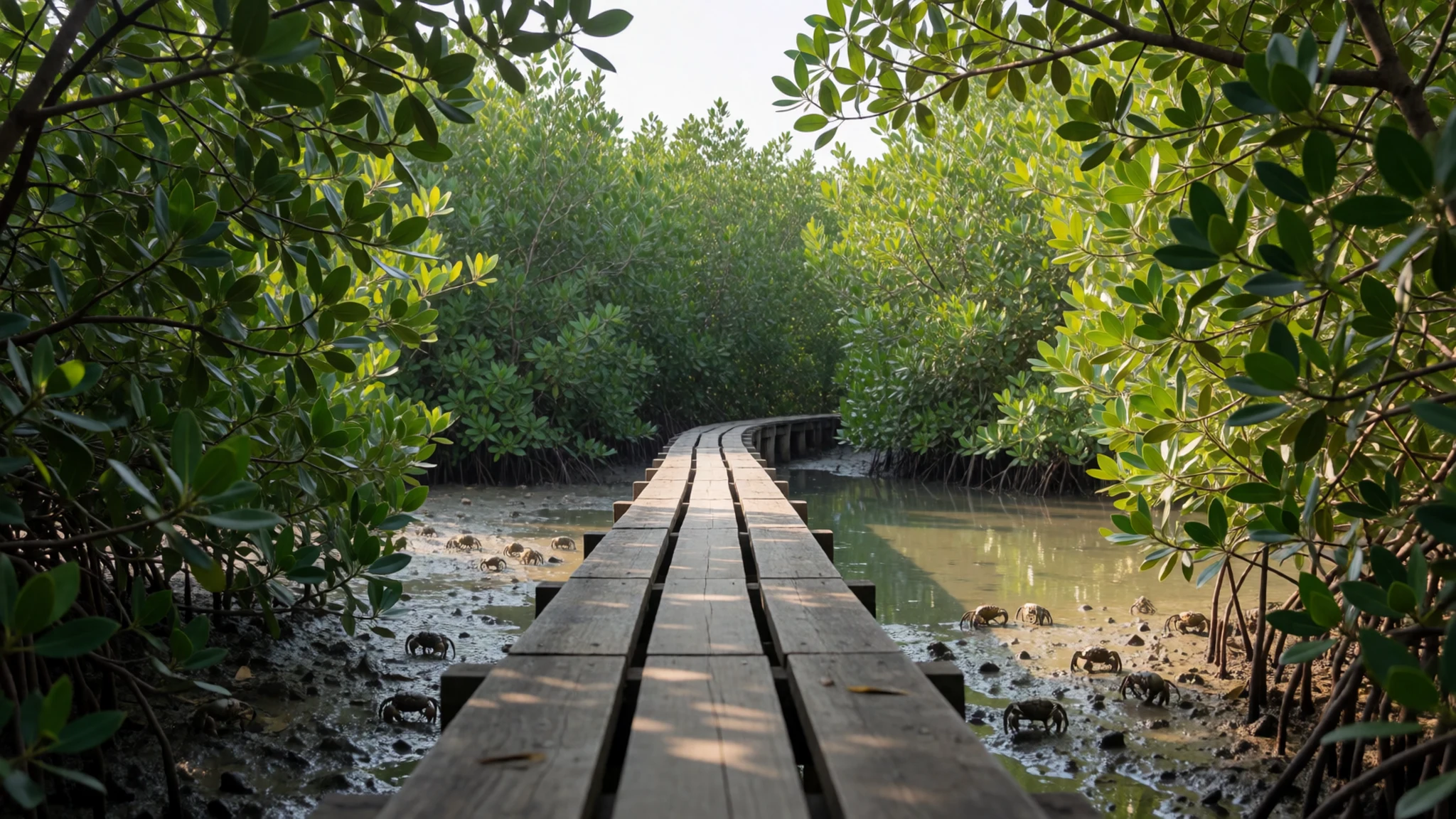
- Underwater World — Beihai city
Underwater World combines an oceanarium with an exhibition centre of shellfish and coral, and it is a strong pick for aquarium lovers. The collection includes over a thousand kinds of coral and shellfish alongside a large set of fish. It is an easy indoor stop when the sun is at its hardest, so it suits a hot afternoon. Check the official site for current hours and tickets.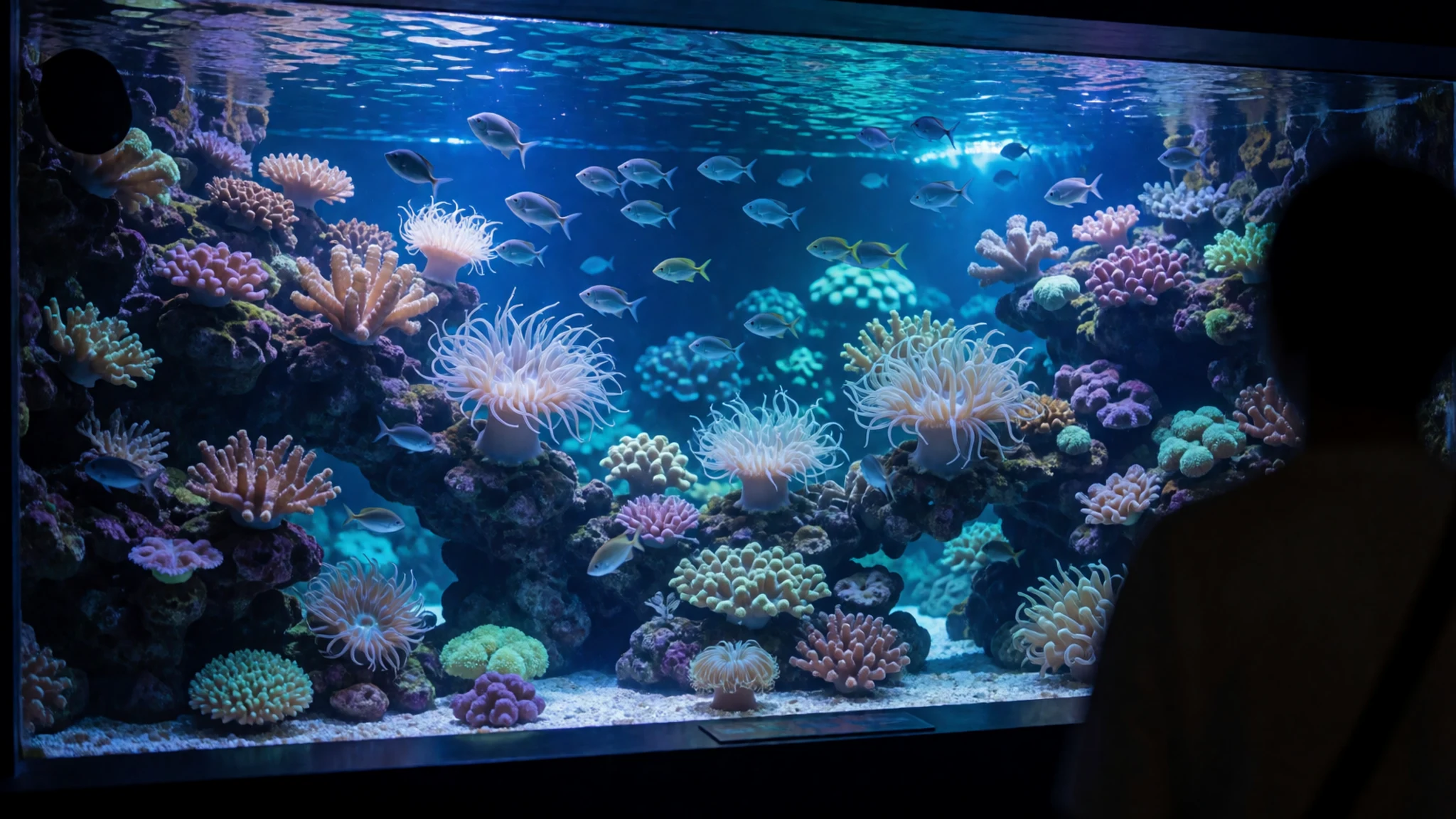
- Night markets — Central streets
Night markets are the heart of Beihai's evenings, and locals stay out late. Most start around dusk, with vendors cooking seafood and vegetables, serving drinks, and setting out plastic stools for customers. Wander the streets with an appetite, pick a stall with a steady queue, and expect the area to be lively, busy and noisy until late.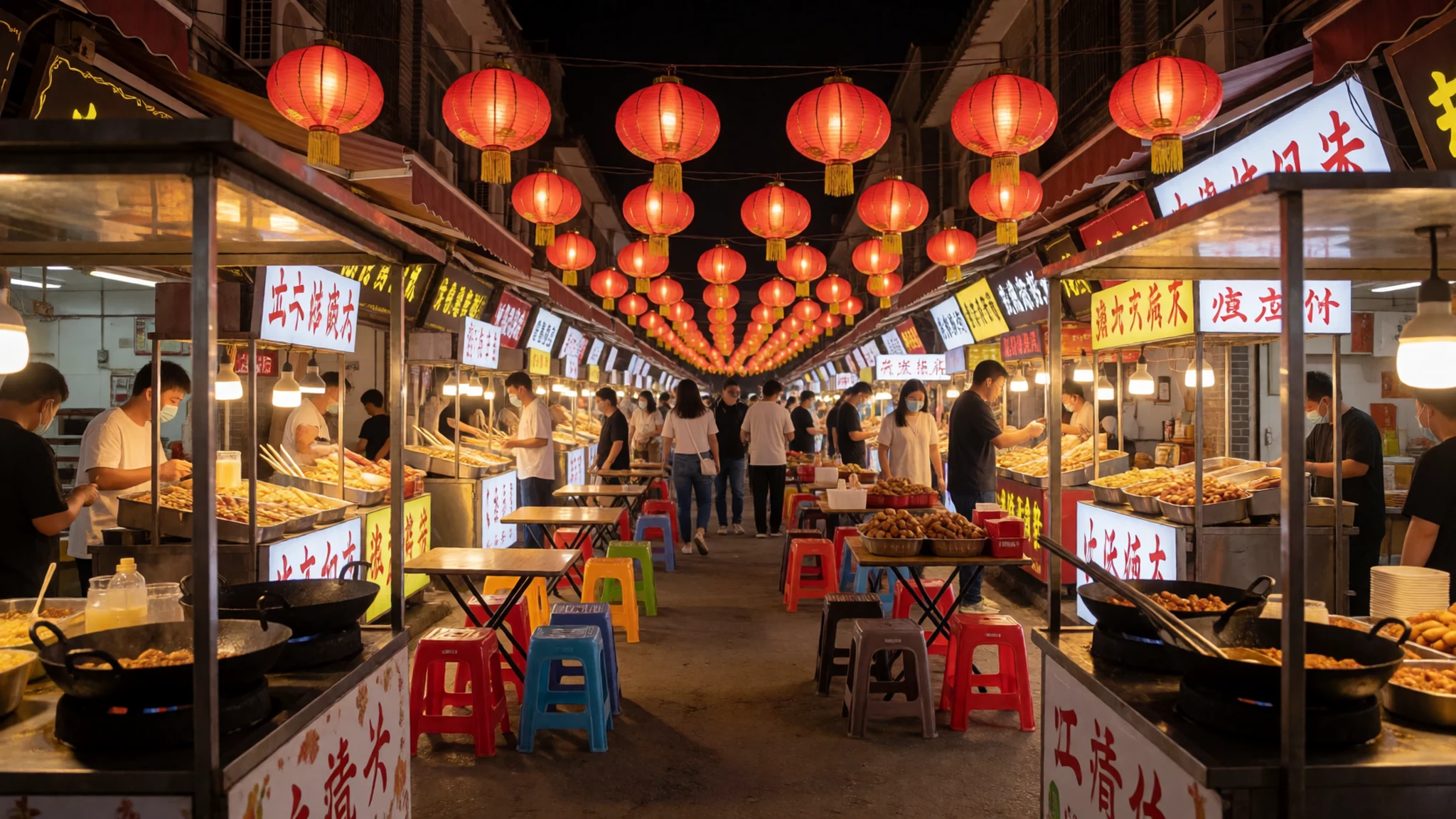
Culture
Beihai is a working port with a relaxed side, and most people you meet are curious rather than formal. English is not widely spoken, so a few words of Mandarin, written characters on your phone or a translation app will smooth most exchanges. The local speech is a form of Cantonese, but many residents also understand or speak Mandarin, so begin in Mandarin and let them show you what they prefer.
Much of the social life happens outdoors. Night markets fill up around dusk, and families and workers linger at the plastic tables well into the evening. Meals are shared and lively, and nobody expects you to eat quietly. Stalls and street scenes are common subjects for photographs, but people's faces are a different matter.
The Qiaogang area is home to families who arrived as refugees from Vietnam during the Sino-Vietnamese War, and their story is part of the city's fabric. Approach residents with curiosity rather than assumptions, and avoid jokes about the war or about cross-border politics. Ask before you photograph anyone at a stall or table, and accept a polite no without argument.
What to wear
Beihai does not have a dress tradition that its sources describe, so this section draws on the wider region. The dress most associated with Han Chinese communities is hanfu, a loose-cut robe made in silk or cotton, now worn mainly for festivals, weddings and photo sessions. Textile traditions in rural Guangxi, including those of the Zhuang people, are better seen at regional markets and festivals than in the city itself.
In the city, dress is practical and modern. Residents wear T-shirts, jeans, light dresses and sneakers in summer, with smarter clothes for work and evenings out. Night market crowds are relaxed, and sandals and loose tops are common when the weather is hot.
The humid heat means light, breathable cotton or linen is the sensible choice, in loose cuts that let air move. Pack a sun hat and sunglasses for the open beaches, and a light waterproof for the rainy months from June to September. Shoes matter more than clothes: closed, quick-drying shoes suit the damp mangroves and sand, while sandals work for the markets and old streets. Dress a little more neatly for a restaurant or evening out, but there is no need for formal wear.
What to eat
- Night-market seafood — The city's night markets, which open around dusk
Cooked seafood is the core of a night-market meal. Vendors grill, steam and stir-fry local catch and vegetables, and you eat at the plastic tables they provide. Pick a stall that is busy with locals, and order a few dishes to share. Seafood here costs much less than in Shanghai or Hangzhou.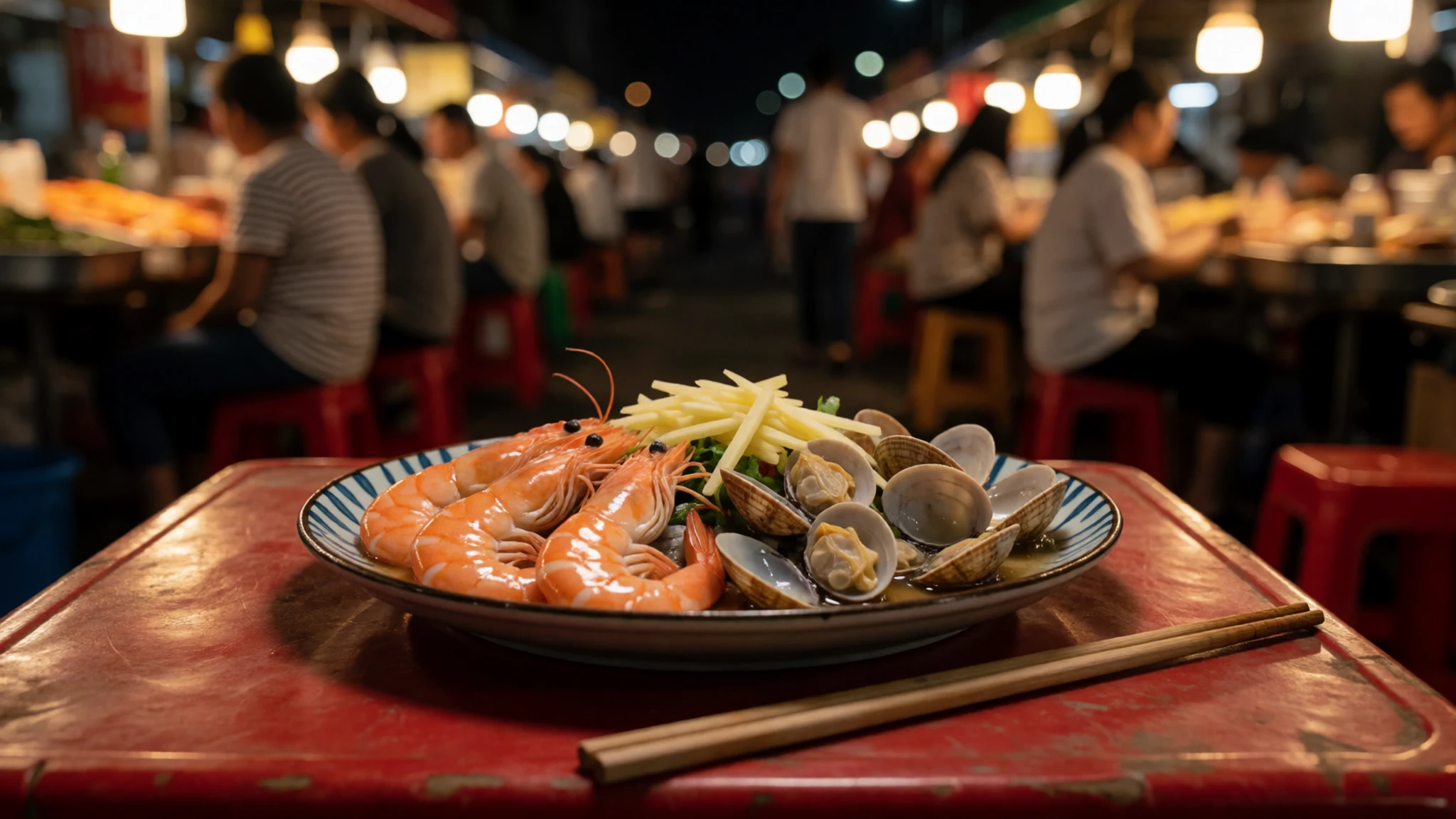
- Raw seafood from the wet market — Beiyun Market and Guizhong Market
Both markets sell raw seafood, so you can see and choose what you are buying before anyone cooks it. Ask the seller to clean the catch, or carry it to a nearby eatery that will cook it. Confirm the weight and the price before you agree.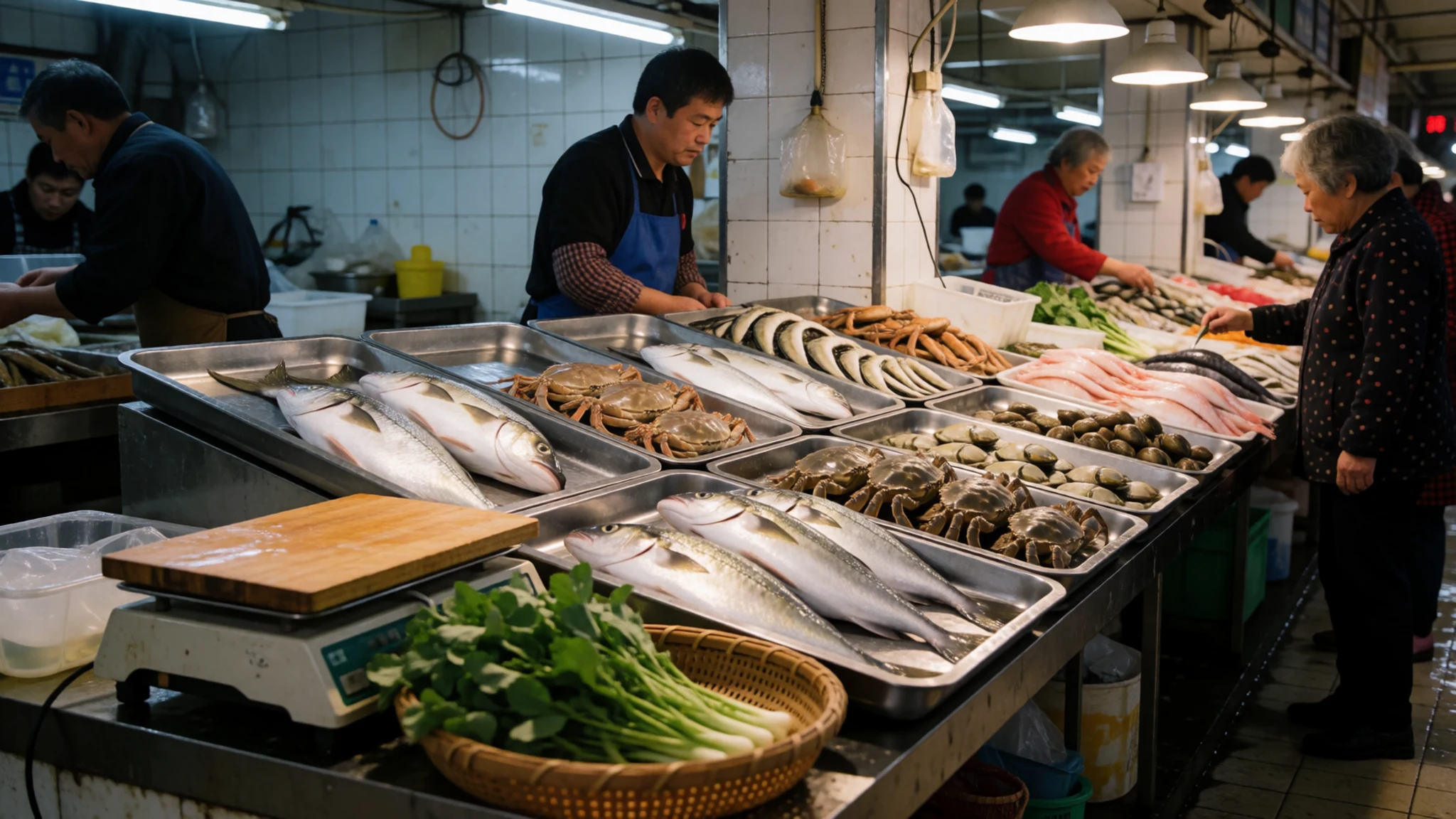
- Salted and dried seafood — Shuichanpin Market
The Shuichanpin Market sells salted and dried aquatic products, a useful place to buy gifts or stock up on dried fish for later. Dried items keep well, so they suit a bag to carry home. Ask the seller how the product is packed and whether it is sealed for travel. - Pineapple on a stick — Street stalls near the night markets
Half a pineapple on a stick is a classic coastal snack in Beihai and other southern Chinese cities. It is sweet, sharp and cheap, which makes it an easy first snack on a warm evening. Buy it from a street stall near the night markets. - Seafood-island dishes — Waisha on the northern shore; Dijiao village
Seafood Island, known locally as Waisha, has many restaurants, tents and stalls on its northern shore serving cooked seafood. Menus are often priced by weight, so ask before ordering. Dijiao has smaller eating places with cheaper cooked seafood. Going with someone who speaks Chinese makes the ordering easier.
Plan it
Best time. November to March are the most comfortable months: the autumn and winter are the drier seasons, with December to February the driest, and the air is less heavy. June to September is the rainy season, when most of the year's rain falls, and summer is hot and very humid.
How long. 2–3
Getting there. Nanning is the main gateway: high-speed trains from Nanning Station or Nanning East Station reach Beihai in around an hour and a half. Overnight buses run from Guilin and Liuzhou via Nanning, and a ferry from Haikou takes about 11 hours.
Budget. low
Tips
- Trains from Nanning are the quickest way in; check current timetables on the official site before you travel
- Visit the mangroves and beaches in the cooler hours, and carry water
- Pack a light waterproof for June to September, when rain is heaviest
- Carry some cash for small stalls and markets, where card payment may not be possible
- Check how bars charge for beer before you sit down, as some sell only sixpacks at a high price
Etiquette
- Ask before photographing people, especially at market stalls
- Learn a few Mandarin phrases or have a translation app ready, as English is limited
- Agree the price of seafood by weight before the food is cooked
Nearby
Sources
- Wikidata Q210365 (CC0)
- Wikipedia (rev 1375796303) (CC BY-SA 4.0)
- Wikivoyage (rev 5243957) (CC BY-SA 4.0)
- 01-panoramio.jpg (CC BY 3.0)
- 02-beihaiyantan.jpg (CC BY 3.0)
- 03-administrative-division-beihai.png (CC BY-SA 4.0)
- 04-500px-photo-50453604.jpg (CC BY 3.0)
- 05-beihai-park-windmill.png (CC BY 3.0)
- 06-beihai-tunnel-panoramio.jpg (CC BY 3.0)
- 07-beihai-guanxi-china-aster.jpg (Public domain)
- 08-beihaiastx-aster.jpg (Public domain)


