Changchun
Changchun, People's Republic of China
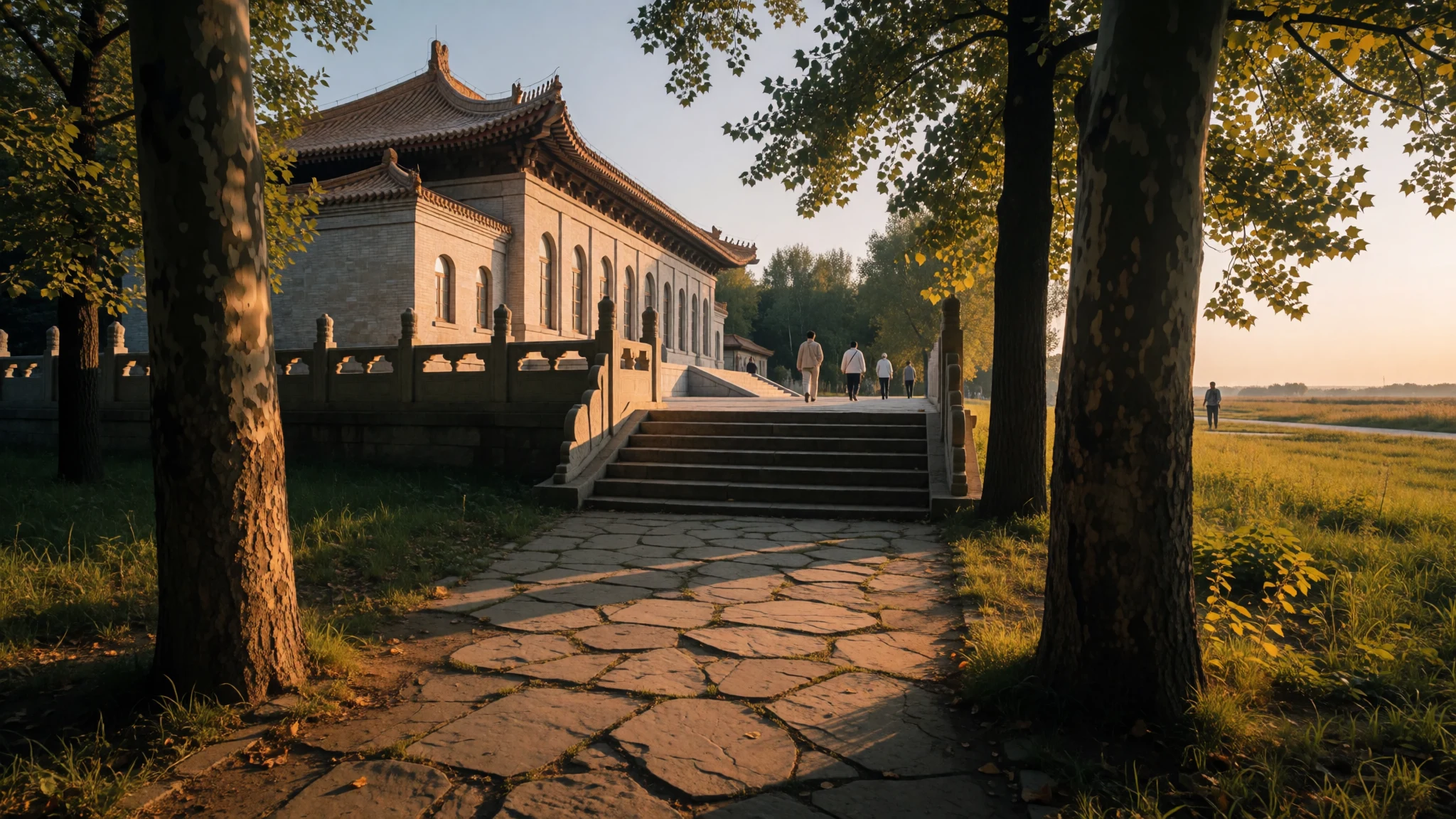
Changchun is a broad, leafy northern city where Manchukuo-era buildings, a car-making giant and long winters tell a layered story.
The place
Changchun sits on the Songliao Plain in north-east China, the capital of Jilin Province and a city of about 9 million people at an elevation of 222 m. The ground is flat and open, so the city has spread outward along wide boulevards instead of climbing hillsides. Administratively it is a sub-provincial city, which means it covers seven districts, a county and three smaller county-level cities as well as the built-up centre. Shuangyang and Jiutai, two of the outer districts, remain largely rural. The name means "long spring", an optimistic label for a place with long, hard winters. Locally the city is called China's City of Automobiles, because vehicle manufacturing anchors its economy. FAW Group, one of the country's big state-owned carmakers, has its headquarters here, and the industry has shaped the universities, the workers' neighbourhoods and the engineering culture. Alongside Shenyang, Dalian and Harbin, Changchun is one of the main urban centres of the north-east. For a visitor the character is that of a working provincial capital rather than a resort: tree-lined avenues, university campuses, parks, lakes and a lively student crowd. Foreign tourists are few, so English signage can be thin and a translation app earns its place on the phone. The main interest is historical, tied to the years when the city served as a capital for a Japanese-backed state, with parks, lakes and winter sports as the lighter side of a stay. Summers are green and mild enough for long walks; winters are for snow and ice.
Its story
Changchun began as a frontier trading post, where furs and other products of the northern forests changed hands. In 1800 the Qing court under the Jiaqing Emperor formally recognised a settlement here, and farming families from Shandong and Hebei moved north to work the plain over the following decades. In 1889 the settlement was raised to the rank of a prefectural city. The railway then changed everything. In 1898 Russian builders opened a station at Kuancheng, on a line linking Harbin with the Liaodong coast, and the town became a junction on an international route. After war between Russia and Japan, the southern part of that line passed to Japanese control and Changchun became the point where the two railway systems met. In 1932 Japan's Kwantung Army made the city the capital of its puppet state of Manchukuo and renamed it Xinjing, meaning "new capital". Planners laid out wide avenues, ministries and a palace for the puppet emperor Puyi, the last emperor of China. When Japan was defeated, the old name returned. The People's Republic was founded in 1949, and in 1954 Changchun became the capital of Jilin Province. Heavy industry, above all vehicle manufacturing, then defined its postwar identity. Many Manchukuo buildings still stand, serving as schools, hospitals and museums, so the city's modern routine runs through its contested past.
What to see
- Museum of the Imperial Palace of Manchukuo — Kuancheng District, north-east of the centre
This was the residence of Puyi, the last emperor of China, during his years as the figurehead of Manchukuo, and the administration of that state worked from the surrounding grounds. It is a sober, well-signposted place for understanding the occupation era. Check the official site or local listings before going, as opening arrangements change. - Manchukuo government department buildings — Chaoyang District
Around 1936 the Manchukuo authorities built a cluster of ministry buildings in what is now Chaoyang District. Eight survive, in a heavy, crowned-roof style, and none is a museum. They now work as schools, hospitals and clinics, so a walk between them shows how ordinary city life occupies a loaded inheritance.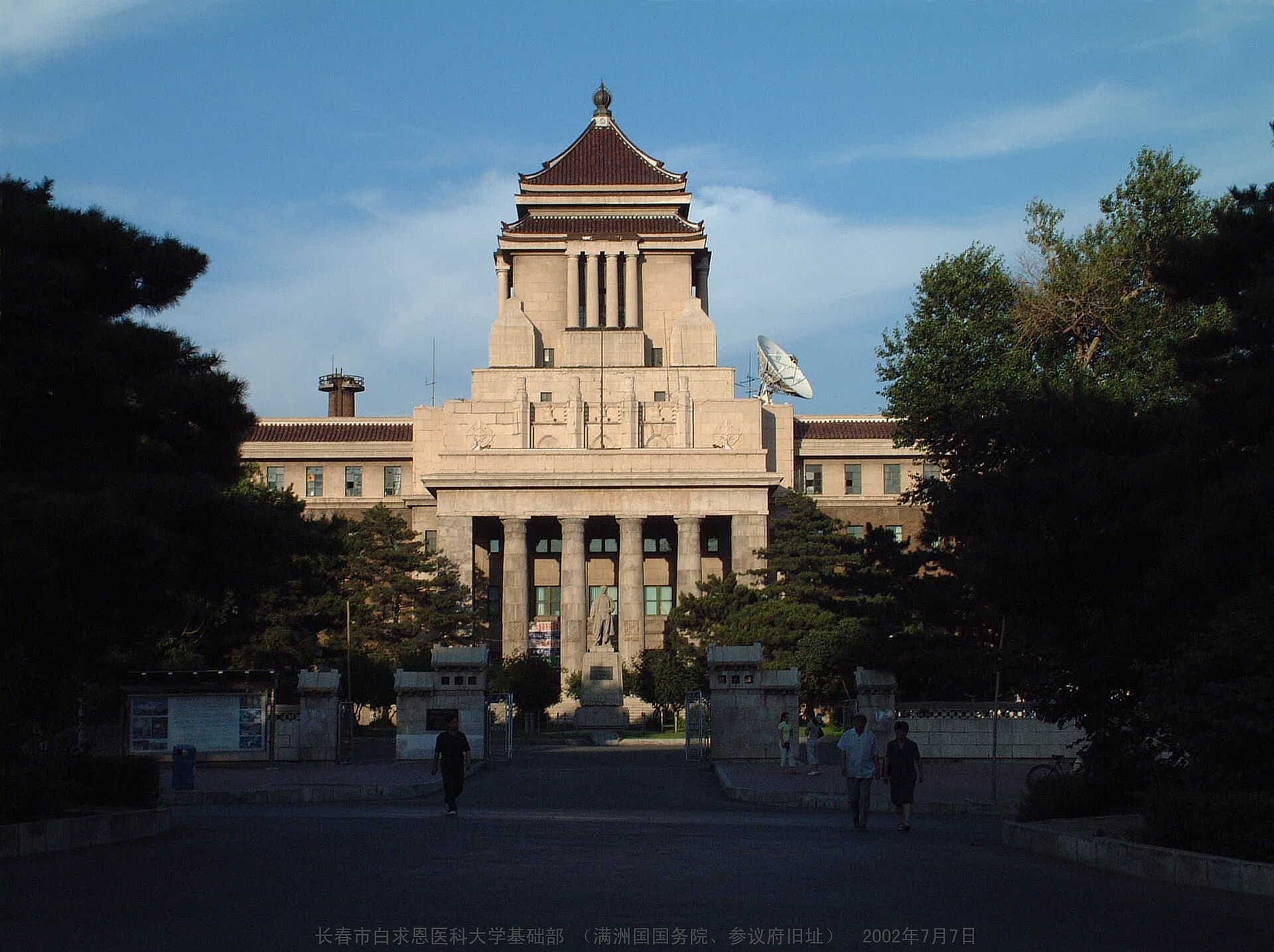
- Former Foreign Affairs Department — Chaoyang District, northern side of the old core
One of the surviving ministry buildings sits towards the northern side of the old planned district and now houses a traditional Chinese medicine clinic. It makes a convenient stop on a self-guided circuit of the old capital, and the exterior is worth a look even if the interior is not open to casual visitors. - Geological Palace — Chaoyang District
This large building stands on the site of the unfinished imperial palace that Manchukuo's planners began and never completed. It now belongs to the geological museum side of Jilin University. The grounds are pleasant for a stroll, and the setting shows how the city reused a project that history left half built.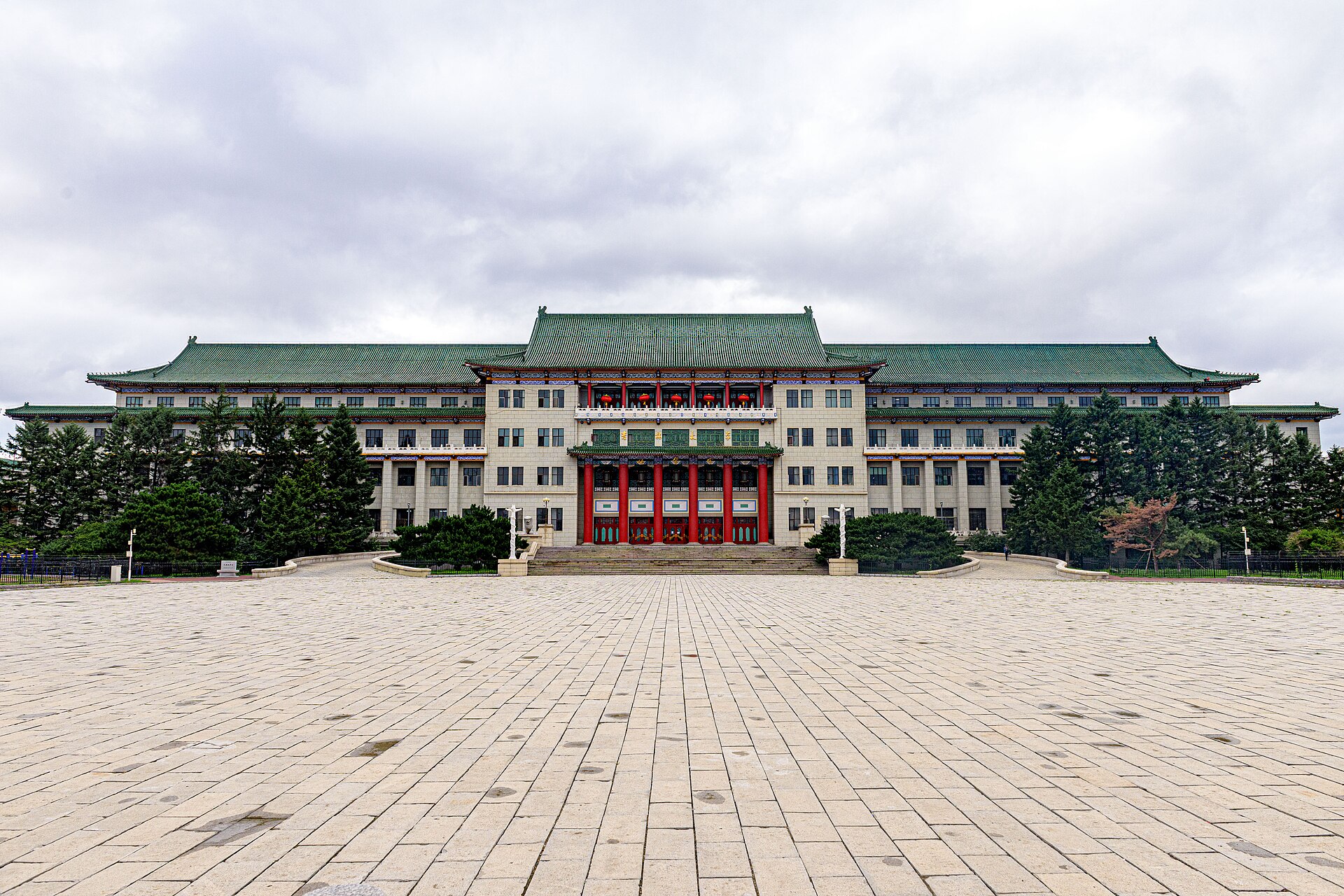
- Nanhu and the Liberation Monument — Southern Changchun
Nanhu is the city's best-loved lakeside park, with paths, boating in the warmer months and skating or winter strolls when the cold sets in. A monument plaza nearby recalls the postwar change of government. Locals come here in the evening, which makes it a good place to watch ordinary Changchun life.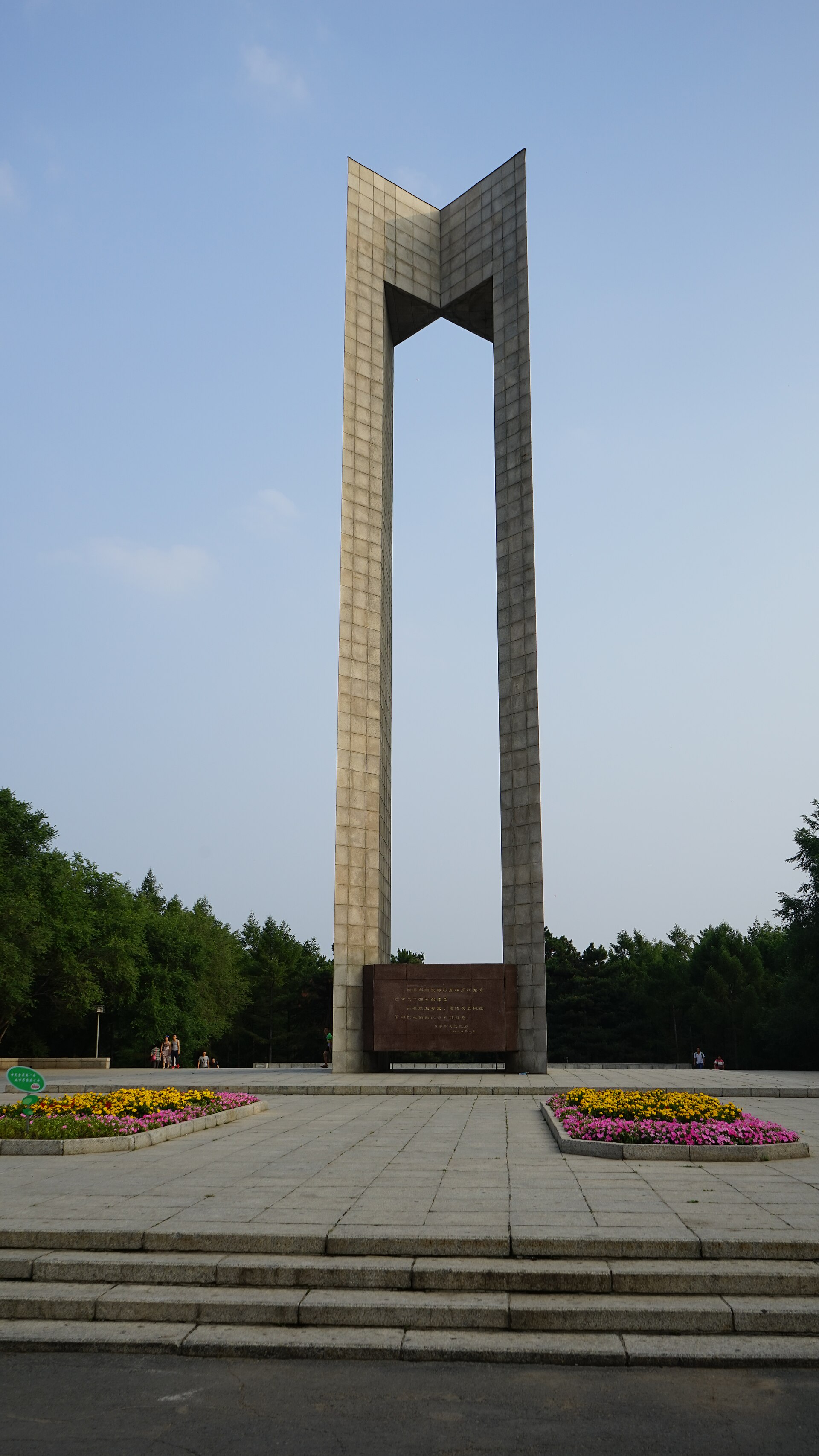
- FAW Group headquarters — Luyuan District
The headquarters of China FAW Group in Luyuan District is not a sightseeing stop in the usual sense, but it is the visible heart of the city's carmaking identity. The surrounding area shows how the industry built housing, roads and institutions, and the exterior can be photographed from the public street.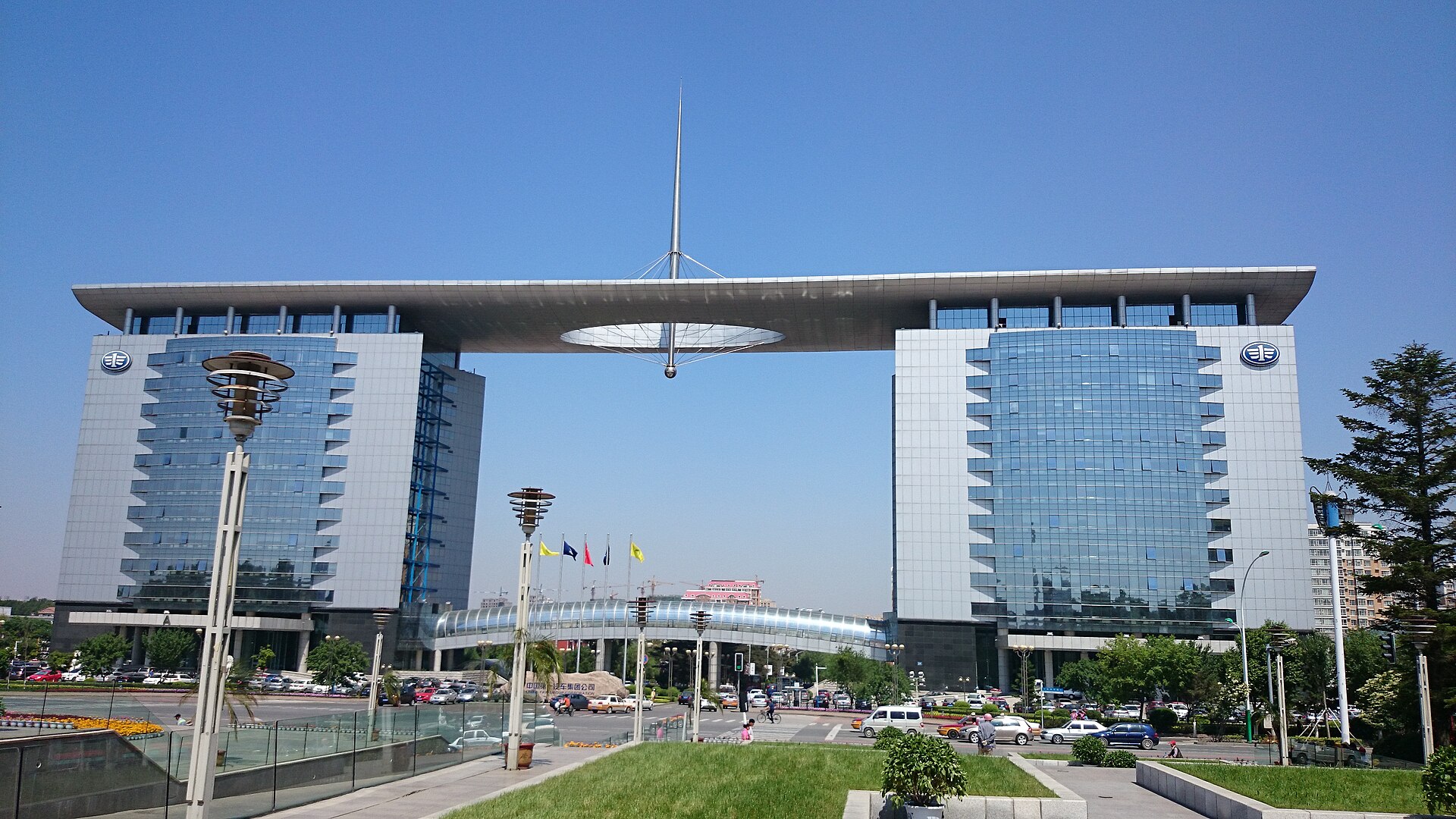
Culture
Changchun's everyday culture is shaped by migration. The local speech is Northeastern Mandarin, which grew from the mix of dialects brought by settlers from Hebei and Shandong. Since the founding of the People's Republic, new arrivals from many regions have pulled urban speech closer to standard Mandarin than the countryside's, so visitors who have studied the standard language will follow most conversations. The north-east has a reputation across China for plain talk, dry humour and generous hosting, and a meal invitation is often pressed more than once. Four religions are practised in the city: Buddhism, Taoism, Christianity and Islam. Places of worship exist for each, but religion is quiet and private rather than a visible tourist theme. Winter shapes social life as much as faith. Ice lanterns, skating and snow-themed events draw families outdoors in the cold months, while summer brings people to parks and the lakeside. Universities give the city a young, studious edge, and the car industry gives it a practical, skilled-trades pride. The Manchukuo period remains a sensitive subject, treated in museums as a time of occupation, and visitors should read exhibits with that framing in mind. Many buildings from that era are now ordinary schools and hospitals, so people are living and working inside them. When visiting the old government buildings, keep your voice low, do not wander into working school or hospital grounds, and ask before photographing staff, students or patients.
What to wear
Changchun's traditional dress reflects the people who have lived in the north-east. The Manchu qipao, a long, straight robe in silk or brocade, is the ancestor of the fitted dress now seen worldwide, and it appears at festivals and in photo studios. Jilin is also home to a Korean-Chinese community, whose hanbok, with a short jacket and full skirt in bright silk or ramie, is worn at weddings, birthdays and holidays. Winter garments historically meant fur, sheepskin and quilted cotton. Day to day, people in Changchun dress for the weather first: long down coats, thermal layers, fur-lined boots, wool hats and thick gloves from late autumn onward. Summer clothing is casual and light, with trainers, jeans and short sleeves, and younger residents follow national street trends, particularly around campuses and shopping streets. For a visitor, the key is the season. In winter bring insulated, waterproof boots with a good grip for icy pavements, a proper hat and scarf, windproof outer layers and warm socks; indoor spaces are heated, so removable layers help. In summer, light cotton, a rain jacket and comfortable walking shoes are enough, and sunscreen is worth packing. Temples and museums have no strict dress code, but covered shoulders and knees are polite at religious sites.
What to eat
- Guobaorou — Northeastern family restaurants across the city
Crisp, sweet-and-sour pork in a glossy golden sauce, a north-eastern favourite. The batter is fried twice for crunch and the sauce is tangy with vinegar. Order it in any family-style Northeastern restaurant, and share it with rice or other dishes. - Di sanxian — Neighbourhood canteens and Northeastern eateries
A stir-fry of aubergine, potato and green pepper in a savoury, garlicky sauce. The vegetables are cooked until soft and rich, so it suits vegetarians when ordered without meat. Look for it on menus in ordinary neighbourhood eateries, usually eaten with rice. - Zhucai fentiao — Home-style restaurants, especially in winter
Pork stewed with pickled cabbage and glass noodles, a warming dish built for cold weather. The cabbage gives it a gentle sourness, and the noodles soak up the broth. Find it in homely restaurants, especially when the weather turns cold. - Korean-style cold noodles — Korean-Chinese restaurants and noodle shops
Chewy buckwheat or wheat noodles in an icy, tangy broth, reflecting the Korean-Chinese communities of Jilin. They are served with pickled vegetables and sometimes sliced beef, and are especially refreshing in summer. Look for specialist noodle shops and Korean restaurants. - Barbecued lamb skewers — Evening barbecue restaurants and night-time food streets
Cumin-dusted skewers grilled over charcoal, usually ordered by the handful with cold beer. The smoky smell draws crowds in the evening. Go to the barbecue streets and casual grill restaurants, where the skewers arrive in bundles to share.
Plan it
Best time. June to September for green parks, lake walks and mild days, though July and August can be warm and showery. The cold season from late autumn to early spring suits visitors who want snow, ice and winter sports, but needs serious layers.
How long. 2–3
Getting there. Fly to Changchun Longjia International Airport, where a rail station sits inside the airport complex. High-speed trains reach the city in about 14 minutes, though they do not run late at night and the walk from terminal to platform is long. Coaches run to the centre, and taxis are an alternative. Changchun is also on China's high-speed rail network, so arriving by train from other cities is straightforward.
Budget. mid
Tips
- Check opening arrangements for museums on the official site, http://www.changchun.gov.cn, or local listings before travelling
- Carry a phone with a translation app and some cash, as English signage and card acceptance can be patchy
- Allow time for the airport rail station walk and note that the airport trains stop running late in the evening
- In winter, plan indoor stops between outdoor walks and wear boots with a good grip
- Group the old government buildings together in one half-day walk, since they sit close to each other
Etiquette
- Treat the former government buildings as working schools and hospitals, and do not enter without permission
- Ask before photographing people, especially students, patients and staff
- Accept hospitality warmly; refusing a host's food or drink once or twice is polite, but be gracious about it
Nearby
Sources
- Wikidata Q92161 (CC0)
- Wikipedia: Changchun (rev 1381463039) (CC BY-SA 4.0)
- Wikivoyage: Changchun (rev 5424740) (CC BY-SA 4.0)
- Photo: Changchun Geological Palace (N509FZ) (CC BY-SA 4.0)
- Photo: Former Manchukuo State Council site (wanghongliu) (CC BY 3.0)
- Photo: Changchun Liberation Monument (Amarespeco) (CC BY-SA 4.0)
- Photo: Cenotaph at Jilin University (Charlie fong) (CC BY-SA 1.0)
- Photo: Nan Hu (wanghongliu) (CC BY 3.0)
- Photo: FAW Group headquarters (ChengH) (CC BY 3.0)
- Photo: Changchun 1932 plan (Public domain)
- Photo: Hsinking master plan (Public domain)


