Montagne des Chevaux
Montagne des Chevaux, France
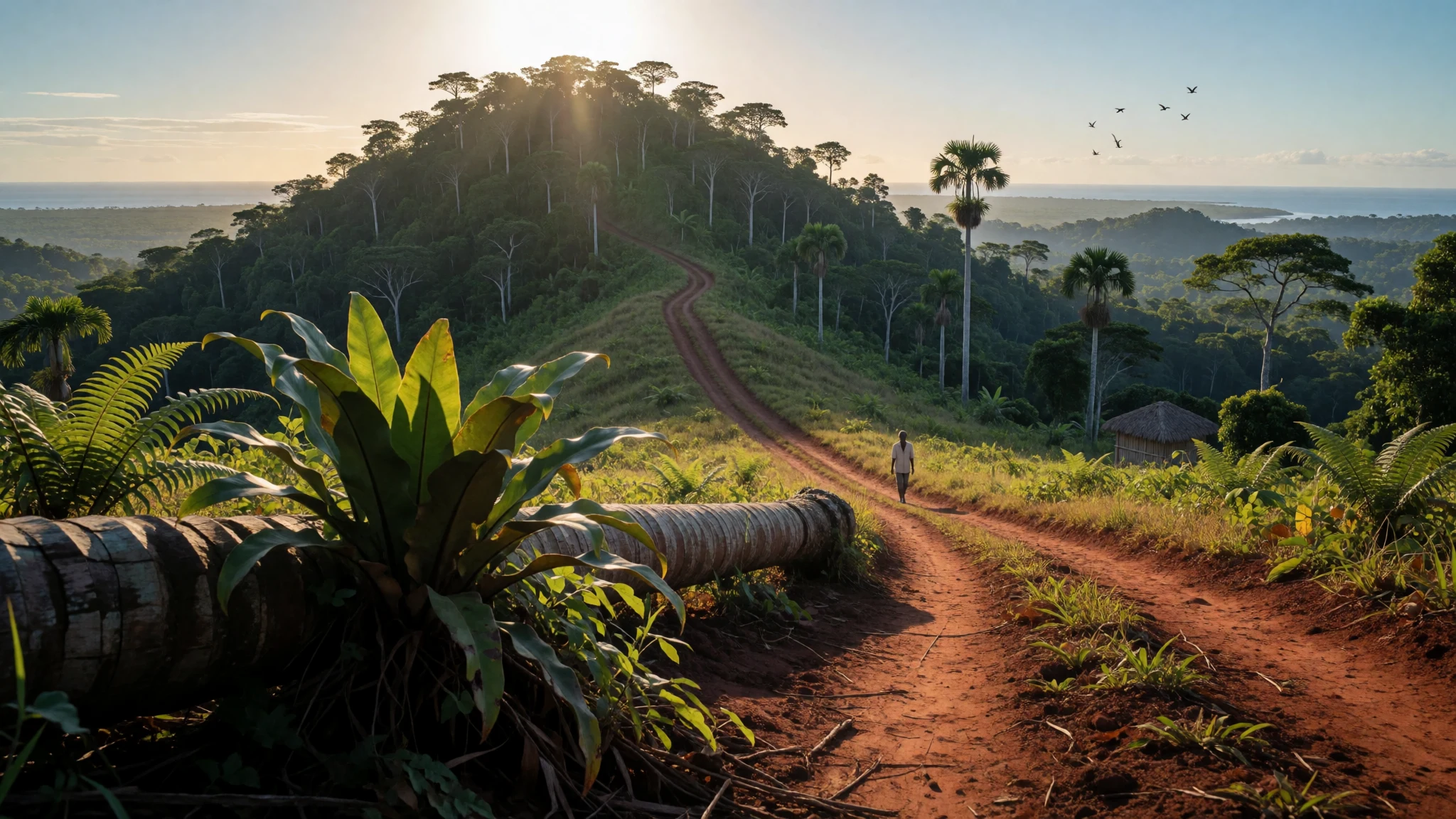
A forested hill in French Guiana, where Amazon jungle, Creole food and a working spaceport sit within reach of one Cayenne base.
The place
Montagne des Chevaux is a hill in French Guiana, the French overseas department on the north-east shoulder of South America. It is not a famous summit with a visitor centre and ticket desk, and very little has been written about it for travellers, so it is best understood through the landscape around it. That landscape begins as a low coastal plain, edged with tall mangrove swamp, and gradually lifts into forested hills, plateaus and, far inland, the Tumuc-Humac mountains. Almost everything beyond the coast is Amazon rainforest with very few people living in it. The climate is tropical: hot, humid, with little change in temperature through the year and heavy rain for most of it. Walking here means sweat, insects, mud and a canopy that shuts out the sky. Cayenne, the capital, is the practical base. A main road runs along the coast towards Kourou in one direction and the Brazilian border in the other, and much of the border road passes through uninhabited forest. Beyond the road, the deeper forest is reached by boat, small plane or on foot with a local guide. Anyone planning to climb or trek near a hill like this should go through a Cayenne operator and ask what is currently open, because tracks in this climate change quickly and the forest makes it easy to lose direction. Euros, French-language signs and European Union rules all apply, which surprises travellers who expect the feel of neighbouring Suriname or Brazil.
Its story
French Guiana was first home to many indigenous peoples, among them the Kalina, Arawak, Galibi, Palikur, Teko, Wayampi and Wayana. French colonists settled the coast in the seventeenth century, facing resistance from Amerindian communities and rivalry from the Portuguese and English. The territory stayed French, and it remains the only part of mainland South America still governed from overseas. For many people the name is linked with the penal settlements known together as Devil's Island, which received convicts until 1951. Strictly, that name belongs to just one of the islands off Kourou, though it came to stand for the whole system. The ruins of that era are now a sombre day trip rather than a celebration. The twentieth century added a very different chapter. Kourou became the home of Europe's spaceport, where rockets leave for satellite customers, and the Foreign Legion helps guard the site and the remote forest zones touched by illegal gold mining. Today the department is a mix: Creole families proud of being French, indigenous and Maroon communities, newer arrivals from Brazil, Suriname and Asia, and a forest that is still mostly empty. A hill like Montagne des Chevaux belongs to that older, quieter story of land that has been walked and paddled across for far longer than any fort, prison or launch pad has existed.
What to see
- Guiana Space Centre, Kourou — Kourou
The spaceport near Kourou runs tours that are free, and a small museum charges only a modest fee. Check the launch calendar before booking flights, because watching a rocket go up is a very different day from a quiet tour. Security is tight and the Foreign Legion patrols the area.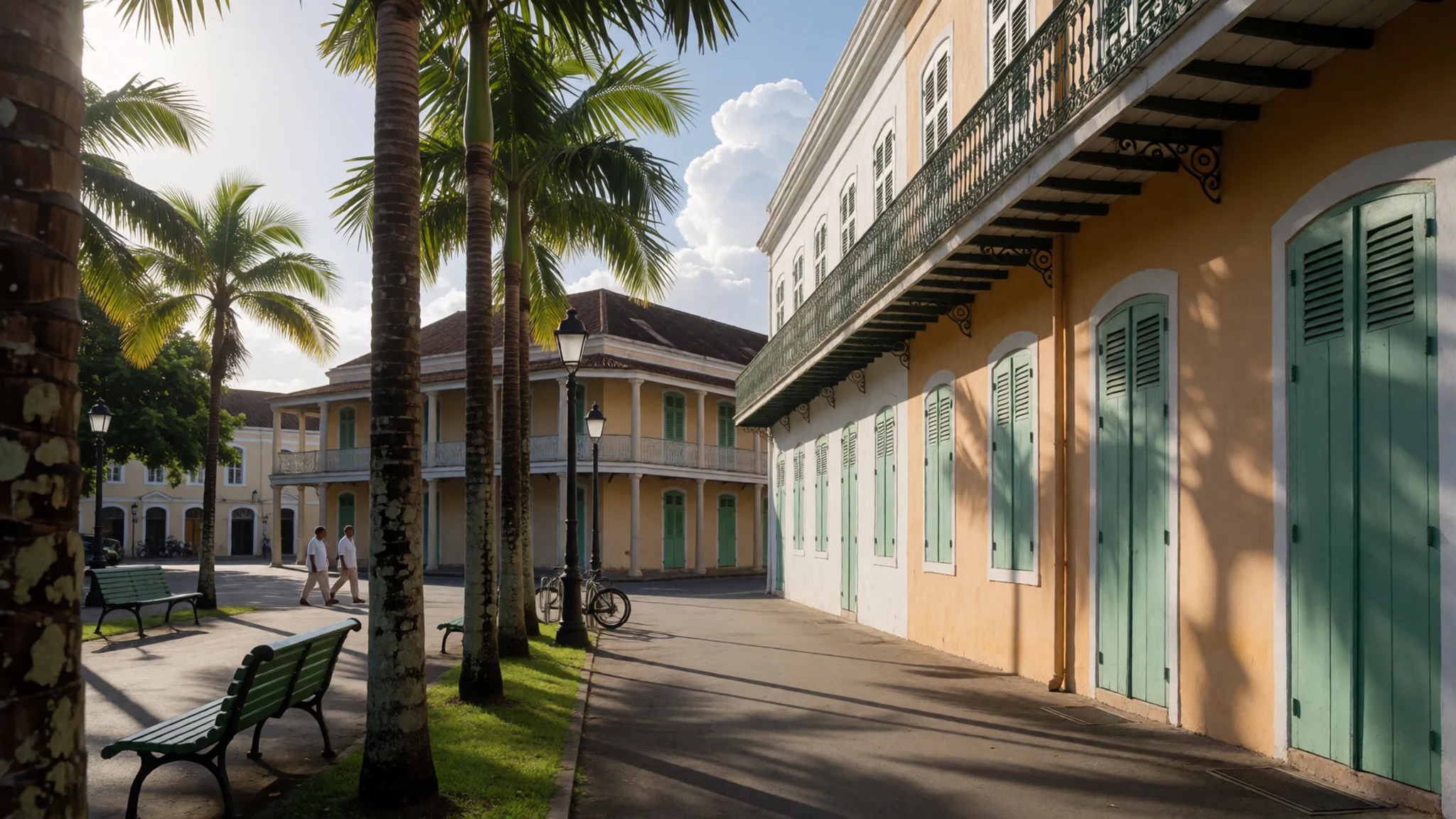
- Îles du Salut — Off Kourou
These islands off Kourou were part of the old penal colony, and Devil's Island is only one of them. Boats leave from Kourou for the others, while Devil's Island itself is closed to visitors. Expect ruined cell blocks, free-roaming wildlife and a heavy, thoughtful atmosphere.
- Plage Les Hattes, Awala-Yalimapo — Awala-Yalimapo
On the north-western coast, this beach is a nesting ground for giant leatherback turtles and is regarded as a leading site for them worldwide. Visits are best at night in the nesting season, with a local guide, and without torches or flash photography that disturb the females.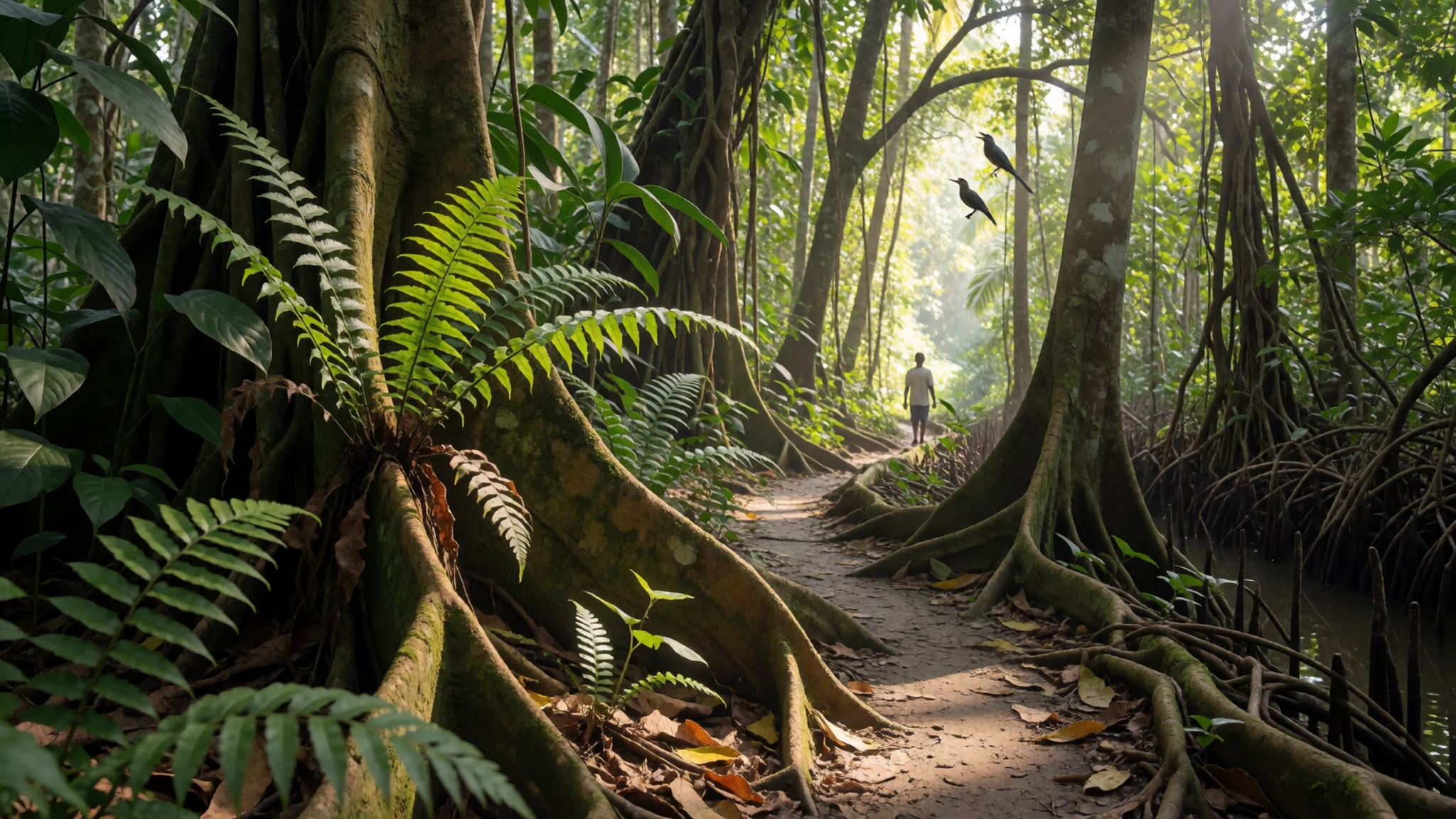
- Cayenne and its market — Cayenne
The capital has colonial-era buildings, a few museums and a lively main market on Place Victor Schoelcher. It sells handmade crafts, tropical fruit, spices, juices and Asian dishes such as Vietnamese noodle soup. It is a good first morning, easy on foot, and cooler before midday.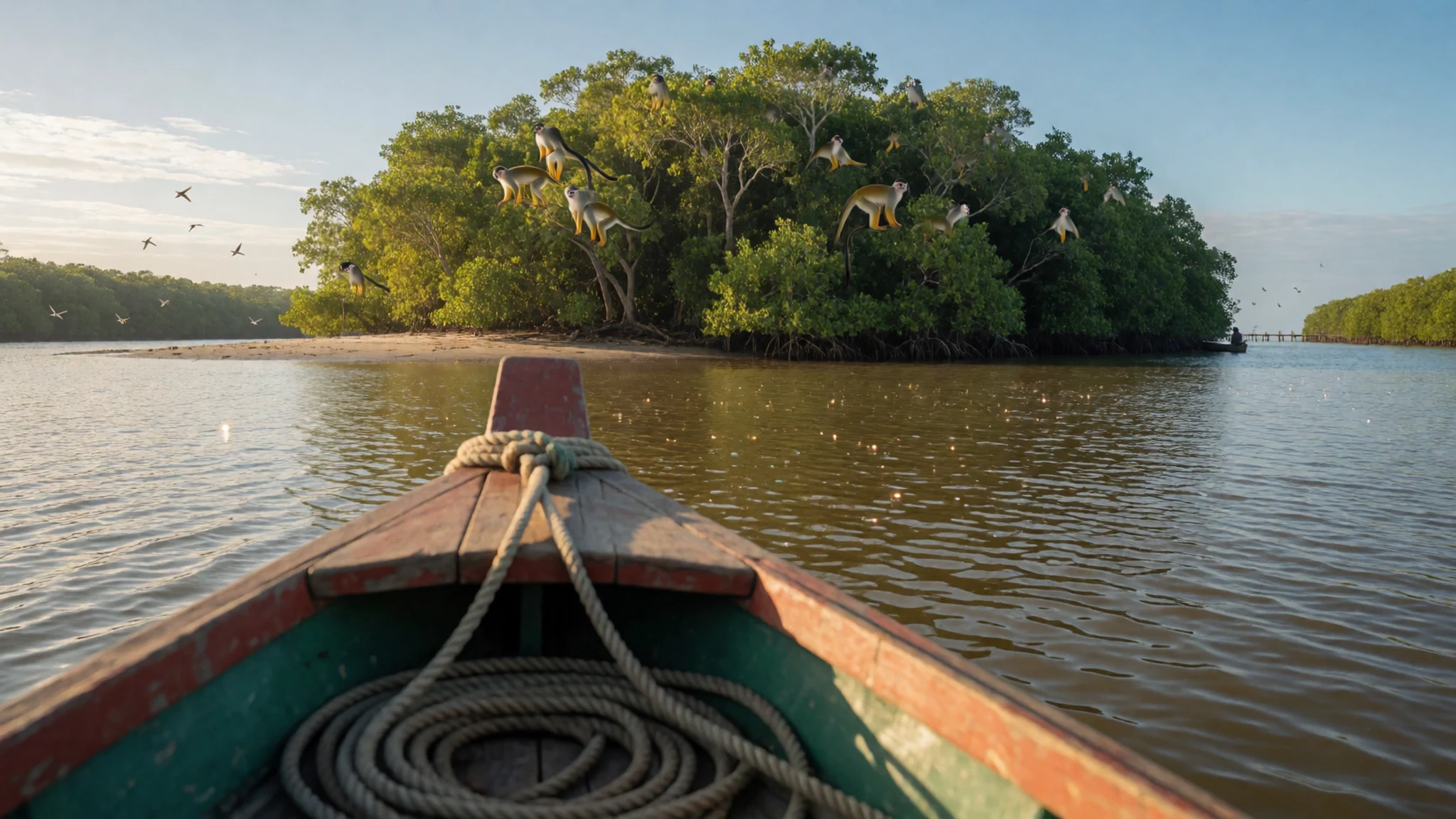
- Trésor Nature Reserve and the Kaw marshes — Kaw, east of Cayenne
This protected area lies within the Kaw wetland system, a drive of a couple of hours from Cayenne. The marshes shelter black caimans, relatives of the American alligator, and flocks of scarlet ibis. Go by boat with a local guide, ideally early or late when the birds are most active.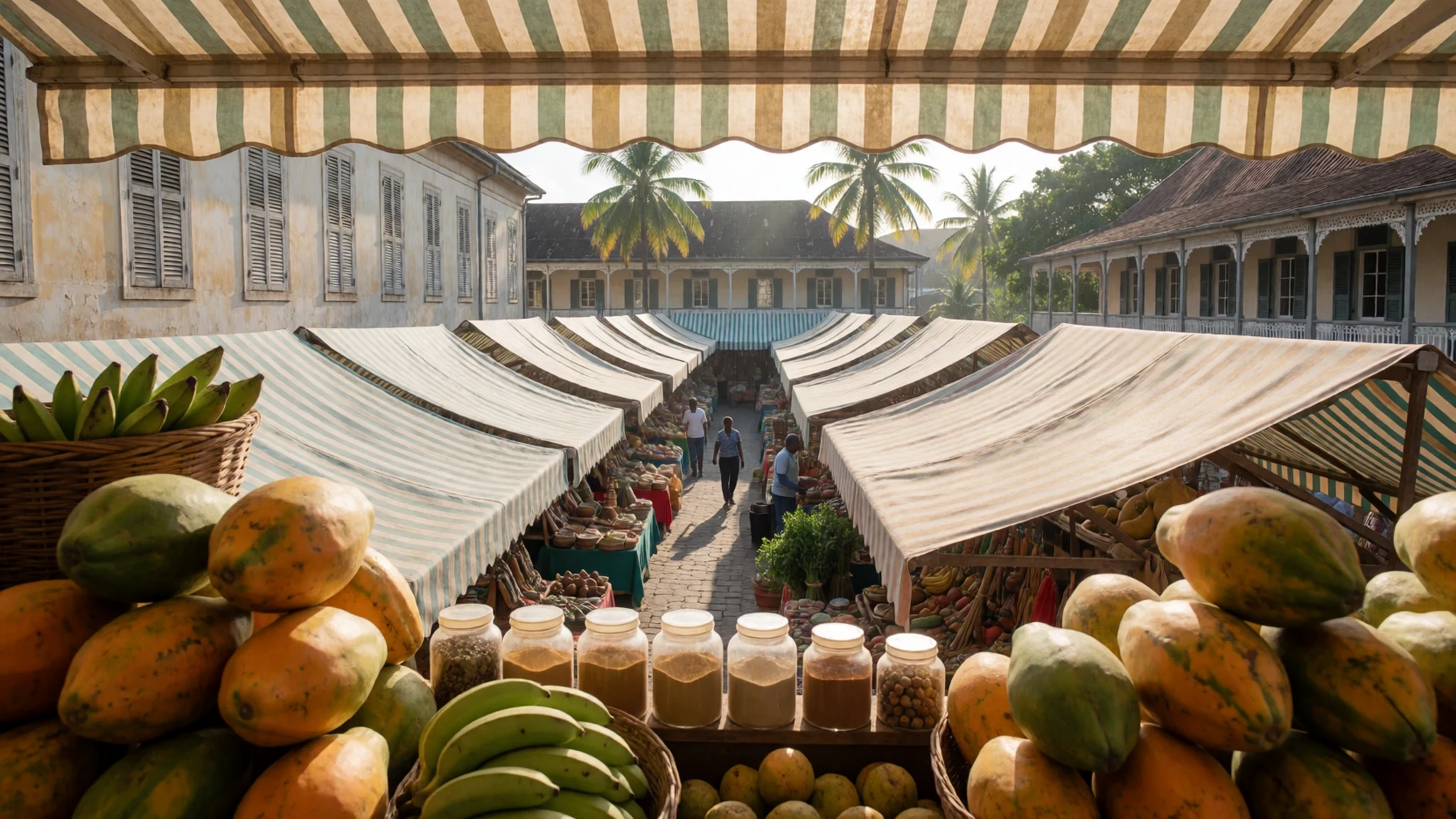
- Montabo Trail, Cayenne — Montabo, Cayenne
This short walk on the edge of Cayenne crosses a surviving patch of rainforest and a mangrove swamp. Labelled plants and close views make it a gentle introduction to the forest without a long drive. Wear sturdy shoes, carry water and repellent, and expect mud after rain.
Culture
Creole culture is deeply rooted in French Guiana, yet people here are proud of being French, and that pride matters in conversation. Mainland France is called la métropole, not simply France, and suggesting that Guianese people are somehow less French is likely to offend. Residents are generally happy to talk about their history, food and religion, though slavery is a sensitive subject that visitors do best to avoid raising. Alongside Creole life are indigenous communities, Maroon families descended from escaped enslaved people, and newer settlers from Brazil, Suriname, Haiti and Asia, so languages and customs change from town to town. Carnival is the great social event of the year. It runs from the first Sunday in January until Ash Wednesday, with masks, traditional costume and dancing in the streets of Cayenne, Kourou and Saint-Laurent every Sunday, and bars and clubs carry on into the night. Visitors are welcome to join the parades in costume. Faith is mostly Catholic, with churches central to village life and some indigenous beliefs persisting inland. When visiting an indigenous village or a forest settlement, go with a guide who has permission and ask the person in charge before taking a photograph of anyone.
What to wear
Traditional dress in French Guiana draws on several communities. Creole women historically wore the madras-style headwrap and a long skirt with a fitted bodice in bright cotton prints, and these costumes still appear at Carnival, weddings and cultural festivals. Amerindian groups such as the Wayana and Wayampi are known for beadwork, with fine glass-bead aprons and collars, and for plant-fibre weaving. Maroon communities are known for bold patchwork textiles and carved wooden objects. In daily life, people dress for heat and rain: light cotton shirts, shorts, dresses, sandals and trainers, with smarter clothing for church, offices and dinner in Cayenne. Carnival costume is another category altogether, with masks, feathers and painted faces. Visitors should pack light, quick-drying long sleeves and trousers for forest walks, as they protect against insects, sun and scratches. A rain jacket is worthwhile in any season, and a hat helps on the coast. Closed shoes with good grip are essential on muddy trails, while sandals suit the beach and town. Swimwear belongs on the beach, so cover up in markets and villages. For church or a visit to a community, shoulders and knees covered is the polite choice.
What to eat
- Colombo — Creole restaurants and family eateries in Cayenne
A Creole curry-style dish made with pork or chicken and a fragrant spice blend, served with rice. It is warming rather than fiercely hot and shows how Caribbean and Asian influences have settled into Guianese home cooking.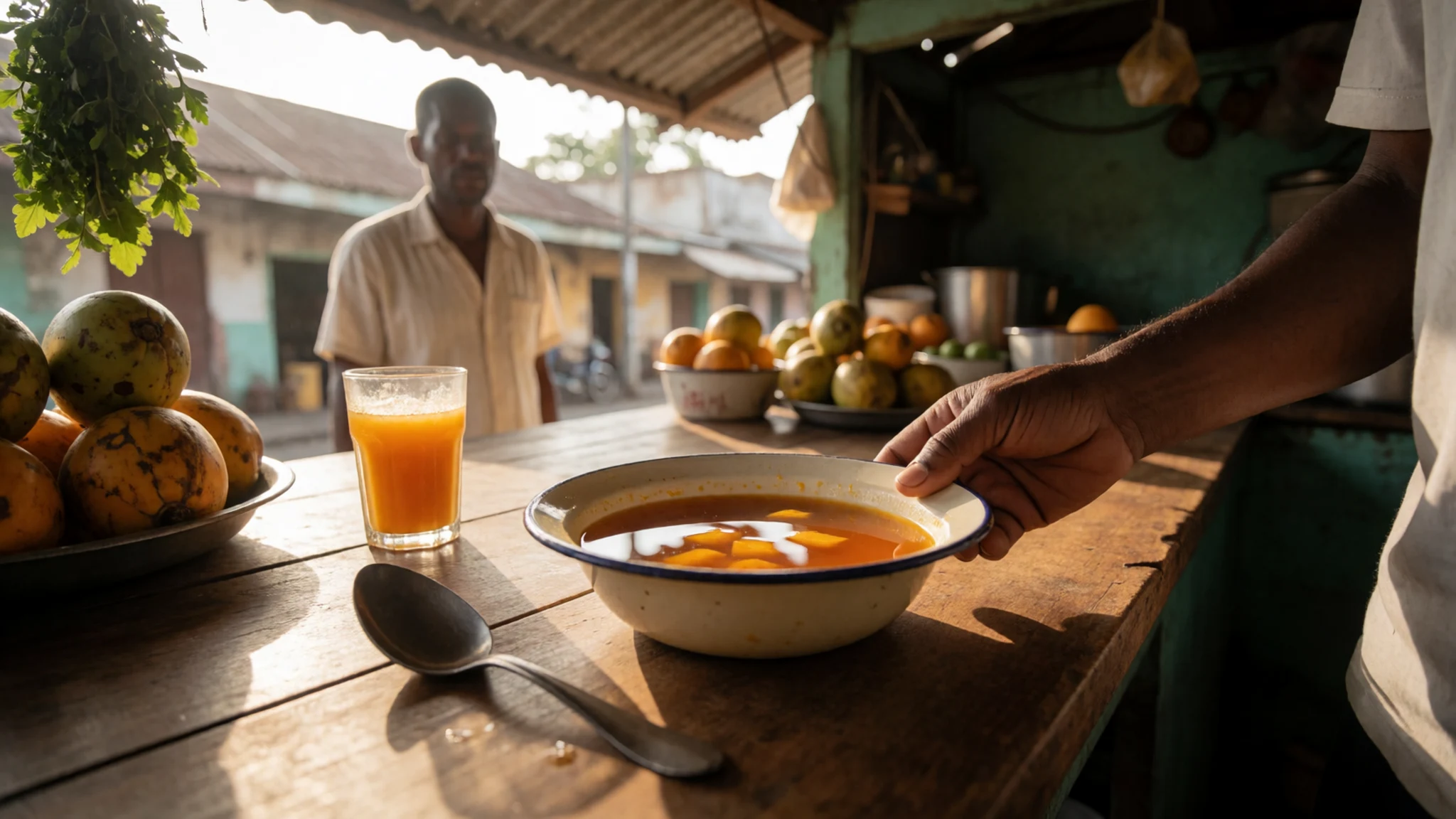
- Blaf de poisson — Seafront eateries and Cayenne market stalls
Fish gently cooked in a seasoned court-bouillon, a light broth flavoured with herbs, lime and chilli. It is a coastal staple, usually served with rice and often one of the freshest things on a menu near the sea.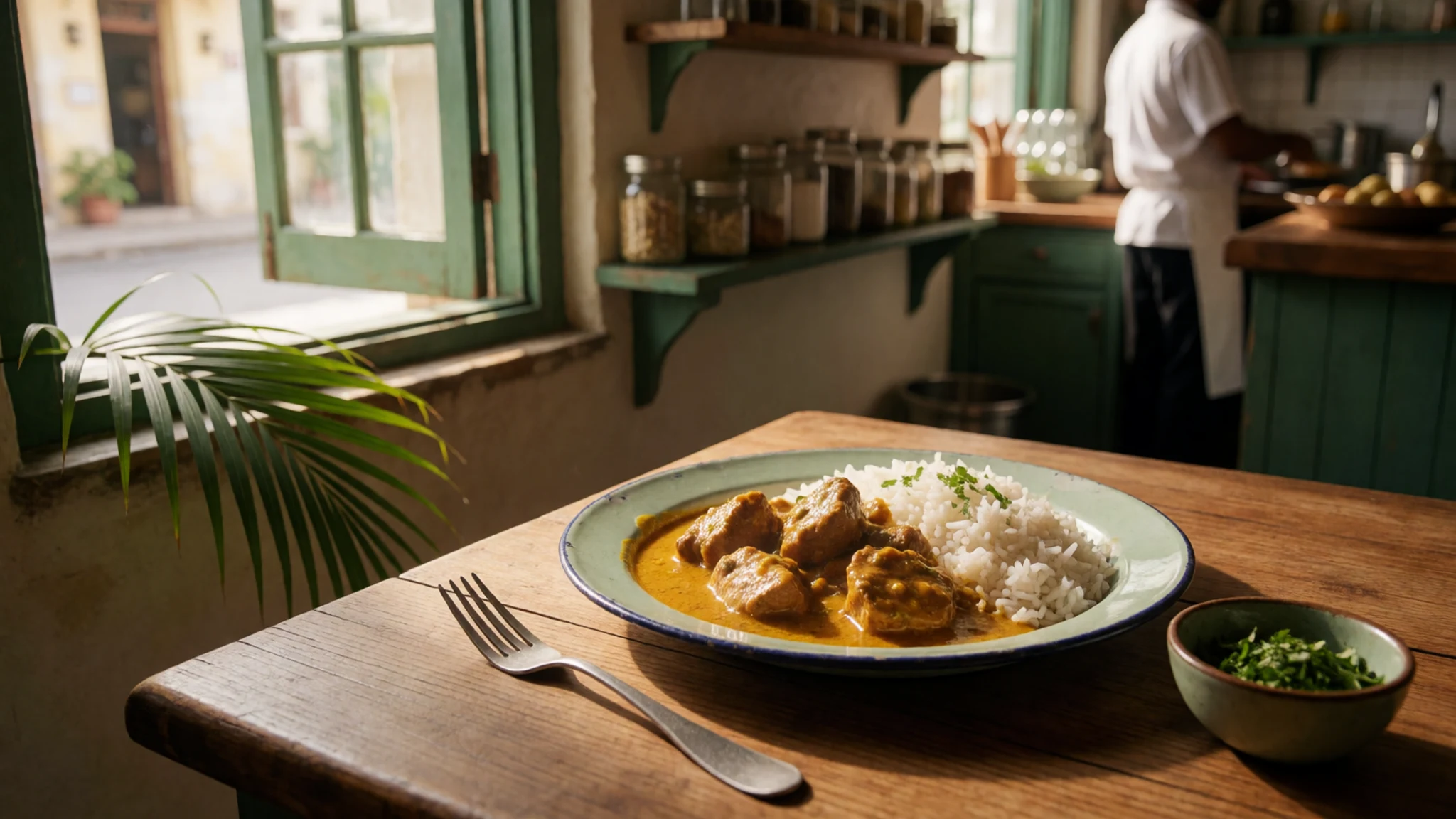
- Pimentade — Creole restaurants in Cayenne and Kourou
Fish in a tomato sauce made sharp with lemon and peppered generously. The region gave its name to cayenne pepper, so heat is expected, but cooks will usually reduce the spice if you ask politely before ordering. - Kalalou — Family-run eateries and community celebrations
A stew of fish with spinach-like leaves and okra, rich and green, and eaten with rice. It is a comforting home-style dish that tastes of the Caribbean and West Africa, and it often appears at festive tables. - Bouillon d'awara — Local festivals and Creole households around Easter
A broth made from the fruit of the awara palm, long associated with Easter gatherings. It is hearty, with fish, meat and vegetables added, and it takes hours to prepare, so it is usually served on special occasions rather than daily. - Wassaï juice — Cayenne market and roadside drink stalls
The pulp of the wassaï palm fruit, known elsewhere as açaí, is soaked, kneaded and filtered into a thick, cold, creamy drink. It is often sweetened with milk, though locals also enjoy it with fish or couac, cassava flour.
Plan it
Best time. The dry season, roughly August to November, is the easiest time for forest walking and boat trips, with less rain than the wet months. It remains hot and humid all year, so go early in the day whatever the month. Carnival, from January to Ash Wednesday, is a lively reason to visit in the wetter season.
How long. 3–5
Getting there. Fly to Félix Eboué Airport near Cayenne, the department's only international airport, with direct flights from Paris Orly. From Cayenne, hire a car or join a guided trip towards the hills, since public transport inland is limited. Remote areas are reached by plane or charter boat.
Budget. high
Tips
- Check entry rules early: French Guiana is outside the Schengen Area, and a yellow fever vaccination certificate is required for every traveller.
- Guard your passport carefully, since few consulates exist locally and replacements may mean a trip to Paris for non-EU citizens.
- Book accommodation ahead, as hotels are expensive and hostels are few; a hammock in a carbet shelter is the cheapest and most adventurous option.
- Use a Cayenne guide for the forest, and carry water, repellent and a rain layer.
- Check the official tourism website, in French, for current openings before travelling.
Etiquette
- Call mainland France la métropole and avoid suggesting Guianese people are less French.
- Ask permission before photographing people, and ask a guide before entering indigenous villages.
- Think twice before ordering caiman or turtle, as some of these animals are threatened.
Nearby
Sources
- Wikidata Q24693797 (CC0)
- Wikivoyage — French Guiana (rev 5383674) (CC BY-SA 4.0)
- Wikipedia — French Guiana (CC BY-SA 4.0)