Mont Panié
Mont Panié, France
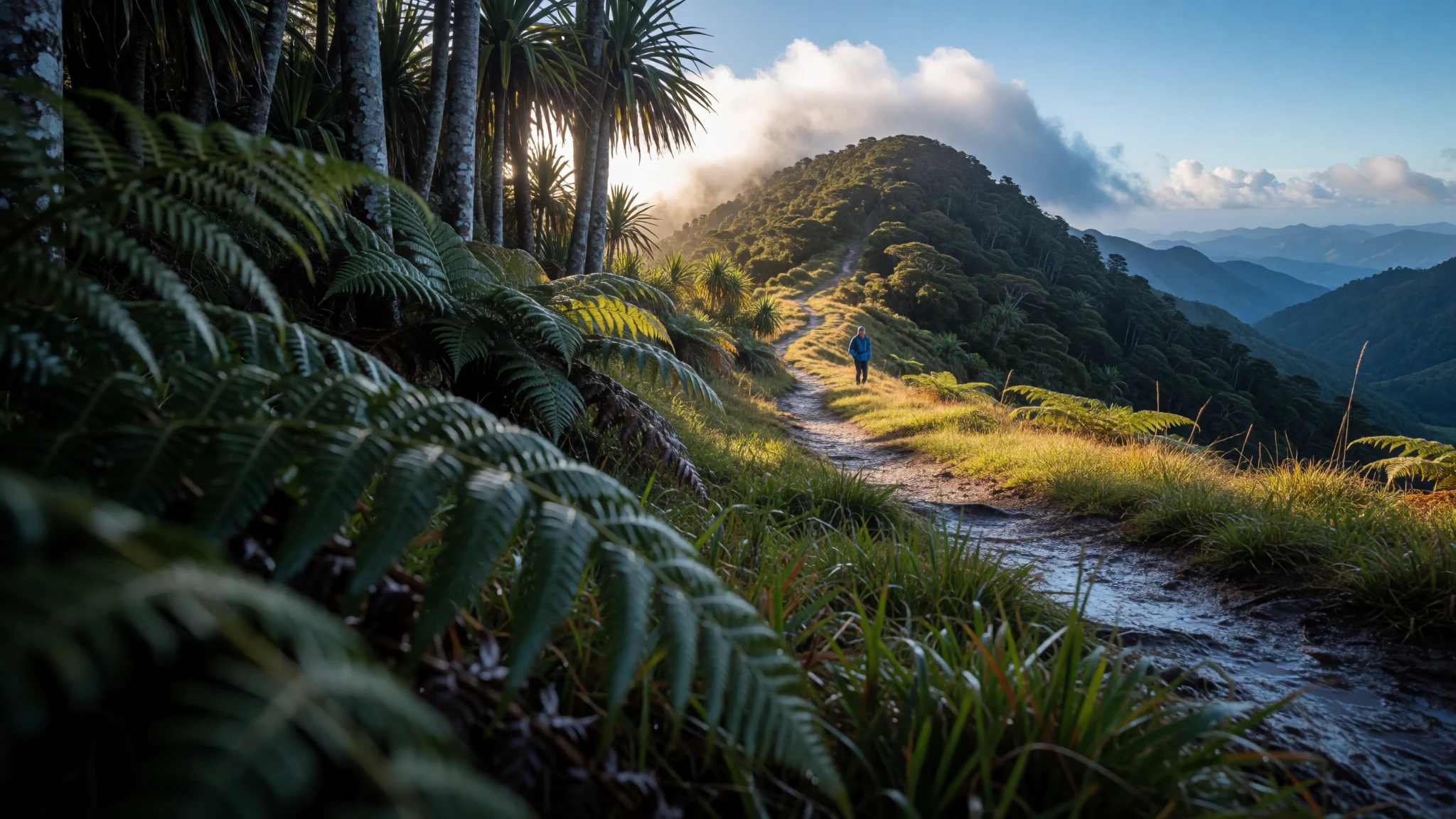
Mont Panié is the highest summit in New Caledonia, a cloud-wrapped mountain in Kanak country, covered in native conifers, palms and ferns, far from the beaches.
The place
Mont Panié rises to 1,629 metres in the north-east of Grande Terre, the main island of New Caledonia, a French special collectivity in the south-west Pacific. It is the island's highest point and part of the Chaîne Centrale, the mountain spine that runs down the length of Grande Terre. Mount Humboldt, the next summit, is only slightly lower, so the high ground works as a range rather than a lone spike.
Few visitors to New Caledonia come this way. Tourism gathers around Nouméa, its city beaches and the lagoon, while Panié sits far to the north in country where many Kanak families still live in tribes and where the authority of chiefs is recognised in French law. That shapes how the mountain is approached: access runs through local people and local agreement, not simply a signed trailhead.
The slopes are better known to botanists than to holidaymakers. Reference photographs from the mountain show Agathis montana, a conifer of the kauri group, the palm Chambeyronia lepidota growing at lower altitude, and ferns on the wetter north-eastern flank. Cloud and rain collect on the heights, so the forest is damp, mossy and noticeably cooler than the coast.
What Mont Panié offers is quiet rather than spectacle: forest, weather, and the sense of standing at the top of an island. It suits people who like slow walking and plant-spotting more than beach lounging, and who are happy to arrange things through local contacts and accept that cloud may hide the view.
Its story
Mont Panié stands in a land that the Kanak, the Melanesian people of New Caledonia, inhabited long before Europeans arrived. Many Kanak families still live in tribes outside Nouméa, and French law recognises the traditional authority of their chiefs, so the mountain sits inside a living system of customary land and not an empty wilderness.
Later arrivals layered more history on top. European and North African prisoners and settlers gave rise to the Caldoches, some of whose families have been on the island for generations. Workers came from Vietnam, China and Indonesia to labour in the nickel mines, and newer residents arrive from metropolitan France and from other French Pacific territories, mostly to work in Nouméa.
Politics has moved steadily towards self-government. New Caledonia makes its own laws and has its own government, with defence and foreign policy left to France, and the United Nations lists it among non-self-governing territories. The push for greater autonomy gathered pace after the Ouvéa cave hostage-taking, and the question of full independence remains sensitive.
That history is not background reading for a walker. Who holds the land, who gives permission to cross it and how people describe their island all carry weight around Mont Panié. The botanical story runs alongside it: the kauri-family conifers and palms on these slopes grow in an isolated island setting, which is why scientists photograph and record them.
What to see
- The summit of Mont Panié — North-east Grande Terre
Mont Panié, at 1,629 metres, is the goal for walkers who want the island's high point. Expect cloud, wet ground and forest closing in around the upper slopes. Views come and go with the weather, so treat any clear window as a bonus. Arrange access through local tribes or a guide, and ask about conditions first.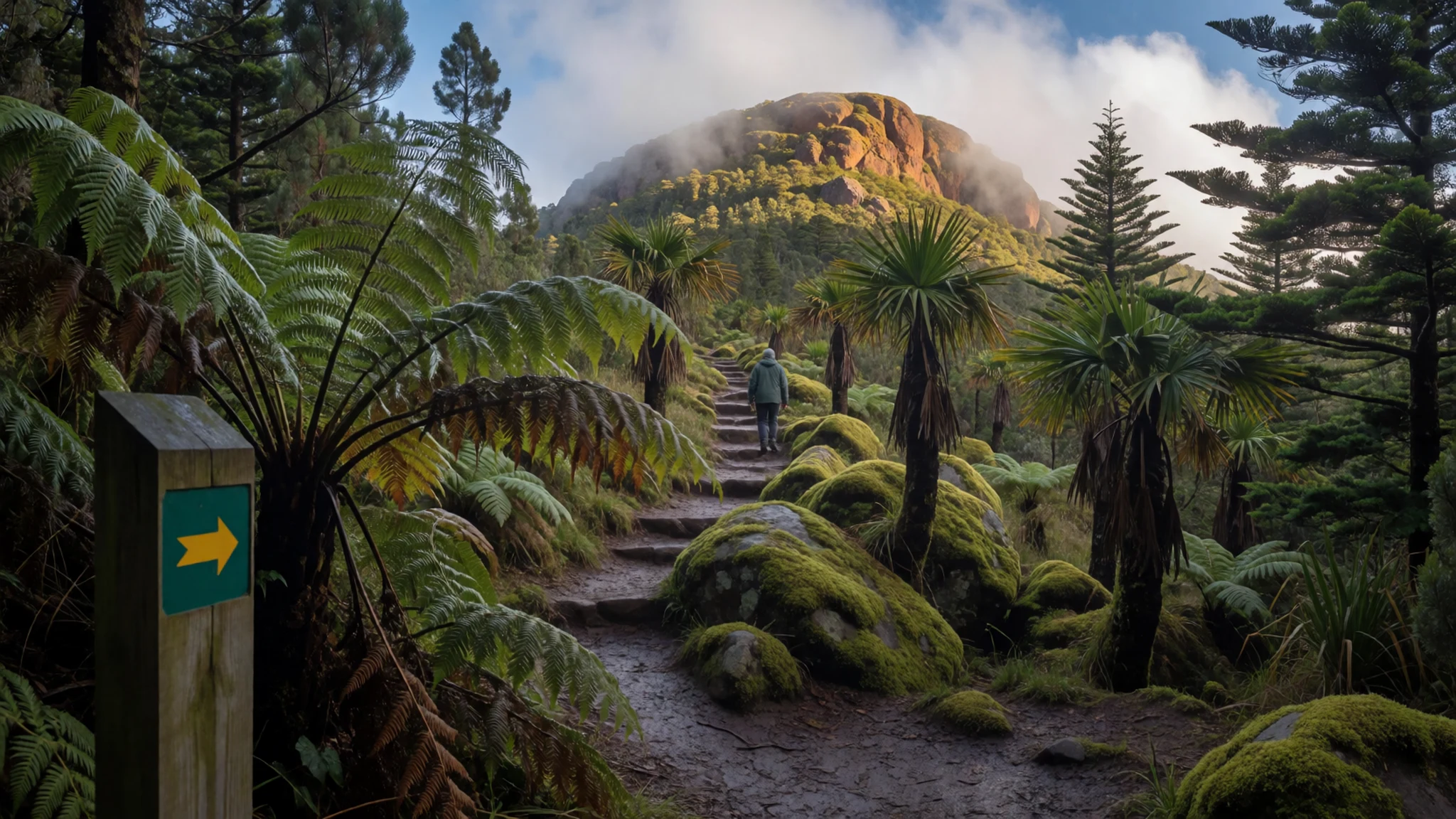
- Kauri-family forest — Upper and mid slopes of Mont Panié
Mont Panié's slopes carry Agathis montana, a conifer of the kauri group, recorded here by botanists with Pl@ntNet photographs. Look for the straight trunks and leathery leaves in the cooler, cloudier forest. Go slowly and watch the ground, which is often wet, and leave plants and seeds where they are.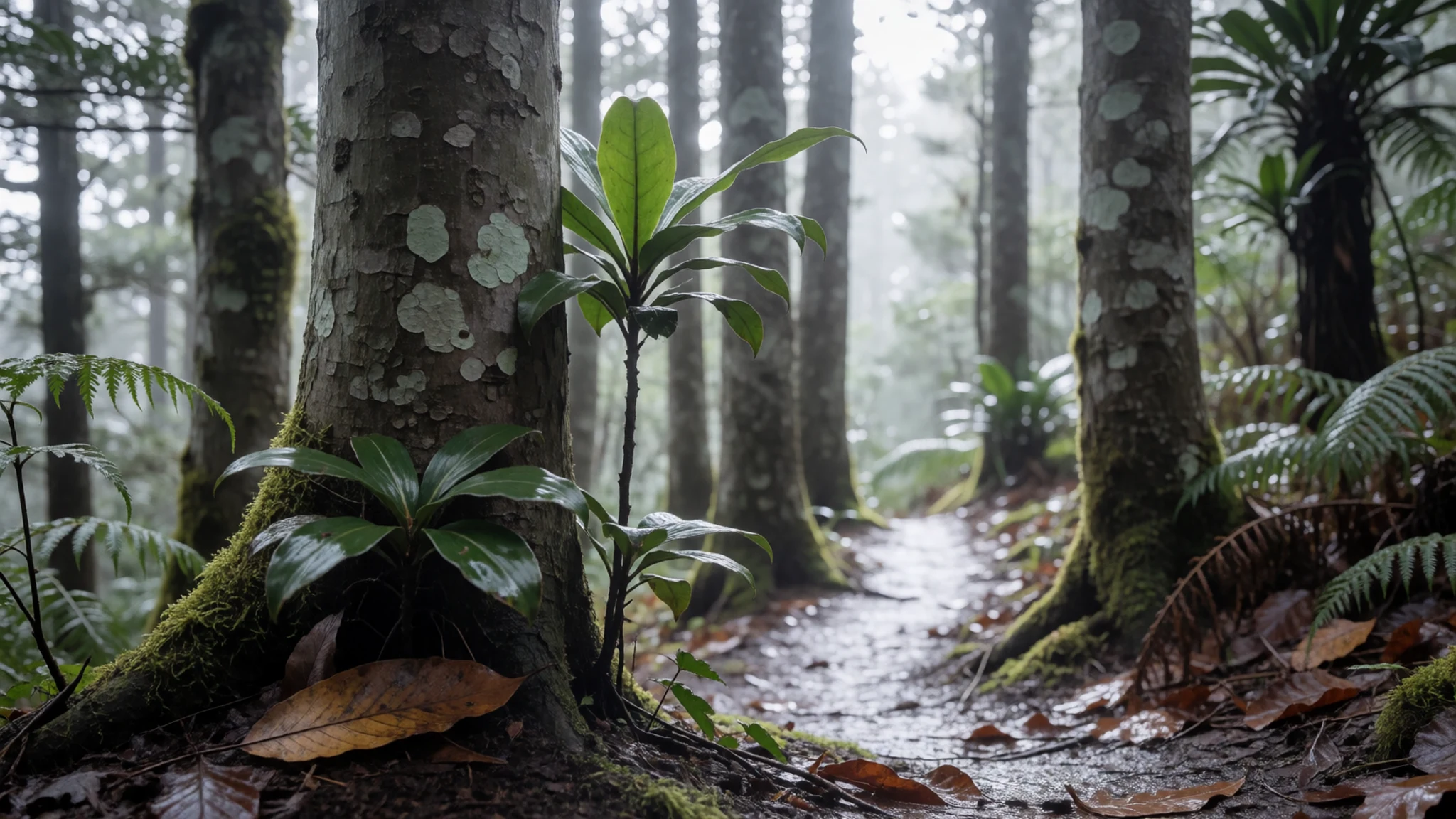
- Palms and ferns on the lower slopes — Lower slopes and north-eastern flank
On the lower slopes of Mont Panié grows the palm Chambeyronia lepidota, and ferns turn up on the north-eastern side of the island near Hienghène. This is walking for people who enjoy small details: new fronds, moss, and the forest changing as height gains. A hand lens and patience repay more than a long lens.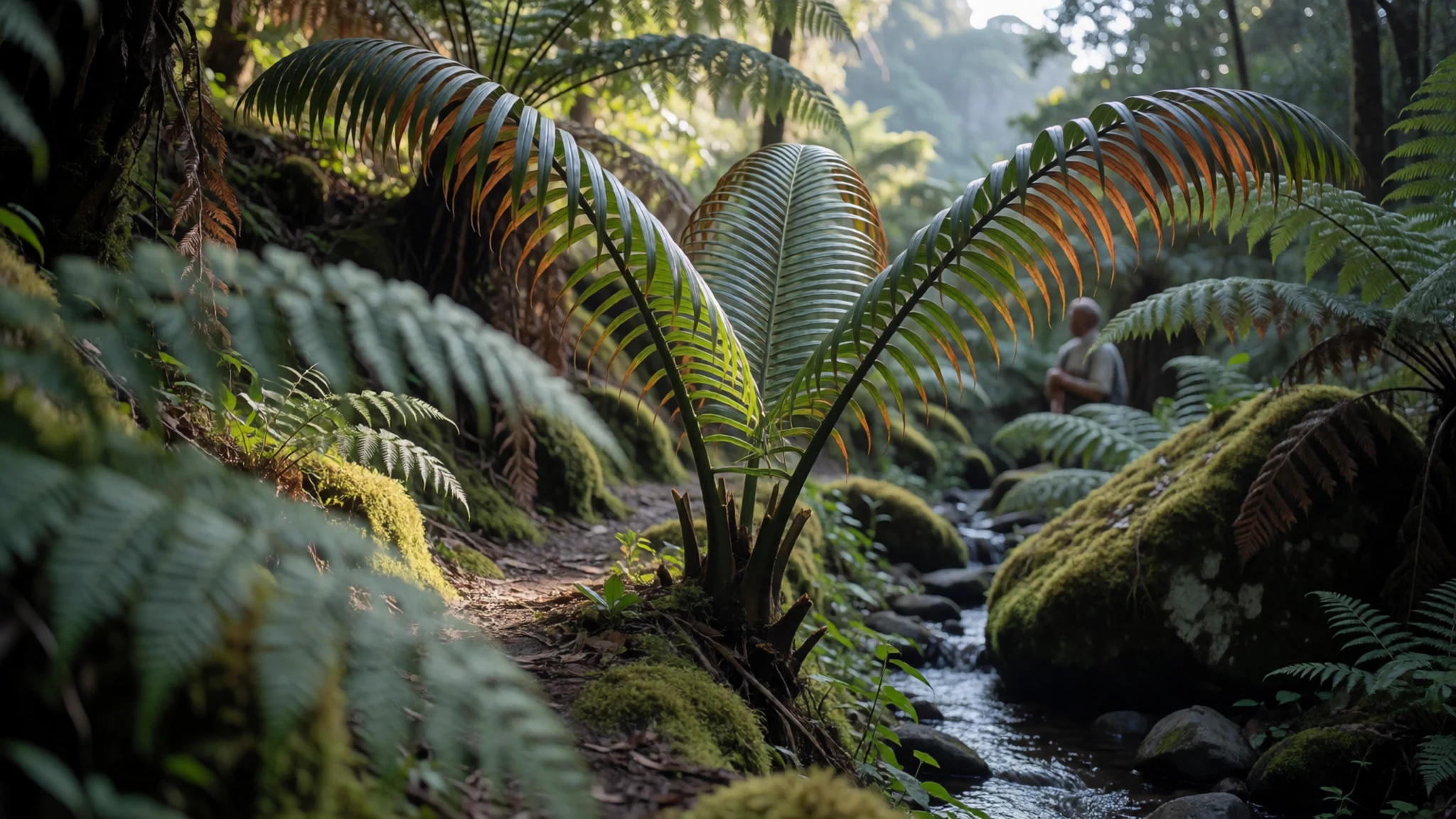
- Tjibaou Cultural Centre — Near Nouméa
Near Nouméa, the Tjibaou Cultural Centre is a gift from the French government that celebrates Kanak culture, designed by the Italian architect Renzo Piano. It is a good way to understand the people whose land surrounds Mont Panié before heading north. Check the official site for opening times and exhibitions.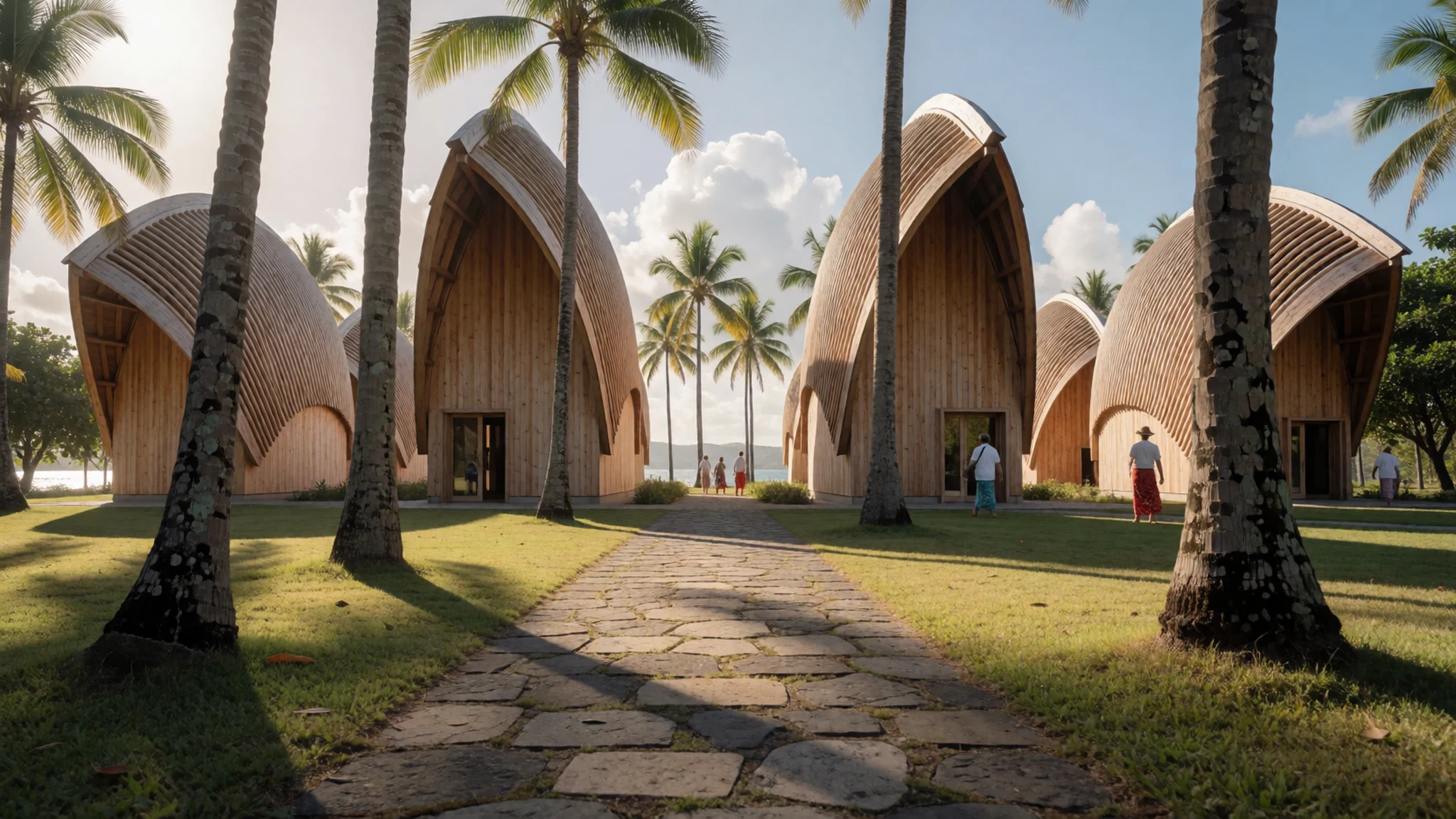
- Monts Koghis — Just outside Nouméa
Mont Panié is far from the capital, so the Monts Koghis just outside Nouméa make a useful warm-up. Two pleasant walks start from the auberge, where walkers park, sign a release and leave a mobile number in case of emergency. It is a gentler taste of New Caledonian forest and hills.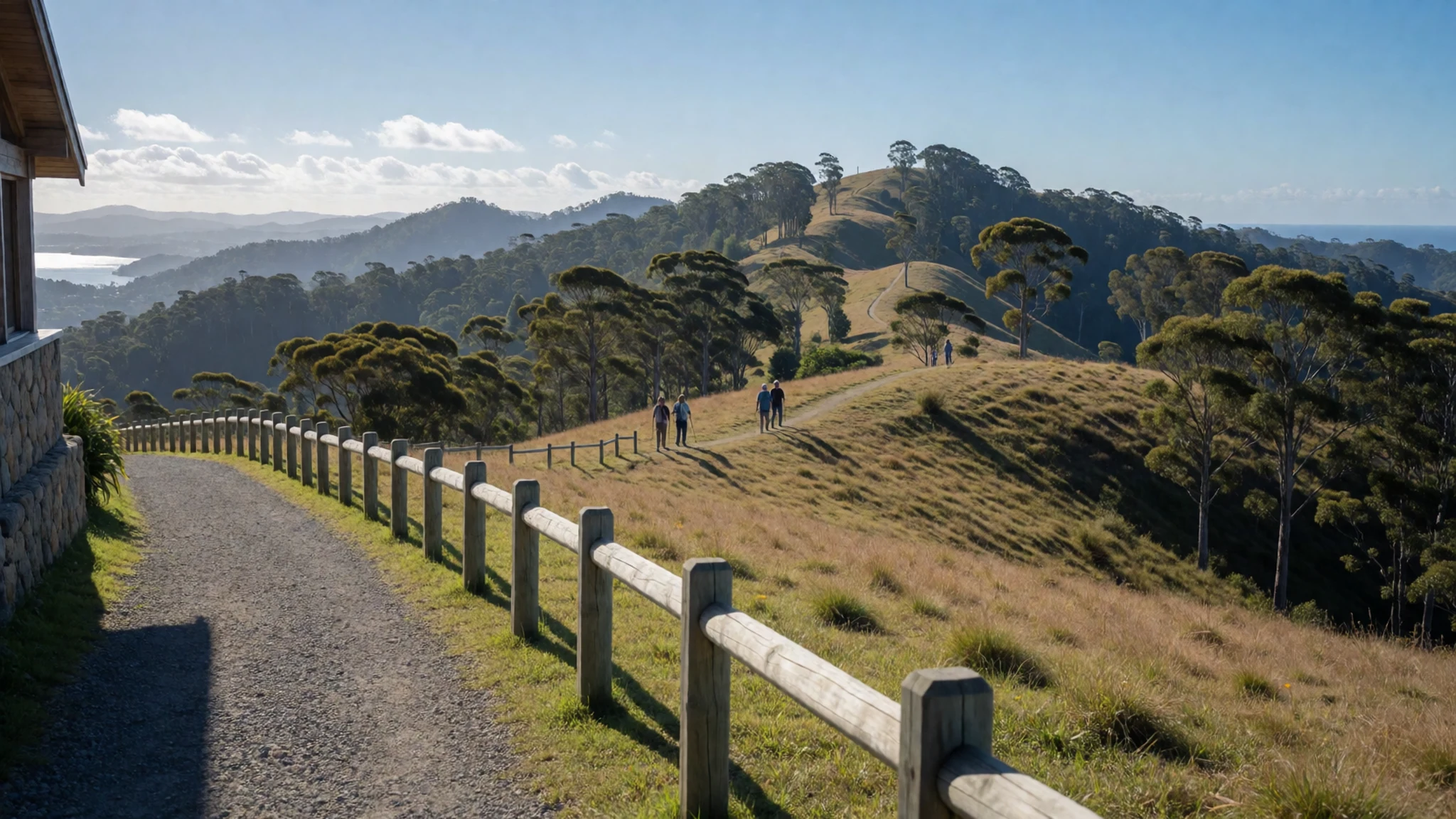
Culture
Mont Panié lies in Kanak country, and the customs around it matter more than any trail map. New Caledonia is a largely conservative Christian society, with Roman Catholicism the biggest denomination, and the pace of life reflects it: most shops and businesses close on Sundays, when much of the population is at church. Dress codes tend to be conservative away from Nouméa and the tourist beaches.
Greetings carry real weight. As in metropolitan France, conversations begin with "bonjour" by day or "bonsoir" at night, and among Melanesian communities it is common to greet people passing in the street. Returning a greeting is expected, and ignoring one comes across as rude. People also prefer a respectful distance, roughly a handshake apart, and standing closer can make them uncomfortable.
Visiting tribal land follows la coutume, the customary protocol of the Kanak. In practice this usually means announcing yourself, asking permission to enter or cross land, and following the guidance of the people who host you, which may include a small customary gift. Local contacts or a guide can explain how this works near Mont Panié.
Before walking on tribal land near Mont Panié, greet people with a bonjour, ask permission in the way la coutume expects, and dress modestly.
What to wear
Around Mont Panié, the best-known traditional dress among Kanak and other Melanesian women is the robe mission: a loose, brightly printed cotton dress with puffed sleeves and a long hem, dating from the missionary era. It is still worn at church, festivals and family occasions. Ceremonial dress can also include ornaments of shell and plant fibre, but details vary between communities, so it is polite to ask rather than assume.
Everyday clothing is practical and casual: shorts or light trousers, T-shirts, caps and rubber sandals in the heat, with French-style smart casual in Nouméa. Sunday church calls for tidier clothes, often the robe mission for women.
Visitors heading for Mont Panié should dress for forest, not beach. Quick-dry long trousers and a light long-sleeved top protect against scrapes, insects and cool damp air, and a waterproof layer is wise because cloud and rain gather on the heights. Wear boots or shoes with proper grip for slippery roots and mud. Away from the tourist beaches, cover shoulders and knees, avoid revealing clothing, and keep swimwear for the sea.
What to eat
- Bougna — Community gatherings and festivals in Kanak villages; ask your host
Bougna is the traditional Melanesian feast: pork, chicken or crab with yam and sweet potato, wrapped in banana leaves and cooked under hot stones. It is usually served at family and community gatherings, so ask locally about festivals and events in the north.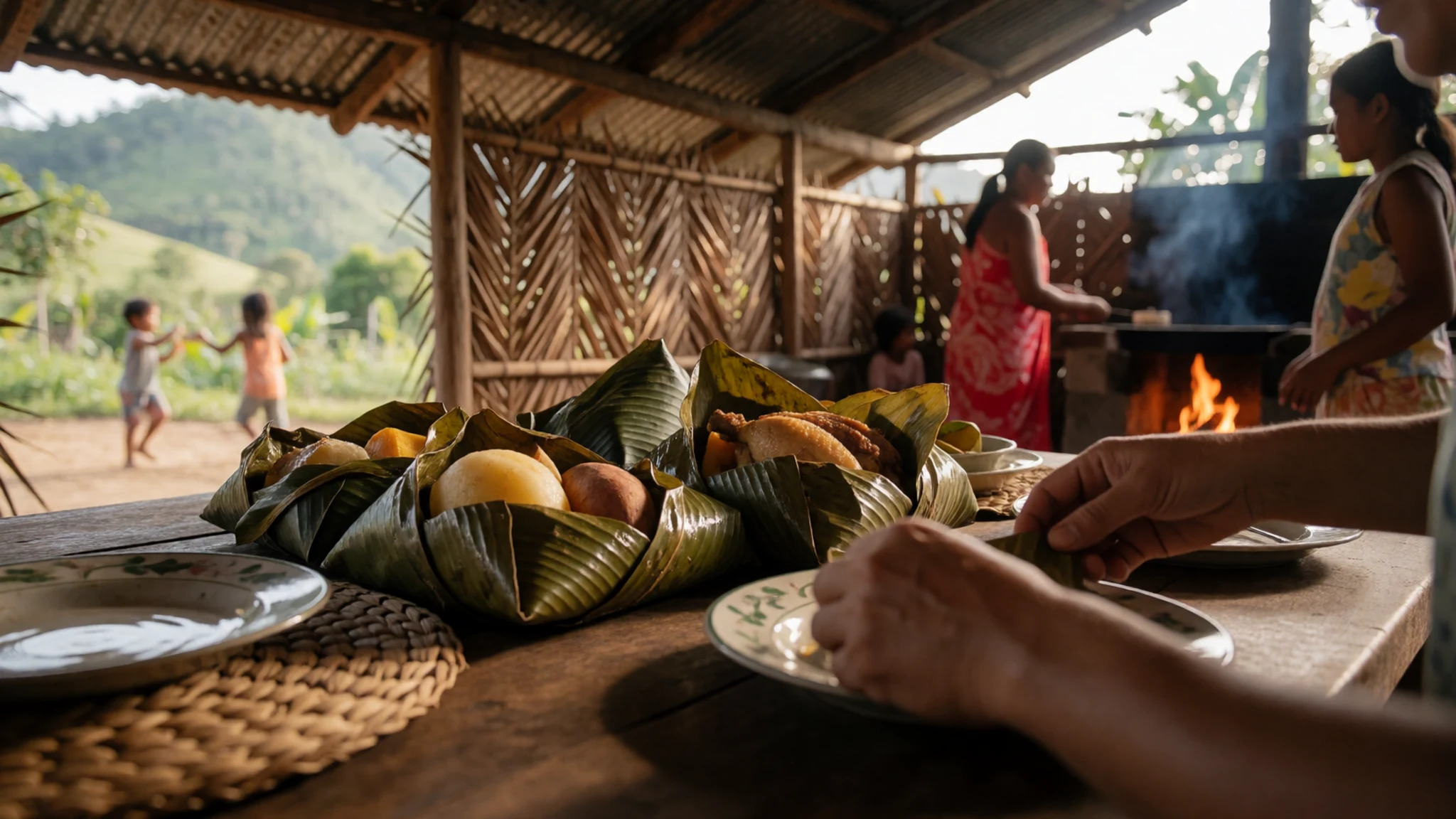
- Porc au sucre — Snacks, the small budget eateries found in towns
Porc au sucre is pork in a sweet soy-based sauce, a sign of the island's Asian-influenced cooking, served with rice or tucked into half a baguette. It is hearty, filling walking fuel and one of the cheaper hot meals on the island.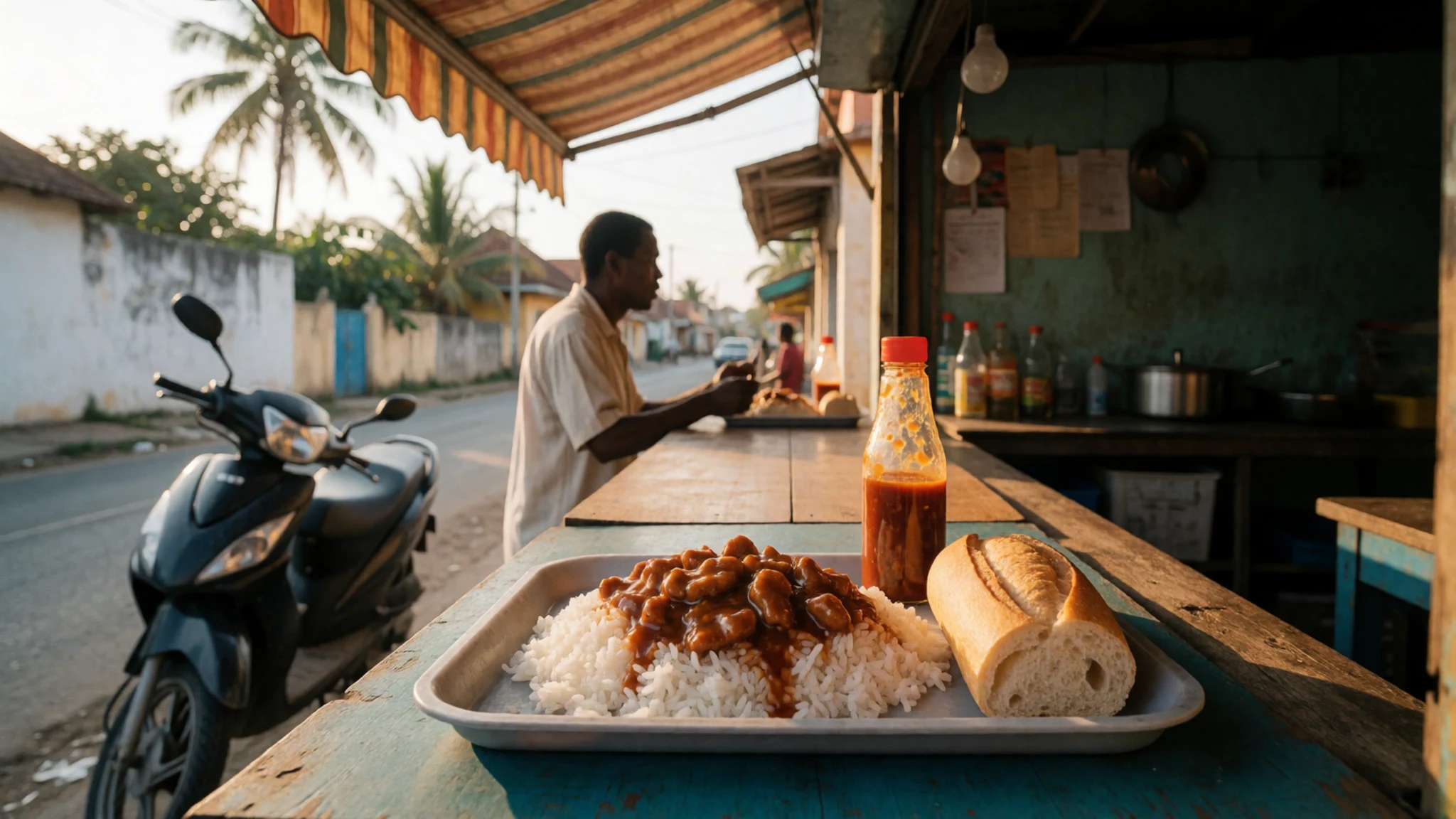
- Croque madame — Snack bars and boulangeries
Croque madame, toasted ham and cheese topped with an egg, is a staple of New Caledonian snack bars, where menus are short and food arrives hot. A baguette sandwich from a boulangerie also makes a good packed lunch for a long day on the mountain. - Fresh market seafood — Local marchés, best on weekend mornings
The local marché sells fresh produce and seafood such as tuna, shrimp and crab, and is a cheaper way to eat well than restaurants or imported supermarket goods. Opening hours are limited, with weekend mornings usually the best time to go. - Kava — Kava bars, usually with a red light outside
Kava is a Pacific root drink served in dim kava bars, often marked by a red light outside. It is drunk straight away and then taken to a quiet bench to unwind. It is not alcohol, but it can numb the mouth, so go gently on a first cup.
Plan it
Best time. September to November, when the weather is usually milder and drier than the hot, wetter months at the start of the year. Mont Panié gathers cloud in any season, so pack for rain whenever you go.
How long. 2–3
Getting there. Fly into Nouméa, New Caledonia's main gateway; flights from France usually stop over in Singapore, Thailand or Japan. From Nouméa, Mont Panié is a long drive north-east by hire car or arranged transfer, ending on local roads and tracks, so confirm the last leg with your local contacts.
Budget. mid
Tips
- Arrange access and a local guide in advance, since the mountain lies on tribal land.
- Carry a valid passport, and read the official customs and biosecurity guidance before packing, especially for boots and outdoor gear.
- Start early and carry water, a rain layer and a charged phone, and tell someone your route.
- Bring some cash for markets and small local services, and ask whether cards are accepted outside Nouméa.
- Treat the view as a bonus: cloud often covers the upper slopes, so build in a spare day.
Etiquette
- Begin every conversation with bonjour or bonsoir, and return greetings in the street.
- Follow la coutume: ask permission before entering or crossing tribal land.
- Dress conservatively away from the tourist beaches, and keep a respectful handshake distance.
Nearby
Sources
- Wikidata Q1945432 (CC0)
- Wikipedia, Mont Panié (rev 1369539278) (CC BY-SA 4.0)
- Wikivoyage, New Caledonia (rev 5399121) (CC BY-SA 4.0)
- Sting, Nouvelle-Calédonie collectivity relief location map, via Wikimedia Commons (CC BY 3.0)
- vanessa hequet/Pl@ntNet, Agathis montana de Laub. 2, via Wikimedia Commons (CC BY 4.0)
- vanessa_147/Pl@ntNet, Agathis montana de Laub. 3, via Wikimedia Commons (CC BY 4.0)
- vanessa_147/Pl@ntNet, Agathis montana de Laub, via Wikimedia Commons (CC BY 4.0)
- Dr Leon Perrie, Austrogramme decipiens, via Wikimedia Commons (CC BY 4.0)
- weta2000nz, Chambeyronia lepidota 1991, via Wikimedia Commons (Public domain)


