Blue Mountains National Park
Blue Mountains National Park, Australia
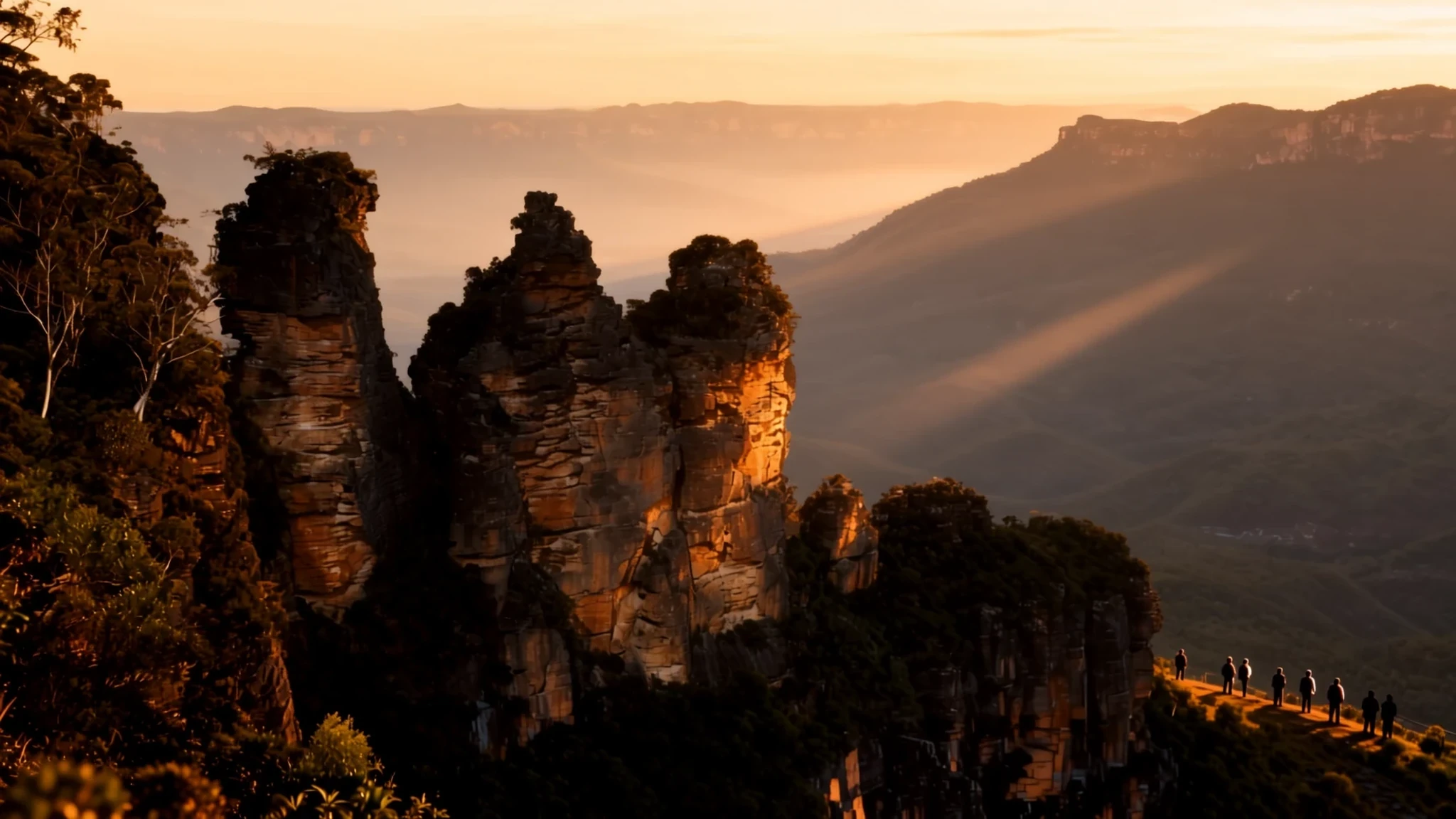
Explore ancient eucalyptus forests, dramatic sandstone escarpments, and deep valleys in an expansive wilderness right on Sydney's doorstep.
The place
Blue Mountains National Park is a protected sanctuary situated in eastern Australia, spreading across an irregular plateau carved by rivers and deep gorges. Though termed mountains, the terrain is fundamentally an uplifted plateau sloping gently from west to east, broken by roads, townships, and pockets of private land. The landscape is defined by sheer sandstone walls, plunging waterfalls, and dense canopies of eucalyptus trees that release fine droplets of oil into the air, creating the characteristic blue atmospheric haze that gives the region its name. As the most central of the protected zones forming the Greater Blue Mountains Area, the park is a vital part of the Great Dividing Range and sits within easy reach of the urban fringe. Visitors encounter a patchwork of rugged wilderness where walking tracks lead down from the plateau rim into fern-choked valleys, rushing creeks, and quiet canyon floors. The sheer scale of the park means that pockets of absolute solitude exist just a short distance from popular viewpoints and scenic lookouts, offering a classic Australian bush experience of dry sclerophyll forest, towering eucalyptus trees, and sweeping horizons.
Its story
The protection of the Blue Mountains landscape owes much to the early conservation advocacy of Myles Dunphy, who proposed a sweeping regional park plan in the early decades of the twentieth century. His vision laid the conceptual groundwork for preserving the vast tracts of native forest, gorges, and river systems that define the region today. Formal recognition arrived when the national park was gazetted, establishing protected status for an initial tract of land that has since expanded significantly. Decades of grassroots conservation and planning culminated in the region's inclusion as a protected zone within the broader World Heritage listing, acknowledging its exceptional natural values, ancient plant communities, and deep Indigenous history. Alongside modern conservation efforts, the landscape preserves a rich heritage of historic walking tracks that snake across the plateau. Many of these paths, developed from nineteenth-century routes and early bushwalking club trails, are formally protected for their cultural and engineering significance, connecting visitors to the enduring traditions of Australian bush exploration.
What to see
- Echo Point — Katoomba
The iconic vantage point offering uninterrupted views across the valley toward the famous Three Sisters rock formation. It serves as the primary gateway for first-time visitors seeking the most celebrated panorama in the national park.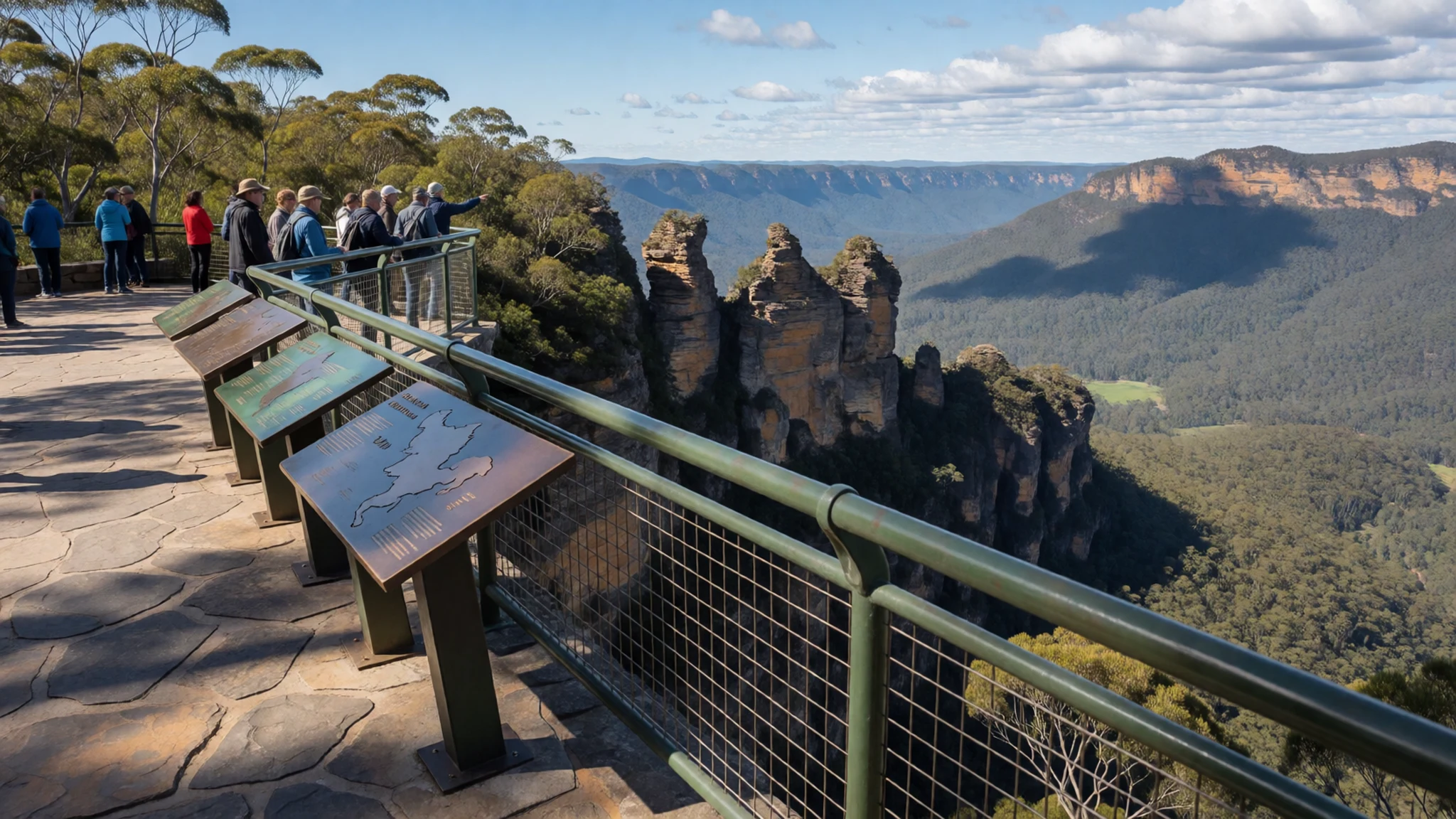
- Evans Lookout — Blackheath
Perched on the edge of the plateau, this site overlooks the dramatic sandstone cliffs and forested floor of Grose Valley. It acts as a popular starting point for serious hikers tackling steep canyon descents and cliffside tracks.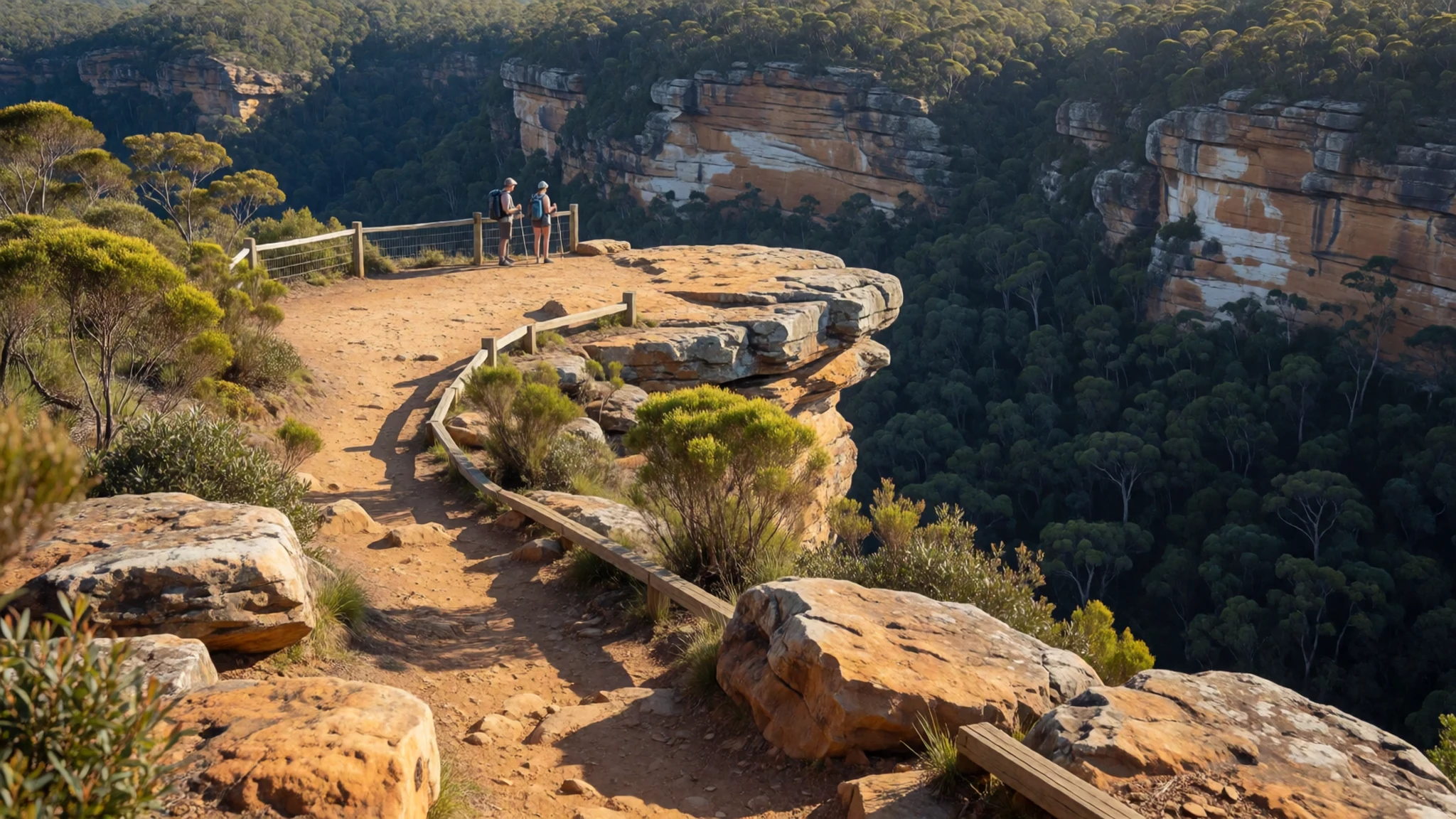
- Blue Mountains Heritage Centre — Blackheath
An essential interpretive stop providing deep insight into the cultural significance of the region to Indigenous Australians. Staff offer trail updates, detailed maps, and educational exhibits regarding the local flora and fauna.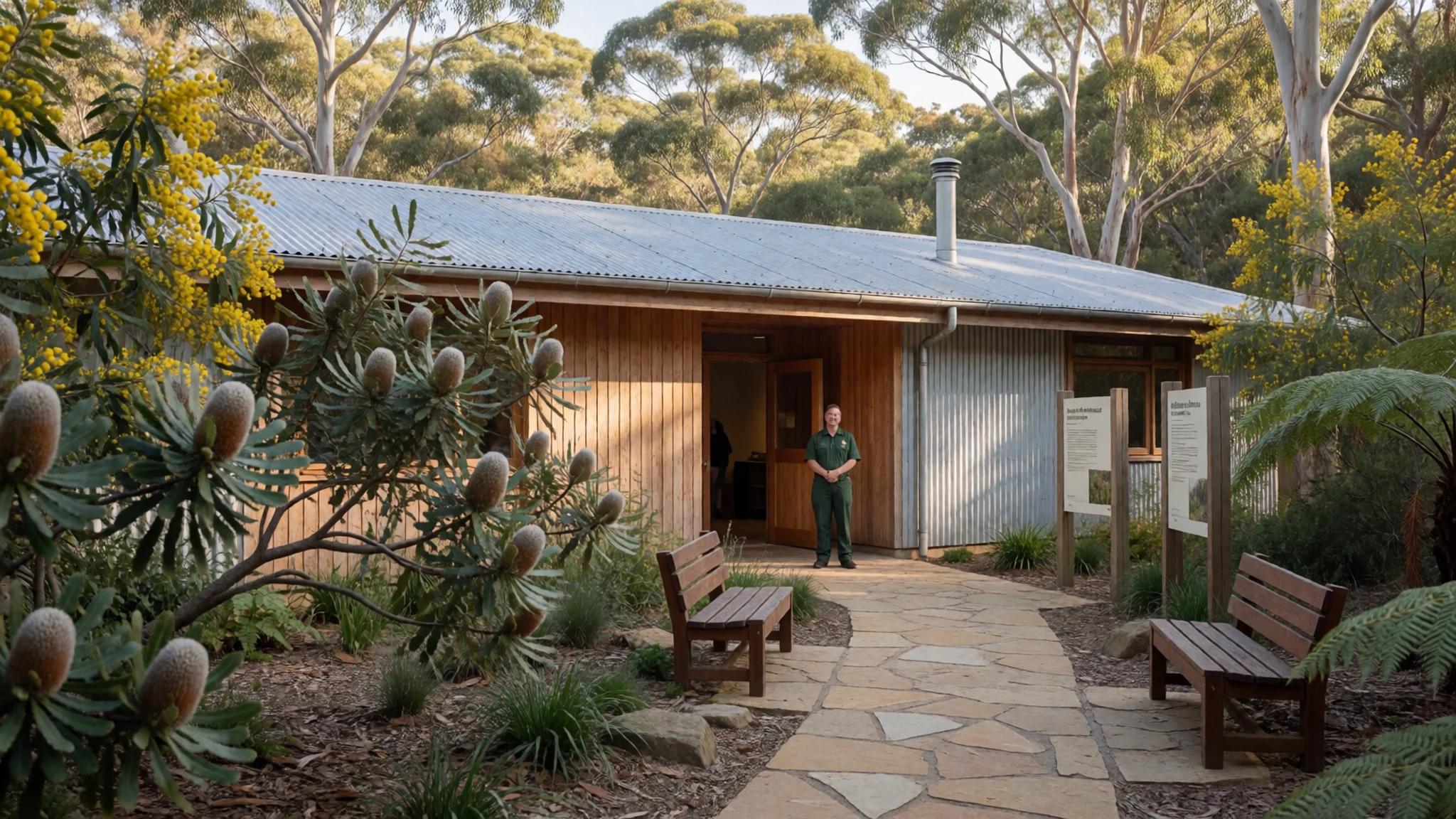
- Red Hands Cave — Lower Blue Mountains
A sheltered rock site featuring ancient Aboriginal hand stencils created using a traditional mixture of ochre, water, and breath. The artwork provides a tangible connection to the traditional custodians who have moved through these valleys for millennia.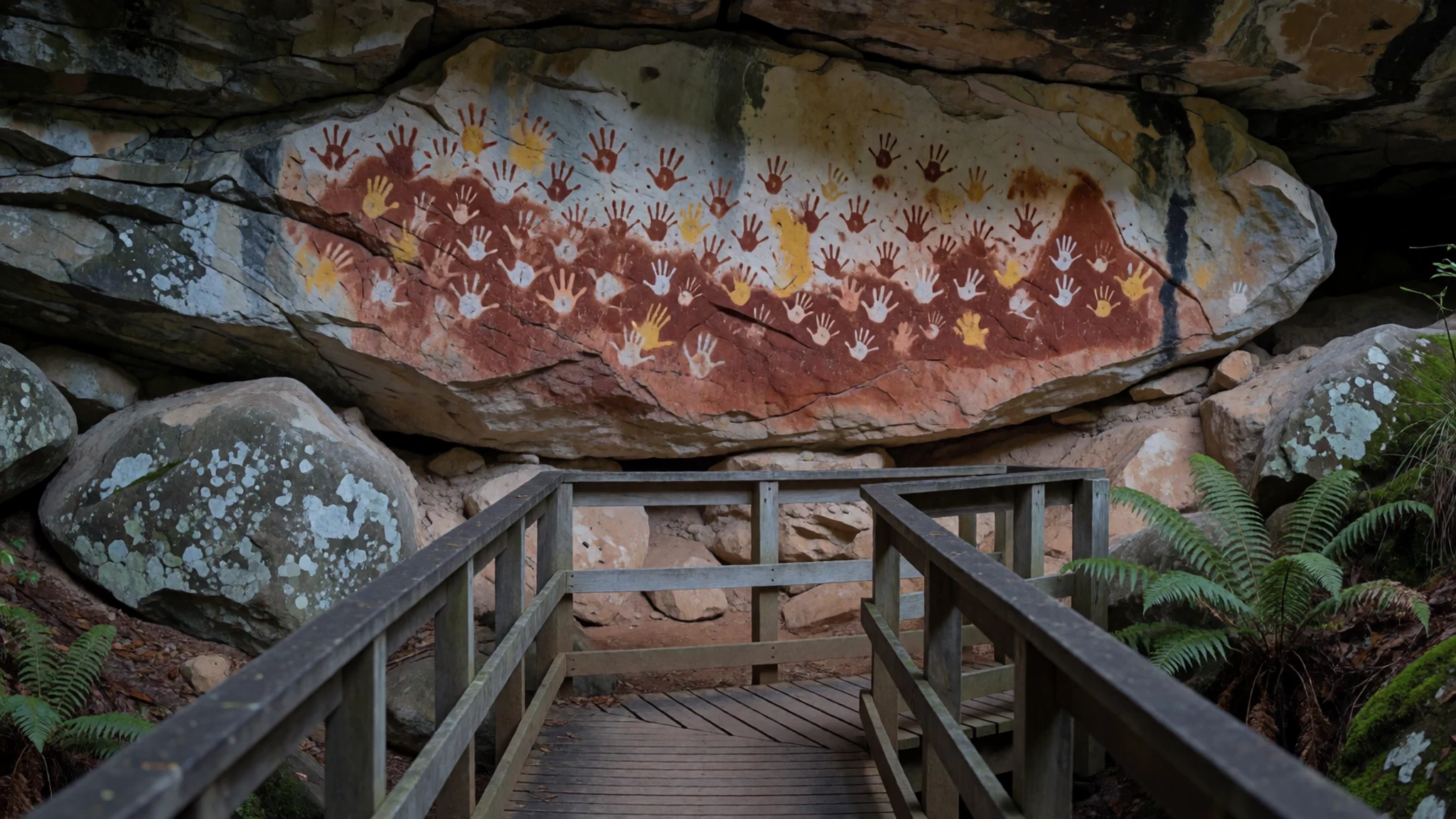
Culture
The Blue Mountains hold profound, continuous cultural and spiritual significance for local Indigenous communities, including the Dharug and Gundungurra peoples, who have managed and cared for this country for countless generations. The landscape is a living cultural archive marked by sacred sites, art shelters, stone arrangements, and traditional pathways that link the high plateau with the coastal plains. Traditional custodians view the country not merely as scenery, but as an interconnected ecosystem of ancestors, law, plants, and animals that must be treated with deep respect. Modern visitors tread gently upon ancient ground, acknowledging the unbroken connection between the original custodians and the rugged gorges, rivers, and ridges. When exploring rock art sites or heritage trails, remember to stay on designated tracks, avoid touching fragile ochre stencils, and respect cultural heritage areas by leaving all stones, plants, and artefacts untouched.
What to wear
Outdoor practicality defines dress in the Blue Mountains, where visitors and local bushwalkers favour durable, weather-appropriate gear rather than stylistic trends. Traditional clothing holds no specific regional costume here, but modern attire is built for changing mountain microclimates that can shift from warm sunshine to misty downpours within hours. Standard wear consists of comfortable layered clothing, breathable shirts, and sturdy hiking boots or trail shoes capable of handling uneven stone steps, muddy tracks, and wet leaf litter. Because the mountain air can be brisk even in warmer months, visitors should always pack a fleece jacket, a waterproof windbreaker, and a wide-brimmed hat to guard against intense Australian sun exposure. Long trousers are recommended for bushwalking to protect against scratchy undergrowth and occasional insects.
What to eat
- Conservation Hut Fare — The Conservation Hut near Wentworth Falls
Traditional hearty cafe meals, warm soups, and hot beverages served at a historic bushland meeting place that has welcomed hikers and nature lovers for decades.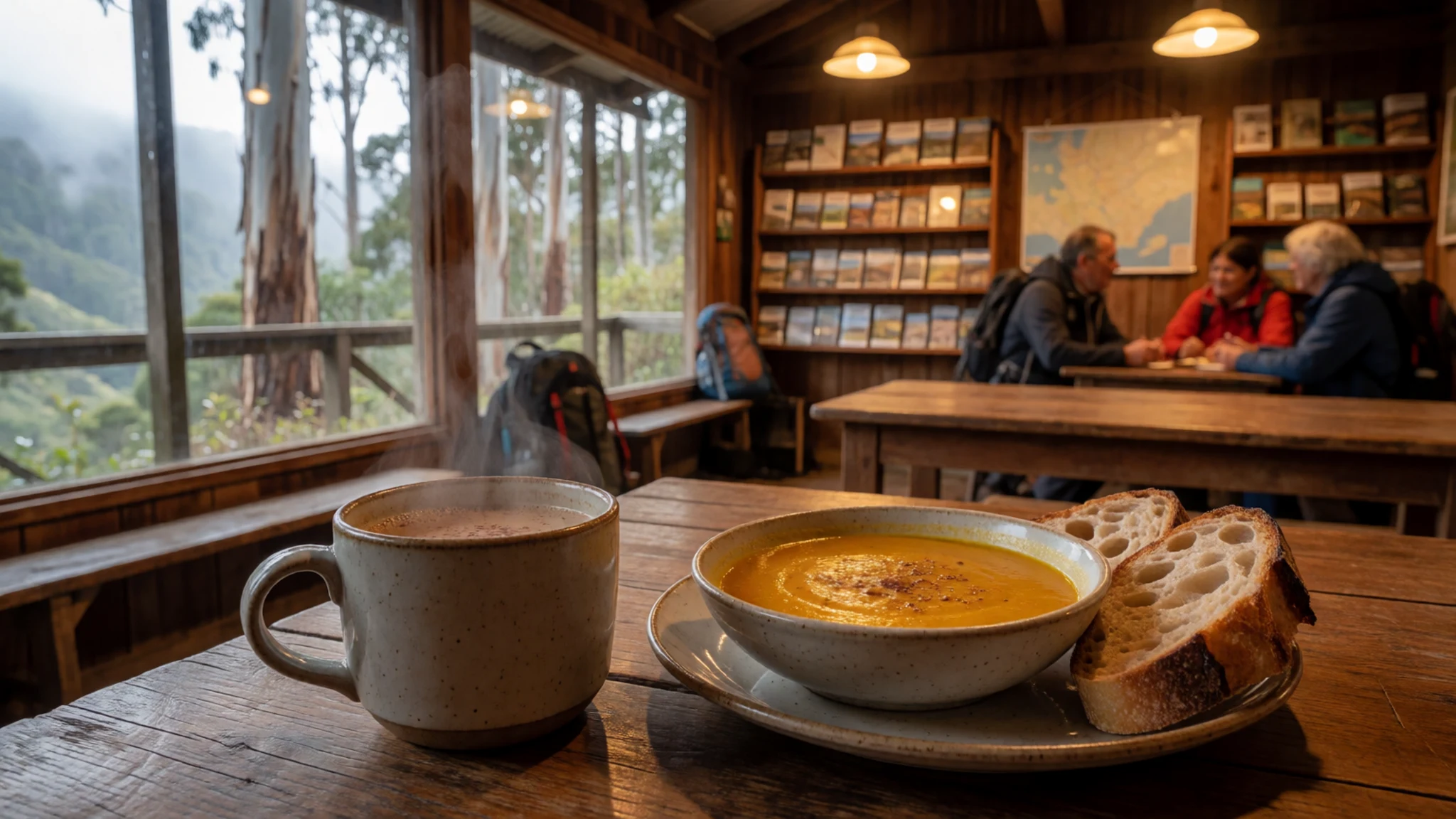
- Blue Mountains Bakery Pies — Katoomba and Blackheath township bakeries
Classic Australian savoury meat pies and pastries, ideal to pack into a rucksack before heading out onto the remote walking tracks and valley floors.
- Local Orchard Produce — Mount Wilson and local farmers markets
Crisp cool-climate apples, stone fruits, and homemade jams harvested from orchards located in nearby fertile pockets of the mountain plateau. - Bushland Picnic Provisions — Leura and Katoomba village shops
Simple portable provisions such as artisan cheeses, fresh bread, and cured meats assembled from village delis to enjoy at scenic canyon lookouts.
Plan it
Best time. September to November for spring wildflowers and mild walking weather, or March to May for crisp autumn air and changing foliage.
How long. 2–3
Getting there. Drive from Sydney via the Great Western Highway or Bells Line of Road, or take the regional train service directly to upper mountain stations like Katoomba.
Budget. mid
Tips
- Check vehicle rental agreements regarding unsealed or gravel access roads before driving into remote park sectors.
- Arrive at popular lookouts like Echo Point early in the morning to avoid heavy tourist crowds and tour bus arrivals.
- Carry ample drinking water and emergency supplies, as natural water sources in the park are not reliable for drinking.
- Download offline maps and trail guides before setting off, as mobile phone reception can be patchy in deep valleys and gorges.
Etiquette
- Stay strictly on marked walking tracks to protect fragile native vegetation and prevent dangerous rock erosion.
- Take all rubbish with you and leave natural and cultural features undisturbed for future visitors.
Nearby
Sources
- Wikidata Q885558 (CC0)
- Wikipedia (rev 1362702037) (CC BY-SA 4.0)
- Wikivoyage (rev 5381744) (CC BY-SA 4.0)
- Photo 01-rainforest-bluemountainsnsw.jpg (CC BY 3.0)
- Photo 02-australia-part-3-27446932621.jpg (CC BY 2.5)
- Photo 03-blue-mountains-np-blue-mountains-aus-location-map.png (CC BY 3.0)
- Photo 04-leura-cascades-in-the-blue-mountains.jpg (CC BY-SA 2.5)
- Photo 05-three-sisters-walk-lookout-at-blue-mountains-national-park.jpg (CC BY-SA 4.0)
- Photo 06-1-bedford-creek-site-1.jpg (CC BY-SA 4.0)
- Photo 07-1-bedford-creek-site-2.jpg (CC BY-SA 4.0)
- Photo 08-1-blackheath-site.jpg (CC BY-SA 4.0)


