Mongol Els
Mongol Els, Mongolia
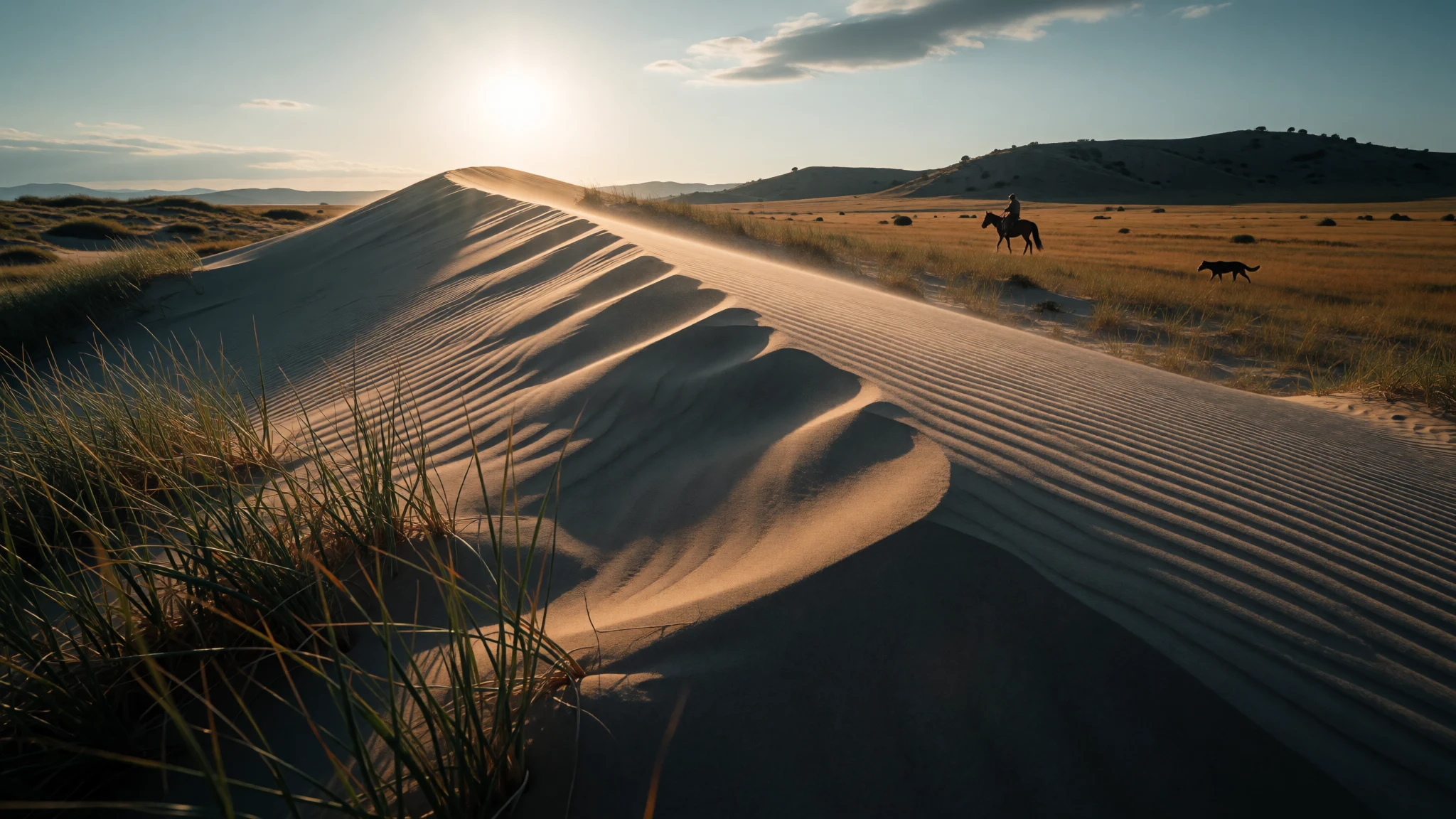
Mongol Els is a remote belt of dunes in western Mongolia, where sand, steppe and sky meet and herding families still set the pace.
The place
Mongol Els is a belt of sand dunes in western Mongolia, a country better known for grass than for sand. The dunes sit in open steppe, where the ground rolls away towards low mountains and the sky takes up most of the view. Wikidata classes the place simply as a sand area, and that is a fair description: ridges of pale, wind-shaped sand, patches of scrub, and long stretches with no building in sight. Mongolia is the world's most sparsely populated sovereign nation, and this area feels every bit as empty. Distances between settlements are large, roads are often just tracks, and a day's travel is decided by terrain and weather rather than a timetable. Mongolians call their land the Land of Blue Skies, and sunny days are common, though the weather swings widely. Winters are bitterly cold, summer days are generally hot, nights can turn cool, and some regions get rain in the warm months. People here mostly live as herders, moving with their animals between pastures, so a visitor is likelier to meet a family at a ger than to find a village. Services are thin. Water, food and fuel need planning, or a driver who knows the tracks. The reward is quiet: wind, hoofbeats, and a night sky with almost no artificial light. It suits people who like space, can manage basic comforts and do not need a packed itinerary.
Its story
Mongol Els belongs to a landscape that has been crossed by nomads for a very long time. The Xiongnu rose to power on these steppes in the centuries before the Common Era, and because they left almost nothing in writing, much of what is known comes from the Chinese records of their neighbours. Later empires followed, and the best known is the Mongol Empire, whose heartland was this country. Oddly, the descendants of Genghis Khan left little built evidence at home. Karakorum, the short-lived capital raised under his son Ögedei, is the main exception, and what survives of it is slight. What the countryside does hold is older and quieter: stone monuments and carved drawings scattered across the land, some of them thousands of years old, and the ruins of stone structures in a culture that prided itself on moving. After the empire faded, Tibetan Buddhist monasteries became the most visible mark of Mongolian history, though only a few survived the Stalinist religious purges of the twentieth century. The Soviet era also brought modern towns and industry, mostly far from places like this. For decades Mongolia was hard to enter, and visitors needed an invitation. Visa rules have since relaxed, and routes to the west are slowly opening, though the dunes remain a place reached by effort rather than by crowds.
What to see
- The dunes at first and last light — Mongol Els, western Mongolia
The sand ridges of Mongol Els are best walked early or late, when low sun picks out every ripple and the heat of the day has gone. Climbing a crest is slow work in soft sand. From the top the view runs to grassland and distant hills, with usually no other person in it. - A ger visit with a herding family — Steppe camps near the dunes
Staying in or visiting a ger is the most direct way to understand the region. Salted milk tea and dried snacks are offered first, and conversation usually follows. A local guide can arrange a family stay, which matters because the animals and pastures decide how people move through the year. - Altai Tavan Bogd National Park — Bayan-Ölgii, far western Mongolia
The Altai Mountains in the far west offer proper mountaineering and glacier country, a sharp contrast to rolling steppe and sand. It is a long journey from the dunes, so it suits a longer trip, with a guide and a vehicle arranged well in advance. - Kazakh eagle hunters in winter — Ölgii area, western Mongolia
In the cold months, Kazakh families in western Mongolia hunt foxes and hares with trained eagles, partly because quarry is easier to spot against snow. Watching a hunt needs a local arrangement, warm layers, and a respectful distance from the birds. Winter travel here is demanding, so go with experienced hosts. - Erdene Zuu Monastery — Kharkhorin, central Mongolia
Erdene Zuu at Kharkhorin is one of the few Buddhist monasteries to remain active after the purges, with resident lamas and temples inside a walled compound. It sits near the site of Karakorum, so one stop links monastic history with the story of the empire.
Culture
Mongol Els lies in a part of Mongolia where herding life shapes manners, and the rules of hospitality are worth learning before arrival. Mongolians are generally direct, so expect honest opinions, plain questions and little small talk for its own sake. Western pleasantries do not always land as intended, and local habits are the better guide. The ger is the centre of social life. A guest is offered salted milk tea and a bowl of dried snacks almost at once, and refusing a gift is considered rude. Buddhism, shamanic traditions and a deep respect for the land all sit side by side, and in the west Kazakh families add their own language, music and eagle-hunting heritage. History is a live subject. Many Mongolians feel strongly about China, and Inner Mongolia is commonly called southern Mongolia, so it is wise to avoid clothing linked to China and to steer clear of the topic unless a host raises it. Stone monuments and monasteries across the country are treated with care, and visitors are expected to do the same. Dogs guarding gers can be fierce, so announce yourself before approaching a camp. Accept anything a ger host hands you with your right hand, palm upward, and take at least a small taste rather than turning the offer down.
What to wear
Mongol Els sits in country where the deel, the long wrap-over robe, is still everyday wear for many herders. It is made from cotton, silk or wool, closed at the side and fastened with a bright sash, and heavier versions are lined or trimmed with fur for winter. Riders wear leather boots with turned-up toes, and felt, sheepskin and fur hats are common. Deel are worn with pride at festivals, weddings and the summer Naadam games, with colours and cuts that vary by region. In the west, Kazakh families add richly embroidered felt and fur, and eagle hunters wear heavy fur hats and coats. Day to day, most people now wear jeans, fleece, trainers or boots and padded jackets, particularly in towns, with the deel kept for work on the steppe or for occasions. A visitor should dress for large swings in temperature: a sun hat, sunglasses and light long sleeves for the day, and a warm fleece or down jacket for the night, which can be cool even in summer. In winter, thermal layers, insulated boots and windproof outers are essential. Sturdy shoes with a closed top keep sand out, and a scarf helps in wind. Dress modestly at monasteries, and avoid anything associated with China.
What to eat
- Boiled mutton — A herder's ger on the steppe, or any canteen in a town
Mutton is the backbone of Mongolian eating, and a herding family may eat little else, seasoned only with salt. Boiled on the bone, it is simple and filling, and it is the meal most visitors are served when staying with a family in a ger. - Buuz — Canteens and tea shops in towns, and family gers at festival time
Buuz are steamed dumplings filled with minced meat, often called the national dish. They are served hot in sets, eaten by hand, and go well with salted tea. They are an easy first dish for newcomers to the local diet. - Khuushuur — Roadside eateries, markets and bus-stop food stalls
Khuushuur is a flat pocket of dough stuffed with meat and onion, then fried until crisp. It was once a festive dish and is now found almost everywhere. It is greasy, warm and hearty, which suits a cold morning. - Süütei tsai — Any ger, and alongside meals at town canteens
Salted milk tea is the everyday drink: milk and water with a little tea and a pinch of salt. It is the first thing a ger host offers. It tastes unusual at first, and some visitors prepare by drinking more milk beforehand. - Aaruul — Family gers and local markets in provincial towns
Aaruul are dried curds, set hard in the sun and eaten as a travelling snack. They are rock-like, so they are sucked slowly until they soften. The flavour is sharply sour. A bowl is often put out for guests alongside tea.
Plan it
Best time. June to September, when days are warm to hot, roads and tracks are passable and the steppe is green; some areas get rain in summer and nights can be cool. Winter is bitterly cold and only suits experienced, well-equipped travellers, with eagle-hunting displays the main reason to come then.
How long. 4–5
Getting there. Fly to Ulaanbaatar, then take a domestic flight towards western Mongolia or travel overland with a driver; the last stretch to the dunes is on tracks, so a four-wheel-drive vehicle with a local guide is the sensible way. Check current visa rules before booking.
Budget. mid
Tips
- Arrange a driver and guide through a local operator well before travel, as public transport does not reach the dunes
- Carry more water, food and fuel than seems necessary, and plan for no mobile signal
- Pack layers: hot days, cool nights and strong sun on open ground
- Carry some cash, as cards are rarely taken outside towns
- Announce yourself at a camp so guard dogs are not startled, and keep a rock or stick in mind when walking
Etiquette
- Receive tea, food and gifts with your right hand, palm up, and take at least a small taste
- Do not turn down an offer from a host outright
- Avoid wearing clothing linked to China or raising the subject of China
Nearby
Sources
- Wikidata Q27702369 (CC0)
- Wikivoyage: Mongolia (rev 5427090) (CC BY-SA 4.0)
- Wikipedia: Mongolia (CC BY-SA 4.0)
Wildlife
- Red fox (animal)
The red fox is the biggest of the true foxes, and it lives right across the northern half of the world. Where and when you might meet one at Mongol Els is hard to promise, so simply keep your eyes open. Snow makes animals easier to spot, which is partly why families in western Mongolia hunt them with eagles in the cold months. Watch from far away, stay quiet, follow your guide's lead, and never feed it.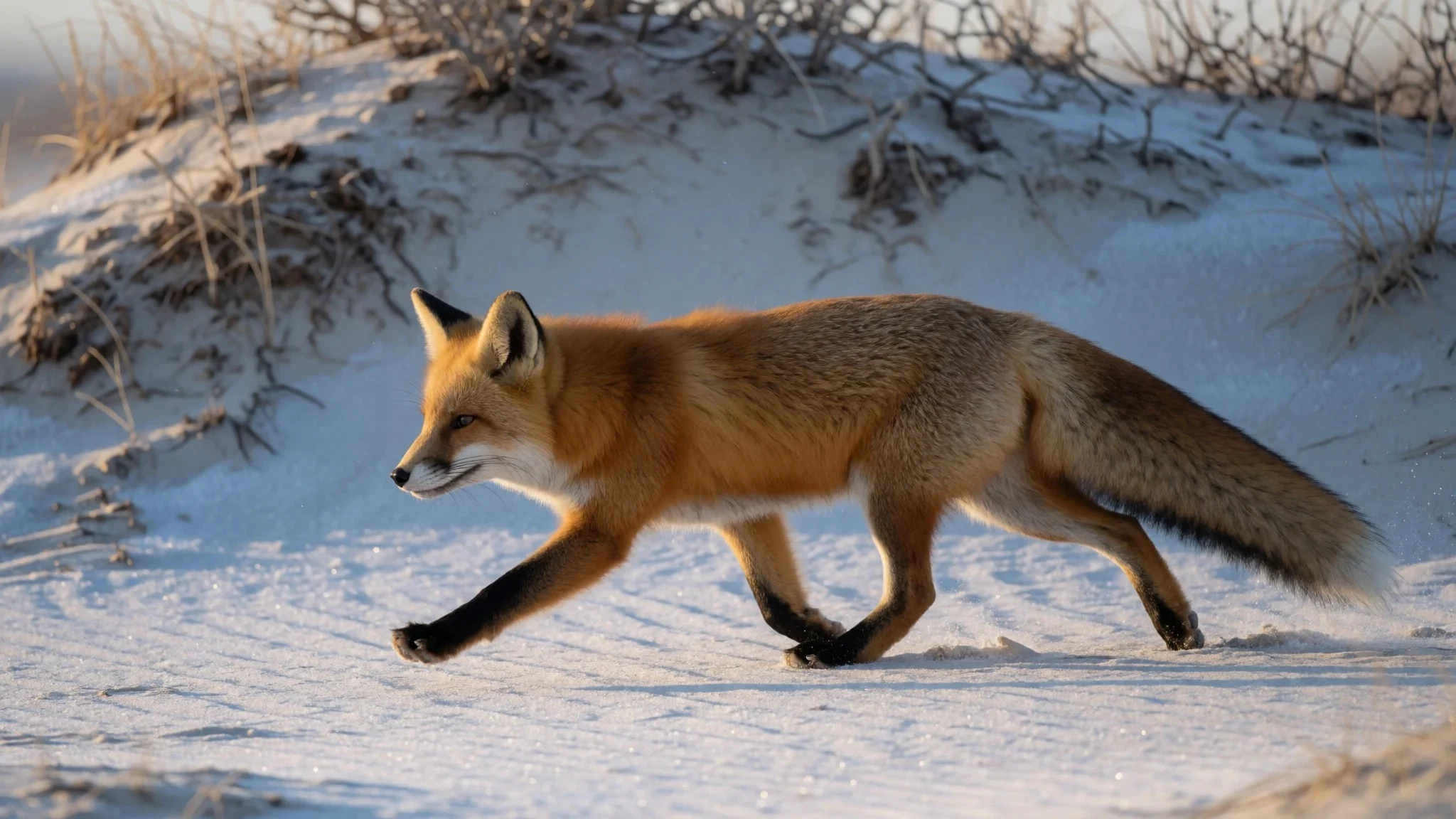
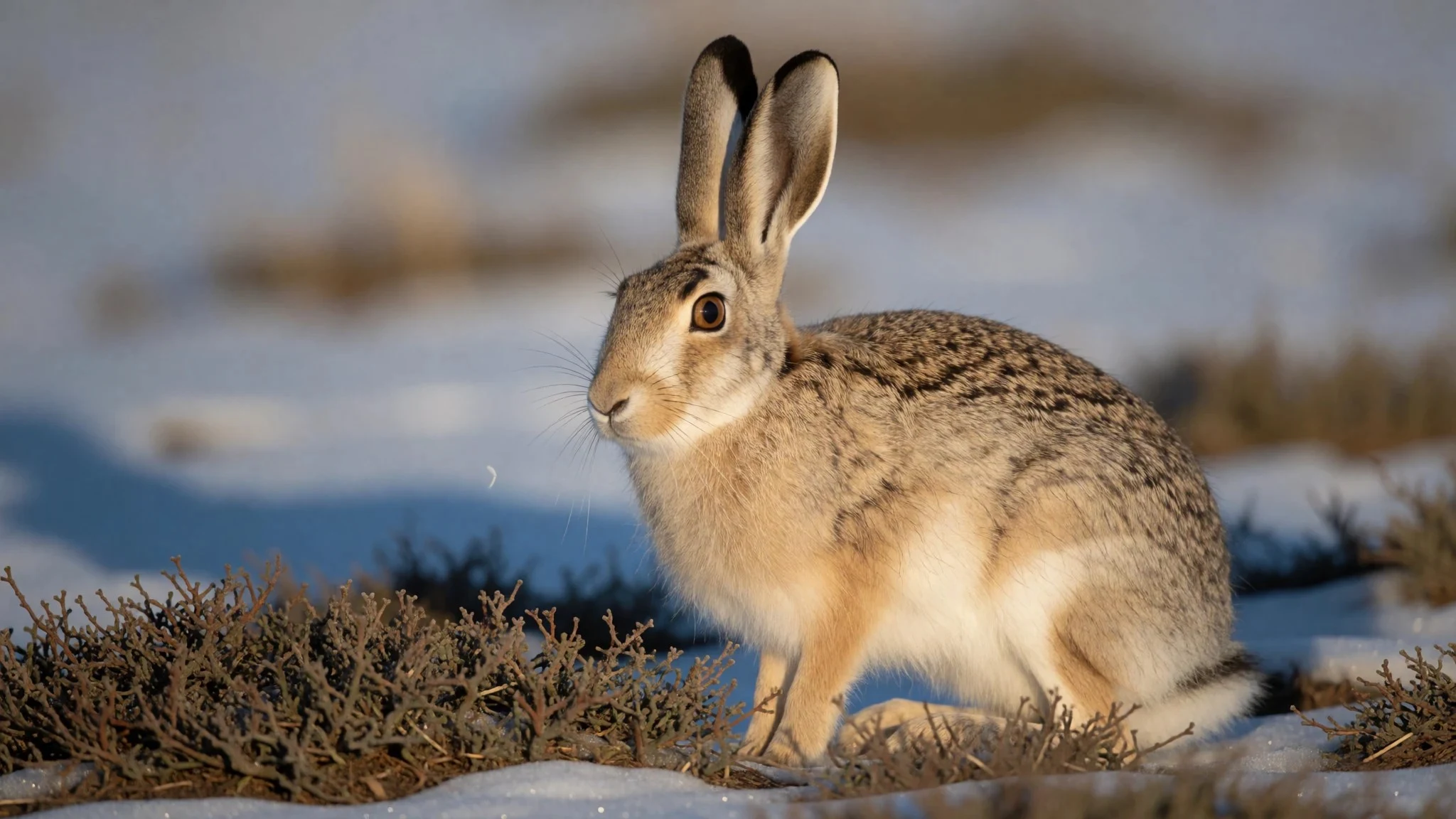
- Tolai hare (animal)
The tolai hare is a long-eared, yellowish, brown or grey hare of Central Asia, and it lives across much of Mongolia. Look for it on steppe, grassland, rocky ground and river valleys. It mostly comes out at dusk and after dark, though it sometimes feeds by day, and young hares are often out in daylight. Scan quietly at twilight, keep well back, let your guide help, and never feed it.